Screening Room: Are You There God? It’s Me, Margaret, Sisu, Big George Foreman, Peter Pan & Wendy, Showing Up and More
by Hope Madden
There’s reason to cheer for David Lowery’s latest effort for Disney, Peter Pan & Wendy. First of all, there’s Lowery’s vision.
In the hands of the Green Knight director, Neverland has never looked so gorgeous. He finds ways to exploit the wonder, beauty and danger of this adventureland in a way that fits his lilting retelling.
For the script, Lowery reteams with longtime producer Toby Halbrooks, who co-wrote the director’s previous Disney outing, Pete’s Dragon. Both of Lowery’s films for the Mouse only draw attention to the fact that the Ghost Story, Ain’t Them Bodies Saints and The Old Man and the Gun filmmaker possesses no sense of irony, cynicism or fatalism. He seems weirdly perfect for family films.
And, like Jon Favreau’s wonderful The Jungle Book, Lowery draws inspiration not only from the original text, but also from Disney’s classic animated version. Snippets of songs from the 1953 musical are woven throughout, enough to give parents and grandparents some nostalgic feels.
But do we need or want another Peter Pan story? Beasts of the Southern Wild director Benh Zeitlin couldn’t find an audience for his 2020 bayou adaptation, Wendy. No one went to see Joe Wright’s star studded, Hugh Jackman led 2015 musical, Pan. Maybe a more traditional telling is in order? One that weighs the humanity as heavily as the whimsy?
Jude Law’s Hook offers surprising pathos. Never the campy pirate you may have come to expect, Hook is resigned to evil, his own pain a tender nerve just below the surface. It’s a dastardly but tender performance that gives the film a broken heart.
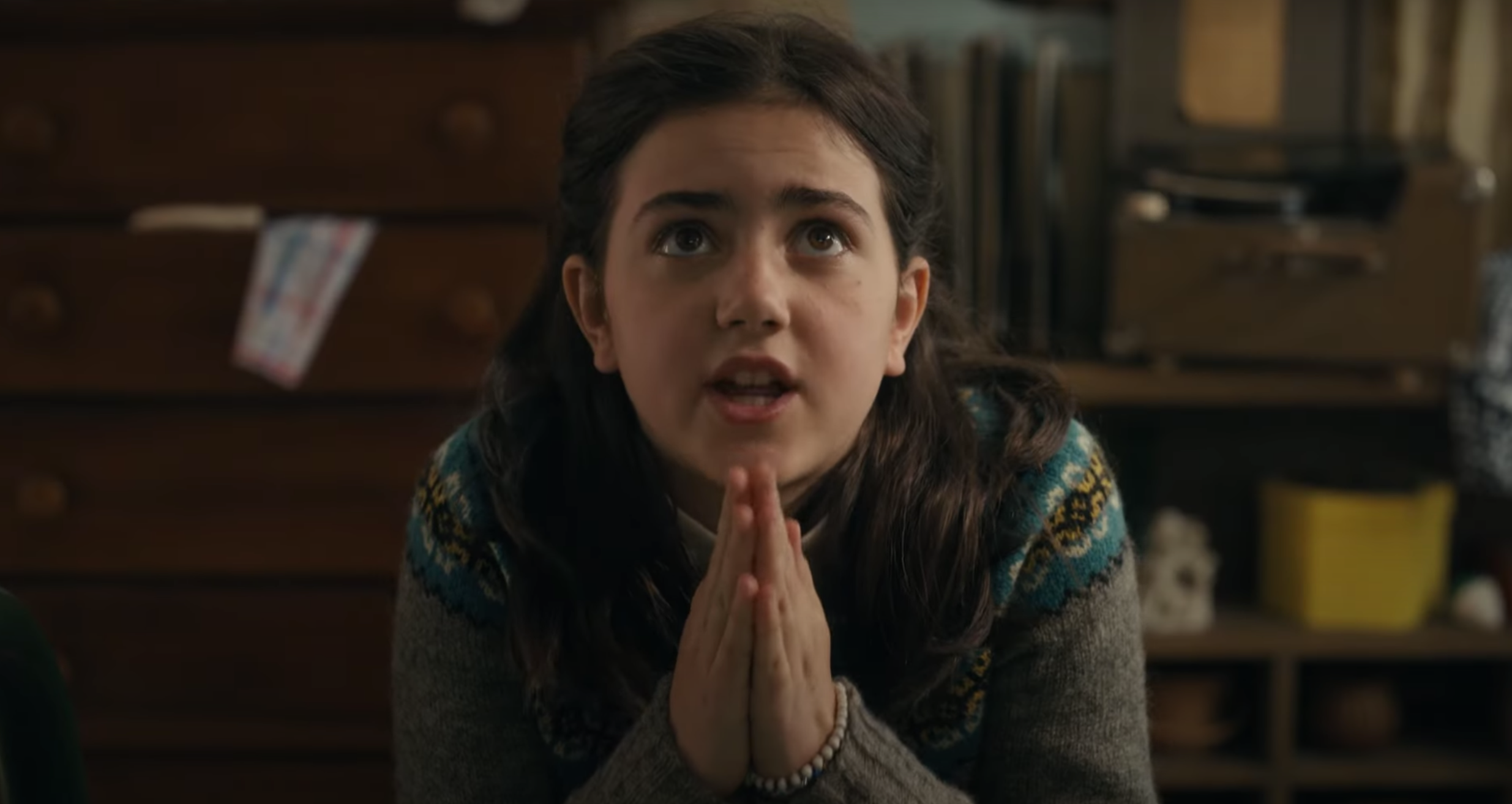
At his side, Jim Gaffigan’s Smee – pretty ideal casting, although the character is underused. Ever Anderson offers a substantial Wendy Darling, and the Lost Boys are not necessarily boys but they are mischievously charming. The problem is Peter.
Alexander Molony, thought cute as can be, is surprisingly lifeless in the lead. His highs don’t feel highs nor his lows low. His performance is neither cartoonish nor realistic.
The character itself gets a bit lost in the adaptation, which holds focus on Wendy’s arc far more than Peter’s story, and Lowery doesn’t seem entirely sure where Peter fits into all this. It’s one of the more ingenious elements of J.M. Barrie’s novel – Peter Pan is not the hero or the villain, he’s more the iconic fool whose lack of arc helps those around him find their own. But Lowery loses his footing when he focuses on Peter, and though his adventure is truly beautiful, it feels a little unfocused and possibly unnecessary.

by George Wolf
Sixteen words in that title, leaving little room for nuance or any shred of mystery about the tale being told. And it’s a perfect fit for a film that is content to just summarize a life like a Wikipedia timeline, choosing the safest, most easily digestible path.
After a brief flashback segment, director and co-writer George Tillman Jr. (Soul Food, Men Of Honor, Notorious, The Hate U Give) just ticks off the events of George Foreman’s life in simple, linear fashion.
He grew up poor in Houston, started boxing during his time in the Jobs Corps, won an Olympic Gold in 1968, won the heavyweight belt from Frazier in ’73, lost to Ali’s “rope a dope” strategy in ’74’s Rumble in the Jungle, quit to be full-time preacher in ’78, came back to the ring 10 years later and won the heavyweight championship again in 1994 at the age of 45.
All of that info is always a search engine away, but Tillman Jr. just regurgitates it onscreen, never embracing the chance to dig deeper or deliver any new insight.
And there are two great opportunities here. The first is George’s relationship with longtime mentor “Doc” Broadus, portrayed with heart and sensitivity by Oscar-winner Forest Whitaker. The second is Foreman’s conversion to a Man of God. Either one of these could have given the film a strong foundation to build around, and an easier route to getting audiences closer to the real Big George.
Khris Davis (Judas and the Black Messiah) beefed up considerably to play Foreman, and while he looks the part, fight sequences range from lackluster recreations to the WTF choice of a deep-faked Davis being inserted into real footage from Foreman’s 1991 bout with Evander Holyfield. Comical portrayals of both Muhammad Ali and Howard Cosell only feed a longing for the historical relevance of the 1996 doc When We Were Kings.
George’s rise to gold medals, heavyweight belts and best-selling grills has indeed been extraordinary. It deserves better than the ordinary treatment that comes from Big George Foreman.

by Hope Madden and George Wolf
Is there anything in all the world more satisfying than watching Nazis die? Perhaps not.
Jalmari Helander, the genius behind 2010’s exceptional holiday horror Rare Exports, squeezes a lovechild from Leone and Peckinpah by way of Tarantino (natch). The result, Sisu, a kind of WWII-era Scandinavian John Wick.
That sounds borrowed, but it doesn’t feel borrowed. It feels stylized but never derivative.
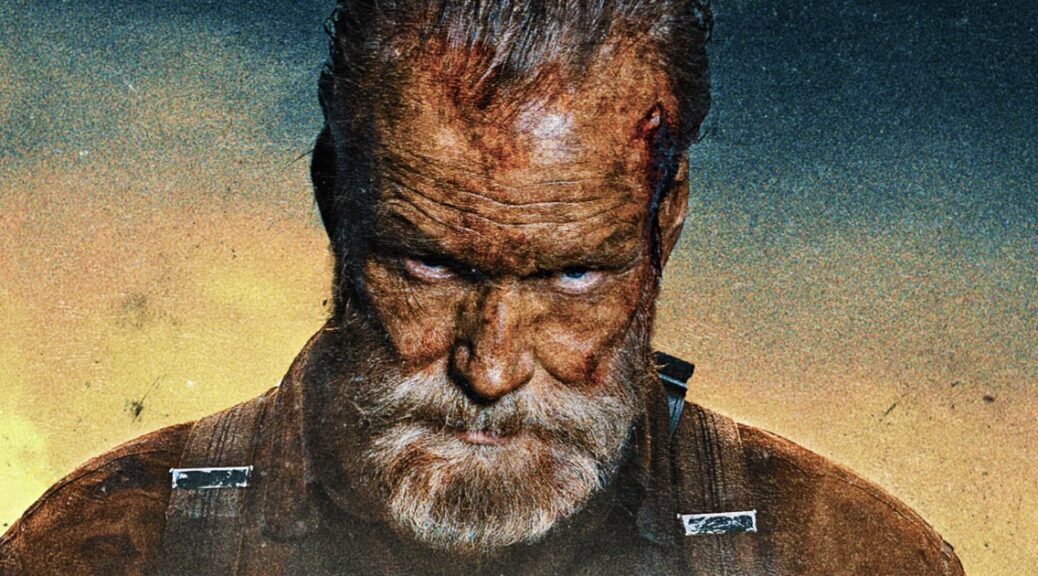
Rare Exports star Jorma Tommila plays Aatami Korpi. Korpi used to be a soldier. He left that – and his reputation as a “one man death squad” – behind, instead roaming Lapland with his dog and his horse in search of peace and gold.
After finding one, the other becomes even more elusive.
The Nazis, their loss imminent, are leaving scorched earth behind as they move across Lapland. Their paths cross Korpi’s. It doesn’t go well for the Nazis.
Helander’s confident vision meshes majestically with the cinematography of Kjell Lagerroos, capturing the lonesome beauty of Lapland in one minute, the next minute bursting with the frenetic energy and viscera of action. The stunt choreography and editing in the dizzying array of carnage-laden set pieces are breathtaking. Knives, guns, fisticuffs, tank fire, regular fire, land mines, a hanging, airplanes – a seemingly endless string of magnificently crafted violent action keeps the pace breathless.
Speaking of breath, there’s an underwater sequence that’s a real gem. And a great deal of Sisu’s success is in the novelty of its action. We’ve seen about 11 hours of John Wick by now. It’s hard to do something new.
But Helander manages. Composers Juri Seppä and Tuomas Wäinölä also assist in lifting the heights of this spectacle, and it becomes as beautiful a celebration of bloodletting as we’ve seen for some time.
And though a final confrontation between Korpi and the ruthless SS Commander tracking him (Aksel Hennie) is never in doubt, it takes on a greater significance thanks to Helander’s clearly-drawn stakes. The Nazi is looking to buy his redemption, while Korpi sees the chance to finally escape his past.
Vengeance? Oh, that’s here, too, for both Korpi and some POWs who smugly warn their German captors of what is coming. They say the Finnish word for what the wandering stranger is does not translate, but that he is no ordinary traveler.
And the film is no ordinary travelogue. Clocking in at just 91 minutes, Sisu is perfectly lean, relentlessly mean, and consistently satisfying at every blood-soaked turn.

by Hope Madden
Visual poet of the day-to-day Kelly Reichardt returns to screens this weekend with a look at art as well as craft in her dramedy, Showing Up.
Michelle Williams is Lizzy, a sculptor who’s not getting enough done for her upcoming show. It’s a small show in a small gallery not exactly downtown, but it’s a show and she’s got a lot of work left to do.
So does Jo (Hong Chau, one of three 2023 Oscar nominees in the cast!), Lizzy’s neighbor and landlord. In fact, Jo has two shows coming up, so who knows when she’ll be able to fix Lizzy’s water heater?
And just like that, Reichardt leaches the glamour from the art world, dropping us instead into a place far from glitzy but bewilderingly human.
Williams is characteristically amazing, her performance as much a piece of physical acting as verbal. You know Lizzy by looking at her, at the way she stands, the way she responds to requests for coffee or work, the way she reacts to compliments about her work, the way she sighs. Williams’s performance is as much in what she does not say as what she does, and the honesty in that performance generates most of the film’s comic moments.
Chau knocks it out of the park yet again, and like Williams, she presents the character of Jo as much in her physical action as in her dialog. The chemistry between the two is truly amazing, simultaneously combative and accepting, or maybe just resigned to each other.
Reichardt’s phenomenal cast does not stop there: Judd Hirsch (irascible and hilarious), John Magaro (sad with an undercurrent of potential danger), Andre Benjamin (chilling), Maryann Plunkett (frustrated) and Amanda Plummer (weird, naturally).
As is so often the case, the environment itself is its own character, every gorgeously mundane detail filmed in Reichardt’s go-to 16mm film. She and cinematographer Christopher Blauvelt once again find the grace and beauty in the spots everyone else ignores.
Like Nicole Holofcener and Claire Denis, Reichardt invests her attention in the small moments rather than delivering a tidy, obvious structure. The result feels messy, like life, with lengths of anxiety and unease punctuated by small triumphs.
There is something scary about hospitals, especially the old, abandoned ones and those creepy, windowless floors! But what about the patients? We take a look – limiting our discussion to actual patients in actual facilities, not involuntary patients in homes, garages and storage units (although that turned out to be quite a list, so maybe later…)
One of a number of underappreciated Aussie horror flicks of the Seventies, Patrick is the first pairing of director Richard Franklin and writer Everett de Roche. The two would make a number of solid genre flicks together, but it was probably the popularity of this film that sparked the Ozploitation craze.
Here, big-eyed Robert Thompson is an unblinking catatonic in a Melbourne hospital. Though nothing’s going on in his body and eyelids (honestly, the fact that he never blinks and no one give him eyedrops might generate more unease than anything else in the movie!), his mind is very busy. Especially now that he’s keen on nurse Kathie (Susan Penhaligon).
Thompson owns the screen, regardless of his state, and effortlessly creates dread. Franklin ups the ante with some elevator claustrophobia and the general tension of being in a hospital. This is a low budget indie and suffers a bit from sprawl, but when Patrick turns his head and scares his new nurse. I still jump.
Nyctophobia, dissociative identity disorder, creepy tapes, an abandoned asylum – the pieces are there for a spooky horror movie. Credit writer/director Brad Anderson for swimming familiar waters and yet managing a fresh, memorable and disturbing film.
Gordon (Peter Mullan) needs some cash – and some sleep. Troubles at home aside, he’s having problems getting his latest assignment completed on time. With just a skeleton crew and an unreasonable turnaround time, Gordon has to remove the asbestos from the long-abandoned Danvers Lunatic Asylum.
He sneaks away a lot to call his wife and listen to these therapy tapes he’s found. Meanwhile, a couple of his guys are bickering over a shared girlfriend, another one’s a pothead, and then there’s Gordon’s sweet, mulleted nephew Jeff (Brendan Sexton III), who’s afraid of the dark.
Atmosphere is everything in this film. Performances are outstanding and Anderson has some seriously scary moments in store. Oh, poor Jeff.
Who wants to see Bruce Campbell play Elvis Presley?! We do.
Director Don Coscarelli (Phantasm) brings Joe R. Lansdale’s short story to the screen to depict the horror and sadness of aging, although its done with such humor that the film is impossible not to love.
Elvis never died, he swapped places with an impersonator who died and ever since then he’s been stuck living someone else’s life. And now he’s in this low-rent old folks home where his only real friend is a guy who believes he’s JFK (Ossie Davis). Obviously, when they realize that the recent spate of patient deaths is due to a mummy sucking the life from people through their assholes, who’d believe these knuckleheads?
The script is great and Coscarelli knows exactly how to make the most of budgetary limitations. The entire cast soars, but Campbell and Davis have such incredible chemistry that the film delivers not just laughs, message, and some scares but genuine tenderness.
Dr. Hal Ragland – the unsettlingly sultry Oliver Reed – is a psychiatrist leading the frontier in psychoplasmics. His patients work through their pent-up rage by turning it into physical manifestations. Some folks’ rage turns into ugly little pustules, for example. Or, for wide-eyed Nola Carveth (Samantha Eggar), rage might turn into bloodthirsty, puffy coated spawn. This is Cronenberg’s reimagining of procreation, and it is characteristically foul.
Cronenberg wrote the film during his own ugly divorce and custody battle. He created a fantasy nightmare rooted firmly in the rage, despair, and the betrayal that comes from watching someone who once loved you turn into someone who seems determined to harm you.
Cronenberg is the king of corporeal horror, and The Brood is among the best of the filmmaker’s early, strictly genre work. Reed and Eggar are both unseemly perfection in their respective roles. Eggar uses her huge eyes to emphasize both her former loveliness and her current dangerous insanity, while Reed is just weird in that patented Oliver Reed way.
You can absolutely never outdo Friedkin’s original masterpiece, but William Peter Blatty – who wrote the novel The Exorcist – takes a nice stab with the third installment.
Who is this secret Patient X? Or, who’s controlling him? Kinderman (played in this film with much gusto by George C. Scott) will live through a nightmare to figure it out. Jason Miller makes a heartbreaking return, but honestly, Blatty has so much fun with the rest of the patients, the film offers constant, weird terror.
by Hope Madden
Deadites hit the big city in Lee Cronin’s Evil Dead Rise, the latest instalment in the old Sam Raimi demon possession franchise. As was true with its predecessors, blood will rain, viscera will spew, chainsaws will bite, and the dead will most definitely rise. Just don’t expect any jokes this time around.
We open, as usual, on a cabin. Despite the top-notch title sequence, though, this episode will not be a cabin-in-the-woods horror. Cronin, who’s credited with the script as well, takes the Necronomicon and all its secrets into an urban high rise to see what hell he can raise.
Beth (Lily Sullivan) has some troubling news and wants to lay low with her sister’s family for a bit. But her sister Ellie (Alyssa Sutherland) is about to have some real troubles of her own because an earthquake opened a hole from the parking garage to a vault beneath the building. That vault held a book and some vinyl.
Lessons we should all have learned by now:
Cronin (The Hole in the Ground) tosses in some loving homages to the Raimi films. Who doesn’t love a demon POV shot?! In fact, he uses disorienting angels and shots throughout the film to beautifully bewildering effect. A fisheye-of-death through a peephole is just one of the film’s many horrifying highlights.
Sutherland takes the most abuse as devoted mother turned chief Deadite, a role her lanky, angular frame is ideally suited to. She’s terrifying, but the most disturbing idea at play in this sequel is that children are fair game.
Cronin’s vision offers none of the slapstick, Three Stooges-esque humor of Raimi’s original trilogy. In fact, it leans far closer to the tone of Fede Alvarez’s underappreciated 2013 genre treasure, Evil Dead. And while this installment’s nods to the iconography of the original set is wonderful, Evil Dead Rise also recalls [Rec] and Joko Anwar’s Satan’s Slaves: Communion and even a little bit of Kubrick’s The Shining, Carpenter’s The Thing (or maybe Yuzna’s Society) – all exceptional horrors and worthy inspiration.
It’s also fun that Evil Dead Rise boasts an altogether new storyline, since so many films in the franchise are reworkings of earlier episodes. That storyline is somewhat slight, but what the film lacks in depth it makes up for with inspired visuals, solid casting, and so much blood.

by Hope Madden
To Catch a Killer is a title that begs to be forgotten, bland and obvious and broad as it is. The film is about a disgruntled and underappreciated cop with the skills to get inside the mind of a killer, skills that are being nurtured by a grizzled detective who sees potential.
So far so yawn.
And yet, filmmaker Damián Szifron’s thriller is weirdly compelling.
His visuals are on point. Fireworks, cop cars, aerial shots, sudden impact – clarity in presentation tells us what is going on long before any actor speaks.
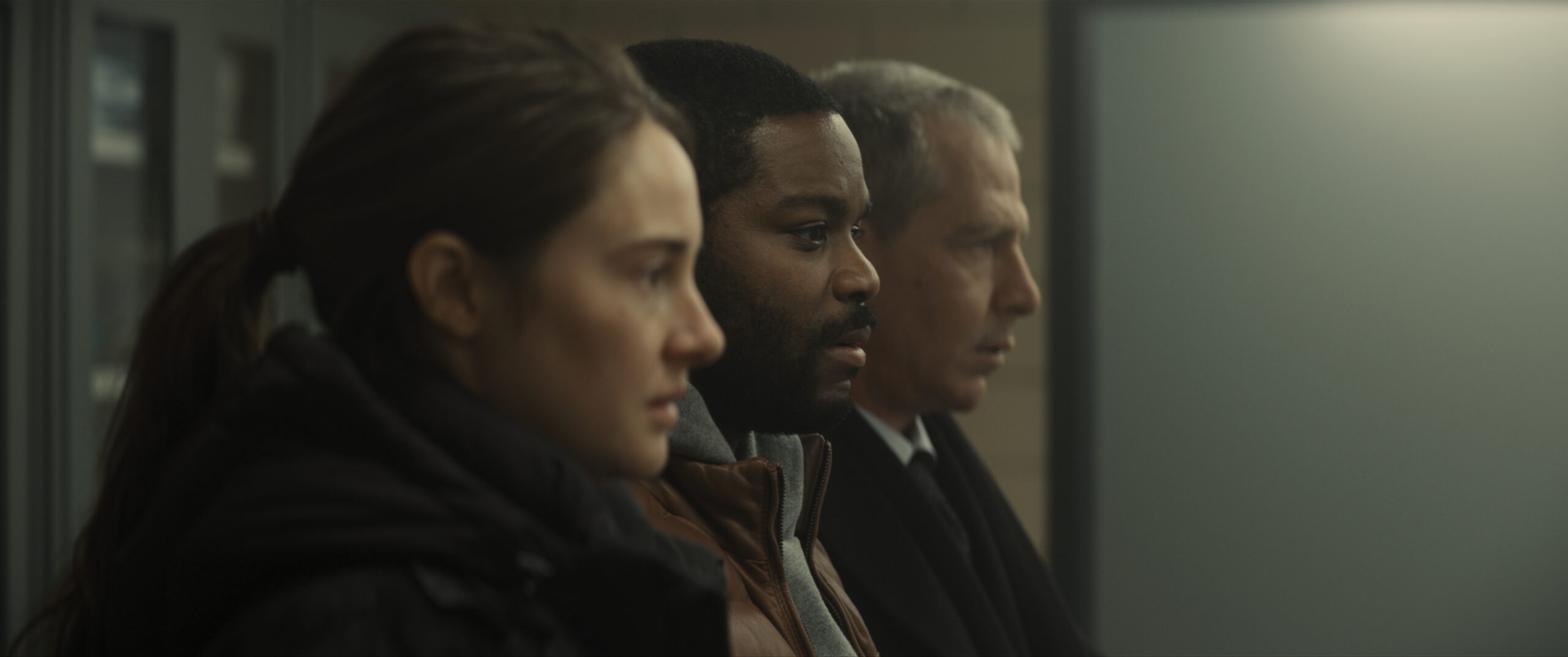
Those actors don’t hurt. Shailene Woodley delivers an un-showy but emotionally raw central performance as a beat cop quietly desperate for a meaningful challenge.
She’s aided by Ben Mendelsohn as the beleaguered senior investigator. While Det. Lammark doesn’t offer Mendelsohn the opportunities for pathos that allowed him to create iconic characters in Slow West, Mississippi Grind, Killing Them Softly, Animal Kingdom and more, the veteran finds enough humanity to make the detective memorable.
Politics, sycophancy, scapegoating and bad decisions cripple the investigation, giving Szifron and co-writer Jonathan Wakeham a chance to impress with their script as well. No broad strokes, the script indicts media, greed, cowardice, sexism, and capitalism in turn and finds reason to empathize with the least likable characters.
Still, it follows the beats you expect from a film called To Catch a Killer about an unsung but brilliant cop finding her legs as an investigator. The film can never fully escape that dull familiarity.
The film is solidly built on understated performances, and it makes viable points. But it can’t quite stick the landing.
by Hope Madden
Is Ari Aster all right?
Asking as a fan who is starting to think Hereditary was autobiographical.
Aster’s new 3-hour self-indulgent opus Beau Is Afraid revisits the scene of his 7-minute 2011 short film Beau, in which a middle-aged man loses his keys and is delayed in his plan to visit his mother.
For his exponentially longer feature, Aster employs the inarguably brilliant Joaquin Phoenix.
Phoenix is Beau Isaac Wasserman from Wasserton and he is living a nightmare of undiluted Freudian scope. Things seem fine as we open on his session with his therapist (Stephen McKinley Henderson, slyly hilarious), who prescribes some new meds. But Beau’s walk back to his apartment is a descent into Escape from New York territory. Escalating tension leads to a naked, corpse-leaping, maniac-fleeing car accident that lands Beau in the highly medicated home of Roger (Nathan Lane, an absolute treat) and Grace (Amy Ryan, always welcome).
But he needs to get to his mom’s house.
Aster generates much of the same kind of primal, ceaseless tension of the Safdies’ Uncut Gems or Aronofsky’s Mother. But he embraces the absurdity of it all in a way the others did not. At times, his film is astonishingly beautiful. There’s a surreal theatricality to the middle portion that’s stunning, but even the comparatively mundane scenes are shot gorgeously.
And as odd as they are, performances throughout are great. Patti LuPone, Kylie Rogers, Parker Posey, Zoe Lister-Jones, Armen Nahapetian, Hayley Squires, Richard Kind, Julian Richlings and a barely glimpsed but nonetheless memorable Bill Hader all add intrigue as they populate Beau’s increasingly desperate and blisteringly imaginative quest to get to his mom’s place.
But damn, it is long. And it asks a lot. Beau Is Afraid is essentially a 3-hour string of traumatic dream sequences, beautiful but shapeless, leading to something out of Pink Floyd’s The Wall. And if Hereditary triggered your mother issues, for the love of God, do not see Beau Is Afraid.
The similarities between Aster’s 2018 horror are legion: the house, the attic, the physically beaten son, a headless body – you’re almost waiting for Mona (LuPone) to deliver the line “I am your mother!”
All told, Beau Is Afraid is a fascinating, gorgeously realized vision and I don’t think you’re going to like it. I can’t say I liked it. I admire it, am stunned by it, and kind of want to see it again. Maybe I do like it, I can’t tell.
One thing I know for sure, Aster is still working some shit out.