Adele Lim’s Joy Ride puts the R in raunchy comedy, but beneath a by-the-numbers R-rated roadtrip is a smart, irreverent, confident tale about owning your identity.
The film opens on Day 1 of the friendship between Audrey & Lolo in the funniest comeuppance scene since the 1993 Thanksgiving pageant at Wednesday Addams’s summer camp. The two are fast friends, even though Audrey (Ashley Park) is ambitious, applied, and constantly proving herself while Lolo (Sherry Cola) makes sex positive art instead of working in her parents’ Chinese restaurant.
But Audrey is about to make partner and move to LA, while Lolo is still living in Audrey’s garage, getting high, making art and enjoying dick.
It’s a phrase you should definitely get used to.
Though Lolo is not the film’s centerpiece, the way the character upends stereotypes about women generally and about Asian women specifically is part of the film’s success. Lim and co-writers Cherry Chevapravatdumrong and Teresa Hsiao use the beats of a familiar story to undermine its relatively misogynistic history. Joy Ride is more than just smart, racially savvy, sexually open and foul mouthed.
It’s funny.
Park is an excellent vehicle for both the core idea of claiming your identity and the necessary schmaltz at the heart of any raunchy comedy. But she is not carrying the comedic burden. Leave that to Cola and Audrey’s other two travel companions, Deadeye (Sabrina Wu, hilarious) and Kat (Stephanie Hsu, hello glorious!).
The commentary on microaggressions, aggressive aggression, all manner of racism, and glass ceilings feels honest, sometimes brave, often borderline (and joyously) lewd.
Don’t be confused. The plot itself is dumb as hell. It’s a roadtrip (well, it’s more of a globe trot) as the four pals travel through China to support Audrey as she lands the big client that will mean a big promotion. Hijinks do what they do best, they ensue.
Not every wild situation lands. Each emotional climax feels destined, obvious. But somehow, even well-worn tropes feel revolutionary when claimed by a filmmaking team (director, all writers, all leads) of nothing but Asian women.
There is something elegantly old school about the slow burn literary mystery afoot in Alice Troughton’s feature directorial debut, The Lesson. Its overt, unyielding structure suggests a familiar, even predictable thriller.
However zealously screenwriter Alex MacKeith subscribes to the traditional three act story, theme stated on page 5 and all that, Troughton and a superb cast still manage to mesmerize you. You’re given every piece of evidence you will need, and yet you’ll wonder ceaselessly where it will all lead.
Troughton’s direction evokes a tense thriller, even though the story itself never feels as if danger’s around the corner. Still, the camera angles and shot choices – gorgeous though they are – leave you on edge. With her creeping camera and gorgeous location Troughton blurs the line between intellectual drama and mystery thriller.
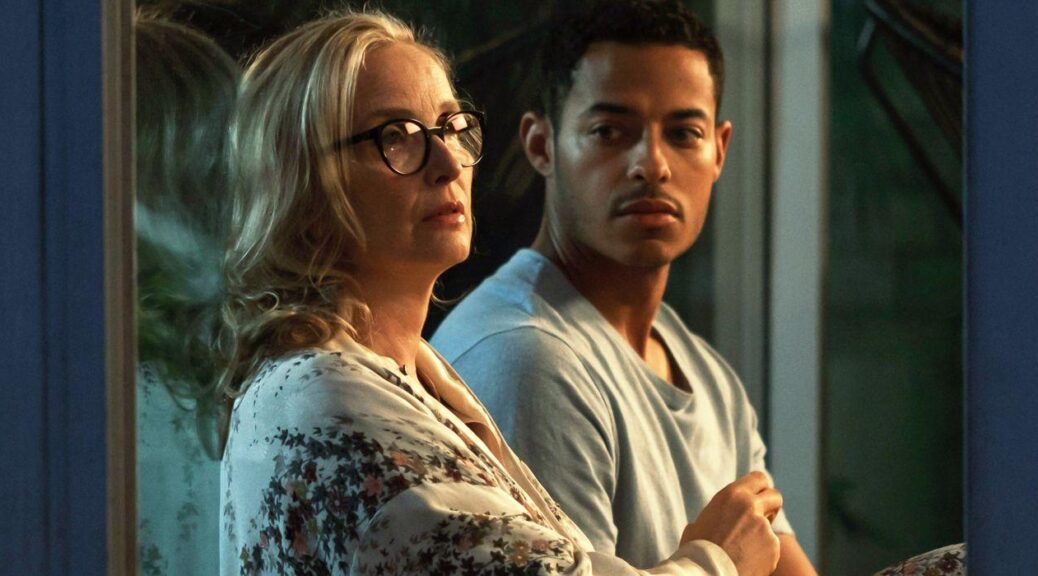
Her stellar cast helps. Richard E. Grant plays renowned writer J.M. Sinclair, whose son Bertie (Stephen McMillan) is in the market for a tutor to help prepare him for Oxford’s entrance exams. Aspiring writer and massive Sinclair fan Liam (Daryl McCormack, Good Luck to You, Leo Grande) gets the job.
Julie Delpy also stars as family matriarch Hélène, whose aloof demeanor strikes the perfect chord against Grant’s vibrance. It would be wrong to say Grant chews scenery, but you certainly can’t look away from him. A charming narcissist, viciously insecure and competitive, his Sinclair is a big presence, which allows the balance of characters to quietly observe, connive even.
McCormack, who was so impressive in the two-person revelation of Leo Grande, delivers another introspective and surprising performance. At times Liam seems to mirror Sinclair’s insecurity and artist’s fragility, but this is not that story.
The conclusion feels a little tidy, but the intricate ballet of character study and mystery that precedes it is so tight you’ll forgive the minor misstep.
The past and present look a little too similar in writer/director Georgia Oakley’s quietly profound drama, Blue Jean.
This is true, regardless of the spot-on period detail. Jean (Rosey McEwen) teaches high school PE in Thatcher-era London. Protests over the conservative party’s push to enshrine anti-LGBTQ+ laws echo from radio stations and TV sets in the faculty lounge, greeted with reactions from colleagues that confirm Jean’s instinct to stay closeted.
McEwen’s riveting performance is almost entirely internal. A gesture, a breath, a blink holds meaning. And tears – forget it. Jean is too tightly wound, trying so hard to disappear, to draw no attention to herself so she can slip through her days unnoticed. But why did she get into teaching in the first place?
Without a hint of a heavy hand, Oakley brings us around to that question. She didn’t do it because she didn’t want to leave an impression. No one chooses to spend their days surrounded by adolescents, of all things, if they don’t want to offer some kind of value, provide some kind of guidance toward adulthood.
Jean doesn’t want to be a hero, but there comes a moment when she has to reckon with whether or not she’s willing to be a villain.
McEwen’s isn’t the only impressive performance. A vibrant and endlessly lovable Kerry Hayes makes love interest Viv a buoyant but levelheaded surprise. Young Lucy Halliday is raw vulnerability as Lois, balanced beautifully by the layered, roiling emotion of Lydia Page’s Siobhan.
It’s stunning that this is Oakley’s feature debut. The patient pacing pays off with a fully earned climax and not one note rings false. Every moment aches of heartbreak, but that only makes the pure joy of the final act that much more beautiful. Like the best queer cinema, Blue Jean makes the political personal. But even in the most oppressive climate, it is freedom.
How is this year half over?! Well, whether we want to believe it or not, it is. That means a look back at the movies that most impressed us over the course of the first six months. Here, in alphabetical order, are our favorites.
Air
If you still need proof that Ben Affleck is a damn fine director, you’ll find it, right down to how he frames the multiple telephone conversations. But the real surprise here is the script. In a truly sparkling debut, writer Alex Convery brings history to life with an assured commitment to character.
And much like his success with the Oscar-winning Argo, Affleck proves adept at a pace and structure that wrings tension from an outcome we already know. In fact, he goes one better this time, inserting archival footage that actually reminds us of how this all turned out, before leaving Mrs. Jordan’s final ultimatum hanging in the air like a levitating slam from Michael.
Asteroid City
As is so often the case, director Wes Anderson, writing again with Roman Coppola, painstakingly creates a world – colorful, peculiar, emotionally tight lipped – brimming with characters (equally colorful, peculiar and emotionally tight-lipped). Brimming. About 50 speaking characters stand or sit precisely on their mark, perfectly framed, each one doing their all to keep chaos at bay.
The wordplay is succinct and witty per usual, dancing through themes of science, art, and Cold War paranoia. But while Anderson’s last film, The French Dispatch, left its procession of indelibly offbeat characters to fend for themselves, this time they’re connected with the sterile humanity that buoys the best of his work.
Blackberry
So, a voice on the line says, “You have a collect call from ‘What the f%& is happening’!”
That’s not really the caller’s name.
He’s actually Jim Balsillie (a terrific Glenn Howerton), co-CEO of BlackBerry Limited, and he’s having yet another temper tantrum. The pairing of Balsillie’s bare-knuckled business sense with the tech genius of other CEO Mike Lazaridis (Jay Baruchel, perfectly awkward) made the company an early leader in the cell phone game, but things have started to unravel. Fast.
The colliding of worlds is engaging enough, but the delightfully sharp humor and first-rate ensemble (also including Michael Ironside) turn these based on true events into a rollicking, can’t-look-away slice of history.
John Wick: Chapter 4
Chapter 4 is not just more of what makes the series memorable, it’s better: better action, better cinematography, better fight choreography, better framing and shot selection. Sandwiched between inspired carnage are brief moments of exposition set within sumptuous visions of luxury and decadence. This movie is absolutely gorgeous.
One of the reasons each episode of this franchise surpasses the last is that the franchise is not exactly about John Wick. It’s a love letter to a canon, a song about the entire history of onscreen assassins and their honorable, meticulous action. Genre legends arrive and we accept a backstory that isn’t detailed or necessary because the actors carry their cinematic history with them, and that’s backstory enough.
It’s hard to believe it took this many sequels to get us to John Wick v Donnie Yen, but it was worth the wait.
Linoleum
If you haven’t gotten to know filmmaker Colin West, it’s high time you correct that. The writer/director follows up last year’s surreal Christmas haunting Double Walker with a beautiful look at living a fantastic life.
The effortlessly affable Jim Gaffigan plays Cameron, an astronomer in suburban Dayton, Ohio hitting a very rocky path in his middle age. The kiddie show about science that he hosts is failing. Maybe his marriage is, too. New neighbors, a mysterious woman, and increasingly bizarre events have got him wondering. What does it all mean?
Return to Seoul
In Return to Seoul (Retour à Séoul), a trip “home” becomes a catalyst for one woman’s search for identity, as director and co-writer Davy Chou crafts a relentlessly engrossing study of character and culture.
In her screen debut, Park Ji-min is simply a revelation. Her experience as a visual artist clearly assists Park in realizing how to challenge the camera in a transfixing manner that implores us not to give up on her character. Her Freddie is carrying a soul-deep wound and pushes people away with a sometimes casual cruelty, but Park always grounds her with humanity and restraint.
Freddie begins to embody the typhoon that pushed her toward this journey of self, and Return to Seoul becomes an always defiant, sometimes bristling march to emotional release. And when that release comes, it is a rich and moving reward for a filmmaker, a performer, and all who choose to follow.
Showing Up
Visual poet of the day-to-day Kelly Reichardt returns to screens with a look at art as well as craft in her dramedy, Showing Up.
Michelle Williams is characteristically amazing, her performance as much a piece of physical acting as verbal. You know Lizzy by looking at her, at the way she stands, the way she responds to requests for coffee or work, the way she reacts to compliments about her work, the way she sighs. Williams’s performance is as much in what she does not say as what she does, and the honesty in that performance generates most of the film’s comic moments.
Chau knocks it out of the park yet again, and like Williams, she presents the character of Jo as much in her physical action as in her dialog. The chemistry between the two is truly amazing, simultaneously combative and accepting, or maybe just resigned to each other.
Like Nicole Holofcener and Claire Denis, Reichardt invests her attention in the small moments rather than delivering a tidy, obvious structure. The result feels messy, like life, with lengths of anxiety and unease punctuated by small triumphs.
Sisu
Is there anything in all the world more satisfying than watching Nazis die? Perhaps not. Jalmari Helander, the genius behind 2010’s exceptional holiday horror Rare Exports, squeezes a lovechild from Leone and Peckinpah by way of Tarantino (natch). The result, Sisu, a kind of WWII-era Scandinavian John Wick.
Helander’s confident vision meshes majestically with the cinematography of Kjell Lagerroos, capturing the lonesome beauty of Lapland in one minute, the next minute bursting with the frenetic energy and viscera of action. The stunt choreography and editing in the dizzying array of carnage-laden set pieces are breathtaking. Knives, guns, fisticuffs, tank fire, regular fire, land mines, a hanging, airplanes – a seemingly endless string of magnificently crafted violent action keeps the pace breathless.
Clocking in at just 91 minutes, Sisu is perfectly lean, relentlessly mean, and consistently satisfying at every blood-soaked turn.
Spider-Man: Across the Spider-Verse
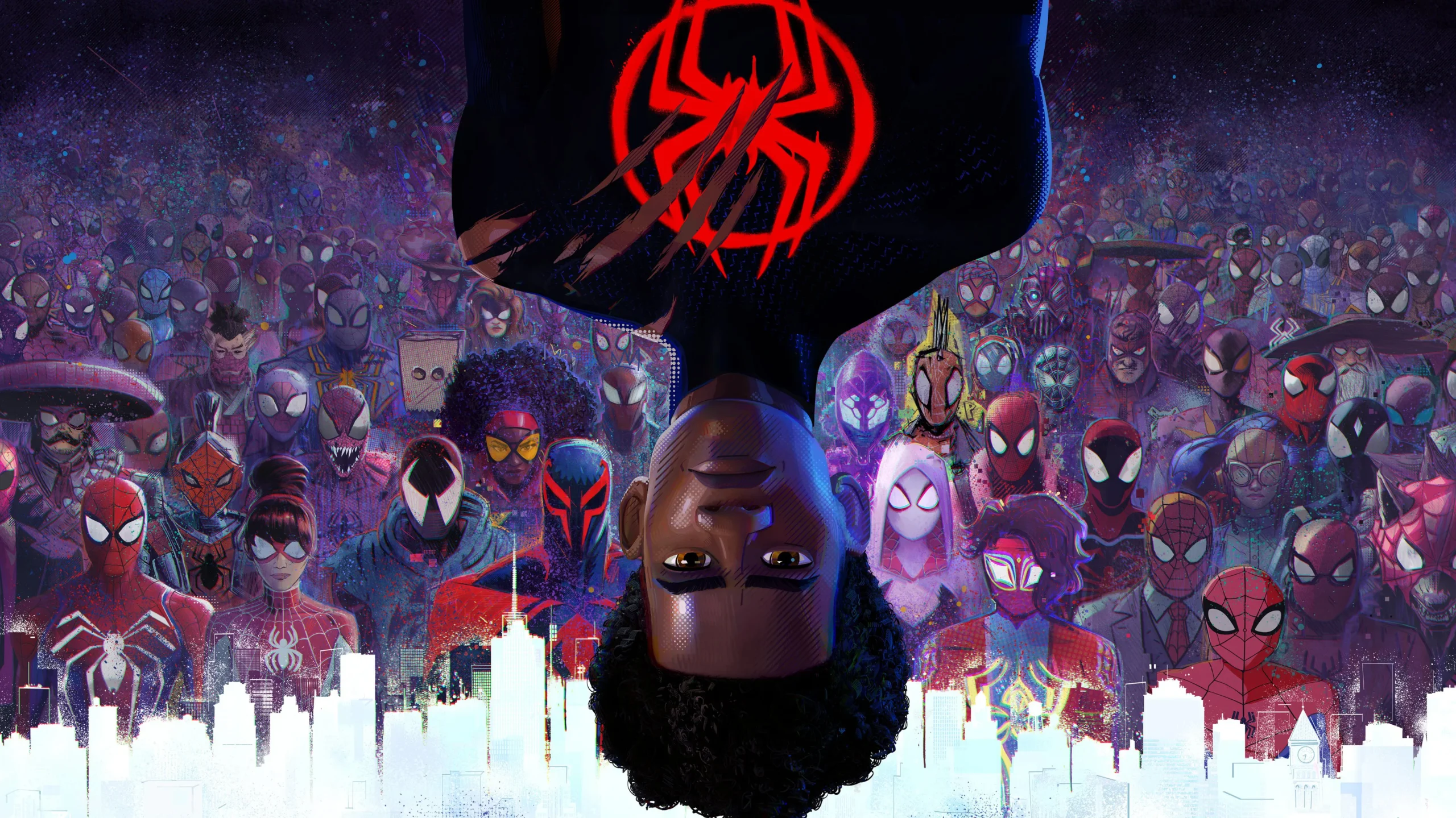
A reminder that multiverse films can, indeed, be made well, this story is wild but never illogical, delivering a heady balance of quantum physics, Jungian psychology and pop culture homages while rarely feeling like a self-congratulatory explosion of capitalism. Heart strings are tugged, and it helps if you’ve seen the previous installment. (If you haven’t, that’s on you, man. Rectify that situation immediately.)
A star studded voice cast shines, but that wattage is almost outshone by the animation. Every conceivable style, melding one scene to the next, bringing conflict, love and heroism to startling, vivid, utterly gorgeous life.
If there is a drawback (and judging the reaction of some of the youngsters in my screening, there may be), it’s that Across the Spider-Verse is a cliffhanger. If you’re cool with an amazing second act in a three-story arc (The Empire Strikes Back, The Two Towers), you’ll probably be OK with it. Maybe warn your kids, but don’t let it dissuade you from taking in this animated glory on the biggest screen you can find.
You Hurt My Feelings
One of filmmaker Nicole Holofcener’s great talents is acknowledging within a film that there is no reason to feel for her characters, and then making you feel for the characters. She’s a master of the relatable if tedious angst of the privileged. In her hands, these primarily insignificant tensions are humanized and often hilarious.
Julia Louis-Dreyfus, who was so magnificently flawed and empathetic in Holofcener’s 2013 film Enough Said, stars as Beth, a novelist. Well, she wants to be a novelist, but her memoir only did OK and now her agent doesn’t seem that thrilled with her first ever novel. Maybe it sucks?
No, supportive-to-a-fault husband and psychologist Don (Tobias Menzies) assures her. But secretly, honestly, maybe that’s not how he feels.
Thanks to these two excellent performances the filmmaker delivers her finest moments, creating a lived-in world, a true microcosm that pokes fun at our insecurities and the little white lies that keep us happy.
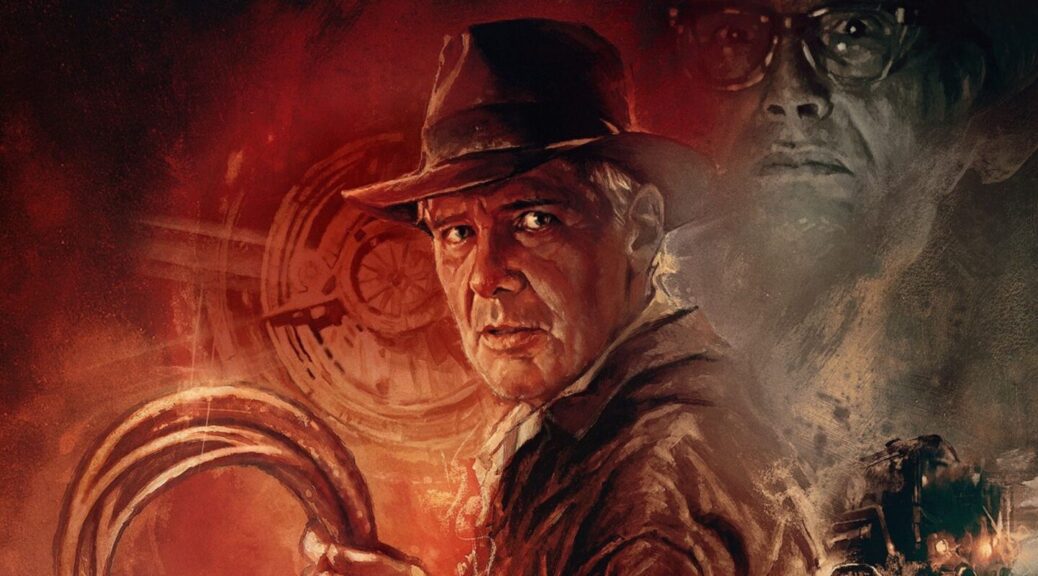
Should they have stopped after Last Crusade? Probably.
But is Dial of Destiny a more worthy sendoff for the iconic Indiana Jones than 2008’s Kingdom of the Crystal Skull? Most definitely.
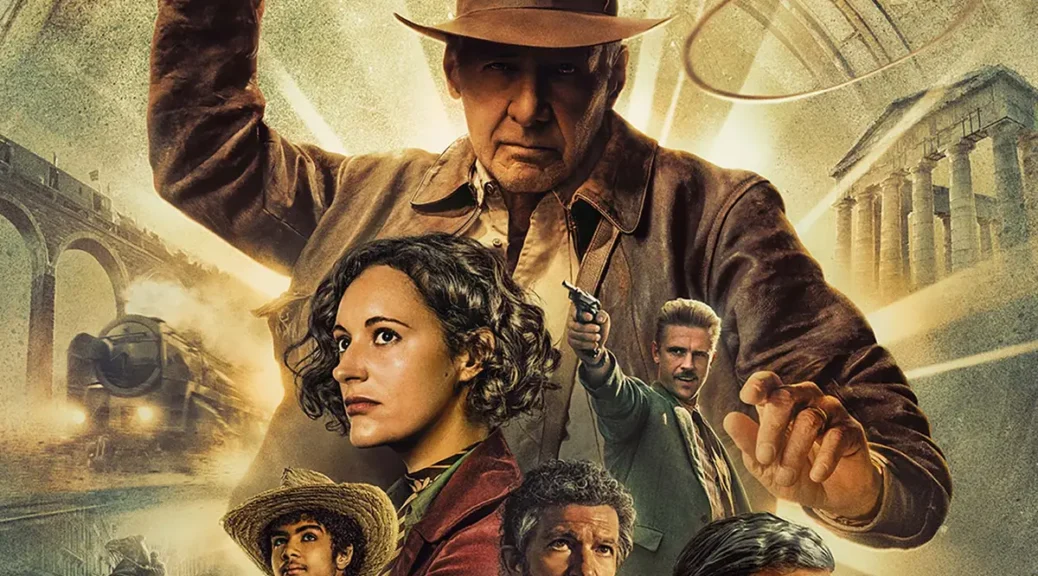
Director James Mangold takes the whip from Spielberg and wastes no time reminding us why we have loved this character for decades. Impressively staged action and that familiar theme song combine for a thrilling 20-minute opening sequence set back amid Indy’s heyday, with the unusual combo of Harrison Ford’s de-aged face (pretty nifty) and 80 year-old voice (craggy) fighting to recover the blade that drew Christ’s blood.
Fast forward to the late 1960s, and Dr. Jones is ready for retirement when his past comes calling with a tempting opportunity. Indy’s goddaughter Helena Shaw (Phoebe Waller-Bridge, bringing some welcome zest), whose father was Indy’s old partner Basil Shaw (Toby Jones), shows up with a tale about finally recovering the artifact that neither Basil nor Indy could ever pin down.
It is the Antikythera, a hand-powered orrery designed by Greek astronomer Archimedes that was said to produce “fissures in time.” Archimedes hid the two halves of the dial from the Ancient Romans, and now Indy can help Helena find the dial before it falls into the menacing hands of the mysterious Dr. Schmidt (Mads Mikkelsen).
The script, co-written by Jez and John-Henry Butterworth, David Koepp and Mangold, allows our character to feel his age – the wisdom of his accumulated experiences and the losses, the absences, they’ve brought him. It also allows a bit of silliness to creep in before we’re done, which becomes the one last hurdle that Indy must overcome.
As a director, Mangold comes to the franchise with a terrific resume that includes Logan, Ford v Ferarri, Walk the Line and 3:10 to Yuma. But while he’s able to fill many action-packed set pieces with craftmanship and flair, Spielberg’s unmistakable layer of childlike wonder is noticeably missing.
But so is Spielberg, so that’s gonna happen.
What Mangold and his writing team can do is find a comfortable groove that, like our hero, leans more toward respecting the past than plundering its remnants.
Ford is a big reason for that. He steps back into that fedora not like he’s never left it, which is the point. He meets his character where he actually is – old, alone, grieving. Mangold’s Logan also grappled with the melancholy of our waning years (and beautifully). Ford makes the most of this opportunity to see the character’s arc through, right into a warm and satisfying sunset.
How can it be that we’re more than 250 episodes in and we’ve never done a podcast on Dario Argento? Well, we’d like to thank the Wexner Center for the Arts for inspiring this episode. We will introduce one of the films in their upcoming Dario Argento series, as will our podcast guest Scott Woods. But first, we’ll get together and hash out our personal favorites.
5. Inferno (1980)
The second of Argento’s Mother Trilogy, Inferno orbits Mater Tenebrarum, the Mother of Darkness. She lives in a foul smelling but phantasmagorically constructed building in New York City, where Rose Elliott believes something diabolical is afoot.
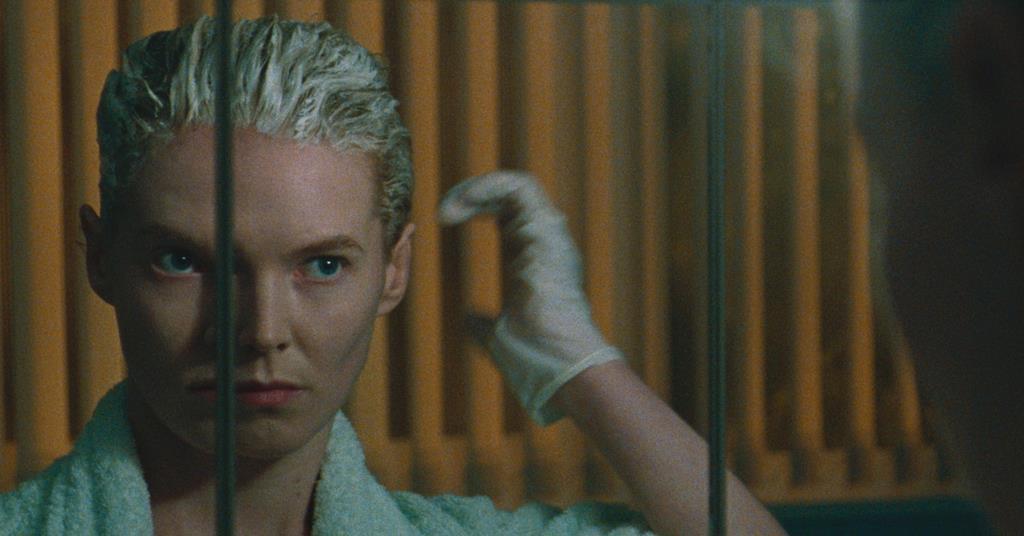
A sequel to the filmmaker’s most lauded work, Suspiria, Inferno mirrors the stagey quality of the first in the trilogy. The architecture, the color scheme, the dizzying nature of the building itself give the film the surreal quality of a spell. This one takes on a neon soaked nighttime aesthetic that’s hypnotic. The opening underwater sequence is among Argento’s best set pieces.
Per usual, the Argento’s plot takes a backseat to the experience. A couple of these murders are especially grisly – appropriate, given that Mater Tenebrarum is the cruelest of the sisters.
4. Cat o’Nine Tails (1971)
Argento’s second feature delivers perhaps the most strictly giallo of his films, in that (before Argento reinvented the genre) a giallo is a mystery thriller. In this one, a blind former newspaperman (Carl Malden) teams up with a sighted but far less savvy newspaperman to figure out why so many murders are connected to the Terzi Institute.
Items that will become standards for the filmmaker: don’t trust what you see, science is a fun underpinning to a mystery no matter how ludicrous that science is, Hitchcock is cool – plus, the extreme close up eye balls and murderer POV that would become trademarks.
Surprises that he drops after this movie? Not only does one character deliver an insightful piece of feminism – “Whore equals liar equals murderer, perfect Italian logic!” – but the film actually murders more men than women.
Its color palette is a bit of a let down and it drags in parts, but it delivers a number of excellent set pieces and it’s really fun to see Carl Malden in an Italian horror movie.
3. The Bird with the Crystal Plumage (1970)
Argento’s first and arguably one of his best opens with a bang. Frustrated writer Sam Dalmas (Tony Musante) is killing time before he finally returns home to the States from Italy. But he witnesses an attack through the massive glass storefront of an art gallery.
It’s such a gorgeous frame for violence, and a perfect introduction to the maestro of sumptuous slaughter. There’s childhood trauma (the sort that turns a person toward mania), which will go on to become a go-to in the filmmaker’s arsenal. But what an introduction to his style!
2. Suspiria (1977)
American ballerina Suzy Bannion (Jessica Harper) moves to Germany to join a dance academy, but the other dancers are catty and the school staff are freaks. Plus, women keep disappearing and dying.
As Suzy undertakes an investigation of sorts, she discovers that the school is a front for a coven of witches. Suspiria is a twisted fairy tale of sorts, Argento saturating every image with detail and deep colors, oversized arches and doorways that dwarf the actors. Even the bizarre dubbing Argento favored in his earlier films works beautifully to feed the film’s effectively surreal quality.
It’s a gorgeous nightmare, bloody and grotesque but disturbingly appealing both visually and aurally (thanks to the second scoring effort by Goblin).
1. Deep Red (1975)
Maybe not the most traditional choice for Argento’s best, but it’s such a powerful step in his overall collection. He made three straight up gialli – The Bird with the Crystal Plumage, Cat o’Nine Tails, and Four Flies on Grey Velvet – before taking a break from the genre with a dark historical comedy.
And then, Deep Red – a giallo, to be sure, but one that predicts the entirely surreal, aesthetic-over-plot supernatural thrillers he’d make next. Deep Red is gorgeous and bizarre, full of red herrings, childhood trauma, traumatizing children, tormented lizards as well as a number of themes he’s hit on since his first film.
David Hemmings (Marcus Daly) saw a murder, but he can’t be sure what exactly he saw. He’s sure if he can just remember it clearly, it’ll all make sense. This is a preoccupation of most of Argento’s films, but he’s never more curious than he is here. And the bloody, almost exquisite murders are more excessive and interesting here than in anything else he made.
The Melt Goes On Forever: The Art & Times of David Hammons
by Hope Madden
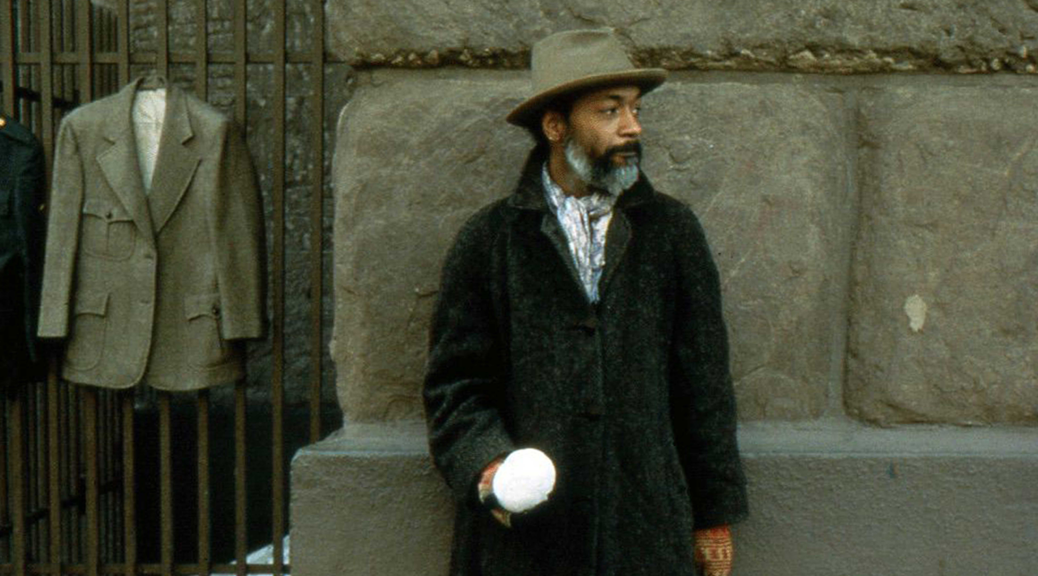
In 1983, a woman buys a snowball from a street vendor. He has many snowballs laid out in a beautiful pattern on a blanket on a wintery New York street, surrounded by other vendors. She thinks she’s helping a homeless man but keeps the snowball in her parents’ freezer in Queens for months before letting her mom toss it.
Decades later she realizes the seller was David Hammons, an American artist who defied boundaries, mocked socially accepted practice, and became one of the most influential voices in art.
I bet she wishes she’d kept the snowball.
Documentarians Harold Crooks and Judd Tully share countless similar anecdotes as they unveil, layer upon layer, something of what Hammons meant to an art world desperately in need of him.
“The more he tells the art world to go fuck itself, the more they want him,” says poet Steve Cannon, whose poem “Rousing the Rubble” offers worthy narration to sections of the film. An ode to Hammons, the poem announces the artist’s many phases, as does the documentary:
Booomboxes, into bebop, hip hop, scatter shots – lower poles Higher Goals –
into human hair – into Bottle caps into people and their attributes –
Cannon’s interviews, as well as those with art historians, artists, curators and collectors, will have to mainly suffice. Although Hammons himself does appear and speak on a handful of rare occasions, his voice is mainly absent (he prefers not to be interviewed, the doc clarifies).
Those who do talk illuminate the spirit of an artist whose work defies categorization. That work, luckily, we do get to view throughout the film. Provocative, racial, absurd, prescient – the art itself is all of this, and the film points to Hammons’s rejection of the norms of the art world as among his most valuable qualities.
The Melt Goes On Forever celebrates the audacity of Hammons’s curation, the subversive nature of his exhibition and the humor in his reactions and presentations, but is quick to point out that his lasting impact on art in the U.S. and globally is more a product of the intensity and relevance of the work itself.
The Melt Goes On Forever: The Art & Times of David Hammons screens this weekend only at the Wexner Center for the Arts.
Welcome to Asteroid City, a grief comedy that may be the most Wes Anderson-y movie Wes Anderson has ever made. Or, welcome to “Asteroid City” – the stage play from famous writer Conrad Earp (Edward Norton) upon which Asteroid City, the film (TV show?) is based. Actively. Brian Cranston will explain as he, the narrator of “Asteroid City”, deconstructs the meticulous framing device Anderson crafts to keep us just one layer further from chaos.
“We are all just characters in a play that we don’t understand.”
As is so often the case, writer/director Anderson painstakingly creates a world – colorful, peculiar, emotionally tight lipped – brimming with characters (equally colorful, peculiar and emotionally tight-lipped). Brimming. About 50 speaking characters stand or sit precisely on their mark, perfectly framed, each one doing their all to keep chaos at bay.
Like Augie Steenbeck (Jason Schwartzman), a widowed war photographer stranded with his teenaged son (scene-stealer Jake Ryan from Eighth Grade) and three daughters in the clean desert nowhereville of Asteroid City, where a “stargazing event” will soon commence. Cinematographer Robert D. Yeoman’s 360-degree swivel shows all you need to see: diner, roadway cabins, onramp to nowhere, and the garage where the town mechanic (Matt Dillon) has found that Augie’s wagon is now deceased.
Augie’s father-in-law Stanley Zak (Tom Hanks, in the usual Bill Murray role) fires ups his Cadillac and arrives for a rescue, only to find no one can leave Asteroid City on account of the alien.
Yep, an alien! He just came down sure as you please and made off with the city’s prized meteorite! Everybody saw it – including famous actress Midge Campbell (Scarlett Johansson) and all the visiting school kids in Miss June’s (Maya Hawke) class!
So the whole city’s on lockdown, while General Gibson (Jeffery Wright) and Dr. Hickenlooper (Tilda Swinton) assess the situation and Augie realizes he just may have snapped the only photo of an honest to goodness alien.
All the unique and wonderful trademarks of Anderson’s craftsmanship are on display. Both the city itself, and the surrounding stage area where the play is performed, are given distinct aesthetics that benefit equally from Anderson’s commitment to symmetry, palette and depth-of-field.
The wordplay is succinct and witty per usual, dancing through themes of science, art, and Cold War paranoia. But while Anderson’s last film, The French Dispatch, left its procession of indelibly offbeat characters to fend for themselves, this time they’re connected with the sterile humanity that buoys the best of his work.
“You can’t wake up if you don’t fall asleep!”
You’ll hear that several times in Asteroid City, enough to know that Anderson hopes we’re paying attention. Leave yourself open – to what art, and science, is saying – and your world might seem a little more colorful.