A somber experiment in atmospheric horror, Josiah Allen and Indianna Bell’s feature You’ll Never Find Me waits out a storm with a couple of curious characters.
Patrick (Brendan Rock) sits quietly if unhappily in the kitchen of his trailer. It’s late—after 2 in the morning—and he seems a tad morose. When a persistent knock on his door punctures the noise of the storm, he ignores it as long as he can.
Eventually, he admits a stranger (Jordan Cowan), barefoot, drenched and shivering. She was caught in the storm and just needs a ride to town.
At this time of night?
What’s really going on here?
The film feels lost in a dream—the lighting, the silences, the pair’s lonesome and broken expressions. The co-directors linger on the actors’ faces, allowing the paranoia to shift so you’re never fully sure of either character.
Everybody in You’ll Never Find Me moves slowly. Everything moves slowly. You don’t know who to trust because neither of these two seems to trust the other, and you can’t judge either of them for it. Surely, they’re not both up to something nefarious.
Maxx Corkindale’s sometimes roving camera reveals something creepy in the trailer’s tidy, tightly enclosed ordinariness. The sound design is hushed and foreboding, blending with Darren Lim’s score to work the nerves. The result allows the film to suggest something supernatural, although all other signs point to very human crimes.
A slow boil like this requires committed, compelling performances and both Cowan and Rock deliver. Eventually the gender politics on display unnerve, and what’s what the film is more than truly scary. It’s unnerving.
The third act doesn’t entirely deliver on the promise made earlier in the film, but Bell and Allen have crafted an unsettling and spooky feast for the senses.
Awash in the stink and the glory of new passion, Rose Glass’s Love Lies Bleeding treads some familiar roadways but leaves an impression solely its own.
Lou (Kristen Stewart) and her mullet work a shitty job in a low rent gym in a nowhere town, looking with disdain toward essentially everyone. Until Jackie (Katy O’Brian) blows into town from wherever and Lou can’t take her eyes off her.
But every stranger has a backstory, and that’s the rub of romance movies, isn’t it? Everybody’s fresh and clean. Not Lou and not Jackie, but for now, it’s all good. Jackie wants to go to Vegas and compete in body building finals. Lou wants Jackie.
Glass blends and smears cinematic gender identifiers, particularly those of noir and thriller, concocting an intoxicating new image of sexual awakening and empowerment. She routinely upends images of power and masculinity, subverting expectations and associations and fetishizing the human body anew.
For Lou and Jackie, love is a wild and dangerous drug, heady and unpredictable. The same sentence describes Glass’s film. She likes to make you uncomfortable, and as soon as you acclimate to one type of confrontation, she’s on to the next. But her style has energy to burn, and her leads are just as explosive.
The supporting cast—Jena Malone (obviously destined to play Stewart’s sister at some point), Dave Franco (with an even more impressive mullet), and the great Ed Harris—command attention with dimensional, damaged and damaging performances.
Glass is not out to break new ground, plot wise. The story is rock solid but delivers essentially a smartly crafted hillbilly noir thriller—a la Red Rock West, Blood Simple, Killer Joe— but with few truly surprising plot turns. The execution, however, is something you’ve never witnessed.
Anyone who’s seen Glass’s magnificent 2021 horror Saint Maudmay be better prepared for the third act than newcomers to the filmmaker’s vision, but it’s a wild and unexpected turn regardless. It’s quite something—bold, original, and wryly funny in the most unexpected moments. There’s heartbreak and horror, sex and revenge, a little magic and a lot of steroids. Glass’s juice has the goods.
Cynical, satirical, uncomfortable and likely to bristle viewers no matter where they fall on the political spectrum, Jessica Hausner’s latest, Club Zero, takes aim at, well, a lot of things.
A wickedly brilliant Mia Wasikowska is Ms. Novak, an expensive boarding school’s newest faculty member. Chosen by the parents’ board, Ms. Novak has been brought on to teach conscious eating. Being single and childless, she’s also available for those hard-to-fill weekend duties.
The film’s aesthetic—essentially, every color of vomit—draws attention immediately while Markus Binder’s audacious score delivers echoes of commodified Eastern music. The main target of Hausner’s film, co-written with longtime collaborator Géraldine Bajard, is the privileged, goopy wellness culture. It’s an easy target, but it’s not the only one the filmmaker hits.
Faith in anything other than science—cliquish privilege, capitalism, consumerism and nearly every manner of parenting—is sent up with sometimes unpleasant but never dull cynicism.
Hausner’s framing is gorgeous, and it keeps views at arm’s length from the action. Students are convinced, coddled, and cajoled by Ms. Novak into eating less and less, and into distancing themselves from anyone who wouldn’t understand the righteousness of their calling. In Club Zero, luxury and loneliness meet a culture of competition to create an environment ripe for radicalization.
The absurdity of the tone keeps this story‑— vulnerable young people succumbing to the attention of a personality that makes them feel special—from feeling tragic. It should, really. But Hausner doesn’t pity the children of privilege much more than their parents.
And while wellness culture is an easy mark, the final image—a clear callback to Da Vinci’s The Last Supper—reinforces the idea that blind, scienceless faith causes more harm than good.
Fear of infection, of contamination, of losing your personhood, of physical violation—all of it coalesces in often gooey fashion in the parasite movie. Metaphors abound and slugs take center stage as some of the greatest directors of the genre tell the tale of hosts and unwanted guests. Here are our favorites.
Shivers (1975)
In an upscale Montreal high rise, an epidemic is breaking out. A scientist has created an aphrodisiac in the form of a big, nasty slug. That slug, though, spreads wantonness throughout the high rise and threatens to overrun the city with its lusty ways.
Shivers takes a zombie concept and uses it to pervert expectations. (See what we did there?) Cronenberg’s his first feature length horror predicts so many of the films to come. The film obsesses over human sexuality, social mores, the physical form, physical violation and infestation, medical science, conspiracy, and free will.
Splinter (2008)
Road kill, a carjacking, an abandoned gas station, some quills – it doesn’t take much for first time feature filmmaker and longtime visual effects master Toby Wilkins to get under your skin. One cute couple just kind of wants to camp in Oklahoma’s ancient forest (which can never be a good idea, really). Too bad a couple of ne’er-do-wells needs their car. Then a flat (what was that – a porcupine? No!!) sends them to that creepy gas station, and all hell breaks loose.
Contamination gymnastics call to mind the great John Carpenter flick The Thing, but Splinter is its own animal. Characters have depth and arcs, the danger is palpable, the kills pretty amazing, and the overall aesthetic of that old highway gives everything a desperately lonesome quality where you believe anything could happen and no rescue is in sight.
Slither (2006)
Writer/director James Gunn took the best parts of B-movie Night of the Creeps and Cronenberg’s They Came from Within, mashing the pieces into the exquisitely funny, gross and terrifying Slither.
Cutie pie Starla (Elizabeth Banks) is having some marital problems. Her husband Grant (the great Michael Rooker) is at the epicenter of an alien invasion. Smalltown sheriff Bill Pardy (every nerd girl’s imaginary boyfriend Nathan Fillion) tries to set things straight as a giant mucous ball, a balloonlike womb-woman, a squid monster, projectile vomit, zombies, and loads and loads of slugs keep the action really hopping.
Consistently funny, cleverly written, well-paced, tense and scary and gross—Slither has it all. Watch it. Do it!
The Thing (1982)
John Carpenter’s remake of the 1951 SciFi flick The Thing from Another World is both reverent and barrier-breaking, limiting the original’s Cold War paranoia, and concocting a thoroughly spectacular tale of icy isolation, contamination, and mutation.
A beard-tastic cast portrays a team of scientists on expedition in the Arctic who take in a dog. The dog is not a dog, though. Not really. And soon, in an isolated wasteland with barely enough interior room to hold all the facial hair, folks are getting jumpy because there’s no knowing who’s not really himself anymore.
This is an amped up body snatcher movie benefitting from some of Carpenter’s most cinema-fluent and crafty direction: wide shots when we need to see the vastness of the unruly wilds; tight shots to remind us of the close quarters with parasitic death inside.
Alien (1979)
After a vagina-hand-sucker-monster attaches itself to your face, it gestates inside you, then tears through your innards. Then it grows exponentially, hides a second set of teeth, and bleeds acid. How much cooler could this possibly be?
Much ado has been made, rightfully so, of the John Hurt Chest Explosion (we loved their early work, before they went commercial). But Ridley Scott’s lingering camera leaves unsettling impressions in far simpler ways, starting with the shot of all those eggs.
Animated sequels often work out. Every time you think “Do we really need another Toy Story?” you get one more cartoon masterpiece. Each How to Train Your Dragon movie is a stunner. And Puss in Boots: The Last Wish was not only better than any previous Puss in Boots film, it was better than any Shrek film.
So why not a fourth Kung Fu Panda? Literally no one expected the 2008 original to be a charming, lovely, thoroughly entertaining Oscar nominee. A couple more episodes in and maybe directors Mike Mitchell and Stephanie Stine have the power to entirely reimagine this franchise, find a universal truth and existential meaning that allows this installment to transcend its late-stage sequel position, a la Toy Story 3. Or Toy Story 4.
No, but it’s cute.
Po (Jack Black, lovable even if it’s only his voice) has been named the spiritual leader of the Valley of Peace, which means he must find his successor as Dragon Warrior. But he doesn’t want to. He finally found something he’s good at—kicking butt—and he’s kind of famous for it. And maybe he just fears change.
But all this successor stuff will have to wait. The Chameleon (Viola F. Davis) has a nefarious plan that needs thwarting and Po’s off to handle the situation with the help of this little thieving fox (Awkwafina, who may be voicing every animated film to come out, but she’s great at it).
Master Shifu (Dustin Hoffman) is disappointed. Naturally.
Hoffman is one of only a handful of returning voice talent—Angelina Jolie, Seth Rogan, Jackie Chan, Lucy Liu and David Cross are noticeably absent. But Ian McShane returns, and that’s a voice we can all listen to all day long, villainous or not. Plus, there’s more room for new characters.
Davis is characteristically wonderful as the evildoer, but it’s really the budding relationship between frenemies Po and Zhen (Awkwafina) that compels interest. Not every actor can carry off animation, but both Black and Awkwafina shine.
The animation is good looking enough. It’s not gorgeous, but it’s nice. The action is fun, the characters are funny enough, and the lessons are solid. And there are these three bloodthirsty little bunnies, and I am a fan.
Kung Fu Panda 4 breaks no new ground, transcends no limitations, but it entertains throughout and delivers a pleasant bit of family-friendly fun. Plus reimagined Ozzy and Britney are a delight.
I was looking forward to American Dreamer, the comedy/drama that pairs Peter Dinklage and Shirley MacLaine as odd couple tenant/homeowner in a comment on the American dream.
And then I found out Matt Dillon and Danny Glover are in it, which appealed as well.
And then I wondered what on earth compelled any of the four of them to take this gig.
Paul Dektor’s film follows Dr. Phil Loder (Dinklage), an adjunct professor of social economics who is very down on his luck. Not sure how he got here? No worries, because a bartender will explain all of it to Loder, who one assumes must already know his own backstory. But this is how bad writing shows itself. And it won’t be the last time.
Loder dreams of home ownership, but he lives in a crappy apartment, drives a 30-year-old Saab, and makes (the bartender explains) less than 50k a year. But then he finds the deal of a lifetime in his price range. He just has to pay now, hold out in the stinky servant’s quarters and wait until the current owner (MacLaine) dies. Then his dream house is all his!
That’s convoluted and contrived enough, but wait, there’s more!
Mainly there’s a lot of sloppy, needless plot devices that do not entertain but do disjoint the overall film. One of these writers (Theodore Melfi) has an Oscar nomination for Hidden Figures. Go figure.
Not that the direction’s any better. Dektor can’t decide if American Dreamer is a slapstick comedy, a sex comedy, or a social diatribe aimed at capitalism. Choosing none of these, he winds up creating an inarticulate mishmash.
Everything that happens outside the relationship between Dinklage and MacLaine feels extraneous, but the focus is almost never on the two leads. Worse still, the actual relationship—what we see of it—is silly and superficial. Because of this, Loder’s arc is unearned.
It’s great to see Dinklage in a lead and in a comedy. Too bad it’s this one.
MacLaine is even more ill-used, and Dillon’s realtor character is unfathomable. You spend the whole time waiting for some revelation, like that he and Loder are boyhood friends or brothers—anything to explain their contemptuous yet close bond.
This year’s group of nominees is stacked. Category after category, you find multiple films, filmmakers and performers all worthy of some hardware. But who will win?
Best picture
“American Fiction”
“Anatomy of a Fall”
“Barbie”
“The Holdovers”
“Killers of the Flower Moon”
“Maestro”
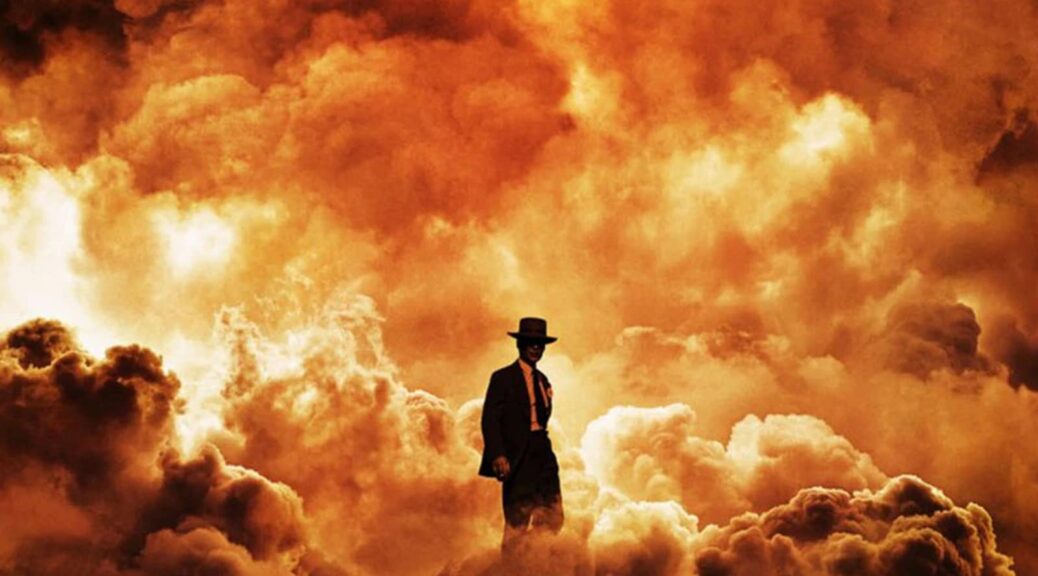
“Oppenheimer”
“Past Lives”
“Poor Things”
“The Zone of Interest”
Should win: “Poor Things”Will win: “Oppenheimer”
Best actor
Bradley Cooper, “Maestro”
Colman Domingo, “Rustin”
Paul Giamatti, “The Holdovers”
Cillian Murphy, “Oppenheimer”
Jeffrey Wright, “American Fiction”
Should win: Cillian Murphy Will win: Murphy (Hope) Paul Giamatti (George)
Best actress
Annette Bening, “Nyad”
Lily Gladstone, “Killers of the Flower Moon”
Sandra Hüller, “Anatomy of a Fall”
Carey Mulligan, “Maestro”
Emma Stone, “Poor Things”
Should win: Stone or Gladstone Will win: Gladstone
Best supporting actor
Sterling K. Brown, “American Fiction”
Robert De Niro, “Killers of the Flower Moon”
Robert Downey Jr., “Oppenheimer”
Ryan Gosling, “Barbie”
Mark Ruffalo, “Poor Things”
Should win: Ruffalo Will win: Downey Jr.
Best supporting actress
Emily Blunt, “Oppenheimer”
Danielle Brooks, “The Color Purple”
America Ferrera, “Barbie”
Jodie Foster, “Nyad”
Da’Vine Joy Randolph, “The Holdovers”
Should win/Will win: Randolph
Best director
Jonathan Glazer, “The Zone of Interest”
Yorgos Lanthimos, “Poor Things”
Christopher Nolan, “Oppenheimer”
Martin Scorsese, “Killers of the Flower Moon”
Justine Triet, “Anatomy of a Fall”
Should win: Nolan or Lanthimos Will win: Nolan
International feature film
“Io Capitano,” Italy
“Perfect Days,” Japan
“Society of the Snow,” Spain
“The Teachers’ Lounge,” Germany
“The Zone of Interest,” United Kingdom
Should win/Will win: “The Zone of Interest”
Animated feature film
“The Boy and the Heron”
“Elemental”
“Nimona”
“Robot Dreams”
“Spider-Man: Across the Spider-Verse”
Should win: “The Boy and the Heron” (Hope) “Spider-Man” (George) Will win: The Boy and the Heron” (Hope) “Spider-Man” (George)
Adapted screenplay
“American Fiction”
“Barbie”
“Oppenheimer”
“Poor Things”
“The Zone of Interest”
Should win: “Poor Things” Will win: “American Fiction” (Hope) “Oppenheimer” (George)
Original screenplay
“Anatomy of a Fall”
“The Holdovers”
“Maestro”
“May December”
“Past Lives”
Should win: “Anatomy of a Fall” Will win: “The Holdovers” (Hope) “Anatomy of a Fall’ (George)
Cinematography
“El Conde”
“Killers of the Flower Moon”
“Maestro”
“Oppenheimer”
“Poor Things”
Should win/Will win: “Poor Things”
Animated short film
“Letter to a Pig”
“Ninety-Five Senses”
“Our Uniform”
“Pachyderme”
“War Is Over! Inspired by the Music of John & Yoko”
Should win: “Ninety-Five Senses” Will win: “War Is Over”
Live action short film
“The After”
“Invincible”
“Knight of Fortune”
“Red, White and Blue”
“The Wonderful Story of Henry Sugar”
Should win/Will win: “Henry Sugar“
Documentary short film
“The ABCs of Book Banning”
“The Barber of Little Rock”
“Island in Between”
“The Last Repair Shop”
“Nǎi Nai & Wài Pó”
Should win/Will win: “The Last Repair Shop”
The 96th Academy Awards, hosted by Jimmy Kimmel, will air on ABC on Sunday, March 10, live from the Dolby Theatre at Ovation Hollywood.
Modern horror is littered with fake ghosthunter tales, films about scammers who come face to face with the evil they’re certain doesn’t exist. Kim Seong-sik’s Dr. Cheon and the Lost Talisman begins down a similar path.
Dr. Cheon (Gang Dong-won) leads his assistant/technician In-bae (Lee Dong-hwi) into the garden of a wealthy family whose bitchy teenage daughter they presume is possessed. She is, of course, just teenaged. Dr. Cheon convinces the family that it’s the house, he exorcises the house, tells the family what they want to hear, and all’s well that ends well.
But the truth is, Dr. Cheon is looking for more than the next gullible family to scam.
He finds it when Esom (Yoo-gyeong) dumps a bag of cash on his desk and asks him to follow her to her village, where her sister is possessed. Of course, though, this time the possession is real.
Don’t expect the same old routine of con artists being outed, learning a valuable lesson before bleeding out. Dr. Cheon is ready for this supernatural nemesis.
There’s a frenetic charm to the film’s main action sequence, where the demon leaps from one villager to the next as it chases Doc and Esom through town. Electric blue FX have a delightfully cheesy, throwback feel that balances the handful of gruesome moments.
Though never laugh out loud funny, levity throughout the film keeps it from ever crossing over truly to horror. Gang’s haunted straight man benefits nicely from Lee as a comedic sidekick, and veteran actor Huh Joon-ho menaces laudably as the evil mace, Beom-cheon.
Kim never fully lands on a tone. What begins as a lightweight horror show develops a kind of Saturday morning TV vibe before turning into an action adventure. Think Korean Dr. Jones meets Scooby Doo, or something along those lines. There’s a weird charm to it that might particularly delight those who like their scary movies not too scary.