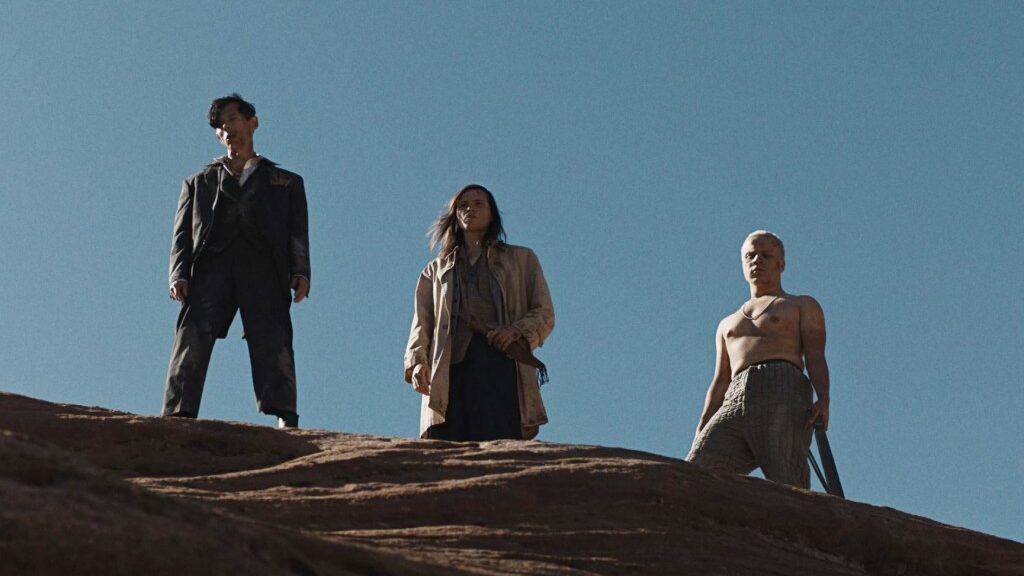
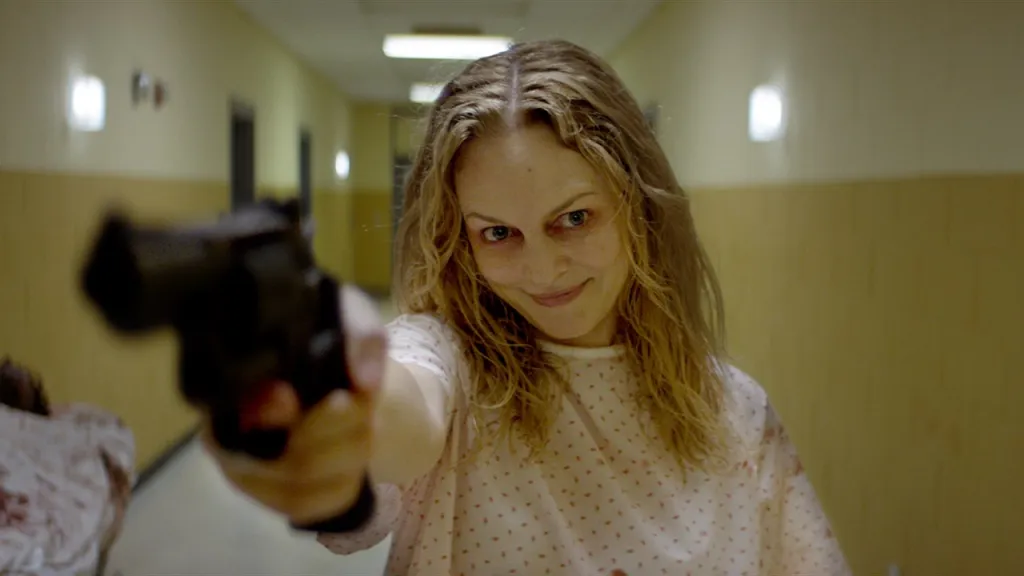
There is something clever underlying directors Alex Henes and Matthew Merenda’s first feature, Mind Body Spirit.
Anya (Sarah J. Bartholomew) is sharing videos of her journey to wellness. She’s just moved cross country into the home her departed grandmother Verasha left her. She never knew her grandmother, but she sees this as an opportunity for a new life.
Her only friend on this side of the country—wellness influencer Kenzi (Madi Bready)—stops by occasionally to check in and collab on videos. But she can’t really get behind Anya’s new direction, taken from a hand-written book left by the deceased and written mostly in Russian.
Mind Body Spirit has a bit more compassion for influencers than most horror films do. Though the tale mines the cultural appropriation and blissful ignorance that is easy to find among influencers—particularly those peddling wellness—the depiction is not entirely one sided.
Bartholomew’s performance is endlessly vulnerable and empathetic, but even rushed and cynical Kenzi gets a nice arc that deepens the impact of the film’s horror. Because naturally, naïve Anya misinterprets the underlying message in the tome her departed grandmother left her.
The directors also write, along with Topher Hendricks, and their script sometimes dances with language, toying with the way mystical turns of phrase can easily be used, depending on inflection, to terrify.
Shot in one location with a total cast of 4 (one of whom appears exclusively via FaceTime), Mind Body Spirit rarely gives evidence of its budget. The found footage approach is sometimes fresh—the ads between video segments are inspired—but like most films of the genre, there is no integrity to the actual footage: who shot it, who edited it, why and how it got posted, etc.
More problematic is the occasional blood gag. Outright horror is included sparingly, but when it is, the unreality of the gag is pretty evident. The filmmakers don’t really tread any new ground, either. They just pull in social media as a slightly askew way to tell the same story you’ve seen a number of times.
Nonetheless, Bartholomew shoulders what is at least 75% one-person-show and does it with enough tenderness that Mind Body Spirit never loses your attention.
Muse and madness, art and commerce duke it out in a slew of films that mine the depths of the artistic nature. We welcome author LCW Allingham, whose dark novella Muse looks at the darker side of art, to join us as we use a little fuzzy math to share our favorite horror movies about artists.
6. Devil’s Candy (2015)
Ethan Embry plays Jesse Hellman, struggling metalhead painter who, with his wife and pre-teen daughter, just bought a bargain of a house out in the Texas sticks. Why so cheap? Amityville shit.
Jesse’s a metalhead and a painter and writer/director Sean Byrne (The Loved Ones) mines the dark artist nature for all its worth in a film that benefits from a rockin soundtrack, and a slew of good performances (shout at the devil to Pruitt Taylor Vince).
A convoluted storyline that mixes supernatural with serial killer is a bit of a drawback. But clocking in at under 90 minutes, Devil’s Candy is a tight little rocker. The lyrics are familiar, but the riffs still kick ass.
5. House of Wax (1953)
An update of the 1933 Mystery of the Wax Museum and precursor to Wax Works (and, of course, the 2005 loose remake), this Vincent Price classic tells a campy fun tale that also resembles a lot of Price’s other films.
An elegant artist turned disfigured madman, Price’s Henry Jarrod creates masterful wax figures of historical horrors. But there’s a secret behind the realistic look!
Yes, you totally know what that secret is, but that diminishes the fun of this film not one tiny bit. Price is fun, Carolyn Jones is a hoot, Charles Bronson’s a wild piece of casting. And the whole bit of insanity boils down to the fact that an artist who wants to earn a living has to sacrifice their integrity.
4. A Bucket of Blood (1959)
Roger Corman’s riff on House of Wax sets this dark comedy in LA’s beanik community of the late Fifties. Dick Miller’s perfect as a dimwitted janitor who accidentally becomes the next big thing by turning a cat, then a police officer, then other people he kills into sculptures.
The more he makes, the more famous he becomes, and the more he rationalizes the murders. Corman’s tone is cynical but fun, working from Charles B. Griffith, who’d also write Corman’s Little Shop of Horrors. It’s a weird little gem of a film.
3. Stopmotion (2024)
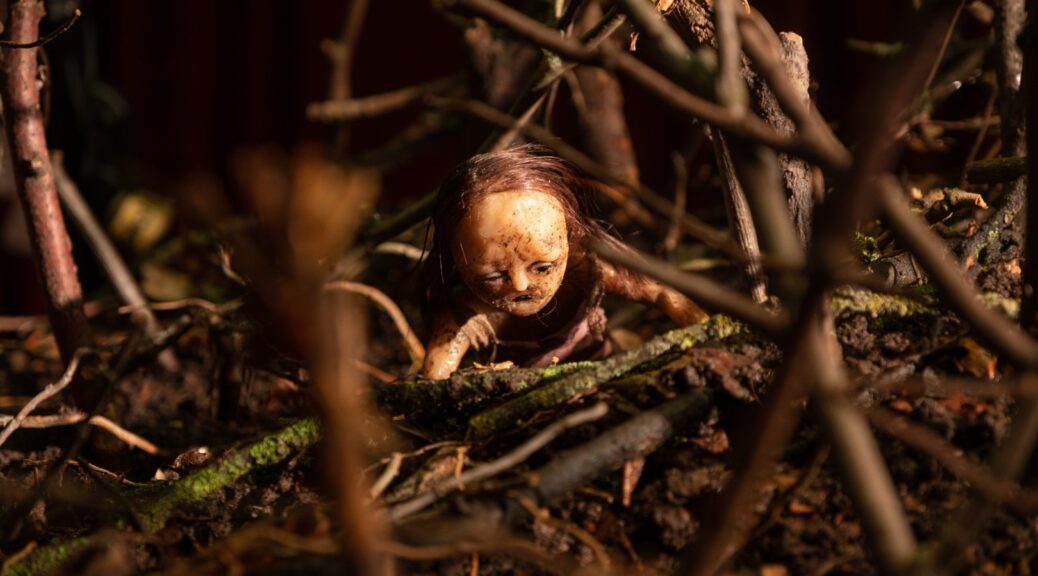
There will be moments when you’re watching Robert Morgan’s macabre vision Stopmotion that you’ll think you see the twists as they’re coming. That’s a trick. Morgan, writing with Robin King, assumes you’ll catch the handful of common horror twists, but he knows that you won’t predict the real story unfolding.
Aisling Franciosi (The Nightingale) is Ella. She’d like to make her own stop-motion animated film, but instead she’s helping her mom finish hers. Ella’s domineering mother Suzanne (Stella Gonet, very stern) is a legend in the field, and she makes Ella feel as if she has no stories of her own to tell.
Stopmotion delivers a trippy, uncomfortable, and deeply felt tale of a struggling artist. This is a descent into madness horror of sorts, but it’s also the story of an artist coming to a realization about what scares her most.
2. Mandy (2018)
Writer/director Panos Cosmatos’s hallucinogenic fever dream of social, political and pop-culture subtexts layered with good old, blood-soaked revenge, Mandy throws enough visionary strangeness on the screen to dwarf even Nicolas Cage in full freakout mode.
Like Cosmatos’s 2010 debut Beyond the Black Rainbow, Mandy is both formally daring and wildly borrowed. While Black Rainbow, also set in 1983, shines with the antiseptic aesthetic of Cronenberg or Kubrick, Mandy feels more like something snatched from a Dio album cover.
When his artist girlfriend Mandy (Andrea Riseborough) is kidnapped and killed by a cult, Red (Cage) enacts a bloody quest for revenge.
Or is it all the story Mandy’s painting?
Either way, it is as badass as it can be.
1. Candyman (2021)
For Nia DaCosta’s sequel to the 1992 classic, we go back to Chicago’s now-gentrified Cabrini Green housing project with up-and-coming artist Anthony McCoy (Yahya Abdul-Mateen II), whose works have taken a very dark turn since he learned of the Candyman legend from laundromat manager William Burke (Colman Domingo).
DaCosta’s savvy storytelling is angry without being self-righteous. Great horror often holds a mirror to society, and DaCosta works mirrors into nearly every single scene in the film. Her grasp of the visual here is stunning—macabre, horrifying, and elegant. She takes cues from the art world her tale populates, unveiling truly artful bloodletting and framing sequences with grotesque but undeniable beauty. It’s hard to believe this is only her second feature.
By the time a brilliant coda of sadly familiar shadow puppet stories runs alongside the closing credits, there’s more than enough reason for horror fans to rejoice and…#telleveryone.
When Brandon Cronenberg decided to be a filmmaker—one keenly interested in corporeal horror—it felt both natural and brave. Natural because his father David is perhaps the all-time master of body horror. Brave for the same reason.
It turns out, Brandon Cronenberg is a natural. (If you haven’t, you should definitely see his films.) But the family affair doesn’t end with him. Daughter Caitlin Cronenberg’s feature debut Humane sets her slightly apart from the fellas, though.
Written by Michael Sparaga, Humane takes place in a near future where climate catastrophe requires that each country on earth purge itself of 20% of its population. A euthanasia program allows citizens to enlist, helping the nation reach its quota, helping the planet survive, and providing government funds to the family bereaved. But with numbers lower than expected, the nation is considering conscription.
Cronenberg’s tale focuses on one family in particular. Patriarch Charles York (Peter Gallagher), retired from a storied career as a TV journalist, invites his four adult children (Jay Baruchel, Emily Hampshire, Sebastian Chacon, Alanna Bale) home for an important dinner. Dad, and the kids’ stepmother Dawn (Uni Park), have decided to enlist.
With this dinner bombshell Cronenberg sets in motion a realistically cynical look at a government’s opportunistic manipulation of a thinning of the herd. She then zeroes in on the festering effect of privilege on the York children, simultaneously throwing shade at the “salt of the earth” types who are as violently judgmental as their position allows.
Gallagher’s great as the martyr desperate to leave a legacy, and Hampshire’s ferociously self-serving villain is a joy. Enrico Colantoni delivers the most fascinating, frustrating character, easily stealing every scene.
Humane makes two horror films in a row, following last week’s Abigail, where you don’t really root for anyone. Everyone’s terrible and it’s slightly disappointing that anyone survives at all. Worse, the big revelation that pushes characters toward the climax is unearned.
More problematic is that there are two fairly substantial omissions—not plot holes, just conveniently placed gaps in clarification that feel like intentional cheats. Beyond that, the writing often feels slightly behind the times. Jared York’s (Baruchel) claim that he “doesn’t see color” feels more suited to a tale set a decade ago rather than in a near-future dystopia.
These writing concerns don’t sink the effort entirely. An intriguing premise buoyed with darkly comedic performances, plus a brisk 90 minute runtime keep Humane entertaining, but it’s hard not to feel a bit disappointed.
Nicolas Cage has become such a mythic figure in film culture that each new outing tends to bring questions.
Is this the unhinged “rage in the Cage?” Arthouse Cage? Mass appeal or self effacing Cage?
You can file Arcadian under “understated Cage leading a YA leaning creature feature.”
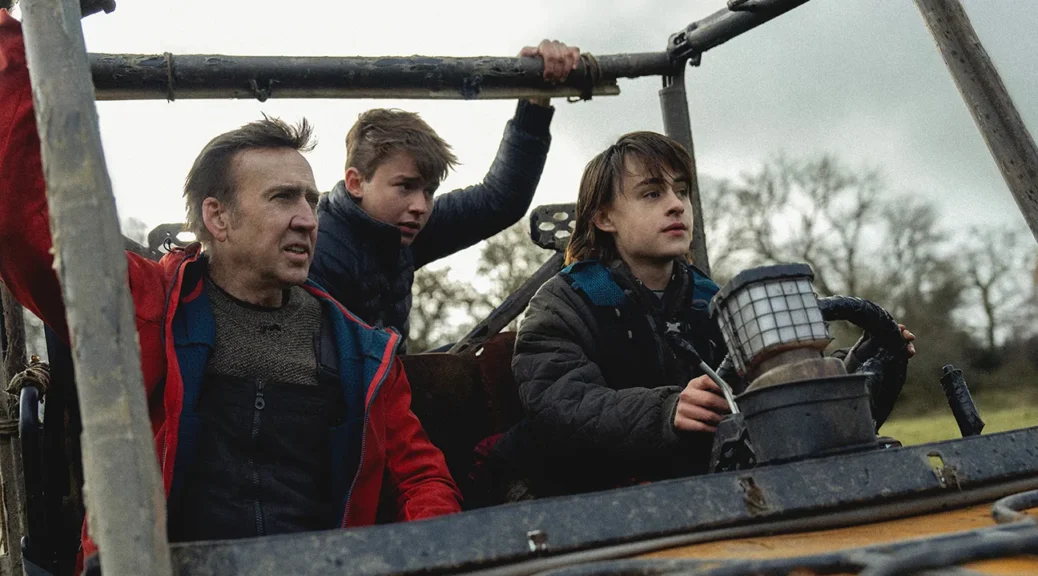
He stars as Paul, who’s living in a remote farmhouse with his twin teenage sons in a dystopian future. By day, the men follow a careful routine of security and sustenance. Because at night, there are visitors that really want to come in.
The exact details of the invasion are a little sketchy, but never elusive enough to derail our interest in the family’s survival.
Thomas (Maxwell Jenkins) is the impulsive, romantic brother, and his visits with Charlotte (Sadie Soverall) at the farm down the road have been keeping Thomas out dangerously late. His twin Joseph (Jaeden Martell) is the introspective thinker. Joseph has been studying patterns of the nightly attacks and believes the creatures have been testing, and planning.
He’s right.
Director Benjamin Brewer isn’t trying to reinvent anything here. He teams with producer-turned-screenwriter Michael Nilon for an unassuming horror thriller than benefits greatly from an impressive cast and a frightening creature design.
I don’t want to give anything away, but these bad boys have one specific trait that will get your attention right quick.
These themes aren’t new. There will be peril, bloodshed, and sacrifice as the creatures get smarter and the young begin to take on responsibilities of adulthood and cherish the things that matter. But thankfully, that familiarity doesn’t breed pandering. Brewer is also able to land some solid thrills, while the three younger co-stars provide impressive support for Cage’s elder statesman grace.
Ultimately, Arcadian doesn’t feel that much like a stereotypical “Nicolas Cage movie.” And the film is better for it.
Is there a more reliable source of terror than the spider?
Well, maybe clowns, but spiders are a close second. Australian filmmaker Kiah Roache-Turner is giddy to elicit shivers and gasps with his delightfully horrifying arachnid adventure, Sting.
Roache-Turner’s love for sci-fi horror bursts gleefully from the dollhouse-set opening credits, a scene that efficiently outlines our backstory. This snapshot playfully predicts the film, even as it homages genre classics.
The Wyrmwood director goes on to use the air ducts of an old Bronx apartment building to lay out the land, introduce us to tenants and their habits, and show our hero shimmying and crawling, all spider-like, through the building.
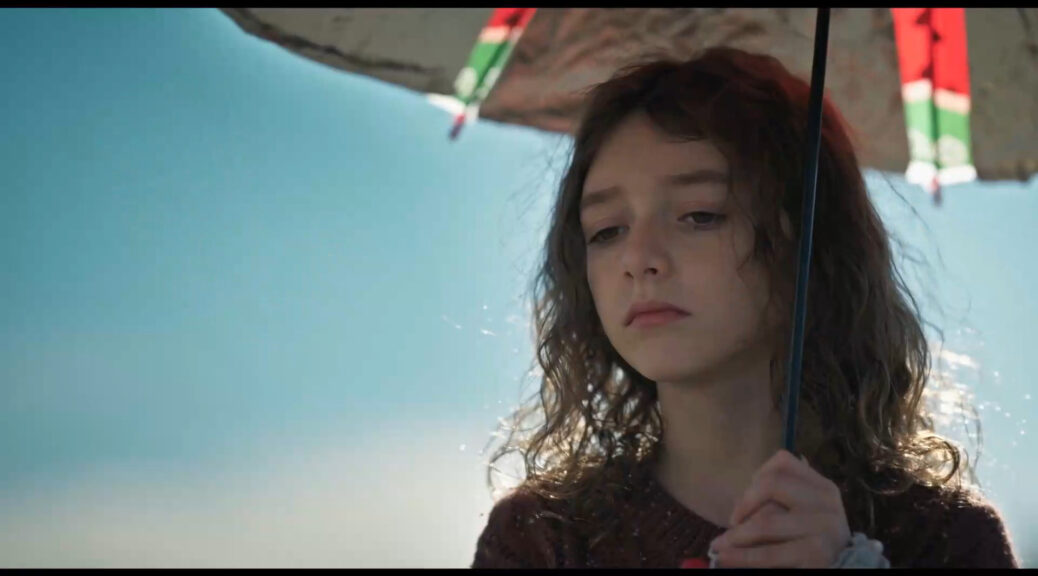
Who is our hero? Malcontent 12-year-old Charlotte (Alyla Browne). Her baby brother is loathsome, her parents are tedious, no one pays attention to her, her old witch of a great-aunt/land lady blames her for everything. Ugh!
But then Charlotte comes across a very cool little spider. And with so many cockroaches in Charlotte’s building, surely the newly monikered Sting will never need to look elsewhere for food!
Boy, that is lucky.
Browne channels Lulu Wilson’s Becky (maybe a little less angry). Her performance easily withstands the demands of a lead, but she does receive nice support from a variety of personalities living in the building: Nona Hazelhurt, Robyn Nevin, Danny Kim, Silvia Colloca and Jermaine Fowler.
Fiona Donovan’s production design stands out, emphasizing the film’s distinctly Joe Dante vibe. Although instead of perverting some idyllic burb, Sting ravages a storybook version of the Bronx.
But make no mistake, this movie gets nasty. The creature design and CGI are a bit campy, but the damage Sting does is convincing and pitiless. (Pet lovers be warned.)
If you missed Roache-Turner’s 2014 post-apocalyptic thrill ride Wyrmwood: Road of the Dead, definitely check it out. With that film, his fondness for Mad Max flavored a delightful riff on the zombie movie. Here he channels affection for a wide range of creature features (he really loves Alien) but still manages to create something decidedly his own.
“What is that? A llama?” says the guy at the bar, pointing to the mounted head of a rabbit with huge antlers that he actually thought was real.
“No, that’s a jackalope,” says the bartender, trying to keep a straight face. “They’re attracted to the smell of whiskey!”
“Oh…..”
That’s not a scene from Easter Bloody Easter, it’s a cherished memory from my days tending bar, and this horror comedy about a bloodthirsty jackalope is finally giving me the chance to weave it in!
It’s all just as silly as it sounds, with director/co-star Diane Foster and writer/co-star Allison Lobel setting that vibe right from a prologue that pokes fun at the well-worn horror trope of “teenage sex = death.” The two actors are much too old and their southern accents are way overdone, which is goofy and endearing. It’s only when the film forgets these roots that things get messy.
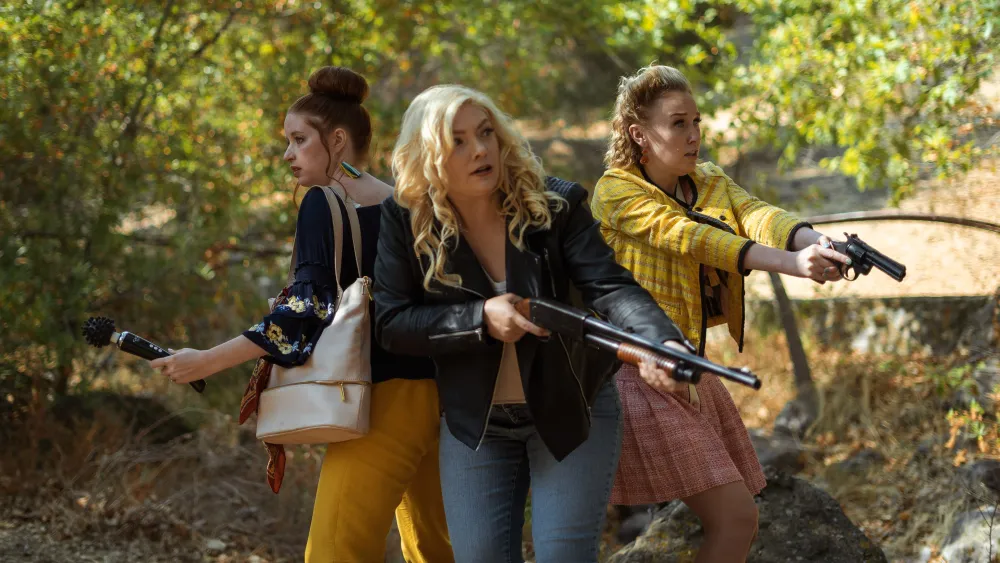
The setting is springtime in small town Texas, when everyone’s excited for the annual combination fish fry/bunny hop/egg hunt they call Easterpalooza! Check that, Jeannie (Foster) is not excited, because her husband Lance is missing! Jeannie’s best friend Carol (Kelly Grant) grabs her shotgun to join the search, and it isn’t long before the warnings from tinfoil hat-wearing Sam (Zach Kanner) begin to play out.
The urban legendary Jackalope and his army of devilish bunnies are on the loose and out for blood! So why won’t the mayor from Jaws—I mean the Sheriff—postpone Easterpalooza?
The film sends up low budget creature features, small town busybodies (with Lobel starring as the leader of the catty church ladies), conspiracy theorists and more with considerable zest. The ensemble cast, led by Grant’s strong comic timing, is all in on the gags, and the moments when fuzzy bunnies turn into maneaters are frequently hilarious.
But the absurd zaniness hits a roadblock whenever the film suddenly starts taking itself seriously. An introspective musical number hits with an especially curious thud, and the running time starts swelling enough to chip away at your patience.
When Easter Bloody Easter stays on its bloody bunny trail, though, it puts together a basket of over-the-top fun. Just be prepared to wade through some patches of grass to find all the treats.
Writer/director Barnaby Clay reimagines Hiroshi Teshigahara’s Oscar nominated 1964 classic The Woman in the Dunes as a Pacific Northwestern horror in The Seeding.
A man (Scott Haze, What Josiah Saw, Antlers) drives out to the desert for the best possible photos of a solar eclipse. He leaves his car, hikes a good way, gets the photos, and heads back to his car, but he’s sidetracked by a boy crying that he’s lost. The boy then gets the man lost. Eventually, alone and thirsty, the man climbs down a rope ladder into a gorge to ask a woman (Kate Lyn Sheil, She Dies Tomorrow) in the lone house for aid.
Next thing you know, the rope ladder is gone.
Like Teshigahara’s film, The Seeding examines the existential crisis of purposelessness and lack of freedom. But Clay’s film is definitely American in that the roots of the entrapment speak more of something monstrous and primal in the wilds of the nation’s last unconquered spaces.
This works to an extent. Haze is solid, if not particularly sympathetic, as frustration turns to terror, then to horror. Sheil’s enigmatic performance suits a character whose motivation and perspective are concealed.
The couple’s story is complicated by the taunts from a gaggle of sadistic boys roaming the rim of the gorge. Here Clay veers from Teshigahara’s path and into something closer to The Hills Have Eyes and declares the film horror. There’s also some vaguely Lovecraftian imagery, as if these feral desert dwellers worship something far older and more cosmic than this man could understand.
It sounds like an interesting meshing of ideas, but if comes off as a bit of a sloppy mess.
Clay, known primarily for directing music videos, nabs a handful of really impressive shots. And both leads benefit from a single opportunity to outright break down, which both do quite impressively.
But the film is too impatient. Clay reexamines an existential nightmare addressed many times (I’m Not Scared, John and the Hole) and turns to a mixed bag of horror tropes to limit its impact.
In 2007, Quentin Tarantino and Robert Rodriguez’s ambitious double feature homage to throwback genre pictures, Grindhouse, roared into cinemas. While the film was a commercial failure, it easily found a cult audience, thanks in no small part to the pedigree of the directors and the accompanying pitch perfect fake movie trailers contributed by Rodriguez (Machete), Edgar Wright (Don’t), Rob Zombie (Werewolf Women Of The SS), and Eli Roth (Thanksgiving). It’s taken sixteen years for the latter to be realized, but Roth’s holiday-inspired slasher has finally arrived to join the ranks of Thanksgiving horror flicks like Blood Rage and Thankskilling!
While the original Thanksgiving trailer had more in common with the sleaze and brutality of 80s slashers (like Maniac or Don’t Go In The House), Roth’s finished film falls more in line with contemporary slasher/whodunits, like the Scream films without the meta-deconstruction of horror films and tropes. The film opens with a darkly comic and brutal Black Friday massacre that mirrors the real life chaos of the annual consumer circus, and sets in motion the story that picks up one year later as a killer dressed as a pilgrim and wearing a John Carver mask begins a murderous spree of revenged slayings against the instigators of the deadly Black Friday incident.
Jessica (newcomer Nell Verlaque) is the heart of the film, leading the cast of potential young victims trying to learn who the killer is while avoiding being served up at the dinner table. A very game Patrick Dempsey (fully leaning into his native New England accent) is also along for the ride as the town sheriff working with the kids to put an end to John Carver’s deadly holiday plans. Roth and Jeff Rendell’s script offers up plenty of red herrings throughout the film, and while the killer’s identity will be fairly easy to deduce by most slasher fans, the inspired violence and set piece kills more than make up for the thin mystery of who John Carver really is. Fans of the original trailer will recognize several moments throughout the film (trampoline, anyone?), but Roth manages to shake things up enough to keep you guessing how each act of violence is gonna play out. Sprinkle in a little Rick Hoffman and just a pinch of Gina Gershon, and you’ve got a pretty good dinner!
Though the opening Black Friday scene alone makes this dish worthwhile, the bulk of the film may not measure up to the promise of the original trailer. But that will likely have more to do with the pressure of expectations of modern horror audiences and time passed, and less with the actual execution of the film itself.
Hungry for a new turkey day tradition that delivers on outlandish violence? Skip the Westminster Dog Show and enjoy a helping of Thanksgiving.
Love, exciting and new! Or, ancient and blood soaked. We’re not judging. There tends to be something wrong – lonesome, desperate, twisted, star crossed – about true love in horror. Maybe that’s what makes it so much more memorable. Here are our five favorite love stories in horror.
5. Spring (2014)
Evan (a spot-on Lou Taylor Pucci) has hit a rough patch. After nursing his ailing mother for two years, Evan finds himself in a bar fight just hours after her funeral. With grief dogging him and the cops looking to bring him in, he grabs his passport and heads to the first international location available: Italy.
It’s a wise setup, and an earnest Pucci delivers the tender, open performance the film requires. He’s matched by the mysterious Nadia Hilker as Louise, the beautiful stranger who captivates Evan.
At its core, Spring is a love story that animates the fear of commitment in a way few others do. The film’s entire aesthetic animates the idea of the natural world’s overwhelming beauty and danger. It’s a vision that’s equally suited to a sweeping romance or a monster movie, and since you’ll have a hard time determining which of those labels best fits Spring, it’s a good look.
4. Bones and All (2022)
The film follows Maren (an absorbing Taylor Russell, Waves), coming of age on the fringes of Reagan-era America. She meets and slowly falls for another outcast with similar tastes, Lee (Timothée Chalamet), and the two take to the road.
Given what the handsome young lovers have in common, you might expect a sort of meat lovers’ Badlands to follow. But Bones and All is less concerned with the carnage left in a wake than in what’s awakening in these characters themselves.
Bones and All is a tough one to categorize. I suppose it’s a horror film, a romance, and a road picture – not three labels you often find on the same movie. In Guadagnino’s hands, it’s more than that, though. He embraces the strength of the solid YA theme that you have to be who you are, no matter how ugly the world may tell you that is. You have to be you, bones and all. Finding Maren’s way to that epiphany is heartbreaking and bloody but heroic, too.
3. Border (2018)
Sometimes knowing yourself means embracing the beast within. Sometimes it means making peace with the beast without. For Tina—well, let’s just say Tina’s got a lot going on right now.
Border director/co-writer Ali Abbasi (Holy Spider) has more in mind than your typical Ugly Duckling tale, though. He mines John Ajvide Lindqvist’s (Let the Right One In) short story of outsider love and Nordic folklore for ideas of radicalization, empowerment, gender fluidity and feminine rage.
The result is a film quite unlike anything else, one offering layer upon provocative, messy layer and Abbasi feels no compulsion to tidy up. Instead, he leaves you with a lot to think through thanks to one unyieldingly original film.
2. A Girl Walks Home Alone at Night (2014)
Ana Lily Amirpour has made the world’s first Iranian vampire movie, and though she borrows liberally and lovingly from a wide array of inspirations, the film she’s crafted is undeniably, peculiarly her own.
Set in Bad Town, a city depleted of life – tidy yet nearly vacant – Girl (Sheila Vand) haunts the shadowy, lonesome fringes of civilization. One by one we get to know a pimp, a prostitute, an addict, a street urchin, and handsome Arash (Arash Mirandi).
Watching their love story play out in the gorgeously stylized, hypnotic backdrop of Amirpour’s creation is among the most lonesome and lovely ways to enjoy a good bloodletting.
1. Only Lovers Left Alive (2013)
Visionary writer/director Jim Jarmusch enlists Tom Hilddleston and Tilda Swinton as Adam and Eve (perfect!), a vampire couple rekindling their centuries-old romance against the picturesque backdrop of…Detroit.
Not since the David Bowie/Catherine Deneuve pairing in The Hunger has there been such perfectly vampiric casting. Swinton and Hiddleston, already two of the most consistently excellent actors around, deliver cooly detached, underplayed performances, wearing the world- weariness of their characters in uniquely contrasting ways.
Jarmusch, as he often does, creates a setting that is totally engrossing, full of fluid beauty and wicked humor. The film moseys toward its perfect finale, casually waxing Goth philosophic about soul mates and finding your joy.
I’m going to guess Joe Lynch is a Stuart Gordon fan.
Who isn’t?!
The Mayhem director returns to the horror genre with a Lovecraftian fable, but this is no garden variety Lovecraft. Lynch’s vibe and manner – not to mention co-writer and cast – lean closer to Gordon homage than outright cosmic horror.
Lynch loosely adapts Lovecraft’s The Thing on the Doorstep, writing with Stewart’s longtime collaborator Dennis Paoli (Re-Animator, From Beyond, Castle Freak, Dagon). Their tale shadows psychiatrist Elizabeth Derby (Heather Graham), who – against her own better instincts – takes on a new patient. Asa (Judah Lewis) believes his father is trying to steal his body.
Cleaving to science and yet inexplicably attracted to the young man, Derby fails to understand her patient’s claims until it is too late – an evil entity has moved from Asa’s father into Asa and is now threatening to take over Dr. Derby’s body.
Graham’s a bit of campy fun in a dual role – far more fun when she gets to dig into the hedonistic villain character. It’s a performance that lets the actor stretch a bit and she seems to relish the darker side of the role. Likewise, Lewis excels in particular when the sinister force inhabits meek and terrified Asa.
Of course, no Gordonesque Lovecraftian flick is complete without the glorious Barbara Crampton (Re-Animator, From Beyond, Castle Freak). Crampton’s Dani, Derby’s uptightcolleague and best friend, becomes an ideal foil for the transformed psychiatrist. Graham and Crampton vamp it up as the demon oscillates between them, which is as much fun as it sounds like it would be.
The film feels very much like a Dennis Paoli film and fans of his Gordon collaborations have reason to celebrate. But Suitable Flesh doesn’t entirely deliver on its promise of mayhem. It never quite leaps off that cliff the way Paoli films usually do and for that reason feels a tad tame.
But a game cast and a bit of 80s inspired lunacy ensure a good time is had by all. Plus, that’s a great title.