Tag Archives: horror movies

Halloween Countdown, Day 10

Henry: Portrait of a Serial Killer (1989)

Like Snowtown Murders, released more than two decades later, Henry is an unforgivingly realistic portrayal of evil. Michael Rooker is brilliant as serial killer Henry (based on real life murderer Henry Lee Lucas). We follow him through his humdrum days of stalking and then dispatching his prey, until he finds his own unwholesome kind of family in the form of buddy Otis and his sister Becky.

Director John McNaughton’s picture offers a uniquely unemotional telling – no swelling strings to warn us danger is afoot and no hero to speak of to balance the ugliness. He confuses viewers because the characters you identify with are evil, and even when you think you might be seeing this to understand the origins of the ugliness, he pulls the rug out from under you again by creating an untrustworthy narrative voice. His film is so nonjudgmental, so flatly unemotional, that it’s honestly hard to watch.

What’s diabolically fascinating, though, is the workaday, white trash camaraderie of the psychopath relationship in this film, and the grey areas where one crazy killer feels the other has crossed some line of decency.

Rooker’s performance unsettles to the bone, flashing glimpses of an almost sympathetic beast now and again, but there’s never a question that he will do the worst things every time, more out of boredom than anything.

It’s a uniquely awful, absolutely compelling piece of filmmaking.


Zombies Make Lousy House Pets

Dead Snow 2: Red Versus Dead

by Hope Madden

You have seen 2009’s Dead Snow, correct? If not, you should do so right now. Go ahead – I’ll wait.

Awesome, wasn’t it? Funny, scary, gorgeously filmed and utterly gross, Tommy Wirkola’s fable of Nazi zombies was an inspired, self-referential blast. And now, five years later, he launches the sequel Dead Snow 2: Red Versus Dead.

It’s dead Commies V dead Nazis, ya’ll, and it is a goretastic good time.

Last time around, a good looking group of college students headed to a remote cabin for Spring Break. There, they awakened something evil, and only Martin (Vegar Hoel) managed to escape. Well, sort of escape.

The sequel (filmed in English) picks up right at that same parked car where, back in 2009, Martin realized he still has one piece of that accursed Nazi gold. A few severed limbs, one disemboweled trucker, one monster car crash and some weeks later, Martin awakens in police custody inside a Norwegian hospital.

The good news – they sewed an arm back on!

The bad news – they didn’t use Martin’s arm!!

With a little ingenuity, the dark power of his new zombie arm, and the assistance of some American zombie hunters (read: nerds), Martin sets out to defeat the Nazi zombies once and for all.

Once again, Wirkola’s script is delightfully self-aware and full of bright comic moments. Betraying an encyclopedic knowledge of horror and SciFi, the filmmaker borrows lovingly and openly from some of the best splatter comedies in history.

There are few actual scares this time around, with Wirkola content to focus squarely on comedy… profoundly bloody, sloppy comedy. The jumps and startles have been replaced by boatloads of entrails and gallons of gore. There are not many taboos RVD isn’t willing to gut, trample or behead, either.

But the sunny Norwegian snowscape gives the whole affair a weirdly cheerful quality, and Wirkola balances comic timing with action pacing well enough to deliver a thrill a minute gore spattered laugh riot.

Verdict-3-5-Stars


Halloween Countdown, Day 7

Dawn of the Dead (2004)

Plenty of filmmakers remade or reimagined George Romero’s flicks, but none did it as well as Zack Snyder. Snyder would go on to success with vastly overrated movies, but his one truly fine piece of filmmaking updated Romero’s Night of the Living Dead sequel with the high octane horror. The result may be less cerebral and political than Romero’s original, but it is a thrill ride through hell and it is not to be missed.

The flick begins strong with one of the best “things seem fine but then they don’t” openings in film. And finally! A strong female lead (Sarah Polley) who seems like a real person. Polley’s beleaguered nurse Ana leads us through the aftermath of the dawn of the dead, fleeing her rabid husband and neighbors and winding up with a rag tag team of survivors hunkered down inside a mall.

In Romero’s version, themes of capitalism, greed and mindless consumerism run through the narrative. Snyder, though affectionate to the source material, focuses more on survival, humanity and thrills. (He also has a wickedly clever soundtrack.) It’s more visceral and more fun. His feature is gripping, breathlessly paced, well developed and genuinely terrifying.

Plus, one truly good guy, one effective change-of-heart character, an excellent slimeball, and solid performances all around keep you invested in the characters.

You’ve got to kind of make up your own mind about the zombie-baby, though.

And who hates Nicole? I do. I hate Nicole.

Halloween Countdown, Day 4

The Crazies (2010)

Breck Eisner’s The Crazies, retooled from George Romero’s little-seen 1973 gem, offers solid scares, inventive plotting, and far better performances than expected in a genre film.

Building a cumulative sense of entrapment and dread, the film relies on a storyline whisper-close to the overplayed zombie tale, but deviates in a powerful way. The slight alteration plumbs for a different kind of terror, and Eisner’s sense of timing provides a fine balance between fear of the unknown and horror of the inevitable.

The Crazies sometimes plays like a more languid 28 Days Later (a film that clearly found inspiration in Romero’s The Crazies). All three films begin by articulating humankind’s repulsion and fear of infection before introducing the greater threat – our own government. Eisner’s film never accomplishes the heights Boyle achieved in each area, but his slower pace builds dread and flirts more often with an effectively disturbing sense of compassion.

Eisner’s greatest strength is his cast. The eternally under-appreciated Timothy Olyphant and Radha Mitchell, unerringly realistic as husband and wife, carry most of the grisly weight, aided by solid support work from folks who are not afraid to be full-on nuts. They may not scare you silly, but they’ll keep you surprised and a little grossed out, which ain’t too bad, considering.

Eisner pulls Romero’s  most notorious punch, but he also knows how to examine individual insanity. Eisner is less interested in government conspiracy and irony and more interested in bloodthirsty lunacy, which is why his film is more fun to watch.

It’ll make you rethink the car wash, I’ll tell you what.


https://www.youtube.com/watch?v=o5d-apDoxyg

Halloween Countdown, Day 1

The Descent (2005)

A caving expedition turns ugly for a group of friends, who will quickly realize that being trapped inside the earth is not the worst thing that could happen. The Descent is the most profoundly claustrophobic film since The Vanishing (the original, not that wussy Keifer Sutherland remake).

This spelunking adventure comes with a familiar cast of characters: arrogant authority figure, maverick, emotionally scarred question mark, bickering siblings, and a sad-sack tag along.  And yet, somehow, the interaction among them feels surprisingly authentic, and not just because each is cast as a woman.

These ladies are not Green Berets who, unlike the audience, are trained for extreme circumstances. These particular thrill seekers are just working stiffs on vacation. It hits a lot closer to home.

More importantly, the cast is rock solid, each bringing a naturalness to her character that makes her absolutely horrifying, merciless, stunningly brutal final moments on this earth that much more meaningful.

Writer/director Neil Marshall must be commended for sidestepping the obvious trap of exploiting the characters for their sexuality – I’m not saying he avoids this entirely, but for a horror director he is fantastically restrained. He also manages to use the characters’ vulnerability without patronizing or stereotyping.

He makes even better use of the story’s structure. Between that and the way film and sound editing are employed, Marshall squeezes every available ounce of anxiety from the audience.

The film begins with an emotionally jolting shock, quickly follows with some awfully unsettling cave crawling and squeezing and generally hyperventilating, then turns dizzyingly panicky before it snaps a bone right in two.

And then we find out there are monsters.

Long before the first drop of blood is drawn by the monsters – which are surprisingly well conceived and tremendously creepy – the audience has already been wrung out emotionally.

The grislier the film gets, the more primal the tone becomes, eventually taking on a tenor as much like a war movie as a horror film. This is not surprising from the director that unleashed Dog Soldiers – a gory fun werewolf adventure. But Marshall’s second attempt is far scarier.

For full-on horror, this is one hell of a monster movie.

The Kevin Smith Movie, Evolved

Tusk

by Hope Madden

In 2010, I had the chance to interview writer/director Kevin Smith. The proposed subject was Smith’s SModcasts – comic podcasts co-hosted by Smith and his buddy Scott Mosier – but I had other ideas. I knew Smith, a filmmaker most known for his juvenile comedies, was putting the finishing touches on his first horror film, Red State, and I was giddy to find out more about that.

Smith told me, “For years I’ve called myself a filmmaker, but it’s not really true. Really I just make Kevin Smith Movies. I’m at that stage where I could make a Kevin Smith Movie with my eyes closed. Let me see if I can make another movie.”

Too few people saw Red State, a flawed but fascinating film that boasted an absolutely mesmerizing performance by Tarantino favorite Michael Parks, but Smith knew he had something great in this actor. Wisely, when the filmmaker returned to horror with this year’s Tusk, he did so with Parks in tow.

Though Tusk is a surreal, utterly bizarre horror comedy, it is without question Smith’s most personal work as a filmmaker. The film follows a podcaster (Justin Long) who travels to an isolated cabin in Canada to record conversations with a recluse (Parks). The podcaster hopes to bring a good story of a weirdo back for the next show, but this story proves a little too weird.

The basic idea, in fact, comes from one of Smith’s actual SModcasts. He found online a letter from a man seeking a lodger, and he and Mosier read it aloud and mocked the man and giggled – the general MO for the show. But somewhere in all that, Smith found the story of man losing his humanity.

Yes, Tusk is a comic riff on The Human Centipede. It’s also an insightful kind of stress dream, so close to home for Smith that, even with all its utter ludicrousness, it feels almost confessional.

Once again, the greatest strength in the film is a hypnotic performance by Parks as the old seafarer with nefarious motives. He’s magnificent, and Long’s work is strongest when the two share the screen.

Smith’s tone shifts wildly from absurd comedy to real terror, but given the film’s insane premise, the approach works because nothing is ever what you expect. Like Johnny Depp as a French Canadian Inspector Clouseau.

There is no film quite like Tusk, certainly not in Smith’s arsenal, which, I suppose, means this is not a Kevin Smith Movie. And yet, there’s more Smith in this film than in anything else he’s made.

Verdict-3-5-Stars

Fright Club: The Reflecting Skin

The Reflecting Skin (1990)

It isn’t often when documenting horror cinema that you have the need to mention an art director, but for The Reflecting Skin, the work of Rick Roberts deserves a note. His gorgeous, bucolic Idaho is perfectly crafted, with golden wheat and decrepit wooden outbuildings representing both the wholesomeness and decay that will meld in this tale.

Writer/director Philip Ridley has a fascinating imagination, and his film captures your attention from its opening moments. A cherubic tot walks gleefully through wheat fields toward his two adorable little buddies, carrying a frog nearly as big as he is. “Look at this wonderful frog!” he calls out to them.

What happens next is grotesque and amazing – the casual but exuberant cruelty of children. It’s the perfect introduction to this world of macabre happenings as seen through the eyes of a little boy.

Seth Dove lives with his emotionally abusive mother and his soft but distant father, who run a gas station in rural Idaho sometime after WWII. Seth’s older brother Cameron (Viggo Mortensen) is off serving in Japan. Seth has decided that the neighborhood widow Dolphin Blue (a wonderfully freaky Lindsay Duncan) is a vampire.

Positively horrible things begin to happen, each of them clouded by the dangerous innocence of our point of view character.

The film plays a bit like a David Lynch effort, but with more honesty. Rather than the hallucinatory dreaminess Lynch injects into films like Blue Velvet (the most similar), this film is ruled by the ferociously logical illogic of childhood. With this point of view, the realities of a war blend effortlessly with the possibility of vampires. Through little Seth Dove’s eyes, everything that happens is predictably mysterious, as the world is to an 8-year-old. His mind immediately accepts every new happening as a mystery to unravel, and the jibberish adults speak only confirm that assumption.

This film is a beautiful, horrifying, fascinating adventure unlike most anything else available. A kind of thematic cross between Lynch’s Blue Velvet and Terry Gilliam’s Tideland (nice company!), The Reflecting Skin manages to feel more honest, and therefore more deeply frightening, than either.

A Tight Squeeze

As Above, So Below

by Hope Madden

A friend of mine went to Paris for her honeymoon, convincing her husband to tour the catacombs beneath the city while there. It’s a creepy, claustrophobic destination for most anyone. He’s uninterested in the macabre, and he’s 6’4”. It was a tight fit.

I thought of him frequently during As Above, So Below because, if there’s one thing the film does effectively, it is tap your claustrophobic dread.

Scarlett, an Indiana Jones type, believes a stone that A) turns any metal into gold, and B) grants eternal life, is hidden beneath Paris. She lures a documentarian, an old boyfriend, and a team of Parisian catacomb explorers to help her finish the quest that killed her father. All told, it’s a weirdly young, attractive, hyper-intelligent group of explorers.

Obviously, co-writer/director John Erick Dowdle (Quarantine) owes the Jones franchise a pretty big debt. He’s equally indebted to Neil Marshall’s 2005 horror classic The Descent, and he robs here and there from his own Quarantine, the Julia Roberts/Keiffer Sutherland debacle Flatliners, and the Nicolas Cage ridiculousness National Treasure. A weird mix, that, but there are moments when it works.

The one thing Dowdle does well is develop a rising terror of confinement – a knack he proved with Quarantine. He loses his footing when it comes to intermittent scares, and the film just doesn’t build to enough of a climax.

The set up takes too long and there’s not enough terror to distract you from the fairly ludicrous quest underway. The spooky images are few and far between, with Dowdle relying too heavily on the whiz and whir of handheld cameras and distorted sounds to carry the load his imagination couldn’t.

It doesn’t make the film entirely unsatisfying. The claustrophobic among us, in particular, will be put through the ringer. But Dowdle and crew can’t quite piece together enough quality moments to deliver a memorable chiller.

Verdict-2-5-Stars


https://www.youtube.com/watch?v=O-KIzzF3S0o

Great Directors’ Horrifying Output

This week, the great writer/director/Ohioan Jim Jarmusch releases just another masterpiece, the vampire flick Only Lovers Left Alive. While Jarmusch is certainly not an easy artist to peg, a vampire film was not exactly a predictable choice.

Still, loads of the most prestigious filmmakers have made horror films. Back in 1960, Alfred Hitchcock made it acceptable for directors of immense talent to take on the genre. In 1991, we even had a horror film win best picture (and actor, actress, director, and screenplay).

Some filmmakers, like Sam Raimi or Brian DePalma, are as well known for horror as for their more mainstream titles. Stanley Kubrick and Roman Polanski were equally at home in horror as they were in any genre. Other giants in the industry, like David Cronenberg and David Lynch, cut their teeth in horror before moving on, while a few, like Jarmusch and Martin Scorsese, dabbled in the genre late into an established career.

Here is a peek at the horror output of some of the greats that you may have missed.

Ingmar Bergman: Hour of the Wolf (1968)

Like all Bergman films, this hypnotic, surreal effort straddles lines of reality and unreality and aches with existential dread. But Bergman and his star, Max von Sydow, cross over into territory of the hallucinatory and grotesque, calling to mind ideas of vampires, insanity and bloodlust as one man confronts repressed desires as he awaits the birth of his child.

Peter Jackson: Dead Alive (1982)

Long before Peter Jackson went legit with the exceptional Heavenly Creatures, or became infamous for his work with hobbits and apes and more hobbits, he made his name back in New Zealand with some of the all time goriest, bloodiest, nastiest horror comedies ever produced. The best of these is Dead Alive, a bright, silly, outrageous bloodbath. For lovers of the genre, the director, or the Sumatran rat monkey, it is essential viewing.

http://www.youtube.com/watch?v=eigwPFVmMIU

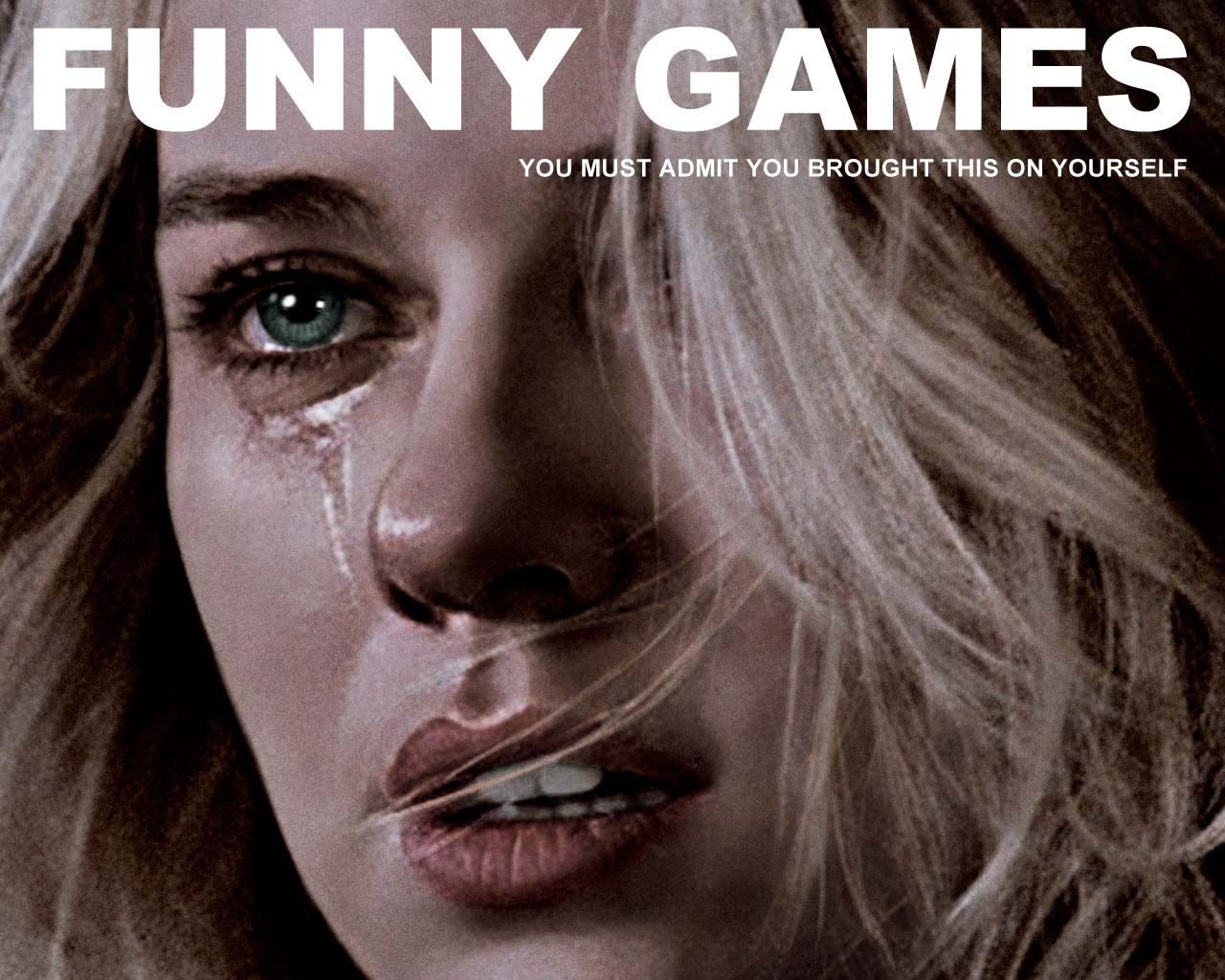
Michael Haneke: Funny Games (1997, 2007)

The Oscar winning director behind Amore, The White Ribbon, and Cache, made a horrific experiment of etiquette in 1997, and then again in 2007, with Funny Games. Made first in his native German, and a decade later, with nearly shot for shot integrity, in English, Funny Games upends the comfort of societal expectations in a number of ingenious and terrifying ways.

http://www.youtube.com/watch?v=Has9E7j9Lrg

Lars von Trier: Antichrist (2009)

Lars von Trier’s cinematic output had been punishing viewers for decades. In 2009, he finally embraced the genre that he’d been courting his whole career. Antichrist is a beautiful, poetic, painful, horrifying examination of guilt, laden with all the elements that mark a LVT effort. What’s unusual is that he takes, for the majority of the film, a traditional “cabin in the woods” approach, depositing his unique vision in well-worn horror territory. And once there, he embraces the genre with much zeal. And a few gardening tools.

http://www.youtube.com/watch?v=eBdDcQONmkM

Francis Ford Coppola: Dementia 13 (1963)

Copolla began his career under the tutelage of B-movie god Roger Corman, and Dementia 13 was one of his first solo flights as director. It wasn’t his last attempt at horror – we all remember the abysmal Dracula remake – but Dementia 13 marks the early promise of a guy who understands the power of killing a loved one in a rowboat on a lake.

http://www.youtube.com/watch?v=_tcI47OkNhg

James Cameron: Piranha Part Two:  The Spawning (1981)

Just three years before taking Hollywood by storm with The Terminator, James Cameron showed absolutely no sign of competence behind the camera when he helmed the sequel to Joe Dante’s B-movie Piranha. This time around, those deadly man-eaters manifest a new mutation. They can fly! Sure, it might look like someone standing just off screen is throwing them at naked women and minorities, but they can fly, I tell you! This one is an underseen gem of bad cinema, and it offers an early peek at Cameron’s fixation with water, strong female leads, and Lance Henriksen.

Less Smoke, More Mirror

Oculus

by Hope Madden

Back in 2011, writer/director Mike Flanagan unleashed the impressive nightmare Absentia, a film that cost him just $70,000 to make. Creepy, memorable and extremely well crafted given the budget, the film suggested an artist who deserved a chance with some real money.

Armed with the genre cred from that film, as well as the story from his well-received short, Flanagan embarked on his first wide-release horror film, Oculus.

His new effort follows a pair of siblings looking to prove that their childhood family horror was actually the fault of a cursed mirror.

Flanagan braids present day events and flashbacks effectively, not just to illustrate the ghastly deeds of the siblings’ youth, but to emphasize the growing madness of the brother and sister as they revisit the scene of the crime and set about proving their theory.

He has better luck with the performances of the youngsters in the cast than their present-day counterparts. Ten-year-old Kaylie Russell (played with convincing spunk by Annalise Basso) and her little brother Tim (Garrett Ryan) survived a family meltdown of Overlook Hotel proportions. While Tim’s spent his formative years institutionalized and learning to accept a more logical version of the events, Kaylie bounced around foster homes doing research and plotting to clear her family name, prove her version of the story, and break that damn mirror.

The pouty Karen Gillan (Dr.Who) offers more insincere bravado than spunk as the adult version of the determined sister, while Brenton Thwaites’s newly-released Tim has as much charisma as a tuna sandwich. For this reason, the flashback sequences hold more attention than the modern-day plans to undo the evil.

Plus, terrorized children are just more scary than whining adults.

Flanagan has some real skill weaving the rational world with one full of madness, and he knows when to rely on FX and when to be craftier with his scares. Unfortunately, his pacing is frustratingly slow, which makes his climax feel like a bit of a cheat. It’s hard not to compare his work with others of similar themes – The Shining, for example – and in that company, Oculus falls quite short.


Verdict-2-5-Stars