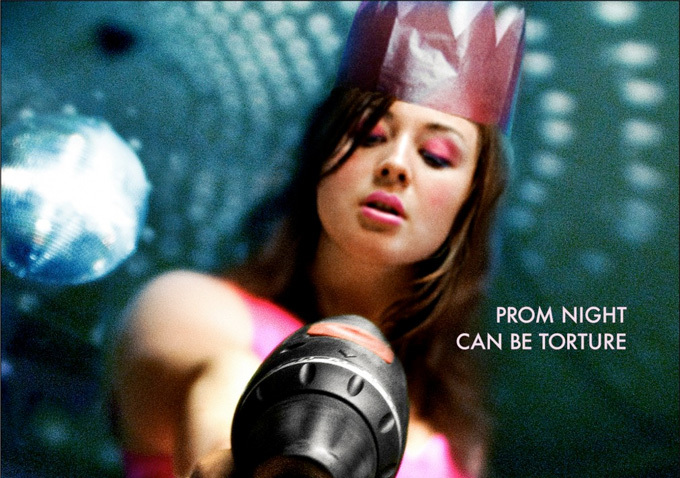
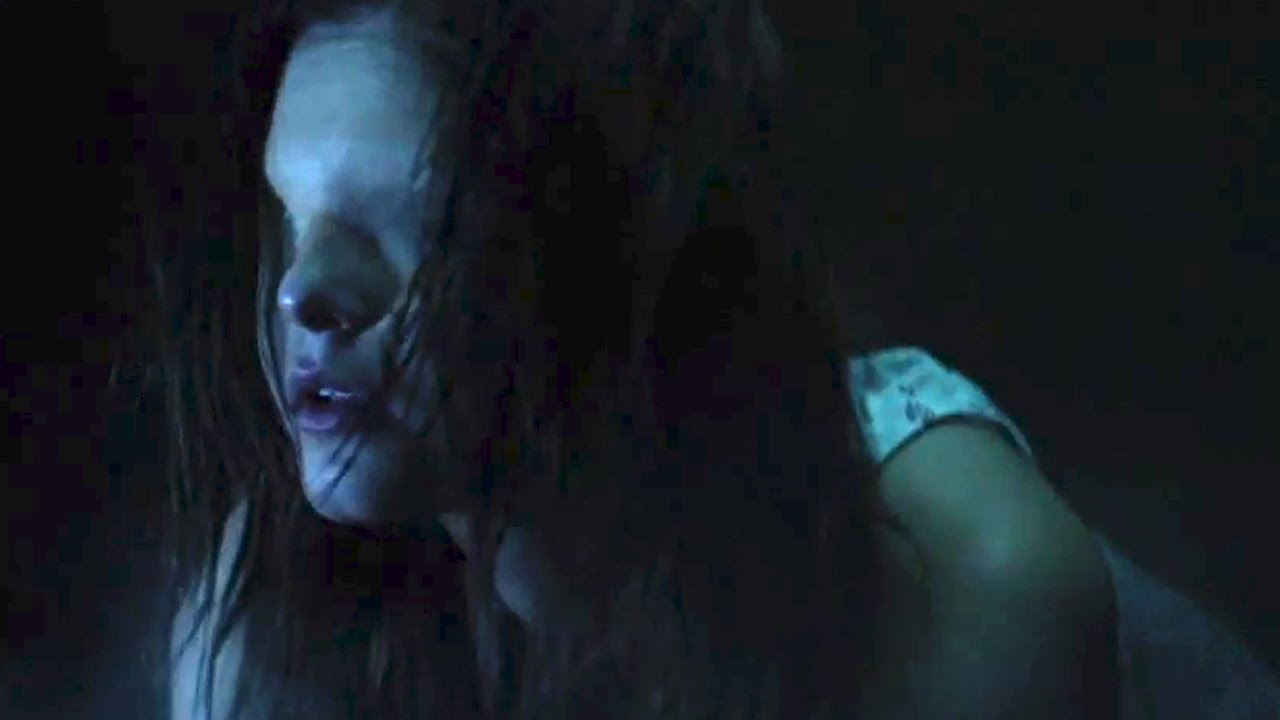
Psycho may have asked us to look at the weird relationships possible with mothers and sons, but fathers and daughters can develop dangerously close bonds, as well. For proof, just gander at this Aussie freakshow.
Writer/director/Tasmanian Sean Byrne upends high school clichés and deftly maneuvers between angsty, gritty drama and neon-colored, glittery carnage in a story that borrows from other horror flicks but absolutely tells its own tale.
Brent (Xavier Samuel) is dealing with guilt and tragedy in his own way, and his girlfriend Holly tries to be patient with him. Oblivious to all this, Lola (a gloriously wrong-minded Robin McLeavy) asks Brent to the school dance. He politely declines, which proves to be probably a poor decision.
Byrne quietly crafts an atmosphere of loss and depression in and around the school without painting the troubles cleanly. This slow reveal pulls the tale together and elevates it above a simple work of outrageous violence.
Inside Lola’s house, the mood is decidedly different. Here, we’re privy to the weirdest, darkest image of a spoiled princess and her daddy. The daddy/daughter bonding over power tool related tasks is – well – I’m not sure touching is the right word for it.
The Loved Ones is a cleverly written, unique piece of filmmaking that benefits from McLeavy’s inspired performance as much as it does its filmmaker’s sly handling of subject matter. It’s a wild, violent, depraved way to spend 84 minutes. You should do so now.
Listen weekly to MaddWolf’s horror podcast FRIGHT CLUB. Do it!
Filmmakers often use their work to pay homage to other filmmakers. Sometimes this looks like a direct rip off, but when done well – as it was earlier this year in David Robert Mitchell’s It Follows – it can elevate a picture while generating nostalgia and paying tribute.
It works better if the films you homage were good in the first place, though.
Love him or hate him (and it appears most everyone does one or the other), Eli Roth is one such filmmaker. His latest, The Green Inferno, takes inspiration from a very particular style of film. These cannibal flicks, mostly made by Italians in the late Seventies and early Eighties, dropped naïve Westerners in jungles populated by flesh hungry head hunters.
Roth’s flick does likewise with a set of idealistic college students, including Justine (Lorenza Izzo – Roth’s real life wife). They just want to stop developers in Peru from destroying tribal villages, but when their plane crashes deep in the jungle, they go from activists to appetizers.
The films that inspired Roth’s picture – Ruggero Deodato’s infamous Cannibal Holocaust, in particular – are known for their goretastic imagery, exuberant violence, ethnocentrism, and general taboo-shattering.
Though it’s a slog getting to the action, when Inferno finally does pit student youth group against Peruvian cannibal tribe, blood, limbs, and entrails go flying.
Like most of Roth’s work, there’s a dark and cynical sense of humor underlying the melee. As with his Hostel films, beneath the concussive violence and body part slurry there lies an attempt at political insight. But with Inferno, the traditional heroine arc and confused jabs at political correctness undermine any relevant statement.
Plus, the acting is abysmal, the writing clichéd, and the comic moments are so poorly executed you get the feeling the filmmaker and his writing partners felt equal contempt for characters and audience alike.
For true fans of this particular genre, though, solid performances and stellar writing are hardly the point, but here’s the rub. The Green Inferno feels like nothing more than a neutered Cannibal Holocaust.
Not that we need another Cannibal Holocaust, nor do we probably need to resurrect a genre that died out for reasons as extreme as those associated with the jungle cannibal movie, but if you can’t improve on its weaknesses and you can’t match its bombast, what is the point, exactly?
The Last Airbender. The Happening. After effing Earth. Man, it has been a long time since M. Night Shyamalan made a decent movie. If you keep that in mind – if you manage your expectations – his latest film, The Visit, is pretty enjoyable. It’s a step in the right direction, anyway.
A single mom (a very believable Kathryn Hahn) reluctantly allows her two teenagers visit their estranged grandparents in rural Pennsylvania for a week. You’ve seen the ads – things don’t go well.
Whatever the flaws, no matter the lack of originality, The Visit generates creepy dread punctuated by some genuine laughs, and it boasts several fine performances.
Ed Oxenbould is endearing, fun and funny as little brother/would-be rapper Tyler. Olivia DeJong is slightly less compelling as his sister/budding filmmaker Becca. (Yes, tragically, this is a found footage film – but it’s an M. Night Shyamalan film, so expect some weirdly beautiful vistas and panoramas given Becca’s age.)
She’s decided to make a documentary of the visit as a gift to her mother, and an attempt to rebuild the relationship that went south long before she was born. (This is a theme that echoes, somewhat tediously, throughout the effort.)
Nana and Pop Pop are played, quite eerily, by Deanna Dunagan and Peter McRobbie, respectively.
Per usual, Shyamalan peppers the mystery with more than enough clues, which you look right past. He’s a master at sleight of hand, and his film – modest as it is – showcases his enviable craftsmanship.
The Visit will absolutely not stand up to the filmmaker’s greatest efforts – Signs, Unbreakable, The Sixth Sense. Hell, it may just be the result of a flagging filmmaker turning backward, falling into patterns that garnered early success, but bringing less inspiration with him to the project. Whatever the reason or craft behind it, The Visit is easily the best film Shyamalan’s made in more than a dozen years.
Perhaps any living thing’s most primal fear is that of being eaten, and horror cinema has taken advantage of that built-in tension with every zombie movie and creature feature ever made. But there’s an added element of the macabre, the unseemly, when it isn’t some “other” preying on us for our own tasty flesh. Today we celebrate those brave, carnivorous souls who crave the other, other white meat. You are what you eat.
Who’s hungry?
5. Trouble Every Day (2001)
Writer/director Claire Denis doesn’t offer a great deal of exposition, relying instead on startling images to convey themes. Her approach, and her provocative film, may do a better job of linking not just sex and death – which is commonplace to the point of being a bore in horror – but lust and bloodlust, carnality and hunger.
Beatrice Dalle’s Core – lovingly held captive by her husband – routinely escapes to seduce and consume unsuspecting men. Meanwhile a honeymooning groom seeks her because of his own obsession and/or similar sexual disposition.
This is a tough film to watch. The murder sequences are particularly bloody and profoundly uncomfortable, but the film gets under your skin and stays there, which is the point of horror, right?
4. Ravenous (1999)
The blackest of comedies, the film travels back to the time of the Mexican/American War to throw us in with a cowardly soldier (Guy Pearce) reassigned to a mountainous California outpost where a weary soul wanders into camp with a tale of the unthinkable – his wagon train fell to bad directions, worse weather, and a guide with a taste for human flesh.
Pearce is great as the protagonist struggling against his own demons, trying to achieve some kind of peace with himself and his own shortcomings, but Robert Carlyle steals this movie. As the wraithlike Colonel Ives, he makes the perfect devil stand-in. Smooth, compelling and wicked, he offsets Pearce’s tortured soul perfectly. The pair heighten the tensions with some almost sexual tension, which director Antonia Bird capitalizes on brilliantly.
3. We Are What We Are (2010)
Give writer/director Jorge Michel Grau credit, he took a fresh approach to the cannibalism film. His Spanish language picture lives in a drab underworld of poverty, teeming with disposable populations and those who consume flesh, figuratively and literally.
Grau’s approach is so subtle, so honest, that it’s easy to forget you’re watching a horror film. Indeed, were this family fighting to survive on a more traditional level, this film would simply be a fine piece of social realism focused on Mexico City’s enormous population in poverty. But it’s more than that. Sure, the cannibalism is simply an extreme metaphor, but it’s so beautifully thought out and executed!
We Are What We Are is among the finest family dramas or social commentaries of 2010. Blend into that drama some deep perversity, spooky ambiguities and mysteries, deftly handled acting, and a lot of freaky shit, and you have hardly the goriest film on this list, but perhaps the most relevant.
https://www.youtube.com/watch?v=nQ4-UOB3Y-U
2. The Texas Chainsaw Massacre (1974)
Not everyone considers The Texas Chainsaw Massacre a classic. Those people are wrong. Perhaps even stupid.
It is classic because Hooper masterfully enlisted a low rent verite for this bizarre story to do something utterly new. The camera work, so home-movie like, worked with the “based on a true story” tag line like nothing before it, and the result seriously disturbed the folks of 1974. It has been ripped off and copied dozens of times since its release, but in the context of its time, it was so absolutely original it was terrifying.
Friends on a road trip pick up a hitchhiker, played with glorious insanity by Edwin Neal. The Hitchhiker is part of a family of cannibals, and the youths will eventually stumble upon their digs. Here we find this unemployed family of slaughterhouse workers just teasing and mocking each other with little mercy. Like Sally Hardesty, we’ve entered a lived-in world belonging to them, and their familial bickering and cruelty only reinforce our helpless otherness. This inescapable absurdity is one of the things that make TCM so unsettling.
https://www.youtube.com/watch?v=Vs3981DoINw
1. The Silence of the Lambs
Everyone loves this film, even people who hate horror films. Those pretentious bastards call the film a “psychological thriller.” But to clarify, any film about one man who eats human flesh helping to track down another man who wears human flesh is a horror movie.
It’s to director Jonathan Demme’s credit that Silence made that leap from lurid exploitation to art. His masterful composition of muted colors and tense but understated score, his visual focus on the characters rather than their actions, and his subtle but powerful use of camera elevate this story above its exploitative trappings. Of course, the performances didn’t hurt.
Anthony Hopkins’s eerie calm, his measured speaking, his superior grin give Lecter power. Everything about his performance reminds the viewer that this man is smarter than you and he’ll use that for dangerous ends. He’s toying with you. You’re a fly in his web – and what he will do to you hits at our most primal fear, because we are, after all, all part of a food chain.
Writer/director Till Kleinert’s atmospheric Der Samurai blends Grimm Brother ideas with Samurai legend to tell a story that borders on the familiar but manages always to surprise.
Jakob, an entirely unintimidating police officer in a remote German berg, has been charged with eliminating the wolf that’s frightening villagers. Moved by compassion or longing, Jakob can’t quite make himself accomplish his task – a fact that villagers and his commanding officer find predictably soft. But a chance encounter with a wild-eyed stranger wearing a dress and carrying a samurai sword clarifies that the wolf is probably not the villagers’ – or Jakob’s – biggest problem.
Pit Bukowski cuts a peculiar but creepy figure as the Samurai – kind of a cross between Iggy Pop and Ted Levine (The Silence of the Lambs’s Buffalo Bill). His raw sexuality offers the perfect counterpoint to the repressed Jakob (Michel Diercks). As their cat and mouse game gains momentum, it appears the Samurai is here to upend all of Jakob’s inhibitions by eliminating anyone keeping him from embracing to his primal urges – getting “rid of the blockage once and for all.”
That’s what the sword is for.
Kleinert’s sneaky camera builds tension in every scene, and the film’s magnificent sound design echoes with Jakob’s isolation as well as that of the village itself. And though much of the imagery is connected in a way to familiar fairy tales or horror movies, the understated approach gives it all a naturalism that is unsettling.
Not that Kleinert’s content to take a naturalistic path all the way through. His tale has roots in old Germanic folklore, so the director peppers the film with enough magical realism to evoke that dreamy – in this case, nightmarish – childhood logic.
It’s a beautiful film about embracing or forever suppressing your inner monster, but this is no ordinary Jekyll and Hyde retread. Kleinert’s vision is steeped in sexuality and sexual identity, giving it a fascinating relevance often missing in this style of horror film.
The film pulls you along with a “Will he or won’t he? Is he or isn’t he?” kind of tension, and at times you’ll fear that you’ve figured out a plot twist in advance, but Kleinert is never that obvious. Though the resolution is not as surefooted as the rest of his film, the overall effort is a uniquely memorable affair.
Here’s an unusual list, not because it’s out of the ordinary to ironically appreciate bad horror movies, but because Madd and Wolf disagree so vehemently about a) the movies on this list, and b) the entertainment value in bad movies. So just know that, though there are bones of contention aplenty, we’re still happy with the final six. How about you?
6. House (Hausu) (1977)
If Takashi Miike’s Happiness of the Katakuris were to marry Pee-wee’s Playhouse, this would be their offspring.
A spoof of sorts, Hausu tells the story of six uniform-clad high school girls named Gorgeous, Fantasy, Sweet, Melody, Kung Fu, and Mac. The nomenclature alone should clue you in on the film’s lunacy. The giggling sextet spend spring break at an aunt’s spooky house – or, in fact, a cheaply made set of an aunt’s spooky house. Not a single thing that follows makes sense, nor is it really meant to.
Expect puppets, random musical sequences, remarkably bad backdrops, slapstick humor, and an amazingly sunny disposition given the sheer volume of human dismemberment. The trippy nonsense wears a bit thin eventually. Luckily director Nobuhiko Obayashi’s film clocks in at under 90 minutes, so the screen goes dark before the novelty wears off.
Score: Hope does not consider this a bad movie in any respect. George considers it so bad it’s just bad.
5. Motel Hell (1980)
It takes all kinds of critters to make Farmer Vincent’s fritters, so swingers looking for a cheap motel in which to swing – be warned! Fifties heartthrob Rory Calhoun plays Farmer Vincent, who, along with his sister Ida (a super creepy Nancy Parsons) rid the world of human filth while serving the righteous some tasty viddles. Just don’t look under those wiggling, gurgling sacks out behind the butcherin’ barn!
Motel Hell is a deeply disturbed, inspired little low budget jewel. A dark comedy, the film nonetheless offers some unsettling images, not to mention sounds. Sure, less admiring eyes may see only that super-cheese director Kevin Connor teamed up with Parsons and Calhoun – as well as Elaine Joyce and John Ratzenberger – for a quick buck. But in reality, they teamed up to create one of the best bad horror films ever made.
So gloriously bad!
Score: Hope and George agree completely on the absolutely entertaining badness afoot in this one.
https://www.youtube.com/watch?v=LmxlnvqjSNM
4. Sleepaway Camp (1983)
A seriously subversive film with blatant homosexual undertones, Sleepaway Camp is a bizarre take on the summer camp slasher.
It may be the shocking finale that gave the film its cult status, but it’s writer/director Robert Hilzik’s off-center approach to horror that makes it interesting. Dreamy flashbacks, weirdly gruesome murders, and a creepy (yet somehow refreshing) preoccupation with beefcake separate this one from the pack.
It’s not scary, certainly, but it is all manner of wrong. The kill sequences are hugely imaginative, and the subversive approach to the entire film makes it hard to believe more people haven’t seen this gem.
Score: Once again, George and Hope are in total agreement. This one’s a keeper.
3. Squirm (1976)
Writer/director Jeff Lieberman drops us off in rural Georgia, where small town hottie Geri (unrepentant ginger Patricia Pearcy) receives a visit from big city pal and possible boyfriend Mick (Don Scardino). Natch, the down home folk don’t take kindly to this city slicker – especially Roger, a menacing rube who wants Geri for his own.
So, the low budget gem creates a little of that Deliverance dread, but the payoff is, of course, the worms brought out by the pantload via voltage from a downed power line.
Lieberman does a fantastic job with the worms. They are everywhere, they’re nasty, they make that gross gummy noise as they squirm around on top of each other, and they may not only eat you but bore right into your face to turn you into a monster. That’s what happens to poor, lovelorn Rog, and it is awesome!
The acting and writing entertain, if ironically, but the movie offers a few real freakout moments and it goes in unexpected directions more than once. It’s weird, start to finish, and that’s always welcome.
Score: George does not care for Squirm, ironically or otherwise. Hope’s still smiling with joy just thinking about this movie.
2. Slugs: The Movie (1988)
Mike Brady (Michael Garfield) must save himself, his town, and his lustrous waves from the menace of man-eating slugs– acting ability or no! And if Sherriff Reese and Mayor Eaton can’t get their heads out of their asses, then dammit, Mike Brady will take care of this himself!
Once it’s discovered that the entire population of mutant slugs is in a single area, Mike Brady makes the level-headed, finely coiffured decision to literally explode the entire town from beneath. Why not dose their hive with salt, you ask? What are you, a wuss?!
But that’s beside the point because Mike Brady has a town to save! He’s getting scant help from the Brit chem teacher who can’t even lift a manhole cover. Weak limey! Do Mike Brady and his hair have to do everything?
The epic saga finishes with a hearty embrace. Mike Brady squeezes his puffy-coat wearing wife, and we all ignore the untold damage he’s just done to the town he singlehandedly blew to pieces. People were killed, certainly. Perhaps an arrest was more in order than a hug. But Mike Brady doesn’t do arrested.
Score: George really hates this movie and considers it an almost criminal waste of his time. Slugs: The Movie fills hope with glee and she’d gladly watch it again right now.
1. The Night of a Thousand Cats (1972)
Oh my God.
This one has to be seen to be believed. It moves at a dreamlike pace, as chopper pilot/monk/playboy/cat lover Hugo (Hugo Stiglitz!) flies his helicopter menacingly close to sexy women lounging poolside, and they act like that’s not weird at all. He mouths flirtations toward them as their towels and lawn furniture blow hither and yon. Eventually they find this dangerous harassment charming enough to be wooed.
Oh, you trusting, slutty ladies.
But things don’t always go smoothly for the handsomely wooden Hugo – as flashbacks to Head in the Jar #2 attest. It’s a deeply weird movie full of cannibalism, bad parenting, questionable facial hair decisions, and a blatant disregard for the dangers of sun damage. Plus, a thousand cats.
I know. Bad movies are often just not worth it. This one is. I swear it.
Score: Even George has to admit that the awe-inspiring incompetence of this film begs for your viewing.
Listen to the whole conversation on the FRIGHT CLUB podcast.
Joel Edgerton is determined to set our nerves on edge with The Gift, and he succeeds pretty well. The writer/director/co-star knows just how to push the audience’s collective buttons.
The tale revolves around Simon and Robyn (Jason Bateman and Rebecca Hall), who no sooner move into their new California home than they run into one of the husband’s old classmates: Gordo. Thanks to Edgerton’s subtly creepy portrayal, we instantly distrust this guy—to the extent that our stomachs tighten a little when Gordo overhears the couple’s new address.
Sure enough, he’s soon showing up unannounced, invariably when Robyn is home alone. Annoyed, Simon recalls that Gordo was always a “weirdo” and suggests that he has the hots for the pretty Robyn. She, on the other hand, thinks he’s just trying to be helpful.
Robyn, as we eventually learn, is not an accomplished judge of character.
As Gordo’s behavior grows more and more erratic, director Edgerton builds tension by supplying a series of shocks constructed in the time-honored fashion: He primes us with scenes of quiet dread followed by a sudden sight or sound. These are fun, especially when experienced with a vulnerable audience.
But Edgerton’s goal ultimately extends beyond eliciting Pavlovian responses. We learn that Simon has more history with Gordo than he’s willing to admit. It’s an ugly history that Simon would like to forget and that Gordo is unable to let go.
Frankly, there’s a bit of a disconnect between the early scenes, with their stock shocks, and the third act, with its unexpected complexity. That’s one of the few signs that this first-time director has more to learn.
A bigger disappointment is that the tale’s female lead is less interesting than her male counterparts.
Edgerton’s Gordo, as stated, is wonderfully creepy, while Bateman’s Simon has a tendency toward ruthlessness that becomes increasingly obvious as the story unfolds. As for Hall’s Robyn, we never quite get a handle on her.
We know she’s an accomplished interior designer, mostly because her husband tells us she is. We also know she has a history of pregnancy-related trauma and addiction. But she mainly comes across as simply a woman in danger—more of a plot device than a flesh-and-blood character.
Hall makes her watchable, but Edgerton’s script fails to make her knowable. The result: Even though The Gift continually scares us and surprises us, it never quite moves us.
We are thrilled to have Senior British Correspondent Craig Hunter of SCREENRELISH join us to look at some of our favorite British horror movies. From classics of Hammer to some of today’s most disturbing films, we count down the five best.
5. Dracula (Horror of Dracula) (1958)
In 1958, Hammer Films began its long and fabulous love affair with the cloaked one, introducing the irrefutably awesome Christopher Lee as the Count.
Their tale varies a bit from Stoker’s, but the main players are mostly accounted for. Peter Cushing steps in early and often as Van Helsing, bringing his inimitable brand of prissy kick-ass, but its Lee who carries the film.
Six foot 5 and sporting that elegant yet sinister baritone, Lee cuts by far the most intimidating figure of the lot as Dracula. Director Terence Fisher uses that to the film’s advantage by developing a far more vicious, brutal vampire than what we’d seen previously.
Still the film is about seduction, though, which gives Lee’s brute force an unseemly thrill. Unlike so many victims in other vampire tales, it’s not just that Melissa Stribling’s Mina is helpless to stop Dracula’s penetration. She’s in league. She wants it.
Ribald stuff for 1958!
https://www.youtube.com/watch?v=HTyBClMmoyQ
4. Kill List (2011)
Never has the line “Thank you” had a weirder effect than in the genre bending adventure Kill List.
Hitman Jay (a volcanic Neil Maskell) is wary to take another job after the botched Kiev assignment, but his bank account is empty and his wife Shel (an also eruptive MyAnna Buring) has become vocally impatient about carrying the financial load. But this new gig proves to be seriously weird.
Without ever losing that gritty, indie sensibility, Ben Wheatley’s fascinating film begins a slide in Act 2 from crime drama toward macabre thriller. You spend the balance of the film’s brisk 95 minutes actively puzzling out clues, ambiguities and oddities.
As Kill List drifts toward its particular flavor of horror, Wheatley pulls deftly from some of the most memorable films of a similar taste. For those looking for blood and guts and bullets, Kill List will only partially satisfy and may bewilder by the end. But audiences seeking a finely crafted, unusual horror film may find themselves saying thank you.
3. Eden Lake (2009)
The always outstanding Michael Fassbender takes his girl Jenny (Kelly Reilly) to his childhood stomping grounds – a flooded quarry and soon-to-be centerpiece for a grand housing development. He intends to propose, but he’s routinely disrupted, eventually in quite a bloody manner, by a roving band of teenaged thugs.
James Watkins’s screenplay keeps you nervous and guessing with some clever maneuvers and horrific turns.
The acting, particularly from the youngsters, is outstanding. Fassbender’s bravado strikes an honest note, and Reilly’s Jenny is capable, smart and compassionate. More than anything, though, the film owes its unsettling ability to stay with you to an unnerving performance from the up and coming Jack O’Connell.
It’s an upwardly mobile urbanite nightmare, well made and crafted to stay with you.
2. The Descent (2005)
A caving expedition turns ugly for a group of friends, who will quickly realize that being trapped inside the earth is not the worst thing that could happen.
This spelunking adventure comes with a familiar cast of characters: arrogant authority figure, maverick, emotionally scarred question mark, bickering siblings, and a sad-sack tag along. And yet, somehow, the interaction among them feels surprisingly authentic, and not just because each is cast as a woman.
Writer/director Neil Marshall makes excellent use of the story’s structure. Between that and the way film and sound editing are employed, Marshall squeezes every available ounce of anxiety from the audience. Long before the first drop of blood is drawn by the monsters – which are surprisingly well conceived and tremendously creepy – the audience has already been wrung out emotionally.
1. 28 Days Later (2002)
Activists break into a research lab and free the wrong fucking monkeys.
28 days later, bike messenger Jim wakes up naked on an operating table.
You know you’re in trouble from the genius opening sequence: vulnerability, tension, bewilderment, rage and blood – it marks a frantic and terrifying not-really-a-zombie film. (They were not dead, you see. Just super pissed off.)
Danny Boyle is one of cinema’s visionary directors, and he’s made visceral, fascinating, sometimes terrifying films his entire career – Shallow Grave, Trainspotting, Millions, 127 Hours – but 28 Days Later is certainly his one true horror film. And it is inspired.
The vision, the writing, and the performances all help him transcend genre trappings without abandoning the genre. Both Brendan Gleeson and Cillian Murphy are impeccable actors, and Naomie Harris is a truly convincing badass. Their performances, and the cinematic moments of real joy, make their ordeal that much more powerful.
Sometimes the truth is scarier than fiction, which is why we decided to look at documentaries this week. From true crime to weird tales, from psychological nightmares to war crimes, we look at the best documentaries the genre has to offer.
5. Room 237 (2012)
Stanley Kubrick’s magnificent film The Shining inspires close examination. Director Rodney Ascher assembled some of the most inspired – obsessed, even – for his documentary on the Kubrick ghost story, Room 237.
It would be too simplistic to take Room 237 as a deconstruction of The Shining, and those hoping to uncover Kubrick’s deeper meaning may be disappointed. But what the film does, it does well. It explores one of cinema’s most exquisite films, using it to encourage the spectator’s active participation in viewing. In doing so, it positions film as an art equal to literature or painting in terms of thematic dissection.
It also opens our eyes to the abject nuttiness of Kubrickian “scholars” – and a documentary always gets extra points if it introduces an audience to an entirely new concept, like that of the Kubrickian scholar.
More than anything, though, Room 237 is a documentation of obsession, and a fascinating one at that. It bares more insight into the act of obsessing than it does on Kubrick’s work itself, but it helps that these people spend all their time analyzing such a great movie. If they were this excited about tessellations or ringworm, well, the movie would have lacked that certain panache.
4. My Amityville Horror (2012)
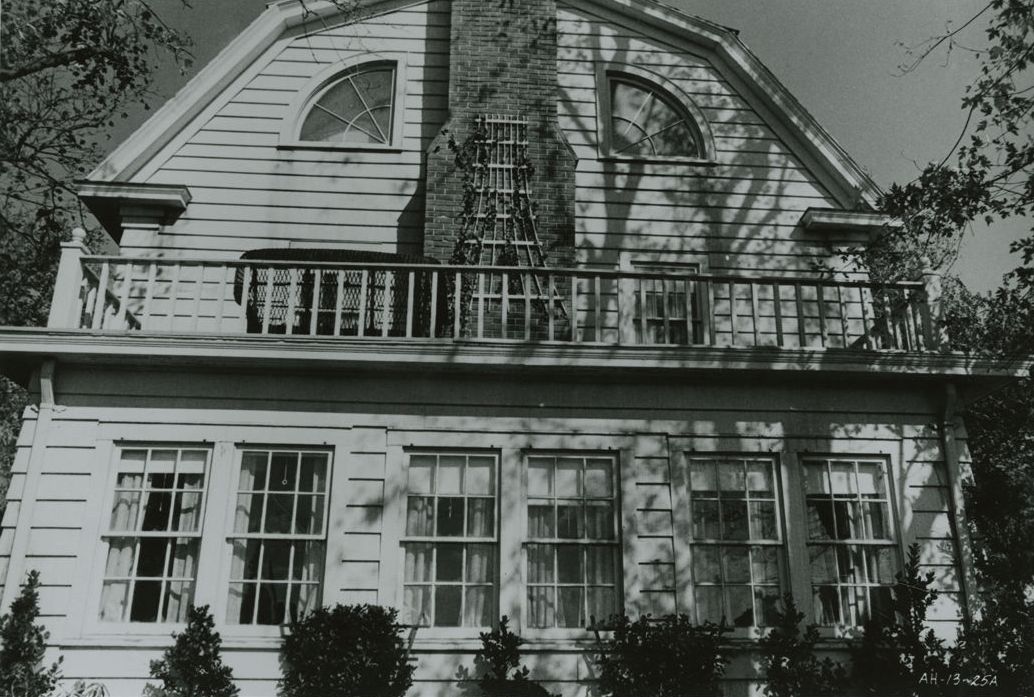
The film begins as yet another tale spun ‘round the Long Island home called High Hopes, where Ronald DeFeo Jr. killed his parents and siblings before the Lutz family took up residence, remaining only 28 days. The Lutzes’ tale informed a fantastically popular book and no fewer than 12 films, as well as plenty of hoax accusations. What sets My Amityville Horror apart is that it quickly becomes a character study of the eldest of the Lutz children, Daniel.
He’s a troubled, heartbreaking, mesmerizing central figure for the film. His stories are so wild and yet he believes them so earnestly that, whether phantasms traumatized his family or whether these tales are the coping mechanism of a young boy subjected to a different kind of abuse becomes hazy and deeply sad.
Director and Amityville fanatic Eric Walter uses a compassionate but unerring focus to illuminate something honestly troubling: the struggle of one of the Amityville horror victims, regardless of the actual horror that went on inside the house.
3. Cropsey (2009)
Cropsey was the Hudson River area summer camp name for a boogeyman. In Staten Island’s Boy Scout camp tales, Cropsey lived in a tunnel system beneath the borough’s abandoned mental hospital. He nabbed children while their parents weren’t looking and killed them out in the woods.
But in Staten Island, the story of Cropsey was true, only his name is Andre Rand.
As filmmakers Barbara Brancaccio and Justin Zemen dig into this story of a convicted sexual predator/mental hospital orderly suspected in the disappearances of as many as seven children, they pull us through fact and myth, expertly choosing news footage to anchor modern interviews.
Their clever approach combines the best of any serial killer drama with the haunting reality of Capturing the Friedmans. They explore the investigation of a serial child killer, all the while exposing the human foibles, mob mentality, and lurid fascination that makes you wonder, even though they clearly have a very bad man, do they have the right one?
2. The Act of Killing (2012)
Surreal, perverse, curious and horrifying, The Act of Killing demands to be seen.
It is anchored in the atrocities committed during the overthrow of the Indonesian government in 1965. Paramilitary death squads and ruthless gangsters captured, tortured and killed at will, all under the guise of exterminating “communists.” Over one million Indonesians lost their lives, and those responsible continue to gloat about their actions from a seat of power they still enjoy today.
Co-director Joshua Oppenheimer met with some of the most famous death squad leaders and made them a distasteful yet ultimately brilliant offer: would they re-enact their savagery on camera?
The result is mesmerizing, can’t-believe-what-I’m-seeing-stuff.
Recalling the finest of their work, The Act of Killing is unforgettable. It calls to mind past cruelty, an Orwellian present and an uncertain future, emerging as essential, soul-shaking viewing.
1. The Nightmare (2015)
An effective scary movie is one that haunts your dreams long after the credits roll. It’s that kind of impact most horror buffs are seeking, but even the most ardent genre fan will hope out loud that Rodney Ascher’s documentary The Nightmare doesn’t follow them to sleep.
His film explores sleep paralysis. It’s the phenomenon that inspired Wes Craven to write A Nightmare on Elm Street. It’s a clear creative root for Insidious, Borgman and scores of other horror movies. But it isn’t fiction. It’s a sometimes nightly horror show real people have to live with. And dig this – it sounds like it might be contagious.
Ascher’s a fascinating, idiosyncratic filmmaker. His documentaries approach some dark, often morbid topics with a sense of wonder. His films never seem to be pushing an agenda, he doesn’t seem to have made up his mind on his subject matter. Rather, he is open which, in turn, invites the audience to be open.
We spend a great deal of time watching horror movies, and I cannot remember an instance in my life that I considered turning off a film for fear that I would dream about it later. Until now.
Listen to the whole conversation on our FRIGHT CLUB podcast.
Mid-budget, R-rated horror can land a surprising punch. Sinister, The Purge, Paranormal Activity and others benefitted from filmmakers’ dark imagination and the freedom to explore unsettling territory.
Similarly budgeted PG-13 horror is more of a mixed bag. The younger target audience frees filmmakers up to steal from older films, and the family-friendly rating sometimes means sterilized scares. There are exceptions: The Ring, The Grudge, Insidious.
The first film in this trilogy offered a wildly imaginative take on ghost stories and possession. A spooky if somewhat traditional haunted house tale turns insane as director James Wan articulated writer Leigh Whannell’s concept of “the Further” – the realm beyond ours where creepy spirits play pipe organs and tiptoe through tulips.
It is tough for a filmmaker to show us something that phantasmal. Generally, leaving it up to the audience’s imagination is the better bet, but Wan and Whannell took a chance and it paid off with disturbing success.
The two returned for a sequel, with lesser results. For the third chapter, Whannell – longtime horror writer, first time director – takes the helm for an origin story.
Elise (Lin Shaye) has retired from the psychic biz after a personal tragedy and a spectral scare, but she’s drawn reluctantly back into the game when spunky teen Quinn (Stefanie Scott) finds herself dogged by a nasty entity she’d mistaken for her dead mother.
As a director, Whannell relies heavily on jump scares, and his image of “the Further” lacks all the panache and terror of the original.
He’s replaced this with a hero/victim that better suits a younger audience. Rather than watching desperate parents struggling to save their children, we follow the increasingly more helpless adolescent as her angsty high school drama turns into something far more sinister.
There’s no depth to the emotional turmoil and the supernatural element is far less clever. This is not a film that will haunt you as you turn out the lights, but it will make you jump while you’re watching, which is sometimes success enough.