Tag Archives: horror movies

Fright Club: Best Zombie Movies

Ever since Romero reimagined the mindless monster in 1968, horror cinema’s go-to beast has been the zombie. Perfect for true terror or splatter comedy – or, hell, even a romantic comedy now and again – films of the undead proliferated faster than a zombie horde. You can find them in nearly every genre, on almost every continent, and in just about every possible medium including children’s books. (If you have not read Ten Little Zombies, it makes an excellent stocking stuffer. Trust us!)

To help us hone our list we enlisted Dave Man, who kindly joins us on this week’s podcast. If you only have time for 5 (or maybe 6) zombie films, which to choose? Rest easy! We have some candidates.

5. Zombie (1979)

Originally filmed as an unofficial sequel to Romero’s Dawn of the Dead, this was director Lucio Fulci’s first true horror film, though he’d done several very violent films previously (Don’t Torture a Duckling, for instance). Shot to showcase violence, and immeasurably aided by Fabio Frizzi’s score, Zombie became a turning point in Z films and in Italian horror.

A boat docks in New York with one undead seaman aboard. A young woman and an investigative reporter head out to the island of that boat’s origins, where her father has been doing scientific work, only to find that the island is overrun with hungry walking corpses.

Fulci’s film tries to marry Romero’s take on the undead with the traditional voodoo narrative of films like White Zombie, but it’s the director’s vivid imagination for festering flesh, plus his now go-to shock of eye gouging, that helped the film make its mark. Plus, zombie-on-shark action!

https://www.youtube.com/watch?v=mqFWrGKLb4E

4. Dead Snow (2009)

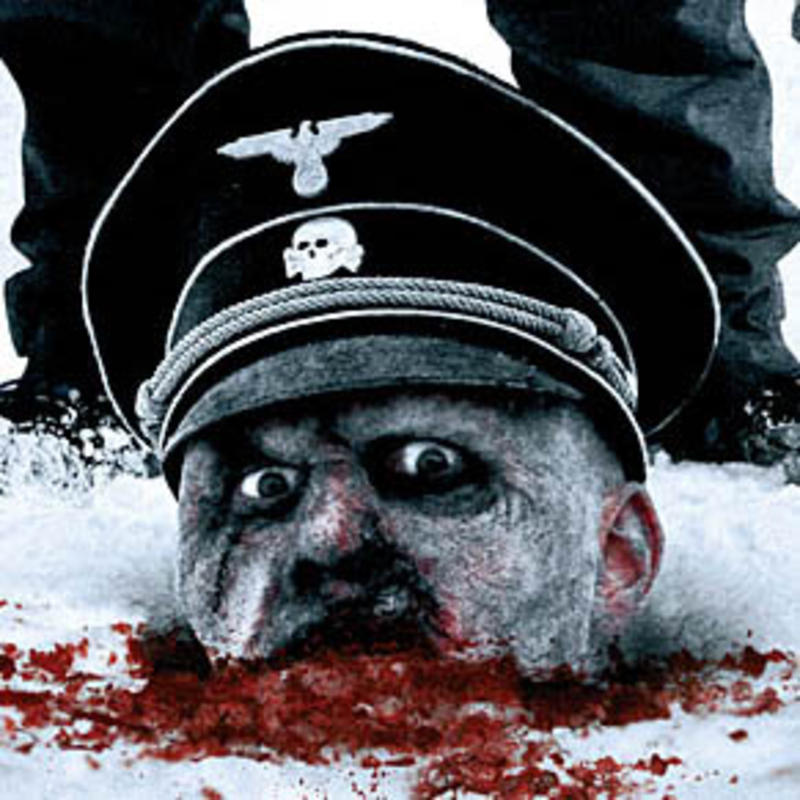
Like its portly nerd character Erlend, Dead Snow loves horror movies. A familiarly self-referential “cabin in the woods” flick, Dead Snow follows a handsome mixed-gender group of college students as they head to a remote cabin for Spring Break. A creepy old dude warns them off with a tale of local evil. They mock and ignore him at their peril.

But co-writer/director/Scandinavian Tommy Wirkola doesn’t just obey these rules. He embraces our prior knowledge of the path we’re taking to mine for comedy, but he doesn’t give up on the scares. Wirkola’s artful imagination generates plenty of startles and gore by the gallon.

Spectacular location shooting, exquisite cinematography, effective sound editing and a killer soundtrack combine to elevate the film above its clever script and solid acting. Take the gorgeous image of Norwegian peace: a tent, lit from within, sits like a jewel nestled in the quiet of a snowy mountainside. The image glistens with pristine outdoorsy beauty – until it … doesn’t.
https://www.youtube.com/watch?v=55uGN58UOkk

3. Braindead (Dead Alive) (1992)

Rated R for “an abundance of outrageous gore,” Braindead is everything the early Peter Jackson did well. It’s a bright, silly, outrageously gory bloodbath.

Lionel Cosgrove (Timothy Balme) secretly loves shopkeeper Paquita Maria Sanchez (Diana Penalver). Unfortunately, Lionel’s overbearing sadist of a mother follows the lovebirds to a date at the zoo, where she’s bitten (pretty hilariously) by a Sumatran rat-monkey (do not mistake this dangerous creature for a rabid Muppet or misshapen lump of clay). The bite kills her, but not before she can squeeze pus into some soup and wreak general havoc, which is nothing compared to the hell she raises once she comes back from the dead.

Braindead is so gloriously over-the-top that nearly any flaw can be forgiven. Jackson includes truly memorable images, takes zombies in fresh directions, and crafts characters you can root for. But more than anything, he knows where to point his hoseful of gore, and he has a keen imagination when it comes to just how much damage a lawnmower can do.

2. Dawn of the Dead (1978/2004)

Romero returned to the land of the undead in ’78 with a full-color sequel to Night. Set in Philadelphia, at a news broadcast gone crazy, the film follows a news producer, her chopper pilot boyfriend, and two Philly SWAT cops ready to abandon the organized zombie fight and find peace elsewhere. The four board a helicopter, eventually landing on the roof of a mall, which they turn into their private hideaway.

Romero, make-up legend Tom Savini, and Italian horror director Dario Argento teamed up for the sequel. You feel Argento’s presence in the score and the vivid red of the gore. Ken Foree and Scott Reiniger as the buddies from SWAT create the most effective moments, whether character-driven tension or zombie-driven action. Romero’s politics are on his sleeve with this one. He uses the “z” word, digs at consumerism, shows full-color entrails, and reminds us again that the undead may not be our biggest enemy once the zombie-tastrophe falls.

Plenty of filmmakers have remade or reimagined Romero’s flicks, but none did it as well as Zack Snyder.

In Romero’s version, themes of capitalism, greed, mindless consumerism run through the narrative. Snyder, though affectionate to the source material, focuses more on survival, humanity, and thrills. (He also has a wickedly clever soundtrack.) It’s more visceral and more fun. His feature is gripping, breathlessly paced, well developed and genuinely terrifying.

https://www.youtube.com/watch?v=PpuNE1cX03c

https://www.youtube.com/watch?v=rhsutNfvuAY

1 Night of the Living Dead (1968)

From the brightly lit opening cemetery sequence to the paranoid power struggle in the house to the devastating closing montage, Night of the Living Dead teems with the racial, sexual, and political tensions of its time. An unsettlingly relevant George A. Romero knew how to push societal panic buttons.

As the first film of its kind, the lasting impact of this picture on horror cinema is hard to overstate. His inventive imagination created the genre and the monster from the ground up.

They’re dead.
They’re back.
They’re hungry for human flesh.
Their bite infects the bitten.
The bitten will eventually bite.
Aim for the head.

The shrill sense of confinement, the danger of one inmate turning on another, and the unthinkable transformation going on in the cellar build to a startling climax – one that utterly upends expectations – followed by the kind of absolutely genius ending that guarantees the film’s eternal position in the annals of horror cinema.

Listen to the whole podcast HERE.
#NotBlessed

#Horror

by Hope Madden

Simultaneously spoiled and neglected, handed every luxury imaginable and then abandoned to do with their time what they will, a group of 12-year-old girls at a sleepover pay the price for a too-modern childhood.

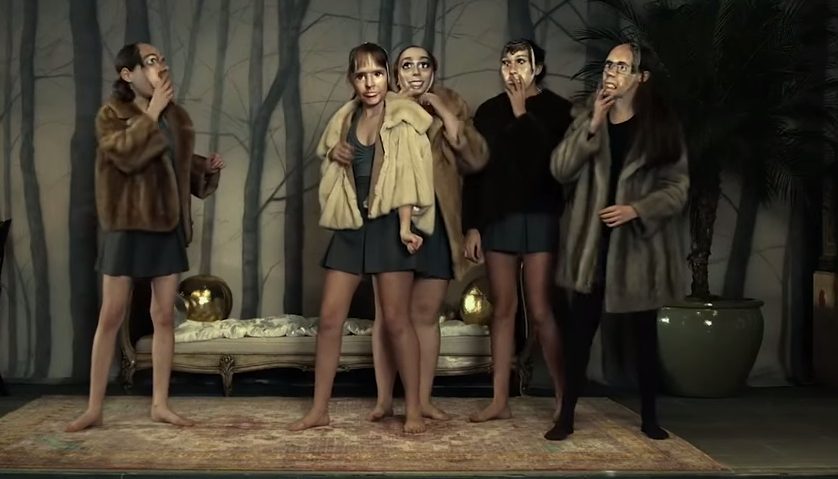
Loosely inspired by true events, #Horror tracks the evolution of the mean girl. Between cyberbullying and online gaming, one pre-adolescent clique elevates their coming-of-age angst into a post-modern horror show.

Writer/director Tara Subkoff populates her soullessly luxurious world with bizarre and arresting visuals, and her cast – both the seasoned adults and the mostly unknown child performers – offer a range of unique and compelling performances. The atmosphere created is so detached, stylized, and surreal, you can imagine almost anything happening.

Subkoff has provocative things to say about coming of age, and though none of them are entirely novel, she wisely avoids one-sided arguments. Yes, the five 12-year-olds ultimately blame their selfish, negligent parents for their own fucked-up-edness, although the film’s heroine Sam, (Sadie Seelert) chooses to reject her loving and protective mother in favor of the attention of her new school’s mean girl circle.

Subkoff’s film is at its best when it drops you into the undercooked logic of a child.

“Nothing is mean if you laugh,” explains a genuinely earnest and confused Cat (Haley Murphy). And that’s really the point of the film: kids are stupid, parents are blind, the world offers more immediate and accessible dangers than ever before, and that time between childhood and adulthood is a haze of misunderstood circumstances and unavoidable selfishness.

Chloe Sevigny and Timothy Hutton are over-the-top wonders, both horrifying yet wonderful in their own way, but Subkoff’s real victory is her ability to capture, with the help of a game pre-adolescent cast, the combination of cynicism and playfulness that marks these particular girls’ youth.

The horror story is a tad thin – derivative, even – but what Subkoff, her visual panache and her cast manage to do with it keeps you intrigued and guessing for the full 90 minute run.

Verdict-3-5-Stars

Read Hope’s interview with director Tara Subkoff HERE.

Bad Doctor

Victor Frankenstein

by Hope Madden

As Daniel Radcliffe’s Igor begins to spin his Gothic yarn in voiceover, he tells us that everyone knows about the monster, but too few people know about Victor Frankenstein.

Here is the first problem with this movie.

In fact, only James Whale and Boris Karloff did Frankenstein’s monster proper. Everyone else – everyone else – has been preoccupied with the mad scientist whose compulsion to create life went wildly out of control.

Still, Paul McGuigan’s film invites us, not just to the headspace of the mad doctor, but to the bond between scientist and assistant, because VF is, at its heart, a buddy picture. In fact, we learn a lot more about Igor than we do the title character.

Radcliffe’s performance is tender and sincere as the malformed and bullied young man, rescued by the anatomically obsessed surgeon. As Victor, James McAvoy waffles between a believably wounded and vulnerable genius, and some hammy overacting.

Neither McAvoy nor Radcliffe are the issue, though. Max Landis’s screenplay meanders hither and yon without the slightest focus, from circus to laboratory to ball to medical college to isolated castle without a clear narrative path or sense of purpose. Worse still, the utterly baffling leaps in logic. (Igor is crippled circus clown who’s never known anything but cruelty; he is also the circus doctor. I’m sorry – what?)

McGuigan’s pacing only exacerbates the situation. The film feels twice as long as it is, and the very-late-entrance of the monster only makes the balance of the running time feel that much more tedious. Though he pastes together eye-catching images now and again – the twirl of a red skirt, an oversized medical sketch on the floor, enormous advertisement heads atop a building – on the whole he can’t capitalize on either a visual aesthetic or any sense of movement.

Victor Frankenstein is as stagnant and bloated as his corpses.

Regardless of all that, the question is, who needs another doctor with a God complex? Whale was right. It’s the monster who’s interesting.

Verdict-2-0-Stars

Unlikely Oscar Contender

For the first time in – perhaps ever – a full-on horror short appears to be in the running for an Oscar nomination.

Shant Hamassian’s one-take wonder Night of the Slasher offers a clever, funny, self-referential look at slasher films and manages to tell a complete tale, develop a character, scare, and entertain – all in about 12 minutes.

The pacing is wonderful, and with each passing minute Hamassian unveils another piece of information we didn’t realize we were missing. A protagonist (Lily Berlina), for reasons unexplained but certainly suggested, appears to be trying to unravel the slasher’s formula. Her goal is certainly to defeat the killer, but she may turn into a monster herself in the process.

A couple of very funny lines, a handful of perfectly placed visual gags, and camerawork that never feels like a gimmick separate Night of the Slasher from other horror comedies. Certainly the story follows the same path as Scream and, more recently, The Final Girls, but Hamassian finds new ground to break. Efficiency is on his side. Nothing is belabored, everything compels attention.

The masked maniac brings with him the film’s cheekiest joke, but Berlina plays the heroine with a raspy desperation and tenacity that elevate the film above spoof.

The short was carved from a full length screenplay and filmed as an attempt to get funding for a full feature. Here’s hoping!

Find out more at Night of the Slasher’s Facebook page:

Fright Club Live: Inside

Inside (2007)

Holy shit. Inside is not for the squeamish.

Beatrice Dalle’s insidious performance is hard to shake. Fearless, predatory, pitiless and able to take an enormous amount of abuse, her nameless character stalks a very, very pregnant Sarah (Alysson Paradis). Sarah lost her husband in a car crash some months back, and now, on the eve of Christmas, she sits, enormous, uncomfortable, and melancholy about the whole business. She’s grown cynical and despondent, more depressed than excited about giving birth in the morning.

Alexandre Bustillo’s film seeks to change her mind, make her want that baby. Because Dalle’s lurking menace certainly wants it. Her black clad silhouette is in the back yard, smoking and stalking – and she has seriously bad plans in mind.

Bustillo and directing partner Julien Maury swing the film from intelligent white collar angst to goretastic bloodfest with ease. The sadistic humor Dalle brings to the performance adds chills, and Paradis’s realistic, handicapping size makes her vulnerability palpable.

The film goes wildly out of control, and by the third act, things are irredeemably out of hand. And yet, this is a brilliant effort, a study in tension wherein one woman will do whatever it takes, with whatever utensils are available, to get at the baby still firmly inside another woman’s body.

Fright Club: Best Spanish Language Horror

!Dios mio! There are so many exceptional Spanish language horror films, it was hard to choose just 5 – so we didn’t! Whether it’s a Mexican director working in Spain, a Cuban zombiepocalypse, or ghosts, zombies, mad doctors or madder clowns, we have you covered with our fuzzy math salute to el cine de los muertos.

6. Juan of the Dead (2011)

By 2011, finding a zombie film with something new to say was pretty difficult, but writer/director/Cuban Alejandro Bruges managed to do just that with his bloody political satire Juan of the Dead.

First, what a kick ass title. Honestly, that’s a lot to live up to, begging the comparison of Dawn’s scathing social commentary and Shaun’s ingenious wit. Juan more than survives this comparison.

Breathtakingly and unapologetically Cuban, the film shadows Juan and his pals as they reconfigure their longtime survival instincts to make the most of Cuba’s zombie infestation. It’s a whole new approach to the zombiepocalypse and it’s entirely entertaining.

https://www.youtube.com/watch?v=CZrKJvX7mjg

5. The Devil’s Backbone (2001)

Guillermo del Toro’s The Devil’s Backbone unravels a spectral mystery during Spain’s civil war. The son of a fallen comrade finds himself in an isolated orphanage that has its own troubles to deal with, now that the war is coming to a close and the facility’s staff sympathized with the wrong side. That leaves few resources to help him with a bully, a sadistic handyman, or the ghost of a little boy he keeps seeing.

Backbone is a slow burn as interested in atmosphere and character development as it is in the tragedy of a generation of war orphans. This is ripe ground for a haunted tale, and del Toro’s achievement is both contextually beautiful – war, ghost stories, religion and communism being equally incomprehensible to a pack of lonely boys – and elegantly filmed.

Touching, political, brutal, savvy, and deeply spooky, Backbone separated del Toro from the pack of horror filmmakers and predicted his potential as a director of substance.

4. The Skin I Live In (2011)

In 2011, the great Pedro Almodovar created something like a cross between Eyes Without a Face and Lucky McGee’s The Woman, with all the breathtaking visual imagery and homosexual overtones you can expect from an Almodovar project.

The film begs for the least amount of summarization because every slow reveal is placed so perfectly within the film, and to share it in advance is to rob you of the joy of watching. Antonio Banderas gives a lovely, restrained performance as Dr. Robert Ledgard, and Elena Anaya and Marisa Paredes are spectacular.

Not a frame is wasted, not a single visual is placed unconsciously. Dripping with symbolism, the film takes a pulpy and ridiculous story line and twists it into something marvelous to behold. Don’t dismiss this as a medical horror film. Pay attention – not just to catch the clues as the story unfolds, but more importantly, to catch the bigger picture Almodovar is creating.

3. [Rec] (2007)

Found footage horror at its best, [Rec] shares one cameraman’s film of the night he and a reporter tagged along with a local fire department. Bad, bad things will happen.

The squad gets a call from an urban apartment building where one elderly tenant keeps screaming. No sooner do the paramedics and news crew realize they’ve stepped into a dangerous situation than the building is sealed off and power is cut. Suddenly we’re trapped in the dark inside a building with about fifteen people, some of them ill, some of them bleeding, some of them biting.

The found footage approach never feels tired – at first, he’s documenting his story, then he’s using the only clear view in the darkened building. The point of view allows [Rec] a lean, mean funhouse experience.

2. The Last Circus (2010)

Who’s in the mood for something weird?

Unhinged Spanish filmmaker Alex de la Iglesia offers The Last Circus, a breathtakingly bizarre look at a Big Top love triangle set in Franco’s Spain.

Describing the story in much detail would risk giving away too many of the astonishing images. A boy loses his performer father to conscription in Spain’s civil war, and decades later, with Franco’s reign’s end in sight, he follows in pop’s clown-sized footsteps and joins the circus. There he falls for another clown’s woman, and stuff gets nutty.

Iglesia’s direction slides from sublime, black and white surrealist history to something else entirely. Acts 2 and 3 evolve into something gloriously grotesque – a sideshow that mixes political metaphor with carnival nightmare.

The Last Circus boasts more than brilliantly wrong-minded direction and stunningly macabre imagery – though of these things it certainly boasts. Within that bloody and perverse chaos are some of the more touching performances to be found onscreen.

https://www.youtube.com/watch?v=oM2corZvDTI

1. The Orphanage (2007)

Sometimes a throwback is the most refreshing kind of film. Spain’s The Orphanage offers just that fresh breath with a haunted house tale that manages to be familiar and surprising and, most importantly, spooky.

Laura (Belén Rueda) and her husband reopen the orphanage where she grew up, with the goal of running a house for children with special needs – children like her adopted son, Simón, who is HIV positive. But Simón’s new imaginary friends worry Laura, and when he disappears it looks like she may be imagining things herself.

One of the film’s great successes is its ability to take seriously both the logical, real world story line, and the supernatural one. Rueda carries the film with a restrained urgency – hysterical only when necessary, focused at all times, and absolutely committed to this character, who may or may not be seeing ghosts.

A good ghost story is hard to find. Apparently you have to look in Spain.

Listen to the full conversation on our FRIGHT CLUB PODCAST.

Fright Club: Top 5 Takashi Miike Films

When we decided to start devoting entire podcasts to individual filmmakers, Takashi Miike was an obvious choice. He’s made 86 movies (and counting), so we knew it wouldn’t be too tough to find 5 really good ones. His imagination is like no other and his films push the envelope in terms of violence, subversive imagery, surreal storytelling, and violence. (Yes, we said that twice. He’s really, really good with violence.)

In fact, it was hard to narrow it down and even harder to leave some of his non-horror masterpieces, like 13 Assassins, off the list. Still, we did it. Here we give you Takashi Miike’s 5 best horror movies.

5. Three…Extremes (2004)

Miike directed one of the three shorts in this collection, a tidy little freakshow called “Box.”

Part of the reason it made this list is that the full film, including Fruit Chan’s “Dumplings” and the great Chan-wook Park’s “Cut,” is among the very best short compilation films you’ll find. Each short is so peculiar and original that your interest never wanes.

Miike’s component tells the story of a haunted, damaged woman. Her waking reality and dreams of the horror from her past weave together so that neither she nor the viewer is ever certain which is which. Sexual repression, incestuous undertones, dreamy colors, bodily contortions, and a dizzying, overlapping storyline mark this as a very Miike work.

https://www.youtube.com/watch?v=5rIz7WEKGTs

4. Happiness of the Katakuris (2001)

Miike is an extremely prolific director. He makes a lot of musical films, a lot of kids’ movies, a lot of horror movies, and then this – a mashup of all of those things. Like Sound of Music with a tremendous body count.

The Katakuris just want to run a rustic mountain inn. They’re not murderers. They’re lovely – well, they’re losers, but they’re not bad people. Buying this piece of property did nothing to correct their luck, either because, my God, their guests do die.

You might call this a dark comedy if it weren’t so very brightly lit. It’s absurd, farcical, gruesome but sweet. There’s a lot of singing, some animation, a volcano, a bit of mystery, more singing, one death by sumo smothering, and love. It sounds weird, truly, but when it comes to weird, Miike is just getting started.

https://www.youtube.com/watch?v=XDfMXwRapNc

3. Gozu (2003)

This one starts off as a yakuza film – one guy on a mob-style assignment – then descends into absolute madness.

Minami (Yuta Sone) has been ordered to assassinate his feeble-minded yakuza boss Ozaki (Sho Aikawa), but he’s conflicted. Then he loses him and wanders, in search, into – you might say it was the Twilight Zone, except this place is considerably weirder. There’s a minotaur. An electrified anal soup ladle death scene. Some seriously, seriously weird shit.

Like a walk through somebody’s subconscious, the film is awash in repressed sexual desires of the very most insane and unspeakable. There’s a comical element that’s almost equally unsettling. Gozu is not as violent as many Miike films – it’s violent, don’t be mistaken, but the horror here is more in unseemly behavior and wildly inappropriate imagery.

https://www.youtube.com/watch?v=penZT2N2xDw

2. Ichi the Killer (2001)

Not everyone considers Ichi the Killer an outright horror film. IMDB classifies it as action/comedy/crime, and while it certainly contains all three of those elements, for sheer carnage, not to mention torture, we have to tack on the horror label as well.

Dubious henchmen with a secret weapon – a childlike perv they’ve programmed to kill at their bidding – start a yakuza war by throwing misleading information about the disappearance of one mob boss. He’s being tracked by his really, really, super loyal second in command, Kakihara. (That’s the guy with the incredibly cool/freaky split face from the DVD cover.)

Kakihara’s boss is dead, but he believes he may be kidnapped. He starts kidnapping those who might be to blame, torturing them pretty outlandishly. It’s kind of his art – Kakihara likes to give and receive punishment. Ichi likes to masturbate while others suffer. He comes to consider himself a kind of superhero. Kakihara believes he may be a superhero and really, really wants Ichi to beat him up or die trying.

The childlike Ichi misunderstands everything, and you long for his redemption and happiness, but Miike pulls that rug out from under you because, basically, every person in this film is seriously deranged.

1. Audition (1999)

Audition tells the story of a widower convinced by his TV producer friend to hold mock television auditions as a way of finding a suitable new mate. He is repaid for his deception.

Unwatchable and yet too compelling to turn away from, Audition is a remarkable piece of genre filmmaking. The slow moving picture builds anticipation, then dread, then full-on horror.

Miike punctuates the film midway with one of the most effective startles in modern horror, and then picks up pace, building grisly momentum toward a perversely uncomfortable climax. By the time Audition hits its ghastly conclusion, Miike and his exquisitely terrifying antagonist (Eihi Shina) have wrung the audience dry.

Keep an eye on the burlap sack.

They Could Have Been More Prepared

Cub

by Hope Madden

Does this story sound familiar? Friends head into the woods, run into some trouble finding their exact camping spot, settle for an “almost right” spot, tell campfire stories about a lurker in the bushes, and die.

If it doesn’t sound familiar, you are new.

So why, then, is Cub (Welp) immediately scarier than other campground slashers?

Because they’re all little kids.

That is correct. It’s a group of wee Belgian scouts out on their big camping excursion into the wrong damn woods.

Co-writer/director Jonas Govaerts uses that small twist to build a lot of tension as imaginative little Sam (Maurice Luijten) – a boy with an uncertain yet tragic past – believes the campfire tales of Kai, a feral boy who hunts the nearby woods.

Govaerts knows how to wring anxiety as he unveils character, beginning with a group countdown as Sam sprints to try to make the truck that’s leaving for camp. Then there’s a run in with unfriendly French hoods claiming the right to the original camp site, not to mention the inner-troop skirmishes for hierarchy. Childhood is tough, tribalism is brutal, and camping in the woods is just plain stupid. If you don’t know that, again, you are new. No one survives the woods.

Most of the film’s success is due to the strong performances, particularly from Luijten, who is equal parts adorable, earnest, and impressionable. The adult cast is solid enough in a film that knows its territory and agrees to do what it can without redefining anything.

Which, of course, is also Cub’s biggest weakness.

Though Govaerts foreshadows quite well, and his camera captures both the wonder and terror of the woods, he can’t entirely overcome the template he’s chosen for his film. The entire effort just feels too familiar.

That doesn’t make the film an outright disappointment, either. There are bright, gnarly moments here and there. Govaerts just can’t finally deliver all the goods.

Verdict-3-0-Stars

Day 29: The Woman

The Woman (2011)

OK, Halloween’s almost here. It’s time to get real. And by that we mean real nasty.

There’s something not quite right about Chris Cleese (an unsettlingly cherubic Sean Bridgers), and his family’s uber-wholesomeness is clearly suspect. This becomes evident once Chris hunts down a feral woman (an awesome Pollyanna McIntosh), chains her, and invites the family to help him “civilize” her.

The film rethinks family – well, patriarchy, anyway. Notorious horror novelist and co-scriptor Jack Ketchum may say things you don’t want to hear, but he says them well. And director Lucky McKee – in his most surefooted film to date – has no qualms about showing you things you don’t want to see. Like most of Ketchum’s work, The Woman is lurid and more than a bit disturbing. Indeed, the advanced screener I watched came in a vomit bag.

Aside from an epically awful performance by Carlee Baker as the nosey teacher, the performances are not just good for the genre, but disturbingly solid. McIntosh never veers from being intimidating, terrifying even when she’s chained. Bridgers has a weird way of taking a Will Ferrell character and imbibing him with the darkest hidden nature. Even young Zach Rand, as the sadist-in-training teen Brian, nails the role perfectly.

Nothing happens in this film by accident – not even the innocent seeming baking of cookies – nor does it ever happen solely to titillate. It’s a dark and disturbing adventure that finds something unsavory in our primal nature and even worse in our quest to civilize. Don’t even ask about what it finds in the dog pen.

Listen weekly to MaddWolf’s horror podcast FRIGHT CLUB. Do it!

Fright Club: Best Stephen King Movies

We greet an honest to god expert for this week’s podcast, as Dr. Neil McRobert (you may know him better as NakMak!) joins us to talk about Stephen King films. Neil’s doctoral thesis concerned itself in part with King’s writings, and yet, somehow Hope decided she was still the more appropriate choice to determine the rankings of King films. Listen in and let us know who does a better job with the list. The whole conversation goes on HERE.

5. Dolores Claiborne (1995)

Taylor Hackford helms this generational saga of women in a man’s world. Not truly a horror film, it follows the tale of stern Mainer Dolores (the magnificent –as-always Kathy Bates), who’s been accused of murdering her contemptible boss, Vera Donovan (an outstanding Judy Parfitt). Dolores’s estranged daughter (Jennifer Jason Leigh) returns to the Maine island of her birth to support her mom from being railroaded, as the entire town believes Dolores has already gotten away with murder once.

The film is an achievement in casting above all things. Bates is brilliant, and so is David Strathairn, playing against type as abusive white trash husband and father. Tony Gilroy’s screenplay is delicately faithful to King’s novel, a character-driven drama that boasts some excellent lines – most of them landing in Parfitt’s mouth. Luckily she’s up to the challenge and makes it look easier than it should to be a bitch.

4. Misery (1990)

Kathy Bates had been knocking around Hollywood for decades, but no one really knew who she was until she landed Misery. Her sadistic nurturer Annie Wilkes – rabid romance novel fan, part time nurse, full time wacko – ranks among the most memorable crazy ladies of modern cinema.

James Caan plays novelist Paul Sheldon, who kills off popular character Misery Chastain, then celebrates with a road trip that goes awry when he crashes his car, only to be saved by his brawniest and most fervent fan, Annie. Well, she’s more a fan of Misery Chastain’s than she is Paul Sheldon’s, and once she realizes what he’s done, she refuses to allow him out of her house until she brings Misery back to literary life.

Caan seethes, and you know there’s an ass kicking somewhere deep in his mangled body just waiting to get out. But it’s Bates we remember. She nails the bumpkin who oscillates between humble fan, terrifying master, and put-upon martyr. Indeed, both physically and emotionally, she so thoroughly animates this nutjob that she secured an Oscar.

3. The Mist (2007)

Frank Darabont really loves him some Stephen King, having adapted and directed the writer’s work almost exclusively for the duration of his career. While The Shawshank Redemption may be Darabont’s most fondly remembered effort, The Mist is an underappreciated creature feature.

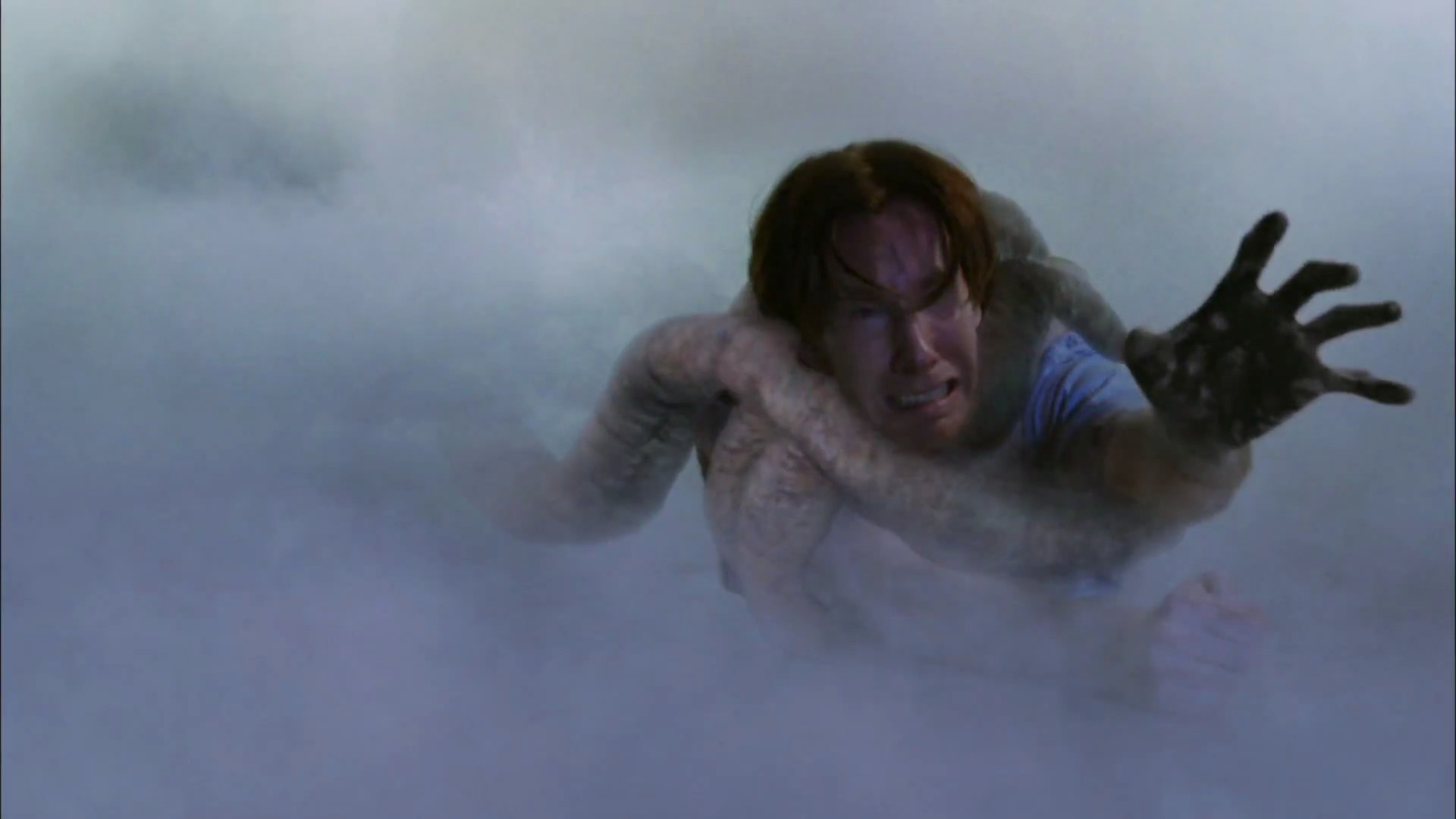
David Drayton (Thomas Jane) and his young son head to town for some groceries. Meanwhile, a tear in the space/time continuum opens a doorway to alien monsters. So he, his boy, and a dozen or so other shoppers are all trapped inside this glass-fronted store just waiting for rescue or death.

Marcia Gay Harden is characteristically brilliant as the religious zealot who turns survival inside the store into something less likely than survival out with the monsters, but the whole cast offers surprisingly restrained but emotional turns.

The FX look good, too, but it’s the provocative ending that guarantees this one will sear itself into your memory.

2. Carrie (1976)

The seminal film about teen angst and high school carnage has to be Brian De Palma’s 1976 landmark adaptation of King’s first full length novel, the tale of an unpopular teenager who marks the arrival of her period by suddenly embracing her psychic powers.

Sissy Spacek is the perfect balance of freckle-faced vulnerability and awed vengeance. Her simpleton characterization would have been overdone were it not for Piper Laurie’s glorious evil zeal as her religious wacko mother. It’s easy to believe this particular mother could have successfully smothered a daughter into Carrie’s stupor.

One ugly trick involving a bucket of cow’s blood, and Carrie’s psycho switch is flipped. Spacek’s blood drenched Gloria Swanson on the stage conducting the carnage is perfectly over-the-top. And after all the mean kids get their comeuppance, Carrie returns home to the real horror show.

1. The Shining (1980)

It’s isolated, it’s haunted, you’re trapped, but somehow nothing feels derivative and you’re never able to predict what happens next. It’s Stanley Kubrick’s masterpiece rendition of Stephen King’s The Shining.

Though critics were mixed at the time of the film’s release, and both Kubrick and co-star Shelley Duvall were nominated for Razzies, much of the world’s negative response had to do with a needless affection for the source material, which Kubrick and co-scriptor Diane Johnson use as little more than an outline.

A study in atmospheric tension, Kubrick’s vision of the Torrance family collapse at the Overlook Hotel is both visually and aurally meticulous. It opens with that stunning helicopter shot, following Jack Torrence’s little yellow Beetle up the mountainside, the ominous score announcing a foreboding the film never shakes.

What image stays with you most? The two creepy little girls? The blood pouring out of the elevator? The impressive afro in the velvet painting above Scatman Crothers’s bed? That guy in the bear suit – what was going on there? Whatever the answer, thanks be to Kubrick’s deviant yet tidy imagination.

Next week we will look at the best Canada has to offer the genre.

The following week, we are thrilled to tackle our sophomore effort at live recording the Fright Club podcast! We will unspool The Orphanage (2007) at Gateway Film Center on November 11, counting down the best Spanish language horror at 7:30, just prior to the 8pm screening.

In the meantime, help us prep for upcoming podcasts. What filmmaker, actor or actress deserves an entire podcast? Let us know on Twitter @maddwolf, on facebook @maddwolfcolumbus, or leave us a comment here.