Tag Archives: horror movies

Living Deliciously

Him

by Hope Madden

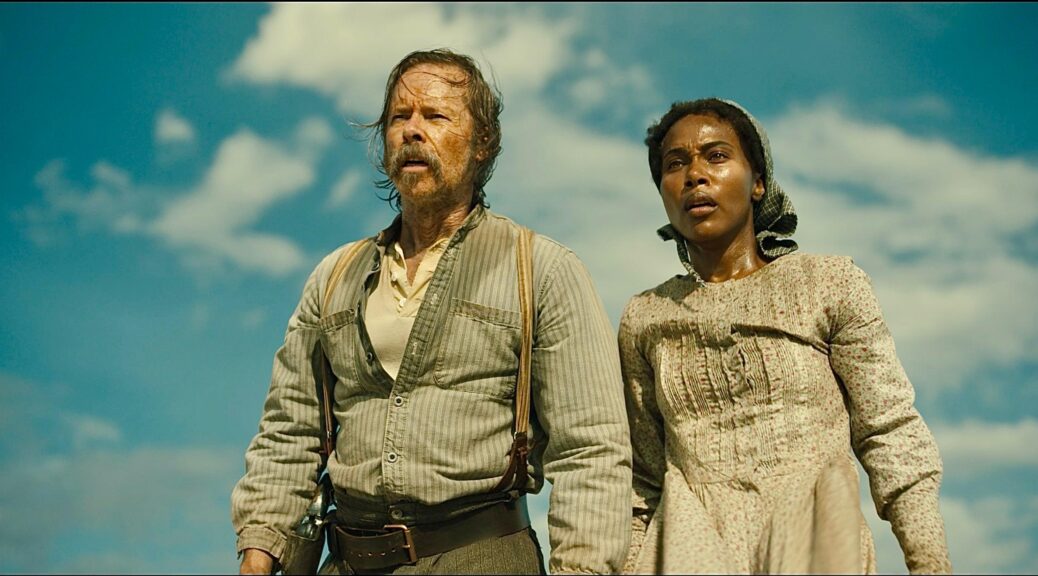
The goat is an apt image to anchor a sports film. The Greatest Of All Time. Every athlete’s dream. If you’ve ever watched horror, goats are also excellent avatars for evil. In the case of Him, co-writer/director Justin Tipping’s feature from Jordan Peele’s Monkey Paw Productions, it’s a bit of both.

Isaiah White (Marlon Wayans) lives deliciously. Is Cameron Cade (Tyriq Withers) ready for that? Cade is the up-and-comer, the college QB who may be the one man to dethrone legendary Saviors quarterback, White. The 8-time champion came back even after the bone-protruding leg injury Cam’s late father made him watch again and again as a child.

Why would a father make a child watch something like that? To learn what it means to be a man, naturally.

Him is dense with themes and imagery, beginning with the very real frights of traumatic brain injury and its effect on football players. But the larger horror is rooted in performative masculinity, of proving your physical superiority by overpowering an opponent, drawing first blood, drawing last blood, and calling it power when it’s simply entertainment for puny white men with money.

Tipping equates the mechanics of sizing up an athlete with preparation for an auction block in one of the film’s most quietly unnerving sequences. Later references to gladiators obediently entering the pit at the behest of their trainers serve as additional, hardly subtle, illustrations of the power dynamic afoot.

Withers’s overwhelmed acolyte feels more dopey than wide-eyed, but Wayans is slippery, diabolical fun as the primary antagonist. Naomie Grossman steals scenes as White’s biggest fan, and Tim Heidecker’s disingenuous smarm fits perfectly as Cade’s agent.

There’s an intriguing half to this film. It’s the half making points about the way those with a financial stake in the game proselytize brutal sacrifice in search of greatness. The delicious living half, though, feels like a cheat.

The supernatural elements in Him give way to a foggy mythology full of fever dream smash cuts and jump scares. At times—as on a shooting range—details are left delightfully, grotesquely vague. Elsewhere the ambiguity feels like narrative weakness.

Worse still, the supernatural side of the film, to a degree, lets capitalism and white supremacy off the hook, no matter how satisfying the final bloodletting may feel. The set design is evocative and cinematography impresses, but the film can’t quite live up to expectations.   

Fright Club: Evil Uncles in Horror Movies

Did Shakespeare start it all with Uncle Claudius? Maybe, but horror movies have really dug in. Yes, there are some excellent uncles, like drunky Uncle Red from Silver Bullet. That guy was the best! But that’s not what we’re after, and author Eric Miller, writer of the new novel Whatever Happened to Uncle Ed? knows a thing or two about uncles and horror, so he’s joined us to count them down!

5. Uncle Maurice, Possum (2018)

Sean Harris is endlessly sympathetic in this tale of childhood trauma. Philip (Harris) has returned to his burned out, desolate childhood home after some unexplained professional humiliation. His profession? Puppeteer. The puppet itself seems to be a part of the overall problem.

I don’t know why the single creepiest puppet in history—a man-sized marionnette with a human face and spider’s body—could cause any trouble. Kids can be so delicate.

Writer/director Matthew Holness spins a smalltown mystery around the sad story of a grown man who is confused about what’s real and what isn’t. As Uncle Maurice, Alun Armstrong cuts as dilapidated and corrosive a figure as Philip’s home and memories themselves. The melancholy story and Harris’s exceptional turn make Possum a tough one to forget.

4. Michael Myers, Halloween 4, 5 & 6 (1988, 1989, 1995)

In 1988, no one realized the Halloween franchise could be saved. Tarnished by the (now unreasonably popular and beloved) Halloween III, The Return of Michael Myers was expected to be a last gasp. it was not. The film, about the adorable little orphan left behind when Laurie Strode and her husband died in a car wreck, Halloween 4 not only saved the franchise with its remarkable popularity, but gave the slumping slasher genre a boost.

Danielle Harris starred, charming her way into our hearts as surely as the child in peril plot line kept us engaged. The film did so surprisingly well that it spawned a quickly slapped together, wildly inferior sequel a year later, also starring Harris. And then, to beat a dead horse and absolutely horrify anyone with fond memories of little Jamie, 1995’s Halloween 6 turns Myers from and uncle to a great uncle/father. Yeesh.

3. Uncle Kouzuki, The Handmaiden (2016)

Director Park Chan-wook had already investigated the influence of a sinister uncle in the woefully underseen Stoker in 2013. In 2016, that not-so-stable branch of the family tree inspires the auteur to mesmerize again with this seductive story of a plot to defraud a Japanese heiress in the 1930s.

Weird is an excellent word to describe this film. Gorgeous and twisty with criss-crossing loyalties and deceptions, all filmed with such stunning elegance. Set in Korea, the film follows a young domestic (Kim TAe-ri) in a sumptuous Japanese household. She’s to look after the beautiful heiress (KimMin-hee), a woman whose uncle (Cho Jin-woong) is as perverse and creepy as he is wealthy.

Smart and wicked, stylish and full of wonderful twists, The Handmaiden is a masterwork of delicious indulgence.

2. Uncle Charlie, Shadow of a Doubt (1943)

Alfred Hitchcock did the most damage with his mother/son relationships, but the unnerving bond between Charlie Newton (Teresa Wright) and her favorite Uncle Charlie (Joseph Cotton) picks some festering scabs.

After a series of heiress murders, Charlie heads to smalltown America to lay low with his older sister, who adores him. Loves him so much, she named her oldest after him, even though it was a daughter. And oh, newly teenaged Charlie is a firebrand and just as spunky and smart as her namesake!

The film examines narcissism as unnervingly as any ever has, Uncle Charlie an amiable enough guy, and he might really regret having to murder his niece. All within that weirdly stilted performance style Hitchcock preferred, the cracks and anxieties and almost sexual innuendos play against the wholesome Midwest aesthetic in a way that gnaws at you.

1. Uncle Frank, Hellraiser (1987)

Hellraiser, Clive Barker’s feature directing debut, worked not only as a grisly splatterfest, but also as a welcome shift from the rash of teen slasher movies that followed the success of Halloween. Barker was exploring more adult, decidedly kinkier fare, and Hellraiser is steeped in themes of S&M and the relationship between pleasure and pain.

Hedonist Frank Cotton (Sean Chapman) solves an ancient puzzle box, which summons the fearsome Cenobites, who literally tear Frank apart and leave his remains rotting in the floorboards of an old house. Years later, Frank’s brother moves into that house with his teenage daughter Kirsty (Ashley Lawrence), who begins to unravel the freaky shit Uncle Frank and stepmom Julia (an amazing Clare Higgins) get up to.

Smart, weird, transgressive, and most importantly, CENOBITES!

Some Dude with a Mop

The Toxic Avenger

by Hope Madden

My friend has photographed Lloyd Kaufman’s testicles. That means that in a game of Six Degrees of Lloyd Kaufman’s Testicles, I would win.

In other news, a bunch of talented, funny humans have rebooted Kaufman’s iconic 1984 Troma classic, The Toxic Avenger. There are few films I have more impatiently anticipated than this, plagued as it was by a two-year delay in distribution. But now you can see writer/director Macon Blair’s reboot in all its goopy, corrosive, violent, hilarious glory.

Though the story’s changed, much remains the same (including Easter eggs a plenty!).

Winston (Peter Dinklage), single stepfather to Wade (Jacob Tremblay) and janitor at a factory that makes wellness and beauty supplements, finds that he’s dying and his platinum insurance doesn’t cover the treatment that could save his life. Attempting to steal the money to cover the treatment, he saves a whistleblower (Taylour Paige) from a group of horror core hip hop parkour assassins but winds up in a pool of toxic sludge.

Let’s pause for a second to marvel at this cast. Dinklage is one of the most talented actors working today, and as Winston he is effortlessly heartbreaking and tender. He’s also really funny, and this is not necessarily the kind of humor every serious actor can pull off.

Paige, who has impressed in Zola and Ma Rainey’s Black Bottom, among other film, also seems built for Blair’s particular brand of Troma comedy. And Tremblay, beloved since his excruciatingly perfect turn in Room as a small boy, gives the film its angsty heartbeat.

Plus, Kevin Bacon as the narcissistic weasel owner of the wellness and beauty empire killing the planet. He hates to be called Bozo (IYKYK).

Blair made his directorial debut with 2017’s underseen treasure, I Don’t Feel at Home in This World Anymore, though he’s better known as the lynchpin performer in many of Jeremy Saulnier’s films (Blue Ruin, Green Room, Murder Party). He and Kaufman both deliver laughs in small roles, but he impresses most as the mind behind the mayhem.

His vision for this film couldn’t be more spot-on. Joyous, silly, juvenile, insanely violent, hateful of the bully, in love with the underdog—Blair’s Toxic Avenger retains the best of Troma, rejects the worst, and crafts something delirious and wonderful.

Bagheads

We’re Not Safe Here

by Hope Madden

The nightmarish images and unsettling sound design of writer/director Solomon Gray’s We’re Not Safe Here more than make up for its narrative stumbles.

A lot of films open on a scene of horror to be contextualized later in the movie. Likewise, Solomon sets the stage early with a swift, troubling little gem of a horror show. But interestingly, the tale he builds around it taps into a terror more subconscious and dreamlike than what you might expect.

Sharmita Bhattacharya is Neeta, a schoolteacher by day/artist by night who’s been unable to get started on her latest painting. Frustrated at the easel one night, she’s surprised by a visit from Rachel (Hayley McFarland), another teacher who’s been missing. Frantic and increasingly panicked, Rachel spills a story that began in her childhood. Something she thought she’d lost has found her again.

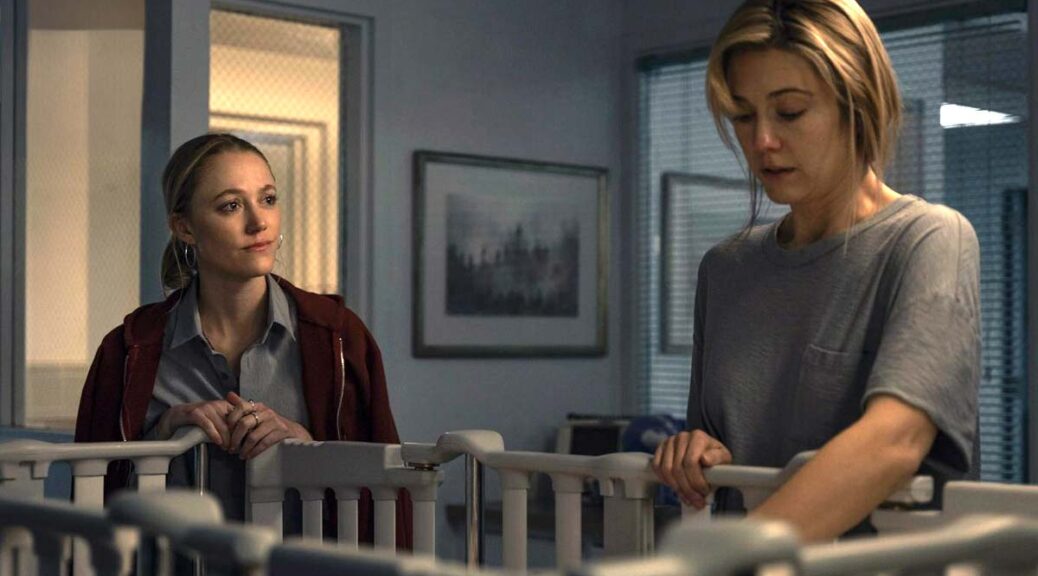
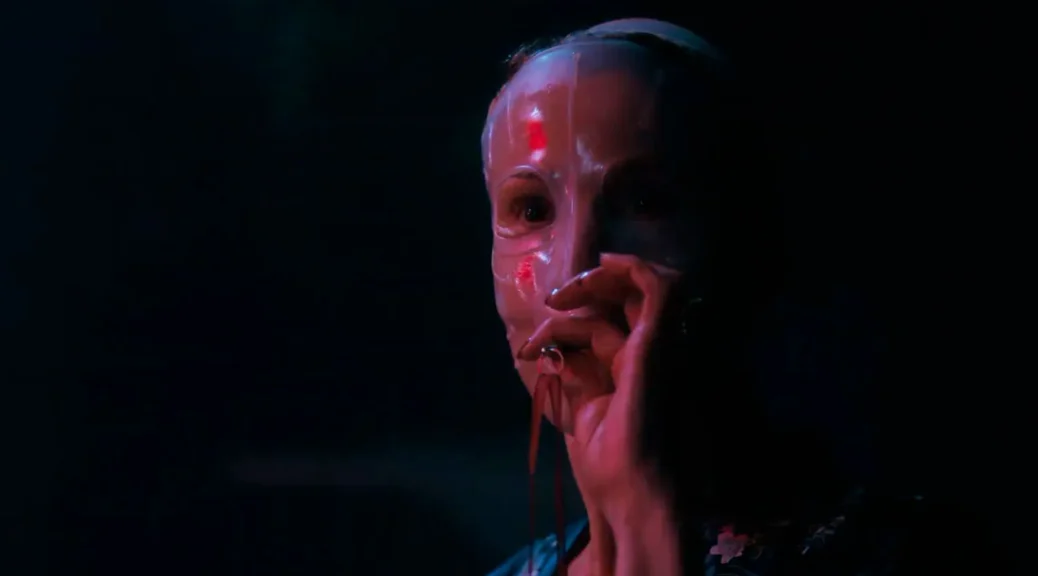
Aside from some very intimidating figures wearing bloody pillowcases over their heads (creepy!), We’re Not Safe Here is primarily a two-person show. McFarland is masterful, her paranoid madness tipped with a teacher’s command of the room. She’s mesmerizing.

Bhattacharya struggles a bit. Neeta is also troubled, and the performance feels stiff and unsure until the character gives into her demons. But there are moments between the two of them that are deeply upsetting. I mean that in a good way.

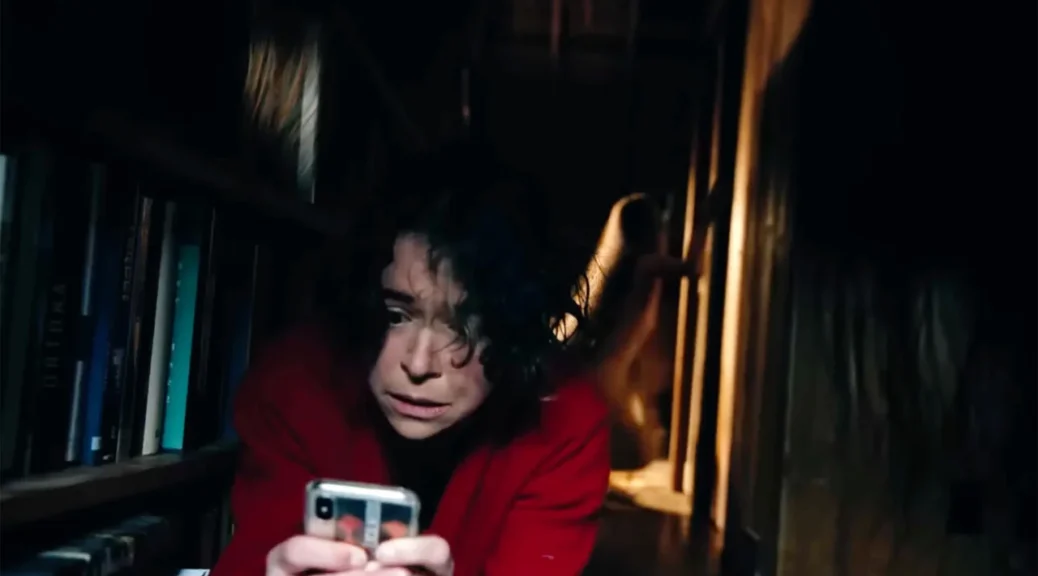
Gray’s use of setting—Neeta’s home, every wall cluttered with her sketches and paintings, every surface littered with books—creates a busy, fascinating space rich with potentially spookiness. A meandering camera and effective sound design capitalizes on what the set design has crafted: a lovingly lived-in space turned suddenly suspicious. The filmmaker evokes a kind of paranoia that feeds the perfect atmosphere for his film.

There’s a looseness to the script that often serves the film’s maniacal undercurrent. What’s delusion? What’s really happening? And is it contagious?

Gray refuses to fit all the pieces together, a choice that mostly pays off. The act structure and finale are rigid enough to give the tale a feel of completion. While a lingering vagueness in the backstory is frustrating, it also allows the imagination to veer into its own halls of madness.

Night Moves

Weapons

by Hope Madden

I’m not saying that Barbarian was anything less than a creepy, disturbing good time. Writer/director Zach Cregger’s 2022 bizarre, brutal minefield of surprises announced him as a master of misdirection, unsettling humor, and horror of the nastiest sort.

I’m just saying Weapons takes a lot of what worked in that film and sharpens it to a spooky edge. No throw-away laughs, no grotesque b-movie shenanigans, just an elaborate mystery slowly revealing itself, ratcheting tension, and leading to a bloody satisfying climax.

Unspooling as an epilogue followed by character-specific chapters, the film builds around a single event, developing dread as it delivers character studies of a town of hapless, fractured, flawed individuals in over their heads.

Julia Garner anchors the tale as a 3rd grade teacher who arrives to class one fateful morning with only one student in the room. Aside from little Alex (Cary Christopher, heartbreaking), none of Mrs. Gandy’s class made it to school today because every single one of them left their beds at 2:17 that morning to vanish into the night.

Since she’s what the kids have in common, the town suspects that she is to blame. This is especially true of young Matthew’s dad, Archer (Josh Brolin), who also gets a chapter.

As it did in Barbarian, this character-by-character approach allows for new information to bleed into what the audience knows, rather than what the characters know. But as each new tale opens our eyes to the mystery, it also lets this solid cast work with Cregger’s game writing to do some remarkable character work. Brolin’s angry, grieving confusion rings painfully true. And Garner seems to relish the opportunity to explore Mrs. Gandy’s unlikeable side.

Benedict Wong contributes the sweetest, and therefore most unfortunate, performance, but it’s the way Cregger lets each actor breathe and settle into idiosyncrasies and failings that keeps you invested. It’s the dark humor that’s most unsettling.

This is smartly crafted, beautifully acted horror. Those who worry Cregger’s left nasty genre work behind for something more elevated need not fear. As crafty as this film is, there’s not a lot of metaphor or social consciousness afoot. Weapons is just here to work your nerves, make you gasp, and shed some blood. It does it pretty well.

Bloody Yield

Strange Harvest

by Hope Madden

Strange Harvest is an evocative title. It conjures all kinds of folk horror notions, or better still, body horror. Mysterious, right? And what better way to solve a mystery than by working with the detectives on the case?

Writer/director Stuart Ortiz’s latest horror film takes on the eerily realistic shape of a true-crime TV show. In fact, it often recalls I’ll Be Gone in the Dark, the series built on Michelle McNamara’s investigation into the Golden State Killer. Tapping into the true crime phenomenon without actually delivering truth, just fiction, can be a tough go.

Luckily, Ortiz has some genuinely horrifying ideas to present. The crime scenes littered throughout the investigation are the stuff of nightmare. And though a couple feel almost Saw inspired, most are jarringly original and truly ghastly.

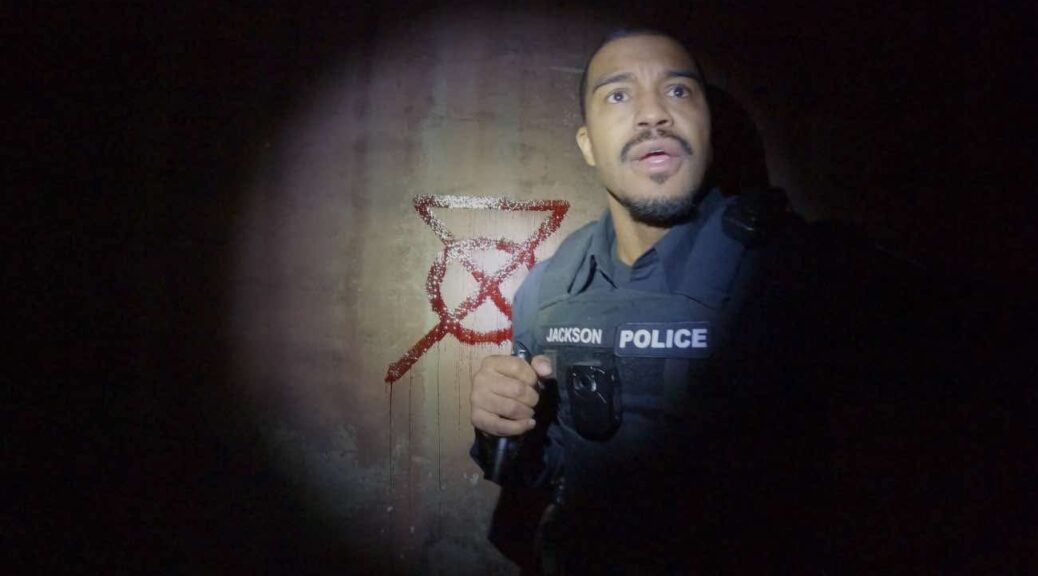
They suggest the work of a true sadist, and fleeting images of the killer himself—masked and unmasked—unsettle. Strange Harvest boasts an awful lot of pieces working together to get under your skin.  

Ortiz stitches this footage together with studio interviews of the investigators, Det. Joe Kirby (Peter Zizzo) and Det. Lexi Taylor (Terri Apple). Here’s where the authenticity begins to thin. Heavy-handed writing paired with, especially in Zizzo’s case, obvious performance delivers something far more staged and artificial than what the balance of the film offers.

They also leech the film of a lot of the horror and tension being built by these horrifying crime scenes. One of the few notions not pulled from McNamara’s show is the focus on the victims. That kind of human underpinning, handled so well by Anna Kendrick in her  2024 directorial debut, Woman of the Hour, might have created the empathy Ortiz seems to be trying for with the investigator interviews.

Feeling for someone—frightened for them, compassion for them—deepens the impact of any horror film. There were certainly opportunities to help us care what happened at each crime scene, but instead we’re asked to be frustrated with the investigators. That can work. Zodiac made it work, but of course that was David Fincher and we were actively investigating with the police, not privy to their trauma after the fact.

The Poughkeepsie Tapes, John Erick Dowdie’s 2007 found footage style horror, steers much closer to the road Ortiz is taking, and because we hear more from and about victims, it leaves deeper scars.

There’s a lot Strange Harvest has going for it, but Ortiz and his cast never fully deliver on the promise of the title.

On a Mission from God

Shaman

by Hope Madden

Director Antonio Negret and writer Daniel Negret have something interesting to say. Unfortunately, they can’t find a consistently interesting way to say it with their latest film, Shaman.

The film shadows an American Catholic missionary family working with an Ecuadorian priest in a mountain village. Candice (Sara Canning) teaches catechism and English, and she and husband Joel (Daniel Gillies) help Father Meyer (Alejandro Fajardo) with baptisms, school and church maintenance, and they serve meals to the community.

Out playing with his friends, preadolescent son Elliot (Jett Klyne) enters a cave, though warned by the two locals he hangs out with. He comes home carrying something much older than Jesus.

Candice notices immediately and blames the shaman who lives in the mountains, while Joel scolds her to stop giving them power they don’t have. Meantime, with something afflicting her own family, Candice finds that her own faith may be more of a false front, a façade of superiority and benevolence.

What is weird about Shaman is that both Klyne and Canning co-starred in Brandon Christensen’s 2019 possession horror Z, a film where a mother watches helpless as something ugly takes hold of her innocent son (Klyne).

At times, the atmosphere Negret creates offers a subtle but worthwhile change in the missionary horror of the past, which told of either a white savior discovering primitive evil, or in more recent years, a white savior who is, in fact, the evil. Negret combines the two tropes in ways that are sometimes provocative, sometimes predictable, sometimes tone deaf.

Solid performances all around, plus gorgeous locations and some genuine surprises elevate the proceedings, but the pace is slow, the FX are weak, and the story too often falls prey to the cliché it’s trying to expose.  (They also don’t get any of the Catholic stuff right. There, I said it.)

So Happy

Together

by Hope Madden

Horror has always trodden the terror of losing your identity, of losing your very personality or individuality, of what makes you you. From Dr. Jekyll and Mr. Hyde to every Invasion of the Body Snatchers iteration (including The Faculty) to most zombie horror, horror fiction and cinema reflect our own worry that there is something out there that will steal from us what makes us ourselves and turn us into something else.

The anxiety of losing your identity to coupledom is just as real, though few films (horror or otherwise) have depicted this relatable, perhaps primal fear as adorably, as authentically, or as grotesquely as Michael Shanks’s Together.

The writer/director’s feature debut benefits enormously from the lived-in camaraderie of its leads. Alison Brie and Dave Franco, married in real life, play Millie and Tim. They’ve been together for nearly a decade, but this new chapter of their lives marks a distinct step. Millie took a job teaching in Upstate New York, two hours from NYC where Tim sometimes plays guitar with a band while he tries to finish his solo EP, to be self-released.

Millie has grown up. Will Tim? Can he? Or is he abandoning himself, giving up on his dreams and forgetting who he is by moving with Millie? If they don’t split up now, it’ll just be harder later.

Much, much harder. Stickier too.

Something happens as the pair explore the woods around their new home and, little by little, it draws their two bodies together, attempting to fuse them into one thing. It’s a delightful metaphor played joyously and goretastically, the body horror and humor fusing just as readily as Tim and Millie’s extremities.

Brie and Franco are perfect, and Damon Herriman lends his considerable, understated talent to develop the plot and keep you guessing.

Though Shank’s writing sometimes lands heavily (past trauma exposition), and other times leaves you disbelieving (why on earth is she still with him?!), the sweet, romantic believability of the performances charms you into sticking it out. And you’ll be glad, because once the film hits its stride, it is a wild, funny, charming, repulsive ride.

What Shanks manages with his film is to be overtly romantic, never cynical, consistently funny, and gross as hell. It’s the perfect date movie. But maybe go on an empty stomach.

Found and Lost

House on Eden

by Hope Madden

Can you watch a found footage horror film and not be constantly asking yourself, who edited this footage together? Who pulled from one camera, then another, spliced in security cam stuff? Who looked at all the footage from all the different cameras and decided what we would see when? And how did they get it all? And where did they go?

If it does not bother you, then it’s possible that you will enjoy writer/director Kris Collins’s House on Eden more than I did.

This found footage horror clings close to real life. Spooky content creators “KallMeKris” Collins, “celinaspookyboo” Celina Myers, and filmmaker Jason-Christopher Mayer play versions of themselves, social media handles and all. The trio is out to make a great video, not one of those boring videos everyone makes. So instead of going to the cemetery Celina has researched, Kris diverts the road trip to a house she found online that she’s sure no one has ever been to.

Sure. Because totally anonymous houses post themselves online.

And what’s the draw? Why is it spooky? Because maybe a girl went missing somewhere in the vicinity 60 years ago.

For context, wherever you are standing at this very second, some girl has gone missing from that spot in the last sixty years.

So, three youngsters break and enter into a beautiful, well-maintained home, not a speck of dust anywhere. But it’s really, really far away from everything else so surely, it must be abandoned.

That is to say, three people break into a well cared for, isolated home to unravel no mystery they know of in one of the more tedious, uninspired, lazily written found footage horror films in recent memory.

It’s not as if found footage can’t be done well, even the ghosthunter variety. Deadstream is epically watchable, funny and scary at the same time, and it maintains the integrity of found footage pretty well. My advice to you is to watch that instead.

Suspect Your Elders

The Home

by George Wolf

About an hour into The Home, things escalate. And quickly. There’s a big enough jolt of blood and violence to make you hopeful the foolishness that’s been rolled out so far can be rescued.

Sorry, too little, too late.

Pete Davidson gives the film a solid, sympathetic anchor as Max, a troubled man who gets sentenced to community service doing custodial work at a New Jersey old folks home. He makes friends with some of the residents, angers some of his co-workers, and quickly comes to realize something pretty f’ed up is going on.

Director and co-writer James DeMonaco, who created The Purge franchise and helmed three of the chapters, can’t mine the same levels of socially-conscious horror or reality-based tension. What’s up with these seniors is ridiculous sci-fi horror built on ideas from much better films, with a message that’s hammered home through repetition, explanation and – for the first 60 minutes at least – boredom.

Through it all, Davidson exhibits a fine screen presence, and the supporting cast is littered with veteran faces you’ll recognize even if the names (John Glover, Ethan Phillips, Bruce Altman) aren’t familiar. They help you to keep rooting for the movie when the bloodshed hits, but DeMonaco doesn’t see it through, pulling up too soon and settling for a curious finale that’s far too weak to satisfy.

A horror film out to chop bloody holes in that “Greatest Generation” mantra is plenty intriguing. The Home, though, feels stuck between more desirable neighborhoods. It’s not self-aware or over-the-top enough to be satirical fun, but far too obvious for metaphorical nuance.

So we’re left wanting, reminded of how important it is to craft a good plan for the golden years.