Tag Archives: horror movie podcast

Fright Club: Dogs in Horror

Whether used to terrorize us or to break our hearts, dogs add something powerful to a horror movie. Unless it’s Zoltan: Dog of Dracula, because nothing, not even the most gorgeous dog, could save that piece of poo. But these dogs, these dogs are keepers.

6. The Woman (2011)

Maybe you haven’t seen Lucky McKee’s amazing, disturbing 2011 feminist horror The Woman? Get on it! But just in case, we’re going to avoid any spoilers, which means leaving you kind of wondering why this film made the list of best dogs in horror. Suffice it to say, the dogs are mentioned throughout but meeting them … well, please see this movie.

5. Cujo (1983)

A New England couple, struggling to stay afloat as a family, has some car trouble. This naturally leads to a rabid St. Bernard adventure.

Though the film contains many faults, once Donna (Dee Wallace) and her asthmatic son (pre-Who’s the Boss Danny Pintauro) find themselves trapped in their broken down Pinto (What? Those seem like such reliable cars!) with a rabid dog (bigger than the car) attacking, the film ratchets up the tensions and rewards you for your patience.

Profoundly claustrophobic and surprisingly tense, benefitting immeasurably by Wallace’s full commitment to the role, the film traps us in the heat inside that Pinto and quickly makes up for the entire rest of the picture.

4. The Omen (1976)

Billie F. Whitelaw, ladies and gentlemen. Her performance as little Damien’s new nanny really took things up a notch, didn’t they? Instantly, not only was Mummy (Lee Remick) unnecessary, but Daddy (Gregory Peck) found himself in a battle for Alpha—a battle that begins over a dog.

There are actually quite a number of great, terrifying dogs in The Omen, Richard Donner’s iconic Seventies horror. The dogs in the cemetery, the bones in the casket—what, exactly, was Damien’s mother, anyway? But Mrs. Baylock’s Hound of Hell—that’s when the unflappable Robert Thorn realized there may be things to fear inside his home.

3. I Am Legend (2007)

Yes, there are scary dogs in horror movies, but more often than not horror filmmakers use dogs to break our hearts. Oh, sure, kill all the people you want, but once we hear that off-screen whimper, we’re bawling.

Tell us Sam’s death in I Am Legend didn’t gut you. No? Well, stay away from us you sociopath.

Horror has done us some damage in the way they treat dogs: Jaws, Raw, Snowtown, The Babadook, It Comes at Night, Greta, Audition, The Hills H ave Eyes, The Wailing, Hounds of Love. But we not only loved Sam, we recognized Robert Neville’s (Will Smith) aloneness, his vulnerability to grief and madness, because of Sam. That dog is the only reason this movie works.

2. The Voices (2014)

Director Marjane Satrapi’s follow up to her brilliant animated Persepolis is a sweet, moving, very black comedy about why medicine is not always the best medicine.

Ryan Reynolds is Jerry. As Jerry sees it, his house is a cool pad above a nifty bowling alley, his job is the best, his co-workers really like him, and his positive disposition makes it easy for him to get along. Jerry’s kindly dog Bosco (also Ryan Reynolds) agrees.

But Mr. Whiskers (evil cat, also Reynolds) thinks Jerry is a cold blooded killer. And though Mr. Whiskers is OK with that, Jerry doesn’t want to believe it. So he should definitely not take his pills.

1. The Thing (1982)

Who’s a good boy?!

OK, not the new rescue dog on MacReady’s team. What a gorgeous boy he is, though. A perfect specimen, adaptable to Antarctica’s hostile climate, bred to survive. He makes those beard-tastic humans look positively vulnerable.
Fright Club: Vehicular Horror

We homaged another topic! Thanks Paul for talking us into doing a podcast on vehicles in horror. So many to choose from!

5. Twilight Zone: The Movie (1983)

We don’t want to leave out airplanes—that terrifying vehicle of the sky, the tight metal tube of death hurtling you thousands of feet above ground to a somewhat likely death. Here were our thoughts:

  • Red Eye
  • Final Destination
  • Quarantine 2
  • Snakes on a Plane

We landed (ha! Get it?) with John Lithgow on George Miller’s visceral, claustrophobic segment of Twilight Zone: The Movie, “Nightmare at 20,000 Feet.” Lithgow’s John Valentine’s so much more posh, more vulnerable, more priggish than scene-chewing Shatner of the 1963 TV episode. He’s hard to root for, but that thing on the wing—slimy, aware, goading—he’s reason enough to stay on the ground.

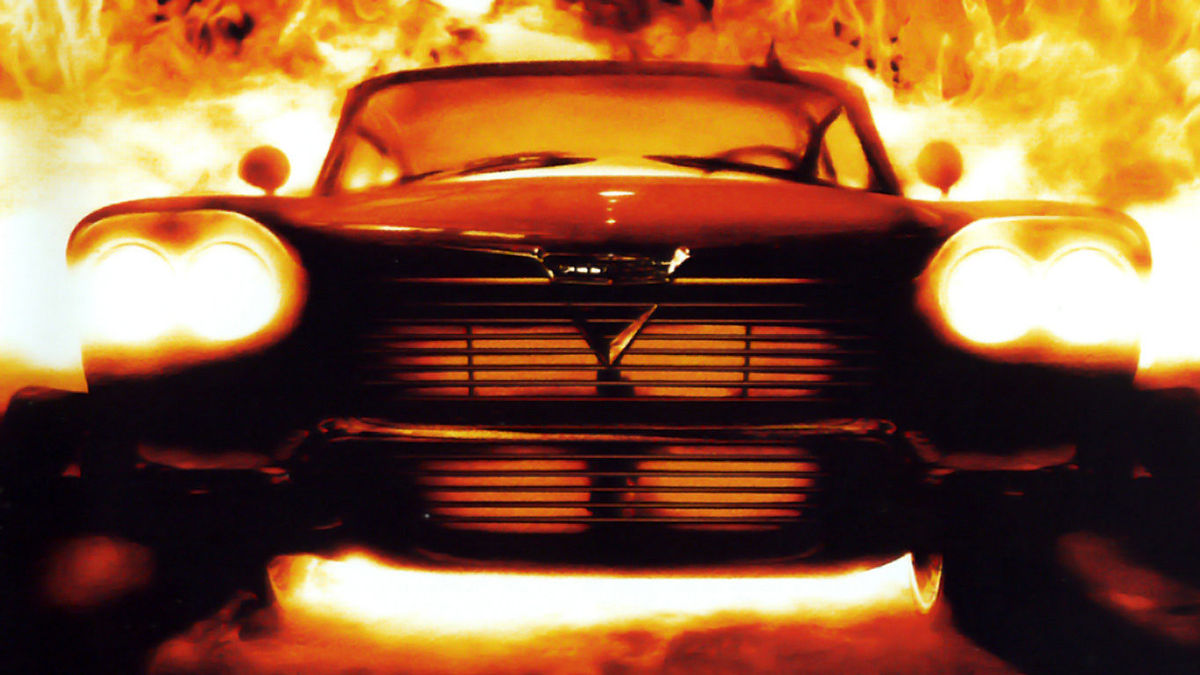
4. Christine (1983)

Obviously we needed to include a film about a killer car. Our options:

  • Death Proof
  • The Hearse
  • The Car

A diabolical beauty seduces a young outcast, killing anyone who infuriates her. A fondness for Fifties culture, a solid performance from Keith Gordon, and John Carpenter’s thumbprints make this Stephen King adaptation a goofy bit of fun.

3. Road Games (2015)

We also wanted at least one car chase movie, and there were a lot of great possibilities:

  • Jeepers Creepers
  • Duel
  • Joy Ride
  • Road Games (the 1981 Stacy Keach/Jamie Lee Curtis one)
  • Race with the Devil

That’s a good looking crop of movies! We liked Abner Pastoll’s Road Games for the list because not enough people have seen it, it keeps you guessing from beginning to end, and, like you, we love Barbara Crampton.

2. Transsiberian (2008)

It turns out, an awful lot of great or bizarre or awful-but-endlessly-watchable horror has been made aboard a train. We narrowed down our list to:

  • Creep
  • Midnight Meat Train
  • Terror Train (a George Wolf favorite)
  • Beyond the Door III (Amok Train – which I think is really set aboard a boat)
  • Night Train to Terror (insane, just insane)
  • Horror Express

And somehow we wound up choosing a thriller more than horror, and you’re asking yourself why. Because Transsiberian is a nailbiter from writer/director Brad Anderson (Session 9, The Machinist), it’s clearly a superior film than the rest of those on this list, and we want you to watch it. Woody Harrelson, totally unaware that his wife (Emily Mortimer) is unsatisfied in their relationship, keeps introducing her to the wrongest possible people on this train. Where is his head? Goes scary, wild, tense places.

1. Train to Busan (2016)

We are always, always interested when a filmmaker can take the zombie genre in a new direction. Very often, that direction is fun, funny, political—but not necessarily scary. Co-writer/director Sang-ho Yeon combines the claustrophobia of Snakes on a Plane with the family drama of Host, then trusts young Su-An Kim to shoulder the responsibility of keeping us breathlessly involved. It works. Sometimes funny, sometimes shocking, always exciting and at least once a heart breaker, Train to Busan succeeds on every front.

Fright Club: Amusements in Horror

A perversion of childhood innocence in an attempt to create anxiety and fear—that, basically, is the definition of carnivals, circuses, theme parks. Maybe that’s why the amusement park and its inhabitants make for such excellent horror movie fodder. Let’s discuss.

5. Zombieland (2009)

Writers Rhett Reese and Paul Wernick (Deadpool) take the tried-and-true zombiepocalypse premise and sprint with it in totally new and awesome directions. An insane cast helps: Woody Harrelson, Jesse Eisenberg, Emma Stone, Abigail Breslin, Bill Murray. That’s eight Oscar nominations and one win, that’s what that is. Plus, I cannot imagine a better cameo in a film than Murray’s in this one.

I give you, a trip to a loud and well-lit amusement park is not a recommendation Max Brooks would make during the zombiepocalypse. Still, you’ve got to admit it’s a gloriously filmed piece of action horror cinema.

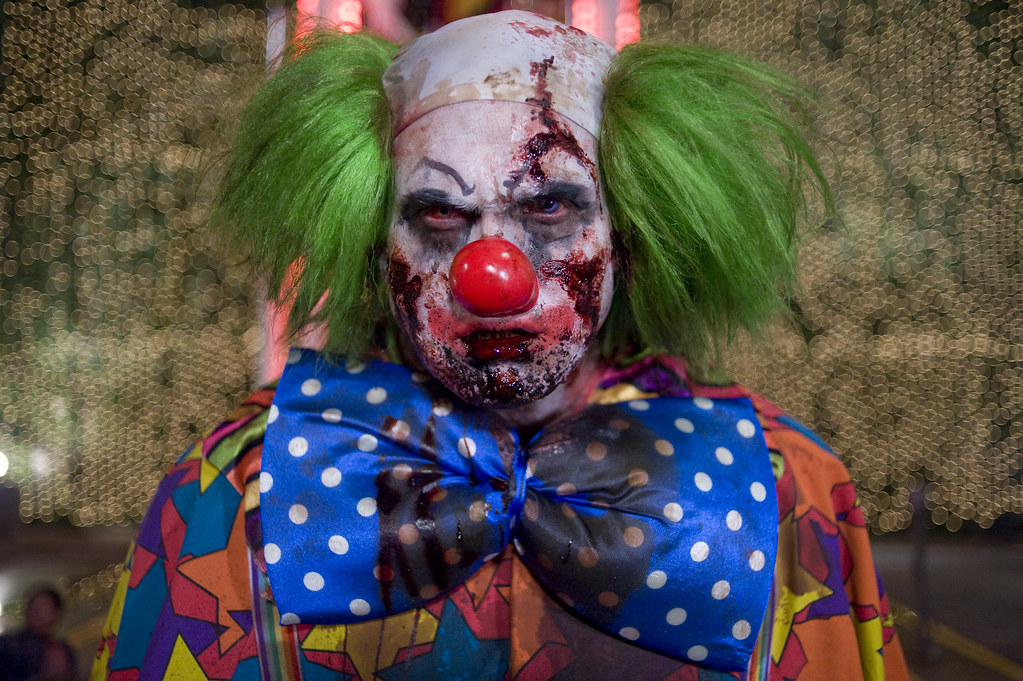
Between the sisters trapped on a ride slowly lowering them toward hungry mouths (good thinking on those boots, ladies!), Columbus’s rule breaking heroism with that effing clown, and the all-time great Tallahassee shoot out, director Ruben Fleischer directs the hell out of the amusement park portion of this movie.

4. It (2017)

Clowns are fun, aren’t they?

The basic premise of It is this: Little kids are afraid of everything, and that’s just good thinking.

Bill Skarsgård has the unenviable task of following a letter-perfect Tim Curry in the role of Pennywise. Those are some big clown shoes to fill, but Skarsgård is up to the challenge. His Pennywise is more theatrical, more of an exploitation of all that’s inherently macabre and grotesque about clowns.

Is he better than the original? Let’s not get nutty here, but he is great.

Director Andy Muschietti shows great instinct for taking advantage of foreground, background and sound. Yes, It relies heavily on jump scares, but Muschietti’s approach to plumbing your fear has more depth than that and he manages your rising terror expertly.

3. The Last Circus (2010)

Who’s in the mood for something weird?

Unhinged Spanish filmmaker Alex de la Iglesia returns to form with The Last Circus, a breathtakingly bizarre look at a Big Top love triangle set in Franco’s Spain.

Describing the story in much detail would risk giving away too many of the astonishing images. A boy loses his performer father to conscription in Spain’s civil war, and decades later, with Franco’s reign’s end in sight, he follows in pop’s clown-sized footsteps and joins the circus. There he falls for another clown’s woman, and stuff gets nutty.

Like Tarantino, Igelsia pulls together ideas and images from across cinema and blends them into something uniquely his own, crafting a film that’s somewhat familiar, but never, ever predictable.

The Last Circus boasts more than brilliantly wrong-minded direction and stunningly macabre imagery – though of these things it certainly boasts. Within that bloody and perverse chaos are some of the more touching performances to be found onscreen.

2. Us (2019)

From a Santa Cruz carnival to a hall of mirrors to a wall of rabbits in cages, writer/director Jordan Peele draws on moods and images from horror’s collective unconscious and blends them into something hypnotic and almost primal.

But Us is far more than a riff on some old favorites. It’s as if Alice’s Adventures in Wonderland turned into a plague on humanity.

And it all starts innocently enough with a family outing to the carnival—an environment that has always been a perversion of innocence, a macabre funhouse mirror of the playthings and past times of children. Peele takes advantage, using this stage to create an even wilder and more bewildering look at who we are.

1. Freaks (1932)

Short and sweet, like most of its performers, Tod Browning’s controversial film Freaks is one of those movies you will never forget. Populated almost entirely by unusual actors – midgets, amputees, the physically deformed, and an honest to god set of conjoined twins (Daisy and Violet Hilton) – Freaks makes you wonder whether you should be watching it at all.

This, of course, is an underlying tension in most horror films, but with Freaks, it’s right up front. Is what Browning does with the film empathetic or exploitative, or both? And, of course, am I a bad person for watching this film?

Well, that’s not for us to say. We suspect you may be a bad person, perhaps even a serial killer. Or maybe that’s us. What we can tell you for sure is that the film is unsettling, and the final, rainy act of vengeance is truly creepy to watch.

Fright Club: Gas Stations in Horror

You think the price of gas will kill you! What about those creepy gas attendants?

Gas stations, for one reason or another, have become a staple in horror films – especially slashers and those backwoods thrillers. Jenny Raya of Dave’s Pop Culture Podcast joins us to count down the films that make the most of the spooky service station.

5. Tucker and Dale Versus Evil (2010)

Because Eli Craig’s comedic upending of the hillbilly horror sub-genre is nearly perfect, there had to be a pivotal scene set in a gas station.

Two backwoods buddies (an endearing Tyler Labine and Alan Tudyk) head to their mountain cabin for a weekend of fishing. En route they meet some college kids on their own camping adventure. A comedy of errors, misunderstandings and subsequent, escalating violence follows as the kids misinterpret every move Tucker and Dale make.

In the tradition of Shaun of the Dead, T&DVE lovingly sends up a familiar subgenre with insightful, self-referential humor, upending expectations by taking the point of view of the presumably villainous hicks. And it happens to be hilarious.

4. Splinter (2008)

Road kill, a carjacking, an abandoned gas station, some quills – it doesn’t take much for first time feature filmmaker and longtime visual effects master Toby Wilkins to get under your skin. One cute couple just kind of wants to camp in Oklahoma’s ancient forest (which can never be a good idea, really). Too bad a couple of ne’er-do-wells needs their car. Then a flat (what was that – a porcupine? No!!) sends them to that creepy gas station, and all hell breaks loose.

Contamination gymnastics call to mind the great John Carpenter flick The Thing, but Splinteris its own animal. Characters have depth and arcs, the danger is palpable, the kills pretty amazing, and the overall aesthetic of that old highway gives everything a desperately lonesome quality where you believe anything could happen and no rescue is in sight.

3. The Hills Have Eyes (1977)

Wes Craven’s original Hills – cheaply made and poorly acted – is a surprisingly memorable, and even more surprisingly alarming flick. Craven’s early career is marked by a contempt for both characters and audience, and his first two horror films ignored taboos, mistreating everyone on screen and in the theater. In the style of Deliverance meets Mad MaxHills was an exercise in pushing the envelope, and it owes what lasting popularity it has to its shocking violence and Michael Berryman’s nightmarish mug.

The nightmare begins (and for a lot of people, ends) at Fred’s Oasis – the last gas station before hitting an unforgiving stretch of desert.

The Hills Have Eyes is not for the squeamish. People are raped, burned alive, eaten alive, eaten dead, and generally ill-treated. You can’t say Fred didn’t warn them.

2. Deliverance (1972)

Nine notes on a banjo have never sounded so creepy.

Deliverance follows four buddies staving off mid-life crises with a canoeing adventure in southern Georgia, where a man’s not afraid to admire another man’s mouth.

They stop off, as travelers must, at a service station. No one warns them, no one delivers ominous news, but come on, no one had to. One look at the locals spending their days at that gas station should have been enough to convince them to turn back.

James Dickey streamlined his own novel to its atmospheric best, and director John Boorman plays on urbanite fears like few have done since. Dickey and Boorman mean to tell you that progress has created a soft bellied breed of man unable to survive without the comforts of a modern age.

https://www.youtube.com/watch?v=gsC4kf6x_Q0&t=128s

1. The Texas Chain Saw Massacre (1974)

Who wants barbeque?

Jim Siedow’s under-appreciated performance as de facto patriarch begins at Last Chance Gas.

First is the classic “you don’t want to go there” warnings, a long tradition in backwoods and slasher horror. But Hooper has something fun up his sleeve with this one, introducing Siedow as a likable weirdo, a concerned older Southern gentleman.

So when Sally Hardesty makes it away from the carnage all the way back to the service station, the tension, betrayal and sadism that follows feels that much more awful and unseemly.

Plus they had bought barbeque earlier! Eeeewww!

https://www.youtube.com/watch?v=ID77MV6g8dc

Fright Club: Body Fluids in Horror Movies

Viscosity! That’s the name of the game today, and it’s a messy, messy game to play.

Today we slip and slide through the sloppiest movies we could find as we count down the most inspired use of body fluids in horror. The whole mess is recorded live at Gateway Film Center, so please listen.

And don’t forget to bring a towel!

5) Don’t Breathe (2016)

Fede Alvarez’s magnificent home invasion horror made this list, beating out the projectile vomit of The Exorcist, the melting bums of Street Trash, the medical what-not of Re-Animator and the viscosity of other films. How did it do it? It was not because of volume.

It’s really just the one scene.

The one with a turkey baster.

The one with the single hair.

Ew.

4) Dead Alive (1992)

The list doesn’t exist without Peter Jackson, let’s be honest. Any old horror director can work with blood. Jackson certainly can. That party scene? The arterial spray poor Lionel Cosgrove causes with his lawnmower is truly a site to behold.

But what Jackson can do with pus and a bowl of custard? Chef’s kiss right there.

3) We Are the Flesh (2016)

Emiliano Rocha Minter loves him some taboos. No one bursts through taboos like him – well, Takashi Miike, maybe.

He also really loves body fluids. We mean all the body fluids. His 2016 social commentary swims them all. All all all.

Taboos and body fluids. Sloppy!

2) Evil Dead (2013)

Peter Jackson’s Dead Alive held the record for most blood in a film – 1000 gallons – until 2013.

It’s a record Sam Raimi’s earlier Evil Dead franchise efforts had once held, but Fede Alvarez (making his second appearance on this list!) drenched all records when he poured out 50,000 gallons of fake blood in a single scene.

Allegedly It Chapter 2 tops that, but I don’t know how you out-soak a torrential downpour of blood.

Gozu (2003)

Who’s not afraid of taboos? Well, the great and prolific Takashi Miike has no fear of body fluids, either. Hell, Ichi the Killer’s title screen is done in semen and one of Audition’s most memorable moments sees a multiple amputee eating his mistress’s vomit.

But with Gozu, Miike’s not holding back: blood, urine, semen, lactation, pus and other discharges I’m not sure how to even categorize. Gozu is an inspired, viscous mess.

https://www.youtube.com/watch?v=4YD7Tz36wyo

Fright Club: This Cast!

We are beyond delighted to have been allowed to screen Jim Jarmusch’s new zombie classic The Dead Don’t Die two days in advance of its national opening. To honor this remarkable film and its amazing cast, we look at the best other horror movies that star these actors.

5. Zombieland (2009) – Bill Murray

Just when Shaun of the Dead convinced me that those Limey Brits had created the best-ever zombie romantic comedy, it turns out they’d only created the most British zom-rom-com. Writers Rhett Reese and Paul Wernick take the tried-and-true zombiepocalypse premise and sprint with it in totally new and awesome directions.

And the cameo. I cannot imagine a better one. I mean that. I’m not sure a walk on by Jesus himself could have brought me more joy.

That’s not true. Plus, in zombie movie?! How awesome would that have been?!

Jesse Eisenberg anchors the film with an inspired narration and an endearing dork characterization. But Woody Harrelson owns this film. His gun-toting, Twinkie-loving, Willie Nelson-singing, Dale Earnhart-number-wearing redneck ranks among the greatest horror heroes ever.

I give you, a trip to a loud and well-lit amusement park is not a recommendation Max Brooks would make during the zombiepocalypse. Still, you’ve got to admit it’s a gloriously filmed piece of action horror cinema.

4. Only Lovers Left Alive (2013) – Tilda Swinton

The Dead Don’t Die is not Jim Jarmusch’s first foray into horror. In 2013, the visionary writer/director concocted a delicious black comedy, oozing with sharp wit and hipster attitude.

Great lead performances don’t hurt, either, and Jarmusch gets them from Tom Hilddleston and Tilda Swinton as Adam and Eve (perfect!), a vampire couple rekindling their centuries-old romance against the picturesque backdrop of…Detroit.

Not since the David Bowie/Catherine Deneuve pairing in The Hunger has there been such perfectly vampiric casting. Swinton and Hiddleston, already two of the most consistently excellent actors around, deliver cooly detached, underplayed performances, wearing the world- weariness of their characters in uniquely contrasting ways.

There is substance to accent all the style. The film moseys toward its perfect finale, casually waxing Goth philosophic about soul mates and finding your joy.

3. Suspiria (2018) – Tilda Swinton

It is 1977 in “a divided Berlin,” when American Susie Bannion (Dakota Johnson, nicely moving the character from naivete to complexity) arrives for an audition with a world-renowned dance company run by Madame Blanc (Tilda Swinton, mesmerizing).

This “cover version” (The Tilda’s phrase, and valid) of Argento’s original lifts the veil on the academy elders early, via the diaries of Patricia (Chloe Moretz), a dancer who tells psychotherapist Dr. Josef Kiemperer (also The Tilda, under impressive makeup) wild tales of witches and their shocking plans.

Guadagnino continues to be a master film craftsman. Much as he draped Call Me by Your Name in waves of dreamy romance, here he establishes a consistent mood of nightmarish goth.

But even when this new Suspiria is tipping its hat to Argento, Guadagnino leaves no doubt he is making his own confident statement. Women move in strong solidarity both onstage and off, dancing with a hypnotic power capable of deadly results. In fact, most of the male characters here are mere playthings under the spell of powerful women, which takes a deliciously ironic swipe at witch lore.

2. American Psycho (2000) – Chloe Sevigny

A giddy hatchet to the head of the abiding culture of the Eighties, American Psycho represents the sleekest, most confident black comedy – perhaps ever. Director Mary Harron trimmed Bret Easton Ellis’s novel, giving it unerring focus. More importantly, the film soars due to Christian Bale’s utterly astonishing performance as narcissist, psychopath, and Huey Lewis fan Patrick Bateman.

There’s an elegant exaggeration to the satire afoot. Bateman is a slick, sleek Wall Street toady, pompous one minute because of his smart business cards and quick entrance into posh NYC eateries, cowed the next when a colleague whips out better cards and shorter wait times. For all his quest for status and perfection, he is a cog indistinguishable from everyone who surrounds him. The more glamour and flash on the outside, the more pronounced the abyss on the inside. What else can he do but turn to bloody, merciless slaughter? It’s a cry for help, really.

Harron’s send up of the soulless Reagan era is breathtakingly handled, from the set decoration to the soundtrack, but the film works as well as a horror picture as it does a comedy. Whether it’s Chloe Sevigny’s tenderness as Bateman’s smitten secretary or Cara Seymour’s world wearied vulnerability, the cast draws a real sense of empathy and dread that complicate the levity. We do not want to see these people harmed, and as hammy as it seems, you may almost call out to them: Look behind you!

As solid as this cast is, and top to bottom it is perfect, every performance is eclipsed by the lunatic genius of Bale’s work. Volatile, soulless, misogynistic and insane, yet somehow he also draws some empathy. It is wild, brilliant work that marked a talent preparing for big things.

1. Get Out (2017) – Caleb Landry Jones

Opening with a brilliant prologue that wraps a nice vibe of homage around the cold realities of “walking while black,” writer/director Jordan Peele uses tension, humor and a few solid frights to call out blatant prejudice, casual racism and cultural appropriation.

When white Rose (Alison Williams) takes her black boyfriend Chris (Daniel Kaluuya) home to meet the fam, she assures him race will not be a problem. How can she be sure? Because her Dad (Bradley Whitford) would have voted for Obama’s third term “if he could.” It’s the first of many B.S. alerts for Peele, and they only get more satisfying.

Rose’s family is overly polite at first, but then mom Missy (Catherine Keener) starts acting evasive and brother Jeremy (Caleb Landry Jones) gets a bit threatening, while the gardener and the maid (both black – whaaat?) appear straight outta Stepford.

Peele is clearly a horror fan, and he gives knowing winks to many genre cliches (the jump scare, the dream) while anchoring his entire film in the upending of the “final girl.” This isn’t a young white coed trying to solve a mystery and save herself, it’s a young man of color, challenging the audience to enjoy the ride but understand why switching these roles in a horror film is a social critique in itself.

Get Out is an audacious first feature for Jordan Peele, a film that never stops entertaining as it consistently pays off the bets it is unafraid to make.

Fright Club: Sea Beasts

Why fear the sea? The same reason to see menace in the deep, dark unknown of space or the dense and dizzying claustrophobia of the forest: because it’s really hard to see what’s in there.

That leaves us to our imagination, and when is that ever a good idea? Here, then, are some of the most imaginative ways horror filmmakers terrorized us with tales of what lies beneath.

5. Godzilla (Gojira) (1954)

Up from the depths, 30 stories high, breathing fire…you know the rest. Surely we had to have a Fifties science run amok beastie on this list, and while there was some stiff competition, nothing really bests Godzilla.

As Japan struggled to re-emerge from the 1945 bombings of Hiroshima and Nagasaki, director Ishiro Honda unleashed that dreaded kaiju—followed quickly by a tidal wave of creature features focused on scientists whose ungodly work creates global cataclysm.

Far more pointed and insightful than its American bastardization or any of the sequels or reboots to follow, the 1954 Japanese original mirrored the desperate, helpless impotence of a global population in the face of very real, apocalyptic danger. Sure, that danger breathed fire and came in a rubber suit, but history shows again and again how nature points out the folly of man.

4. Open Water (2003)

Jaws wasn’t cinema’s only powerful shark horror. In 2003, young filmmaker Chris Kentis’s first foray into terror is unerringly realistic and, therefore, deeply disturbing.

From the true events that inspired it to one unreasonably recognizable married couple, from superbly accurate dialog to actual sharks, Open Water’s greatest strength is its unsettling authenticity. Every element benefits from Chris Kentis’s control of the project. Writer, director, cinematographer and editor, Kentis clarifies his conception for this relentless film, and it is devastating.

A couple on vacation (Blanchard Ryan and Daniel Travis) books a trip on a crowded, touristy scuba boat. Once in the water, they swim off on their own – they’re really a little too accomplished to hang with the tourists. And then, when they emerge from the depths, they realize the boat is gone. It’s just empty water in every direction.

Now, sharks aren’t an immediate threat, right? I mean, tourist scuba boats don’t just drop you off in shark infested waters. But the longer you drift, the later it gets, who knows what will happen?

https://www.youtube.com/watch?v=F4fxtHQtt4Y

3. The Lure (2015)

Here’s a great Eastern European take on reimagined Eastern European fairy tales, like Norway’s Thale (2012) and Czech Republic’s Little Otik (2000).

Gold (Michalina Olszanska) and Silver (Marta Mazurek) are not your typical movie mermaids, and director Agnieszka Smoczynska’s feature debut The Lure is not your typical – well, anything.

The musical fable offers a vivid mix of fairy tale, socio-political commentary, whimsy and throat tearing. But it’s not as ill-fitting a combination as you might think.

The Little Mermaid is actually a heartbreaking story. Not Disney’s crustacean song-stravaganza, but Hans Christian Andersen’s bleak meditation on the catastrophic consequences of sacrificing who you are for someone undeserving. It’s a cautionary tale for young girls, really, and Lure writer Robert Bolesto remains true to that theme.

The biggest differences between Bolesto’s story and Andersen’s: 80s synth pop, striptease and teeth. At its heart, The Lure is a story about Poland – its self-determination and identity in the Eighties. That’s where Andersen’s work is so poignantly fitting.

https://www.youtube.com/watch?v=vxhi_3hDUPE

2. The Host (2006)

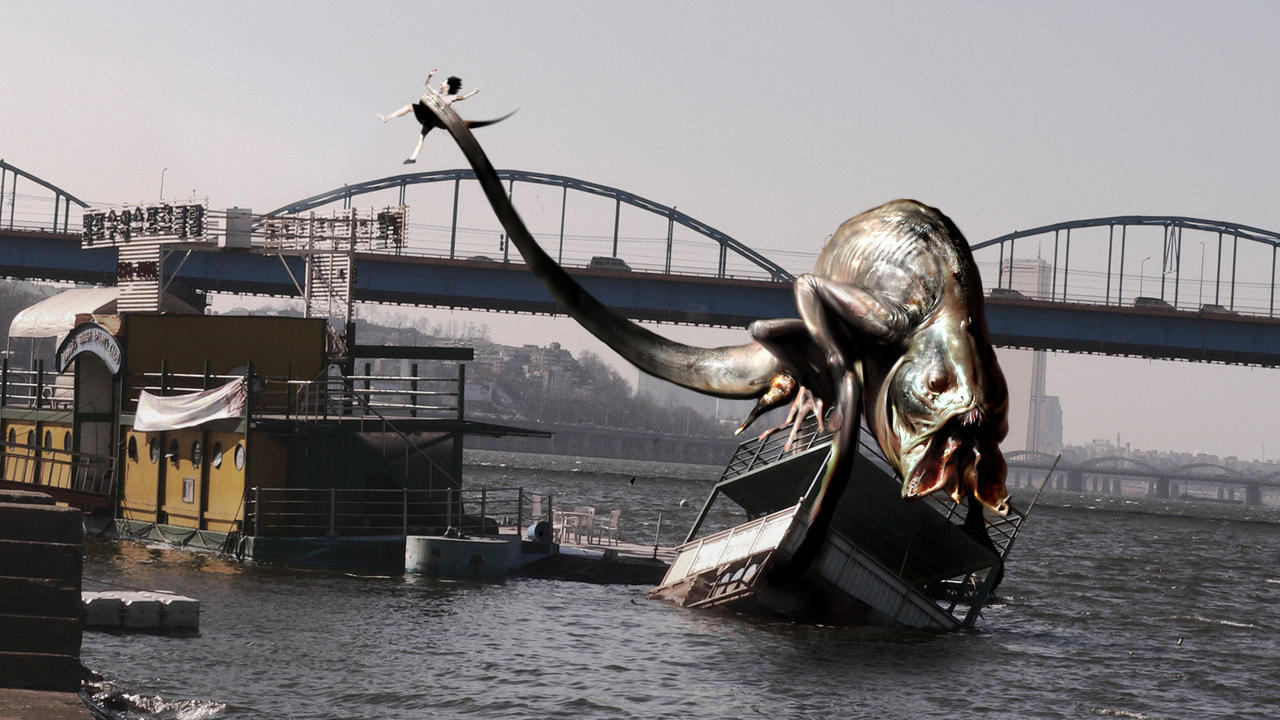
Visionary director Joon-ho Bong’s film opens in a military lab hospital in 2000. A clearly insane American doctor, repulsed by the dust coating formaldehyde bottles, orders a Korean subordinate to empty it all into the sink. Soon the contents of hundreds of bottles of formaldehyde find its way through the Korean sewer system and into the Han River. This event – allegedly based on fact – eventually leads, not surprisingly, to some pretty gamey drinking water. And also a 25 foot cross between Alien and a giant squid.

Said monster – let’s call him Steve Buscemi (the beast’s actual on-set nickname) – exits the river one bright afternoon in 2006 to run amuck in a very impressive outdoor-chaos-and-bloodshed scene. A dimwitted foodstand clerk witnesses his daughter’s abduction by the beast, and the stage is set.

What follows, rather than a military attack on a marauding Steve Buscemi, is actually one small, unhappy, bickering family’s quest to find and save the little girl. Their journey takes them to poorly organized quarantines, botched security check points, misguided military/Red Cross posts, and through Seoul’s sewer system, all leading to a climactic battle even more impressive than the earlier scene of afternoon chaos.

1. Jaws (1975)

What else – honestly?

Twentysomething Steven Spielberg’s game-changer boasts many things, among them one of the greatest threesomes in cinematic history. The interplay among the grizzled and possibly insane sea captain Quint (Robert Shaw), the wealthy young upstart marine biologist Hooper (Richard Dreyfuss) and the decent lawman/endearing everyman Brody (Roy Scheider) helps the film transcend horror to become simply a great movie.

Perhaps the first summer blockbuster, Jaws inspired the desire to be scared silly. And in doing so it outgrossed all other movies of its time. You couldn’t deny you were seeing something amazing – no clichés, all adventure and thrills and shocking confidence from a young director announcing himself as a presence.

Spielberg achieved one of those rare cinematic feats: he bettered the source material. Though Peter Benchley’s nautical novel attracted droves of fans, Spielberg streamlined the text and surpassed its climax to craft a sleek terror tale.

It’s John Williams’s iconic score; it’s Bill Butler’s camera, capturing all the majesty and the terror, but never too much of the shark; it’s Spielberg’s cinematic eye. The film’s second pivotal threesome works, together with very fine performances, to mine for a primal terror of the unknown, of the natural order of predator and prey.

Jaws is the high water mark for animal terror. Likely it always will be.

Fright Club: Hippies in Horror

Horror has a love/hate relationship with hippies. I suppose most of us do. And while some of the greatest films in the genre were made by Sixties freaks George Romero, Wes Craven, Tobe Hooper and the like, most of the time hippies’ onscreen representation got wrapped up in Manson hysteria.

5. Children Shouldn’t Play with Dead Things (1972)

Full disclosure: George objects to including this film on the list. It’s not good.

But it’s not good in such a good way! Director Bob Clark (Black Christmas, A Christmas Story) and writer/co-star Alan Ormsby seem basically to be taking out their frustrations at being part of the theatrical community.

Ormsby’s Alan is a director, and he drags his troupe of hippie thespians to a lonely island once used to bury the criminally insane. He then insists—if they ever want to work with him again—that his merry band dig up a body and perform a ritual to bring him back to life.

It’s basically theater kids making fun of theater kids. Watching a group of actors being literally eaten alive by their audience is its own stoke of genius, even if the film itself is not.

4. Let’s Scare Jessica to Death (1971)

In this Age of Aquarius riff on J. Sheridan Le Fanu’s vampire novel Carmilla, the unfortunately titled Let’s Scare Jessica to Death follows a somewhat delicate woman through what amounts to either a nervous breakdown or the seduction of a female vampire.

A married couple and their organic farmer friend move into an old, abandoned house on a New England island. They find a vagrant—long haired, pretty, can play an acoustic guitar, natch—and they ask her to stay. Why not?

Deliberately paced and boasting a genuine and sympathetic performance by lead Zohra Lampert, the film’s a slow burn, a hallucinogenic smalltown horror. The creepy townies, the spooky cemetery girl, and the moody cinematography blend with Lampert’s committed performance to make this one a dusty little gem.

3. I Drink Your Blood (1970)

David Durston’s grindhouse classic (in which no one drinks anyone’s blood, regardless of what this lying trailer tells you) marks that great divide in hippie horror: those made by and about hippies and those made by opportunists seizing upon a population’s terrified fascination with the Manson Family murders.

I Drink Your Blood is the latter. We open on a group of hippie Satan worshippers who turn out to be gang rapists. They descend on a little town almost empty of inhabitants—the menfolk all having moved to live and work in the nearby mining camp. That leaves just that scrappy family working in the bakery.

But once young, vindictive Pete injects the baker’s meat pies with rabid dog blood, them no goodnicks might learn some manners.

Actually, that’s the last thing they’ll do.

This is an extremely violent film, not very well made and certainly not well acted. It has a punch, though, and several scenes are provocative enough to warrant its inclusion on this list.

2. Mandy (2018)

A hallucinogenic fever dream of social, political and pop-culture subtexts layered with good old, blood-soaked revenge, Mandy throws enough visionary strangeness on the screen to dwarf even Nicolas Cage in full freakout mode.

Red (Cage) and Mandy (Andrea Riseborough) live a secluded, lazily contented life somewhere in the Pacific Northwest.

That contentment is shattered by a radical religious sect under the spell of Jeremiah (Linus Roache), who takes a liking to Mandy when the group’s van (of course it’s a van!) passes her walking on a country road.

Horror of the late 60s and early 70s saw hippies terrorizing good, upright citizens, perpetrating cult-like nastiness. Thanks to Charles Manson, society at large saw the counterculture as an evil presence determined to befoul conventional, Christian wholesomeness.

With Mandy, it’s as if the 70s and 80s have collided, mixing and matching horror tropes and upending all conceivable suppositions. In this case, zealots consumed with only the entitlement of their white, male leader wreak havoc on good, quiet, earth-loving people. The Seventies gave us some amount of progress, civil justice and peace that the Eighties took back under the guise of decency.

1.The Texas Chainsaw Massacre (1974)

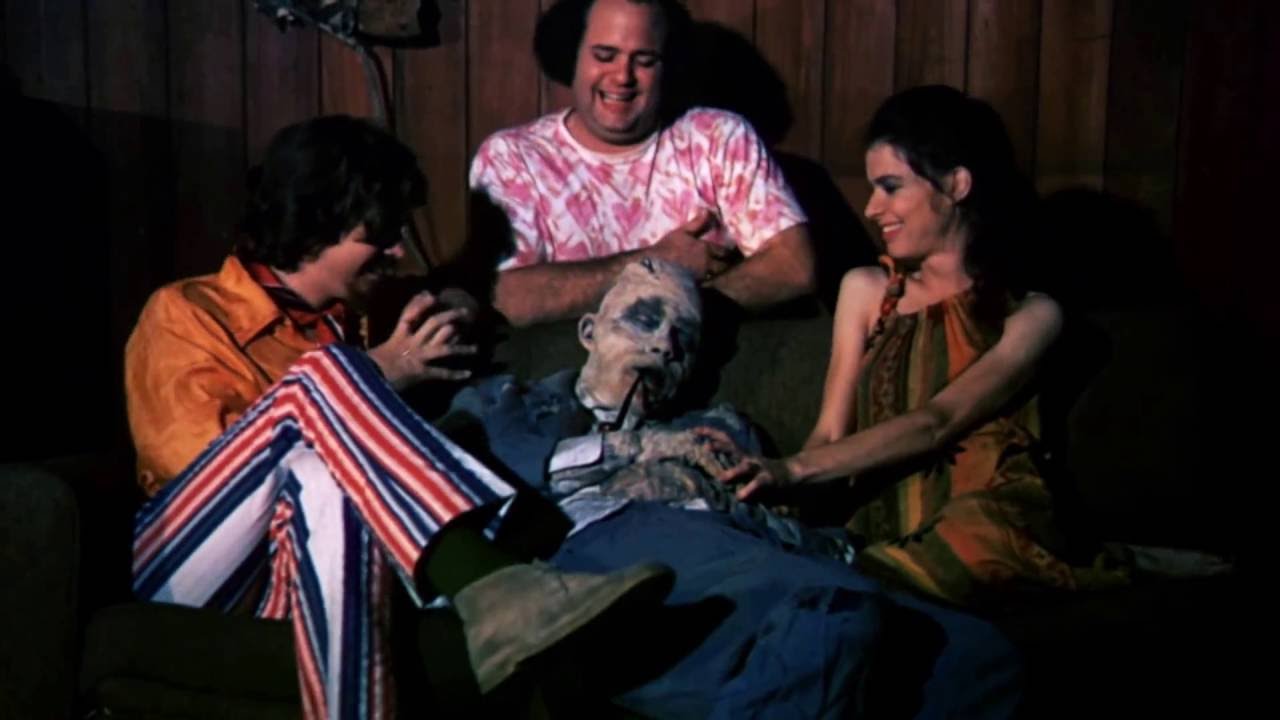
Hippie pals pile into a van and head to Texas to double check that Grammy and Gamps still rest in peace, what with these rumors of grave robbing. Along the way they talk astrology, smoke some weed, pick up a hitchhiker–it’s all in a day’s journey for a hippie.

That hitchhiker thing goes sideways. In fact, the whole trip feels like a bad idea by the time pretty Sally Hardesty and her friends make a second trip to the cemetery. Well, what’s left of them.

https://www.youtube.com/watch?v=Vs3981DoINw

Fright Club: The Law

The Law figures heavily in horror films. Most of them depict crimes. Bloody, bloody crimes. So, in many cases, the authorities must be brought in. And there are some outstanding genre films depicting a law enforcement officer as hero—Jaws and Slither spring to mind. They are also villains as often as bumbling side characters (we’re looking at you Inside and Last House on the Left).

Today we want to celebrate the films that dive into the police work, that focus squarely on The Law and its investigators. And, again, bloody, bloody crimes.

6. Baskin (2015)

Welcome to hell! Turkish filmmaker Can Evrenol invites you to follow a 5-man police squad into the netherworld, where eye patches are all the rage, pregnancy lasts well under the traditional 40 weeks, and you don’t want to displease Daddy.

The serpentine sequencing of events evokes a dream logic that gives the film an inescapable atmosphere of dread, creepily underscored by its urgent synth score. Evrenol’s imagery is morbidly amazing. Much of it only glimpsed, most of it left unarticulated, but all of it becomes that much more disturbing for its lack of clarity.

The further along the squad gets, the more often you’ll look in horror at something off in a corner, that sneaking WTF? query developing along with your upset stomach.

The central figures in this nightmare are one eye-patch wearing helper who enjoys tossing his or her hair over one shoulder, and the breathtaking father figure played by Mehmet Cerrahoglu. There is no one quite like him.

Cerrahoglu’s remarkable presence authenticates the hellscape. Evrenol’s imaginative set design and wise lighting choices envelope Cerrahoglu, his writhing followers, and his victims in a bloody horror like little else in cinema.

5. Se7en

Serpentine and dark as the sin it depicts, David Fincher’s Se7en marked him as a director willing to work your subconscious and take you to unseemly places. The film compares the strict and merciless justice of an old school God with the rotting corpse of NYC police work as two homicide detectives – one a grizzled veteran (Morgan Freeman), one a hot headed rookie (Brad Pitt) – try to keep up.

Fincher shrouds the mystery in some of the most memorably horrific images set to film. Who can forget that first victim, facedown in his spaghetti? How about Lust? “Get it off me! Get it off me!”

Let’s not even discuss Sloth. Still trying to recover from that, and the film came out in 1995.

Great performances and sleight of hand keep the story itself breathless as you work toward the now legendary climax.

What’s in the box?!!!

4. The Wailing

“Why are you troubled,” Jesus asked, “and why do doubts arise in your hearts? Look at my hands and my feet. It is I myself. Touch me and see — for a spirit does not have flesh and bones, as you see I have.”

Though the true meaning of this quote won’t take hold until the final act, it presents many questions. Is this film supernatural? Demonic? Or, given the corporeal nature of the quote, is it rooted in the human flesh?

Yes.

That’s what makes the quote so perfect. Writer/director Hong-jin Na meshes everything together in this bucolic horror where superstition and religion blend. The film echoes with misery, as the title suggests. The filmmaker throws every grisly thing at you – zombies, pustules, demonic possession, police procedural, multiple homicides – and yet keeps it all slippery with overt comedy.

3. I Saw the Devil (2010)

Min-sik Choi (Oldboy) plays a predator who picks on the wrong guy’s fiancé.

That grieving fiancé is a police investigator played by Byung-hun Lee (The Magnificent Seven), whose restrained emotion and elegant good looks perfectly offset Choi’s disheveled explosion of sadistic rage, and we spend 2+ hours witnessing their wildly gruesome game of cat and mouse.

Director Jee-woon Kim (A Tale of Two Sisters) breathes new life into the serial killer formula. With the help of two strong leads, he upends the old “if I want to catch evil, I must become evil” cliché. What they’ve created is a percussively violent horror show that transcends its gory content to tell a fascinating, if repellant, tale.

Beneath the grisly violence of this unwholesome bloodletting is an undercurrent of honest human pathos – not just sadism, but sadness, anger, and the most weirdly dark humor.

If you can see past the outrageously violent images onscreen, you might notice some really fine acting and nimble storytelling lurking inside this bloodbath.

2. Big Bad Wolves (2013)

A mixture of disturbing fairy tale and ugly reality, Israel’s Big Bad Wolves takes you places you really don’t want to go, but damn if it doesn’t keep you mesmerized every minute.

The particularly vulgar slaughter of several little girls sets events in motion. One teacher is suspected. One cop is driven. One father suffers from grief-stricken mania. It’s going to get really ugly.

Filmmakers Aharon Keshales and Navot Papushado (Rabies) implicate everyone, audience included. They create intentional parallels among the three men, pointing to the hypocrisy of the chase and making accusations all around of a taste for the intoxicating bloodlust that comes from dominating a weaker person.

Their taut and twisty script keeps surprises coming, but it’s the humor that’s most unexpected. Handled with dark, dry grace by Lior Ashkenazi (the cop) and Tzahi Grad (the father) – not to mention Doval’e Glickman (the grandfather) – this script elicits shamefaced but magnetic interest. You cannot look away, even when the blowtorch comes out. And God help you, it’s hard not to laugh now and again.

1. The Silence of the Lambs (1991)

It’s to director Jonathan Demme’s credit that Silence made that leap from lurid exploitation to art. His masterful composition of muted colors and tense but understated score, his visual focus on the characters rather than their actions, and his subtle but powerful use of camera elevate this story above its exploitative trappings. Of course, the performances didn’t hurt.

Hannibal Lecter ranks as one of cinema’s scariest villains, and that accomplishment owes everything to Anthony Hopkins’s performance. It’s his eerie calm, his measured speaking, his superior grin that give Lecter power. Everything about his performance reminds the viewer that this man is smarter than you and he’ll use that for dangerous ends.

Demme makes sure it’s Lecter that gets under our skin in the way he creates a parallel between Lecter and FBI investigator Clarice Starling (Jodie Foster). It’s Clarice we’re all meant to identify with, and yet Demme suggests that she and Lecter share some similarities, which means that maybe we share some, too.


Fright Club: What’s On the Slab

Come up to the lab and see what’s on the slab.

The cold, sterile morgue. That basement examination room with those drawers that should really never open on their own. Those rows of tables with sheets that should not just blow around. It’s a quiet, peaceful place where, in horror movies, attractive naked women lay prone and yet onscreen without a line of dialog for 90 minute stretches.

That’s not to say that they do nothing. Sometimes they talk. Sometimes they even bite.

Thanks to Jenny from Cali for the topic idea.

Here are our favorite autopsy/morgue horror movies.

5. Re-Animator (1985)

Stuart Gordon’s Re-Animator reinvigorated the Frankenstein storyline in a decade glutted with vampire films. Based, as so many fantasy/horror films are, on the work of H. P. Lovecraft, Re-Animator boasts a good mix of comedy and horror, some highly subversive ideas, and one really outstanding villain.

Jeffrey Combs, with his intense gaze and pout, his ability to mix comic timing with epic self-righteousness without turning to caricature, carries the film beginning to end. His Dr. Herbert West has developed a day-glo serum that reanimates dead tissue, but a minor foul up with his experimentations – some might call it murder – sees him taking his studies to the New England medical school Miskatonic University. There he rents a room and basement laboratory from handsome med student Dan Caine (Bruce Abbott).

They’re not just evil scientists. They’re also really bad doctors.

First-time director Gordon’s effort is superb. He glories in the macabre fun of his scenes, pushing envelopes and dumping gallons of blood and gore. He balances anxiety with comedy, mines scenes for all they have to give, and takes you places you haven’t been.

4. Anatomy (2000)

Franka Potente leads a medical school mystery in Stefan Ruzowitzky’s film about Germany’s ugly history with medical experimentation and societal hierarchy.

Ruzowitzky would go on to direct the Oscar winning foreign language film The Counterfeiters in 2007, but back in 2000 he was still riding high on the surprise success of this mid-budget medical horror.

Potente is Paula. She’s new and maybe a little frigid for her prestigious medical school. In one of her classes she recognizes a corpse. Her curiosity piqued, what she stumbles into may look like a by-the-book slasher, but it digs into the scars of a generation whose beloved forebears were either implicit in heinous crimes against humanity, or who participated willingly.

3. The Corpse of Anna Fritz (2015)

Young hospital orderly Pau (Albert Carbo) attends the morgue, where the famous actress Anna Fritz (Alba Ribas) awaits an autopsy come morning. He secretly texts a selfie with the body to two buddies.

Soon, three young men are alone with a beautiful, naked, dead woman with absolutely no chance of being interrupted for hours. If you’re a little concerned with where this may lead, well, you should be.

Sort of a cross between 2008’s irredeemable rape fantasy Deadgirl and Tarantino’s brilliant Kill Bill, Volume 1, The Corpse of Anna Fritz will take you places you’d rather not go.

As a comment on rape culture, the film is a pointed and singular horror.

And while contrivances pile up like cadavers in a morgue, each one poking a hole in the credibility of the narrative being built, The Corpse of Anna Fritz has a lot more to offer than you might expect – assuming you stick it out past the first reel.

2. I Am Not a Serial Killer (2016)

Billy O’Brien (Isolation) finds a new vision for the tired serial killer formula with his wry, understated indie horror I Am Not a Serial Killer.

An outsider in a small Minnesota town, John (Max Records) works in his mom’s morgue, writes all his school papers on serial killers, and generally creeps out the whole of his high school. But when townsfolk start turning up in gory pieces, John turns his keen insights on the case.

Records, who melted me as young Max in Spike Jonze’s 2009 masterpiece Where the Wild Things Are, serves up an extraordinarily confident, restrained performance. His onscreen chemistry with the nice old man across the street – Back to the Future’s Christopher Lloyd – generates thrills enough to offset the movie’s slow pace.

For his part, Lloyd is in turns tender, heartbreaking and terrifying.

Bursts of driest humor keep the film engaging as the story cleverly inverts the age-old “catch a killer” cliché and toys with your expectations as it does.

1. The Autopsy of Jane Doe (2017)

Back in 2010, Andre Ovredal established himself as a filmmaker of unusual vision with his found footage style gem Trollhunter. His first English-language film takes him into the basement examination room of father and son coroners.

Both stars Brian Cox and Emile Hirsch are underappreciated actors, and each one turns in a wonderfully familiar, tender performance. Their kinship and associated dysfunction are played with enough restraint to keep it from weighing down proceedings, instead creating a believably protective relationship that causes certain scenes to hurt.

As the two dig in to the mystery of their latest patient, an unidentified woman found underground in a nearby basement, an intimate and claustrophobic but always smart and creepy mystery starts to unveil itself. The result is a chilling and effective thriller.