The last time the great Ian McKellen donned the lead role in a film for director Bill Condon, he was rightfully nominated for an Oscar. In their collaboration Gods and Monsters, McKellen played director James Whale in his waning years, trying to remember for himself and articulate for others the difference between who he was as a man and who the world believed him to be.
Director and star tread a similar path with their latest effort, Mr. Holmes. A 93-year-old Sherlock faces his mortality and – worse still for the brainiac detective – encroaching senility. Attempting to battle enfeeblement, he tries to remember the details of his final case – facts clouded by the published story and subsequent film written by his longtime friend, Dr. Watson.
Though the film does stalk a mystery, don’t expect clues, lurid suspicions and a tidy conclusion. Rather, Condon’s effort, based on Mitch Cullin’s 2005 novel A Slight Trick of the Mind, puzzles over bigger questions about morality, fallibility, regret, and the regenerative power of storytelling.
The retired sleuth spends his waning years in a Sussex seaside farmhouse tending bees and basking in the admiration of Roger (Milo Parker), the son of his housekeeper, Mrs. Munro (Laura Linney).
Linney feels slightly miscast as the put-upon housekeeper, aware of her own intellectual limitations and envious of her son’s affections for her employer. Her accent is off-putting and her intelligence is perhaps too fierce to be believably buried inside this character, but she certainly finds the frail humanity beneath Mrs. Munro’s sturdy exterior.
The tale is a bit soft-hearted and not nearly as cerebral as fans of the sleuth might hope. Don’t expect the expected – there is no Watson, no deerstalker, no pipe. Sherlock’s deductive prowess does come into play now and again, but even as logic continues to form and inform his actions, he’s developing an admiration for emotion – even for fiction.
Condon’s pace is slow and his storytelling is not as crisp as it should be, but McKellen soars nonetheless. With effortless grace and honesty he delivers a turn full of fear, courage, regret, need, and joy. It’s a masterful performance.
Ten years ago, The 40-Year-Old Virgin introduced the new voice of cinematic comedy. A decade later, 40 writer/director Judd Apatow is – for the first time – directing a film he didn’t write. Why? Because there’s a new sheriff in town and Apatow has the clout to ensure that the next voice in cinematic comedy gets heard.
Trainwreck is the bawdy, wise, hilarious, about-fucking-time romantic comedy written by and starring Amy Schumer. Startlingly honest and utterly lacking in pretension, she followed up years of refreshingly raw stand-up comedy by destroying cable TV with her brilliant Inside Amy Schumer. (YouTube 12 Angry Men Inside Amy Schumer immediately to see just how savvy a writer she is.)
She and Apatow collaborate on this sometimes touching, boisterously funny upending of rom-com clichés. (As Amy narrates the lovey-dovey montage backdropped by the Manhattan skyline, even she finds it cloying, quipping, “I hope this love montage ends like Jonestown.”)
Schumer plays Amy, a heavy drinking, sexually active (very active) writer for a magazine that runs stories like “How Does Eating Garlic Change the Taste of Semen?” and “You’re Not Gay, She’s Boring.” Her editor – the ever glorious Tilda Swinton – assigns her a piece on a sports doctor (Bill Hader), and Amy is reluctantly pulled into the world of monogamy.
The screenwriting is ingenious. This is a role reversal romantic comedy, basically, but it’s far too crafty to rely on that as a gimmick. On the surface, Amy’s the same protagonist trapped in an extended adolescence that has become commonplace in Apatow’s filmography, but there is no denying Schumer’s ability to find something new and authentic to bring to the mix.
She’s aided by an impeccable cast. Bill Hader has quickly become one of the most versatile and authentic actors of the SNL alum. Swinton’s magnificent, LeBron James is deadpan hilarious and a very good sport, as is John Cena, and Dave Attell is a hoot. Cameos galore draw belly laughs in a comedy that has something to say underneath hundreds of well-aimed gags.
Trainwreck might be the best romantic comedy since Bull Durham.
Sometimes the truth is scarier than fiction, which is why we decided to look at documentaries this week. From true crime to weird tales, from psychological nightmares to war crimes, we look at the best documentaries the genre has to offer.
5. Room 237 (2012)
Stanley Kubrick’s magnificent film The Shining inspires close examination. Director Rodney Ascher assembled some of the most inspired – obsessed, even – for his documentary on the Kubrick ghost story, Room 237.
It would be too simplistic to take Room 237 as a deconstruction of The Shining, and those hoping to uncover Kubrick’s deeper meaning may be disappointed. But what the film does, it does well. It explores one of cinema’s most exquisite films, using it to encourage the spectator’s active participation in viewing. In doing so, it positions film as an art equal to literature or painting in terms of thematic dissection.
It also opens our eyes to the abject nuttiness of Kubrickian “scholars” – and a documentary always gets extra points if it introduces an audience to an entirely new concept, like that of the Kubrickian scholar.
More than anything, though, Room 237 is a documentation of obsession, and a fascinating one at that. It bares more insight into the act of obsessing than it does on Kubrick’s work itself, but it helps that these people spend all their time analyzing such a great movie. If they were this excited about tessellations or ringworm, well, the movie would have lacked that certain panache.
4. My Amityville Horror (2012)
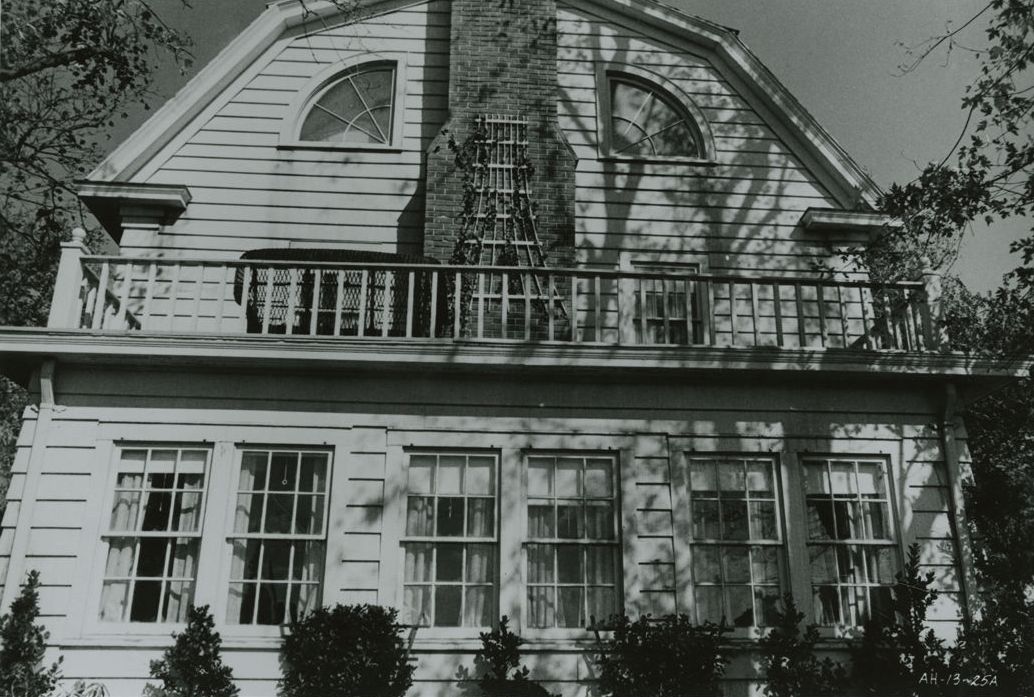
The film begins as yet another tale spun ‘round the Long Island home called High Hopes, where Ronald DeFeo Jr. killed his parents and siblings before the Lutz family took up residence, remaining only 28 days. The Lutzes’ tale informed a fantastically popular book and no fewer than 12 films, as well as plenty of hoax accusations. What sets My Amityville Horror apart is that it quickly becomes a character study of the eldest of the Lutz children, Daniel.
He’s a troubled, heartbreaking, mesmerizing central figure for the film. His stories are so wild and yet he believes them so earnestly that, whether phantasms traumatized his family or whether these tales are the coping mechanism of a young boy subjected to a different kind of abuse becomes hazy and deeply sad.
Director and Amityville fanatic Eric Walter uses a compassionate but unerring focus to illuminate something honestly troubling: the struggle of one of the Amityville horror victims, regardless of the actual horror that went on inside the house.
3. Cropsey (2009)
Cropsey was the Hudson River area summer camp name for a boogeyman. In Staten Island’s Boy Scout camp tales, Cropsey lived in a tunnel system beneath the borough’s abandoned mental hospital. He nabbed children while their parents weren’t looking and killed them out in the woods.
But in Staten Island, the story of Cropsey was true, only his name is Andre Rand.
As filmmakers Barbara Brancaccio and Justin Zemen dig into this story of a convicted sexual predator/mental hospital orderly suspected in the disappearances of as many as seven children, they pull us through fact and myth, expertly choosing news footage to anchor modern interviews.
Their clever approach combines the best of any serial killer drama with the haunting reality of Capturing the Friedmans. They explore the investigation of a serial child killer, all the while exposing the human foibles, mob mentality, and lurid fascination that makes you wonder, even though they clearly have a very bad man, do they have the right one?
2. The Act of Killing (2012)
Surreal, perverse, curious and horrifying, The Act of Killing demands to be seen.
It is anchored in the atrocities committed during the overthrow of the Indonesian government in 1965. Paramilitary death squads and ruthless gangsters captured, tortured and killed at will, all under the guise of exterminating “communists.” Over one million Indonesians lost their lives, and those responsible continue to gloat about their actions from a seat of power they still enjoy today.
Co-director Joshua Oppenheimer met with some of the most famous death squad leaders and made them a distasteful yet ultimately brilliant offer: would they re-enact their savagery on camera?
The result is mesmerizing, can’t-believe-what-I’m-seeing-stuff.
Recalling the finest of their work, The Act of Killing is unforgettable. It calls to mind past cruelty, an Orwellian present and an uncertain future, emerging as essential, soul-shaking viewing.
1. The Nightmare (2015)
An effective scary movie is one that haunts your dreams long after the credits roll. It’s that kind of impact most horror buffs are seeking, but even the most ardent genre fan will hope out loud that Rodney Ascher’s documentary The Nightmare doesn’t follow them to sleep.
His film explores sleep paralysis. It’s the phenomenon that inspired Wes Craven to write A Nightmare on Elm Street. It’s a clear creative root for Insidious, Borgman and scores of other horror movies. But it isn’t fiction. It’s a sometimes nightly horror show real people have to live with. And dig this – it sounds like it might be contagious.
Ascher’s a fascinating, idiosyncratic filmmaker. His documentaries approach some dark, often morbid topics with a sense of wonder. His films never seem to be pushing an agenda, he doesn’t seem to have made up his mind on his subject matter. Rather, he is open which, in turn, invites the audience to be open.
We spend a great deal of time watching horror movies, and I cannot remember an instance in my life that I considered turning off a film for fear that I would dream about it later. Until now.
Listen to the whole conversation on our FRIGHT CLUB podcast.
Ever have that dream where you’re trapped inside your old high school? I think maybe Travis Cluff and Chris Lofing have. They work through their issues with the theatrical horror show The Gallows.
The writing/directing duo resort to found footage to tell their tale. What you’re watching is Nebraska police evidence – so kind of the cops to edit together multiple different camera sources for us! The footage captures the horrific events surrounding the high school production of The Gallows.
First, the good news: You don’t have to actually watch a high school play. Whew!
Twenty years ago a boy died during a performance. To honor that anniversary, the school puts on the same damn play. Now that’s just in poor taste. As retribution, someone or something terrorizes the kids who break in to the school the night before the performance to bust up the sets. Scamps!
Like the surprise fun of this summer’s Unfriended, The Gallows taps some insightful ideas concerning modern teens – like that they are, on average, stupid enough to film themselves committing felonies. This film also has some fun at the expense of drama kids, as well as those kids who believe they are way too cool for high school theater.
The original trailer for this film was a scream, and the scene it depicts remains the film’s high water mark in terms of terrifying fun. Set decoration is spooky and the brisk 81 minutes offers a goodly number of jump scares.
Performances are generally solid, too. Pfeifer Ross, in particular, strikes the perfect note as the perky, earnest drama kid, while Ryan Shoos is equally on-mark as the insecure, douchey jock. A couple of supporting turns are fun as well in a movie that hopes to quickly create a believable high school microcosm before it turns into a predictable if entertaining riff on some familiar horror ideas.
It’s better than going back to high school, that’s for damn sure.
It takes a real gift for storytelling to take a Behind the Music tale – rags to riches to tragedy – and turn it into a riveting, relevant, surprising film. Documentarian Asif Kapadis (Senna) has done just that with the vital and heartbreaking film Amy.
For his picture of Amy Winehouse he collects hundreds of interviews and sifts through countless bits of personal footage to craft more than just a powerful look at a self-destructive talent. The footage is so personal, the interviews so honest, we become voyeurs as a bawdy, vivacious young talent finds her own voice, indulges her dangerous appetites, spirals out of control, and finally succumbs to her demons.
That lens – the voyeur’s eye view – is a pivotal component to the success of Kapadis’s film. While Winehouse’s story is eerily similar to so many others, it may have been the utterly public self-destruction that sets her story apart. We watched it happen, and to a great degree, we participated. Kapadis is asking us to do it again.
Winehouse’s story certainly echoes too many others. Dead at 27, she joins a prestigious if tragic club: Jimi Hendrix, Kurt Cobain, Jim Morrison, Janis Joplin. Like those musical supernovas, Winehouse struggled with depression, drug abuse, family issues, and a string of bad decisions.
Too few people knew her before she was a Jay Leno punchline, but the doc takes us back to her throaty pre-teen singalongs with buddies, her earliest club dates, to scenes with the same group of friends from grade school onward. We see the raw, shocking potential in this voice, something that echoed both jazz divas of days gone by as well as the most contemporary hip hop, and are reminded of the breathtaking intimacy of her lyrics.
A crafty filmmaker, Kapadis knows what to do with the collection of material. He understands the complexity of the Winehouse story. Though he implicates those whose influence helped determine the chanteuse’s fateful trajectory – a dirt bag junky husband, an emotionally disinterested mother, a manipulative, self-serving father, a short sighted tour manager, and a public thirsty for controversy – he never paints Winehouse as a true victim.
Like many hard living performers of remarkable talent before her, Amy Winehouse was a train wreck. Asif Kapadis respects that. You should, too.
After last week’s look at the most horrific scenes in horror, we needed something light. Today we celebrate the great, rich tradition of mixing horror and comedy, whether slapstick or splatter, dark and dry or red and wet, these are the best of a wonderful sub-genre.
6. Housebound (2014)
Funny and scary, smartly written and confidently directed, this is a film that makes few missteps and thoroughly entertains from beginning to end.
An inspired Morgana O’Reilly plays Kylie, a bit of a bad seed who’s been remanded to house arrest and her mother’s custody after a bit of bad luck involving an ATM and a boyfriend who’s not too accurate with a sledge hammer. Unfortunately, the old homestead, it seems, is haunted. Almost against her will, she, her hilariously chatty mum (Rima Te Wiata) and her deeply endearing probation officer (Glen-Paul Waru) try to puzzle out the murder mystery at the heart of the haunting. Lunacy follows.
Good horror comedies are hard to come by, but writer/director Gerard Johnstone manages the tonal shifts magnificently. You’re nervous, you’re scared, you’re laughing, you’re hiding your face, you’re screaming – sometimes all at once. And everything leads up to a third act that couldn’t deliver better.
5. Tucker and Dale vs Evil (2010)
Horror cinema’s most common and terrifying villain may not be the vampire or even the zombie, but the hillbilly. The generous, giddy Tucker and Dale vs. Evil lampoons that dread with good natured humor and a couple of rubes you can root for.
In the tradition of Shaun of the Dead, T&DVE lovingly sends up a familiar subgenre with insightful, self-referential humor, upending expectations by taking the point of view of the presumably villainous hicks. And it happens to be hilarious.
Two backwoods buddies (an endearing Tyler Labine and Alan Tudyk) head to their mountain cabin for a weekend of fishing. En route they meet some college kids on their own camping adventure. A comedy of errors, misunderstandings and subsequent, escalating violence follows as the kids misinterpret every move Tucker and Dale make.
T&DVE offers enough spirit and charm to overcome most weaknesses. Inspired performances and sharp writing make it certainly the most fun participant in the You Got a Purty Mouth class of film.
4. Cabin in the Woods (2012)
You know the drill: 5 college kids head into the woods for a wild weekend of doobage, cocktails and hookups but find, instead, dismemberment, terror and pain. You can probably already picture the kids, too: a couple of hottie Alphas, the nice girl, the guy she may or may not be into, and the comic relief tag along. In fact, if you tried, you could almost predict who gets picked off when.
But that’s just the point, of course. Making his directorial debut, Drew Goddard, along with his co-scribe Joss Whedon, is going to use that preexisting knowledge to entertain holy hell out of you.
The duo’s nimble screenplay offers a spot-on deconstruction of horror tropes as well as a joyous celebration of the genre. Aided by exquisite casting – particularly the gloriously deadpan Richard Jenkins and Bradley Whitford – the filmmakers create something truly special.
3. Shaun of the Dead (2004)
This is a hard movie not to like. Writer/director Edgar Wright teams with writer/star Simon Pegg to lovingly mock the slacker generation, 80s pop, and George Romero with this riotous flesh eating romance. But what is easy to overlook is the genuine craftsmanship that went into making this picture.
Every frame of every scene is so perfectly timed – pauses in conversation synchronized with seemingly random snippets of other conversations, or juke box songs, or bits from the tele. (The movie will turn you British. By the end you’ll be saying holiday instead of vacation, spelling colour with a u and saying, “How’s that for a slice of fried gold?” even though you don’t really know what that means.)
Shaun offers such a witty observation of both a generation and a genre, so well told and acted, that it is an absolute joy, even if you’re not a fan of zombie movies. As social satire, it is as sharp as they come. It also manages to hit the bull’s eye as a splatter horror film, an ode to Romero, a buddy picture, and an authentic romantic comedy. And it’s more than just a remarkable achievement; it’s a fresh, vivid explosion of entertainment. It’s just a great movie.
2. Slither (2006)
Writer/director James Gunn took the best parts of B-movie Night of the Creeps and Cronenberg’s They Came from Within, mashing the pieces into the exquisitely funny, gross, and terrifying Slither. The film is equal parts silly and smart, grotesque and endearing, original and homage. More importantly, it’s just plain awesome.
Cutie pie Starla (Elizabeth Banks) is having some marital problems. Her husband Grant (the great horror actor Michael Rooker) is at the epicenter of an alien invasion. Smalltown sheriff Bill Pardy (every nerd girl’s imaginary boyfriend Nathan Fillion) tries to set things straight as a giant mucous ball, a balloonlike womb-woman, a squid monster, projectile vomit, zombies, and loads and loads of slugs keep the action really hopping.
Consistently funny, endlessly quotable, cleverly written, well-paced, tense and scary and gross – Slither has it all.
In fact, it’s the perfect movie to see in a big, screaming group – some come join us Wednesday, 7/8 as we screen it at Fright Club Live! Join us at 8pm/6:30 for happy hour and prizes, at the Gateway Film Center in Columbus, OH.
1. American Psycho (2000)
A giddy hatchet to the head of the abiding culture of the Eighties, American Psycho represents the sleekest, most confident black comedy – perhaps ever. Director Mary Harron trimmed Bret Easton Ellis’s novel, giving it unerring focus. More importantly, the film soars due to Christian Bale’s utterly astonishing performance as narcissist, psychopath, and Huey Lewis fan Patrick Bateman.
There’s an elegant exaggeration to the satire afoot. Bateman is a slick, sleek Wall Street toady, pompous one minute because of his smart business cards and quick entrance into posh NYC eateries, cowed the next when a colleague whips out better cards and shorter wait times. For all his quest for status and perfection, he is a cog indistinguishable from everyone who surrounds him. The more glamour and flash on the outside, the more pronounced the abyss on the inside. What else can he do but turn to bloody, merciless slaughter? It’s a cry for help, really.
Harron’s send up of the soulless Reagan era is breathtakingly handled, from the set decoration to the soundtrack, but the film works as well as a horror picture as it does a comedy. Whether it’s Chloe Sevigny’s tenderness as Bateman’s smitten secretary or Cara Seymour’s world wearied vulnerability, the cast draws a real sense of empathy and dread that complicate the levity. We do not want to see these people harmed, and as hammy as it seems, you may almost call out to them: Look behind you!
Listen to the whole conversation on the FRIGHT CLUB podcast!
When handled properly, even the slightest premise or most ridiculous behavior can turn into an insightful and moving observation. Such is the case with the frank and uncomfortable sex comedy The Overnight.
Emily and Alex (Taylor Schilling and Adam Scott, respectively) recently relocated from Seattle to LA, and while their youngster RJ has a birthday party to attend that will help him make friends, they are still feeling a little isolated and friendless. That is, until uber-hipster Kurt (Jason Schwartzman) approaches them at the park after his son befriends theirs.
The kids hit it off, the parents hit it off, and Kurt invites the whole gang back to his place for an impromptu pizza party. What could be better? Go spend 24 hours with your neighbors and see how weird it gets.
Schwartzman is spot on perfection, as is often the case, with the smarmy but likeable but maybe creepy but kind of awesome Kurt. Few if any can hit these notes of self-parody caricature and earnest vulnerability quite this well.
Scott, as the tightly wound, trying-too-hard straight man to Schwartzman’s nut is equally impressive. Luckily, it’s not just odd couple schtick the two are after, though. They, as well as Schilling and Judith Godreche, as Kurt’s wife Charlotte, toggle nicely between broad comedy and precise, insightful characterization.
Like a less precious, more contemporary Bob & Carol & Ted & Alice, The Overnight flirts with the idea of partner swapping as a way to explore more: personal insecurities, relationships, love, commitment, boredom, and breast pump fetishists.
Although you always have the sense of where things are going, there’s a surprise in nearly every scene. Not every one pays off, but most of them land with a laugh and maybe an awkward shudder. Though writer/director Patrick Brice mines the embarrassing situation on a near-Noah Baumbach level, his film is compassionate. He gives his four performers room to breathe, sometimes hold their breath, but they’re able to be mortified and vulnerable simultaneously.
The Overnight is a perceptive if bawdy comedy directed with nuance for laughs and resonance. Brice can’t nail the tone consistently enough, the overarching tale leans too heavily on giddy expectation, and the female characters are not given enough chance to evolve, but that hardly sinks this ship. Schwartzman and Scott are an inspired pairing and the film is a nice, adult minded comedy to offset the summer’s blockbuster glut.
Revenge fantasies have been theatrical staples since writers first put quill to parchment. Even the rape-revenge fantasy has been a mainstay of genre filmmaking for generations. Somehow director Jose Manuel Cravioto mixes the classic theatricality with both common exploitation and an unsettling contemporary relevance in his first English language effort, Bound to Vengeance.
Combining present tense narrative with flashback footage, the film unveils the predicament that has befallen Eve (a believably intense Tina Ivlev). Chained in filth in the basement of an isolated old house, Eve finally makes her escape but chooses to risk herself further by keeping her captor alive long enough to fulfill an obligation.
The filmmaker thankfully skirts unseemly titillation. Though his film uses sex trafficking as its basis for horror, Cravioto does not rely on the shock value lechery that has driven other films of the sort. Because the film is told from Eve’s perspective, we’re given the opportunity to find humanity and compassion.
But don’t write the film off to political correctness. Craviotio makes some provocative decisions that won’t thrill every viewer, although they do seem to serve the unsettling reality of the film itself.
Ivlev tinges her character’s tenacity with just enough PTSD flourishes to make the character both realistic and unpredictable, while Richard Tyson is creepy perfection as her foil. Is he the sympathetic simpleton he makes himself out to be, or the conniving psychopathic predator you’d imagine could be capable of this inhuman behavior?
Give writers Rock Shaink Jr. and Keith Kjornes credit – every time a character makes a careless or stupid decision, it isn’t simply convenient writing. There’s a reason for most everything that happens here.
This is a small film, visually grimy and difficult to watch, but it’s Cravioto’s restraint that makes it worth the effort. Very little here feels exploitative, and he never gives over to sentimentality. He invests in characters and reminds us why the revenge fantasy has remained as compelling as it has for as long as people have told stories.
Few among us have even heard of the film Felt, and those who have are misled. Packaged as a feminist superhero movie about rape culture, this film has less in common with rape/revenge fantasies like I Spit on Your Grave and American Mary and more in common with mumblecore.
This is a peculiar, intimate, meandering meditation on a single person’s struggle with trauma. The fact that Amy (co-writer Amy Everson) works through her problems by creating hyper-masculine costumes that she wears in the woods, accompanied only by her anger and her wooden sword, is really what sets Felt apart from other art films.
Director/co-writer Jason Banker’s camera is intimate and awkward, an ideal combination that mirrors Amy’s state of mind. There’s something uneasy in the quick edits, extreme close ups, and wandering visuals that suggests Amy’s perspective.
Recovering from an unspecified but clearly sexual trauma, Amy slowly deserts the socially accepted course of healing – those steps her friends keep urging her to take – instead filling her room with art that’s equally childish and grotesque, most of it phallic.
But it’s the costumes that seem to help Amy regain some measure of personal power, and the film’s strongest scenes are those in which she explores this empowerment. Whether she and her penis suit are scaling trees, or she wears her exaggerated vagina and breast outfit to upend a sexy photo session, the behavior is unpredictable, fascinating, and sometimes weirdly funny.
The scene with the photographer and new friend Roxanne (Roxanne Lauren Knouse) is a scream, and something truly unlike anything else in film. Roxanne immediately embraces what it is Amy is trying to do, which is why she’s disappointed when Amy does what her other friends see as healthy – gets a new boyfriend.
Kenny (Kentucker Audley) represents a gentle, patient soul willing to wait for Amy, but with trust comes vulnerability. There’s a circuitous nature to the sparse narrative. Traditional relationships find an echo later in the film, the second time with Amy in a position of power, but she is ill prepared to handle the shift.
The film boasts very little dialog, and as a curious onscreen presence, Everson is a master. At times, though, the lines delivered feel too obvious for the film itself, and in the end Everson and Banker fall back on behavior too predictable for the fractured fairy tale they’ve crafted. They do leave you unsettled, though. There’s no big hurrah, no sense of accomplishment, just more of the same maddening nightmare.
Rarely is a sequel superior to the original film – Bride of Frankenstein, The Empire Strikes Back, maybe The Godfather, Part 2. That’s heady company for Magic Mike XXL – in fact, the movie should never really be mentioned in the same sentence as those particular films – but let’s give it its due. It is a better movie than the original.
It’s been three years since Mike (Channing Tatum) left male entertainment behind him for the settled life. But he’s bored, basically, and he misses it, so he joins the old Tampa Kings for one last trip to the national stripper convention in Myrtle Beach.
There is a huge, gaping hole in this film shaped like Matthew McConaughey, who was the only reason to watch the original. McConaughey was Dallas, the leader and emcee for the Tampa Kings, and the performance was positively unhinged. This was just at the beginning of what anthropologists will call the McConaissance – that period of unbelievable performances that led to his first Oscar. He does not return for the sequel, and his inspired lunacy is dearly missed.
On the other hand, both Alex Pettyfer and Cody Horn are blessedly missing. I’m sure they’re nice people, but Lord they cannot act.
Another positive change, weirdly enough, is a switch in director. Steven Soderbergh directed the original to be a gritty expose on the dangerous world of Florida stripper life, while the film owes its irrational success to one thing: beefcake.
Director Gregory Jacobs embraces this. Welcome aboard a road trip of muscle and thong, spray tans and gyration as Tatum and his buds hope to pull off one last, big dance. They want to go out in a tsunami of dollar bills and they hope you brought your singles.
Tatum is effortlessly charming, as always, but his posse gets more of an opportunity to show off personality as well as pecs this time around. Joe Manganiello, in particular, gets more screen time in a film that’s far more bromance than romantic comedy.
There are also cameos aplenty, some glitter, some baby oil, and at least as much screaming inside the theater as on the screen. Ladies, calm down.
Magic Mike XXL is not a great movie by any stretch, but it knows what it is and it runs with it. Well, dances with it. And that’s fine.