It was fun spending the apocalypse with Seth Rogen and his friends, so why not Christmas?
The Night Before gives you that chance. Isaac (Rogen) and BFF Chris (Anthony Mackie) have spent Christmas Eve with Ethan (Joseph Gordon-Levitt) every year since his parents died. They have the same routine, hit the same spots, seek the same elusive party. But the tradition’s getting a little pathetic as the trio heads into their mid-thirties, so this is their last holiday hurrah.
It’s a lame set-up about embracing adulthood without abandoning your true friends, but there’s magical Christmas weed and a slew of hilarious cameos, so maybe things will work out OK?
JGL is reliably likeable, Rogen is – well, you know what you get with him. Mackie is no comic genius and his performance feels a bit too broad. But the secret here is in the supporting players.
Jillian Bell is characteristically hilarious, as is Broad City’s Ilana Glazer, but the way Michael Shannon walks away with scenes is tantamount to larceny. He doesn’t do a lot of comedy (unless you count that sorority girl’s letter online), but his deadpan performance is easily the highlight of the film.
It’s hard to tell whether the film is too silly or not silly enough. It has its laughs, raunchy though they are, but the adventure feels simultaneously slapped together and formulaic.
Director Jonathan Levine (50/50) and his team of writers (including Evan Goldberg, natch) dip a toe in schmaltz rather than investing at all in actual character development, preferring to string together episodes of goofball fun.
The zany misadventures aren’t enough to carry the film, and lacking depth of character creates a “holiday spirit” climax that is tough to care about.
The film drops you into a world you would be hard-pressed to even imagine and finds a story that is both bright and beautiful despite itself. It’s the story of a young woman, held captive inside a shed, and her 5-year-old son, who’s never been outside of “room.”
Never lurid for even a moment, both restrained and urgently raw, the film benefits most from the potentially catastrophic choice to tell the story from the child’s perspective. And here is the miracle of Room: without ever becoming precious or maudlin or syrupy, with nary a single false note or hint of contrivance, the boy’s point of view fills the story with love and wonder. It gives the proceedings a resilience, and lacking that, a film on this subject so authentically told could become almost too much to bear.
Director Lenny Abrahamson (Frank) creates yet another meticulously crafted, lived-in world – a world that should look like nothing we have ever seen or could ever imagine, and yet manages to resonate with beautifully universal touches. He is absolutely blessed with two magnificent leads and one wonderful supporting turn.
The undeniably talented Brie Larson gives a career-defining performance as Ma. On her face she wears the weariness, desperation, and surprising flashes of joy that believably create a character few of us could even imagine. She conjures emotions so tumultuous as to be nearly impossible to create, but does it with rawness that feels almost too real.
Veteran Joan Allen is the normalizing presence, and her characteristically nuanced turn gives the film its needed second act emotional anchor.
Surrounded as he is by exceptional talent, it is young Jacob Tremblay who ensures that the film won’t soon be forgotten. Where did Abrahamson find such a natural performer? Because an awful lot rests on those wee shoulders, and it’s the sincerity in this performance that keeps you utterly, breathlessly riveted every minute, and also bathes an otherwise grim tale in beauty and hope.
Visual showman Corin Hardy has a bit of trickery up his sleeve. His directorial debut The Hallow, for all its superficiality and its recycled horror tropes, offers a tightly wound bit of terror in the ancient Irish wood.
Adam (Joseph Mawle) and Clare (Bojana Novakovic) move, infant Finn in tow, from London to the isolated woods of Ireland so Adam can study a tract of forest the government hopes to sell off to privatization. But the woods don’t take kindly to the encroachment and the interlopers will pay for trespassing.
What’s in the woods and why is it so angry?
“An occupied people forced into hiding by fire and iron,” explains a friendly Irish policemen to the Brit couple helping to sell off Erin’s ancient forests.
Openly influenced by Evil Dead, The Shining, The Thing, and Straw Dogs, among others, the film rarely feels stale for all its rehash. Hardy borrows and spit-shines, but the final amalgamation takes on such a faery tale quality that it generally works. (Except for that Necronomicon-esque book – that’s just a rip off.)
Hardy has a real knack for visual storytelling. His inky forests are both suffocating and isolating with a darkness that seeps into every space in Adam and Clare’s lives. He’s created an atmosphere of malevolence, but the film does not rely on atmosphere alone.
Though all the cliché elements are there – a young couple relocates to an isolated wood to be warned off by angry locals with tales of boogeymen – the curve balls Hardy throws will keep you unnerved and guessing.
A lot of the scares require very little visual effect – one early bit where Adam is knocked into the trunk of his car while something claws and bangs at the door toward his screaming infant is particularly nerve wracking. Still, Hardy’s joy and real gift is in the creature feature half of the film.
The magical folk of the Hallow – “faeries, banshees, and baby stealers” – have a look that is unique, appropriately woodsy, and immensely creepy. And just when you think the film’s reached its peak with this back woods monster mash, Hardy takes a sharp turn with a deeply felt emotional plot twist.
The political allegory doesn’t really pan out; Clare, though well performed, is entirely one-dimensional; the mythology of the sludge, while cool, doesn’t clearly fit with the monsters; and why in the hell do the rest of the natives stay?!
That’s a lot to ponder, but Hardy – magician that he is – will keep you so interested with relentless pacing and horror wonder that you won’t even notice.
!Dios mio! There are so many exceptional Spanish language horror films, it was hard to choose just 5 – so we didn’t! Whether it’s a Mexican director working in Spain, a Cuban zombiepocalypse, or ghosts, zombies, mad doctors or madder clowns, we have you covered with our fuzzy math salute to el cine de los muertos.
6. Juan of the Dead (2011)
By 2011, finding a zombie film with something new to say was pretty difficult, but writer/director/Cuban Alejandro Bruges managed to do just that with his bloody political satire Juan of the Dead.
First, what a kick ass title. Honestly, that’s a lot to live up to, begging the comparison of Dawn’s scathing social commentary and Shaun’s ingenious wit. Juan more than survives this comparison.
Breathtakingly and unapologetically Cuban, the film shadows Juan and his pals as they reconfigure their longtime survival instincts to make the most of Cuba’s zombie infestation. It’s a whole new approach to the zombiepocalypse and it’s entirely entertaining.
https://www.youtube.com/watch?v=CZrKJvX7mjg
5. The Devil’s Backbone (2001)
Guillermo del Toro’s The Devil’s Backbone unravels a spectral mystery during Spain’s civil war. The son of a fallen comrade finds himself in an isolated orphanage that has its own troubles to deal with, now that the war is coming to a close and the facility’s staff sympathized with the wrong side. That leaves few resources to help him with a bully, a sadistic handyman, or the ghost of a little boy he keeps seeing.
Backbone is a slow burn as interested in atmosphere and character development as it is in the tragedy of a generation of war orphans. This is ripe ground for a haunted tale, and del Toro’s achievement is both contextually beautiful – war, ghost stories, religion and communism being equally incomprehensible to a pack of lonely boys – and elegantly filmed.
Touching, political, brutal, savvy, and deeply spooky, Backbone separated del Toro from the pack of horror filmmakers and predicted his potential as a director of substance.
4. The Skin I Live In (2011)
In 2011, the great Pedro Almodovar created something like a cross between Eyes Without a Face and Lucky McGee’s The Woman, with all the breathtaking visual imagery and homosexual overtones you can expect from an Almodovar project.
The film begs for the least amount of summarization because every slow reveal is placed so perfectly within the film, and to share it in advance is to rob you of the joy of watching. Antonio Banderas gives a lovely, restrained performance as Dr. Robert Ledgard, and Elena Anaya and Marisa Paredes are spectacular.
Not a frame is wasted, not a single visual is placed unconsciously. Dripping with symbolism, the film takes a pulpy and ridiculous story line and twists it into something marvelous to behold. Don’t dismiss this as a medical horror film. Pay attention – not just to catch the clues as the story unfolds, but more importantly, to catch the bigger picture Almodovar is creating.
3. [Rec] (2007)
Found footage horror at its best, [Rec] shares one cameraman’s film of the night he and a reporter tagged along with a local fire department. Bad, bad things will happen.
The squad gets a call from an urban apartment building where one elderly tenant keeps screaming. No sooner do the paramedics and news crew realize they’ve stepped into a dangerous situation than the building is sealed off and power is cut. Suddenly we’re trapped in the dark inside a building with about fifteen people, some of them ill, some of them bleeding, some of them biting.
The found footage approach never feels tired – at first, he’s documenting his story, then he’s using the only clear view in the darkened building. The point of view allows [Rec] a lean, mean funhouse experience.
2. The Last Circus (2010)
Who’s in the mood for something weird?
Unhinged Spanish filmmaker Alex de la Iglesia offers The Last Circus, a breathtakingly bizarre look at a Big Top love triangle set in Franco’s Spain.
Describing the story in much detail would risk giving away too many of the astonishing images. A boy loses his performer father to conscription in Spain’s civil war, and decades later, with Franco’s reign’s end in sight, he follows in pop’s clown-sized footsteps and joins the circus. There he falls for another clown’s woman, and stuff gets nutty.
Iglesia’s direction slides from sublime, black and white surrealist history to something else entirely. Acts 2 and 3 evolve into something gloriously grotesque – a sideshow that mixes political metaphor with carnival nightmare.
The Last Circus boasts more than brilliantly wrong-minded direction and stunningly macabre imagery – though of these things it certainly boasts. Within that bloody and perverse chaos are some of the more touching performances to be found onscreen.
https://www.youtube.com/watch?v=oM2corZvDTI
1. The Orphanage (2007)
Sometimes a throwback is the most refreshing kind of film. Spain’s The Orphanage offers just that fresh breath with a haunted house tale that manages to be familiar and surprising and, most importantly, spooky.
Laura (Belén Rueda) and her husband reopen the orphanage where she grew up, with the goal of running a house for children with special needs – children like her adopted son, Simón, who is HIV positive. But Simón’s new imaginary friends worry Laura, and when he disappears it looks like she may be imagining things herself.
One of the film’s great successes is its ability to take seriously both the logical, real world story line, and the supernatural one. Rueda carries the film with a restrained urgency – hysterical only when necessary, focused at all times, and absolutely committed to this character, who may or may not be seeing ghosts.
A good ghost story is hard to find. Apparently you have to look in Spain.
A bruised, muscular romanticism – a nostalgia for a hipper, more rebellious and gorgeous reality – informs Jake Hoffman’s Asthma.
The beautifully damaged Gus (Benedict Samuel) can’t claim a place in the generic uniformity of the modern world. He longs for the grittier and richer reality he believes came and went before his time. So he steals a Rolls, picks up the girl he admires, and attempts the kind of tragically restless road trip you might find in a Godard film.
All of which would feel precious were it not for erratic but solid performances, and a revelation that unveils Gus as the poseur we knew he was. Surprisingly, Hoffman and Samuel are able to mine that late-film revelation to connect the lead with the ordinary Joe in the audience, and still make his troubles resonate because of the genuine pain in the performance.
For all the film’s showy quirks – Nick Nolte, for instance, is the voice of Gus’s Guardian Angel/Wolfman – Hoffman’s abrupt manner with both camera and soundtrack keep things from feeling frivolous or pretentious.
The slew of peculiar folk Gus meets along his journey nearly chokes any hint of authenticity from Asthma, although the great (and appropriate) Iggy Pop is like a needed and timely punch in the gut to a film just about to topple over with its own quirkiness.
For a hyper-masculine road-type-picture, Asthma boasts a surprisingly nuanced female lead. Yes, Krysten Ritter’s Ruby looks like the typical off-beat beauty, and her character is certainly the right combination of naughty and nice to fit the bill, but Ritter never lets the character off too easy. She makes poor decisions, kicks herself for them, hardens, and moves on – all with a grace that feels of this time and of another.
There’s an addiction theme that threatens to hold the film together, give it purpose and drive, but often feels like the least authentic piece of the movie. Without it, though, Asthma too often comes off as a nostalgic riff on another era’s nostalgic riffs.
Hoffman’s a confident first time filmmaker with a product that is great to look if purposeless – kind of like Gus.
Few true events lend themselves more perfectly to film than the 2010 Chilean mine collapse. There is more drama, peril, resilience, and joy in the facts of this incident than anything that could believably be created in a piece of fiction.
Director Patricia Riggen tackles the story of the miners trapped about half a mile below ground. With food enough for three days, all 33 men survived an impossible 69 days. The story that mesmerized the world is not just of the unbelievable perseverance of the miners themselves, but also of the tenacity of an international team of engineers who worked against both overwhelming odds and an urgent timeclock to save them.
There is no end to the cinematic possibilities available in this deeply moving, thrilling story, which is why it’s so unfortunate that Riggen layers on so much artificial melodrama.
Antonio Banderas and Lou Diamond Phillips anchor a cast saddled with one-dimensional characters, each allowed a particular flaw to overcome or an inspiring trait to benefit the group. Riggen undermines the miners’ struggles by inexplicably skirting a claustrophobic feel, allowing no one the chance to truly panic or lose hope without Saint Mario (Banderas as inspirational leader Mario Sepulveda) swooping in with a word of wisdom to put everyone back on the right track.
Events above ground are treated with even less integrity, as engineers undergo lengthy, obvious epiphanies, and families offer little more than tearfully unwavering support. Riggen’s script, adapted by a team of writers from Hector Tobar’s book “Deep Down Dark,” leeches the human drama and complexity from all the events surrounding the collapse, replacing it with by-the-numbers disaster flick clichés and easy answers.
Most of the actors struggle with accents (I’m looking at you, Gabriel Byrne), and the back and forth use of Spanish and English only further exacerbates the film’s lack of authenticity.
And yet, when that first miner is lifted from his would-be tomb, it is impossible not to be moved. Because this really happened. Thirty three humans spent more than two months 2300 feet below ground, all the while understanding that their chance for survival was infinitesimal. Their ordeal is incomprehensible, and the fight against hopelessness and financial complacency to free them is genuinely inspiring.
The miners received no compensation from the company that stranded them, and this is the best Hollywood can do?
When we decided to start devoting entire podcasts to individual filmmakers, Takashi Miike was an obvious choice. He’s made 86 movies (and counting), so we knew it wouldn’t be too tough to find 5 really good ones. His imagination is like no other and his films push the envelope in terms of violence, subversive imagery, surreal storytelling, and violence. (Yes, we said that twice. He’s really, really good with violence.)
In fact, it was hard to narrow it down and even harder to leave some of his non-horror masterpieces, like 13 Assassins, off the list. Still, we did it. Here we give you Takashi Miike’s 5 best horror movies.
5. Three…Extremes (2004)
Miike directed one of the three shorts in this collection, a tidy little freakshow called “Box.”
Part of the reason it made this list is that the full film, including Fruit Chan’s “Dumplings” and the great Chan-wook Park’s “Cut,” is among the very best short compilation films you’ll find. Each short is so peculiar and original that your interest never wanes.
Miike’s component tells the story of a haunted, damaged woman. Her waking reality and dreams of the horror from her past weave together so that neither she nor the viewer is ever certain which is which. Sexual repression, incestuous undertones, dreamy colors, bodily contortions, and a dizzying, overlapping storyline mark this as a very Miike work.
https://www.youtube.com/watch?v=5rIz7WEKGTs
4. Happiness of the Katakuris (2001)
Miike is an extremely prolific director. He makes a lot of musical films, a lot of kids’ movies, a lot of horror movies, and then this – a mashup of all of those things. Like Sound of Music with a tremendous body count.
The Katakuris just want to run a rustic mountain inn. They’re not murderers. They’re lovely – well, they’re losers, but they’re not bad people. Buying this piece of property did nothing to correct their luck, either because, my God, their guests do die.
You might call this a dark comedy if it weren’t so very brightly lit. It’s absurd, farcical, gruesome but sweet. There’s a lot of singing, some animation, a volcano, a bit of mystery, more singing, one death by sumo smothering, and love. It sounds weird, truly, but when it comes to weird, Miike is just getting started.
https://www.youtube.com/watch?v=XDfMXwRapNc
3. Gozu (2003)
This one starts off as a yakuza film – one guy on a mob-style assignment – then descends into absolute madness.
Minami (Yuta Sone) has been ordered to assassinate his feeble-minded yakuza boss Ozaki (Sho Aikawa), but he’s conflicted. Then he loses him and wanders, in search, into – you might say it was the Twilight Zone, except this place is considerably weirder. There’s a minotaur. An electrified anal soup ladle death scene. Some seriously, seriously weird shit.
Like a walk through somebody’s subconscious, the film is awash in repressed sexual desires of the very most insane and unspeakable. There’s a comical element that’s almost equally unsettling. Gozu is not as violent as many Miike films – it’s violent, don’t be mistaken, but the horror here is more in unseemly behavior and wildly inappropriate imagery.
https://www.youtube.com/watch?v=penZT2N2xDw
2. Ichi the Killer (2001)
Not everyone considers Ichi the Killer an outright horror film. IMDB classifies it as action/comedy/crime, and while it certainly contains all three of those elements, for sheer carnage, not to mention torture, we have to tack on the horror label as well.
Dubious henchmen with a secret weapon – a childlike perv they’ve programmed to kill at their bidding – start a yakuza war by throwing misleading information about the disappearance of one mob boss. He’s being tracked by his really, really, super loyal second in command, Kakihara. (That’s the guy with the incredibly cool/freaky split face from the DVD cover.)
Kakihara’s boss is dead, but he believes he may be kidnapped. He starts kidnapping those who might be to blame, torturing them pretty outlandishly. It’s kind of his art – Kakihara likes to give and receive punishment. Ichi likes to masturbate while others suffer. He comes to consider himself a kind of superhero. Kakihara believes he may be a superhero and really, really wants Ichi to beat him up or die trying.
The childlike Ichi misunderstands everything, and you long for his redemption and happiness, but Miike pulls that rug out from under you because, basically, every person in this film is seriously deranged.
1. Audition (1999)
Audition tells the story of a widower convinced by his TV producer friend to hold mock television auditions as a way of finding a suitable new mate. He is repaid for his deception.
Unwatchable and yet too compelling to turn away from, Audition is a remarkable piece of genre filmmaking. The slow moving picture builds anticipation, then dread, then full-on horror.
Miike punctuates the film midway with one of the most effective startles in modern horror, and then picks up pace, building grisly momentum toward a perversely uncomfortable climax. By the time Audition hits its ghastly conclusion, Miike and his exquisitely terrifying antagonist (Eihi Shina) have wrung the audience dry.
Misty Copeland has a fascinating story to tell. Unfortunately, director Nelson George is the one telling it. From the title to the structure, from the focus to the finale, A Ballerina’s Tale is a needlessly homogenized package of what could have been an amazing film.
Earlier this year – this year! – Copeland became the first African American prima ballerina in the 75 year history of the American Ballet Theater.
Why did it take so long? What did Copeland possess to not only reach the absolute height of her craft, but to overcome classical ballet’s longstanding prejudices about body type as well as skin color? Where did she come from? How did she get here?
If you’re looking for answers to those questions, well, this is not the film for you.
To a certain degree, George seems to understand the historical significance of Copeland’s achievement. He deserves credit for spending time talking with Copeland and even more insightful voices about the staunchly white face of ballet. He also devotes attention to the unhealthy physical aesthetic imposed on ballet dancers, as well as the punishment their bodies take. He just doesn’t really help us see how these things relate to Copeland or her struggles.
George meticulously avoids coverage of Copeland’s difficult childhood and rocky road toward dance, perhaps to keep the focus on challenges she faced once she’d made it to ABT, but in doing so he sketches too vague a picture of the courage and talent she needed to excel as she has. And though he mainly films during the period where she struggled to overcome a potentially career ending injury, he remains so removed from her trials that he sucks all drama from the events.
This is not really the story of a changing paradigm in classical ballet – there’s not enough history or enough documentation of contemporary impact to make that claim. It’s certainly not a clear version of Copeland’s personal journey toward the pinnacle of her career. It’s not even a dance movie – aside from a handful of snippets, we’re provided no real footage of Copeland’s skill as a ballerina.
The struggles, triumphs, and historical significance of Misty Copeland’s life story has all the drama of a great movie. Too bad A Ballerina’s Tale does not.
Three years ago, director Sam Mendes took the reins of the Bond franchise, pitting cyber terrorism against old fashioned knuckle and grit, employing the most talented international actors working, and crafting the single best 007 film of its then 50-year legacy, Skyfall. Hell, it even had the best song. That’s a big martini glass to fill with a follow up, and his Spectre can’t quite live up.
In what’s rumored to be Daniel Craig’s last go-round as Bond, cybercrime and the possible end of the Double 0 program are again the causes of conflict. M (Ralph Feinnes) has a new boss who’s more interested in a global surveillance than man-on-the-ground spying, but Bond can’t be worried about that right now. He has a secret mission and an old adversary to deal with.
Christoph Waltz, an ideal candidate as a Bond villain, is the puppet master, and through him Mendes gets to toss in scores of nods and winks to the entire span of 007 films. There are gadgets, familiar names, enormous henchmen, Bond girls, elaborately staged chases, cheeky one-liners, and cocktails being “shaken, not stirred.” There’s even a board meeting of evil worthy of an Austin Powers film or a Simpsons send-up.
There’s too little else, though.
The film starts off gloriously enough with a brilliantly filmed action piece set in Mexico City’s Day of the Dead parade, but Mendes and crew soon settle into a muddled, anti-climactic mishmash of old tropes and familiar ideas. Spectre offers dozens of gorgeously framed, eerily lit, elegant images, but the drama and style of the previous effort are missing.
Shallow writing full of ludicrous sequencing and convenient decisions rob the film of the resonance Skyfall offered. Lined up against most Bond efforts, Spectre is a fun, lively bit of entertainment. It just so badly misses the high water mark left by Skyfall that it can’t help but feel like a let-down.
There are thousands of horror films that can be called Canadian horror, in that so many movies are filmed in Canada. But we weren’t looking for Hollywood on the cheap. No, we wanted to celebrate the subversive yet polite genre filmmaking flowing from the Canucks themselves. We were looking for films made by Canadians in Canada.
We didn’t want to zero in on just one guy, either. There are so many films by David Cronenberg that could have made the list (indeed – maybe he deserves an entire podcast?!), but we limited ourselves to one so that we could celebrate some of the horror variety you can find bundled up in America’s Hat.
5. Bloody Knuckles (2014)
Canadian writer/director Matt O’s Bloody Knuckles offers a gloriously nasty, Troma-esque mash note to freedom of speech.
Pasty malcontent Travis (Adam Boys) writes the underground comic series Vulgarian Invasions. One inflammatory comic book too many lands him on the hit list of local thug Leonard Fong, who saws off his disrespectful drawing hand. But even if Travis is ready to surrender, that dismembered appendage is not.
The effort and tone are reminiscent of the bargain basement horror comedies of Frank Henenlotter (think Frankenhooker) – good-natured but wildly tasteless. Unlike Henenlotter or the Troma films O so clearly admires, Bloody Knuckles has a point to make. Art should be dangerous. Safety is the refuge of the cowardly.
Most faults can be forgiven this film, especially if you pine for the silly fun of low-budget horror of a bygone time. Or if you just really like free speech.
https://www.youtube.com/watch?v=fwvjfv6C_Qs
4. American Mary
Twin sisters, Canadians, and badasses Jen and Sylvia Soska have written and directed a smart, twisted tale of cosmetic surgery – both elective and involuntary.
Katharine Isabelle (Ginger Snaps) stars as med student Mary Mason, a bright and eerily dedicated future surgeon who’s having some trouble paying the bills. She falls in with an unusual crowd, develops some skills, and becomes a person you don’t want to piss off.
The Soskas’ screenplay is as savvy as they come, clean and unpretentious but informed by gender politics and changing paradigms. They also prove skilled at drawing strong performances across the board. Isabelle is masterful, performing without judgment and creating a multi-dimensional central figure. Antonio Cupo also impresses as the unexpectedly layered yet certainly creepy strip club owner.
Were it not for all those amputations and mutilations, this wouldn’t be a horror film at all. It’s a bit like a noir turned inside out, where we share the point of view of the raven haired dame who’s nothin’ but trouble. It’s a unique and refreshing approach that pays off.
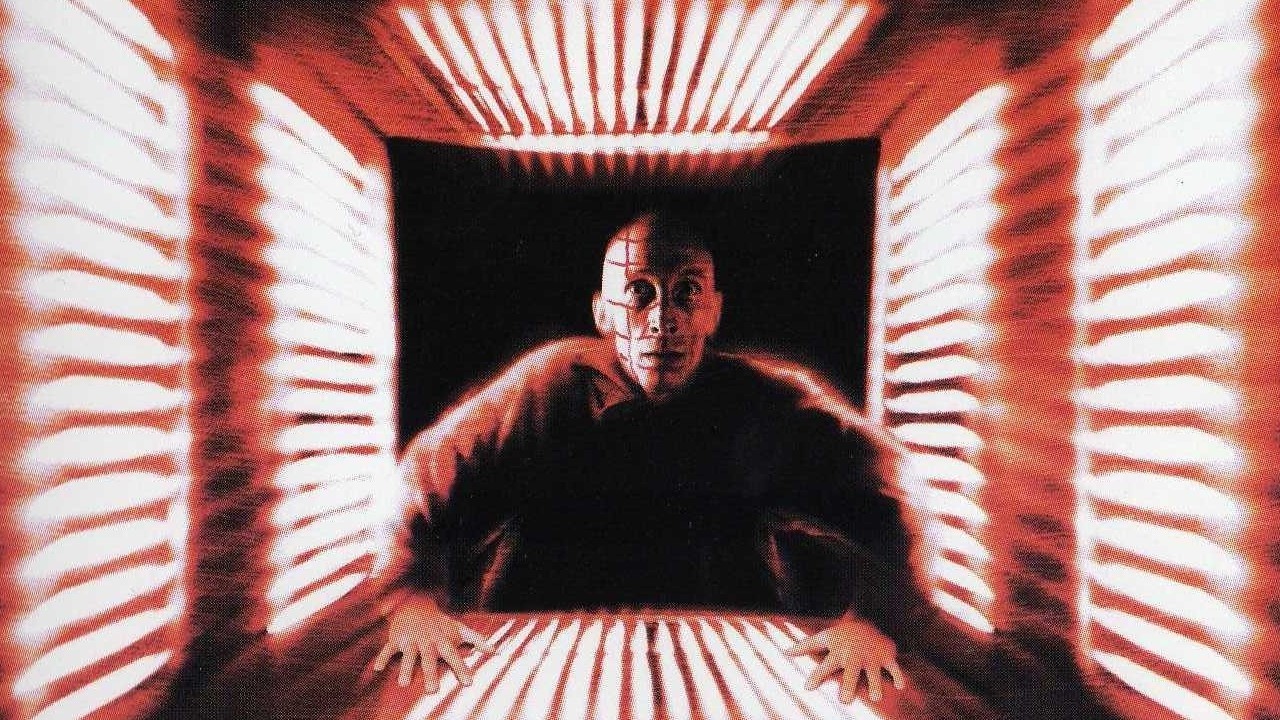
3. Cube (1997)
Making his feature directing debut in 1997, Vincenzo Natali, working from a screenplay he co-wrote, shadows 7 involuntary inmates of a seemingly inescapable, booby trapped mazelike structure. Those crazy Canucks!
Cube is the film Saw wanted to be. These people were chosen, and they must own up to their own weaknesses and work together as a team to survive and escape. It is a visually awe inspiring, perversely fascinating tale of claustrophobic menace. It owes Kafka a nod, but honestly, stealing from the likes of Kafka is a crime we can get behind.
There is a level of nerdiness to the trap that makes it scary, in that you know you wouldn’t make it. You would die. We would certainly die. In fact, the minute they started talking about Prime Numbers, we knew we were screwed.
What Natali was able to accomplish within the limitations he has – startlingly few sets, a very small cast, a 20 day shoot schedule – is astounding. An effective use of FX, true visual panache, and a handful of well-conceived death sequences elevate this far above Saw and many other films with ten times the budget.
https://www.youtube.com/watch?v=37EjGw7jV98
2. Ginger Snaps (2000)
Sisters Ginger and Bridget, outcasts in the wasteland of Canadian suburbia, cling to each other, and reject/loathe high school (a feeling that high school in general returns).
On the evening of Ginger’s first period, she’s bitten by a werewolf. Writer Karen Walton cares not for subtlety: the curse, get it? It turns out, lycanthropy makes for a pretty vivid metaphor for puberty. This turn of events proves especially provocative and appropriate for a film that upends many mainstay female cliches. Walton’s wickedly humorous script stays in your face with the metaphors, successfully building an entire film on clever turns of phrase, puns, and analogies, stirring up the kind of hysteria that surrounds puberty, sex, reputations, body hair, and one’s own helplessness to these very elements. It’s as insightful a high school horror film as you’ll find, peppered equally with dark humor and gore – kind of A Canadian Werewolf in High School, if you will.
https://www.youtube.com/watch?v=Zoa1A987A_k
1. Videodrome (1983)
Yes, there are many, many Cronenberg films that could have taken this or any other spot on the countdown. Videodrome was the last true horror and truly Canadian film in his arsenal, and it shows an evolution in his preoccupations with body horror, media, and technology as well as his progress as a filmmaker.
James Woods plays sleazy TV programmer Max Renn, who pirates a program he believes is being taped in Malaysia – a snuff show, where people are slowly tortured to death in front of viewers’ eyes. But it turns out to be more than he’d bargained for. Corporate greed, zealot conspiracy, medical manipulation all come together in this hallucinatory insanity that could only make sense with Cronenberg at the wheel.
Deborah Harry co-stars, and Woods shoulders his abundance screen time quite well. What? James Woods plays a sleaze ball? Get out! Still, he does a great job with it. But the real star is Cronenberg, who explores his own personal obsessions, dragging us willingly down the rabbit hole with him. Long live the new flesh!