Filmmaker Mona Fastvold (The World to Come) draws you into her latest by dancing into the woods with an ecstatic group dressed a bit like Puritans. The dance feels simultaneously choreographed and organic, but definitely somehow forbidden.
The Testament of Ann Lee spins its period tale, the true story of a founding leader of the Shakers, with none of the baggage expected of a historical drama. Snapshots of formative moments are held together with liltingly earnest narration from fellow shaker Mary Partington (Thomasin McKenzie), and with dance.
It’s a tough film to fit into a neat category, as, it would seem, was Lee herself. Played undiluted passion by Amanda Seyfried, Lee is a self-contained human in progress, aware of herself, her inclinations, and the pressures around her. She knows God in an uncompromising way and wants only to find community as devoted as she. She finds it with the Shakers, so named because, unlike the Quakers, they dance.
What Seyfried delivers is just shy of astonishing. There is no artifice, nothing calculated or naieve. And though the script offers you room to find reasons for Lee’s faith and the hang ups that fuel her fervor, it does not decide for you or judge her.
Fastvold’s script, (penned with Brady Corbet, with whom she wrote last year’s Oscar contender The Brutalist), does not ask you to believe that Lee was the second coming of Christ, as she and her assembly did. Nor does it ask you to disbelieve it. But it asks, quietly and regularly, all kinds of questions, delivers all kinds of information, suggests any number of possible answers. The approach to the writing is anthropological without being burdensome or dry, while the direction itself is passionate and bold, not an ounce of cynicism or pretension.
If you know little or nothing about the Shakers, we have that in common. Among the many joys of Fastvold’s film is that it unveils information without belaboring points. You’re left with questions, not because you can’t follow the film, but because you’re intrigued enough to want to know more.
This is a passionate, bold film about building community, finding and remaining true to yourself, and the unrivaled power of dancing.
Maxime Giroux’s gritty thriller In Cold Light keeps you off kilter, moving from dreamy confusion to full-on sprint and back again.
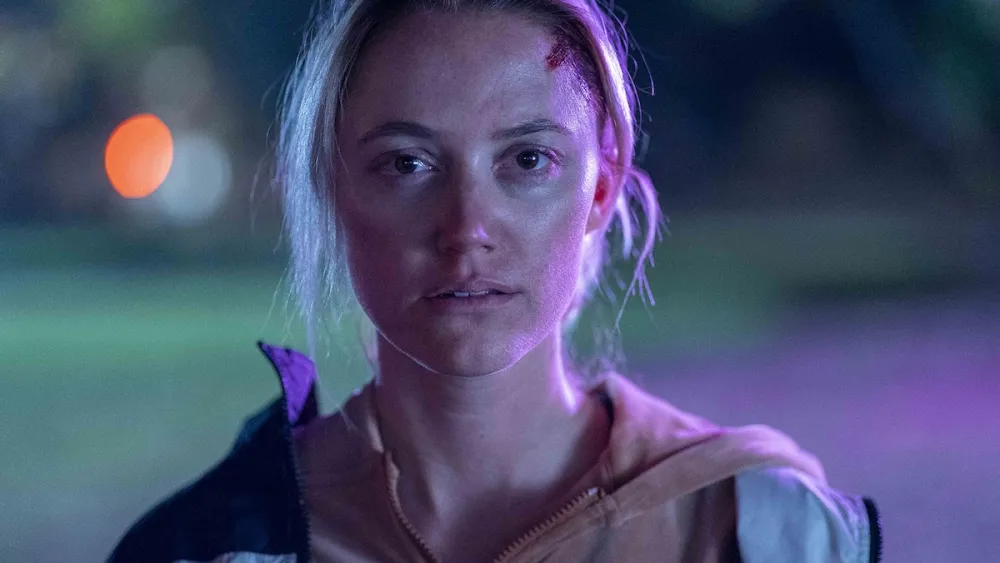
Maika Monroe is Ava, and our first sprint with Ava ends in a violent drug bust. But after her two-year sentence, she finds herself back in Ponoka, Alberta. No fresh start, she’s clean but she’s otherwise ready to return to leading the smalltime drug operation she left behind. But they’ve moved on.
Her twin brother (Jesse Irving) tries to reason with her, tries to convince her to take the 40k he’s been setting aside for her while she did her time, but Ava can see that her once small operation has bitten off more than it can chew and is now dealing with real big, real bad guys.
She’s right, and those bad guys are the reason for more sprinting.
The story itself is somewhat simple, but Giroux, working from Patrick Whistler’s script, keeps your attention by revealing information as necessary, and by situating Ava’s world inside something lived-in but not ordinary. The context gives the story roots, authenticity, and opportunity for some pretty wonderful, dreamlike sequences.
Monroe’s sharp. The character of Ava is interior, speaking only as necessary, always thinking, weighting options. The performance feels caged, desperate but simultaneously controlled. Monroe’s long been a master of using stillness to manipulate a scene and an audience. She did it with precision in Watcher, among other films. Once again, Monroe uses an electric silence to say more than dialog could properly manage.
Giroux surrounds her with a game supporting cast. Troy Kotsur delivers a particularly layered performance, and a cameo from Helen Hunt is chilling. There’s not a weak link in the ensemble, and barely a stray or needless phrase in the script.
If anything, the film could have used maybe a few more sentences of exposition, especially as it closes. To leave so much up to interpretation invites the suggestion of plot holes, which In Cold Light doesn’t have, but it does leave more to the imagination than it probably should. Regardless, it’s a more than solid thriller and another impressive turn from Monroe.
On this week’s Screening Room podcast, Hope & George review 28 Years Later: The Bone Temple, The Rip, No Other Choice, Dead Man’s Wire, The Choral, Night Patrol, Maldoror, Resurrection and Obex! PLUS! News & Notes from Daniel Baldwin, ada The Schlocketeer!
Deeply, darkly weird and surprising—that’s a good phrase to describe, to one degree or another, the films of Fabrice du Welz. His high-water mark for me is 2004’s Calvaire, a Christmas horror story that feels like something David Lynch might have done with Texas Chainsaw Massacre if he spoke French.
I am always eager to watch whatever springs next from a mind that conjures anything so harrowing and bizarre. His latest, Maldoror, is a true crime tale set in Belgium in the 1990s.
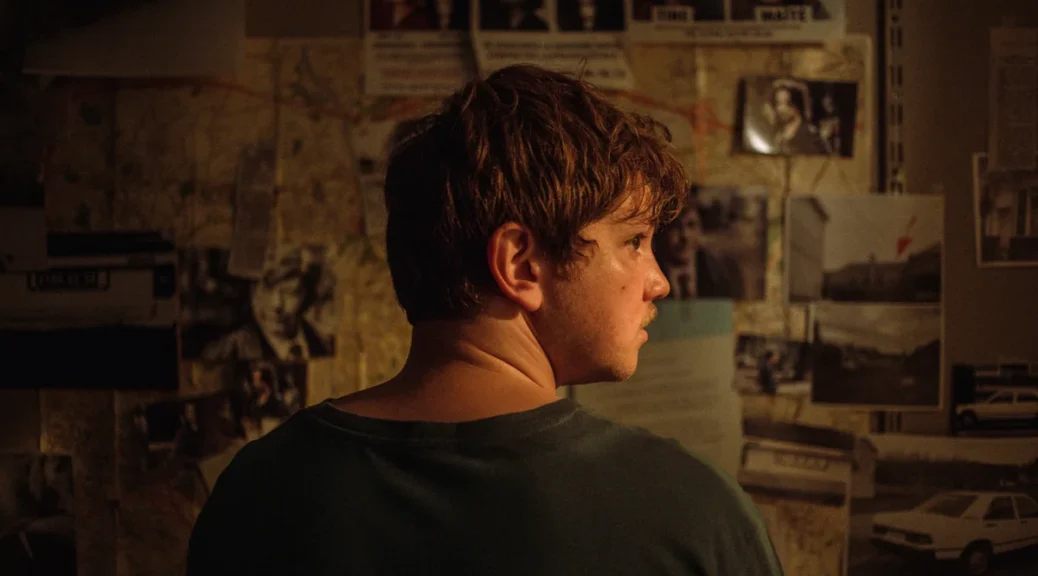
Paul Chartier (Anthony Bajon, Teddy) joins the Gendarmerie because he wants sincerely to make a difference. What he wants, as the film will slowly unveil, is to create for himself the life he was not born into—one with value, with family, with honor. For Paul, the unsolved missing persons case involving two small girls from the neighborhood provides the opportunity.
The crimes at the heart of the film are based on those of Marc Dutroux, a serial rapist, killer and pedophile who was able to continue to prey upon little girls in his community because of an inept and siloed legal system, as well as a corrupt justice department. Boy, there was a time when that would have sounded far-fetched, wasn’t there?
Du Welz surrounds Bajon with a large ensemble including the great Sergi López, always magnificent Béatrice Dalle, and du Welz regular Laurent Lucas. The filmmaker is at his loosest and most naturalistic with this film, a choice the cast embraces. Du Welz’s script, cowritten with Domenico La Porta, feels less well-suited to the approach.
The material is grim, covers more than a decade and casts a wide net. It’s sprawling and gritty, marked by a cynical unease about the possibility of finding truth or justice in a corrupt legal system. Yet somehow Maldoror becomes a tale of one man’s obsession, which neither fits the story being told nor the actor playing lead.
Bajon’s vulnerable, awkward cop and family man is played with an integrity that rings true. Even his early steps over the line in favor of eventual justice fit. But the character’s arc is a misfit for the film and the actor, and it reduces the story. Act 3 feels like it’s pulled from a different, lesser effort. The end result is that, though it boasts real tension and great performances, Maldoror feels like a misstep.
Crime drama, social commentary, action flick, vampire movie—Night Patrol bites off a lot. But since director Ryan Prows and writers Tim Cairo, Jack Gibson and Shaye Ogbonna’s last teaming combined an organ harvesting crime caper with the life of a luchador, it shouldn’t come as a surprise.
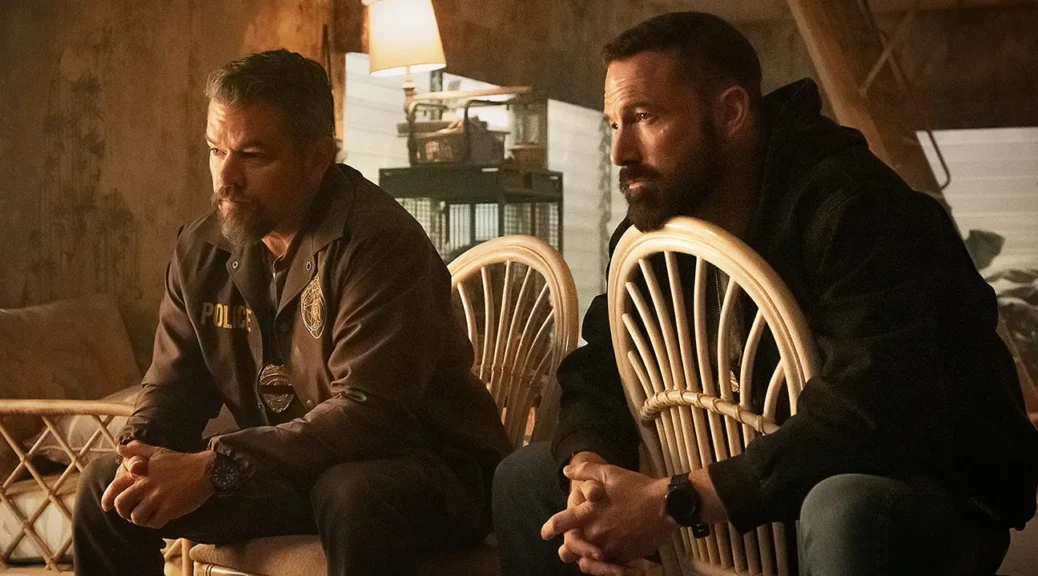
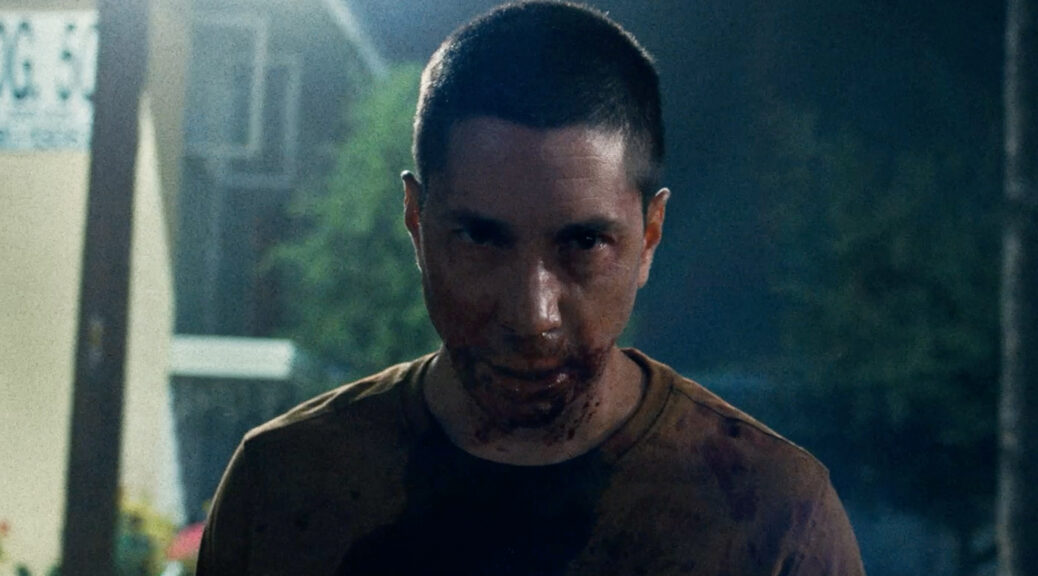
Night Patrol opens on a young man (RJ Cyler) bleeding from a weapon still poking out of his ribs. He’s in police custody, sitting across from a nonplussed LAPD officer (Nick Gillie), who’d like him to explain himself.
Prows then flashes back a couple of days, introducing the young man, the girl he loves, and the LA cops known as Night Patrol. What follows is an allegory about white supremacy dressed up as some kind of higher calling but behaving as bloodthirsty beasts.
Apt, particularly after what we all witnessed in Minneapolis last Wednesday night.
Justin Long co-stars as a cop looking to get to the bottom of whatever it is Night Patrol is up to, and he’ll go to some regrettable means to meet those ends. But he hopes to be remembered as “one of the good ones”.
It’s unfair to compare Prows’s film with the similarly themed Sinners because it’s unfair to compare any film at all with Ryan Coogler’s masterpiece. Prows’s ire is focused on the here and now, and probably bears a closer resemblance to Bomani J. Story’s 2023 film The Angry Black Girl and Her Monster as well as Remington Smith’s 2025 festival favorite LandLord.
The theme is clear-eyed and relevant: Systemic racism in the U.S. is monstrous, its willing participants are monsters.
Prows solicits game performances from Cyler, Long, and especially Nicki Micheaux who dominates every scene she’s in, as only her character could.
Where Night Patrol falters is in its wild mix of tones and genres. For all its bloodsucking, this is no horror film. The violence is action violence, but even that is sometimes lost in the loonier, funnier moments. The rival gang is preoccupied with supernatural entities, including Lizard Men, giving the film a bizarre sense of humor that doesn’t fully fit.
The hodgepodge approach to genre hampers its castmates—Cyler, in particular—from finding a suitable performing style. Long is custom designed for this character, and Micheaux elevates the material, but with no discernable genre, Night Patrol leaves you a little dizzy.
Maybe you enjoyed last year’s coming-of-age survival story masquerading as horror, 28 Years Later. Respect. But if you believe the film lacked the genuine terror required for this franchise, director Nia DaCosta has you covered.
She delivers the first great horror film of the year with 28 Years Later: The Bone Temple, also written by Alex Garland. It picks up the most intriguing threads left untied last time: those of the band of Clockwork Orange-esque marauders who saved young Spike (Alfie Williams) from the infected, and the beautiful soul covered in iodine and living amongst the bones, Dr. Ian Kelson (Ralph Fiennes).
There is more visceral horror in the first three scenes of DaCosta’s film than in the entire hour and fifty-five minutes of the previous installment.
Spike finds himself unwittingly and unwillingly one of the Jimmys, the seven blond-wigged disciples of Sir Jimmy Crystal (Jack O’Connell). Meanwhile, die-hard Duran Duran fan (hell yeah!) Dr. Kelson might be making friends with Samson (Chi Lewis-Parry), the pantsless alfa-infected who left such an impression in the last film.
As the two stories lead toward inevitable collision, Garland, who wrote the 2000 genre masterpiece 28 Days Laterbefore writing and directing some of the best genre films of the 2000s (Ex Machina, Annihilation, Men, Civil War), delivers smart storytelling, impeccable world building, and scares aplenty.
And again, Garland is able to display an intense social conscience, with timely and relevant nods to humanity fighting cruelty for survival, and the desperate allure of demagogues.
O’Connell’s never given a bad performance, and thanks to Sinners, the world knows what he can do with a villain role. But the man’s been doing the charismatic sadist better than any actor since his 2008 breakout, Eden Lake. His performance here is diabolical and unsettlingly funny.
Fiennes is again in wonderous form, soulful, earnest and dear. DaCosta surrounds them both with a strong ensemble that more than sells this story.
The filmmaker (Little Woods, Candyman, The Marvels, Hedda) returns to horror with aplomb, expertly weaving from the grimmest horrors the Jimmys can muster to the tender bromance blossoming over at the bone temple. And the climactic musical number she stages there is a thing for the ages.
Back in the summer of 2002, Danny Boyle released the single scariest movie to hit screens in a decade or more. The next two sequels are solid films. But credit DaCosta and her game and gamey cast for upping the ante to deliver everything a horror fan hoped to get last time out.
The last decade has seen an explosion in Spanish language horror—so many incredible options that we went fuzzy math for this list and still had to leave off some incredible movies, including Amigo, Veronica, The Platform, Terrified, Luz: The Flower of Evil, La Llorona, Huesera: The Bone Woman, and The Untamed. So, make sure you check every one of those out, but first, you should peruse the films that did make our list.
Thanks as always to a great crowd at Gateway Film Center!
6. El Conde (2023, Chile)
On Netflix Pablo Larraín has a particular gift for poetic historical retellings grounded in a singular woman’s perspective: Spencer, Jackie. But his passion for the political history of his native Chile rings through most of his films, including Naruda and No. But did we see a vampire movie coming?
El Conde reimagines Augusto Pinochet as a vampire weary of his many years on earth and ready to leave his bickering family in squalor and finally die – until the church sends a vampire slayer after him. What follows is a near-slapstick political satire, sort of The Death of Stalin meets What We Do in the Shadows.
Every moment’s a delight, and a late-film reveal is a cynical and biting reward for a gloriously spent couple of hours.
5. Tigers Are Not Afraid (2019, Mexico)
On Shudder, Prime and AMC+
Lopez’s fable of children and war brandishes the same themes as Guillermo del Toro’s masterpiece Pan’s Labyrinth, but grounds the magic with a rugged street style.
Tigers follows Estrella, a child studying fairy tales—or, she was until her school is temporarily closed due to the stray bullets that make it unsafe for students. As Estrella and her classmates hide beneath desks to avoid gunfire, her teacher hands her three broken pieces of chalk and tells her these are her three wishes.
But wishes never turn out the way you want them to.
4. Piggy (2022, Spain)
On Hulu, HBO Max, Prime, AMC+
Mean girls are a fixture in cinema, from Mean Girls to Carrie, Heathers to Jawbreaker to Napoleon Dynamite and countless others. Why is that? It’s because we like to see mean girls taken down.
Writer/director Carlota Pereda wants to challenge that base instinct. But first, she is going to make you hate Maca (Claudia Salas), Roci (Camille Aguilar) and Claudia (Irene Ferreiro). In one tiny Spanish town, the three girls make Sara’s (Laura Galán, remarkable) life utterly miserable. Like worse than Carrie White’s.
The filmmaker complicates every trope, all the one-dimensional victim/hero/villain ideas this genre and others feast on. Redemption doesn’t come easily to anyone. Pereda also seamlessly blends themes and ideas from across the genre, upending expectations but never skimping on brutal, visceral horror.
3. The Coffee Table (2022, Spain)
On Shudder, Prime, Tubi, AMC+
A remarkably well written script fleshed out by a stunning ensemble becomes utter torture as you want so badly for some other outcome. Co-writer/director Caye Casas ties threads, builds anxiety, plunges the depths of “what’s the worst that could happen?” and leaves you shaken.
David Pareja and Estefania de los Santos craft indelible, believable, beautifully flawed characters so convincing that their experience becomes painful for you. Casas salts the wounds with dark comedy, but the tenderness and tragedy collaborate toward something far more crushingly human.
2. The Wolf House (2018, Chile)
On Prime, Tubi, Plex, Fawesome
Another Chilean horror, so you’re safe in assuming it has something to do with Pinochet. This breathtaking, incredibly creepy stop motion animated wonder tells of a true cult, Colonia Dignidad. One of its inhabitants escapes into the woods, has a near-miss catastrophe with a wolf, and hides in an abandoned house.
Directors/animators Cristobal León and Joaquín Cociña pull you into Maria’s dreamlike world, as her thoughts and reality blend before your eyes. Sets are painted, built, melted, and destroyed on the screen as Maria’s thoughts and the dangers she faces come and go. It’s an eerily beautiful and unforgettable fairy tale rooted in reality.
1. When Evil Lurks (2023, Argentina)
On Shudder, Hulu, Max, AMC+, Prime
Just when you thought no one could do anything fresh with a possession movie, Terrified filmmaker Demián Rugna surprises you. When Evil Lurks does sometimes feel familiar, its road trip to hell detouring through The Crazies, among others. But Rugna’s take on all the familiar elements feels new, in that you cannot and would not want to predict where he’s headed.
This is a magnificently written piece of horror, and Rugna’s expansive direction gives it an otherworldly yet dirty, earthy presence.
The inexplicable ugliness – this particularly foul presence of evil – is handled with enough distance, enough elegance to make the film almost beautiful, regardless of the truly awful nature of the footage. And Rugna never lets up. Each passing minute is more difficult than the last, to the very last, which is an absolute knife to the heart.
Since becoming an undisputed acting heavyweight, Stewart’s moved on to a new challenge: filmmaker. Her leap to the big screen feature format is an adaptation of Lidia Yuknavitch’s memoir, The Chronology of Water.
Imogen Poots plays Lidia. It’s the kind of a role that would simultaneously entice and worry an actor—survivor of abuse who numbs her trauma with self-destructive behavior. And for Stewart, Lidia’s is a tale told in close-up. The filmmaker has apparently never met a wide shot she liked. Her approach creates a wild intimacy, taking a story told in flashback and requiring us to see every second’s urgent immediacy.
It’s also a choice that disallows any kind of acting cheat. No matter, because Poots is no cheat. The actor has impressed in a wide range of characters but never has she brought such raw agony to the screen.
Stewart’s made a punishing film, and in Poots’s more ferocious moments, it’s difficult to watch. The actor externalizes pain as rage brilliantly, making her moments of vulnerability that much more heartbreaking.
A supporting cast goes often nameless, existing as fragments of Lidia’s reality. Still, Stewart draws wonderful performances from everyone. Thora Birch is understated excellence, a perfect counterpoint to Poots’s explosive passion. And Jim Belushi offers an affable, caring turn as Ken Kesey.
Together, cast and filmmaker find beauty in Yuknavitch’s tale, though at times The Chronolog of Water feels like it’s wallowing. Still, Stewart’s touch is lyrical, offsetting the brutality of the film’s content with images that are delicately wondrous, contradictorily peaceful, sometimes even lightly but discordantly funny.
Back when Bradley Cooper forgot stealing Mike Tyson’s tiger, few would have guessed that he would go on to collect a dozen Oscar nominations for writing, directing, producing, and acting. His first two adventures behind the camera, 2019’s A Star Is Born and 2024’s Maestro, each earned him nominations for picture, screenplay, and performance. They also showcased a director of real power.
So obviously his latest is a comedy.
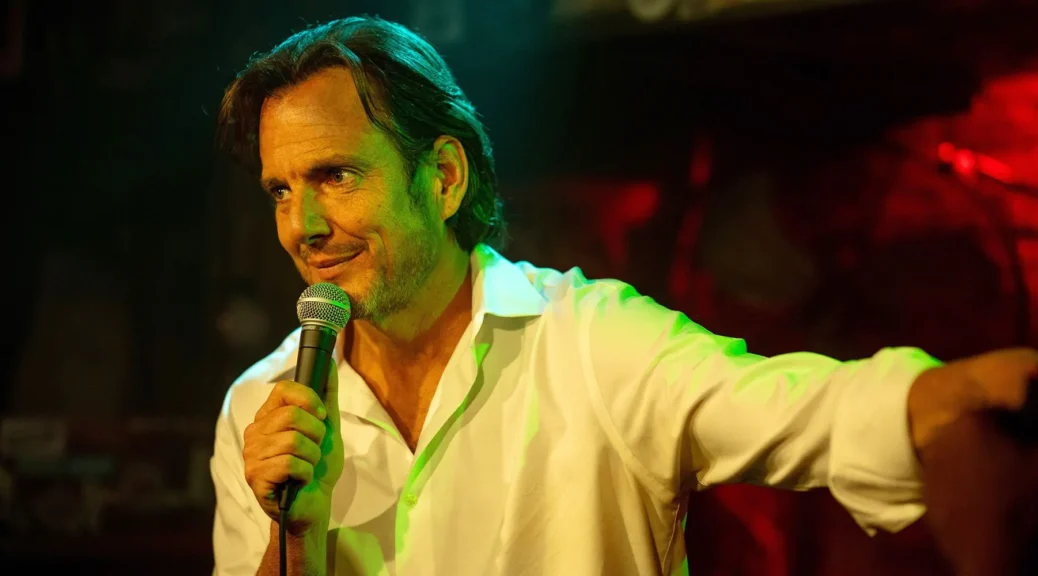
Cooper co-writes and directs Is This Thing On?, a midlife crisis disguised as a rom-com.
Alex (Will Arnett, who co-writes) and Tess (the ever-incandescent Laura Dern) are ending their 20-year marriage. No hard feelings, no infidelities, both just decided it was time to call it.
On his first night out of the house, in need of a beer and lacking the $15 cash to pay the cover, Alex puts his name on “the list” for a comedy club’s open mic night. He doesn’t bomb, gets some stuff off his chest, and finds that he kind of loves stand-up.
Because men will do anything to avoid therapy.
A supporting cast keeps things chaotic. Cooper plays Alex’s dumbass stoner actor brother whose wife (Andra Day) needs to stay high just to tolerate him. His parents (an inspired Christine Ebersol and Ciarán Hinds) mean well, Cooper directing their cacophony of advice, dismay, rebukes, and requests for juice boxes for giddy, exhausting mayhem.
Dern is characteristically wonderous, crafting a character who’s raw and on-edge and absolutely never the clichéd put-upon supportive partner. Her chemistry with Arnett breathes, bristles, and laughs as easily as a lived-in relationship rooted somewhere or other in love.
To Arnett’s credit, he goes head-to-head with the veteran Oscar winner and charms. Muddled but earnest and effortlessly likeable, Alex is the dad you want kids to know and the floundering ex you root for, if not to get back together, at least to just get it together.
Aside from one or two convenient plot beats, Is This Thing On? benefits immeasurably from authenticity. That emotional honesty drives the laughter and the tension, and elevates the relatively light film (given Cooper’s previous two efforts) above easy comedy or indie dramedy. The film is a unique beast, natural and messy but still totally sold on love.
My working theory is that Johannes Roberts saw Nope and thought, when does Gordy get his own movie? IP being what it is, Primate is likely the closest the co-writer/director could come.
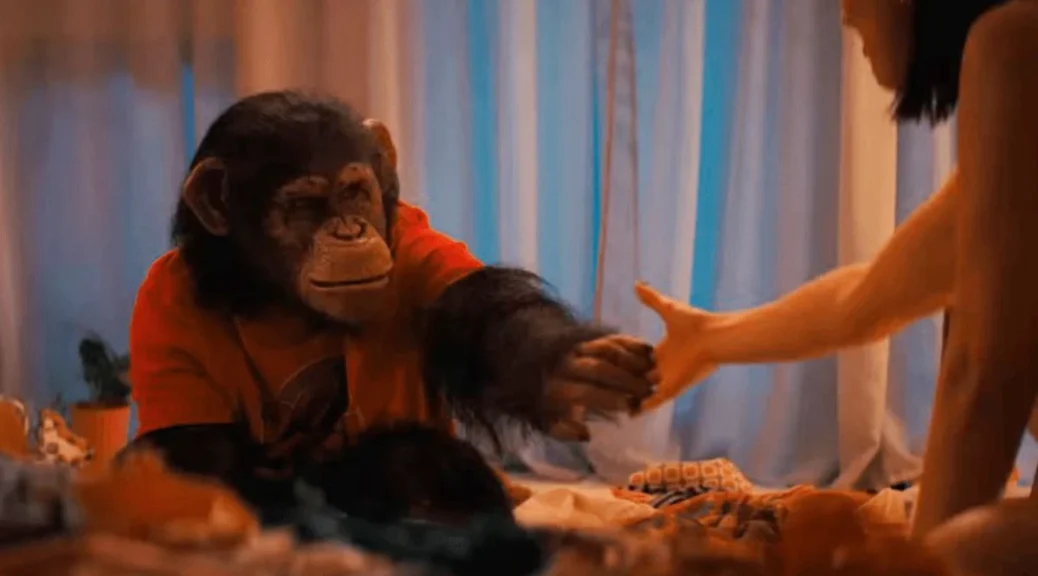
The film follows Lucy (Johnny Sequoyah) home from college. She’s summering with family—dad (Troy Kotsur, CODA), little sister (Gia Hunter), and Ben, the family’s beloved chimpanzee in their incredibly impressive compound on the side of a cliff in Hawaii.
But Dad’s off to a work event Lucy’s first weekend home, so friends crash to drink beer, smoke weed, eat pizza, and get picked off one by one when Ben turns super feral.
Roberts (47 Meters Down, 47 Meters Down: Uncaged, Strangers: Prey at Night, Resident Evil: Welcome to Raccoon City) has not built a career on nuance. He makes fun, obvious monster movies. The telegraphed scares are at least goretastic, and what he lacks in subtlety he makes up for with macabre humor.
Like any monster movie worth its chlorine, Primate is a survival tale. Quickly, the partiers assess the danger and jump into the pool because chimps can’t swim. Did you know that? I didn’t know it. Is it even true?
Google says it’s true.
There you go. Johannes Roberts taught me something today.
Superficial character development feeds into teen horror cliche as Sequoyah and her supporting players, including Jess Alexander (A Banquet) and Victoria Wyant, struggle with insipid dialog. The writing is pretty awful, and aside from jumping into the pool, the kids’ behavior is consistently dumb.
Some of the gore is inspired, though, particularly one jaw-related injury. The creature design is a little more touch and go. At times Ben’s look is passably realistic, but not always. But Kudos to Roberts for going practical, and Miguel Torres Umba inside the suit moves with menace.
There’s also an effective device made of Lucy’s dad’s deafness, handled with minimal manipulation and landing some authentic tension.
In the end, Gordy Meets Cujo delivers exactly what you should expect: jump scares, cliché, young adults behaving stupidly, and plenty of blood. Is it a great movie? It is not. Nope, definitely not. But it might be what you’re in the mood for.