Bella Thorne is the best thing about writer/director Janell
Shirtcliff’s zany thriller Habit. When is that ever a good sign?
Thorne plays Mads, a Jesus-loving Texan transplanted to
Hollywood’s underbelly to be with her two hometown besties Evie (co-writer Libby
Mintz) and Addy (Andreja Pejic). Mads really loves Jesus. Like in an entirely
unwholesome way.
But that’s the least of her problems after Evie’s one night
stand makes off with all the drugs and money the girls are holding for Eric
(Gavin Rossdale).
This movie tries so hard to be Tarantino by way of John
Waters and it fails so absolutely that it gets credit for commitment. What it
lacks is inspiration—Shirtcliff’s odyssey requires that we be shocked by Mads’s
behavior, surprised by the stilted lunacy of her pursuers, and weirdly drawn into
her unseemly world.
The fact that none of it feels especially wild, or that the
pursuers lack originality and panache, takes a backseat to the film’s lacking
cinematic quality. Individual scenes have no structure – they drag, most of
them missing purpose, punchline or punch.
Nothing feels especially taboo, and that’s a problem because
without any real “wild” in these antics, you find yourself paying attention to
the writing or, worse still, the acting. Rossdale has a tough time developing a
character, partly because there’s no telling whether to like or dislike Eric.
Shirtcliff and Mintz have no idea what to do with the real villains, Queenie (Josie Ho) and Tuff (Jamie Hince). The filmmakers dress them up like something out of Pee-wee’s Playhouse, but their villainy is sloppy and suspect.
Habit plays like a film made by people who really liked David Lynch’s Wild at Heart, Tony Scott’s True Romance, and everything John Waters ever made, but had no real idea what they liked about it. The result is a mishmash of borrowed ideas, none of them interesting enough to merit the label subversive.
At a time in history where fascism, neo-Nazism, nationalism,
antisemitism and white supremacy flourish out in the open, it seems natural
that our collective conscious directs its attention to the rise of the Nazi
party.
And at the same time, doesn’t one more documentary about
Hitler just add to his legend?
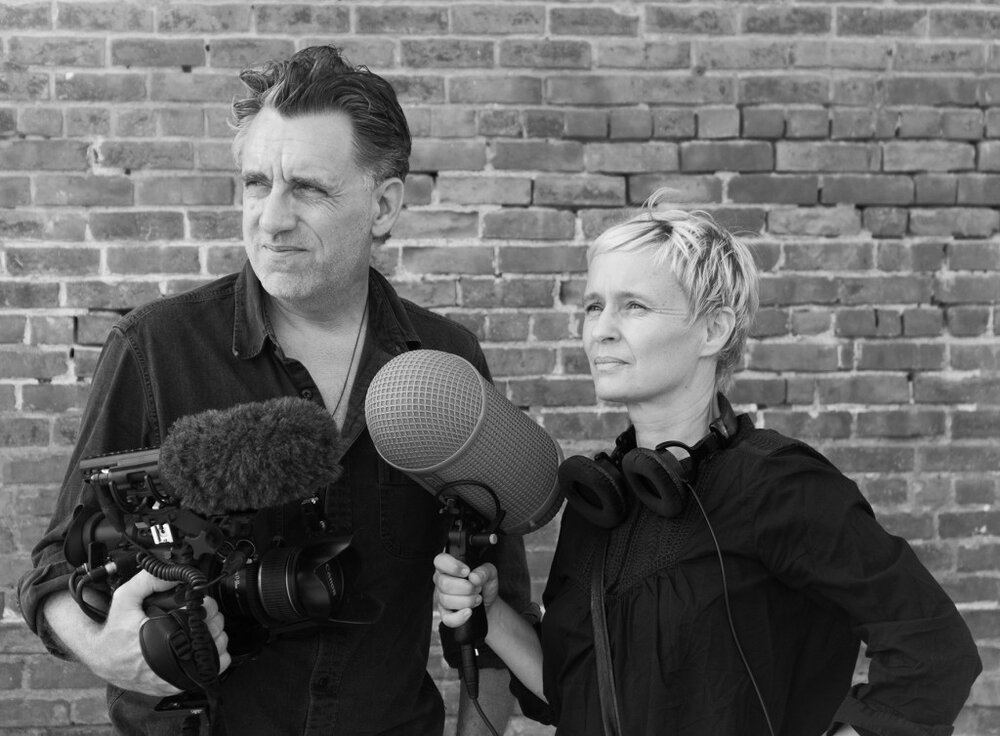
Filmmakers Petra Epperlein and Michael Tucker (Gunner Palace) grapple with that conundrum in their latest, The Meaning of Hitler.
Their primary aim is to look at how it happened in the first place to see how it might be stopped this go-round without romanticizing Hitler himself. But that had a lot to do with how he became the cult of personality he was, and why he continues to fascinate entitled, angry people.
“The Nazi ideals were acted out by people who were
absolutely normal.”
Historian Yehuda Bauer, a 95-year-old who knows firsthand,
shares this insight. And while much of what Epperlein and Tucker cover feels
well-worn, this one bit of information gives the film upsetting relevance.
That’s why it’s happening again. Hitler was little more than
a spoiled, profoundly selfish, childish man who wanted what he wanted. What he
wanted was evil, but he found that an awful lot of people were OK with that as
long as they believed they would also be allowed to take whatever it is they
wanted.
That sounds familiar, but thankfully the film’s main point is not simply to draw obvious parallels with another vane and repugnant manchild. Their central problem is how to expose a fascist’s need to be mythologized without mythologizing the fascist.
They find freshness and relevance, partly in the transparency of their thought processes. It’s often as though we’re privy to the actual construction of the film: images of Epperlein in the scene with a clapboard or boom mic, the sound of Tucker asking the subject a question.
Part of what makes this approach work is the way it
deconstructs the propaganda that Hitler used to pretend he was more than a
failed artist and spoiled child. Inviting us behind the curtain, Epperlein and
Tucker puncture the gaudy theatricality that makes weak men look like something
they’re not.
These filmmakers are making a documentary about Hitler specifically to point out that it’s time we end our fascination with fascism.
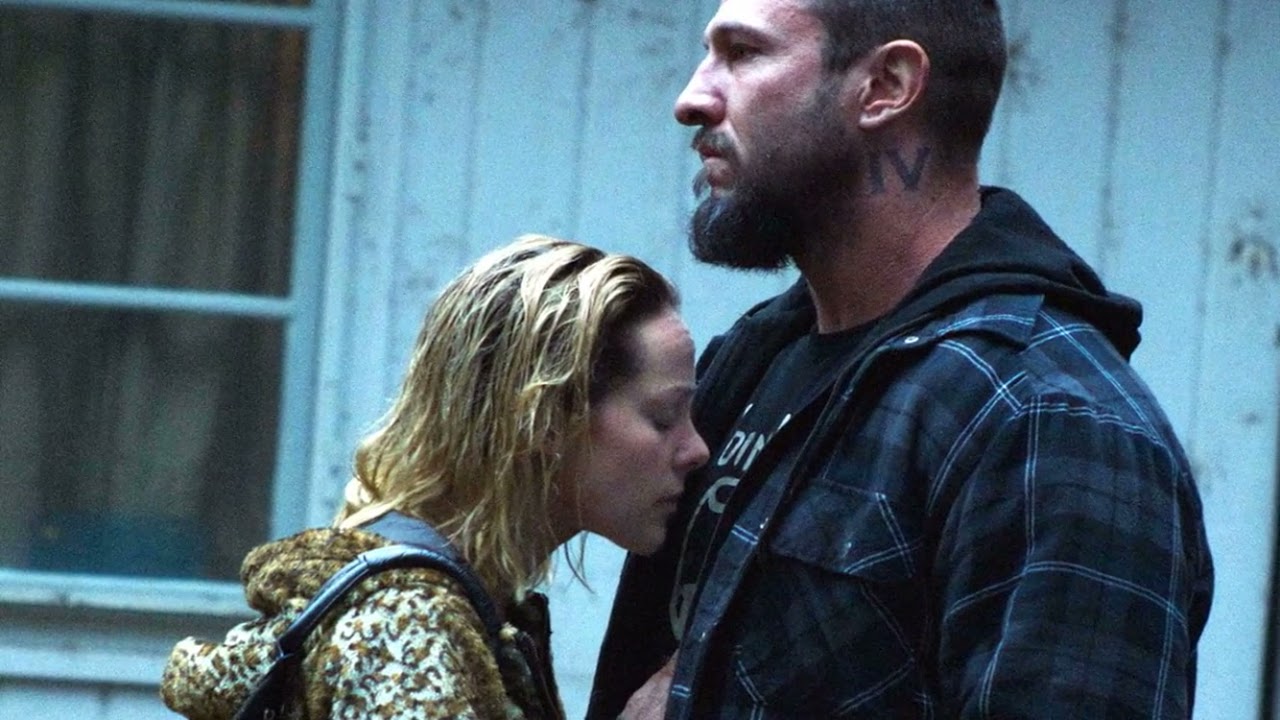
Dolores (Jena Malone) is a mess. Her past, her present, even her future: a mess. Shacking up with her high school boyfriend – just released from a 15-year stint for armed robbery – hardly seems like it will improve things for Dolores or her three children.
But bubbling beneath the surface of filmmaker Sabrina Doyle’s
messy, sometimes frustrating feature debut Lorelei is enough magic to
make redemption possible.
It helps immeasurably that Jena Malone plays the single mom
who named each of her children after a different shade of blue. Wayland (Pablo
Schreiber) had held out a hope that the eldest—a 15-year-old boy named Dodger
Blue (Chancellor Perry)—might be his, but the truth is that none of Dolores’s
kids are Wayland’s. All three should have been, but Wayland, in his own way,
got out and Dolores did not.
Malone’s commitment is mesmerizing. In her hands, Dolores is never one-note white trash, nor is she by any means an example of the noble poor. Instead, she’s all love and resentment, wonder and self-destruction.
Schreiber (Liev’s brother) balances her electricity with quiet
awe. He’s a physically imposing presence, especially opposite the petite
Malone, but he never falls back on the gentle giant cliche. He fills Wayland’s
inner conflict with remorse, loss and tenderness.
Though Dolores’s trio of Blues (Perry, Amelia Borgerding and Parker Pascoe-Sheppard) showcase genuine talent from three young performers, the same can’t be said of the entire ensemble. Many struggle with Doyle’s sometimes stilted dialog and her tendency to toss in minor characters with little purpose but exposition. Between that and the film’s sometimes frustrating structure, Lorelei can be cumbersome.
But there’s no denying the central performances or the beautifully messy image of family the film delivers. Though at its heart Lorelei offers a blue-collar romance, this is less a traditional love story—albeit one on society’s fringes—than a declaration about unconventional families.
In fact, in that way alone Doyle manages to make Lorelei’s flaws work in its favor.
Stay with me. Remember how bad Mortal Kombat was? Like, bad, but kind of so stick-to-your-guns bad, so full of head-bursting ridiculousness and terrible acting that it somehow felt right?
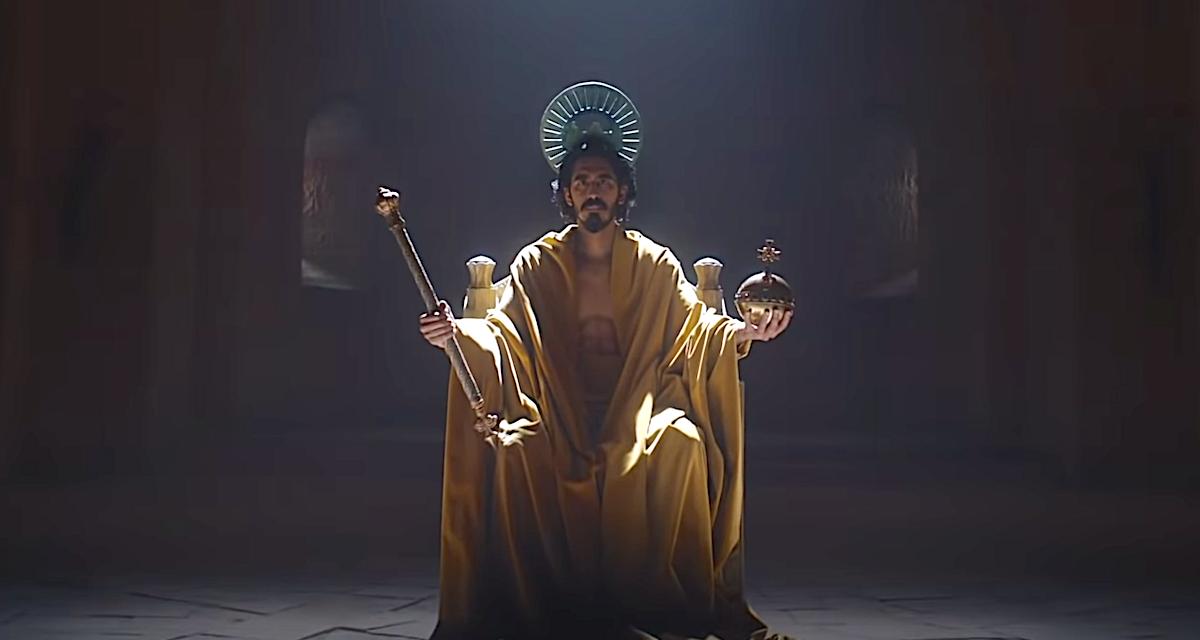
Take that, neuter it completely so you don’t even see any blood regardless of the wall-to-wall swordplay, invest in great-looking scenery and one A-list actor, and you essentially have the new G.I. Joe movie, Snake Eyes.
Henry Golding is that A-lister, an American with a questionable accent and some barely hidden rage issues. A dice game gone bad left him emotionally scarred (thought it did lend him that cool moniker) and now he fistfights his way from one town to the next.
That is, until a shady Yakuza man offers him a chance at vengeance in return for some labor. The next thing you know, Snake Eyes is mixed up in ninja training, clan warfare and global domination, or some such nonsense.
Director Robert Schwentke is pretty hamstrung with the PG-13 rating. His film is based on a children’s cartoon, after all. Sure, that cartoon promotes armed conflict in every single episode—as does this film—but you can’t show the result of any of that violence.
How cool would this movie be if Takashi Miike directed it? And how NC-17?
A girl can dream. But the reality is that Schwentke does
about as well as he can within the limitations. The clanging swords are shiny,
the motorcycles zip around like the ninjas they carry, and the hand-to-hand
bouts stand out.
The acting, well, you know. And writing. Yeesh. Indeed, the writing is weak enough that both Golding and the proven Samara Weaving nearly choke on it. Andrew Koki as clan heir apparent Tommy struggles mightily, his character at war with what is expected of him. It calls for a lot of inner conflict.
It calls for a better script.
Haruka Abe likewise wrestles to find a character within this loyal security chief who’s unemotional and yet so very emotional. And wearing really high heels for someone called on to run this often.
Weaving at least seems to recognize that she is playing a cartoon character, and her performance is therefore reasonably cartoonish. Koki mopes, Abe whines. And Golding, well, he is very handsome.
The sets look great—from a super cool-looking Tokyo to the secret Arashikage compound to the cement pits for bare-knuckle brawling. That’s not really reason enough to watch it, though.
The great thing about filmmaker Quentin Dupieux is that you
always know what you’re in for and you definitely never know what you’re in
for.
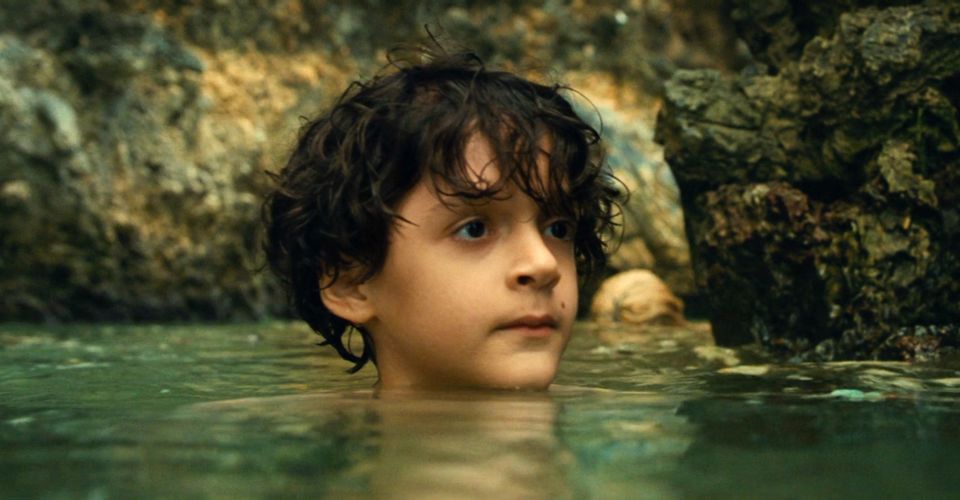
The point of Mandibles, essentially, is that you can never rely on anyone to do a single, simple thing correctly. Manu (Grégoire Ludig, Keep an Eye Out) — homeless at the moment — promises to deliver a suitcase in the trunk of his car from Michel-Michel to Point B. He needs to get it there by noon. Can he be trusted to do that one thing?
Of course he can!
He cannot.
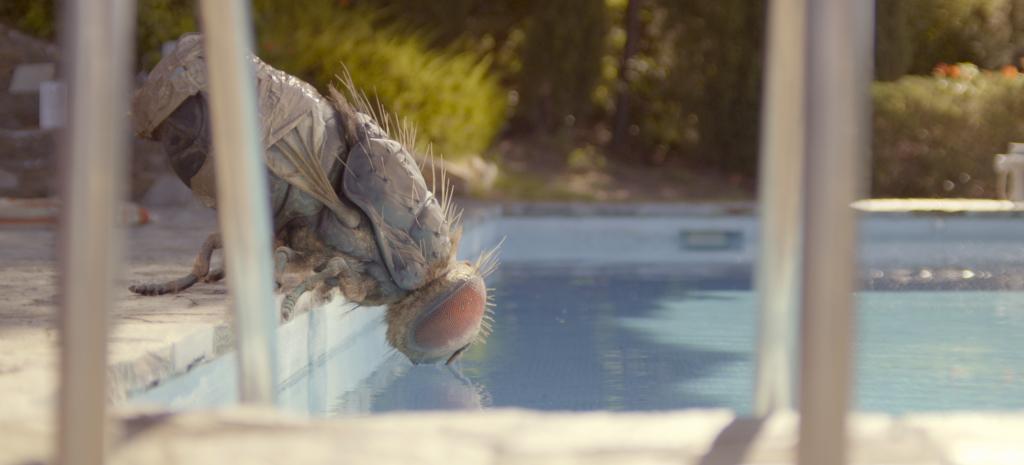
There are the extenuating circumstances of the giant housefly that’s already in the trunk. We could get into what happens with the fly, but it’s not going to make any real sense, so why ruin it? Dupieux films work best when you just go with it.
That’s what Manu does. He and best friend Jean-Gab (David Marsais) take opportunities as they come, remain open to possibilities, and just enjoy their friendship. And their new, giant housefly.
The relatively streamlined plot delivers a fresh change of pace for the filmmaker—not that you could call any Dupieux film stale. But in pairing back the complications and convolutions, the writer/director has crafted maybe his most audience-friendly film to date. Mandibles certainly delivers the filmmaker’s most audience-friendly characters.
Ludig frustrates and charms in equal measure as the doofus Manu, and he and Marsais share an easy chemistry that suggests a lot of miles on this friendship. Here is the filmmaker’s most delightful surprise—a lack of cynicism or existential dread that leaves just an airy, almost sweet, wildly ridiculous comedy.
None of this has anything to do with a jawbone, but the title will become clear if you pay close attention.
Broadcasting—TV, radio, podcasts—offer plentiful opportunities for horror. You have the good broadcasts, where an important message is being delivered to the right people: The Fog, I Am Legend, A Quiet Place Part II, Texas Chainsaw Massacre 2. And, of course, there are the evil broadcasts: Lords of Salem, Trick or Treat, The Cleansing Hour.
There are also two (well, three really)N utterly brilliant films with very particular broadcasts that are difficult to come by. We narrowed the list to broadcasts aimed at as many people as can be affected, and for that reason alone we’ve left off Poltergeist and Ring/Ringu.
So here are the five best ways horror filmmakers found to wreak havoc over the airwaves.
5. They Live (1988)
More SciFi and action than horror, still John Carpenter’s vision of an elite class using tech to mollify and control the population of the US was eerily prescient. And horrifying.
At the time, though, it was just plain entertaining in a way that married Carpenter’s own iconic Escape from New York vibe with the SciFi horror miniseries of the day, V.
But mainly, it’s Rowdy Roddy Piper chewing bubble gum, and the 6 1/2 minute fight scene between Piper and undeniable badass Keith David that make this film as fun to watch today as it was when it was released.
4. Halloween III: Season of the Witch (1982)
Man, people did not like this movie when it came out. After two massive blockbusters kicking off the franchise, somebody decided to make a Halloween movie without Michael Myers. It would go on to be one of the most beloved cult movies of all time.
Is the storyline confused? Well, its mythology—Celts and Stonehenge and shamrocks and Halloween masks and blah blah blah—but the point is Tom Atkins, isn’t it? Plus the main plot points: kids wear the masks, they watch the commercial, they hear that creepy jingle, and their heads effing melt.
Now that’s showbusiness.
3. The Signal (2007)
A transmission – a hypnotic frequency – broadcasting over TV, cell and landline telephones has driven the good folks of the city of Terminus crazy. David Bruckner, Dan Bush and Jacob Gentry created a film in three segments, or transmissions.
Transmission 1 introduces our lover heroes as well as the chaos. Can Mya (Anessa Ramsey) and Ben (Justin Welborn) remain sane, reunite and outrun the insanity?
Transmission 2 takes a deeply, darkly funny turn as we pick up on the illogical logic of a houseful of folks believing themselves not to have “the crazy.” The final transmission brings us full circle.
The movie capitalizes on the audience’s inability to know for certain who’s OK and who’s dangerous. Here’s what we do know, thanks to The Signal: duct tape is a powerful tool, bug spray is lethal, and crazy people can sure take a beating.
2. Pontypool (2008)
Canadian director Bruce McDonald’s shock jock horror film is best appreciated as a metaphor on journalistic responsibility and the damage that words can do. Radio air personality and general pot-stirrer Grant Mazzy (Stephen McHattie) finds himself kicked out of yet another large market and licking his wounds in the small time – Pontypool, Ontario, to be exact. But he’s about to find himself at the epicenter of a national emergency.
McDonald uses sound design and the cramped, claustrophobic space of the radio studio to wondrous effect as Mazzy and his producers broadcast through some kind of zombie epidemic, with Mazzy goosing on the mayhem in the name of good radio. As he listens to callers describe the action, and then be eaten up within it, the veteran McHattie compels attention while McDonald tweaks tensions.
Shut up or die is the tagline for the film. Fitting, as it turns out that what’s poisoning the throng, turning them into mindless, violent zombies, are the very words spewing at them. It’s a clever premise effectively executed, and while McDonald owes debts all around to previous efforts, his vision is unique enough to stand out and relevant enough to leave an impression.
1. Videodrome (1983)
Videodrome was the last true horror and truly Canadian film in David Conenberg’s arsenal, and it shows an evolution in his preoccupations with body horror, media, and technology as well as his progress as a filmmaker.
James Woods plays sleazy TV programmer Max Renn, who pirates a program he believes is being taped in Malaysia – a snuff show, where people are slowly tortured to death in front of viewers’ eyes. But it turns out to be more than he’d bargained for. Corporate greed, zealot conspiracy, medical manipulation all come together in this hallucinatory insanity that could only make sense with Cronenberg at the wheel.
Deborah Harry co-stars, and Woods shoulders his abundant screen time quite well. What? James Woods plays a sleaze ball? Get out! Still, he does a great job with it. But the real star is Cronenberg, who explores his own personal obsessions, dragging us willingly down the rabbit hole with him. Long live the new flesh!