Here’s a sampling of the things we yelled at the screen during Godzilla vs. Kong:
“Boom! In the face!”
“Kyle Chandler is a terrible father.”
“Skull f**k him!”
“It’s just a flesh wound, get up!”
So you could say we were engaged in this battle, the one that’s been brewing since the end credits stinger from the excellent Kong: Skull Island four years ago. GvK can’t quite match that film’s tonal bullseye, but it easily lands as second best in the “Titan” Monsterverse that was reborn with 2014’s Godzilla.
Picking up three years after the tedious Godzilla: King of the Monsters, the film finds Kong contained on Skull Island under the respectful eye of Ilene Andrews (Rebecca Hall).
Meanwhile, Godzilla attacks APEX’s Florida headquarters – seemingly unprovoked. Mansplaining Mark Russell (Kyle Chandler) says Godzilla’s changed his hero stripes, but his daughter Madison (Millie Bobby Brown) and “Titan Truth” podcaster Bernie Hayes (Brian Tyree Henry, committing grand theft scenery) think there’s got to be more to the story.
There’s plenty more, and Dr. Nathan Lind (Alexander Skarsgård) believes Kong could be the key to proving his Hollow Earth theory about the Titans. Ilene agrees to allow the heavily sedated Kong to be transported by sea, but far from Godzilla’s favorite swimming holes, of course.
Riiiight.
Director Adam Wingard (You’re Next, Blair Witch) clearly realizes that monster mashes aren’t compelling if you can’t tell who’s fighting, and the technical aspects of GvK bring the Titan battles to vibrant life. Pristine cinematography, detailed CGI effects and a wonderfully layered sound design elevate the thrills early and often.
And that is what we’re here for, isn’t it?
That’s a familiar refrain when the human arcs in these films are so woeful, but screenwriters Eric Pearson and Max Borenstein toss the overwrought melodrama of King of the Monsters and add a frisky sense of welcome fun.
Yes, there’s another cute kid (Kaylee Hottle) with negligent guardians, and more than enough characters, locations and theories to keep up with. But even if you fall behind, you’ll catch up when these two Titans throw hands and tails, because they mean business.
They’re timing ain’t bad, either, as this is the kind of cinematic spectacle that could mean very good business for newly reopened theaters that badly need it. It’s a PG-13 return to form for a legendary franchise, with plenty to reward your popcorn munching and ringside commentary (keep it clean at the multiplex, please).
Just pick your screen size, and get ready to rumble.
If we were going to add a third certainty to join death and taxes, how about the fact that heist movies are fun?
A good one makes you want to go assemble your crack team to trade quips, try on parkas and steal a Picasso. A bad one just makes you want to watch the good ones again.
The Vault (formerly titled Way Down) borrows from a host of similar films, keeping the formula familiar, the pulse quick and the scenery exciting for a ridiculous caper that never takes itself too seriously.
Freddie Highmore is Thom, a 22 year-old engineering genius fresh from the University of Cambridge. Bored by all the job offers from Big Oil, his interest is piqued by a mysterious opportunity to “change his life.”
Adventurer Walter Moreland (Liam Cunningham) offers Thom a spot on his “salvage” team, and the chance at untold riches. The plan? Break into the Bank of Spain and steal a centuries-old treasure first buried by Sir Francis Drake. The vault holding the booty is a puzzle of engineering yet to be solved, and Moreland is counting on Thom to be the big brain that outsmarts it.
The upper-crust thieves will have a timely distraction on their side. Spain’s World Cup final will be shown on a Jumbotron set up right outside the bank, meaning that during the match, all security cameras will be pointed at the huge crowd of soccer fans flooding the street, and not at the bank itself.
The script-by-committee mentions “Danny Ocean” early on, which is just stating the obvious. The Italian Job and Now You See Me, Now You Don’t will also come to mind, but director Juame Balagueró ([REC] and [REC2]) isn’t pretending he’s breaking new ground, just trying out a new playground.
Balagueró keeps his pace impatient from the opening minutes. Expect a succession of fake outs, multiple “We’re screwed!” exclamations and a shameless amount of “all is lost” moments. Realizations come only at the most fortuitous junctures and the tests to Thom’s genius never seem quite that strenuous.
And the effect of all of that on the film isn’t nearly as deadly, or taxing, as it should be.
The two hour run time feels about half that. Balagueró gives his camera a stylish flow and keeps us supplied with plenty of opportunities to feel like we’re in on the con, and have a stake in the success of the heist.
How much better would 2001 have been if there were helpful onscreen text explaining the motives of the monolith?
Use that bone as a weapon and you won’t starve.
None. The answer is none better.
A habit of over-explanation is just one of the weights pulling down Doors, a science fiction drama presented in three separate acts by three different writer/directors.
Jeff Desom fares best with the opening segment entitled “Lockdown.” As high schoolers in a classroom hear their locked-up cellphones buzzing, planes overhead and vaguely ominous announcements, some nice tension is built via mystery and subtlety.
And then both are gone.
A late night podcaster quickly sets the stage. Imposing, sentient “doors” have appeared around the world, and in the rush for answers, volunteers called (what else?) knockers are answering the invitation. The “Knockers” segment, from Saman Kesh, features Josh Peck and Lina Esco as a couple who find a greatly distorted reality awaits them on the other side.
Dugen O’Neal’s final segment, “Jamal,” carries a fine performance from Kyp Malone as a reclusive man successfully communicating with a door in secret. When an unexpected betrayal brings outsiders, the onscreen text brings mood – spoiling clarity to what the door requests.
Extended exposition via a podcaster is at least an organic device, but text? Since none of the characters can see these messages, they are only for our benefit as viewers, and land as the most inexplicable aspect of this entire cosmic trip.
This film starts with an intriguing setup to a decent sci-fi premise, but can never find resonant avenues for development. Some confidence in its audience, better performances, a more compelling score and crisper sound mix would be steps forward, but the most gaping hole is the absence of one clear storytelling vision.
Without it, Doors is an awkward anthology in search of an anchor, as well as a satisfying reward for opening it.
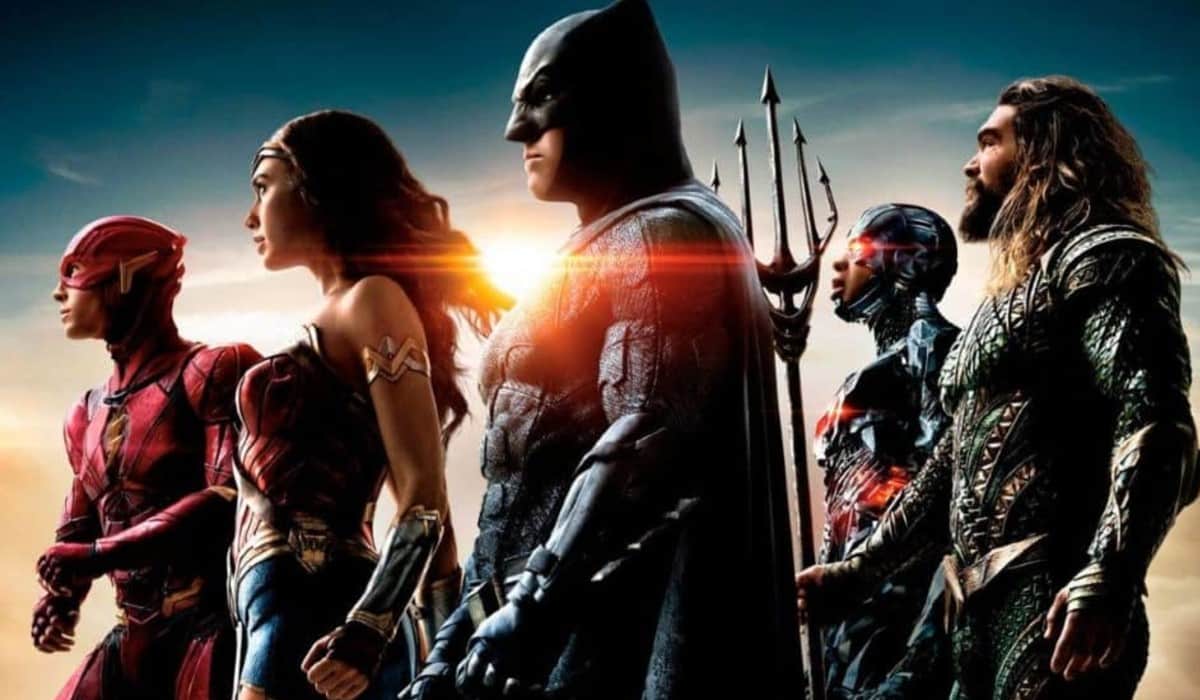
No matter what you thought of Justice League 1.0, the mere arrival of this “Snyder Cut” is fascinating on multiple levels.
It’s more than the Everest of fan service. There just isn’t any way Snyder’s DCEU epic – this version of it anyway – would exist without the Snyder/Whedon mashup mess of 2017.
It’s four freaking hours, people! You think Snyder’s gonna get that (and the extra millions for reshoots) without the whole hashtag campaign? But while the extended time and money giveth, they also taketh away, meaning that first JL debacle can take some ironic credit for all that’s better – and worse – about round two.
But it is indeed better.
More than anything, it’s a singular vision. The first was nothing if not a super-sized compromise, but this is Snyder unbound, no compromises. The 4:3 format is enriched with greatly improved CGI, specifically the “armor of scales” appearance of Steppenwolf (voiced by Ciaran Hinds), the underwater depths of Atlantis and the complete absence of Superman’s (Henry Cavill, again a perfect Clark Kent) distractingly altered upper lip.
The character development – as you would hope with this run time – is much more satisfying, especially with the two justice leaguers we know the least: Flash (Ezra Miller) and Cyborg (Ray Fisher).
And while truly important moments (Superman’s death and rebirth, for example) get the extra time they need to resonate, Snyder can still linger too long (those mini music videos, ugh) when he could be moving on.
Ben Affleck reminds you he’s a fine grizzled Batman, Gal Gadot’s Wonder Woman gets more badass moments and fewer leering camera angels, and at its core, the basic plot remains the same. Steppenwolf is seeking to unite the three “mother boxes” that will conquer another world for his master Darkseid (voiced by Ray Porter). But with the nurturing of return characters and the welcome appearance of new ones (like Darkseid), the chaptered storytelling feels more natural and complete.
Yes it is dark and brooding, and this League may hold the mother lode of daddy issues, but it never becomes tedious. And while you can’t quite call it fun, it is super, and heroic, and sometimes thrilling.
The stinger (actually an epilogue)? It’s a humdinger (nothing rhymes with epilogue), one that will more than satisfy the die hards while setting a major hook for more justice, darkly served.
Our son Donovan joins us this episode, so obviously the best idea is to look into horror movie families that make ours look downright wholesome. Check out the boy’s band, NEW PLAGUE RADIO!
6. The Woman (2011)
Forget Pollyanna McIntosh for one minute (if that’s even possible). One of many reasons that Lucky McKee’s powerhouse of horror is so memorable is that McIntosh’s feral cannibal (who must smell awful) is not the scariest person on screen.
There’s something not quite right about Chris Cleese (an unsettlingly cherubic Sean Bridgers), and his family’s uber-wholesomeness is clearly suspect. This becomes evident once Chris hunts down a wild woman, chains her, and invites the family to help him “civilize” her.
It doesn’t go that well for anybody, really, in a film rethinks family.
Well, patriarchy, anyway.
https://www.youtube.com/watch?v=GL50yBcw5wA&t=27s
5. The Texas Chainsaw Massacre (1974)
Poor, unlikeable Franklin Hardesty, his pretty sister Sally, and a few other friends head out to Grampa Hardesty’s final resting place after hearing the news of some Texas cemeteries being grave-robbed. They just want to make sure Grampy’s still resting in peace – an adventure which eventually leads to most of them making a second trip to a cemetery.
But that’s not the family we’re after. The clan that will come to be known as the Sawyers begin humbly enough in Toby Hooper’s original nightmare: a cook, a hitchhiker, a handyman of sorts, and of course, Grandpa.
There are so many moments to recall. Maybe it’s the slamming metal door, or the hanging meat hook, or the now iconic image of the hysterical and blood-soaked Sally Hardesty hugging the back of a pick up truck bed as the vehicle speeds away from Leatherface.
Or maybe it’s dinner, when Hooper really gives us some family context. He uses extreme close up on Sally’s eyeball as she takes in the bickering family lunacy of a dinner table quite unlike any we’d seen before.
4. The Lodge (2019)
It’s Christmas, and regardless of a profound, almost insurmountable family tragedy, one irredeemably oblivious father (Richard Armitage) decides his kids (Jaeden Martell and Lia McHugh) should get to know the woman (Riley Keough) he left their mother for. A week in an isolated mountain cabin during a blizzard should do it.
Dad stays just long enough to make things really uncomfortable, then heads back to town for a few days to work. Surely everybody will be caroling and toasting marshmallows by the time he returns.
What is wrong with this guy?! And it’s not just him. Turns out his kids are pretty seriously messed up as well. But fear not (or fear a lot) because Grace has some profound family dysfunction to fall back on, and pretty soon it’s just a guess as to who’s going to out-dysfunction the other.
3. We Are What We Are (2010)
In a quiet opening sequence, a man dies in a mall. It happens that this is a family patriarch and his passing leaves the desperately poor family in shambles. While their particular quandary veers spectacularly from expectations, there is something primal and authentic about it.
It’s as if a simple relic from a hunter-gatherer population evolved separately but within the larger urban population, and now this little tribe is left without a leader. An internal power struggle begins to determine the member most suited to take over as the head of the household, and therefore, there is some conflict and competition – however reluctant – over who will handle the principal task of the patriarch: that of putting meat on the table.
Jorge Michel Grau’s We Are What We Are is among the finest family dramas or social commentaries of 2010. Blend into that drama some deep perversity, spooky ambiguities and mysteries, deftly handled acting, and a lot of freaky shit and you have hardly the goriest film ever made about cannibals, but perhaps the most relevant.
2. Raw (2016)
Justine (Garance Marillier, impressive) is off to join her older sister (Ella Rumpf) at veterinary school – the very same school where their parents met. Justine may be a bit sheltered, a bit prudish to settle in immediately, but surely with her sister’s help, she’ll be fine.
Writer/director Julia Ducournau has her cagey way with the same themes that populate any coming-of-age story – pressure to conform, peer pressure generally, societal order and sexual hysteria. Here all take on a sly, macabre humor that’s both refreshing and unsettling.
Because what we learn is not just that Justine’s sister will not be a good mentor, or that there is definitely something wrong with Justine. By the blackly hilarious final moments on the screen, we see the big family portrait.
1.Hereditary (2016)
What else?!
With just a handful of mannerisms, one melodic clucking noise, and a few seemingly throwaway lines, Aster and his magnificent cast quickly establish what will become nuanced, layered human characters, all of them scarred and battered by family.
Art and life imitate each other to macabre degrees while family members strain to behave in the manner that feels human, seems connected, or might be normal. What is said and what stays hidden, what’s festering in the attic and in the unspoken tensions within the family, it’s all part of a horrific atmosphere meticulously crafted to unnerve you.
Aster takes advantage of a remarkably committed cast to explore family dysfunction of the most insidious type. Whether his supernatural twisting and turning amount to metaphor or fact hardly matters with performances this unnerving and visual storytelling this hypnotic.
Knowing that Cosmic Sin comes from the writers behind last year’s Breach probably won’t fill you with confidence about their latest sci-fi adventure.
But the good news is Edward Drake and Corey Large are improving. Very, very slowly.
Drake also takes the director’s chair this time, and coaxes a mildly interested performance out of returning star Bruce Willis (which Breach could never manage).
The year is 2524 (remember that) and Earth’s forces have formed the Alliance of colonies throughout the universe. Willis is General James Ford, renamed the “Blood General” after he wiped out one of the colonies with a “Q-bomb” and was stripped of rank and pension (ouch!).
But minutes after learning of first contact with an alien life form, General Ryle (Frank Grillo) calls Ford back to duty, where he’ll join a rag tag group of you know who to make a heroic you know what and save you know where.
Drake and Large (who also plays Ford’s sidekick) clearly blew the budget on Grillo and Willis (Grillis!), with a side of Costas Mandylor. 500 years from now looks a lot like next Tuesday, while planets light years away look like next Tuesday in Michigan.
And still, cinematographer Brandon Cox manages some slick deep space panoramas…that are often ruined by Saturday morning-worthy effects of our heroes flying through the stars and “pew pew pew”-ing in battle with the aliens.
Likewise, Drake and Large’s script toys with the meaty issues of war, sacrifice, and colonialism, only to abandon them in the name of heroic grandstanding. Potential threads (and Grillo’s entire character) grab our attention and then vanish at random, rendering much of the 88 minute running time a meandering mess.
Big, old, empty houses are creepy, right? Lots of dark, musty spaces to get the imagination conjuring up all manner of nasty things that might be lurking.
There are some nasty things lurking in Shudder’s Stay Out of the F**kingAttic, but the way they’re conjured leans more toward laborious and silly.
Shillinger (Ryan Francis), Imani (Morgan Alexandria) and Carlos (Bryce Fernelius) are three ex-cons working for the Second Chance moving company. When they show up to move the elderly Vern (Michael Flynn) out of his mansion, he surprises them with a hard-to-resist offer.
If the three will work through the night to get the job done by morning, Vern will reward them with a nice chunk of cash. Two things, though: stay out of the attic and the basement.
Bet they don’t.
The use of the edited F**king in the title suggests a mischievous, knowing tone that got off the bus in a totally different zip code than director/co-writer Jerren Lauder. That’s too bad, because this film is in serious need of lightening up.
Almost every element – from performances to dialog to cheesy score to practical creature effects – lands as stilted and overly staged. Though Flynn does make an effective villain and one particular creature ain’t half bad, even the brisk 80-minute run of Lauder’s feature debut seems like an overstayed welcome.
As our Second Chance movers uncover secrets about Vern (and each other), Lauder leans on body horror closeups and weak jump scares on the way to a big reveal that is bigly ridiculous.
Shudder’s been on an impressive run of originals lately, which makes this misfire a little surprising. Here’s hoping Lauder’s second chance will be a bit more worthy of the investment.
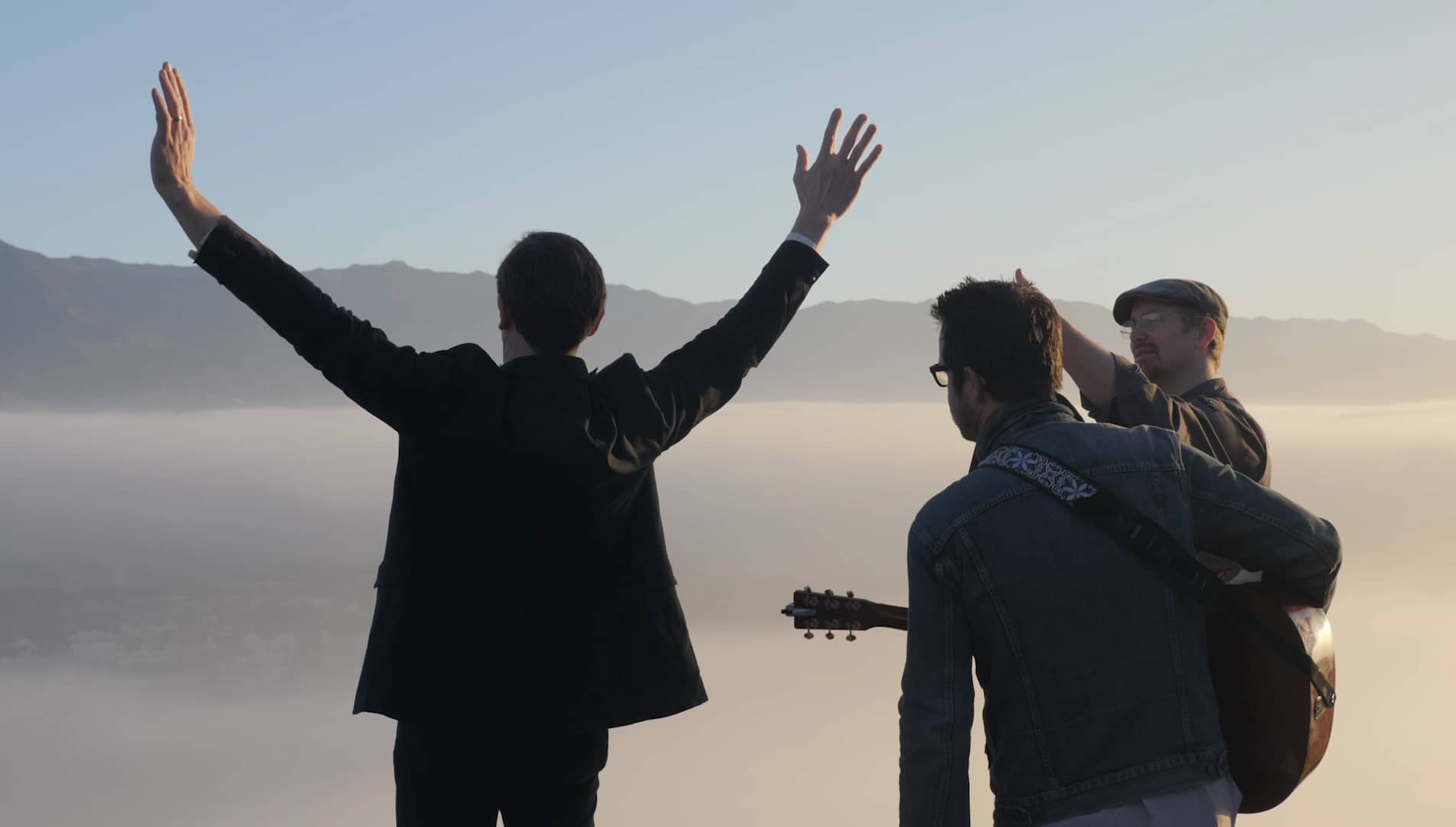
Whatever it is, New York neighbors Richard (Rich Price) and Greg (writer/director Greg Naughton) are brought together by the fate of a fallen tree limb. Both are musicians, and after an eye-opening impromptu jam session they decide to throw caution to the wind.
Rich, a teacher and grad student, will blow off working on his dissertation, and the guys will take to the road. They’ll stop in Ohio to pick up Greg’s estranged girlfriend, then hit the Eagle Rock folk festival to play original tunes on one of the side stages.
So what are the odds weird hitchhiker Brian (Brain Chartrand) also plays guitar and can provide the missing voice for perfect three part harmony?
The guys sound great together, and they should, because they’re an actual group called the Sweet Remains. Taking inspiration from his real life, Naughton filmed his directorial debut over several years, shooting around the band’s touring schedule.
The result is a sweetly earnest and often funny ode to the simple joy of making music, and the value in even the most unlikely dreams.
So yeah, a fast-talking record exec (Richard Kind) hears the guys play and sets up an L.A. showcase, but give Naughton credit for adding plenty of unexpected, sometimes pretty clever speed bumps on the road to overnight success.
As actors, the three leads are all talented musicians, with just enough easygoing charm to get us rooting for their characters almost immediately. That’s a big help when those brand new songs sound polished on the first take, or when someone conveniently has an uncle who can get them out of the latest jam.
How much of Naughton’s art is imitating his life? Hard to say, but it hardly matters. In both cases, it took the guys some time to arrive, but now that they’re here, what remains is pretty sweet.
The Independents will be released virtually via LAEMMLE THEATRES and ANGELIKA CINEMAS for a special limited engagement beginning Feb 26, then it will be released via TVOD on March 9.
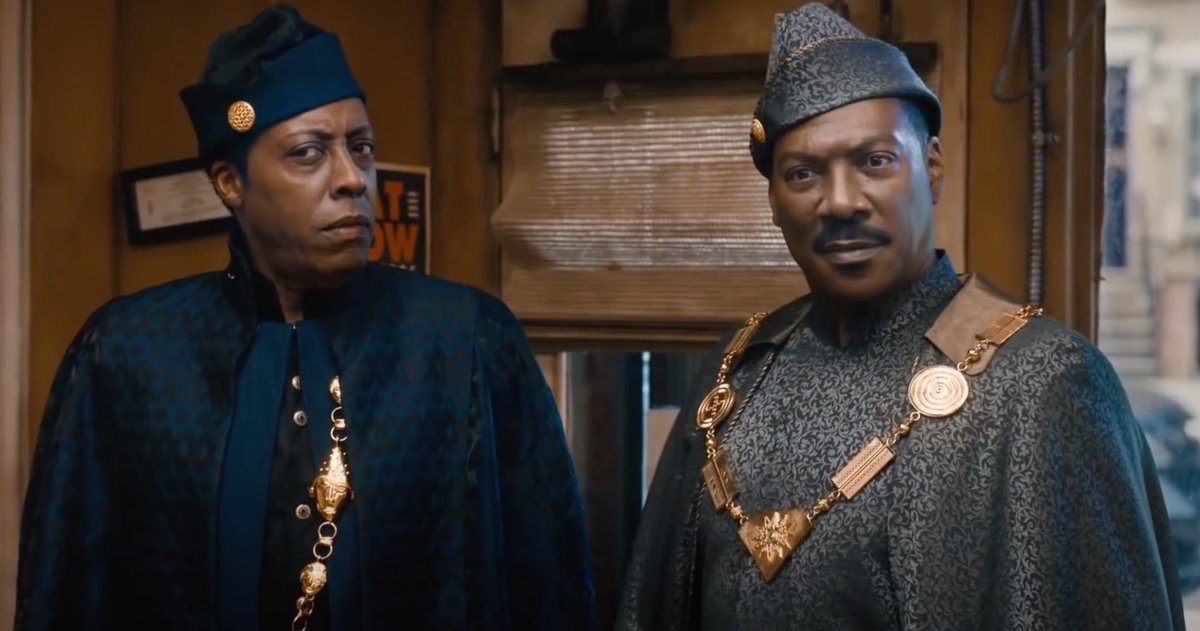
A quip about unnecessary sequels is just one of several “wink-wink” gags you’ll find running throughout Coming 2 America. And though the original was heavy in sexism (even for 1988) and light on LOLs, there’s little doubt that the film’s huge fan base has been anxious for a follow-up.
Eddie Murphy teams again with director Craig Brewer, which is reason for optimism, since Brewer helmed one of Murphy’s career highs – 2019’s Dolemite Is My Name. But screenwriters David Sheffield and Barry Blaustein return from the original film, and while they thankfully update the sexual politics, the humor is again scattershot at best.
Most of the cast is back, including 90 year-old James Earl Jones as King Jaffe of Zamunda. He’s ready to pass the throne to Prince Akeem (Murphy), but is worried that Akeem and Lisa (Shari Headley) only have daughters, and tradition calls for a male heir.
What’s this? The loyal Semmi (Aresenio Hall) has been keeping a very big secret all these years, which means Akeem and Semmi must return to New York to find Akeem’s long lost son.
That would be Lavelle (Jermaine Fowler), who makes the trip to Zamunda for royal training with his mom (Leslie Jones) and uncle (Tracey Morgan) in tow. The additional family is good for Lavelle, and for us, as Jones and Morgan’s “fish out of Queens” antics give the film its most consistently fresh and funny moments.
They’re just aren’t enough of those moments to pump real life into part 2. The girl power is overdue and and love lessons are generic, each as predictable as getting more insults from the barbershop guys and more R&B stylings from Randy Watson.
Buy hey, you go to see Sexual Chocolate, you want to hear the hits. And if you’ve been waiting for Coming 2 America for reminders of what you liked the first time, you’ll get them.