Tag Archives: George Wolf

Block Party

In the Heights

by George Wolf

I know there’s still plenty of bad out there, but it’s summer, people are getting out in the heat, and it feels like maybe we deserve a few minutes to celebrate.

How about 143 minutes? In the Heights makes them all count, with a summer celebration practically bursting with joyful exuberance.

It’s been 13 years since the stage production won 4 Tony Awards – including Best Musical, on top of Best Original Score and Best Actor for Lin-Manuel Miranda. Since then, Miranda conquered the world with Hamilton (maybe you’ve heard it), so now what seems like a follow up is really a return to his roots.

Miranda’s aged out of the starring role, so Anthony Ramos (Hamilton, A Star Is Born) answers the bell with a breakout turn as Usnavi – the Washington Heights, New York storekeeper with a dream.

As the days until a blackout wind down and the temperature ramps up, Usnavi’s block is buzzing with welcome arrivals, planned departures, and romance in the air.

Nina (Leslie Grace) is home from Stanford with major news to break to her father Kevin (Jimmy Smits) while she reconnects with Benny (Corey Hawkins), a dispatcher at Kevin’s neighborhood car service.

For his part, Usnavi has finally scored a date with his crush Vanessa (Melissa Barrera), but it might be too late – she has her sights set on leaving the block behind with a new apartment uptown.

So while the gossip is raging at the hair salon, and the piraqua guy (Miranda) tries to compete with Mister Softee (Hamilton‘s Chris Jackson, who played Benny in the stage version) as the king of cool treats, fate intervenes. Usnavi discovers his bodega has sold a winning lottery ticket – a stroke of luck worth 96 G’s – and then the lights go out.

Director Jon M. Chu (Crazy Rich Asians) proves a worthy choice to move the project from stage to screen with magic intact. The most accomplished of directors (see Attenborough and Eastwood) have fallen hard trying to make musical numbers pop on film, but Chu gives Christopher Scott’s choreography the space to be graceful and the intimacy to be gritty.

Miranda’s music meshes irresistibly with the sounds of the street, and from swimming pools to rooftops, more than a few of Chu’s grandly-staged set pieces nearly soar off the screen. And it won’t be just fans of this show who will be giddy, as the Wicked faithful will find plenty of reason to be excited Chu is already in pre-production on that long-awaited film adaptation.

Source writer Quiara Alegría Hudes pens the screenplay here as well, with a heartfelt, character-driven ode to cultural strength and sacrifice. Bookended by Usnavi telling the story of his block to a cute group of youngsters, the tale of Washington Heights is layered with respect for immigrant families just fighting for a place to belong.

And while they may be fighting against gentrification and bigotry, the film’s heart remains unquestionably hopeful, so downright wholesome that even the lack of sweat-stained bodies in the 100-degree heat feels like part of the movie magic.

In the Heights has been saving that magic for the big screen experience, and now that it’s here it is indeed worthy of celebrating – in a theater, with a crowd.

Are we really “back to normal?” Can the American dream still be alive?

For 143 minutes, it sure feels like it.

Swimming in Romance

Undine

by George Wolf

Christian Petzold is a filmmaker with an almost casual mastery of storytelling. Those stories may seem simple at first, but he fills them with deeply felt narrative shifts, taut editing and pristine shot selections that make every frame feel imperative, and propels them with characters full of mysterious obsessions.

And for anyone unfamiliar with Petzold (Barbara, Phoenix, Transit), Undine (oon-DEEN-uh) is a wonderful entry into the writer/director’s hypnotic style.

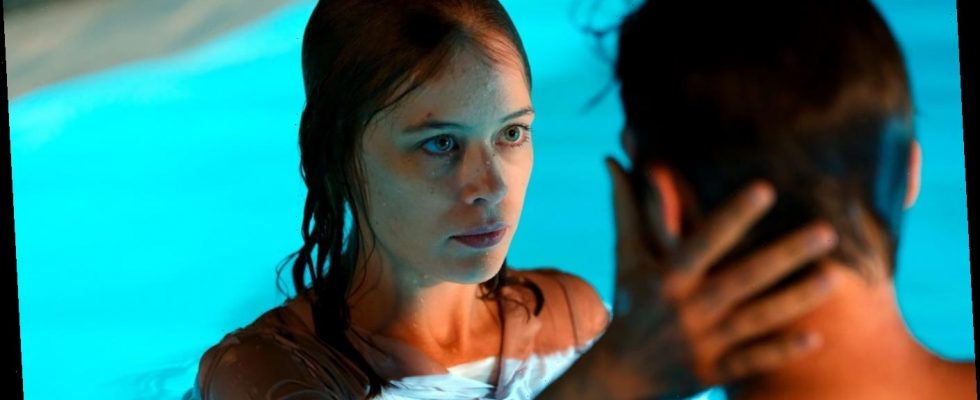
Undine (Paula Beer, simply terrific) works in Berlin, delivering tours and lectures on the city’s urban development post WWII. But when her boyfriend Johannes (Jacob Matschenz) leaves her, Undine pledges unity with an ancient myth.

She must take the life of this man who has betrayed her and then return to the water as a nymph.

Undine’s water obsession only gains more fuel with her next relationship. Christoph (Franz Rogowski, also stellar) is an industrial diver, and while he and Undine develop a deep, almost supernatural connection, she never truly lets go of Johannes, who has also moved on with another love.

As Christoph’s dives become more dangerous and Undine’s lectures begin to link the personal and historical, Petzold shapes the romance into a head-swimming mix of mythology, thrills and humor.

Like much of Petzold’s work, Undine is anchored by exquisite framing and lush cinematography (the underwater scenes are especially impressive), and driven by characters drawn with easy fascination. The film’s magic and mystery meet the romance and realism with undaunted confidence, delivering a tale that satisfies via the conventional and the celestial.

Senior Discount

The Amusement Park

by Hope Madden and George Wolf

This long-lost film from the legendary George A. Romero is an awkward, clumsily-assembled metaphor with a glaring lack of subtlety.

And armed with the proper context, you should probably see it anyway.

In 1973, Romero was far from a legend. He had lost the copyright to Night of the Living Dead, and he was a nearly broke filmmaker that needed work. So he was more than happy to accept a commission from right in his own hometown. Pittsburgh-based Lutheran Services wanted a film to explore societal discrimination of the elderly, and turned to the local boy who’d hit it big a few years back.

But they weren’t at all interested in the Twilight Zone treatment that Romero and first time (only time) screenwriter Wally Cook gave the subject, so they passed. Each party put the film behind them, and it sat unreleased for nearly fifty years.

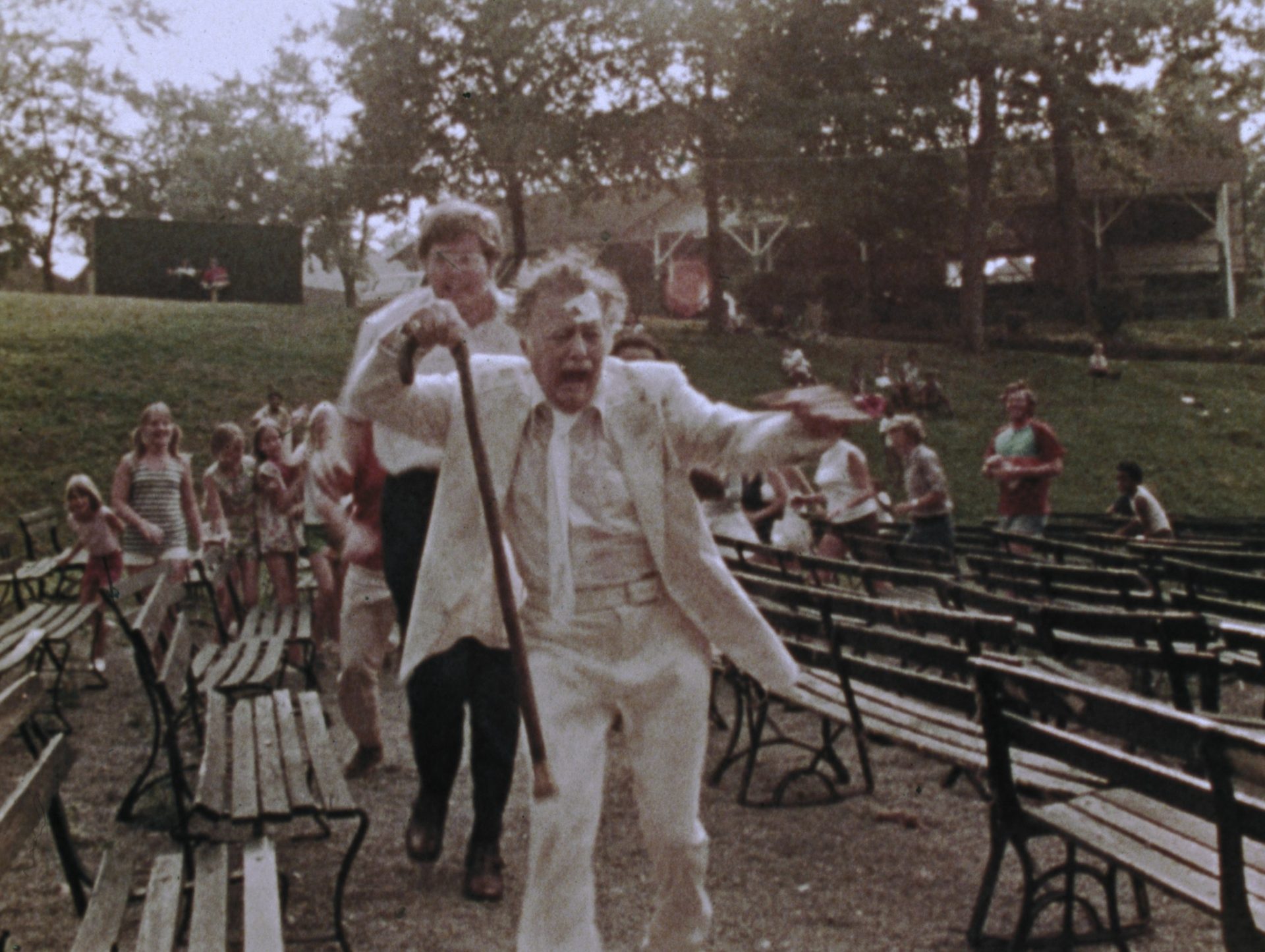
The 52-minute feature stars Lincoln Maazel (who would co-star in Romero’s classic Martin four years later) as an affable, white-suited man who greets a beaten down and disheveled version of himself in an empty waiting room. The out-of-breath Maazel advises the energetic one not to go outside.

“There’s nothing out there. You won’t like it!”

The warnings go unheeded, and the nattily-clad Maazel begins his day at the amusement park, where he is subjected to nothing but torment, ridicule and abuse.

Some of the vignettes are rooted in solid ideas. The grim reaper wandering the park and riding coasters is a striking juxtaposition, and a fortune teller’s unpleasant premonition for a couple of young lovers manages to deliver confrontational cynicism with a somewhat lighter touch.

The elderly gentleman’s metaphorical trip through the carnival of agism is flanked by footage of Maazel, as himself, explaining what we are about to see, and later, what we have seen. No doubt someone thought a late-addition prologue/epilogue would help an audience make sense of the narrative’s structureless string of abuses, but the Serling-on-steroids material is so lengthy and so at odds with the otherwise experimental nature of the core content that it only serves to make the entire film even less enjoyable.

For completists, The Amusement Park is available in select theaters and on Shudder, and merits consideration. For anyone thrilled by the idea of George A. Romero siccing amusement park horror on unsuspecting old people, be warned: you will be sorely disappointed.

The Rubber Meets the Road

Plan B

by George Wolf

Even before theaters shut down, there was no shortage of solid R-rated comedies getting woefully ignored. One of those was the wonderful Booksmart – which put a female friendship at the center of a Superbad-type coming-of-age romp.

Hulu’s Plan B takes the Booksmart model, mixes in some trusty road movie hijinx and even more sexual honesty than Blockers to concoct a teen sex comedy with plenty of smarts and sustained laughs.

South Dakota teens Lupe (Victoria Moroles) and Sunny (Kuhoo Verma) are best friends on slightly different social levels. The confident, outgoing Lupe is, ahem, “dating,” while the reserved Sunny has zero prospects and just pines for her crush to come over for a “Disney Plus and thrust.”

But then Sunny’s Mom goes out of town, so party! After Lupe’s cheery advice to “make good choices!” an impatient Sunny wants to get it over with already, leading to a very awkward bathroom hookup and an unfortunate condom accident.

Trading puke buckets and talking it over the next morning, the girls decide the best thing to do is get Sunny the morning after pill. This turns out to be a lot harder than they expect.

Moroles and Verma are both terrific, each finding distinct ways to give their characters authentic levels of the angst, curiosity, self-doubt and cautious confidence that are perpetually bouncing off teenage walls.

Once the search for Plan B involves a road trip to Rapid City, the script from Joshua Levy and Prathiksha Srinivasan delivers welcome surprises alongside inspired silliness and moments of outright hilarity (like the bit about Footloose and a doll museum).

There are some dry stretches along the way, but director Natalie Morales shows good instincts for when to pivot, and for making sure this teen sex comedy ends up speaking to some mighty serious issues.

So expect Rachel Dratch teaching abstinence by way of driver’s ed, but also young women exploring their sexuality amid an onslaught of mixed messages, double standards and threats to their freedom of choice.

Don’t let the dick jokes fool ya, there’s heart and brains here, too, and a sweet friendship illustrating the importance of unconditional love from your family, as well as the ones that feel like family.

And also dick jokes.

Brother’s Keeper

Blast Beat

by George Wolf

The most effective way a film can lead us to look at a complex issue from a new angle – or look at it at all – is to narrow the focus. Introduce the issue through characters worth caring about, and suddenly individuals make the stakes more tangible than memes and hot takes.

In his feature debut, Blast Beat director/co-writer Esteban Arango shows fine instincts for just this type of socially aware storytelling.

It is the summer of ’99, and brothers Carly and Mateo (real life siblings Mateo and Moises Arias, respectively) are spending their last few days with high school friends in their native Columbia. They’re moving to the U.S. with their mother (Diane Guerreo), where they will finally join their father Ernesto (Wilmer Valderrama) and build a new life in Atlanta.

A metalhead who’s also a science prodigy, the older Carly sees the move as getting him one step closer to the Georgia Aerospace Institute, and then to his dream job at NASA.

Ne’er do well Teo, though, feels differently. He’s a talented artist, but only seems happy when he’s acting out to show his unhappiness.

Both Arias brothers are terrific, and it is the strength of their performances that keep the film from collapsing when Arango pulls convenient and predictable pages from the Young Adult playbook. Each brother begins making friends, with Teo remaining the fuckup while Carly poses as a student at the Aerospace Institute so he can audit a class taught by a former astronaut (Daniel Dae Kim).

But when Ernesto is suddenly faced with deportation, and when broken promises and unscrupulous lawyers threaten all the family has planned, the film’s investment in character pays dividends. We’re pulling for this family, and these boys in particular.

The immigration question in America is a messy one. But beneath the heated rhetoric and political posturing are real families with complicated stories. Even in the moments when it chooses well-worn paths, Blast Beat brings that message home.

Cabin. Woods. Uh Oh.

The Retreat

by George Wolf

Does it matter that The Retreat is a “gay” horror film?

Well, no. And then yes.

Renee (Tommie-Amber Pirie) and Valerie (Sarah Allen) are on the verge of making their relationship permanent, but feel like some time away would do them good. The plan is to meet Val’s friends Scott (Turbo Kid‘s Munro Chambers) and Connor (Chad Connell) at a picturesque “gay BnB” for some quiet time in the Canadian countryside.

Or let’s just call it what it is: a cabin in the woods.

Uh oh.

Right, things escalate quickly. Scott and Connor are nowhere to be seen, and with just a touch of contrivance, the girls soon realize they’re being hunted by some sadistic Rambros (Aaron Ashmore, Rossif Sutherland).

From the minute Renee and Val stop for gas, director Pat Mills builds an air of dread and tension minus the usual gimmickry. And once the women are truly fighting for their lives, Mills keeps the adrenaline pumping with a quick pace and crisp editing that helps you forget the distractingly dark tones of the cinematography.

Writer Alyson Richards pens a lean, mean, bloody survival thriller that boasts some welcome surprises and a smart social conscience. Realized via strong performances from Pirie and Allen, Renee and Val’s relationship feels perfectly authentic, with a sexuality that’s never exploited by a leering camera. And while you may be reminded of 2018’s What Keeps You Alive, there is a critical difference.

The couple in that film could have been heterosexual, and it still would have worked. But here, the fact that it is a same sex couple being hunted matters very much to the story at work. It enables Richards and Mills to anchor a revenge horror show with a satisfying metaphor for the violent threats LGBTQ folks continue to face every day.

A big part of that satisfaction is from the blunt force trauma being reserved for the action, not the message. And for those who might be ready to accuse the film of doing some undue stereotyping of its own, take a breath.

A nifty little coup de grace proves The Retreat has seen you coming all along.

Tech Savvy

Profile

by George Wolf

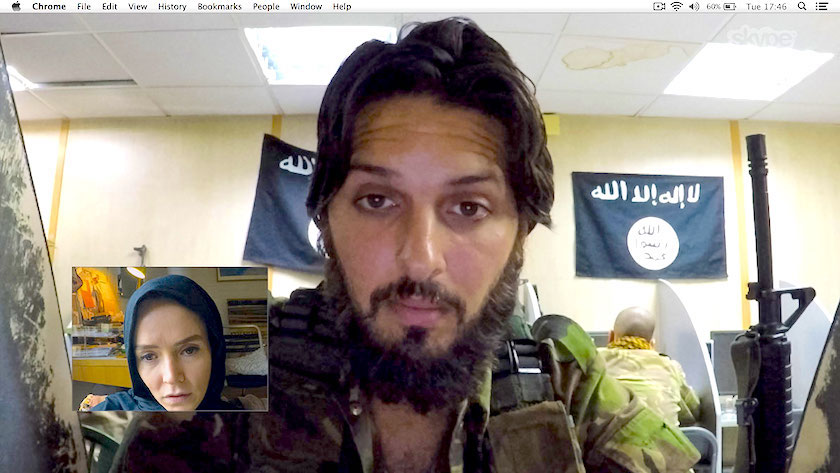
Since its inception, the “real-time computer screen” sub genre has spawned films attempting to expose truths about how small -and dangerous – the wired world has become. By drawing inspiration from urgent real world events, director/co-writer Timur Bekmambetov’s Profile achieves more lasting resonance than most.

London reporter Amy Whittacker (Valene Kane) is chasing a big story that will expose the online propaganda channels Islamic radicals utilize to recruit European women. Adopting the online profile of “Melody Nelson,” Amy quickly makes contact with Bilel (Shazad Latif), a charismatic recruiter.

It isn’t long before Amy is in way over her head, and even as her friends, boyfriend, and editor urge her to stop, Amy seems seduced by the very tactics she hoped to expose.

The logic isn’t always water tight, and some decisions flirt with absurdity, but authentic performances from Kane and Latif reel in this catfish, and Bekmambetov lands it with a chilling accuracy.

Mighty Neighborly

The Woman in the Window

by George Wolf

The Woman in the Window is a testament to the power of “all in.”

Like if you’re spying on your neighbors, get a zoom lens, take pictures! And if you’re modernizing Hitchcock, embrace that shit from the opening minutes and don’t f-ing look back.

For director Joe Wright and screenwriter Tracy Letts, that’s the play as they adapt A.J. Finn’s bestselling novel. And it’s a smart one.

Psychologist Anna Fox (Amy Adams, fantastic) has a shrink of her own these days (Letts), and plenty of prescriptions. Suffering from crippling agoraphobia, Anna will not leave her spacious Manhattan townhouse. She’s got her cat Punch and her downstairs tenant David (Wyatt Russell), but outside of occasional conversations with her ex-husband (Anthony Mackie), Anna spends most of her time watching her neighbors and old movies.

Then the Russells move in across the street.

Jane (Julianne Moore) comes over for an enjoyable visit, has some wine and admits that Alistair (Gary Oldman) can be angry and controlling. A later conversation with the teenaged Ethan Russell (Fred Hechinger) seconds that.

So when Anna sees Jane stabbed in her apartment, she’s sure Alistair is to blame. But with detectives (Brian Tyree Henry, Jeanine Serralles) looking on, a different Jane Russell (Jennifer Jason Leigh) appears, swearing that she’s never even met Anna before tonight.

For the entire first hour, Wright (Atonement, Darkest Hour, Hanna), Letts (Pulitzer winner for writing August: Osage County) and this splendid ensemble put the hammer down on a delicious mystery ride. Putting stairwells, doors, railings and more in forced perspective, Wright intensifies our relation to Ann’s small world while Letts’s crackling script draws us into the mystery and Danny Elfman’s staccato score hammers it home.

Is any of Anna’s story even real, or is it her meds and fragile psyche talking? This question allows the direct homages to classics like Rear Window and Vertigo to be filtered through a movie-loving unreliable narrator, becoming a wonderfully organic device that feeds this intoxicating noir pot-boiler.

As events escalate and Anna’s plight becomes more overtly terrifying, the novel’s pulpy seams begin to show, and the film stumbles a bit in transition. But Adams is strong enough to keep us rooted firmly in Anna’s camp, long enough for the darker side of Hitchcock to wrestle control.

Taking a story like this from page to screen successfully requires a strong, confident vision and a committed, talented cast. The Woman in the Window is overflowing with riches on both counts, landing as immensely satisfying fun.

Death Be Not Proud

There Is No Evil

by George Wolf

Presenting four short films together as separately compelling variations on a theme is impressive. Make those four shorts all from the same writer/director, telling distinct stories that raise the emotional stakes in distinct ways, and you have a stunning achievement.

You have Iranian filmmaker Mohammad Rasoulof delivering a political statement of immense weight and moral conviction. You have There Is No Evil.

After an opening segment that lulls you with a family’s mundane daily schedule before dropping a hammer of casual horror, Rasoulof unveils small sets of characters, each dealing with the effects of seemingly impossible choices.

While serving the two-year term of military service mandated in Iran, a man may be forced to perform executions. Go along you’ll get along, and you’ll be a killer. Say no?

“They destroy our lives.”

Each chapter of the film presents a seemingly unique paradox, then quietly mounts the tension before revealing gripping plot turns that unite the strands in memorably devastating fashion.

Dare we hope for any happy endings here, even when a desperate decision seems to pay off?

With four masterful bits of storytelling and the exceptional ensemble cast in There Is No Evil, Rasoulof deftly explores the wages of those decisions, as well as the immoral center of a despotic regime that makes them necessary.

Funny How?

Here Today

by George Wolf

Billy Crystal is a likable guy, and frequently funny. Tiffany Haddish is a likable gal, and often funny.

So there are possibilities for some odd couple fun in Crystal’s Here Today, but almost all of them are wasted in an overlong, self-indulgent, misguided and unfunny misfire.

Crystal, in his first big screen directing effort since 95’s Forget Paris, also co-writes and stars as Charlie, a legendary comedy writer currently working on a TV sketch show. Haddish is Emma, a singer whose boyfriend wins lunch with Charlie in a charity auction. But when the boyfriend becomes an ex, Emma shows up at the restaurant instead, and an unlikely friendship is born.

Charlie’s memory problems are quickly becoming an issue, as are the flashbacks to a vaguely traumatic event involving his ex-wife (Louisa Krause). Frequent visits to the doctor (Anna Deavere Smith) help Charlie hide his condition from his grown children (Penn Badgley, Laura Benanti), so the speed with which Emma sniffs it out is just one example of the falseness that plagues the entire film.

From phone conversations to reaction shots to skits on Charlie’s TV show, there’s hardly an ounce of authenticity to Crystal’s direction. And because none of these characters feel real, Charlie’s dismissive attitude toward the younger writers’ brands of comedy – complete with an embarrassing riff on Network‘s “mad as hell” speech – comes off as sour grapes from Crystal himself.

The script, based on co-writer Alan Zweibel’s short story “The Prize,” has only enough humor to elicit some scattered smiles. The bigger goal quickly becomes telling us how Charlie comes to grips with his condition and his past, and more disappointingly, showing us how Emma puts her own dreams on hold to pursue her magically healing effect on this white family.

Crystal has enjoyed many high points in a long and legendary career. He may very well have more, which would help everyone forget the lowlight that is Here Today.