Tag Archives: George Wolf

Neverending Story

The Last Duel

by George Wolf and Hope Madden

Take a look at the list of screenwriters on The Last Duel, and one name jumps out at you. There beside Oscar-winning writers Matt Damon and Ben Affleck is Oscar nominee Nicole Holofcener. All three, along with director Ridley Scott, are also listed as producers, and while this project may seem out of character for Holofcener (Can You Ever Forgive Me?, Please Give, Enough Said, Lovely & Amazing) her insight proves indispensable,

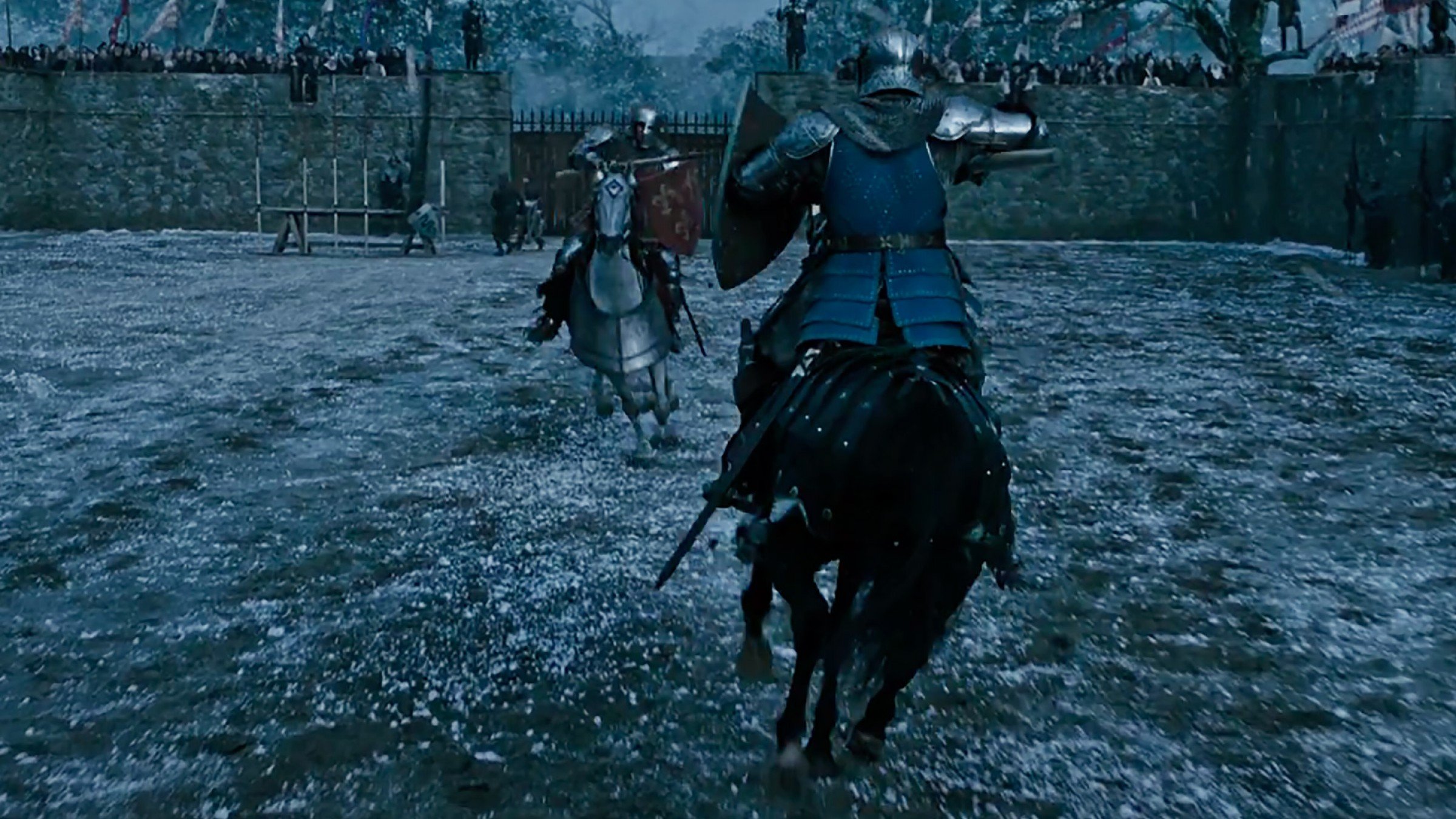
Based on the 2004 book by Eric Jager, the film chronicles events leading to the last officially recognized judicial duel in France, a 1386 trial by combat between knight Jean de Carrouges and squire Jacques Le Gris.

Carrouges (Damon) accused Le Gris (Adam Driver) of raping his wife Marguerite (Jamie Comer). Unsatisfied with the lenient decision handed down by Count Pierre d’Alencon (Affleck), Carrouges appealed directly to King Charles VI (Alex Lawther), where Carrouges threw down the challenge that Le Gris accepted. 

Scott presents the tale with exceptional craftsmanship and spectacle, getting big assists from Dariusz Wolski’s gritty, expansive cinematography and Michael Fentum’s detailed sound design.

This is a brooding, brutal, violent and sexually violent film, one that utilizes a Rashomon-style narrative to frame an often-debated moment in history around a centuries-old struggle that continues today.

Separated into three chapters, the film gives us the truth according to Carrouges, Le Gris, and then Marguerite, when the onscreen text holds a few extra beats on the phrase “the truth.” And while what changes with each new side of the story is vital, there’s equal importance to be found in the elements that don’t change.

One man’s crime is another’s entitlement, one man’s denial gets “the benefit of the clergy,” while one woman’s truth is disregarded among the power of men.

The ensemble cast is outstanding, led by Driver’s convincing cad, Damon’s gruff brute and Affeck’s delightful range as the shallow Count. But as Marguerite’s acerbic mother-in-law (a terrific Harriet Walter) dresses down her accusation with a pointed “You think you’re the only one?” Comer shoulders the courage that becomes the soul of the film. 

Her nuanced performance chapter to chapter tells us everything about the perspectives of the two men involved, and she carries Marguerite’s mindset with a weary bravery that depicts just how tiresome – even 600 years ago – it is to have to defend yourself after you’ve been raped.

It’s not just Comer, though. Scott’s camera lingers tellingly on the reactions of different women throughout the story as they silently respond to the charges.

Scott presents the climactic duel with the completely thrilling treatment it requires, but by then it’s clear why Holofcener’s contributions were so vital. As talented as Scott, Affleck and Damon are, making this film without the filmmaking perspective of an equally gifted woman would have amounted to more of the same: men telling us how rape is for women.

The Last Duel aims for more than just a gripping history lesson. It’s ultimately able to use that history to remind us that the way society treats women generally – and women’s sexuality specifically – has changed little since the freaking Middle Ages. 

Shame.

Shaken and Stirred

No Time to Die

by Hope Madden and George Wolf

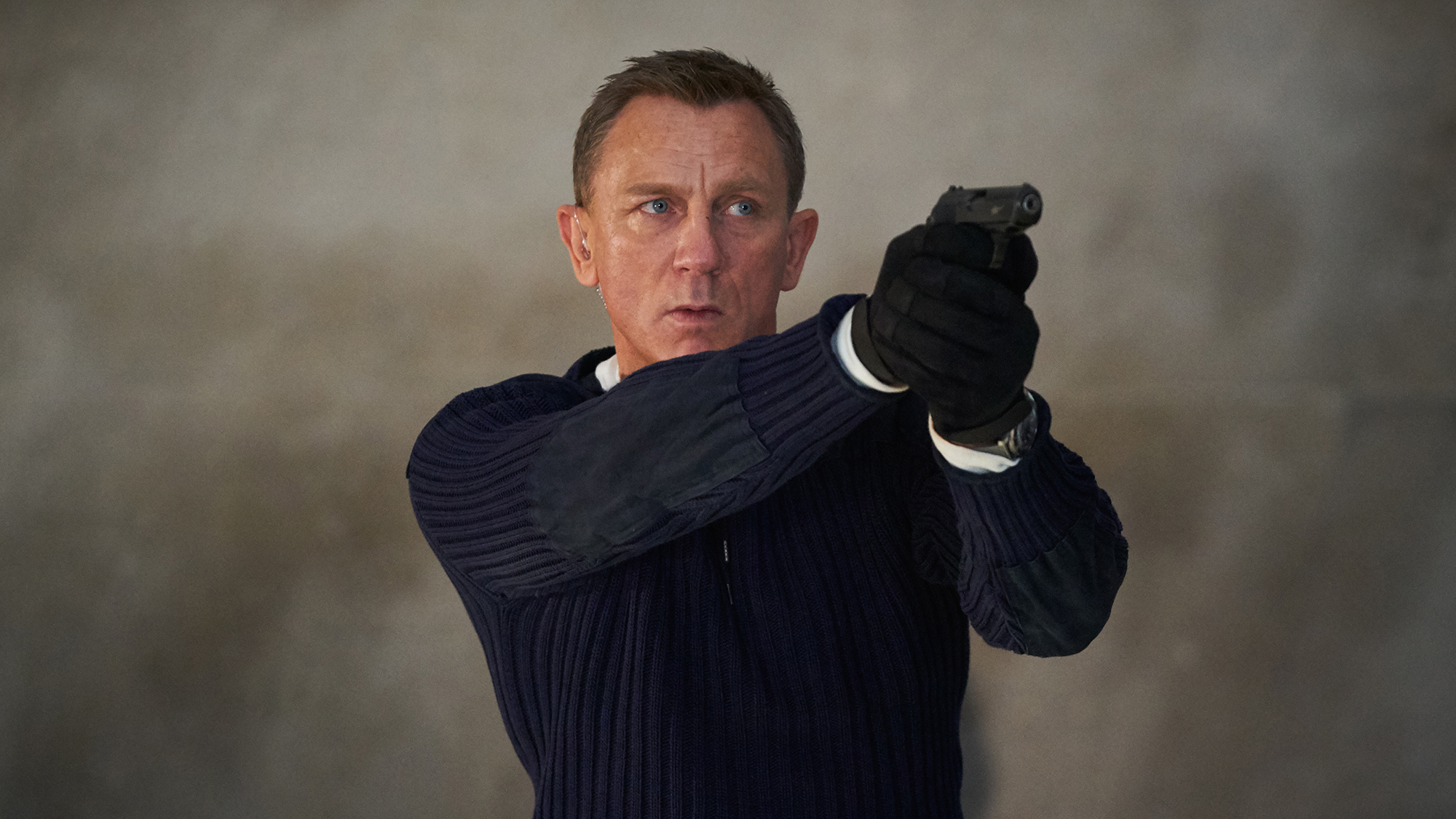
Daniel Craig’s had a good run. As Bond, he delivered a much needed transformation for the Brit spy series, shouldered the best film in the entire franchise (2012’s Skyfall), and allowed considerable nuance to seep in to the characterization.

Bravo.

He needed a bold and fitting final film to cap his time with MI6, and 2015’s disappointing return to the old guard Spectre wasn’t it. A global plague pushed his finale back nearly two years. Luckily, No Time to Die was worth the wait.

Craig’s retired agent is lured back to the game (of course he is) by a global threat (of course it is) involving an old nemesis (natch), a new rival (sure) and the beauty who broke his heart.

Yes, but wait, because co-writer/director Cary Joji Fukunaga (Beasts of No Nation) takes these familiar elements in new directions, thanks mostly to Craig’s wearily vulnerable performance.

Bond is a tough gig for an actor because there has generally been so little actual acting required – or allowed. And while Craig shows us a wizened soul with humor, longing and vulnerability to spare, Fukunaga surrounds that performance with a story worthy of his send off.

Since the Craig era began, his Bond has always seemed more determined to exist in a more relatable world with more universal stakes. Here, Craig’s final outing speaks often of love, legacy, sacrifice, and precious time, against the threat of human contact itself becoming fatal. And while there are still plenty of moments to suspend disbelief, this film again benefits from the move away from the parody-ready version of 007 that reigned for decades (cheekily emphasized here by Bond’s brief adventure with Ana de Armas’s rookie agent, Paloma).

Mysterious new villain Safin (Rami Malek) shares a tragic past with Bond’s love Madeleine (Léa Seydoux), while the legendary Blofeld (Christoph Waltz) is still able to pull deadly strings from inside maximum security.

Bond’s old friend Luther (Jeffrey Wright) and an over-eager newbie (Billy Magnussen) recruit Bond for the CIA, seemingly pitting him against M”s (Ralph Fiennes) MI6 team and its new 007 agent, Nomi (Captain Marvel‘s Lashana Lynch). Can Q (Ben Whishaw) and Moneypenny (Naomie Harris) sit this one out and remain neutral?

Not bloody likely.

Opening with a tense and expansive 26-minute prologue, Fukunaga unveils thrilling set-pieces and gorgeous visuals that beg for a big-screen experience. Aided mightily by a soaring, throwback score from Hans Zimmer, Fukunaga infuses NTTD with a respectful sense of history while it marches unafraid into the future.

The one-liners, callbacks and gags (like Q’s multi-piece tea set) are well-placed and restrained, never undercutting the nearly three-hour mission Fukunaga clearly approached with reverence.

Where does James Bond go from here? Hard to say, but this 007 doesn’t care. Five films in 15 years have changed the character and the franchise for the better, and No Time to Die closes this chapter with requisite spectacle and fitting emotion.

Cue and A

V/H/S/94

by George Wolf

You ready for scary?

1994 was almost thirty years ago. Three zero.

So the fourth film in the V/H/S series places the found footage premise in a decidedly nostalgic vibe, with plenty of videotape filter effects, “taped over” moments and no worries about smartphones crashing the internal logic.

Five filmmakers deliver separate short film visions, as four segments are bookended by an anchor meant to tie them all together as a narrative whole.

Jennifer Reeder handles the wraparound, entitled “Holy Hell,” which follows a SWAT team invading a compound while members shout about drugs and search warrants. They find much more than drugs in a frantic, satisfactory opening that suffers from some uneven production values and pedestrian acting.

Chloe Okuno’s “Storm Drain” finds an Ohio TV reporter and her cameraman investigating the local legend of the Rat Man. Venturing a little too deep in the sewers, what they find sheds a nicely subtle light on the plight of the homeless before the creature effects come calling.

Okuno’s camerawork and dark tunnel framing is effective, and Anna Hopkins delivers a fine performance as the reporter, but like all the segments here, “Storm Drain” feels like a great idea that’s never fully realized.

That is the most true with Simon Barret’s “Empty Wake.” Barrett, writer of You’re Next, The Guest and Blair Witch, gives us a funeral home employee waiting out a wake that no one is attending. As a storm escalates outside, noises from inside the casket suggest a soul may not be ready to move on.

Barrett lays out some nicely simplistic stakes, and plays a fine game of peek-a-boo with the inside lights going off and on, but the payoff ultimately lands as a bit familiar and anti-climactic.

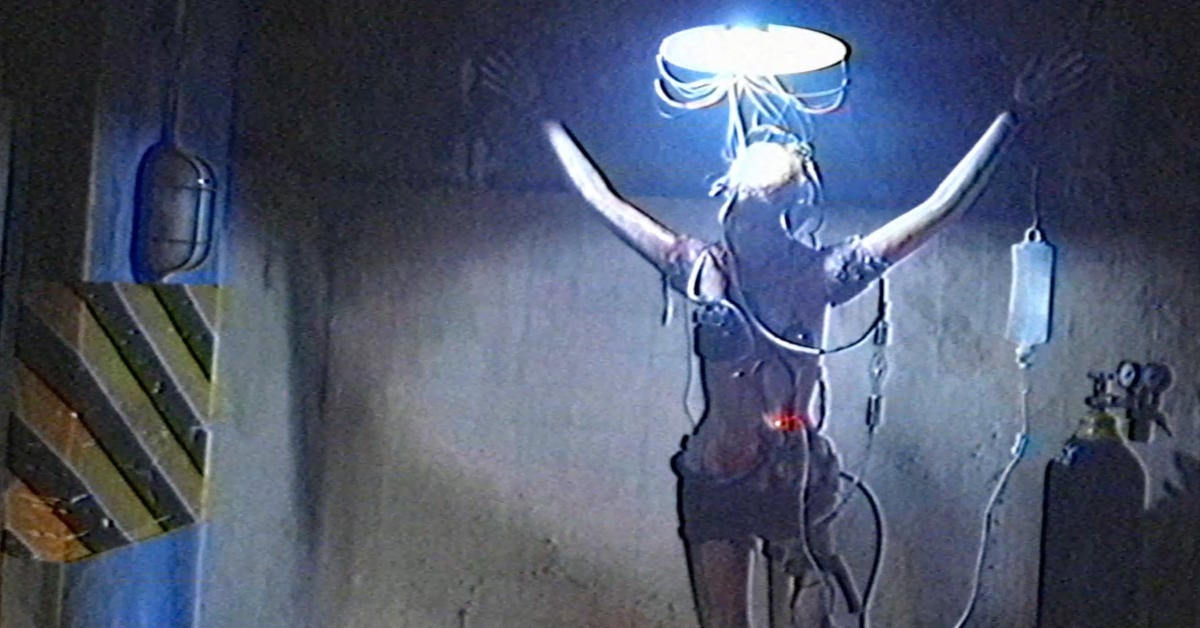
The opening shot of Timo Tjahjanto’s “The Subject” grabs your attention immediately, bringing you into the horrific laboratory of a mad scientist conducting human experiments. What starts as a fun and gore-filled homage to both Frankenstein and Tetsuo descends into an overlong, first-person shooter game that squanders much of its early potential.

“Terror,” the final segment from Ryan Prows, brings horror comedy to the party with a look at good ‘ol boy militia members aiming to overthrow the government. They’re more than well-armed, they’re fostering a supernatural entity. And you can guess how well that goes.

Prows never completely sets the tone, as the few truly comedic moments crash into an overall atmosphere that plays it too straight for satire.

Reeder closes it all out with the conclusion of “Holy Hell,” bringing a surprise to one of the SWAT teamers and an overly tidy reinforcement of the videotape theme.

V/H/S/94 presents a host of promising ideas and several solid moments. A step up from Viral for sure, but with too many false starts for a rewind-able experience.

Screening Room: Venom: Let There Be Carnage, The Many Saints of Newark, Titane, Addams Family 2 & More

Daughter of Darkness

The Addams Family 2

by George Wolf

Two years ago, The Addams Family returned to their cartoon roots with an animated feature that leaned heavily on little Wednesday Addams for its few sparks of macabre fun.

Despite turning to a more convoluted plot line, AF2 doesn’t do much to improve the family reputation.

Wednesday (Chloe Grace Moretz) is still the standout here, putting the creepy and kooky in the 3rd grade science fair. She’s denied a prize thanks to a new “everybody wins” school policy, but her brilliance catches the eye of shady scientist Cyrus Strange (Bill Hader).

Worried she’s being dumbed down by the idiots around her, Wednesday rebuffs cheer up attempts from Dad Gomez (Oscar Isaac) and Mom Morticia (Charlize Theron) when a pushy lawyer (Wallace Shawn) comes knocking with a bombshell.

His clients believe Wednesday may actually be their daughter and are requesting a DNA test. What else can Mom and Dad do except pack Wednesday, Pugsley (Javon “Wanna” Walton, stepping in for the now deeper voiced Finn Wolfhard), Fester (Nick Kroll) and Lurch (Conrad Vernon, who again co-directs with Greg Tiernan and newcomer Laura Brousseau) into the haunted camper for that fallback device for hastily-connected hi jinx, the road trip!

It’s a three week trek to (where else?) Death Valley and back, stopping in Miami, San Antonio, and the Grand Canyon long enough to catch up with more family (Snoop Dogg’s Cousin It) and try out some mildly amusing gags.

Only a precious few – like the guy who keeps trying to propose to his girlfriend and “Thing” trying to stay awake while driving – actually land, and it’s up to Moretz and her perfect deadpan (“I’ve been social distancing since birth”) to remind us of what makes this family dynamic.

The script from Dan Hernandez and Benji Samit veers off into wild Dr. Moreau territory, adding even more baggage to a film that would have been wise to pack lighter. Inspired soundtrack choices (from Gordon Lightfoot to Motorhead) give way to forced pop and hip-hop, and the film’s attempt at an “own who you are” message seems half-hearted at best.

But what’s really lost is the inherent fun The Addams Family brings to wherever they are. When the world goes light, they go dark. That’s a fun and funny idea ready to be exploited.

Once again, Wednesday’s just waiting for the rest of the gang to get back to the family business.

Flesh & Bone & Other

Titane

by George Wolf

I’m just going to go with the official synopsis:

“Following a string of unexplained murders in France, a father is reunited with the son who has been missing for ten years.”

Fine, done, because knowing anything more about Julia Ducournau’s Palme d’Or-winning Titane could steal some of the mesmerizing, can’t-look-away, what-is-happening spell it inflicts on you.

Ducournau’s 2016 feature debut Raw shocked audiences with a brutally in-your-face metaphor mixing primal appetites and familiar bonds. She ups all the antes available with Titane, claiming her film is “its own wild animal” like a mad doctor unleashing her creation on an unsuspecting city of fools.

The film is alive with alternating color palettes, pulsating sounds and endless shocks of body horrific visuals. The sudden bursts of violence are downright pedestrian alongside the parade of boldly squirm-inducing clashes of flesh, bone and other.

But as she did with Raw, Ducournau finds humanity clawing out from the inhumane. Truly unforgettable performances from Vincent Lindon and Agathe Russell provide intimate examples of the extremes that even the most damaged souls are capable of in the search to care and be cared for.

It may not be shy about homages and influences, but Titane is indeed its own ferocious animal. Open the cage look the F out.

Undead American Summer

Black As Night

by George Wolf

“That was the summer I got breasts and fought vampires.”

Yes, a lot is happening in Shawna’s life, but Black As Night never loses that matter-of-fact teenage perspective even as it broaches some plenty familiar horror terrain.

Shawna (Asjha Cooper) and her BFF Pedro (Fabrizio Guido) uncover a ring of vampires in their New Orleans precinct, and it’s going to take some help from the hunky Chris (Mason Beauchamp) and a privileged Twilight fan (Abbie Gayle) to track down the lead bloodsucker and take him out.

Black As Night is part of 2021’s “Welcome to the Blumhouse” collaboration with Amazon, and it continues last season’s focus on films by and about women and/or people of color.

Director Maritte Lee Go and writer Sherman Payne mix Candyman‘s themes of gentrification and disposable populations with the surface level adventures of Buffy and The Lost Boys for a vampire tale that is most noteworthy for its fresh cultural lens.

The message isn’t unique or particularly subtle, production values can be shaky and there’s a hearty helping of exposition shortcuts, but these kids have spunk. Cooper makes Shawna’s journey from insecure wallflower to confident vampire killer an endearing one, and Keith David is here to lend his always welcome gravitas.

And though it often feels like Black As Night is content to just jump on a crowded ride, it consistently finds small moments to call its own. Plus, large numbers of vampires to kill!

So, how was your summer?

Born Under a Bad Sign

The Many Saints of Newark

by Hope Madden and George Wolf

Murmurs, complaints, and whispers come in and out of focus as a camera meanders through an empty cemetery at midday: we hear souls telling the stories of their lives. We stop over the resting place of Christopher Moltisanti (Michael Imperioli). He has a tale to tell.

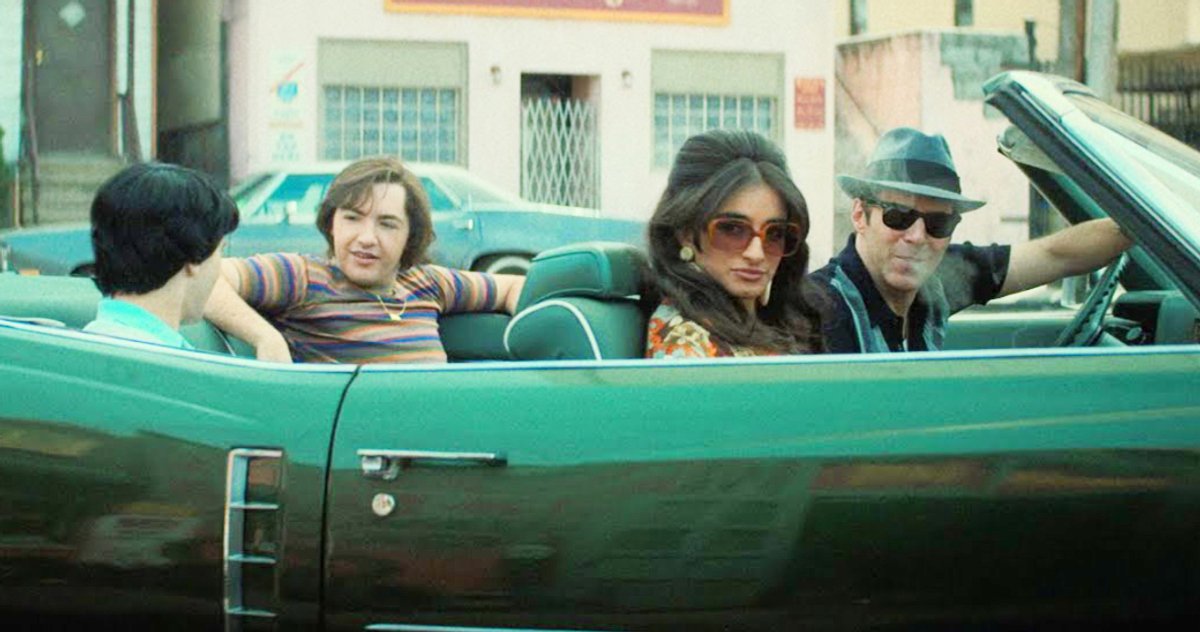
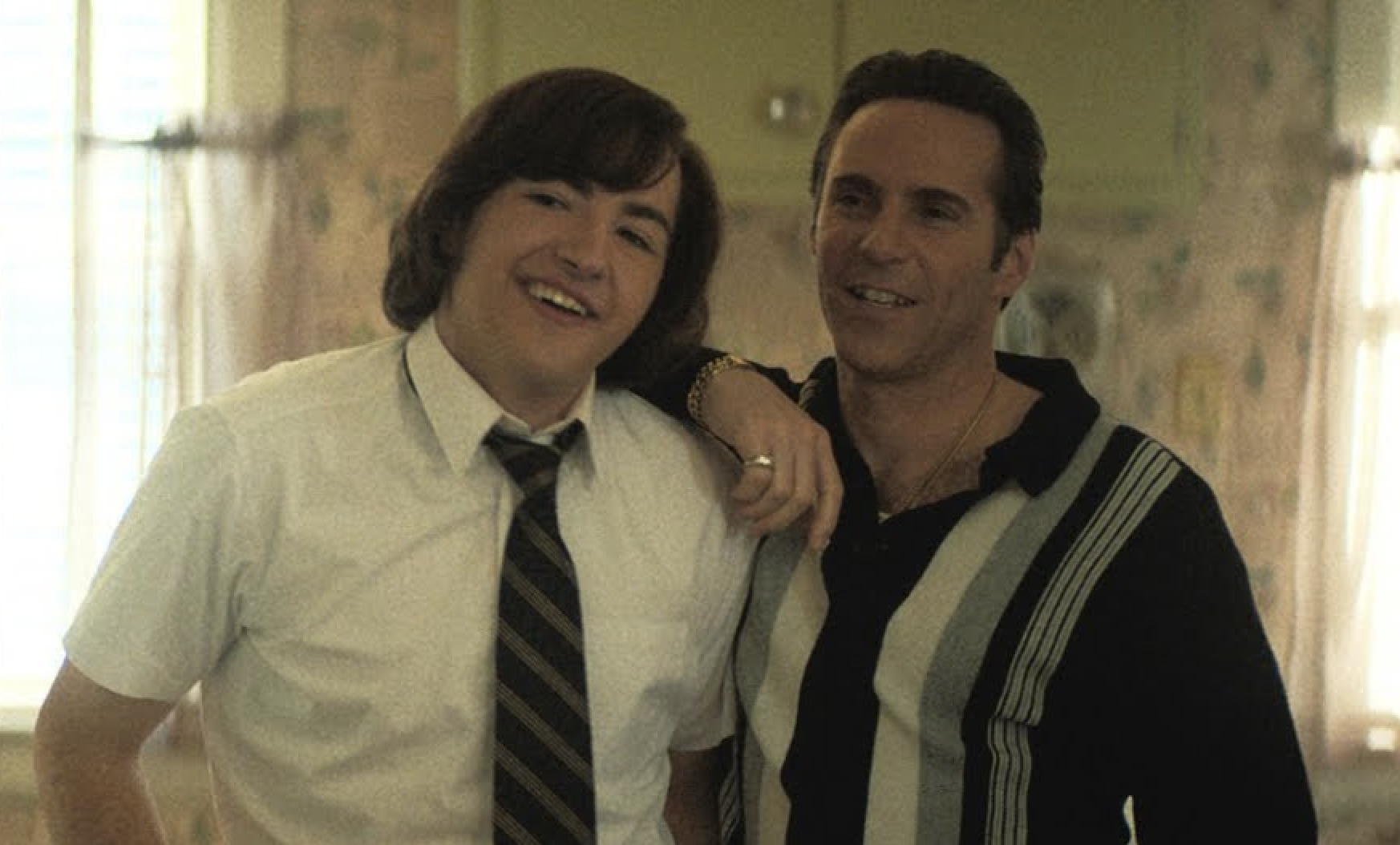
It’s a beautiful opening, spooky but with a bitter, familiar humor about it. With it, director Alan Taylor sets the mood for a period piece that lays the groundwork for one of the best shows ever to grace the small screen. The Many Saints of Newark brings Christmas early for Sopranos fans, but this is not exactly the story of Tony Soprano. In uncovering the making of the future, Taylor and writer Lawrence Konner invite us into the life of Uncle Dickie Moltisanti (Alessandro Nivola).

Nivola makes for an ideal choice to play the beloved “uncle.” The always reliable actor depicts the film’s central figure as the struggling, complicated result of his circumstances – an excellent theme given the film’s long game to uncover the forces that forged a future boss. In many ways, Uncle Dickie’s weaknesses, indulgences, strengths and goals create a mirror image of the Tony Soprano we would come to know over eight years and six seasons.

Longtime fans will have a bada bing blast recognizing familiar characters in their youth. Vera Farmiga is characteristically excellent as Tony’s formidable mother. John Magaro is a spot-on and hilarious Silvio, matched quirk for quirk by Billy Magnussen as Paulie Walnuts. Corey Stoll brings a younger but no less awkward Uncle Junior to life beautifully.

Of course, the one you wait for is young Tony, played with lumbering, melancholic sweetness by James Gandolfini’s son Michael. The resemblance alone gives the character a heartbreaking quality that feeds the mythology, but young Gandolfini serves Tony well with a vulnerable, believable performance that only expands on our deep investment in this character.

But the film is really more interested in those we never got to know: Tony’s father Johnny Boy Soprano (Jon Bernthal), Dickie’s father Aldo and uncle Sal Moltisanti (Ray Liotta, in two exceptional and very different roles), and stepmother Guiseppina Moltisanti (Michela De Rossi).

De Rossi and Leslie Odom Jr. (who plays colleague-turned-competitor Harold McBrayer) offer some of the most intriguing complexity and context in the entire film. The first half pokes holes in the “woe is me” backstory of the entitled white male Mafioso figure by spending some time with two characters who actually did have a tough go making a life for themselves in this community.  

Taylor (Thor: the Dark World, Terminator Genisys, GoT) helmed nine Sopranos episodes, winning an Emmy for one, while Konner penned three solid episodes of his own, although his decades of work for the big screen has been mediocre at best.

But here the filmmakers combine for extended family drama that, despite one major plot turn landing as entirely illogical, weaves themes old and new in a ride that is often operatic and downright Shakespearean.

If the Sopranos family feels like family, turning back the clock on these indelible characters is just as giddy and delightful as it sounds. But The Many Saints of Newark impresses most by the balance it finds between fan service and fresh character arcs.

It’s an often cruel and bloody tale of wanton crime, treacherous deceit, family dysfunction and cold-blooded murder. And it just might be the most fun you’ll have at the movies all year.

Fright Club: Fathers and Daughters in Horror

Familial relationships can be a killer – especially in the hands of horror filmmakers. This week we look at the fraught relationships between fathers and daughters in horror movies.

5. We Are What We Are (2013, American)

As in Jorge Michel Grau’s original, one family’s religious custom is thrown into havoc when the family leader dies unexpectedly, leaving the ritual unfinished and the children left to determine who will take over. Both films look at a particularly religious family as a sort of tribe that evolved separately but within the larger population. Grau has better instincts for mining this paradigm to expose the flaws of the larger population, but Mickel takes an American Gothic tone to create an eerily familiar darkness that treads on common urbanite fears.

The always exceptional Michael Parks plays a gentle, rural doctor heartbroken over the years-old disappearance of his daughter and intrigued by some grisly bits unearthed by the recent flood. Meanwhile, the devout and desperate Parker family prepares for Lamb’s Day.

The film sets a tone that sneaks up and settles over you, like the damp from a flood. Mickel proves adept with traditional horror storytelling, casting aside any flash in favor of smothering atmosphere and a structure that slowly builds tension, and the impressive climax is worth the wait.

4. Dracula’s Daughter (1936)

Dad himself isn’t even in this film, but what Dracula’s Daughter does well is to depict the hold parents can have on us – if taken to beautifully melodramatic and metaphorical extremes.

Gloria Holden is the hypnotic and almost despondent daughter, Countess Marya Zaleska. After Von Helsing (spelled with an “o” in this movie for some reason) kills the Count, the Countess travels to London to steal the body, hoping to perform a ritual that would cure her of her own awful thirst.

Holden is wonderful, as is Nan Grey as the Countess’s first victim. Lambert Hillyer’s film suggests lesbianism as the shameful curse that can’t be cured – as many a Dracula film has pointed toward homoeroticism as the true curse of vampirism. Thanks to Holden’s melancholy performance, though, instead of feeling like some unwholesome threat, Marya’s desire for women feels more like something her father and now society has made her believe is shameful.

3. Train to Busan (2016)

We are always, always interested when a filmmaker can take the zombie genre in a new direction. Very often, that direction is fun, funny, political—but not necessarily scary. Co-writer/director Sang-ho Yeon combines the claustrophobia of Snakes on a Plane with the family drama of Host, then trusts young Su-An Kim to shoulder the responsibility of keeping us breathlessly involved. It works.

Kim plays Soo-an, a wee girl on a train with her overworked, under-attentive father (Gong Yoo). They are headed to her mother’s. The filmmaker will teach Dad what’s important in this life.

Sometimes funny, sometimes shocking, always exciting and at least once a heartbreaker, Train to Busan succeeds on every front.

2. Oldboy (2003)

A guy passes out after a hard night of drinking. It’s his daughter’s birthday, and that helps us see that this guy is a dick. He’s definitely not much of a father. He wakes up a prisoner in a weird, apartment-like cell. Here he stays for years and years.

The guy is Dae-su Oh (Min-sik Choi). The film is Oldboy, director Chan-wook Park’s masterpiece of subversive brutality and serious wrongdoing.

Choi is unforgettable as the film’s anti-hero, and his disheveled explosion of emotion is perfectly balanced by the elegantly evil Ji-tae Yu.

Choi takes you with him through a brutal, original, startling and difficult to watch mystery. You will want to look away, but don’t do it! What you witness will no doubt shake and disturb you, but missing it would be the bigger mistake.

1. The Host (2006)

Visionary director Bong Joon Ho’s film opens in a military lab hospital in 2000. A clearly insane American doctor, repulsed by the dust coating formaldehyde bottles, orders a Korean subordinate to empty it all into the sink. Soon the contents of hundreds of bottles of formaldehyde find its way through the Korean sewer system and into the Han River. This event – allegedly based on fact – eventually leads, not surprisingly, to some pretty gamey drinking water. And also a 25 foot cross between Alien and a giant squid.

Said monster – let’s call him Steve Buscemi (the beast’s actual on-set nickname) – exits the river one bright afternoon in 2006 to run amuck in a very impressive outdoor-chaos-and-bloodshed scene. A dimwitted food stand clerk (Joon Ho regular Kang-ho Song) witnesses his daughter’s abduction by the beast, and the stage is set.

What follows, rather than a military attack on a marauding Steve Buscemi, is actually one small, unhappy, bickering family’s quest to find and save the little girl. Their journey takes them to poorly organized quarantines, botched security checkpoints, misguided military/Red Cross posts, and through Seoul’s sewer system, all leading to a climactic battle even more impressive than the earlier scene of afternoon chaos.

If you have donated to our IGG fund, we thank you! If you have not and you care about horror movies (we know you do because you’re here!), women-led film and independent film, check out our awesome perks and give or share!