Tag Archives: George Wolf

Best Movies of the First Half of 2023

by Hope Madden and George Wolf

How is this year half over?! Well, whether we want to believe it or not, it is. That means a look back at the movies that most impressed us over the course of the first six months. Here, in alphabetical order, are our favorites.

Air

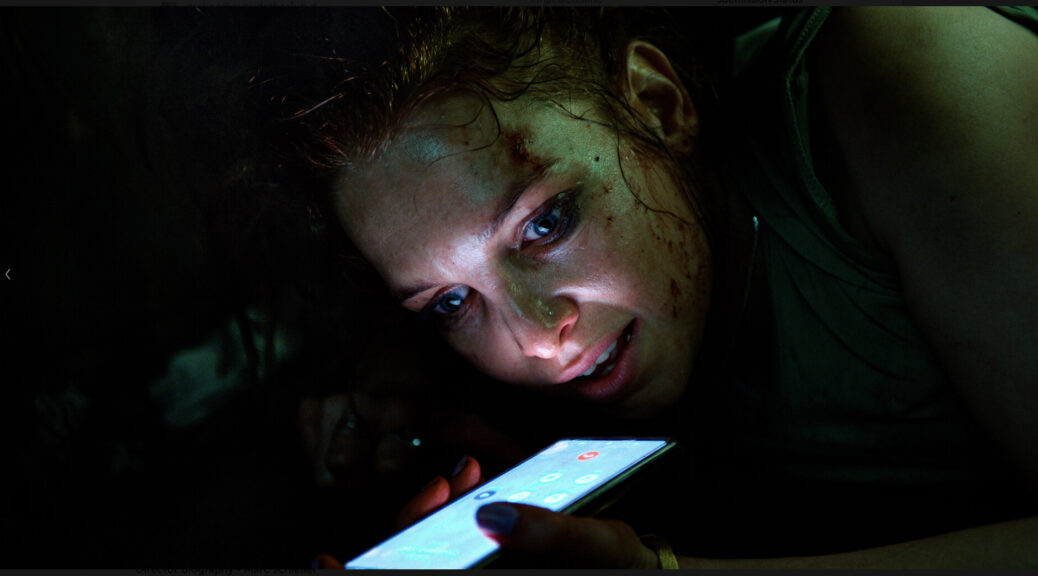
If you still need proof that Ben Affleck is a damn fine director, you’ll find it, right down to how he frames the multiple telephone conversations. But the real surprise here is the script. In a truly sparkling debut, writer Alex Convery brings history to life with an assured commitment to character.

And much like his success with the Oscar-winning Argo, Affleck proves adept at a pace and structure that wrings tension from an outcome we already know. In fact, he goes one better this time, inserting archival footage that actually reminds us of how this all turned out, before leaving Mrs. Jordan’s final ultimatum hanging in the air like a levitating slam from Michael.

Asteroid City

As is so often the case, director Wes Anderson, writing again with Roman Coppola, painstakingly creates a world – colorful, peculiar, emotionally tight lipped – brimming with characters (equally colorful, peculiar and emotionally tight-lipped). Brimming. About 50 speaking characters stand or sit precisely on their mark, perfectly framed, each one doing their all to keep chaos at bay.

The wordplay is succinct and witty per usual, dancing through themes of science, art, and Cold War paranoia. But while Anderson’s last film, The French Dispatch, left its procession of indelibly offbeat characters to fend for themselves, this time they’re connected with the sterile humanity that buoys the best of his work.

Blackberry

So, a voice on the line says, “You have a collect call from ‘What the f%& is happening’!”

That’s not really the caller’s name.

He’s actually Jim Balsillie (a terrific Glenn Howerton), co-CEO of BlackBerry Limited, and he’s having yet another temper tantrum. The pairing of Balsillie’s bare-knuckled business sense with the tech genius of other CEO Mike Lazaridis (Jay Baruchel, perfectly awkward) made the company an early leader in the cell phone game, but things have started to unravel. Fast.

The colliding of worlds is engaging enough, but the delightfully sharp humor and first-rate ensemble (also including Michael Ironside) turn these based on true events into a rollicking, can’t-look-away slice of history.

John Wick: Chapter 4

Chapter 4 is not just more of what makes the series memorable, it’s better: better action, better cinematography, better fight choreography, better framing and shot selection. Sandwiched between inspired carnage are brief moments of exposition set within sumptuous visions of luxury and decadence. This movie is absolutely gorgeous.

One of the reasons each episode of this franchise surpasses the last is that the franchise is not exactly about John Wick. It’s a love letter to a canon, a song about the entire history of onscreen assassins and their honorable, meticulous action. Genre legends arrive and we accept a backstory that isn’t detailed or necessary because the actors carry their cinematic history with them, and that’s backstory enough.

It’s hard to believe it took this many sequels to get us to John Wick v Donnie Yen, but it was worth the wait.

Linoleum

If you haven’t gotten to know filmmaker Colin West, it’s high time you correct that. The writer/director follows up last year’s surreal Christmas haunting Double Walker with a beautiful look at living a fantastic life.

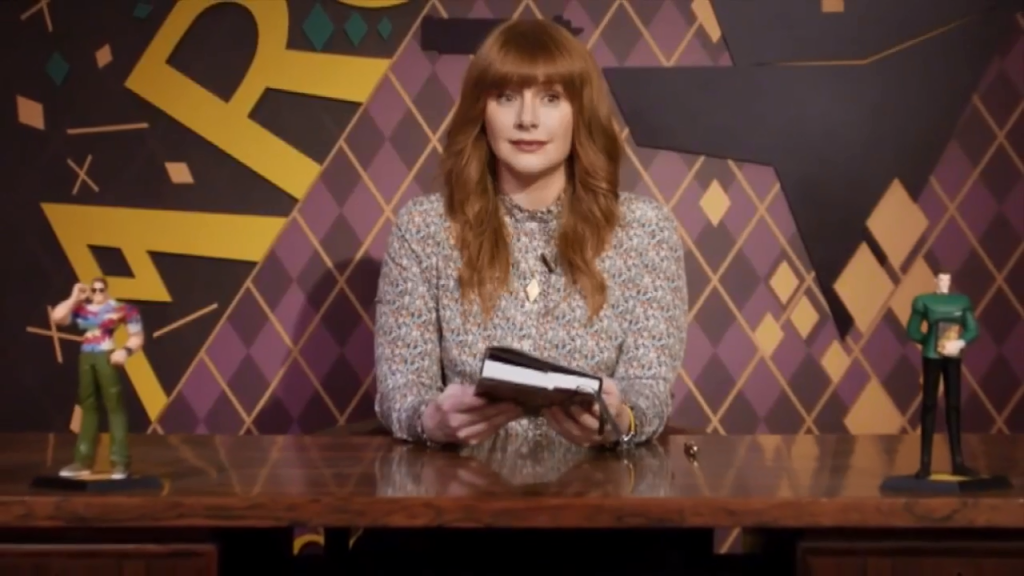
The effortlessly affable Jim Gaffigan plays Cameron, an astronomer in suburban Dayton, Ohio hitting a very rocky path in his middle age. The kiddie show about science that he hosts is failing. Maybe his marriage is, too. New neighbors, a mysterious woman, and increasingly bizarre events have got him wondering. What does it all mean?

Return to Seoul

In Return to Seoul (Retour à Séoul), a trip “home” becomes a catalyst for one woman’s search for identity, as director and co-writer Davy Chou crafts a relentlessly engrossing study of character and culture.

In her screen debut, Park Ji-min is simply a revelation. Her experience as a visual artist clearly assists Park in realizing how to challenge the camera in a transfixing manner that implores us not to give up on her character. Her Freddie is carrying a soul-deep wound and pushes people away with a sometimes casual cruelty, but Park always grounds her with humanity and restraint.

Freddie begins to embody the typhoon that pushed her toward this journey of self, and Return to Seoul becomes an always defiant, sometimes bristling march to emotional release. And when that release comes, it is a rich and moving reward for a filmmaker, a performer, and all who choose to follow.

Showing Up

Visual poet of the day-to-day Kelly Reichardt returns to screens with a look at art as well as craft in her dramedy, Showing Up.

Michelle Williams is characteristically amazing, her performance as much a piece of physical acting as verbal. You know Lizzy by looking at her, at the way she stands, the way she responds to requests for coffee or work, the way she reacts to compliments about her work, the way she sighs. Williams’s performance is as much in what she does not say as what she does, and the honesty in that performance generates most of the film’s comic moments.

Chau knocks it out of the park yet again, and like Williams, she presents the character of Jo as much in her physical action as in her dialog. The chemistry between the two is truly amazing, simultaneously combative and accepting, or maybe just resigned to each other.

Like Nicole Holofcener and Claire Denis, Reichardt invests her attention in the small moments rather than delivering a tidy, obvious structure. The result feels messy, like life, with lengths of anxiety and unease punctuated by small triumphs.

Sisu

Is there anything in all the world more satisfying than watching Nazis die? Perhaps not. Jalmari Helander, the genius behind 2010’s exceptional holiday horror Rare Exports, squeezes a lovechild from Leone and Peckinpah by way of Tarantino (natch). The result, Sisu, a kind of WWII-era Scandinavian John Wick.

Helander’s confident vision meshes majestically with the cinematography of Kjell Lagerroos, capturing the lonesome beauty of Lapland in one minute, the next minute bursting with the frenetic energy and viscera of action. The stunt choreography and editing in the dizzying array of carnage-laden set pieces are breathtaking. Knives, guns, fisticuffs, tank fire, regular fire, land mines, a hanging, airplanes – a seemingly endless string of magnificently crafted violent action keeps the pace breathless.

Clocking in at just 91 minutes, Sisu is perfectly lean, relentlessly mean, and consistently satisfying at every blood-soaked turn.

Spider-Man: Across the Spider-Verse

A reminder that multiverse films can, indeed, be made well, this story is wild but never illogical, delivering a heady balance of quantum physics, Jungian psychology and pop culture homages while rarely feeling like a self-congratulatory explosion of capitalism. Heart strings are tugged, and it helps if you’ve seen the previous installment. (If you haven’t, that’s on you, man. Rectify that situation immediately.)

A star studded voice cast shines, but that wattage is almost outshone by the animation. Every conceivable style, melding one scene to the next, bringing conflict, love and heroism to startling, vivid, utterly gorgeous life.

If there is a drawback (and judging the reaction of some of the youngsters in my screening, there may be), it’s that Across the Spider-Verse is a cliffhanger. If you’re cool with an amazing second act in a three-story arc (The Empire Strikes Back, The Two Towers), you’ll probably be OK with it. Maybe warn your kids, but don’t let it dissuade you from taking in this animated glory on the biggest screen you can find.

You Hurt My Feelings

One of filmmaker Nicole Holofcener’s great talents is acknowledging within a film that there is no reason to feel for her characters, and then making you feel for the characters. She’s a master of the relatable if tedious angst of the privileged. In her hands, these primarily insignificant tensions are humanized and often hilarious.

Julia Louis-Dreyfus, who was so magnificently flawed and empathetic in Holofcener’s 2013 film Enough Said, stars as Beth, a novelist. Well, she wants to be a novelist, but her memoir only did OK and now her agent doesn’t seem that thrilled with her first ever novel. Maybe it sucks?

No, supportive-to-a-fault husband and psychologist Don (Tobias Menzies) assures her. But secretly, honestly, maybe that’s not how he feels.

Thanks to these two excellent performances the filmmaker delivers her finest moments, creating a lived-in world, a true microcosm that pokes fun at our insecurities and the little white lies that keep us happy.

Into the Sunset

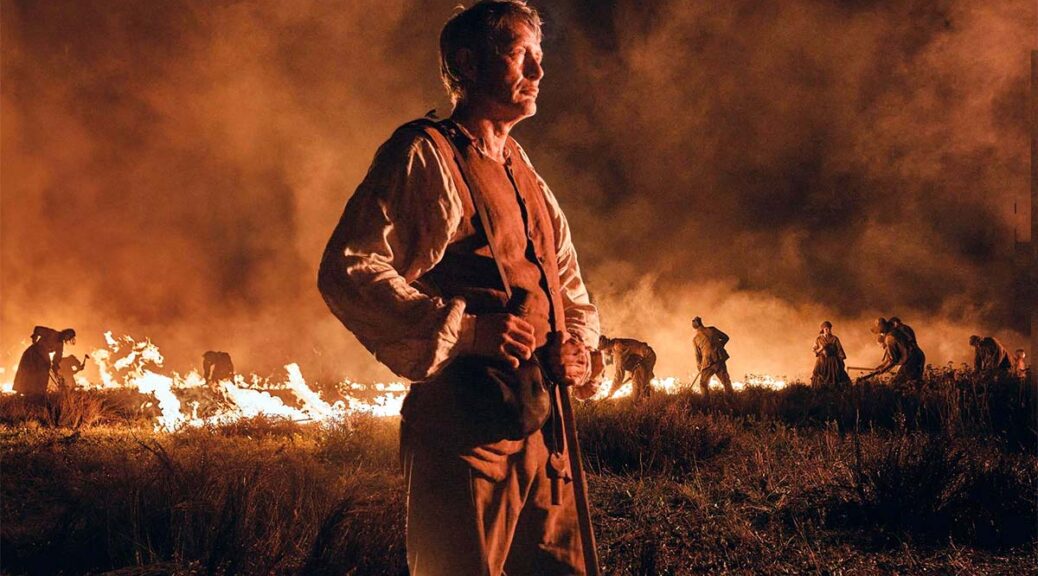
Indiana Jones and the Dial of Destiny

by Hope Madden and George Wolf

Should they have stopped after Last Crusade? Probably.

But is Dial of Destiny a more worthy sendoff for the iconic Indiana Jones than 2008’s Kingdom of the Crystal Skull? Most definitely.

Director James Mangold takes the whip from Spielberg and wastes no time reminding us why we have loved this character for decades. Impressively staged action and that familiar theme song combine for a thrilling 20-minute opening sequence set back amid Indy’s heyday, with the unusual combo of Harrison Ford’s de-aged face (pretty nifty) and 80 year-old voice (craggy) fighting to recover the blade that drew Christ’s blood.

Fast forward to the late 1960s, and Dr. Jones is ready for retirement when his past comes calling with a tempting opportunity. Indy’s goddaughter Helena Shaw (Phoebe Waller-Bridge, bringing some welcome zest), whose father was Indy’s old partner Basil Shaw (Toby Jones), shows up with a tale about finally recovering the artifact that neither Basil nor Indy could ever pin down.

It is the Antikythera, a hand-powered orrery designed by Greek astronomer Archimedes that was said to produce “fissures in time.” Archimedes hid the two halves of the dial from the Ancient Romans, and now Indy can help Helena find the dial before it falls into the menacing hands of the mysterious Dr. Schmidt (Mads Mikkelsen).

The script, co-written by Jez and John-Henry Butterworth, David Koepp and Mangold, allows our character to feel his age – the wisdom of his accumulated experiences and the losses, the absences, they’ve brought him. It also allows a bit of silliness to creep in before we’re done, which becomes the one last hurdle that Indy must overcome.

As a director, Mangold comes to the franchise with a terrific resume that includes Logan, Ford v Ferarri, Walk the Line and 3:10 to Yuma. But while he’s able to fill many action-packed set pieces with craftmanship and flair, Spielberg’s unmistakable layer of childlike wonder is noticeably missing.

But so is Spielberg, so that’s gonna happen.

What Mangold and his writing team can do is find a comfortable groove that, like our hero, leans more toward respecting the past than plundering its remnants.

Ford is a big reason for that. He steps back into that fedora not like he’s never left it, which is the point. He meets his character where he actually is – old, alone, grieving. Mangold’s Logan also grappled with the melancholy of our waning years (and beautifully). Ford makes the most of this opportunity to see the character’s arc through, right into a warm and satisfying sunset.

Fright Club: Best Argento Movies

How can it be that we’re more than 250 episodes in and we’ve never done a podcast on Dario Argento? Well, we’d like to thank the Wexner Center for the Arts for inspiring this episode. We will introduce one of the films in their upcoming Dario Argento series, as will our podcast guest Scott Woods. But first, we’ll get together and hash out our personal favorites.

5. Inferno (1980)

The second of Argento’s Mother Trilogy, Inferno orbits Mater Tenebrarum, the Mother of Darkness. She lives in a foul smelling but phantasmagorically constructed building in New York City, where Rose Elliott believes something diabolical is afoot.

A sequel to the filmmaker’s most lauded work, Suspiria, Inferno mirrors the stagey quality of the first in the trilogy. The architecture, the color scheme, the dizzying nature of the building itself give the film the surreal quality of a spell. This one takes on a neon soaked nighttime aesthetic that’s hypnotic. The opening underwater sequence is among Argento’s best set pieces.

Per usual, the Argento’s plot takes a backseat to the experience. A couple of these murders are especially grisly – appropriate, given that Mater Tenebrarum is the cruelest of the sisters.

4. Cat o’Nine Tails (1971)

Argento’s second feature delivers perhaps the most strictly giallo of his films, in that (before Argento reinvented the genre) a giallo is a mystery thriller. In this one, a blind former newspaperman (Carl Malden) teams up with a sighted but far less savvy newspaperman to figure out why so many murders are connected to the Terzi Institute.

Items that will become standards for the filmmaker: don’t trust what you see, science is a fun underpinning to a mystery no matter how ludicrous that science is, Hitchcock is cool – plus, the extreme close up eye balls and murderer POV that would become trademarks.

Surprises that he drops after this movie? Not only does one character deliver an insightful piece of feminism – “Whore equals liar equals murderer, perfect Italian logic!” – but the film actually murders more men than women.

Its color palette is a bit of a let down and it drags in parts, but it delivers a number of excellent set pieces and it’s really fun to see Carl Malden in an Italian horror movie.

3. The Bird with the Crystal Plumage (1970)

Argento’s first and arguably one of his best opens with a bang. Frustrated writer Sam Dalmas (Tony Musante) is killing time before he finally returns home to the States from Italy. But he witnesses an attack through the massive glass storefront of an art gallery.

It’s such a gorgeous frame for violence, and a perfect introduction to the maestro of sumptuous slaughter. There’s childhood trauma (the sort that turns a person toward mania), which will go on to become a go-to in the filmmaker’s arsenal. But what an introduction to his style!

2. Suspiria (1977)

American ballerina Suzy Bannion (Jessica Harper) moves to Germany to join a dance academy, but the other dancers are catty and the school staff are freaks. Plus, women keep disappearing and dying.

As Suzy undertakes an investigation of sorts, she discovers that the school is a front for a coven of witches. Suspiria is a twisted fairy tale of sorts, Argento saturating every image with detail and deep colors, oversized arches and doorways that dwarf the actors. Even the bizarre dubbing Argento favored in his earlier films works beautifully to feed the film’s effectively surreal quality.

It’s a gorgeous nightmare, bloody and grotesque but disturbingly appealing both visually and aurally (thanks to the second scoring effort by Goblin).

1. Deep Red (1975)

Maybe not the most traditional choice for Argento’s best, but it’s such a powerful step in his overall collection. He made three straight up gialli – The Bird with the Crystal Plumage, Cat o’Nine Tails, and Four Flies on Grey Velvet – before taking a break from the genre with a dark historical comedy.

And then, Deep Red – a giallo, to be sure, but one that predicts the entirely surreal, aesthetic-over-plot supernatural thrillers he’d make next. Deep Red is gorgeous and bizarre, full of red herrings, childhood trauma, traumatizing children, tormented lizards as well as a number of themes he’s hit on since his first film.

David Hemmings (Marcus Daly) saw a murder, but he can’t be sure what exactly he saw. He’s sure if he can just remember it clearly, it’ll all make sense. This is a preoccupation of most of Argento’s films, but he’s never more curious than he is here. And the bloody, almost exquisite murders are more excessive and interesting here than in anything else he made.

Cruel to Be Cruel

The Hole in the Fence

by George Wolf

The fence is meant to separate the proud and the privileged from the lawless and desperate. So the opening in it serves as a warning about who might try to come in, and a reminder about how important it is to protect your place on the “good” side.

The Hole in the Fence (El hoyo en la cerca) isn’t exactly subtle, or especially profound, but it does serve up a well constructed lesson in the roots of toxic masculinity, the twisted tenets of religious hypocrisy, and the casual cruelty that often accompanies both.

A group of rich Catholic kids is bused into Mexico’s Los Pinos integration camp for boys. The lessons they receive will continue their grooming as the next wave of the Mexican “elite,” and lesson one is a speech that reinforces how unworthy the “outside” people are.

And right on cue, ringleader Jordi (Valeria Lamm) and the rest of the boys begin singling out any sign of weakness in the ranks. Diego (Eric David Walker) is hampered by casts and a neck brace, Eduardo (Yubah Ortega) is a scholarship kid, and Joaquincito (Lucciano Kurti) might be gay.

This will not do.

We’ve seen these themes and metaphors before, but director and co-writer Joaquin del Paso does score some compelling moments by narrowing the focus to the teachers and students interacting in one confined space. And the pupils learn quickly about how well cruelty can work for them, especially as a means to decrease your own suffering at the expense of someone else’s.

Slowly, the priests and instructors begin moving from the periphery to the center of the narrative. One camper goes missing, hints are dropped about the history of the camp, and del Paso engineers a truly unsettling extended take sequence set by the side of a highway.

Who is more dangerous here, those outside the fence, or those inside? The Hole in the Fence has answers that are not soft-pedalled, but still too hard to be ignored.

Take Me Down

Asteroid City

by Hope Madden and George Wolf

Welcome to Asteroid City, a grief comedy that may be the most Wes Anderson-y movie Wes Anderson has ever made. Or, welcome to “Asteroid City” – the stage play from famous writer Conrad Earp (Edward Norton) upon which Asteroid City, the film (TV show?) is based. Actively. Brian Cranston will explain as he, the narrator of “Asteroid City”, deconstructs the meticulous framing device Anderson crafts to keep us just one layer further from chaos.

“We are all just characters in a play that we don’t understand.”

As is so often the case, writer/director Anderson painstakingly creates a world – colorful, peculiar, emotionally tight lipped – brimming with characters (equally colorful, peculiar and emotionally tight-lipped). Brimming. About 50 speaking characters stand or sit precisely on their mark, perfectly framed, each one doing their all to keep chaos at bay.

Like Augie Steenbeck (Jason Schwartzman), a widowed war photographer stranded with his teenaged son (scene-stealer Jake Ryan from Eighth Grade) and three daughters in the clean desert nowhereville of Asteroid City, where a “stargazing event” will soon commence. Cinematographer Robert D.  Yeoman’s 360-degree swivel shows all you need to see: diner, roadway cabins, onramp to nowhere, and the garage where the town mechanic (Matt Dillon) has found that Augie’s wagon is now deceased.

Augie’s father-in-law Stanley Zak (Tom Hanks, in the usual Bill Murray role) fires ups his Cadillac and arrives for a rescue, only to find no one can leave Asteroid City on account of the alien.

Yep, an alien! He just came down sure as you please and made off with the city’s prized meteorite! Everybody saw it – including famous actress Midge Campbell (Scarlett Johansson) and all the visiting school kids in Miss June’s (Maya Hawke) class!

So the whole city’s on lockdown, while General Gibson (Jeffery Wright) and Dr. Hickenlooper (Tilda Swinton) assess the situation and Augie realizes he just may have snapped the only photo of an honest to goodness alien.

All the unique and wonderful trademarks of Anderson’s craftsmanship are on display. Both the city itself, and the surrounding stage area where the play is performed, are given distinct aesthetics that benefit equally from Anderson’s commitment to symmetry, palette and depth-of-field.

The wordplay is succinct and witty per usual, dancing through themes of science, art, and Cold War paranoia. But while Anderson’s last film, The French Dispatch, left its procession of indelibly offbeat characters to fend for themselves, this time they’re connected with the sterile humanity that buoys the best of his work.

“You can’t wake up if you don’t fall asleep!”

You’ll hear that several times in Asteroid City, enough to know that Anderson hopes we’re paying attention. Leave yourself open – to what art, and science, is saying – and your world might seem a little more colorful.

Screening Room: The Flash, Elemental, The Blackening, Extraction 2, Maggie Moore(s) & More

Moore Than a Woman

Maggie Moore(s)

by George Wolf

Maggie Moore(s) is nestled in a quiet little neighborhood between the Coen Brothers, Taylor Sheridan, and any mid-lfe rom-com. Expect engaging characters getting caught in dangerous games and possible romances, and reacting with clever witticisms, charming flirtatiousness and occasional bursts of violence.

And though the film doesn’t rise to the best of any genre, it patches together enough winning moments for a worthwhile caper-com.

With an opening declaration that “some” of the events actually happened, Paul Bernbaum’s first script since 2007’s Next takes us to a small desert town in Arizona that’s suddenly rocked by two murders in one week.

And both victims are named Maggie Moore. WTF?

Is there a connection between Maggie 1 (Louisa Krause) and Maggie 2 (Mary Holland)?

That’s what Police Chief Sanders (Jon Hamm) and deputy Reddy (Nick Mohammed) aim to find out. And pretty soon they’re finding out that Maggie 2’s husband (Christopher Denham) has a girlfriend (Bobbi Kitten) and a life insurance payout coming, while Maggie 1’s man (Micah Stock) has been passing photos for a pedophile food supplier (Derek Basco) in exchange for cheap and moldy cold cuts for his sub shop.

Oh, and Maggie 1’s neighbor Rita (Tina Fey) says the couple’s fights had recently been escalating.

Director John Slattery (God’s Pocket) exhibits fine juggling skills, giving his Mad Men pal Hamm plenty of room to craft Chief Sanders as the easy-to-root-for heart of the film. He’s a widower who takes a creative writing class at night, and his rebuff of a classmate’s overtures only makes us more hopeful when he and the divorced Rita find reasons to meet.

Of course, it helps that Hamm and Fey are real life buddies, with enough natural chemistry and snappy barbs (Him: “Wash your car.” Her: “Wash your ass!”) to make their time together a treat to watch.

Yes, putting a wannabe romance in the middle of Hell or High Fargo can bring a disjointed feel, but the orbit of distinct characters and cutting dialogue around it never lets the crime-solving grow tiresome.

Don’t look to Maggie Moore(s) for trail blazing or ground breaking, it will come up short. But for an hour-and-a-half of breezy, sometimes messy entertainment, it’s plenty capable.

Let’s Play a Game

The Blackening

by George Wolf

How many kids does Nick Cannon have? Think on it, because your answer could say a lot about you.

It might even keep you alive.

Several friends from college (including Jay Pharaoh, Yvonne Orji, Sinqua Walls, Antoinette Robertson, and the film’s co-writer Dewayne Perkins) are reuniting at a remote cabin for a Juneteenth celebration. It isn’t long before they discover a talking blackface at the center of a board game called The Blackening (“probably runs on racism!”) and fall into a sadistic killer’s plan to pick them off one by one.

The game will test their knowledge of Black history and culture, and demand they sacrifice the friend they deem “the Blackest.” It’s a clever device that Perkins, co-writer Tracy Oliver and director Tim Story use to skewer both well-known horror tropes and well-worn identity politicking.

The old joke about Black people being the first to die in horror films is pretty well-worn, too, but don’t let that poster tagline convince you that the film has nothing new to say. The less “Blacker” these characters seem, the greater chance they have of surviving. That’s some fertile ground for social commentary, and what began as a viral comedy sketch lands on the screen as a refreshing new angle for a horror comedy.

The winning ensemble crafts unique, identifiable characters, and Story (Barbershop, Ride Along) keeps the homages coming, from Scream to Saw to Set It Off and more. But while the film’s brand of fun can be silly and/or bloody, there’s plenty of smart woven into the takes on scary movies, race, and sexual identity (Perkins’s character is openly gay and has some rules of his own).

But seeing that I’m a white man in his fifties, every joke in the film didn’t land for me. And I can respect that. This is a film from Black creators, with a Black cast, that speaks very knowingly to a Black audience while keeping the cabin door open for anyone to join the fun.

Thinking that only a certain type of audience could enjoy The Blackening is exactly the kind of stereotyping the film is eager to put in the crosshairs. And that assumption would be more than wrong.

It would be…dead wrong.

Across the Universes

The Flash

by George Wolf

Remember the utility belt on the Adam West version of Batman? Whatever the situation, there was always something on that belt that was perfect for bailing him out of it.

Decades later, it’s starting to look like “the multi-verse” may be the new Get Out of Jail Free card for superhero adventures. It certainly is for The Flash, a movie that scatters impressive moments across a landscape of fan service that’s searching for a truly compelling story.

Ezra Miller returns as Barry Allen/The Flash, who discovers this time out that he can hit speeds fast enough for time travel. Bruce Wayne/Batman (Ben Affleck) warns him against messing with the past, but Barry is convinced that simply putting one can of tomatoes in a shopping cart can bring back his murdered mother (Maribel Verdú ) and in turn, free his father (Ron Livingston) from a murder charge.

Of course, that can of tomatoes carries plenty of butterfly effects. The changes are enough to put Barry face-to-face with a non-super version of himself, in a universe where Bruce Wayne (Michael Keaton) has hung up his cape, Eric Stoltz never got canned from Back to the Future, and General Zod (Michael Shannon) is still an imminent threat to destroy the planet.

That Stoltz name drop (along with Affleck’s priceless line about the size of his ego) are just two of the moments where screenwriters Christina Hodson and Joby Harold inject some lighthearted fun that never seems forced. Ironic, though, that the Stoltz backstory just reminds you that the controversial Miller didn’t get dropped from this franchise.

But beyond the many offscreen troubles, Miller is impressive here, effectively crafting two distinct Barry Allens who play off each other quite well. Keaton’s return is a nostalgic kick, and as much as he’s clearly enjoying getting back in the Batsuit, Keaton steers clear of scenery-chewing. His Batman is a perfectly weary version of the one he left in the 90s, a disillusioned hero ready for one more ride.

And as the Barrys and Bruce search for an imprisoned Superman, we get our first look at Sasha Calle as Kara/Supergirl, who provides an intriguing glimpse of what we might expect from the character’s upcoming standalone film.

Director Andy Muschietti (It, It Chapter Two) hooks us with an exciting and visually impressive – except for the computer-generated babies – opening sequence, but the pace begins to drag almost immediately after. Threads of other time travel films from Timecrimes to Looper are bandied about, leading to the puzzling centerpiece that is the Chrono-ball.

Inside the ball, any past version of a superhero can be trotted out for a fan service bow, often with GCI that’s less-than-super enough to recall DC’s embarrassing experiment with Superman’s mustache. You would think that after that debacle, the effects bar would be higher. Apparently not, which only exacerbates the feeling that the point here is not The Flash, it’s how many flashes of the past can be manufactured – before and after the credits.

Both the animated and live action Spider-Man films have shown us how delightful the multi-verse can be. The Flash never gets there, but it shows us enough of Barry Allen to wonder what might be possible if the DCEU can trust him enough to carry his own weight.