Tag Archives: Fright Club

Day 18: Calvaire (The Ordeal)

The Ordeal (Calvaire) (2004)

A paranoid fantasy about the link between progress and emasculation, The Ordeal sees a timid singer stuck in the wilds of Belgium after his van breaks down.

Writer/director Fabrice Du Welz’s script scares up the darkest imaginable humor. If David Lynch had directed Deliverance in French, the concoction might have resembled The Ordeal. As sweet, shy singer Marc (a pitch perfect Laurent Lucas) awaits aid, he begins to recognize the hell he’s stumbled into. Unfortunately for Marc, salvation’s even worse.

The whole film boasts an uneasy, “What next?” quality. It also provides a European image of a terror that’s plagued American filmmakers for generations: the more we embrace progress, the further we get from that primal hunter/gatherer who knew how to survive.

Du Welz animates more ably than most our collective revulsion over the idea that we’ve evolved into something incapable of unaided survival; the weaker species, so to speak. Certainly John Boorman’s Deliverance (the Uncle Daddy of all backwoods survival pics) understood the fear of emasculation that fuels this particular dread, but Du Welz picks that scab more effectively than any filmmaker since.

His film is a profoundly uncomfortable, deeply disturbing, unsettlingly humorous freakshow that must be seen to be believed.

Listen weekly to MaddWolf’s horror podcast FRIGHT CLUB. Do it!

https://www.youtube.com/watch?v=Hn3oba5HmH8

Fright Club: Best New Zealand Horror

Sure, New Zealand is known for that delicious fuzzy little fruit, the kiwi, but there’s some fun horror to explore there as well, not all of it courtesy of Peter Jackson. Pre-LOTR, he established a legacy of particularly messy horror comedies that his countrymen have kept alive and well since his move to more mainstream efforts. From killer sheep to evil-awakening rock tunes and more, let’s dive into the top 5 horror exports from NZ!

5. Black Sheep (2006)

Graphic and gory horror comedy seems to be the Kiwi trademark, no doubt a product of the popularity of native Lord of the Gastro-Intestinal-Splatter-Fest-Laugh-Riot, Peter Jackson.

First time writer/director Jonathan King uses the isolation of a New Zealand sheep farm and the greedy evil of pharmaceutical research to create horror. He does it with a lot of humor and buckets full of blood. It works pretty well.

Evil brother Angus (Peter Feeney) has bred some genetically superior sheep while smart but sheep-phobic brother Harry (Nathan Meister) has been away. But the new sheep bite (a recurring problem with bio-genetically altered farm animals). Victims turn into, well, were-sheep. Of course they do.

The result is an endearing, often genuinely funny film. Cleverly written with performances strong enough to elevate it further, Black Sheep offers an enjoyable way to watch a would-be lamb chop get its revenge.

4. Deathgasm (2015)

Blood! Guts! Heavy metal!

New Zealand teenage outcast Brodie (Milo Cawthorne) knows he and his friends are losers, so of course they start a band to get loud and be cool!

But when their rocking involves playing an ancient piece of music known as the Black Hymn, they unwittingly summon an evil entity and the body count starts rising.

In his feature debut, writer/director Jason Lei Howden, a veteran of Peter Jackson’s special effects team, borrows heavily from Shaun of the Dead-style pacing and camerawork while managing to poke some blood-spattered fun at the “devil music” stereotypes often thrown at heavy metal.

You’ll find plenty of laughs, some rom-com elements and winning performances from both Cawthorne and Kimberley Crossman as Medina, the school beauty who can also swing a pretty mean ax.

Clever and surprisingly self-aware, Deathgasm is fine excuse to feed your inner metalhead.

https://www.youtube.com/watch?v=4m6BIvN3ggM

3. Dead Alive (Braindead) (1992)

Rated R for “an abundance of outrageous gore,” Dead Alive is everything the early Peter Jackson did well. It’s a bright, silly, outrageously gory bloodbath.

Lionel Cosgrove (Timothy Balme) secretly loves shopkeeper Paquita Maria Sanchez (Diana Penalver), but his overbearing sadist of a mother, does not take well to her son’s new outside-the-home interests. Mum follows the lovebirds to a date at the zoo, where she’s bitten (pretty hilariously) by a Sumatran rat-monkey (do not mistake this dangerous creature for a rabid Muppet or misshapen lump of clay).

The bite kills her, but not before she can squeeze pus into some soup and wreak general havoc, which is nothing compared to the hell she raises once she comes back from the dead.

Braindead is so gloriously over-the-top that nearly anything can be forgiven it. Jackson includes truly memorable images, takes zombies in fresh directions, and crafts characters you can root for. But more than anything, he knows where to point his hoseful of gore, and he has a keen imagination when it comes to just how much damage a lawnmower can do.

https://www.youtube.com/watch?v=tHWAoKzHut8

2. What We Do in the Shadows (2014)

In the weeks leading up to the Unholy Masquerade – a celebration for Wellington, New Zealand’s surprisingly numerous undead population – a documentary crew begins following four vampire flatmates.

Besides regular flatmate spats about who is and is not doing their share of dishes and laying down towels before ruining an antique fainting couch with blood stains, we witness some of the modern tribulations of the vampire. It’s hard to get into the good clubs (they have to be invited in) or find a virgin. Forget about tolerating the local pack of werewolves (led by the utterly hilarious alpha Rhys Darby).

Jemaine Clement is reliably hysterical as Vladislav, and the film benefits from the same silly, clever humor seen in his series Flight of the Conchords. The filmmakers know how to mine the absurd just as well as they handle the hum drum minutia. The balance generates easily the best mock doc since Christopher Guest. It’s also the first great comedy of 2015.

1. Housebound (2014)

You need to see Housebound.

Funny and scary, smartly written and confidently directed as to take full advantage of both, this is a film that makes few missteps and thoroughly entertains from beginning to end.

Gerard Johnstone writes and directs, though his brightest accomplishment may be casting because Morgana O’Reilly’s unflinching performance holds every moment of nuttiness together with brilliance.

O’Reilly plays Kylie, a bit of a bad seed who’s been remanded to her mother’s custody for 8 months of house arrest after a recent spate of bad luck involving an ATM and a boyfriend who’s not too accurate with a sledge hammer.

Unfortunately, the old homestead, it seems, is haunted. Almost against her will, she, her hilariously chatty mum (Rima Te Wiata) and her deeply endearing probation officer (Glen-Paul Waru) try to puzzle out the murder mystery at the heart of the haunting. Lunacy follows.

Good horror comedies are hard to come by, but Johnstone manages the tonal shifts magnificently. You’re nervous, you’re scared, you’re laughing, you’re hiding your face, you’re screaming – sometimes all at once. And everything leads up to a third act that couldn’t deliver any better.

The film is so much fun it all but begs to be seen with a group.

https://www.youtube.com/watch?v=BT1KcYiPb4I

Listen to the whole conversation on our FRIGHT CLUB PODCAST!

Day 17: Henry: Portrait of a Serial Killer

Henry: Portrait of a Serial Killer (1989)

Like Snowtown Murders, released more than two decades later, Henry is an unforgivingly realistic portrayal of evil. Michael Rooker is brilliant as serial killer Henry (based on real life murderer Henry Lee Lucas). We follow him through his humdrum days of stalking and then dispatching his prey, until he finds his own unwholesome kind of family in the form of buddy Otis and his sister Becky.

Director John McNaughton’s picture offers a uniquely unemotional telling – no swelling strings to warn us danger is afoot and no hero to speak of to balance the ugliness. He confuses viewers because the characters you identify with are evil, and even when you think you might be seeing this to understand the origins of the ugliness, he pulls the rug out from under you again by creating an untrustworthy narrative voice. His film is so nonjudgmental, so flatly unemotional, that it’s honestly hard to watch.

What’s diabolically fascinating, though, is the workaday, white trash camaraderie of the psychopath relationship in this film, and the grey areas where one crazy killer feels the other has crossed some line of decency.

Rooker’s performance unsettles to the bone, flashing glimpses of an almost sympathetic beast now and again, but there’s never a question that he will do the worst things every time, more out of boredom than anything.

It’s a uniquely awful, absolutely compelling piece of filmmaking.

Listen weekly to MaddWolf’s horror podcast FRIGHT CLUB. Do it!

https://www.youtube.com/watch?v=IU3P6WXzvXU

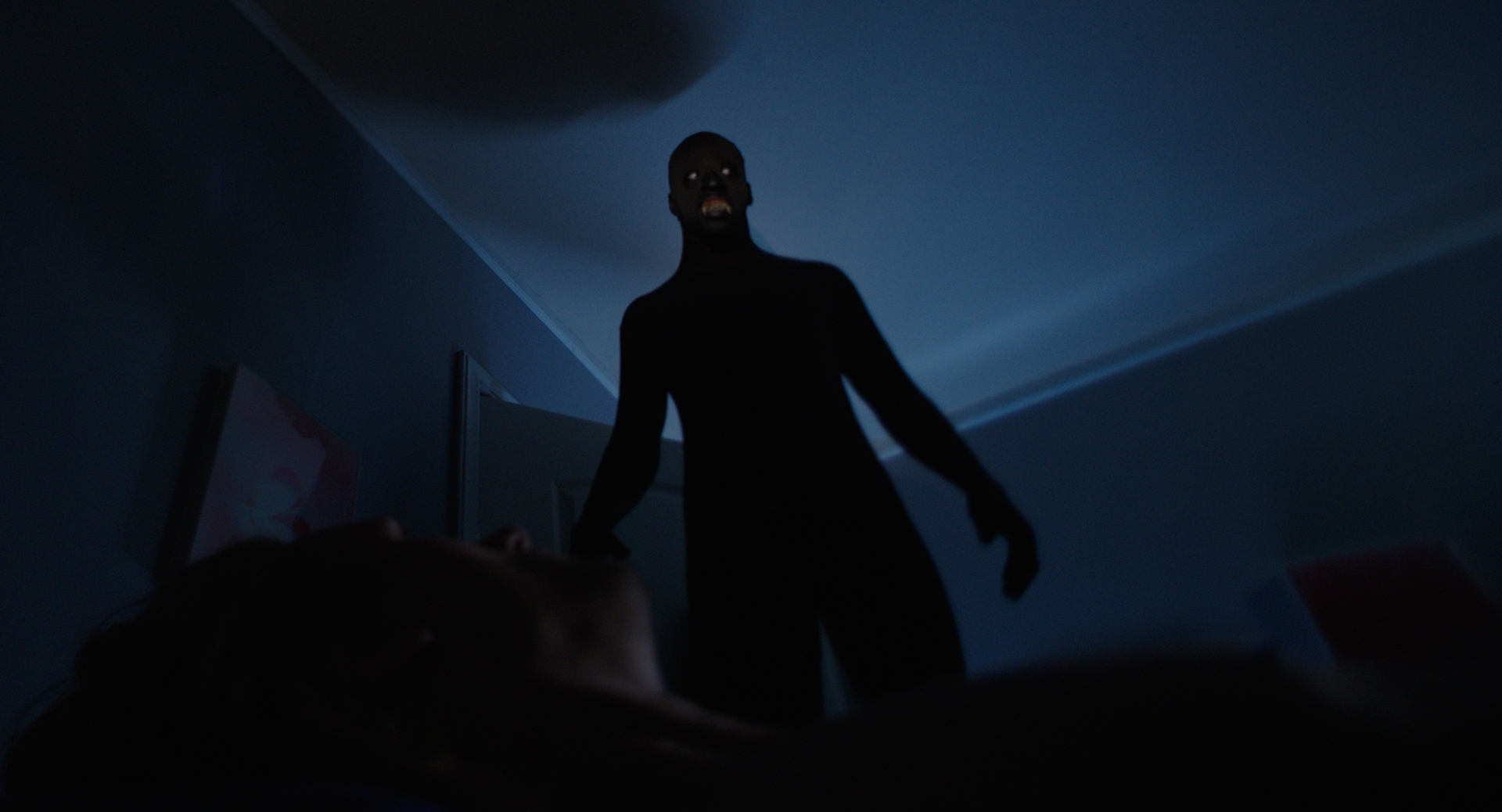
Day 16: The Nightmare

The Nightmare (2015)

An effective scary movie is one that haunts your dreams long after the credits roll. It’s that kind of impact that most horror buffs are seeking, but even the most ardent genre fan will hope out loud that Rodney Ascher’s new documentary, The Nightmare, doesn’t follow them to sleep.

His film explores sleep paralysis. It’s a sleep disorder – or a label hung on the world’s most unfortunate night terrors – that’s haunted humanity for eons. Most sufferers never realize that others share their misery.

Sleep paralysis is the phenomenon that inspired Wes Craven to write A Nightmare on Elm Street. It’s a clear creative root for Insidious, Borgman, and scores of other horror movies. But it isn’t fiction. It’s a sometimes nightly horror show real people have to live with. And dig this – it sounds like it might be contagious.

Ascher’s a fascinating, idiosyncratic filmmaker. His documentaries approach some dark, often morbid topics with a sense of wonder. His films never seem to be pushing an agenda, he doesn’t seem to have made up his mind on his subject matter. Rather, he is open, which, in turn, invites the audience to be open.

It’s not all earnest sleuthing, though, because Ascher is a real showman. What’s intriguing is the way he draws your attention to his craftsmanship. His dramatic touches never feel amateurish, but they don’t really feel like a cinematic wink, either. Instead they seem intentional, as if he may just be playing.

Coyness suited his Shining documentary Room 237 pretty brilliantly. Here it feels almost like a way to release the tension, remind you that you are, indeed, watching a movie… a heartbreaking, terrifying movie.

We spend a great deal of time watching horror movies, and we cannot remember an instance in our lives that we considered turning off a film for fear that we would dream about it later. Until now.

Listen weekly to MaddWolf’s horror podcast FRIGHT CLUB. Do it!

Day 15: The Descent

The Descent (2005)

A caving expedition turns ugly for a group of friends, who will quickly realize that being trapped inside the earth is not the worst thing that could happen. The Descent is the most profoundly claustrophobic film since The Vanishing (the original, not that wussy Keifer Sutherland remake).

This spelunking adventure comes with a familiar cast of characters: arrogant authority figure, maverick, emotionally scarred question mark, bickering siblings, and a sad-sack tag along.  And yet, somehow, the interaction among them feels surprisingly authentic, and not just because each is cast as a woman.

These ladies are not Green Berets who, unlike the audience, are trained for extreme circumstances. These particular thrill seekers are just working stiffs on vacation. It hits a lot closer to home.

More importantly, the cast is rock solid, each bringing a naturalness to her character that makes her absolutely horrifying, merciless, stunningly brutal final moments on this earth that much more meaningful.

Writer/director Neil Marshall must be commended for sidestepping the obvious trap of exploiting the characters for their sexuality – I’m not saying he avoids this entirely, but for a horror director he is fantastically restrained. He also manages to use the characters’ vulnerability without patronizing or stereotyping.

He makes even better use of the story’s structure. Between that and the way film and sound editing are employed, Marshall squeezes every available ounce of anxiety from the audience.

The film begins with an emotionally jolting shock, quickly follows with some awfully unsettling cave crawling and squeezing and generally hyperventilating, then turns dizzyingly panicky before it snaps a bone right in two.

And then we find out there are monsters.

Long before the first drop of blood is drawn by the monsters – which are surprisingly well conceived and tremendously creepy – the audience has already been wrung out emotionally.

The grislier the film gets, the more primal the tone becomes, eventually taking on a tenor as much like a war movie as a horror film. This is not surprising from the director that unleashed Dog Soldiers – a gory fun werewolf adventure. But Marshall’s second attempt is far scarier.

For full-on horror, this is one hell of a monster movie.

Listen weekly to MaddWolf’s horror podcast FRIGHT CLUB. Do it!

Day 14: Housebound

Housebound (2014)

You need to see Housebound.

Funny and scary, smartly written and confidently directed as to take full advantage of both, this is a film that makes few missteps and thoroughly entertains from beginning to end.

Gerard Johnstone writes and directs, though his brightest accomplishment may be casting because Morgana O’Reilly’s unflinching performance holds every moment of nuttiness together with brilliance.

O’Reilly plays Kylie, a bit of a bad seed who’s been remanded to her mother’s custody for 8 months of house arrest after a recent spate of bad luck involving an ATM and a boyfriend who’s not too accurate with a sledge hammer.

Unfortunately, the old homestead, it seems, is haunted. Almost against her will, she, her hilariously chatty mum (Rima Te Wiata) and her deeply endearing probation officer (Glen-Paul Waru) try to puzzle out the murder mystery at the heart of the haunting. Lunacy follows.

Kylie’s disdain for every single person and event in this film is beautifully animated – O’Reilly constantly looks as if she’s just smelled something foul. But her expressions also share those fleeting moments of regret that make her utterly, admirably human.

Good horror comedies are hard to come by, but Johnstone manages the tonal shifts magnificently. You’re nervous, you’re scared, you’re laughing, you’re hiding your face, you’re screaming – sometimes all at once. And everything leads up to a third act that couldn’t deliver better.

The film is so much fun it all but begs to be seen with a group.

Listen weekly to MaddWolf’s horror podcast FRIGHT CLUB. Do it!

https://www.youtube.com/watch?v=BT1KcYiPb4I

Fright Club: Before They Were Stars

We spend a lot of time examining skeletons in the closets of major celebrities – the god-awful horror movies where they got their start. But today, we celebrate that handful of aspiring actors who get their start in really decent horror movies – some you’ve probably seen, some you may not have. Before these guys were stars, they lucked into a good one, so check them out!

5. My Little Eye (2002)

This quasi-found footage style gem is hardly flawless, but it creeps around dark ideas and delivers some nasty moments. Five youngsters volunteer to live Real World-style for a year, being filmed for an online channel contest. If they all stay for the full year, they win a million dollars. If anyone leaves, they all lose the cash.

Co-written by James Watkins, who appears again on this countdown, the story remains claustrophobic until the introduction of one handsome, lost hiker (Bradley Cooper) who’s not what he seems.

This is just Cooper’s second feature, releasing shortly after Wet Hot American Summer, and his onscreen presence breathes life to an intentionally drab atmosphere. His character is a catalyst for horrors aplenty, but his performance offers a glimpse of good things to come.

4. A Nightmare on Elm St. (1984)

Johnny Depp made his film debut in Wes Craven’s groundbreaking nightmare. Craven said in interviews that he almost didn’t cast the future heartthrob, thinking he was too pasty and weird for the role, but his daughter’s swooning convinced him.

Depp plays Glen, boyfriend to bossy Nancy (Heather Langenkamp), epicenter of Freddy Krueger’s revenge from beyond. Though his performance doesn’t necessarily predict an Oscar-nominated future, he delivers his lines more thoughtfully than most of the cast. Plus, what a death scene!

3. A Perfect Getaway (2009)

This is another underseen flick, boasting some solid performances that make the most of decent, twisty writing in a identity reversal horror story. In his second feature, Chris Hemsworth is half of one of the three couples traveling through Hawaii that get mixed up in a mystery surrounding serial killers. The ever-versatile Steve Zahn plays beautifully against type, while Timothy Olyphant offers another hard-edged but fun performance.

For the film to work, you need to always be guessing as to who may or may not be the killer. Hemsworth’s performance is one you revisit, is-he-or-isn’t-he style. He’s menacing from his first appearance, but shows some of the versatility that would help him climb quickly out of supporting roles.

2. Eden Lake (2008)

Again with James Watkins! He writes and directs this brutal and brilliant culture clash, but his real talent may be in casting. Michael Fassbender proves here what everyone knows by now – he is a brilliant, limitless actor. His Steve takes girlfriend Jenny (Kelly Reilly – also excellent) to an old quarry about to be revitalized as an upscale community – to the distaste of the low scale community currently roaming its beaches.

Fassbender plumbs his character’s depths. By turns smug and cowardly, superior and kind hearted, Steve is a real human being – the kind rarely seen in a horror film. And while Reilly’s strength is another uniqueness that makes the film stand out, the introduction to Jack O’Connell’s evicerating talent as alpha thug is no doubt what makes Eden Lake so painfully memorable.

https://www.youtube.com/watch?v=_9kuMFPW0YI

1. American psycho (2000)

The star-studdedness just keeps growing! Jared Leto, Josh Lucas, Chloe Sevigny, Justin Theroux, Reese Witherspoon! But, of course, the main reason to remember the film is the lunatic genius of Christian Bale as Patrick Bateman, soulless Wall Street psychopath.

He’s helped, of course, by director Mary Harron’s faultless direction – effortlessly balancing the blackest of comedy with inspired bloodletting. So many scenes are iconic by this point, all of them involving Bale as the beautiful shell of a human being, filled mostly with vacuous musical taste and a lust for blood.

Listen to the whole conversation over on FRIGHT CLUB!

Fright Club: Best Slashers

Listen to the full FRIGHT CLUB PODCAST.

Senior Aussie Correspondent Cory Metcalfe makes a return trip, because he is a slasher junky and we needed the assist. Together we walk through the five best slashers in cinematic history, but first we had a couple of arguments to settle.

There are millions of potential films in this category, so we defined the term slasher for our purposes. Well, Hope defined it and George grumbled about it. Definition: A group is stalked in a neighborhood/woods (not a single, isolated location) by a seemingly indestructible killer with a blade of some kind. So, no Texas Chainsaw Massacre, Psycho, Maniac.

On to our second argument – one of Cory’s all-time favorites (and likely a film you expect to see here) did not make the list. Again, blame Hope, though Cory was a great sport about it.

With that out of the way, it’s time: Fright Club counts down the five best slashers!

5. Bay of Blood (1971)

Here is where you might have seen Friday the 13th, but won’t. In fact, nearly every campground slasher – The Burning, Sleepaway Camp, the wonderful new Belgian horror Cub – all owe a debt, not really to Friday the 13th, but to Mario Bava’s Bay of Blood (also known as Twitch of the Death Nerve).

If you’re familiar with Bava (and you should be), it’s probably because of his more romantic, visually lovely films like Black Sunday, but in ’71 he made his bloodiest film and created nearly every gimmick we’d soon see across the slasher subgenre.

The story is basically nonsensical. There’s a murder early on that sets up a fight for an inheritance; meanwhile four nubile youths stumble into the same inheritable bayside cottage, where they have sex, skinny dip, die, etc. You will notice entire scenes lifted directly for use in Friday the 13th, but the film is also fun because, as it predates the genre, it often feels like it’s somehow veered off the path (because there was no path yet). So Bay of Blood gets the nod because it did it first.

4. Black Christmas (1974)

The other foundational work in the genre, like Bay of Blood, Black Christmas created the architecture for the slasher. Fun trivia: director Bob Clark made two Christmas-themed films in his erratic career, including the iconic A Christmas Story (You’ll shoot your eye out, kid!). Black Christmas is remembered less well.

Sure, it’s another case of mysterious phone calls leading to grisly murders; sure it’s another one-by-one pick off of sorority stereotypes; sure, there’s a damaged child backstory; naturally John Saxon co-stars. Wait, what was different? Oh, yeah, two things. Maybe three. The story veers off on a red herring chase that’s utterly ludicrous. Also, the actors – Margot Kidder, in particular – show more commitment than you’d normally see in this kind of film. Most importantly, the phone calls are actually pretty scary. There’s something unseemly about them, unsettling.

Why the girls remain in the sorority house (if only they’d had an Official Red Ryder Carbine-Action Two-Hundred-Shot Range Model Air Rifle!), or why campus police are so baffled remains a mystery, but Clark was onto something with the phone calls, as evidenced by the number of films that ripped off this original convention.

3. A Nightmare on Elm Street (1984)

Teens on suburban Elm St. share nightmares, and one by one, these teens are not waking up. Not that their disbelieving parents care.

Depositing a boogieman in your dreams, creating nightmares that will truly kill you, was a genius concept by writer/director Wes Craven because you can only stay awake for so long. It took everyone’s fear of nightmares to a more concrete level.

Plus, Craven had plenty of iconic kills and images up his sleeve. That face that stretches through the wall is cool, the weirdly long arms out behind Tina are still super scary. The nightmare images are apt, and the hopscotch chant and the vision of Freddie himself were not only refreshingly original but wildly creepy. All of that plus an iconic villain, brought to glorious life by Robert Englund’s darkly comical performance, and you have a real keeper.

2. Scream (1996)

A dozen years after recreating the genre with Nightmare, Wes Craven did it again. When Scream hit screens in 1996, we were still three years from the onslaught of the shakey cam, six years from the deluge of Asian remakes, and nearly ten years from the first foul waft of horror porn. In its time, Scream resurrected a basically dying genre, using clever meta-analysis and black humor.

What you have is a traditional high school slasher – someone dons a likeness of Edvard Munch’s most famous painting and plants a butcher knife in a local teen, leading to red herrings, mystery, bloodletting and whatnot. But Craven’s on the inside looking out and he wants you to know it.

What makes Scream stand apart is the way it critiques horror clichés as it employs them, subverting expectation just when we most rely on it. As the film opens, Casey (Drew Barrymore) could have survived entirely (we presume) had she only remembered that it was not, in fact, Jason Voorhees who killed all those campers in Friday the 13th; it was his mother. A twisted reverence for the intricacies of slashers is introduced in the film’s opening sequence, then glibly revisited in one form or another in nearly every scene after. It could be the wryly clever writing or the solid performances, but I think it’s the joyous fondness for a genre and its fans that keeps this one fresh.

1. Halloween (1978)

No film is more responsible for the explosion of teen slashers than John Carpenter’s babysitter butchering classic.

From the creepy opening piano notes to the disappearing body ending, this low budget surprise changed everything. Carpenter develops anxiety like nobody else, and plants it right in a wholesome Midwestern neighborhood. You don’t have to go camping or take a road trip or do anything at all – the boogeyman is right there at home.

Michael Myers – that hulking, unstoppable, blank menace – is scary. Pair that with the down-to-earth charm of lead Jamie Lee Curtis, who brought a little class and talent to the genre, and add the bellowing melodrama of horror veteran Donald Pleasance, and you’ve hit all the important notes. Just add John Carpenter’s spare score to ratchet up the anxiety. Perfect.

Fright Club: Best Werewolf Movies

In honor of George Wolf’s birthday on “the 21st night of September” (thanks Earth, Wind & Fire!), we celebrate Wolf men today. Not the fuzzy abomination of the Twilight wolf boys – let’s skip them. In fact, in prepping for this one we noticed an awful lot of really bad werewolf movies, and even more decent efforts undone by the real curse of lycanthropy – the prosthetics and make up. There’s also one we leave off this list that will piss a lot of people off. It was a close call, but we gave goth poetry the nod over Eighties social commentary.

5. The Company of Wolves (1984)

Neil Jordan’s poetic tale of sexual awakening is saturated with metaphors and symbols – most of them a bit naughty. A young girl dreams a Little Red Riding Hood type fable. She was just a girl, after all, who’d strayed from the path in the forest.

Jordan looks at a lot of the same themes you’ll find in any coming of age horror – the hysteria surrounding the move into womanhood. It’s just that he does it with such a sly delivery.

Theatrical and atmospheric, it’s not a classic horror tale, but it is creepy and it builds genuine dread. It also takes some provocative turns, and it boasts a quick but outstanding cameo by Terence Stamp as the Prince of Darkness.

4. The Wolf Man (1941)

Obviously this classic needs to be remembered in any examination of the genre. Lon Chaney, Jr.’s incredibly sympathetic turn as the big American schlub who keeps accidentally killing people anchors a film that has aged surprisingly well. Just compare it to its heinous 2010 reboot and you, too, will long for the grace of the original.

Sure, the score, the sets, the fog and high drama can feel especially precious. And what self-respecting wolf man goes by the name Larry? But there’s something lovely and tragic about poor, old Larry that helps the film remain compelling after more than sixty years.

3. Ginger Snaps (2000)
Sisters Ginger and Bridget, outcasts in the wasteland of Canadian suburbia, cling to each other, and reject/loathe high school (a feeling that high school in general returns).

On the evening of Ginger’s first period, she’s bitten by a werewolf. Writer Karen Walton cares not for subtlety: the curse, get it? It turns out, lycanthropy makes for a pretty vivid metaphor for puberty. This turn of events proves especially provocative and appropriate for a film that upends many mainstay female cliches. Walton’s wickedly humorous script stays in your face with the metaphors, successfully building an entire film on clever turns of phrase, puns, and analogies, stirring up the kind of hysteria that surrounds puberty, sex, reputations, body hair, and one’s own helplessness to these very elements. It’s as insightful a high school horror film as you’ll find, peppered equally with dark humor and gore – kind of A Canadian Werewolf in High School, if you will.

https://www.youtube.com/watch?v=Zoa1A987A_k

2. Dog Soldiers (2002)

Before Neil Marshall freaked us all out with the excellent genre flick The Descent, he breathed new life into the werewolf tale by abandoning a group of soldiers in the Scottish highlands as bait.

Wry humor, impenetrable accents, and a true sense of being out in the middle of nowhere help separate this from legions of other wolf men tales. Marshall uses an army’s last stand approach beautifully. This is like any genre pic where a battalion is trapped behind enemy lines – just as vivid, bloody and tense. But the enemies this time are giant, hairy, hungry monsters. So the idea (fantastically realized here) of traitors takes on a little extra something-something.

1. An American Werewolf in London (1981)

We’ve mentioned John Landis’s groundbreaking horror comedy in the past. It is the best of the bunch for a number of reasons: a darkly funny script, sharp writing that propels the action, Oscar-winning effects, a cool looking wolf. But is there one scene that encapsulates it all?

A pasty, purse-lipped Brit businessman leaves the train in an otherwise empty, harshly lit subway station. He pumps a small vending machine with change and comes out with mints. A tiny smirk of satisfaction crosses his face as he begins to unwrap the item, but the look turns to a grimace of unpleasant surprise. Echoing through the empty, rounded corridor comes a far off growl.

“Hello? Is there someone there?”

Again the growl.

Stern voice: “I can assure you that this is not the least bit amusing. I shall report this.”

There now, those hooligans have ruined his happy mint moment.

The camera follows him up an escalator, around a turn, into a rounded tunnel-like corridor uninterrupted for a long stretch by doors or windows. It’s a claustrophobic nightmare.

The camera takes the beast’s eye view, rounding a nearby corner, eyeing the Englishman. We see the terror as he backs away.

“Good lord.”

That awful howling sound.

And then David wakes up naked in the zoo.

Join the conversation on our Fright Club Podcast.

Fright Club: Best Horror Sequels

Who says a sequel can’t be better – or at least as good – as the original? If you look closely, there are loads of excellent horror sequels: New Nightmare, Scream 2, 28 Weeks Later, Ringu 2, The Devil’s Rejects. But which are the best of the best? We have the answer!

5. Exorcist III (1990)

William Peter Blatty wrote and directed this dialogue-dense sequel to the 1973 phenomenon William Friedken had made of his novel. Blatty starts strong enough, garnishing shots with vivid, elegantly creepy images. He enlists George C. Scott to anchor the tale of a cop drawn back into a supernatural case. In other inspired casting, New York Nicks great Patrick Ewing plays the angel of death in one of Kinderman’s freaky dream sequences, joined by romance novel coverboy Fabio as another angel. Also, the always great character actress Nancy Fish plays the bitchy but reluctantly helpful Nurse Allerton.

There are also two of the scariest scenes in cinema. Eventually the story moves into a hospital and stays there, but just before that move, there’s a terrific confessional scare – crazy spooky voice, effective cackle, blood – that elevates the entire project.

And then there’s that insane flash of terror as one nurse crosses the narrow hallway in front of the camera, quickly followed by some gauze-draped figure, arms outstretched. Eep!

4. Dawn of the Dead (1978)

Romero returned to the land of the undead in ’78 with a full-color sequel to Night of the Living Dead. The film follows a news producer, her chopper pilot boyfriend, and two Philly SWAT cops ready to abandon the organized zombie fight and find peace elsewhere. The four board a helicopter, eventually landing on the roof of a mall, which they turn into their private hideaway.

Romero, make-up legend Tom Savini, and Italian horror director Dario Argento teamed up for this sequel. You feel Argento’s presence in the score and the vivid red of the gore. Bloated, dated, and suffering from blue zombie make up, the film does not stand up as well as the original, but it still packs a punch.

Ken Foree and Scott Reiniger as the buddies from SWAT create the most effective moments, whether character-driven tension or zombie-driven action. Romero’s politics are on his sleeve with this one. He uses the “z” word, digs at Eighties consumerism, shows full-color entrails, and reminds us again that the undead may not be our biggest enemy once the zombie-tastrophe falls.

3. The Texas Chainsaw Massacre 2 (1986)

Tobe Hooper revisited his southern cannibal clan 12 years after unleashing The Texas Chain Saw Massacre on an unsuspecting world, and he had the great Dennis Hopper in tow. Hopper plays a retired Texas Marshall. He joins forces with a radio host, played gamely by Caroline Williams. Together they flush the Sawyer family out of hiding. And just in case we’d missed how Leatherface got his name, the act of removing someone’s face to wear as a mask is revisited in a kind of weird wooing ritual.

TCM2 certainly gets weird, and boasts an unhinged performance by Hopper as a lawman willing to make some ugly choices to follow his obsession. Jim Siedow (The Cook) returns, and veteran genre favorite Bill Moseley adds a quirky ugliness to the proceedings. There’s also an awful lot of screaming, even for this kind of a film, but it’s a worthy genre flick. It pales in comparison to the original, but it deserves its own appreciation. Hold it up against any other low-rent horror output of 1986 and it’s a standout.

https://www.youtube.com/watch?v=xUyEaYxTI2U

2. Evil Dead II: Dead by Dawn (1987)

In 1981, Sam Raimi and Bruce Campbell crafted the single bloodiest film ever made. Six years later, Raimi gets a little Ray Harryhausen and Campbell gets a makeover in a sequel that’s mostly a remake. An even broader comedy, with clay-mation monsters aplenty, Evil Dead II works harder for laughs than for scares.

Expect a lot of the same: Necronomicon, possessed friends, demonic woods, dismemberment, and fun. Plus hundreds of gallons of black, green, and red goo. Nice.

The wide eyed, romantic Ash from episode one slowly morphs into the ass kicking, catch phrase spouting, boom-boom stick toting badass we’ll see in all his glory in the third installment. Ash would finally learn how important it is not to listen to tapes left by the owners of the cabin you’re secretly squatting in for the weekend. And we’d eventually learn never to wear Michigan State paraphernalia when camping with Bruce Campbell.

1. The Bride of Frankenstein (1935)

James Whale and Boris Karloff returned to Castle Frankenstein for an altogether superior tale of horror. What makes this one a stronger picture is the dark humor and subversive attitude, mostly animated by Frankenstein’s colleague Dr. Pretorius (Ernest Thesiger).

Thesiger’s mad doctor makes for a suitable counterpart to the earnest and contrite Henry Frankenstein (Colin Clive, again), and a sly vehicle for Whale. This fey and peculiar monster-maker handles the most brilliant dialogue the film has to offer, including the iconic toast, “To gods and monsters.”

The sequel casts off the earnestness of the original, presenting a darker film that’s far funnier, often outrageous for its time, with a fuller story. Karloff again combines tenderness and menace, and Elsa Lanchester becomes the greatest goth goddess of all film history as his Bride.

Listen to the whole conversation on our FRIGHT CLUB PODCAST.