Tag Archives: film

Yes, and…

Don’t Think Twice

by Cat McAlpine

The three rules of improv are as follows:

1. Say yes
2. It’s all about the group
3. Don’t think

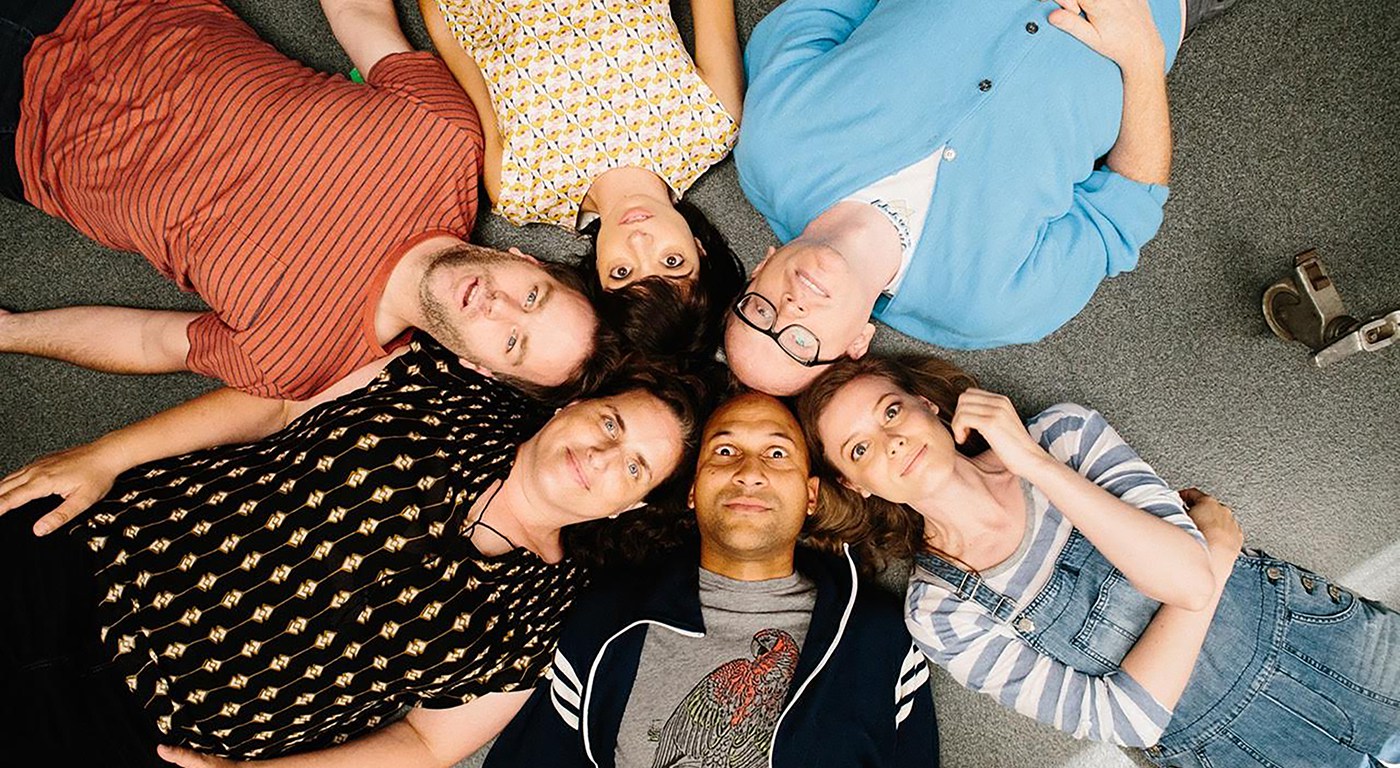
The six members of improv troupe The Commune live, bend, and break these rules on stage and in the green room in Don’t Think Twice. The ensemble dramedy pits the dreams of your 20s against the hard realities of your 30s and asks: When is it okay to be about me?

With the self-awareness of an improv performance, Don’t Think Twice keeps it real and stays grounded. The most recognizable face in the cast, Keegan-Michael Key (Key and Peele), plays Jack, the guy with a real shot at stardom. Samantha (Community’s Gillian Jacobs), has the skill but not the desire while Miles (Mike Birbiglia, who also wrote and directed) refuses to accept that he just doesn’t have what it takes.

Don’t Think Twice is intentional in its choices that way, inviting the audience to arrive with whatever context they can. Birbiglia never lets the drama spiral too low, either, immediately scooping you up again with jokes and laughter. The Commune develops several inside jokes throughout the course of the film, meaning you’re not only in on it, you understand how this sort of family keeps laughing even when life stops being funny.

At the beginning of each Commune show, Samantha asks “Did anyone have a particularly difficult day?” The ironic part, as most actors and improvisers will tell you, is that the best place to work through your own intimate problems is on stage in front of an audience.

We see this mechanism in action quite beautifully throughout this film, as Birbiglia uses the show-inside-a-show format to explore many themes.

His most powerful visual element, for instance, is the staging of chairs. Before each performance starts, the cast chairs are arranged onstage. In prepping for the performance, all the chairs are lined up neatly in a row, and if a performer is missing their chair is removed. The improvisers drag these chairs across the stage as needed throughout their performance, with the point being there is a chair for each of them. This literal setting of the stage underscores the narrative’s emotional current, and becomes a strong indicator of mood. “Hey, we’re about to work through some shit, and here’s exactly what we’re working with.”

Don’t Think Twice is a film that takes an honest look at “making it” from all sides. It challenges the notions of success and fame, and suggests that it’s okay to love doing something even if you never want to be famous for it.

If you’re invited to go see Don’t Think Twice this weekend, reply “Yes, and…”

Verdict-3-5-Stars

Texas Two Step

Hell or High Water

by Hope Madden

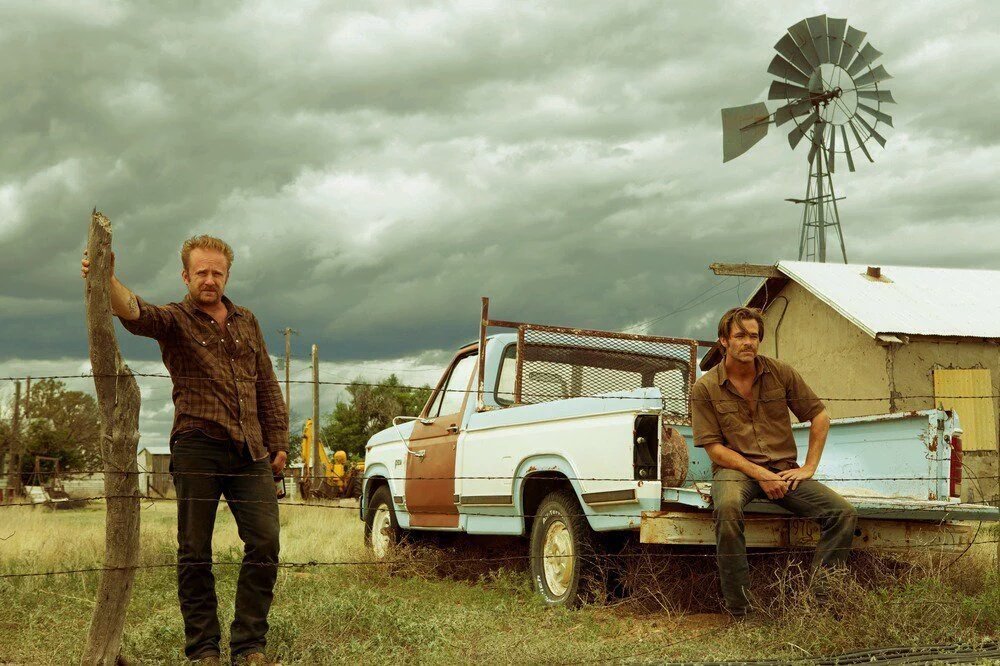
Two brothers in West Texas go on a bank robbing spree. Marshalls with cowboy hats pursue. It’s a familiar idea, certainly, and Hell or High Water uses that familiarity to its advantage. Director David Mackenzie (Starred Up) embraces the considerable talent at his disposal to create a lyrical goodbye to a long gone, romantic notion of manhood.

Two pairs of men participate in this moseying road chase. Brothers Toby and Tanner – Chris Pine and Ben Foster, respectively – are as seemingly different as the officers trying to find them. Those Texas Marshalls, played with the ease that comes from uncommon talent, are Marcus (Jeff Bridges) and Alberto (Gil Birmingham).

Though both pairs feel like opposites at first blush, their relationships are more complicated than you might imagine. Foster, a magnificent character actor regardless of the film, is a playful menace. Though Pine’s Toby spends the majority of the film quietly observing, his bursts of energy highlight the kinship. Their often strained banter furthers the story, but moments of humor – many landing thanks to Foster’s wicked comic sensibility – do more to authenticate the relationship.

Likewise, Bridges – wearing the familiar skin of a grizzled old cowboy – makes every line, every breath, ever racist barb feel comfortably his own. Birmingham impresses as well, quietly articulating a relationship far muddier than the dialog alone suggests.

These four know what to do with Taylor Sheridan’s words.

Sheridan more than impressed with his screenwriting debut, last year’s blistering Sicario. Among other gifts, the writer remembers that every character is a character and his script offers something of merit to every body on the screen – a gift this cast does not disregard.

The supporting actors populating a dusty, dying landscape make their presence felt, whether Dale Dickey’s wizened bank teller, Katy Mixon’s spunky diner waitress, or a hilarious Margaret Bowman as another waitress you do not want to cross.

Even with the film’s unhurried narrative, not a moment of screen time is wasted. You see it in the investment in minor characters and in the utter, desolate gorgeousness of Giles Nuttgen’s photography. Every image Mackenzie shares adds to the air of melancholy and inevitability as our heroes, if that’s what you’d call any of these characters, fight the painful, oppressive, emasculating tide of change.

A film as well written, well acted, well photographed and well directed as Hell or High Water is rare. Do not miss it.

Verdict-4-5-Stars

The Emperor’s Old Voice

Florence Foster Jenkins

by Hope Madden

Brace yourselves – Meryl Streep is wonderful in her new film Florence Foster Jenkins. Great to know she’s finally found her footing with this whole acting thing.

Yes, Meryl Streep can act. Thanks to a string of recent films like Into the Woods, we learned that Streep can sing, too. Maybe not as well, but passably. She’s also great in a comedy (Julie & Julia, The Devil Wears Prada).

How good? Well, she did grab Oscar nominations for all three of the above efforts.

In the title role of Stephen Frears’s new 1944-set biopic, Streep gets to strain those vocal cords while showing off her comic sensibilities. No surprise, she does both with aplomb in the role of the NYC heiress who loved music far more than it loved her. Streep delivers a vibrant central performance in a charming if forgettable end-of-Summer comedy.

The film gets so much right, though. There could not have been a better choice to play Florence’s devoted yet philandering husband than Hugh Grant, whose scheming is rarely in the service of self. His every expression exposes such tenderness and protectiveness, whatever his cagy action.

Big Bang Theory’s Simon Helberg, playing Florence’s talented if green accompanist, steals scenes – from Meryl Streep, no less! – with the barely contained giggle or outright expression of bewildered wonder. To a certain degree, he represents the audience, forever asking: How is all this possible?

Because the film remains relatively faithful to the truth of the events: Jenkins honestly believed her caterwauling to be the tones of a sublime soprano. Her husband had so insulated her from critics who might burst that delusion that she willed herself to the stage of Carnegie Hall.

Florence is the butt of this joke, and to Streep’s credit, we all feel as protective of her as her husband and accompanist do. She finds the right combination of entitlement, tenacity, vulnerability and true, blinding love of art to make the character more than just a joke. Everyone can understand deeply loving something you simply don’t have the talent to succeed in.

Unfortunately, Frears can’t quite deliver the poignancy or even the universality that should undergird the giggles and screeches. Despite moving performances, the film dips too frequently and too deeply into sentimentality. Worse though, is the fact that you come away from the film thinking: Can you believe she really sang at Carnegie Hall? She’s still a joke. She should be a bit more of an inspiration.

Verdict-3-0-Stars

Zappa Plays Zappa

Eat That Question: Frank Zappa in His Own Words

by Hope Madden

“There is no word nor any sound that you can make with your mouth that is so powerful that it will condemn you to the lake of fire at the time when you hear it. Any word that gets the point across is a good word.”

So says Frank Zappa – a singular, curmudgeonly, cynical voice that echoed around the fringes of American culture for far too short a time. Known more for his personality than his music – each of them equally ingenious and caustic – Frank Zappa became a peculiar kind of icon. He was associated with a hippie culture he disdained, linked to extreme liberalism though he was a conservative, and for many he stood for the hedonistic rock star lifestyle that would corrupt our youth, though he was a loyal family man.

Frank Zappa was a conundrum.

Eat That Question: Frank Zappa in His Own Words underscores every seemingly inconsistent element of that mad genius, sharing nothing but interviews from the musician over the course of his career. Documentarian Thorsten Schutte crafts a portrait free from the analysis of others – no friends of the family, no insights from the director himself. Zappa is best understood – if he can be understood at all – on his own terms.

Whether it’s archival footage of a young, clean shaven Frank appearing on the Steve Allen Show to play a symphony of dissonance on a bicycle, the iconic mess of hair and cynicism that marked his most productive time with The Mothers of Invention, or the bitter elder statesman dealing with Tipper Gore’s PMRC, you see Zappa as he saw himself.

There’s something appropriate about Schutte’s structure. Why should we care about someone else’s opinions on Frank Zappa? He certainly didn’t. And Schutte doesn’t try to paint a pretty picture. These aren’t one-sided images set to glorify. Frank Zappa was a dick. Geniuses often are.

Like Bob Dylan, Zappa was disinterested in the effects of his artistic decisions on his fans. He alienated at will, forever cursing the American public’s lack of discernment. “People are not accustomed to excellence,” was one of his more generous statements about his lack of popularity at home.

“The thing that sets Americans apart from the rest of the cultures of the world is we’re so fucking stupid,” is one of his less generous thoughts.

Pulling an even-handed, honest documentary that sheds light on this particular individual could not have been easy. It must have been tempting to pick and choose – Zappa the wild man, Zappa the political mind, Zappa the underappreciated genius. But Schutte balances those, throwing in the ugly with the funny with, in one especially uncharacteristic and moving segment, the tender.

Frank Zappa had a larger effect on American culture than you may realize. Have you seen those tee shirts – So Many Books, So Little Time? He said that. You should get to know him. Here’s how.

Verdict-4-0-Stars

Pretty Dress, Ugly Girl

Indignation

by Cat McAlpine

I recently attended a play that was full of young, good looking, and extremely talented actors. Unfortunately, the play wasn’t any good. Something about it lacked cohesion. Its aspirations were too high. It was entirely too self-aware. After the show, I approached my friend to let him know his performance had been marvelous, but truthfully … He nodded in grim agreement, “It’s a pretty dress on an ugly girl.”

That is exactly how I would describe Indignation.

Indignation takes place in 1951, following young Marcus (Logan Lerman) who, Jewish in upbringing but not in faith, attends his freshman year at a small college in Ohio. College is a safe haven during a time in which boys not enrolled in school are drafted for the Korean War. Tumultuous feelings bubble to the surface and then are repressed again.

Director and writer James Schamus’s adaptation of Philip Roth’s novel looks pretty enough. The period setting is well done, all moody browns and sweaters, the perfect backdrop for a coming-of-age tale mired in societal repression.

The acting is marvelous across the board, but there’s no denying that Lerman is the star, deftly handling lengthy monologues with the righteous assuredness of youth. The entire film, in fact, is rife with fantastic monologues, expertly handled. Pretty dress, ugly girl.

The core of the film is meant to hinge off of Marcus and Olivia Hutton’s (Sarah Gadon) sexual tension, taken from each other too soon. The reality is that Olivia is naught more than another manic pixie dream girl. Her key characteristics are emotional damage, constantly telling Marcus how special he is, and giving out sexual favors without any expectation of them being returned.

Lerman and Gadon are both believable in their roles but not with each other. The most they achieve is a shocked wonderment at being in the same room together. There’s never any true connection, no passion, and certainly no love. When Marcus’s mother tells him to stop seeing such an unhinged girl … he does.

An ending meant to be tragic and epic seems almost random and disjointed. The horrors of the Korean War have felt like a threat instead of a promise, caricatured by strange funeral chit chat and offhanded remarks.

People will argue that this is a marvelous film because it checks all the boxes of what we consider “great”. Period piece. Coming of age. A misunderstood intellectual. Love story. War. The acting is good. The cinematography standard. There’s a moody score. This all amounts to pretty dresses.

Ultimately, the tale simply isn’t interesting. The women are all frail, the men are all bullies. No one is very likeable. As hard as Indignation tries to pit sex and death against the cosmos, it simply doesn’t. Depression isn’t exotic. Divorce isn’t shocking. A coming of age story where the lead is technically still a virgin doesn’t seem scandalous. Looking on from 2016, the 1950s are about as thrilling as their color palate. Dull brown.

Verdict-3-0-Stars

https://www.youtube.com/watch?v=u389YagFbOY

Losing the Will to Live

Suicide Squad

by Hope Madden

Through it all – casting changes, recuts, reshoots, August opening date – I remained cautiously optimistic. Suicide Squad could be good.

Why? Because the villains are the most interesting part of the DC universe and the idea of a film unburdened by some superhero or another’s conflicted conscience or internal crisis, free to revel in the wing-nut chaos of nothing but villains felt fresh and risky.

And there’s not one but nine villains … yeah, nine is a lot. It could be tough to piece together a story that feels less like a cattle call than a coherent film.

But Suicide Squad offers a marginally promising cast. Will Smith is tired, but Jared Leto (hot off his Oscar) as the Joker can’t help but pique interest, and Margot Robbie’s done nothing but impress (until Tarzan, anyway). Plus – get this – the genuinely excellent Viola Davis takes on ringleader duties in a film that corrals all the nastiest bad guys for a black ops mission against a meta-human menace.

When Viola Davis can’t deliver, your movie is doomed.

Suicide Squad is doomed.

Writer/director David Ayer has quietly built a solid career with incrementally more thoughtful, more brooding, more violent action films. For those who thought the DC catastrophe Batman V Superman was dark, Ayer was the promise of something truly gritty.

And what more does he need? All the “worst of the worst” gathered together, leading a mission to save the world or die trying – and maybe die when they’re finished, because we certainly can’t let them out, right? They’re the worst of the worst!

Except for the one who really just wants to know his daughter’s OK. Or the one who’s reformed, his conscience keeping him from fighting this fight. Or the one who’s not bad, she’s just in love. Or the others who are absolutely useless to any mission and are here just to clutter up an over-packed, under-impressive landscape of bloodless action and uninspired set pieces.

Ayer has shown promise across his previous five films, but self-serious drama tends to be his undoing. Imagine how he struggles with tone in this would-be flippant exercise in comic book self-indulgence. Robbie and Smith try to instill some badass levity, but any success is due to their talent and timing because there’s not a single funny line in the film.

Leto’s little more than a glorified cameo in a landscape so overstuffed with needless characters that you’re almost distracted from the stunning plot holes and absence of narrative logic.

Suicide Squad is not going to save this disappointing summer – you should save yourself the aggravation.

Verdict-1-5-Stars

Barr and/or Bust

Roseanne for President!

by Matt Weiner

You can’t argue that Roseanne Barr has lost her timing. As we enter what political scientists call the “Holy mother of God there isn’t enough whiskey in the world” phase of the election season, Roseanne for President! looks back at the comedian’s 2012 attempt to run for president as the Green Party nominee.

Spoiler alert: Roseanne Barr did not win the 2012 presidential election. What’s frustrating though is how Barr — and the film, directed by Eric Weinrib — never really settle on what the point of it all was. She claims it’s a serious run at the presidency, which quickly turns into a half-hearted battle for the Green Party nomination, which finally becomes a successful attempt to qualify as the nominee of yet another third party. In three states. Yes, three. (The surest sign that even Barr gave up on everything has to be when she freely admits to voting for Barack Obama due to convoluted write-in rules.)

And yet all of this could have still been fertile material for a comedian as gifted as Barr. Instead, we see her literally phoning in her efforts throughout the race: Barr might be the first presidential nominee to campaign almost entirely via Skype. Be prepared for lots of awkward video conferences from a computer in her Hawaii home, peppered with anti-capitalism rants that sound genuine but disjointed.

While short on introspection, the film allows some moments of inspiration. It’s hard not to want to reach out and hug Farheen Hakeem, Barr’s campaign manager keeping things running in the Mainland. Hakeem is comically undaunted by the challenges of running a third party campaign with no staff and a candidate who doesn’t campaign in person.

Hakeem is also Exhibit A for anyone trying to argue that Barr’s run had merit. The documentary constantly undercuts its own seriousness, though, by landing way more in Christopher Guest territory than Michael Moore. (This is especially odd because director Weinrib has worked on multiple Moore films, but here deploys none of Moore’s visual diversions that could have helped add some context around the nomination process instead of more Skype rants.)

The real tragedy is that talking heads like Sandra Bernhard, Rosie O’Donnell and Tom Smothers aren’t being used for a documentary about Roseanne herself. Barr’s brother, Ben-David, also talks movingly about the family’s outsider upbringing as Jews in Salt Lake City. These all-too-brief scenes show how Barr’s subversive and genuinely radical comedy career deserves a better showcase than this.

Verdict-1-5-Stars

Play on Player

Nerve

by Hope Madden

Unfriended meets Pokemon Go in the online thrill ride Nerve.

Directors Henry Joost and Ariel Schulman like to reflect the evolution of society’s culture of technology. Their breakout 2010 “documentary” Catfish questioned the safety in online anonymity. Over their next few films these themes grew and merged with statements on privacy vs voyeurism, exhibitionism and thrill seeking in a digitally saturated world.

With Nerve, the filmmakers have wrapped these ideas around the universal truth that kids are stupid and framed it with your standard fare high school drama, achieving surprisingly entertaining results.

Within the film’s universe, Nerve is an online game of truth or dare, “minus the truth.” Participants choose to be players or watchers. Watchers choose dares, players complete them, gaining cash rewards and collecting watchers. The player with the most of both wins – or do they?

Emma Roberts is Vee, a high school senior who observes more than she participates. Definitely not a player. But when brash bestie and Nerve celebrity-wannabe Syd’s (Emily Meads) miscalculation leads to Vee’s public humiliation, she leaps outside her comfort zone and joins the game.

Kiss a boy (Dave Franco). Ride into Manhattan with him. Try on a swanky dress. Everything seems innocent – even dreamy – until it doesn’t.

Jessica Sharzer’s script, based on Jeanne Ryan’s 2012 novel, is sharp enough to keep you interested regardless of the holes in the plot, which devolves into utter ridiculousness by Act 3. Still, in a forgettable B-movie kind of way, it’s a fun ride.

It also boasts a savviness that’s too of-the-moment to remain relevant by the end of the summer, but right this second it’s both cheeky and insightful. The finger-wagging and lessons learned fit perfectly with the familiar teen angst of the genre in this glitzy cautionary tale.

Verdict-3-0-Stars

Mom Genes

Bad Moms

by Hope Madden

A raunchy comedy that peels away all the precious nonsense associated with motherhood and isn’t afraid to get a bit nasty – this feels like a film that’s been a long time coming. It could be a welcome change of pace if done well. Unfortunately, instead we got Bad Moms.

Mila Kunis stars as an overworked, underappreciated, harshly-judged parent. Her husband’s useless, her boss is a joke, and she’s so irredeemably responsible that her life is spiraling out of control. Either that or she is such an overtly clichéd image of every potential mom complaint that no actor could possibly make her a human.

Kunis has strong comic sensibilities, as do the performers playing her two new besties, Kristen Bell and Kathryn Hahn. Hahn’s the unrepentant man- and booze-hound of a single parent, while Bell’s Kiki is the socially awkward stay-at-home mother of 4. Together they have great fun doing all the things no one wants to see their mom do – and thank God for it, because the rest of the film is worthless.

This is a world where not one father contributes. OK, maybe one – but he’s a hot widower, so there’s no mother to help out. Awwww….

The film is co-written and co-directed by Hangover franchise creators Jon Lucas and Scott Moore, but they could have seriously used an assist from Bad Moms co-star Annie Mumolo. Mumolo co-wrote 2011’s Bridesmaids, a film that was capable of producing female-centric comedy with dimension. Even men.

I’m confident that there are times when every parent feels incompetent, where every well-planned family vacation turns into fodder for your child’s first adult conversation with a therapist. Bad Moms brings up loads of great, universal points that will pick those scabs. Unfortunately, the resolution to those issues is always convenient and one-sided to the point of being offensive.

Bad Moms is trying to offend your sensibilities, but it succeeds in the wrong spots. The lengthy sight gag concerning sex with an uncircumcised penis – not offensive, just funny. The problem is the rest of the movie.

At no point in the film Bad Moms is the word “parent” used. Every problem, every responsibility, every joy and obstacle is the sole property of the mom. I’m sure it can feel that way at times, but good comedy rarely comes from such a one-dimensional premise. It certainly doesn’t do so here.

Verdict-2-0-Stars

Red Versus Blue

Equals

by Cat McAlpine

In a blue-white landscape where form follows function, director and story writer Drake Doremus must choose between head and heart. He chooses heart, every time.

I’ve seen some parallels drawn between this film and 1984 (fair) or Romeo and Juliet (a bit of a stretch). Is any story wholly original? No. Does Equals borrow? Yes. And if I were to point fingers, I’d look to Lois Lowry’s “The Giver.”

In “The Giver,” a young boy learns to feel pain and passion, to serve as his community’s vessel for the humanity that has been anesthetized. It’s not until he discovers color in a red apple that you realize, already half-way through the text, that the author has not used a single colored adjective. The world until that point has been flat, black and white.

The lesser film adaptation betrays this wonderment and horror in its added visual dimension, shooting for the most in grayscale.

In Equals, a remaining fraction of the human race lives in a community called The Collective. They have been genetically engineered to not feel emotion. Their DNA, lobotomized. However, emotion does surface in what Collective leaders warn is a dangerous disease called “Switched on Syndrome.” Those with advanced stages are encouraged to kill themselves, or are otherwise contained and dealt with at The Den.

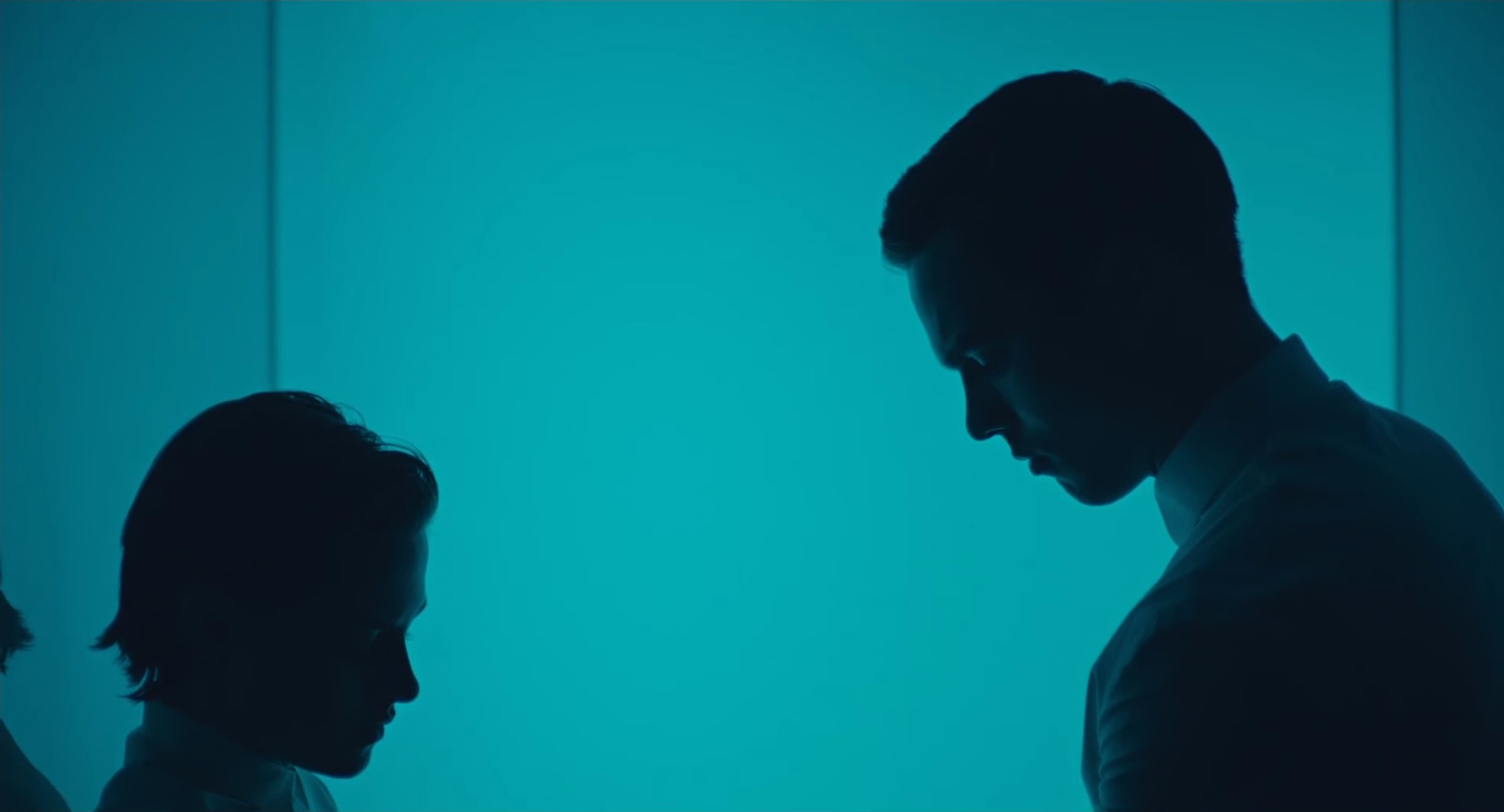
Early scenes are shot in harsh white with moody blue undertones, but when Silas (Nicholas Holt) and Nia (Kristen Stewart) discover each other, and love, the color palate shifts. Oranges and reds appear, in flares, and in the film’s coloring as a whole. Purples emerge where the two moods meet. Paired with a beautiful lighting design, all tortured silhouettes and sets filled with glass and steel, the imagery is powerful. Not unlike black and white versus color, Doremus toys with red versus blue.

Unfortunately, Equals is so enchanted with its own aesthetic that it almost stands still. My heart ached but my mind wandered. The same white industrial sets begin to wear on the viewer in hour two, and while Holt and Stewart give powerful performances, it is hard for them to shine in some of the more drab settings.

Stewart, in particular, is fantastic as Nia. Despite Doremus’s melodramatic intentions, she is never over-the-top and always justified. If we are still making the same jokes about Stewart’s ability to emote, let them be finally laid to rest. She is raw and believable. I sincerely doubt she took this role without contemplating the image Twilight earned her, and if this is her middle finger to those critics, I salute it.

If you consider this as a film, a visual exploration of the human heart, Equals is stunning. In keeping the same white sets and pacing at a slow burn, the color theory shines. The lighting design is moving. The concept of discovering feeling in an emotionless landscape is beautiful and heart-wrenching.

If you consider this as a movie, an hour and a half journey that feels like three, you will find yourself bored. Equals is not overly cerebral, but promises adventures that never come. An unsure ending stays true to the themes of emotion and heart, but will leave viewers uncomfortable and longing. It’s hard to say if this is intentional.

Paired with the rest of the box office, gritty action packed adventures and dirty, drunk comedies, Equals may very well fade quietly into the background.

Verdict-3-5-Stars