Big week in theaters and crowded week in home entertainment. In this week’s Screening Room we talk (spoiler free!) about Captain Marvel, Apollo 11, The Hole in the Ground and I’m Not Here. Then we hit the lobby to give you a sense of what’s worth your while in home video.
Loss, regret and redemption permeate people’s lives. We all have those things we wish we could “do over” — a life mulligan, if you will. It’s a universal fantasy that binds us together as human beings. This idea of redemption, or at least the understanding of one’s mistakes, is right at the muddled heart of I’m Not Here.
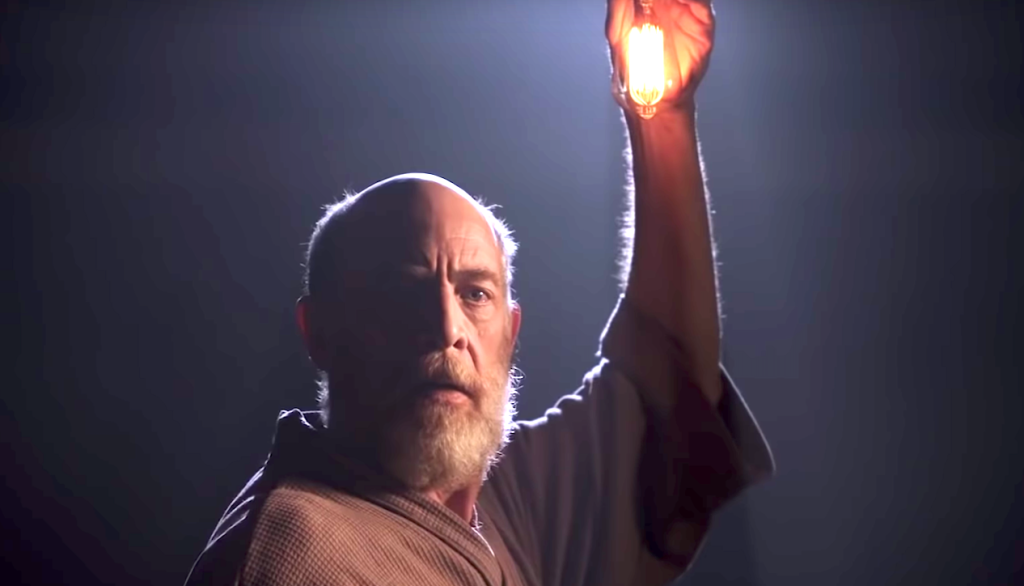
Steven (J.K. Simmons) is a shell of a man. He drinks too much, lives in squalor and has distanced himself from his remaining family. Through a rotating series of flashbacks, we’re introduced to Steven as a boy dealing with the complexities of his parents’ divorce, and also as a young man (Sebastian Stan) who has just started to make his own life-altering missteps. For present-day Steven, a phone call delivering upsetting news brings all of his past trauma to the surface.
I’m Not Here is frustrating. Its cast is more than capable of knocking this kind of material out of the park, but they are hobbled by a poor script and weak direction. Simmons fares best as his segments are solo and allow him to channel the intensity that’s he’s so well known for. The rest of the cast, including Stan, Maika Monroe and Mandy Moore, get bogged down by the cliche-ridden script. The lack of subtlety, especially in the flashback segments, undermines the emotional wallop of grief and loss that director Michelle Schumacher is trying to convey.
Schumacher’s handling of the material is scattershot. The present day scenes involving Simmons show a confidence that isn’t replicated in the flashbacks. The present day material has a more natural flow that lets the audience settle into Steven’s world of loneliness and self-pity. The darkness of his home mirrors the darkness of his life. On the other hand, the flashbacks offer hazy, overlit scenes that wouldn’t be out of place on CBS’s prime time schedule.
Casting Steven as the ultimate Unreliable Narrator is perhaps I’m Not Here’s greatest strength. His unwillingness to come to terms with his choices have clouded his memories with excuses. Steven’s memories cast him as a victim with only slivers of truth peeking through.
I’m Not Here has the foundation for a complex look at how tragedy and grief shape us, but it doesn’t have the follow-through. This one is not worth remembering.
About a month ago the film The Prodigy came out, and promptly disappeared. Lee Cronin’s Irish horror The Hole in the Ground treads similar territory: a mother looks at her young son and wonders with terror who it is she sees.
Where Prodigy took the path most ludicrous, Cronin mines a parent’s disappointment, grief, loneliness and alienation for more poignant results.
Sara (Seána Kerslake), along with her bib overalls and young son Chris (James Quinn Markey), are finding it a little tough to settle into their new home in a very rural town. Chris misses his dad. Sara is having some life-at-the-crossroads anxiety.
Then a creepy neighbor, a massive sink hole (looks a bit like the sarlacc pit) and Ireland’s incredibly creepy folk music get inside her head and things really fall apart.
I grew up listening to nothing but Irish music. If you don’t think it’s creepy, you aren’t listening properly.
In execution, The Hole in the Ground is less The Prodigy and more of a cross between the masterpiece of maternal grief, The Babadook, and another Irish horror of changelings and woodland spirits, The Hallow. (Plus a surprise third act inspiration I won’t mention for fear of spoilers.)
You look at your child one day and don’t recognize him or her. It’s a natural internal tension and a scab horror movies like to pick. Kids go through phases, your anxiety is reflected in their behavior, and suddenly you don’t really like what you see. You miss the cuter, littler version. Or in this case, you fear that inside your beautiful, sweet son lurks the same abusive monster as his father.
Cronin’s subtext never threatens his story, but instead informs the dread and guilt that pervade every scene. Performances are quite solid and the way folklore – in tale and in song – is woven through the story creates a hypnotic effect.
If you’re a horror fan looking to celebrate the season, here’s a more authentic way to do it than watching Leprechaun for the 15th time.
Dayumm there are a lot of movies available for home viewing this week! Oscar winners, foreign gems, underseen treasures, underappreciated family films, and also Aquaman. So much! Let us help you sort through it all.
Captain Marvel is still a week out, which makes for a pretty quiet weekend at the box office. Join us as we run down the highs and lows: Greta, A Madea Family Funeral plus all that’s fit to watch in new home entertainment.
Greta is a mess, and I don’t just mean the character.
In fact, I’m not sure the character is a mess at all, no matter how she hopes to fool you. Played by the inimitable Isabelle Huppert, the titular friend in need is, in fact, a crackpot. She’s a force to be reckoned with, and poor, wholesome Frances (Chloe Grace Moretz) doesn’t seem up to the reckoning.
A Midwestern transplant still grieving the loss of her mother, Frances lives in an irredeemably perfect New York apartment with her debutante bestie (Maika Monroe), but she feels a little untethered in the big city without her mom to call.
Enter Greta, the lonely older woman whose handbag Frances finds on the subway train and returns.
Director Neil Jordan hasn’t shot a feature since his underappreciated 2012 vampire fantasy, Byzantium. Here he shares writing duties with Ray Wright, who’s made a career of outright reboots and overt reworkings.
Like maybe Fatal Attraction with mommy issues.
There are elements to appreciate about Greta. Huppert is superb, her performance becoming more unhinged and eventually comical in that Nic Cage sort of way. Her time onscreen is creepy fun.
Moretz’s fresh-faced grief convinces for a while, and Monroe excels in an absolutely thankless role.
So what’s the problem? Well, number one, are we really afraid of this tiny, frail old lady?
No. We are not. Jesus, push her down already. I get it, you’re polite, but come on. I’m Midwestern and I’d have knocked her under a NYC taxi by now.
The terror is so unreasonable and yet so earnestly conveyed that scenes meant to be tense are comedic, and once you start laughing it’s hard to stop.
In fact, the sound of your own guffaws might distract you from the film’s truly breathtaking leaps of logic. It often feels as if whole reels were chunked out of this film and replaced with unconnected scenes from a private detective TV drama—one in which Stephen Rea’s dialog is inexplicably and unconvincingly dubbed.
What on earth?!
Well, par for the course with this film. It opens strong, develops well and relies on Huppert’s supernatural presence to create palpable tension before going entirely off the rails.
The best animated film of 2018 swings into your living room this week, along with (if you’re smart) an instant cult classic. Other biggies of 2018 make their way home this week, so let us help you sort this out.
On this week’s screening room—after we kick around our Oscar predictions—we get down to business with How to Train Your Dragon: The Hidden World, Fighting with My Family, Arctic, Lords of Chaos and all the new stuff in home entertainment.
“I want to sue my parents!” a defiant pre-teen child exclaims inside of a crowded courtroom. Everyone – his parents, the judge, the attorneys – appears stunned. As his initial outburst lingers in the air, the boy explains further:
“Because I was born.”
Our world can be a horrific place. Unfortunately, children aren’t spared from these horrors. Capernaum follows one child as he tries to make sense of his place in a world that’s constantly placing greater and greater hurdles in front of him.
The streets of Beirut are the playground for headstrong Zain (Zain Al Rafeea). When not selling cheap cups of juice in the gutter, Zain spends his days working in a small shop to appease his parent’s landlord. Even at such a young age, Zain has been tasked with providing for his large family. The abrasiveness of Zain’s demeanor is quickly overshadowed by his need to take care of his siblings and keep them all together.
Capernaum isn’t subtle about where it lays blame. The neglect from adults is directly responsible for the misery these children endure. Zain and his siblings are only valuable to their parents because of what they can provide for them; not because they’re human beings. Even the lone caring adult in Zain’s life puts him in a situation that no child should be in.
The movie isn’t a miserable experience by any means, but it doesn’t shy away from the hardships these characters suffer. In fact, that honesty is what makes Capernaum so compelling. Knowing there are real children like Zain who live this kind of bleak existence helps give the story weight.
Al Rafeea is a revelation in his acting debut. A real life Syrian refugee, Al Rafeea conveys a weariness that cannot be faked. He plays Zain as a hardened, street-smart kid, but allows the cracks in that facade to show. Zain wants the chance to be a regular kid, and those few moments when he is truly happy are simultaneously joyous and heartbreaking.
The honesty of the story and the lead performance make Capernaum a riveting experience.
In 1943, the infamous Joseph Goebbels declared Berlin was “free of Jews.” However, 7000 Jewish residents remained in hiding in Germany’s capital. Director Claus Räfle brings this dark history to life with his docudrama, The Invisibles.
Focusing on the lives of four young Jewish men and women, Räfle showcases their struggles through a combination of dramatic reenactment and interviews.
The dramatic elements of the film play like any well-written, well-acted drama. The actors enliven the words of the survivors, whose interviews are interspersed throughout the film. Newsreel footage from the days of the war also help paint the picture for modern viewers.
It’s an interesting choice to retell the more dramatic elements of history through reenactments, but because of Räfle’s attention to detail and the actors’ commitment to the story, it works fairly well. Räfle understands how to balance the dramatic with the interviews, frequently reminding us we’re watching a story about real people.
The strongest performance comes from Max Mauff, who portrays Cioma Schönhaus. By forging documents, Cioma manages to stay behind in Berlin when his parents are sent to a concentration camp. Because of his skills, soon friends ask for help with their own documents. His work gains the attentions of Dr. Franz Kaufmann, a member of the Third Reich, who assists Jewish men and women in escaping Germany., and he enlists Cioma’s help in creating fake passports and papers. Cioma’s work saves the lives of scores of other Jewish men and women.
Räfle tries to balance Cioma’s story with the stories from his other interviewees, Ruth Ardnt, Hanni Lévy and Eugen Friede, but he never quite manages to bring the same level of detail to their histories. Though Eugen participates in a resistance movement distributing leaflets to citizens, that fact almost feels like an afterthought. Ruth works in the house of a Nazi officer, who knows who she is, but the tension of such a situation is never fully explored.
In addition to the four survivors profiled, there are a number of men and women who assist in hiding Ruth, Hanni, Cioma, and Eugen. It’s hard to keep track of the names of those who risked their lives to do the right thing, which is unfortunate since their actions were critical in keeping people alive.
The Invisibles might have been better served by simply letting the survivors tell their stories in their own words, but even with the choice to dramatize the history, it’s a sensitive, emotional portrayal of one of the darkest times in human history.