Tag Archives: film reviews

The Screening Room: Holidays, Lawyers and Billboards

Welcome to The Screening Room. This week we take a look at new theatrical releases Coco, Three Billboards Outside Billing, Missouri, Roman J. Israel, Esq., Novitiate and I Remember You. Plus, we’ll help you pick through new home entertainment.

Listen HERE.

Chilly Memories

I Remember You

by Hope Madden

“Children just don’t disappear in Iceland.”

This line, slyly delivered shortly into co-writer/director Óskar Thór Axelsson’s
film I Remember You, let’s you know that you are not really watching the movie you think you are.

Indeed, the Icelandic thriller weaves two separate stories together using this missing child as the thread.

As the line is delivered, Freyr (Jóhannes Haukur Jóhannesson 0, a psychiatrist, is filling in for a medical doctor at the site of a suicide. An elderly woman hung herself in an old church, writing the word “unclean” on the wall and vandalizing the building before taking her own life.

Though he’s only a fill-in, Freyr begins working with local authorities on the case, which begins as an apparent suicide but quickly turns into something sinister, perhaps supernatural.

Meanwhile, the film spends time with a trio—a man, his wife and her friend—refinishing a would-be bed and breakfast on an isolated Icelandic island.

What does Freyr’s son Benni, who vanished three years ago, have to do with all of it?

To be honest, Axelsson has trouble really clarifying that point. It takes a medium (who also happens to be a lawyer for no reason I can discern) to begin to explain Benni’s connection, but the truth is that these three tales of human misery—the suicide, the DIY trio and the mourning father— are spinning disconnected around us and no amount of spiritual mumbo jumbo can truly bring them all together

Still, I Remember You offers plenty of fine performances. Though Freyr behaves in ways no psychiatrist would (having his ex-wife point that out does little to remedy the problem), Jóhannesson’s caring but distrusting turn gives the film a center of gravity.

The three fixer-uppers (Anna Gunndís Guðmundsdóttir, Thor Kristjansson and Ágústa Eva Erlendsdóttir) offer the most tender and believable performances, and the ghost story itself sits best with them on that secluded island.

There’s also an effectively foreboding score and the endlessly imposing if beautiful Icelandic backdrop. The biggest issue is that Axelsson, working with Ottó Geir Borg to adapt Yrsa Sigurðardóttir’s novel, can’t bring the most intriguing threads to the surface and tie them together.

It’s a movie that refuses to stay with you. The final image is provocative, but even that won’t help you remember I Remember You.

Preparing the Bride

Novitiate

by Rachel Willis

When Cathleen Harris (Margaret Qualley) is seven years old, her mother, out of a sense of duty and more than a little boredom, takes her daughter to church. So begins Cathleen’s love affair with God.

And it is a love affair, as Novitiate seeks to show its audience as it follows Cathleen from that first encounter to her time as a novitiate seeking to become a bride of Christ.

As a postulant (the first step in becoming a nun), Cathleen meets the Reverend Mother (Melissa Leo), a woman who joined the convent 40 years earlier and has not left the convent in those 40 years. With the introduction of the Reverend Mother, the film branches into two narratives. We see the convent through both Cathleen and the Reverend Mother on the eve of monumental changes to the Catholic Church.

If writer/director Margaret Betts had kept her story limited to these two perspectives, we would be treated to a tighter film. Cathleen is a mostly silent observer, her few words devoted to her devotion to God, but we see a great deal through her. When the film branches off to follow other postulants in the convent, as well as a sister questioning her faith, we lose the intimacy established in the beginning with Cathleen.

Betts is aware that many in the audience will not understand what it takes to become a nun, nor will they be familiar with the Church in the early 1960’s, so there are a few moments of exposition. However, they never feel heavy-handed or forced. It feels as if we’re entering as a postulant, then a novitiate, with Cathleen.

As our eyes into this world, Qualley is phenomenal as Cathleen. She brings an intensity to the role that is needed to understand the level of commitment to Christ it takes to become a nun.

Leo as the Reverend Mother brings a different level of intensity, one that not only explains her devotion to Christ, but her faith in the perfection of the Church as Vatican II seeks to alter the world to which she’s given her entire life.

There are moments when the film sinks into melodrama, and some scenes feel unnecessary to the story, but it’s a captivating glimpse into a world few of us witness.

I See Dead People

Coco

by Hope Madden

Pixar is probably still the best bet in animation, though they followed up their 2015 high point Inside Out with the somewhat mediocre The Good Dinosaur and Finding Dory, and finally the underwhelming third installment in their least impressive series, Cars 3.

Can Coco, a story of finding your place between family and dreams, between this world and the next, set things right?

The film follows Miguel (well voiced by young Anthony Gonzalez), a musician, like his great-great-grandfather. The one no one is allowed to mention. The one whose face has been torn from the family photo. The one the whole family is supposed to forget.

Instead of being a musician, Miguel is supposed to make shoes, like the great-great-grandmother who taught herself to make shoes when her husband left her to pursue his dreams of being a musician.

But Miguel prefers music—who wouldn’t?—and “borrows” the guitar of the great, long-dead hometown hero Ernesto de la Cruz (Benjamin Bratt) so he can play in the talent show during the Dia de los Muertos celebration.

One thing leads to another and Miguel finds himself in the Land of the Dead.

There are a number of things Coco does quite right. Though its themes are reminiscent of other Pixar films—Ratatouille, in particular—the cultural execution is a welcome change in a long and Euro-centric list of movies.

The film is also characteristically gorgeous, many frames spilling over with vivid color and imagery.

Coco also tells a satisfying story that packs an emotional wallop. Like the animation giant’s 2009 masterpiece Up, Coco invests in elderly characters and celebrates death as a tragic but inevitable consequence of life.

The structure by now has become common, with too many notions borrowed from other Pixar films. Worse, the laughs are rarely hearty and the genuine emotion is saved for the climax leaving too much time spent with little serious audience connection.

That’s the tough thing about being Pixar, though, isn’t it? We’ve become so accustomed to treasures that we disregard a lovely, heartfelt piece of family entertainment. Coco is no Toy Story, but it’s a lovely film.

The Screening Room: Justice, Kindness and Forgiveness

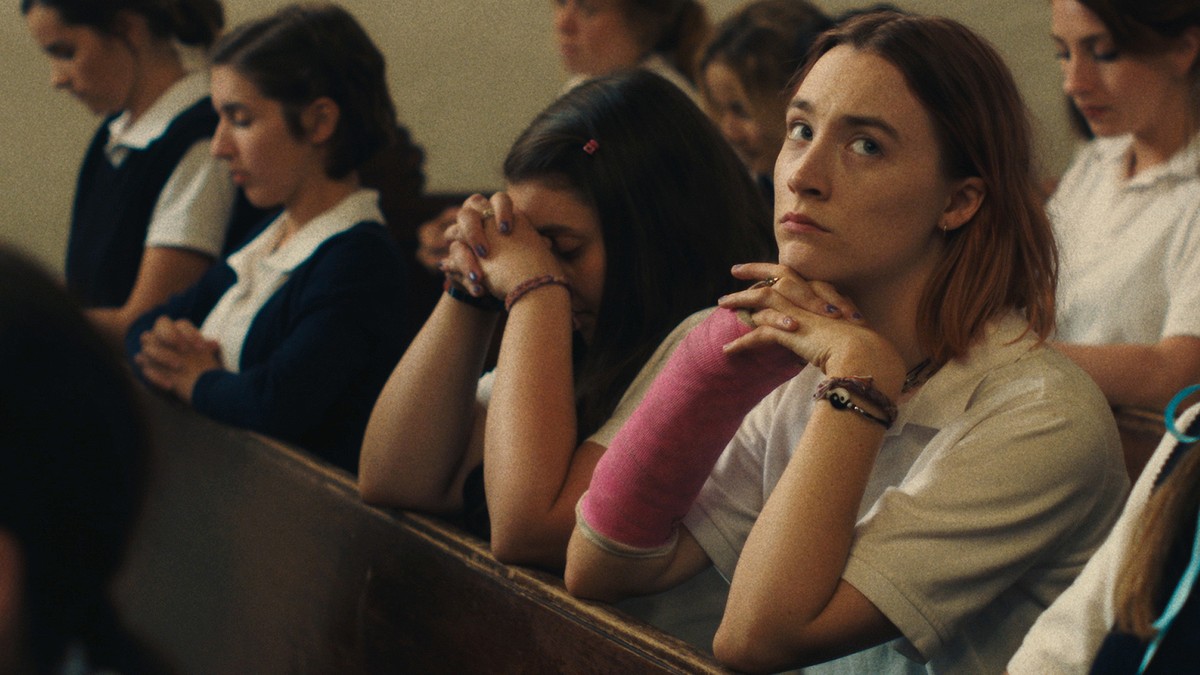
Join us in The Screening Room to talk through this week’s new releases in theaters and home entertainment. We break down Justice League, Wonder, Lady Bird, The Square, Poor Agnes and Frank Serpico, plus the week’s BluRay, DVD and streaming releases.

Listen in HERE.

Agnes, Sweet Agnes

Poor Agnes

by Hope Madden

Small town sociopath, isolated farmhouse on land littered with rusted out car carcasses, a basement freezer full of human heads—Poor Agnes has all the trappings of your garden variety serial killer flick.

All but one: Lora Burke.

Burke plays Agnes, a woman who knows what she likes.

The film plays out like the origin story of some unstoppable slasher, and that works pretty well. Director Navin Rameswaran complicates his narrative and Agnes’s life with a side trip into Stockholm syndrome territory.

Agnes spends her days either chopping wood or injecting men with a concoction featuring “rat poison, mostly.” But she takes a liking to would-be victim Mike (Robert Notman), a low-rent private investigator whom no one will miss.

Rather than dispatching him quickly, Agnes indulges her inclination to play God and see how well she can re-mold Mike in her own image. Things seem to go smoothly until their twosome becomes a threesome.

While Burke’s unapologetically convincing, Notman’s performance is less so. Maybe his metamorphosis is too truncated by James Gordon Ross’s script, or maybe Notman can’t manage to sell the transformation. Whichever, too often his behavior feels utterly false. What we needed out of Notman was a version of Patty Hearst, but his face is a blank slate, his actions inauthentic.

That’s a real problem for this film because a tangy villain can only carry a story so far. Burke’s turn commands attention. She’s unafraid to be profoundly unlikeable, but she’s never over-the-top. It’s an alarmingly natural, more alarmingly believable portrait of a psychopath.

It’s probably reason enough to see the film.

Choose Kind

Wonder

by Hope Madden

On its surface, Wonder is about feeling like an outsider.

Auggie Pullman (Jacob Tremblay, proving that his remarkable turn in Room was no fluke) is about to start middle school. There’s anxiety enough in that, but this will be Auggie’s first “real school,” having spent his formative education being homeschooled by his more than capable mother (Julia Roberts).

But there’s more. Auggie suffers from a congenital malady which, after dozens of surgeries, leaves him with an unusually misshapen and scarred face. This is why he prefers to wear a space helmet whenever he’s in public.

To its enormous credit, Wonder makes Auggie’s plight universal. Doesn’t everyone entering middle school desperately fear some kind of ostracism? Doesn’t every parent fear the same for their tender youngster?

How much worse will it be for Auggie? Few parents will not recognize the sincerity in his mom’s plea as she sends her son off to his first day of real school: “Please, God, let them be nice to him.”

Roberts, whose work in recent years has radically outshone everything from the first couple decades of her career, offers a strong and believable center of gravity for both the Pullman family and the film.

Director Stephen Chbosky also co-wrote this adaptation of R.J. Palacio’s popular juvenile fiction book. Chbosky waded into similarly angst-ridden waters when he directed the screen version of his own novel Perks of Being a Wallflower, but with Wonder he manages to find an emotional truthfulness missing from his previous film.

Wonder is surprisingly—almost amazingly—understated, given the content. The film avoids many a tear-jerking cliché and sidesteps sentimentality more often than you might expect.

It’s also dishonest— well-meaning, but wildly dishonest. Conflicts are easily resolved, lessons quietly learned, comeuppance generally had and loose ends carefully tied.

Wonder is about as wholesome a movie as you will see, lacking even an ounce of cynicism, which certainly makes Auggie’s ordeal easier to bear. But it’s still a cinematic cop out.

I Don’t Want to Go Out: Week of November 13

The effing holidays are upon us. If you have plenty of lounge-about time this week and zero gumption to go out into the cold, here are some lazy day movie suggestions. Here is what’s out this week on VOD, DVD, BluRay and streaming.

Click the movie title for the full review.

Brigsby Bear

Atomic Blonde

Wind River

https://www.youtube.com/watch?v=zN9PDOoLAfg

The Nut Job 2: Nutty by Nature

Richard Turner’s Full Deck

Dealt

by Alex Edeburn

To simply label Richard Turner a “blind magician” would be to insult a man whose pursuit of perfection is all the more admirable considering his impairment. Turner, the subject of Dealt, is much more than a spell-binding “card mechanic.” He is also a father, a husband and an all-around legend within the magic community.

The film, directed by Luke Korem, introduces Turner and what he is best known for: his card tricks. Or, rather his card mechanics. Turner specifies that he is a card mechanic which means he can “fix” a card game—something he can without any vision at all.

Korem pulls TV spots featuring Turner dating back to the late 1970s. From these television appearances, we witness how one man has managed to capture our attention over the years with his impeccable abilities.

His jovial attitude is disarming, even as he explains how he will bend the card game. He uses his mechanics to cheat you, yet all the while explaining how he is doing so. You can’t help but smile while he succeeds.

The film really shines, though, when it shifts focus from the mesmerizing card tricks to Turner’s family. We get a glimpse of a man who relies so much on his wife and child to assist him throughout the journey of his life.

Turner also shares a strong bond with his younger sister, who is also visually impaired. She proves to be a point of strength for him, helping him begin to shed the stigma of his blindness.

The film is a brief look into a rather compelling and friendly character. Richard Turner and his family definitely stick around with you once the film is over—a film that will have you buying a deck of cards and trying out some tricks on your friends and family, just like Richard did when he started.

Take Your Inner Psycho to Work Day

Mayhem

by Hope Madden

You know that nice lady at work who gets bronchitis every time she flies, then she coughs and hacks and spews DNA all over the office?

Let’s say you have issues with that kind of office contamination. And with office politics. And with your boss, her boss, and the way you’ve basically given up everything that makes you feel alive and happy for this stupid job you hate where germs are everywhere…

Wouldn’t it be cathartic to explode, right there, in the middle of everything, righteously and with no repercussions?

Mayhem, the new film from director Joe Lynch, is just that emotional release.

Steven Yeun (The Walking Dead) plays Derek, mid-level white-collar prick in a law office. Just mid-level, though—there’s some conscience left in him. Still, he got where he is by finding the loophole that got a broad-daylight-surrounded-by-witnesses murderer off the hook.

The murderer had a virus—the Red Eye virus—which disrupts your ability to manage your emotions. You might weep uncontrollably, masturbate during a conference call, or stab your boss in the throat with a pen.

Here’s what’s important: we like Derek, his building is contaminated, his court case set the precedent allowing public murder and mayhem while under the 8-hour-ish influence of the virus.

Let’s just quarantine this building and see what happens.

The film is an exercise in workplace catharsis, and a pretty fun one. It’s far superior to other recent attempts at office-bound carnage The Belko Experiment and Bloodsucking Bastards, partly because Lynch has a crisp sense of pace and knack for comedy.

Matias Caruso’s script doesn’t hurt. Though it never mines deeply enough for the film to resonate beyond the “I hate my job and wouldn’t mind killing my boss” level, it’s clever fun from start to finish.

Yeun makes an excellent everyman and his enjoyable performance is matched by those of many of his evil colleagues. Dallas Roberts (also The Walking Dead) is exceptional as the head of HR, also known as The Reaper.

The film is little more than an id explosion in service of workplace fantasy. It keeps a light heart despite the carnage, doesn’t dig deep and doesn’t really hold up to scrutiny. But it’s fun. Especially if you’ve ever wanted to kill your boss.