Tag Archives: documentary

Wolf Pack Mentality

Meow Wolf: Origin Story

by Rachel Willis

If you’ve never heard of Meow Wolf, an 88-minute documentary about their beginnings may seem pointless, but I promise it’s worth it. By the time the credits roll, you’ll be looking into the price of plane tickets to Santa Fe.

Santa Fe, New Mexico is one of the world’s most vibrant arts centers. Home to hundreds of galleries and dozens of museums, it’s known worldwide for its art markets, events and performances.

And it’s also home to Meow Wolf, an art collective comprising a handful of anarchistic artists who saw too much bourgeois capitalism in the local art scene. Seeking to break away from the idea of art as commodity, these creative individuals banded together to create something new, unique and entirely collaborative.

Using animations, archival footage and interviews with founding members of the collective, directors Jilann Spitzmiller and Morgan Capps create a visually engaging documentary. It would have to be to capture the spirit and brilliance of the art and artists behind Meow Wolf.

The major theme of the film, which is the major dilemma for Meow Wolf, is maintaining artistic integrity while creating a marketable product. From the very beginning of Meow Wolf’s inception, most of the group’s members were opposed to anyone trying to impose too much order into the creation process.

Spitzmiller and Capps document the bitter fights, the fissions within the group, and ultimately, the success when they manage to work together to find common ground. With a collective, each member is involved in the creation process. Each member has a say, and each person contributes to the final product.

Documenting a few of Meow Wolf’s early successes, the film culminates with their most ambitious endeavor: the House of Eternal Return. A 20,000 square feet interactive, immersive art installation, it’s one of the most incomparable and wondrous projects you’ll have the pleasure of viewing from conception to completion onscreen.

That George R.R. Martin of Game of Thrones fame helped fund the project only adds to its charm.

Watching Meow Wolf create ambitious, quirky projects is like watching a great band write game-changing songs. There are tense moments, fights and losses, but when things come together you’ll come as close as one can to true magic.

From the Corners to the Council, Baltimore under a Microscope

Charm City

by Matt Weiner

If the Midwest is often treated as America’s test market for new products, Baltimore makes a good case as America’s stand-in for how our cities have been neglected, in ways both passive and pernicious. With Charm City, Marilyn Ness sketches the big picture by zooming in on one city neighborhood.

Ness centers the documentary around those most affected by the violence and lack of opportunity in the city, spending time on the streets with the irrepressible Clayton “Mr. C” Guyton. Mr. C runs a neighborhood community center, providing a mix of social services, inspirational sermons and a contagious hope that things must get better.

Also represented is the Baltimore Police Department, whose officers are buckling under constant overtime in an attempt to stem the record murder rate. Politicians get their due through the eyes of Brandon Scott, a reform-minded city councilman (and the youngest person elected to the position).

At first it seems like Ness’s framing is nuanced to a fault. She studiously highlights the interactions on all sides as an almost routine drudgery. Or as routine as life can be when you’re in a constant struggle for resources just to survive.

But haunting the periphery is the death of Freddie Gray, which took place just months before the film begins. Ness limits her interviews to the more optimistic and eager officials and officers, but even relatively benign interactions are impossible to separate from the wider conversations happening around criminal justice reform in cities and police departments all over the country.

As frustrating as it can be when Ness sticks to her granular talking head shots, there’s a still a message—even if that message to viewers is often that you’re going to need to do some extra homework on this.

And it’s effective. It’s heartbreaking when the people on Mr. C’s block abruptly suffer the loss of one of their own. It’s bracing to hear them refuse to give up even though they feel like everyone else has abandoned them. It’s useful to see how city officials view doing the right thing, and how quickly that impulse crashes against a public health epidemic that cannot be theirs alone to fix.

There have been plenty of superb recent documentaries about criminal justice in America, including Ava DuVernay’s 13th and Erik Ljung’s The Blood Is at the Doorstep. Charm City probably shouldn’t be the only film to watch if you’re looking to go deeper on the subject, but it’s a fine and no less urgent place to start.

Blinding Us with Science

Science Fair

by Rachel Willis

One year back in high school, my school decided participation in the science fair would be compulsory. I resented this since the last thing I wanted to do was “science.”

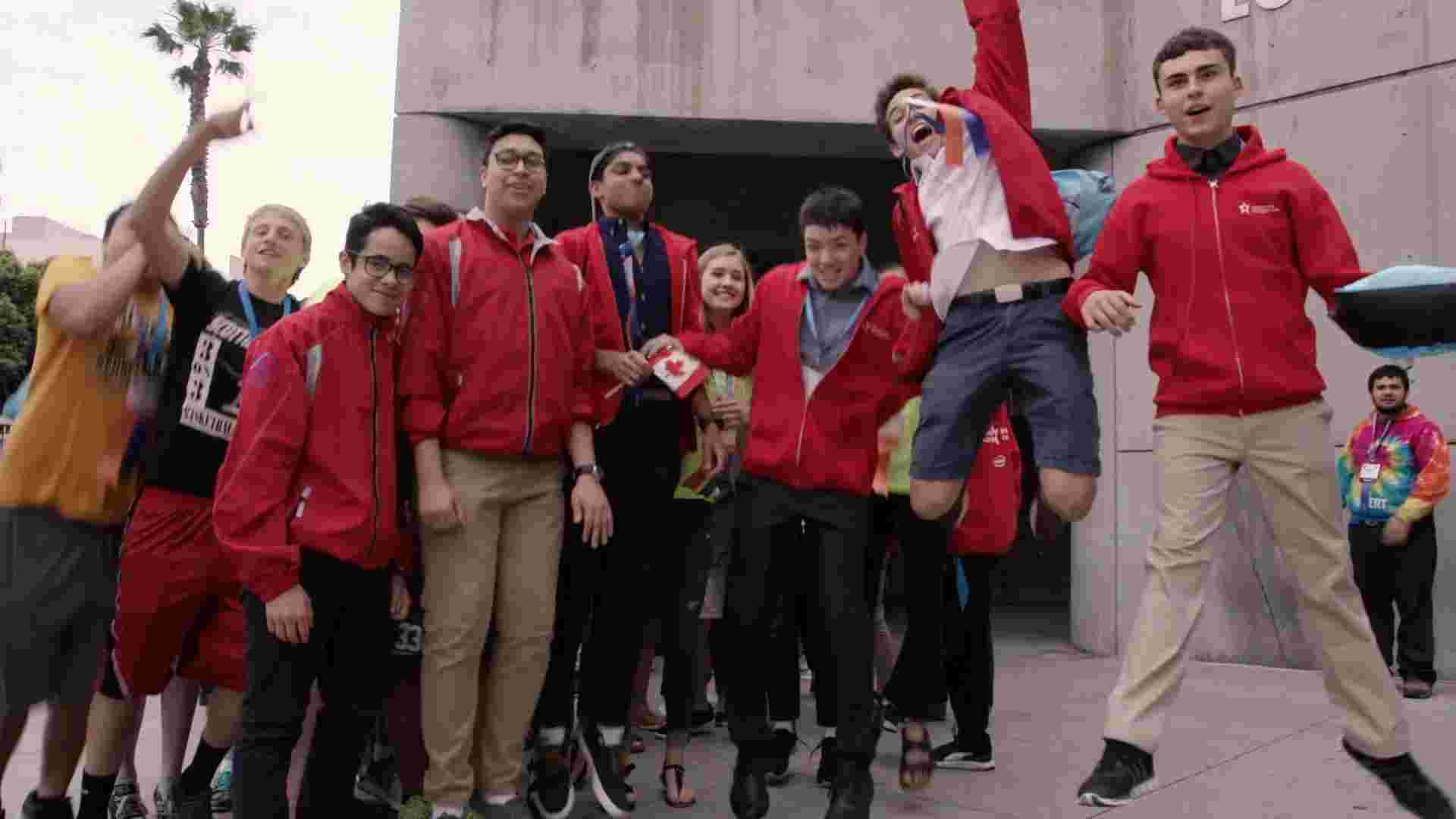
Watching the teenagers profiled in documentarians Cristina Costantini and Darren Foster’s film Science Fair, I start to understand the appeal of sincere participation in regional, national and international science fairs. If I had seen film the year I participated, I might have taken it more seriously.

What these kids invent, build and research makes my greenhouse in a shoe box look prosaic. From research into ways to prevent Zika transmission to monitoring and testing for arsenic in groundwater, these kids are smart, ambitious, and driven.

The crème de la crème of science fairs is the International Science and Engineering Fair (ISEF). To qualify for participation in ISEF, first these students must win their area science fairs, which can be state-wide or regional competitions. However they make it to ISEF, the teenagers who qualify have already faced stiff challenges from their fellow science enthusiasts.

To help the viewer understand the pressure these kids face, former ISEF winner Jack Andraka sheds light on the stress of presenting to judges. Projects that students have worked on for months, even an entire year, must be broken down into ten minute presentations to a handful of judges who will decide if their project is worth the prestigious Gordon E. Moore Award.

It’s hard to pick a  favorite. All of the teenagers profiled are charming and their desire to win is infectious. You wish they could all win.

Science Fair follows the familiar structure of other films depicting students engaged in fierce competition – First Position, Spellbound, and Make Believe. We’re given time to get to know the students profiled, to watch them hard at work on their craft, and then we follow them through the competitions as they fight their way to the finish line.

Costantini and Foster make a point to profile students from varied backgrounds. Some of the kids attend private schools especially focused on STEM education. Others attend public schools so focused on athletics that science achievements are completely ignored. The directors want to make a point that science is for everyone and anyone can achieve the level of success that these students find.

In a country that frequently devalues science and scientists, this documentary reminds us that these kids are our future.

That future is very bright.

God Save McQueen

McQueen

by Rachel Willis

The life of iconic fashion designer Alexander McQueen is the subject of director Ian Bonhôte’s documentary, McQueen. With writer and co-director Peter Ettedgui, Bonhôte creates a richly artistic dive into the controversial designer’s life and art.

Dividing his portrait into sections, Bonhôte uses home videos, archival footage, interviews with family and friends, and scenes from the catwalk to highlight McQueen’s unique—and oftentimes controversial—work.

As Bonhôte highlights with sensitivity and warmth throughout the film, fashion is an expression of McQueen’s experiences. It’s clear McQueen puts his feelings into his designs, and his collections become deeply personal. “I would go to the far reaches of my dark side and pull these horrors out of my soul and put them on the catwalk,” he says of his art.

The fondness with which people speak of McQueen in the documentary’s many interviews offers a picture of someone who made an impact beyond his creative output. His friends, many of whom were part of his design team, speak of the dedication and drive behind his designs. There is a love for McQueen that shines throughout the film.

However, the darkness in McQueen, at first kept to the catwalk, begins to come through in his personal life. As his success grows, the energy behind his work grows darker. Some of his long-time collaborators end their working relationship with him, something he takes personally. For McQueen, there was no such thing as a work-life balance.

It’s clear through the course of the film that the world of haute couture is a stressful one, and no one seemed to take on more than McQueen. In an interview, he mentions assembling 14 collections a year. It’s a staggering number given how much time, energy, and effort must go into each piece of clothing, not to mention the hair, makeup, and set design that made up McQueen’s unique and stunning exhibitions. What’s unclear is if McQueen’s inner turmoil drove him to work nonstop or if it was the work that fueled his inner chaos.

Bonhôte and Ettedgui produce a mesmerizing narrative. From McQueen’s early apprenticeships with tailors to his meteoric rise as one of the most sought-after designers, the filmmakers cultivate an interest in a subject that many may be unfamiliar with. They highlight the art in fashion design, utilizing footage from many of McQueen’s collections to show this artistry.

Coupling the fashion world and McQueen’s creativity with a captivating score, the documentary pulls the viewer in from the first moment and never lets go. It’s a fascinating, compassionate portrait of an imaginative genius.


Pleased to Meet Me

Three Identical Strangers

by Hope Madden

The first time I saw Desperately Seeking Susan, I remember being unnerved by the image of three identical men, all dressed the same and leaning up against a building to ogle Madonna as she exited a cab.

Weird, I thought.

Little did I know that those three brothers were the center of a global media hubbub at the time.

Back in 1980, as Robert Shafran moved into college, he was greeted warmly by many as “Eddy.” The 19-year-old would soon meet his doppleganger.

Eddy Gallan—also adopted, also born July 12, 1961—and Bobby became inseparable friends. Brothers, actually, and their story attracted the attention of several newspapers as well as another young man born July 12, 1961.

When David Kellman joined the crew, three brothers separated at birth held the world’s attention. This story itself, told warmly and with great compassion by documentarian Tim Wardle, is endlessly charming based on the contagious joy the brothers felt to be reunited.

And you coast along on that charm for a while until this nagging idea creeps into the party atmosphere: why were they separated in the first place?

Even those who remember the brothers’ tale will find this recounting fresh and fun. Footage and photos of their time together as young men paired with their own lively recounting of the story creates an energy that entertains. Wardle expertly moves the story forward, offering new, often funny and sometimes touching reminiscences of certain events from those closest to the action.

Wardle’s less a master of visual storytelling. Stylistically, the film struggles. Some painful musical choices, stagy reenactments and otherwise uninspired visual representations give the film an amateurish appearance. Late-film montages of earlier revelations and quotes feel like information force-feeding. But, thanks to the truly fascinating story and the charm of its leads, these missteps don’t derail the effort.

The filmmaker’s strictly sequential chronology relies on your assumptions about documentary and ensures consistent surprises. What begins as a zanier-than-life story slowly turns into a dark tale of conspiracy colored by larger themes of nature versus nurture.

As Wardle pieces together a frustrating puzzle, he’s left with more questions than answers. Constantly revealing a new piece of information, a new source and more complications, the investigation itself becomes as much a character in the film as the triplets.

If nothing else, it is quite a story.

WWFRD?

Won’t You Be My Neighbor?

by Hope Madden

The world did not deserve Fred Rogers.

A loving and tender soul if ever there was one, Fred Rogers saw children not as future consumers, but as vulnerable human beings who needed to know they had value.

Directed by documentarian Morgan Neville (Oscar winner for his 2013 doc 20 Feet from Stardom), Won’t You Be My Neighbor? trollies into the life of the children’s TV host. What you’ll learn is that, yes, Mr. Rogers was really like that.

What might surprise you, though, is how brave he was in representing the themes and conflicts of current events in the neighborhood. It seems everybody missed that—perhaps because of his gentle delivery, or maybe adults just couldn’t see past the puppets to notice. Rogers wasn’t out to be controversial. But when horrifying images from the Vietnam War, assassinations or terrorism splashed across TV screens, Rogers understood that this would frighten children, and they would need ways to cope that would not likely be there. So he did it himself.

The parallels to today are hard to miss, as is the current need for Rogers’s sincerity and idealism.

Neville mines ample archival reels from programs, interviews and home movies and offsets them nicely with talking head footage. The family exposes a man who struggled at times with exactly the kinds of insecurities and fears he addressed head-on for children on his show: fear of being a fraud, the need to be loved.

Neville’s film does not canonize the man. We see how uncomfortable he was with his SNL-style imitators and how infuriating he found trashy children’s programming.

Meanwhile, experts position him among the great child educators and colleagues see him as a fearless and savvy manipulator of the medium. An ordained pastor, Rogers also utilized his time with children to preach by example.

In one episode, Rogers is cooling himself on a hot day by bathing his feet. A visit from Officer Clemons, an African American character played by Francois Clemmons, prompts Fred to ask him to join. The two men sit blandly enough, side by side, their bare feet chilling in a plastic pool.

At that same time – as Neville points out with news footage – children may also have witnessed a different image on their TV screens: one of a public pool manager tossing bleach into the water to bully a black family into leaving the grounds.

Fred Rogers looked out for children, understanding what frightened us and making every attempt to help us through those “difficult modulations.” It’s tough to make it through the film’s 94 minutes without tearing up, and that’s not entirely from sentimentality. It’s from wondering whether today’s world is simply too cruel and cynical for Mr. Rogers.

Checking Out

Always at the Carlyle

by Rachel Willis

There are a few directions a film can take when focusing on a hotel with the kind of history as the Carlyle Hotel in Manhattan. A historical retrospective of its place in New York would have cemented the hotel as one of the city’s vibrant hearts. A simple history of the hotel itself and its early struggles after opening during the Great Depression and its rise to prominence could have proved an interesting subject if explored.

However, director Matthew Miele focuses his documentary, Always at the Carlyle, on the shallowest of subjects—the hotel’s many famous guests.

A good chunk of the film feels like a promotional advertisement. Interviews with hotel staff highlight the hotel’s charms without diving too deeply into those charms. One of the staff was given the opportunity to stay in the room that Princess Diana frequented on her visits to New York. When asked by Miele if the room’s $10,000 per night fee is worth it, she says yes. It’s hard to imagine her saying anything else.

The rest of the film is interviews with its rich and famous guests. From George Clooney to Angelica Huston to Lenny Kravitz to Sofia Coppola, we’re told repeatedly why they find the Carlyle so inviting. They hint at scandals and extravagant parties, but no one ever divulges anything truly interesting.

There’s a lack of cohesion to the story Miele is trying to tell, so it’s not entirely clear what he hopes to accomplish. Part of the documentary focuses on the upcoming arrival of William and Kate, the Duke and Duchess of Cambridge. From the initial call booking the room to the couple’s arrival, it could have been a lynchpin for the movie, but their story is abandoned half-way through the film. Instead, it’s simply another entry into the Carlyle’s roster of celebrity guests.

Miele’s film is, in some ways, representative of the worst of our celebrity-obsessed culture. It equates wealth with class, fame with sophistication, and the past as a time when things were “better.” It’s the same kind of culture that led to the death of the hotel’s frequent visitor, Princess Diana.

While The Carlyle may have an interesting story to tell, this documentary doesn’t do it.

Unsane Worldwide

12 Days

by Rachel Willis

Like a fly on the wall, Raymond Depardon takes his audience inside a world most will never see, and many may never want to see again.

In France, anyone committed to a psychiatric hospital without consent must be seen by a judge within 12 days. At that time, the judge will decide whether to continue their treatment or release them from care. Each patient’s doctor, or group of doctors, provides recommendations to the judge. In every case Depardon is privy to, the doctors never recommend release for their patients.

Only one woman is okay with this decision. She admits she needs additional care and seems happy with the judge’s decision to continue her treatment for another six months. For the rest, they desire their freedom.

Many of the patients are lucid. They argue their cases before the judge, promising to seek treatment from their own doctors, find jobs, and do what they can to lead healthy lives. When they’re remitted back into the care of the hospital, they promise to appeal the decision (they have ten days to appeal any decision made by the judge).

For others, it is clear their mental health is poor. One man is unable to answer questions from the judge; it’s as if he is having a separate conversation, one that only makes sense to him. Another man begs the judge to find his father and have his father come visit him. Only after he leaves the room does the judge comment on why his father will never visit.

It’s an interesting conundrum for the judges, who must rely on the recommendations of the doctors to make their decisions. Do they struggle with their decision when patients have clear goals for their lives outside of the hospital?

Depardon doesn’t give us any answers. He remains an unbiased observer never offering a narrative to sway the viewer. We’re never given any information outside of what we see inside the small, claustrophobic courtroom. This may irritate some viewers who may wish to know more about each of the individuals seen before the judges or the circumstances surrounding their care. For those open to simply taking what Depardon gives, the film is likely to raise many important questions about the nature of mental health care.

Zen and the Art of Channel Changing

95 and 6 to Go

by Alex Edeburn

There is a silent poetry contained in Kimi Takesue’s fly-on-the-wall documentary focusing on the daily life of her aging grandfather, Tom. 95 and 6 to Go is the calm portrait of this widowed Japanese immigrant who carries on through his calisthenics, coupon clipping and channel surfing.

The film portrays these apparently mundane activities with a zen-like attitude through Takesue’s simple and elegant camera work. There is a hushed beauty in the director’s approach, which allows us as the audience to soak in and associate with Grandpa Tom’s life in his house.

There is one rather eye-catching shot of Tom flipping through TV channels. In the foreground of the shot, we see Grandpa’s tanned, leathery hands clutching the blockish television remote. It almost looks archaic compared to the sleek designs we are so used to with today’s 55-inch flat-screens. Grandpa presses down every half-second, unimpressed with whatever program he comes across. There is a layer of grain in this shot (and several others), a choice that adds a faded element to correspond with the nostalgic texture of the project.

Takesue explores a central theme of reinvention, as when she asks Grandpa Tom to revise a film script she has written. The more he discusses his own ideas on how the script should evolve, the more his eyes flicker with youthful vigor.

Tom is also reinventing himself as he copes with life as a widower. He does not seem like the man to wallow in despair following the death of Kimi’s grandmother, but rather he seeks action in those ostensibly ordinary tasks we notice early on. It all seems like a practical process to Tom, readying himself for whatever may happen in the following chapter of his life.

95 and 6 to Go is a reserved documentary focused on the small aspects of day-to-day living. The film captures something essential and human through its quiet observation of Grandpa Tom and his placid routine toward reinvention.

Bury Your Gold

The China Hustle

by Cat McAlpine

Are you still upset about the 2008 housing crash? Of course you are. We all are. Ten years ago banks put the American dream up for sale and the market inevitably collapsed in on itself.

But when the American people were trying to pull themselves back up by their bootstraps, the financial industry had already moved on. To China.

Get ready to look up at the glistening spires of capitalism only to realize we’re all huddled under a house of cards.

Writer/Director Jed Rothestein weaves a thrilling, terrifying tale about the next financial disaster awaiting our country. Some of your neighbors have already lost their life savings. The current administration is actively stripping away financial regulations between the average investor and billions of dollars in fraud. Shady deals are happening now, and honestly, there’s probably nothing you can do about it.

Rothestein calls on the full spectrum of documentary devices: talking heads, voice-over narration, cartoon re-enactments, visual graphics, and more. They work for the most part, but some of the b-roll seems out of place. The most effective and evocative imagery is a series of long, sweeping drone shots of cities and factories.

Rothstein really hits his stride when short-seller Dan David tours his hometown of Flint, MI. Flint is the poster child of blue-collar suffering for white-collar crimes. The camera captures haunting images of the town that really reflect the tangible repercussions of corporate fraud.

China Hustle warns us of a new danger on the horizon. Billions of dollars are propped up in the empty shells of defunct American companies, waiting to collapse.

And then there’s the warning of a larger danger, entrenched in the very fabric of our society. No one is looking out for the American people. The SEC, the accreditation firms, the lawyers, and the bankers—they all invest in their own interests. Even the men blowing the whistle on fraudulent Chinese companies first make money off of them.

“Companies have companies’ best interests at heart.”

And that’s the real hustle.