Tag Archives: documentary reviews

A Time to Act Up

HomoSayWhat: Who’s Pushing Hate?

by Matt Weiner

For a documentary with the subtitle “Who’s Pushing Hate?,” you would think that HomoSayWhat, Craig Bettendorf’s brief survey of homophobia in America from the mid-20th century up to the nationwide legalization of same-sex marriage, would be a long list of people to choose from.

Bettendorf’s sprint through half a century of history is a helpful primer on major events in the gay rights movement. And while the film is heavy on narration and light on interviews that might contextualize the history—the longest interview segment is a casual chat with Bettendorf’s colleagues—they make the most of contemporary news footage and interviews to produce plenty of jaw-dropping moments.

Far too often, though, the film serves as just that: a whirlwind introduction to the top hits and the reminder that “this sure was bad, but things are getting better.” And to be fair, Bettendorf and his crew couldn’t have known that Pride Month this year would coincide with some of the largest protests against injustice in this country’s history.

But it’s hard to reckon with the film’s contention that progress is a clockwork inevitability even within the relatively rapid success of the gay rights movement. So while gay marriage gets its due, the Stonewall Riots that birthed modern Pride events are conspicuously absent. As is the very current and not at all settled fight for transgender equality. (Trans activists are almost entirely absent from the film’s history, which could be a decision to let them tell their own story. But it’s a puzzling omission for a movie that paints history in such broad strokes. And finds the time for an entire cable news monologue from Keith Olbermann.)

The most generous way to think of the film’s version of events is like a high school textbook: the chronology opens up windows to so many deeper stories you can look up if you’re interested. But given how profound and moving the subject is, the documentary’s point of view seems to go out of its way to avoid sounding too radical. And that leads to some very weird territory, like spending more time on C. Everett Koop than Larry Kramer.

As superficial as the historical treatment is, Bettendorf’s earnestness goes a long way to keeping the narration sprightly. But the choices are so idiosyncratic and linger on so much near history that it’s hard to figure out exactly who the audience for this retelling even is. For a film that sets out to dig into the history of homophobia and how it shaped American society, there’s an awful lot of time on the 2000s-era culture war with very little interrogation of what mission accomplished looks like today.

In a way it’s quaint to look back on a time when hatred felt like it had to keep a veneer of civility and logic when arguing among the political class. Those days are gone though, and those backslapping opponents have been replaced with a new group that doesn’t have much use for masks. It’s ironic that there are plenty of events and figures to look back on who raised hell to see justice done, wielding righteous certainty along with bricks, rocks, and whatever it took. That might offer some comfort at this moment. But you won’t learn about it here.

The Mutineer

The Ghost of Peter Sellers

by Hope Madden

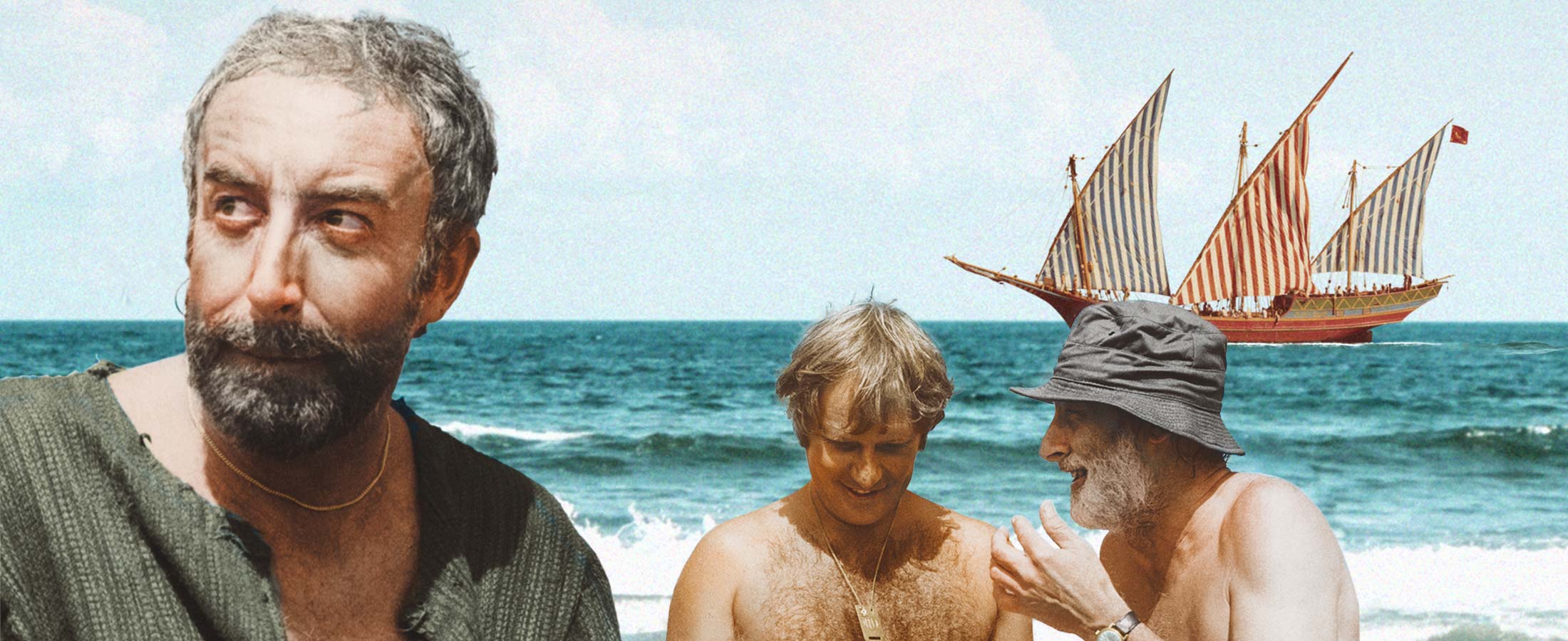
You can’t go home again. You can go to Cyprus again, though, which is what director Peter Medak does in an attempt to come to terms with the project that nearly derailed his blossoming career.

Objectivity be damned!

Medak’s documentary The Ghost of Peter Sellers deconstructs the disaster that was his unreleased 1973 pirate comedy Ghost in the Noonday Sun. Medak believes he may be the first director to make such a documentary.

He’s not entirely wrong. Richard Rush directed a doc about the making of his own The Stunt Man – but that was an Oscar-nominated success. And though Terry Gilliam was involved in Lost in La Mancha—a doc outlining the endless disasters that doomed his first attempt to film The Man Who Killed Don Quixote— he was not the director.

Rather, this time the documentary is the filmmaker himself documenting not his successes but his massive, almost career-ending failure. That failure was partly due to incessant weather troubles and other catastrophes—hell, his pirate ship sank the day it arrived in Cyprus.

But according to Medak, those involved in the shoot and those who knew the actor best, the main problem was Peter Sellers.

“It’s not as if any of us didn’t know that Peter was nuts,” remarks the incredibly sage producer John Hayman, nearly 50 years after the fact. “But none of us knew how nuts.”

Medak’s clearly been haunted by the production—and, to a degree, by Sellers—since the shoot wrapped. Riding high at the time on two critical and box office successes (Negatives, The Ruling Class), the in-demand director jumped at the chance to direct the brilliant Sellers, then considered the greatest comedic actor in the world.

But Sellers—possibly, as friends suggest in the film, a man suffering from an undiagnosed mental health condition who was exploited by money hungry moviemakers—would not be the artist Medak hoped he’d be.

Lunatic behavior combined with an outright desire to sink the film turned an already underwhelming script, underfunded production and nightmarish environment into something crippling.

The stories from the set are fascinating, as are moments of commiseration between Medak and directors who’d dealt with Sellers on other films (Casino Royale and the Fiendish Plot of Dr. Fu Manchu). Equally interesting are the sympathetic but knowing, even giggling responses Medak’s tales of woe elicited from Sellers’s family and friends.

“Oh, yes. He definitely did that.”

But too much time spent with director who is also subject turns many scenes into a self-indulgence.

That doesn’t topple The Ghost of Peter Sellers. Medak’s confessional pity party delivers a compelling look at the wrong side of filmmaking as it offers yet another take on Sellers—his genius as well as his demons.

An Eye for Style

The Times of Bill Cunningham

by Brandon Thomas

In 1994, rookie producer Mark Bozek sat down with New York Times fashion and street photographer, Bill Cunningham. The casual chat about an award Cunningham was receiving was supposed to only be a quick 10-minute in and out.

The interview didn’t end until the tape in Bozek’s camera ran out.

Twenty-five years after conducting this interview, Bozek makes his feature documentary debut with The Times of Bill Cunningham. Less a look or critique of the New York fashion scene, Bozek’s interest is sharply focused on the unassuming Cunningham. 

Bozek uses the ample footage at his disposal to let Cunningham share his thoughts and insights about his life and career. Cunningham’s almost child-like zeal for his work comes across as both disarming and curious all at once. From his beyond-modest “apartment” in the old Carnegie Hall Studios building, to his uniquely un-chic wardrobe consisting mainly of hand-me-downs, Cunningham wasn’t your typical New York fashion figure. 

As the layers peel back more and more, Bezok is able to capture and celebrate Cunningham’s genuine kindness — whether that be his enthusiasm for catching people “as they are” on the street, or the financial support he showed a friend who was fighting a losing battle with the AIDS virus. 

Peppered throughout the film are many of Cunningham’s photos. The juxtaposition of these wonderful photographs with his animated interview makes for an appreciative experience. Many of these photos were splashed across Cunningham’s weekly spread in the New York Times. A few gems, however, were never published during Cunningham’s storied career. 

Sparse narration by Sarah Jessica Parker (Sex and the City) provides needed connective tissue and context. It’s one thing to take Cunningham’s word for it, but highlighting his accomplishments in the broader fashion world is a poignant statement on how important he was to the fashion industry and to New York City itself. 

Documentaries focused on one individual aren’t new. Specific filmmakers, politicians, and athletes have all received this treatment. What’s so different, and enthralling about The Times of Bill Cunningham is how much Cunningham gets to speak for himself. It’s an honest, unfiltered look at a man that did what he loved — and did it well. 


Hindsight 2020

Capital in the Twenty-First Century

by George Wolf

You want to understand the economic mess we’re in? Simple. It all comes down to horses and board games.

Wut?

Watch Capital in the Twenty-First Century, and more than just vague analogies will come into startling focus.

New Zealand filmmaker Justin Pemberton has assembled an array of scholars and historians (including Thomas Piketty, author of the source book) for a 103-minute presentation that is so informative, measured and concise it should earn you college credits.

There are graphs, illustrations and pop culture snippets from film and television that Pemberton weaves throughout the lecture material to attract the eye and boost the film’s overall entertainment value. But make no mistake, his mission is about breaking down the 400 years of history that explain the social and economic precipice we’re teetering on right now.

The breakdown is an accomplishment in itself, but Pemberton and his scholars never condescend or confuse, bringing an immeasurable value to the medium delivering this invaluable message.

And while some of the lessons are not new (i.e. we need a strong middle class) the context here is so vivid and relevant many observations may land with an echo of “eureka!” inside your head.

The history of nations carrying staggering wealth inequality and stagnant social mobility is not pleasant, but the ironic timing of Pemberton’s film helps fuel the hope that total socio-economic collapse may still be avoided.

The key lies in totally re-shaping the way a population thinks, which historically has only been achieved through seismic cultural shifts such as a war or a depression.

Or a pandemic?

We’ll see, but by the time Capital in the Twenty-First Century is done telling you about the horses and the board games, there will be little doubt why the “job creators” are so anxious to give us the business.

Seeking Harmony

Gay Chorus Deep South

by Brandon Thomas

On Tuesday, November 8, 2016, Donald Trump was elected president of the United States. Over the next few weeks and months, many Americans responded by organizing and protesting. The San Francisco Gay Men’s Chorus’s call to arms was quite different: tour the conservative American South. In the timely documentary Gay Chorus Deep South, director David Charles Rodrigues tackles the decades of discrimination, shame and emotion that led to this tour.

Choir director Tim Seelig has the best of intentions: he hopes to change hearts and minds with a tour of uncharted territory. Many of the choir’s members originally hail from the South, and they vividly remember the rejection and outright hate directed toward them. For these members, the tour is less about changing minds. This tour is about closing a chapter.

At times, Seelig and the choir wade directly into the belly of the beast. They appear on conservative talk radio. They meet with a church that ultimately doesn’t allow them to perform due to a newly-placed homophobic head pastor. Seelig expected these reactions, but it doesn’t soften the sting. 

The pain of past experiences vividly pours off the screen—tales of humiliation at the hands of adults who should’ve been there for protection. Seelig himself was separated from his children and cast out of the church he gave so much to. The film’s strength is in its devotion to these individual stories.

Through the choir members, Rodrigues is able to immerse the film in Southern culture rather than look at it entirely as an outsider. Seelig knows how to shrewdly navigate not only the Southern world but the religious one, too. The discrimination during the tour isn’t blatant as one would expect but is instead wrapped subtly inside the veil of Southern hospitality. This hypocrisy is something Seelig expected and isn’t afraid to constructively call out.

While politics is squarely at the forefront, Gay Chorus Deep South isn’t interested in political proselytizing. The “fish out of water” aspect to the film is political enough without dozens of talking heads telling the audience how to feel. Rodrigues wisely lets the choir members naturally move the story along as they navigate a complex, and at times uncomfortable situation.

While the music and performances are as impressive and moving as you would expect, the real heart of Gay Chorus Deep South is in those personal stories. Song and dance are easy to sell, but building community inside a structure of fear and hate takes conversation and empathy.

https://youtu.be/IGN_NDfo5gw


Spacing In

Spaceship Earth

by George Wolf

Man, it was a crazy time. A group of hippies got famous for putting on jumpsuits and quarantining themselves in Arizona for two years. Then they tweaked their own rules and bickered until Steve Bannon showed up to “kick ass” and name names.

If you were thinking “70s commune” until the Steve Bannon reference threw you, you’ve forgotten about the great Biosphere 2 experiment from 1991. As much as it made news then, if B2 is remembered at all these days, it usually lands just a notch above “new Coke” on the scale of pop culture face plants.

Almost 30 years later, is that a fair assessment, or did Biosphere 2 teach us something valuable?

Director Matt Wolf looks for answers with Spaceship Earth, an intriguing look back on a moment when the reach of idealism seemed equal to its grasp.

Wolf, as he did with Teenage and Recorder: The Marion Stokes Project, leans on a wealth of archival footage to view a historical movement through a modern lens. For Spaceship Earth, that begins with a reminder that B2 was not some grand government project, but the culmination of hippie aspirations.

Led by the charismatic John Allen, a group of California dreamers traveled the world performing theater and preaching ecology, gradually increasing their goals until eight of them were moving into a completely closed system boasting a geodesic dome designed by Buckminster Fuller.

The aim was to understand biosphere 1 (Earth) enough to be able to replicate it in space. The result was complicated.

The film’s backstory of the “synergists” and their accomplishments provides a sturdy anchor, as well as a resonant narrative contrast once the B2 project is beset with scientific short-sightedness, group infighting, and the opportunist douch-baggery of Bannon.

Wolf’s respect for the group is clear, and while that respect isn’t unearned, it makes the skirting of some legitimate issues – like Allen’s label as a “cult leader” – appear more flagrant.

But what Wolf does best is give a whole new taste test to a benchmark in both science and pop culture. Biosphere 2 deserves a better legacy, and by showing us life inside the dome, and then re-framing the entire project through the lessons of the last three decades, Spaceship Earth rests on a compelling case.

And, just sayin’, new Coke was pretty good, too.

https://www.youtube.com/watch?time_continue=1&v=DO1OuPCLPmI&feature=emb_logo

Partial

Santiago, Italia

by Hope Madden

History repeats itself.  This often frustrating, even tragic theme has powered many films and documentaries over the years, including Nanni Moretti’s Santiago, Italia.  

An account of Chile’s 1973 military coup, Santiago, Italia approaches its history with a fascinating, character-driven approach. An opening news footage montage sets the stage—no timeline or voiceover narration detail events for you.

The people of Chile democratically elect a socialist president. Chileans are excited and hopeful. Big business and the military is not. Planes fly low over the city. Bombs drop. Hope turns to terror.

Moretti, 6-time nominee and 2001 winner of the Palme d’Or, isn’t exactly known as a documentarian. His instincts as a storyteller supersede, even complement, his disregard for the standard practice of documentary. The result is a slice of global, political, human life that bristles with passion and indignation.

Moretti’s main characters are a handful of Chilean exiles, persecuted and, in several cases, tortured for their political views and later exiled to Italy. As moving as it is to see emotion sneak up on someone remembering a moment now nearly fifty years old, witnessing someone recount their own torture with such a clear eye and lack of emotion is even more unsettling.

The filmmaker spends time with former military as well. Among others, he interviews imprisoned war criminal Raul Iturriaga, who believes the two sides should just forgive and forget. Irked at the direction the interview takes, Iturriaga challenges Moretti’s impartiality.

Moretti corrects him.

“Yo no soy imparcial.”  

And why should he be? With Santiago, Italy, Moretti recounts a story of two countries bound by a common desire for freedom from tyranny. As he sees that history replay itself once again, he believes that this is a story that bears repeating.

Crooked Lines

Slay the Dragon

by George Wolf

Before hitting play on Slay the Dragon, make sure you’re a good social distance away from Grandma’s fine china.

Because you’re going to want to break something.

Directors Chris Durrance and Barak Goodman open their deep dive into political gerrymandering with a quote from Founding Father John Adams about democracies and suicide. They then spend almost two hours making the case that time is running short for America to prove Adams wrong.

The film’s historical context of gerrymandering – or drawing Congressional districts in a hyper-partisan manner – is informative and even entertaining in spots. Who knew the practice got its name from pairing an old Massachusetts governor with a salamander?

But once it digs into the deep pockets and advanced metrics behind “packing,” “stacking” and “bleaching,” the film’s view that this a fight between voters picking winners and winners picking voters does not seem hyperbolic.

The direct, measured approach pushes hardest when reminding us that new district maps are drawn every ten years, so elections in a year that ends in zero – LIKE THIS YEAR – are especially important.

But to make their film a rallying cry for passionate turnout, Durrance and Goodman know that beneath the dirty tricks, blatant hypocrisy, systemic oppression, corporate greed and Supreme Court setbacks, there has to be hope.

We get it via Katie Fahey and Voters Not Politicians, a grassroots movement fighting gerrymandering in Michigan that began with a Facebook post. Fahey, a total neophyte diving into vicious waters, is instantly relatable and easy to root for, creating a narrative contrast that’s a bit simplistic but naturally effective.

It does get a bit long-winded in spots, but Slay the Dragon makes its case with enough info, passion and persistence to make it necessary, especially in a year that ends in zero.

Like this year. 2020. An election year.

Did we mention that?

Put the Load Right On Me

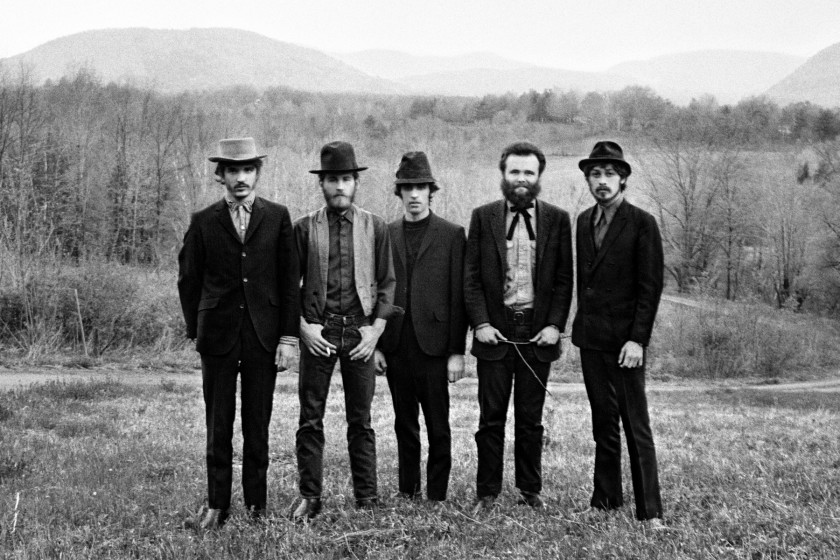
Once Were Brothers: Robbie Robertson and The Band

by George Wolf

How big of a music geek are you if you can name all five members of The Band?

They were the rare musical breed whose biggest personality was not the lead singer. Still, even charismatic guitarist Robbie Robertson remained largely anonymous next to the very rock stars his work was influencing.

Writer/director Daniel Roher makes Robertson and his memoir the anchor of Once Were Brothers, and while that does limit the film’s scope, Robertson is such an enthusiastic and engaging storyteller – and his access is so valuable – you come to understand the choice pretty quickly.

Robertson met his future Band-mates while he was still a teenager, playing guitar and writing songs for Ronnie Hawkins and the Hawks. The Hawks’ talent soon outgrew Hawkins rockabilly style, as Robertson and the boys moved on to a legendary Hawks collaboration with Bob Dylan, before cementing their legacy as The Band.

Roher and executive producer Martin Scorsese surround Robertson (looking fantastic at age 76) with praise from of a succession of legendary fans (Eric Clapton exclaims “Big Pink changed my life,”) and, of course, plenty of priceless archival footage.

Music docs are always going to be most interesting to the subject’s core following, but even casual Band fans will get bracing reminders of Robertson’s guitar virtuosity and drummer Levon Helm’s passionately soulful vocal power.

Plus, getting a peek at Dylan telling folk fans “Don’t boo me anymore!” and hearing Scorsese deconstruct his own filmmaking on the iconic concert film The Last Waltz fosters an engaging intimacy. At times, the reach extends beyond Robertson’s music history to touch on the creative process itself.

As a rock doc, Once Were Brothers blazes few trails, but the ones it travels are well worth revisiting. And though the lack of any counterpoint from surviving member Garth Hudson is noticeable, tour guide Robertson is the kind you’re ready to tip when the day is done.

Rick Danko, Richard Manuel, Hudson, Helm and Robertson, by the way, but you knew that.

Geek.

Glass Houses

The Edge of Democracy

by George Wolf

Documentaries can often be judged by how successful they are at showing us unfamiliar worlds.

But for the Oscar-nominated The Edge of Democracy, it is the familiarity of the story it tells that makes it so heartbreakingly urgent, as it wraps a personal memoir around a first hand account of Brazil’s fragile hold on democracy.

Veteran documentarian Petra Costa (Omar & the Seagull, Undertow Eyes), whose own parents risked their lives protesting Brazil’s military dictatorship, narrates the film with much personal insight, starting with her feeling that she and Brazilian democracy “have grown up together.”

Taking power through a U.S.-backed coup in 1964, a succession of generals ruled Brazil until 1985, when the Workers Party began to take hold, thanks in large part to union leader Luiz Inácio “Lula” da Silva, who was finally elected president in 2002.

Costa, backed up by a string of working class Brazilians, speaks in glowing terms of the economic progress made under Lula, and we see no less than Barack Obama dub him “the most popular politician on Earth.”

Indeed, Lula left office in 2010 with an 87 percent approval rating, when his hand-picked successor, former militant Dilma Rousseff, won the presidency. Three years later the economy stumbled, Dilma announced a crackdown on corruption, and the knives came out.

Even then, not many would have thought it possible for the democracy Brazilians long fought for to succumb so easily to primal populism, or for Jair Bolsonaro, a bigoted, hostile, “fake news” decrying candidate who began as a joke, to be elected president in 2018.

But here we are.

Costa’s passion for her cause is weary but evident, and her earnest narration often asks us to assume much without pausing to consider any contrasting evaluations of what she dubs “the coup of 2016.”

That’s not to say Dilma’s ouster doesn’t stink to high Heaven – it does – but it also isn’t hard to find accusations against the Workers Party that don’t seem that flimsy, and while the one-sided approach is in line with the film’s personal journey, it leaves the documentary side wanting.

But Costa’s ultimate success comes from weaving her family’s story into the political tumult of her homeland, and in turn mirroring a more global struggle. We get a stark illustration of the rising tides of authoritarianism, leaving the Edge of Democracy a film that should be pretty damn personal to all of us.