Gonna Break Into Your Heart

American Valhalla

by Hope Madden

An aging musical icon wants to end his career on a fresh note and reaches out to an esteemed industry powerhouse to help him.

A modern master gets a text from his childhood hero, reminding him in a rush of all that informed the direction of his life.

In what could easily have been a simple marketing tool – a documentary to support Iggy Pop’s last album, Post Pop Depression – American Valhalla instead offers a look at the creative process. But, more than that, it’s a glimpse into the kind of rock star adoration we’ve all felt, and an image of the all-too-human object of that worship.

In this case, the adored is punk rock godfather Iggy Pop; the adoring, Queens of the Stone Age front man Josh Homme, (who also co-directs).

Reading directly from their own journals written during the planning, recording and touring process, Homme, Pop and the rest of the band narrate the clashing emotions, nerves and anxieties that fueled this partnership and the ensuing album and tour.

Pop, now in his late sixties, is a small, crooked, humble guy, and still every bit a spectacle. His raw, unpredictable humanity is etched in the deep lines and huge eyes that haunt his famous face.

Homme – every inch Pop’s physical opposite, tall, sleek and handsome – opens himself up on camera in a way that’s disarming. Between Pop’s honest humility and Homme’s almost paralyzing adoration, the film somehow strikes a deeply sweet note. It’s validation for the overwhelming awe your own personal heroes can inspire. At the same time, it’s a touching reminder that even our heroes are deeply human.

Homme, directing with Andreas Neumann, shows great instincts visually. The documentarians cut between live footage, portraits and stills, creatively framed talking heads, and lonesome vistas. The pieces weave together to create an image that’s simultaneously haunting and energetic.

The music also happens to be outstanding.

Most surprising may be the film’s sweet, open heart. It’s a mash note for fans – all fans, but particularly Iggy Pop fans. If this is, indeed, to be Pop’s final hurrah, it is a lovely way to go out.

Verdict-4-0-Stars

Fright Club: Maybe a Vampire

So many vampires – so many! And then there are all these other guys who may or may not be. Sometimes it’s hard to say. Sure they drink blood, but do they really need to? Let’s explore.

5. Vampire’s Kiss (1988)

Sure, Nicolas Cage is a whore, a has-been, and his wigs embarrass us all. But back before The Rock (the film that turned him), Cage was always willing to behave in a strangely effeminate manner, and perhaps even eat a bug. He made some great movies that way.

Peter Lowe (pronounced with such relish by Cage) believes he’s been bitten by a vampire (Jennifer Beals) during a one night stand. It turns out, he’s actually just insane. The bite becomes his excuse to indulge his self-obsessed, soulless, predatory nature for the balance of the running time.

Cage gives a masterful comic performance in Vampire’s Kiss as a narcissistic literary editor who descends into madness. The actor is hilarious, demented, his physical performance outstanding. The way he uses his gangly mess of limbs and hulking shoulders inspires darkly, campy comic awe. And the plastic teeth are awesome.

Peter may believe he abuses his wholesome editorial assistant Alva (Maria Conchita Alonso) with sinister panache because he’s slowly turning into a demon, but we know better.

4. The Transfiguration (2016)

Milo likes vampire movies.

Eric Ruffin plays Milo, a friendless teen who believes he is a vampire. What he is really is a lonely child who finds solace in the romantic idea of this cursed, lone predator. But he’s committed to his misguided belief.

All this changes when Milo meets Sophie (Chloe Levine), another outsider and the only white face in Milo’s building. A profound loneliness haunts this film, and the believably awkward behavior of both Ruffin and Levine is as charming as it is heartbreaking.

The Transfiguration is a character study as much as a horror film, and the underwritten lead, slow burn and somewhat tidy resolution undercut both efforts.

Still, there’s an awful lot going for this gritty, soft-spoken new image of a teenage beast.

3. The Reflecting Skin (1990)

Writer/director Philip Ridley has a fascinating imagination, and his film captures your attention from its opening moments.

Seth Dove lives with his emotionally abusive mother and his soft but distant father, who run a gas station in rural Idaho sometime after WWII. Seth’s older brother Cameron (Viggo Mortensen) is off serving in Japan. Seth has decided that the neighborhood widow Dolphin Blue (a wonderfully freaky Lindsay Duncan) is a vampire.

Positively horrible things begin to happen, each of them clouded by the dangerous innocence of our point of view character.

The film plays a bit like a David Lynch effort, but with more honesty. Rather than the hallucinatory dreaminess Lynch injects into films like Blue Velvet (the most similar), this film is ruled by the ferociously logical illogic of childhood.

With this point of view, the realities of a war blend effortlessly with the possibility of vampires. Through little Seth Dove’s eyes, everything that happens is predictably mysterious, as the world is to an 8-year-old. His mind immediately accepts every new happening as a mystery to unravel, and the jibberish adults speak only confirm that assumption.

This film is a beautiful, horrifying, fascinating adventure unlike most anything else available.

https://www.youtube.com/watch?v=DBGHoknFI2I

2. Cronos (1993)

In 1993, writer/director Guillermo del Toro announced his presence with authorty by way of this tender and unusual “vampire” flick. Del Toro favorites Federico Luppi and Ron Perlman star. Luppi is Jesus Gris, the elder statesman, an antique store owner, loving husband and doting grandfather.

Perlman plays Angel, a thug – what else? Angel’s miserable but very rich uncle wants an Archangel statue from Gris’s store, but the real value has already found its way into Gris’s veins.

A vampire film of sorts, it’s a beautiful story about faith and love – not to mention the real meaning of immortality. Performances are wonderful, and watching this masterful filmmaker find his footing is the real joy.

1. Martin (1978)

Martin (John Amplas) is a lonely young man who believes he’s a vampire. He may be – the film is somewhat ambivalent about it, which is one of the movie’s great strengths. He daydreams in black and white of cloaks, fangs and mobs carrying pitchforks.

Or are those memories? Does Martin’s uncle hate him because Martin, as he claims, is really in his Eighties, as his uncle would surely know? Romero has fun balancing these ideas, tugging between twisted but sympathetic serial killer and twisted but sympathetic undead.

Romero’s understated film is more of a character study than any of his other works, and Amplas is up to the task. Quietly unnerving and entirely sympathetic, you can’t help but root for Martin even as he behaves monstrously. It’s a bit like rooting for Norman Bates. Sure, he’s a bad guy, but you don’t want him to get into any trouble!

The film’s a generational culture clash wrapped in a lyrical fantasy, but quietly so. It’s touching, gory at times, often quite tense, and really well made. That, and it’s all so fabulously Seventies!

https://www.youtube.com/watch?v=NNIGTSdKPl0

It’s Not a Vibrator

My First B&E

by Hope Madden

When my sister Joy and I were about eight, our next door neighbors, the Manns, went on vacation. (I’ve changed their names in case the statute of limitation on breaking and entering is longer than I realize.)

They unwisely entrusted another neighbor up the block, Vickie Carmen (also a totally fake and not entirely convincing name), with the key to the house.

Vickie was to pick up the mail and feed the cats. Instead, she chose to bring her older sister Heather, as well as Joy and me, into the house for snooping, eating, and the stealing of coins from a giant container on the washing machine.

Heather was two years older than Vickie, Joy and myself, and we considered it a terrifying honor that she played with us. She also smacked and bullied us, bossed us around, mocked us without pity, and tricked us into doing dangerous and idiotic things that would land us in hot water.

But it was Vickie you had to look out for.

Together one afternoon, we four wandered through the neighbors’ home as some might an archeological find, examining everything. We ate their chips. We thumbed through their records. We opened cabinets. We stole Corey Mann’s Barbie clothes.

We went into the basement.

It was with starry eyes that we spied that jug o’coins, and promptly filled our pockets, fantasizing about the booty we’d buy at Cook’s Food Store down the block.

I looked forward to Caramel Creams or a Milky Way bar – or both! – since I was now a professional larcenist and could live it up bigger than I ever had.

Vickie would undoubtedly begin by hiding beyond the freezers eating baby food with her fingers, as was her Cook’s food-shopping tradition. Then, who knows what that freak would buy.

I once caught her eating the skin she’d peeled from a sunburn. I swear to God.

Before plunging headfirst into our illegally appropriated candy binge, we eyeballed the rest of the basement. Eager as we were for a sugar rush, we nearly overlooked an antique piece of exercise equipment.

Unfortunately, I did notice it. Indeed, it took my fancy and I recommended that we investigate.

Connie Mann was the youngest mom in the neighborhood and she insisted on being called by her first name. She was different. She was better. Not unlike Amy Poehler’s character in Mean Girls, but I can’t remember whether she had the same affinity for velour.

Connie had one of those weight-loss machines you’d see in old sit-coms. It was the kind of thing that resembles a doctor’s office scale, but at the top is a big, white belt that loops around your middle and vibrates away the fat.

I don’t know what you call this piece of equipment.

I’m sure you don’t call it a vibrator.

Whatever you call it, we turned it on.

Heather took the first tour. The knobs rotated furiously back and forth, back and forth, causing the movement in the belt that would make you sound like you were talking through the blades of a fan but would not, I felt sure, whittle away belly fat. Only a proper diet and sensible exercise regimen can do that.

The mistake I made – I mean, beside the mistake of breaking into a neighbor’s house and wandering around the dark and potentially dangerous basement of a home that would remain vacant for another week at least – was in examining the knobs too closely.

As I looked down, one tenaciously rotating gear grabbed the tips of my waist-length hair, yanked, and almost immediately my scalp was pressing cold metal.

“Turn it off! Turn if off! TURN IF OFF!”

They turned it off. My hair was already knotted around the knob, my head tugged so tight against the machine I thought the scalp would tear away from my skull. I was trapped.

My friends’ faces were ashen.

There was a long silence, and then Vickie, inching up the basement steps, whispered, “Let’s go. Come on. Let’s just go.”

Attached by the head to a machine at least twice my weight, stooped to one side and crying, I couldn’t even clearly conceive of my plight. My mind swam in terror.

And they did leave.

I didn’t scream or even slump to my knees looking for a more comfortable way to situate myself around my new anchor. I stared at the concrete block wall and did nothing at all. My brain ceased to function.

I know me, and I am terrified of everything. It’s hard to imagine that I didn’t stare into some dark corner, sure I’d seen movement or heard growls – human growls – coming from the darkness behind me.

It’s hard to believe I didn’t tear myself free, running bloody and half-hairless back to my house.

I honestly believe I was more afraid of my mom’s reaction to my breaking and entering than I was to dying alone in a basement.

Lucky for me, though the Carmens may have been the kind of bitches who’d abandon you to rot in the basement of your neighbor’s temporarily unoccupied home, my sister isn’t.

She strode somberly up to my father – likely relaxing with a cup of coffee and an episode of M*A*S*H – and told him, “Come with me. Bring your tools.”

Simple as that. My hero.

Dad dismantled the machine and freed my head. The hair on the left side tangled to about 1/3 its natural length, and the scalp remained raised and bumpy for months. To this day my hair does not lay flat on the left side. But we never told my mom, never narced on the Carmens, never fixed the machine.

Maybe the mysteriously broken equipment drew the Manns’ attention away from all that missing change.


Life Support

The Big Sick

by George Wolf

The Big Sick is that rare breed seldom seen in the wilds of the multiplex. It’s a smart and incisive romantic comedy that has something new and vital to say while it’s being both romantic and comedic.

It also feels incredibly authentic, probably because co-writers Emily V. Gordon and Kumail Nanjiani are telling much of their own story.

Kumail (Nanjiani) is a struggling standup comedian in Chicago who can’t bring himself to tell his traditional Pakistani family about his new girlfriend Emily (Zoe Kazan). Family pressures eventually lead to a breakup, not long before Emily becomes hospitalized with a mysterious infection that becomes life-threatening.

Emily’s parents (Holly Hunter and Ray Romano) know all about Kumail, and they aren’t exactly thrilled with his insistence on hanging around the hospital with a visitor’s badge.

Director Michael Showalter (Wet Hot American Summer, Hello My Name is Doris), is blessed with a uniformly wonderful ensemble cast, and he guides the actors through alternating levels of humor and societal insight that feel effortlessly organic.

We see a Muslim family portrayed much as any other movie family might be (imagine!), with generational conflicts that are plenty familiar, even if they manifest in unfamiliar ways. Bonus points for cleverly educating about Pakistani culture while also finding the funny in culture clash and persistent stereotypes.

Almost all the humor – be it scatalogical, corny, or suddenly dark – finds a mark, and is paired with a constant undercurrent of relatable humanity that draws us into these characters and becomes truly touching.

At times hilarious, sweet,  emotional and even heartbreaking, The Big Sick has a case of charming that will follow you home.

Let’s hope it’s catching.

Verdict-4-0-Stars


This Dude Abides

The Hero

by Hope Madden

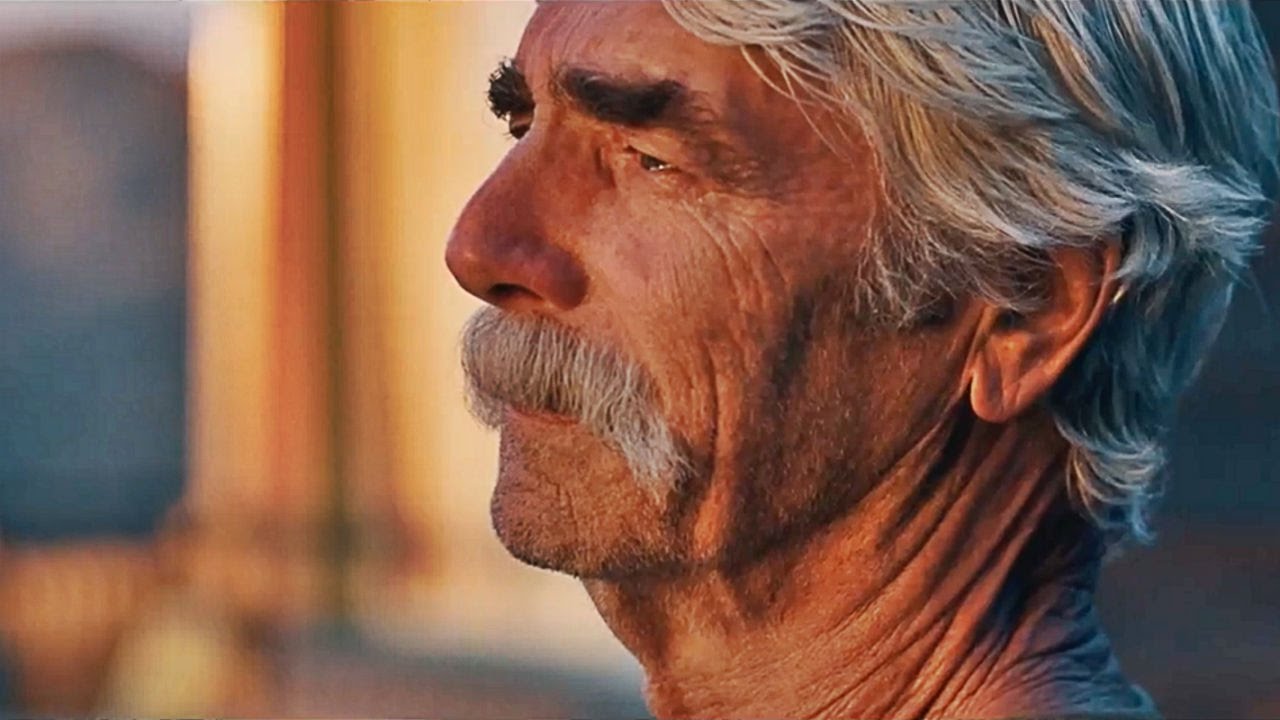
Somebody finally wrote a starring role for Sam Elliott. Let’s be honest, we all love him. What’s not to love? His lived-in masculinity, mannered charm and sonorous delivery make every line a comic/dramatic/romantic dream.

His latest film, the Brett Haley directed and co-penned The Hero, feels like an attempt to give Elliott his own The Wrestler or Crazy Heart.

I’m cool with that.

Haley was responsible for the 2015 life-renewing romance I’ll See You In My Dreams, a post-middle-age adventure starring Blythe Danner, with Elliott joining as her mustachioed gentleman caller.

With Hero, Haley places Elliott firmly in the lead of another “life begins when you decide it does” kind of story.

In a role undoubtedly written specifically for the actor, Elliott plays an aging performer who’s knocked around Hollywood for decades but is best known for his deep, cowboy voice. The film opens with that memorable baritone recommending, “Lone Star barbeque sauce – the perfect pardner for your chicken.”

It’s an inspired scene, full of humorous indignity and carried beautifully by the voice-over veteran. It’s really a shame Haley can’t build on it.

Elliott’s Lee Hayden has cause to reevaluate his life when a health issue, a lifetime achievement award, a viral video and a surprising new girlfriend all collide unexpectedly. Oh, so many reasons to contemplate your own mortality.

Elliott’s quiet, moseying way remains as enigmatic and charming as it ever has been, and seeing him play a character so very close to himself is sometimes eerie. Real-life wife Katharine Ross even plays his ex.

The film scores highest marks in two scenes with Ross, and in everything with a delightful Nick Offerman, playing against type as Lee’s goofy former co-star and current weed dealer.

It derails hardest, though, when it tries to juggle a distant relationship with a daughter (Krysten Ritter) and a new romance with a hot, much younger woman (Laura Prepon).

The Hero breaks no new ground. Had Haley and co-writer Marc Basch (who also co-wrote Dreams) thrown one or two fewer contrivances at us, or found perhaps a fresher way to contend with their obvious choices, they might have had something.

Instead they ride Elliott’s charm and settle for sentimentality, which is such a shame. It’s high time Sam Elliott gets to lead his own movie, but he deserves a little more than this.

Verdict-3-0-Stars

Teenage Dream

Spider-Man: Homecoming

by Hope Madden and George Wolf 

With brief but wildly enjoyable screen time, the newest Spider-Man (Tom Holland) introduced himself to us in last year’s Captain America: Civil War. His presence was energetic, light-hearted and fun – childlike. Appropriate for a high school freshman.

It’s exactly that bottled exuberance that makes Spider-Man: Homecoming so enjoyable.

The events of Cap and Iron Man’s battle for control of the Avengers only months behind them, Tony Stark (Robert Downey, Jr. – like you didn’t know) takes arachnid-bitten science nerd Peter Parker under his wing.

Pete’s not ready for the big time yet, though. Mr. Stark would prefer his protégé focus on being a friendly, neighborhood Spider-Man instead of pestering for an invite to be the next Avenger.

There are several things director Jon Watts (Clown, Cop Car) and his enormous team of writers get right.

Firstly, they know we’re hip to Pete’s origin story, so the bite, Uncle Ben and all that needless angst are mercifully missing.

Next, they keep the story tight and low to the ground. It’s a training-wheels villain – somebody too big for you or me to contend with, but no intergalactic menace or god waiting to annihilate global humanity.

It also helps that said villain, the “Vulture,” is played by the reliably nutty and likeable Michael Keaton, who brings the perfect mix of psychosis and humanity to a role that could have easily been pushed over the top.

But mainly, Watts hits a bullseye with the film’s joyously entertaining tone.

As solid as the Marvel universe has been, it’s not hard to find moments (especially in Civil War) when the push for a hip chuckle undercuts the action. The humor in Homecoming hits early and often, but only to reinforce that the film’s worldview is sprung from a teenage boy. In this way, it feels more true to its comic origins than most in the entire film genre.

Holland, who just turned twenty-one, has no trouble passing for fifteen in a wonderfully wide-eyed performance. Paired with a nicely diverse group of classmates, Holland finds the perfect sweet spot to contrast the social minefields of high school with the learning curve of his new Stark Industries super suit.

Best of all, Holland re-sets the character to a place where its growth seems both unburdened and unpredictable. That’s exciting, and not just for Pete.

Same goes for the film. Watts and his writing team fill Homecoming with the thrills, wit and humanity (plus a plot twist that’s subtle genius) to give the entire superhero film genre a freshness that’s plenty welcome.

Throw in a letter-perfect final scene, and we’re already tingling about what Spidey might be up to next.

Verdict-4-0-Stars

The Snack that Smiles Back

Okja

by Hope Madden

That lovely period of youth, close enough to childhood to be magical, near enough to adulthood to be tinged with longing – it’s that moment where people like Spielberg made their greatest mark.

Filmmaker Joon-ho Bong takes us there with the story of a super pig – a genetically engineered and yet utterly adorable hippo-like beastie bred to feed a lot of people cheaply – and her best friend.

If you haven’t seen the films of Joon-ho Bong, you should. All of them. Repeatedly.

This versatile Korean filmmaker is as comfortable with dystopian fantasy as he is creature features, with dark family dramas as police procedurals. Whatever he makes, he edges it curiously with humor and shadows with a bit of horror. It’s a heady mix, but in Bong’s hands, it never ceases to satisfy.

In this case, we tag along as Korean farm girl Mija (Seo-hyun Ahn) wiles away days in the rural mountains with Okja. Ten years earlier, the Mirando corporation left the tiny piglet with Mija’s farmer grandfather. It’s now time for the company to take her back.

What opens as a beautiful story of magical childhood friendship a la E.T. or some kind of live-action Miyazaki film turns, in Act 2, into something far darker. Once Tilda Swinton (glorious – and playing twins!) and Mirando Corp come calling, Okja becomes satire of the most broad and brutal sort.

Though Bong peppers the prolog with a couple F-bombs, there’s still no way to be ready for the pivot his film makes. Not every actor is prepared for the shift, either.

Swinton – so breathtakingly brilliant in Bong’s 2013 flick Snowpiercer (Be a shoe!) – is characteristically fascinating as Mirando’s mogul, and Paul Dano offers a startlingly unpredictable eco-terrorist.

The generally reliable Jake Gyllenhaal can’t seem to nail his part, kind of a Jack Hannah patterned after a crackhead version of Richard Simmons. It’s less interesting than it sounds.

Otherwise, though, the collision of styles and gut punch of a third act guarantee that the film will stick with you.

Okja is the first film in which Bong clearly states a prescribed purpose, rather than simply writing and directing a fine, if politically astute, film. That doesn’t take away from his movie’s power, and only cements his position as a filmmaker at the top of his game.

Verdict-3-5-Stars

Fright Club: Asylums in Horror Movies

Who’s crazy, who’s not? Whose perspective can you believe? Why can’t I look in the basement?

All fine questions that have been asked in film since around 1920. We sifted through all the loonies and the asylums to generate a list of the best and nuttiest available.

Thanks to Senior Lunatic Correspondent Dr. Neil McRobert – affectionately known as NakMac – for returning, hangover and all, to help us count down the best horror films in set an asylum.

5. Lunacy (2005)

So, here’s one that lives up to its title. If you were to choose any “lunatics running the asylum” film, this is the one to go with.

Set in Czech Republic 2005, disturbed young Jean (Pavel Liska) accepts an invitation to stay with a man who believes himself the Marquis de Sade (Jan Triska) – frilly shirts, horse-drawn carriage and all.

If you’ve seen any of the films of Jan Svankmajer, you know to expect the unexpected. It turns out, his talent for the surreal and the grotesque so perfectly fit the topic of the film, it’s hard to imagine anyone else making it.

Animated meat cutlets, insane speechifying, burlesque and unpleasantness aplenty work together in a film that defies summarization but leaves an unmistakable impression.

4. The Brood (1979)

Dr. Hal Ragland – the unsettlingly sultry Oliver Reed – is a psychiatrist leading the frontier in psychoplasmics. His patients work through their pent-up rage by turning it into physical manifestations. Some folks’ rage turns into ugly little pustules, for example. Or, for wide-eyed Nola Carveth (Samantha Eggar), rage might turn into bloodthirsty, puffy coated spawn. This is Cronenberg’s reimagining of procreation, and it is characteristically foul.

What’s she so mad about? Her divorce. So angry, indeed, that she’s gone mad – and begun neglecting, even endangering, her puffy coated actual daughter.

Cronenberg wrote the film during his own ugly divorce and custody battle. He created a fantasy nightmare rooted firmly in the rage, despair, and the betrayal that comes from watching someone who once loved you turn into someone who seems determined to harm you.

Cronenberg is the king of corporeal horror, and The Brood is among the best of the filmmaker’s early, strictly genre work. Reed and Eggar both are unseemly perfection in their respective roles. Eggar uses her huge eyes to emphasize both her former loveliness and her current dangerous insanity, while Reed is just weird in that patented Oliver Reed way.

https://www.youtube.com/watch?v=RVQkJJxjdIM

3. Session 9 (2001)

Nyctophobia, dissociative identity disorder, creepy tapes, an abandoned asylum – the pieces are there for a spooky, if recognizable, horror movie. Credit writer/director Brad Anderson for swimming familiar waters and yet managing a fresh, memorable and disturbing film.

Gordon (Peter Mullan) needs some cash – and some sleep. Troubles at home aside, he’s having problems getting his latest assignment completed on time. With just a skeleton crew and an unreasonable turnaround time, Gordon has to remove the asbestos from the long-abandoned Danvers Lunatic Asylum.

He sneaks away a lot to call his wife and listen to these therapy tapes he’s found. Meanwhile, a couple of his guys are bickering over a shared girlfriend, another one’s a pothead, and then there’s Gordon’s sweet, mulleted nephew Jeff (Brendan Sexton III), who’s afraid of the dark.

Atmosphere is everything in this film. And though several surprises may not really surprise, performances are outstanding and Anderson has some seriously scary moments in store. Oh, poor Jeff.

https://www.youtube.com/watch?v=TYC83LCttW8

2. Titticut Follies (1967)

In 1967, the great documentarian Frederick Wiseman announced his presence with authority, producing the first film in American history to be banned for reasons other than obscenity or national security.

While the American legal system may have believed the filmmaker had violated the privacy of the patients of the Massachusetts Correctional Institution Bridgewater, the film suggests it cared less about the patients’ other rights.

Haunting and spare, juxtaposing patients’ day-to-day abasement against choreographed musical numbers performed with a saucy baritone on staff, Wiseman’s film rattles you. The filmmaker offers no voiceovers to guide you. Instead, he assaults your sensibilities with the raw and unacceptable truth.

1. The Cabinet of Dr. Caligari (1920)

Few films of the silent era or any other are as visually striking as this. A German Expressionist, director Robert Wiene uses light and shadow, exaggerated angles and gloomy spirals to envelope us in a nightmare.

In a story told in flashback we learn of Francis, who is visiting his bewitched beloved in an asylum. He tells the tale madness – a traveling hypnotist and his somnambulist, performing at a town fair; murder, magic and lunacy.

The film’s twist ending and framed storytelling have become commonplace in horror – particularly in “asylum” horror – but the look of this film has never been truly recreated.

Taken in the context of the time, Caligari becomes a metaphor and premonition of Germany’s mindless obedience to a lunatic, homicidal authority figure. Carl Mayer and Hans Janowitz wrote it just after WWI to reflect their experiences in the war, but it mirrored a growing, terrifying phenomenon in their country.

https://www.youtube.com/watch?v=Y0A0sfxM6AE

Hope Madden and George Wolf … get it?