It’s a languid Italian summer circa 1983 and everything is just so ripe.
Call Me by Your Name, the coming-of-age drama from Luca Guadagnino (I Am Love, A Bigger Splash), swoons. Precocious seventeen-year-old Elio (an utterly astonishing Timothée Chalamet) is surrounded with luscious fruit from the trees, lovely girls from the village, books and music to fill the hours spent with his parents (Amira Casar, Michael Stuhlbarg) in the rural villa where they research Greco-Roman culture.
Then their seasonal research assistant Oliver (Armie Hammer) arrives.
Awash in sensuality, Guadagnino’s love story is unafraid to explore, circling Oliver and Elio as they irritate each other, then test each other, and finally submit to and fully embrace their feelings for one another. Theirs is a remarkable dance, intimately told and flawlessly performed.
Enough cannot be said for Chalamet’s work. He is astonishingly in control of this character, and were that not the case, the age difference between the two characters (Oliver is meant to be 24, though Hammer is 31 which makes the gap seem more disturbing) would have left things feeling too predatory.
Hammer has never been better. Though the young Chalamet’s performance is Oscar-caliber, Hammer matches him step for step, creating a character both vulnerable and authoritative.
A standout in a solid ensemble, Stuhlbarg, looking almost alarmingly like Robin Williams, brings a quiet tenderness to the proceedings, a tone he elevates in a late-film monologue that could not have been delivered with more compassion or love. It’s breathtaking, perfectly punctuating the themes of acceptance and self-acceptance that permeate the film.
But even before Hammer or Chalamet can seduce you, Sayombhu Mukdeeprom does, lensing a feast for the senses. Together he and Guadagnino immerse you in this heady love story, developing a dreamy cadence and alluring palette that invites you to taste.
It may be an often misused phrase, but if you’d like an example of someone literally at a loss for words, you’ll find it in The Final Year.
Ben Rhodes, senior advisor to President Barack Obama, is trying to come to grips with the fact that Donald J. Trump had just become President-Elect of the United States. Rhodes tries several times to process a comment, and cannot.
It’s a striking sequence of an entire administration caught by horrific surprise, one of many indelible moments in director Greg Barker’s compelling look inside the final twelve months of the Obama presidency. Beyond the press conferences and photo ops, the film celebrates the daily grind of governing, and builds an ironic vibrancy from the slow and often frustrating march of persistence.
The goal is Obama’s vision of a “global common humanity,” and as the months wind down, we get close to the key players on his foreign policy team: Secretary of State John Kerry, UN Ambassador Samantha Power, National Security Advisor Susan Rice, and Rhodes.
It’s The West Wing with very real, incredibly high stakes, and from the Iranian nuclear treaty to the Syrian conflict, from the Paris climate accords to Boko Haram, we witness a commitment to progress that might be…steady…”harder to dismantle if we take a different turn.”
Which, of course, we did, a fact that lays bare the anchor in this film that’s as bittersweet as it is inescapable. Government needs people this committed, this intelligent, this qualified, this decent, and right now they seem in damn short supply.
Is Barker selective about what sides of his subjects we’re permitted to see? For sure, as that’s what a director does. But whether your political lean is left or right, the suspicion that Barker’s sitting on video of Obama bragging about sexual assault or calling some country a “shithole” would occur only to the most rabid of Hannitys.
It adds up to a fascinating, fly-on-the-wall account of 2016 that arrives already feeling like a freshly opened time capsule from some faraway yesteryear, a magical time when Presidents might have actually cared about other people.
I brought you into this world, I can take you out of it.
It’s a joke, of course, an idle threat. Right?
Maybe so, but deep down, it does speak to the unspeakable tumult of emotions and desires that come with parenting. Wisely, a humorous tumult is exactly the approach writer/director Brian Taylor brings to his horror comedy Mom and Dad.
Horror films have been coming up with excuses to exorcise our forbidden desire to kill our own children for decades, mostly with little-seen cult films like It’s Alive or The Children or Cooties. In those films, the children themselves become monsters and the adults have no choice, you see.
Taylor (co-director of the Crank series) has a different take. In what is basically a long and very bloody metaphor for a mid-life crisis, parents the world over simply give in to an unspecified but urgent need to kill their own offspring.
It’s an epidemic picture, a zombie film without the zombies. Which doesn’t sound that funny, I’ll grant you, but Taylor and a game cast indulge in many of the same family tensions that fuel most sitcoms. They just take it one or two or three demented steps further.
So why do you want to see it? Because of the unhinged Nicolas Cage. Not just any Nic Cage—the kind who can convincingly sing the Hokey Pokey while demolishing furniture with a sledge hammer.
This is one of those Nic Cage roles: Face/Off meets Wild at Heart meets Vampire’s Kiss. He’s weird, he’s explosive and he is clearly enjoying himself.
Selma Blair lands the unenviable role of sharing the screen with Cage, but she doesn’t try to match him as much as keep him focused: they do have a job to accomplish, you know. The result is a fascinating picture of marital teamwork, actually. Good for them.
Taylor’s frantic pace and hiccupping camera mirror Cage’s lunatic energy, and clever writing toys with our expectations while delivering a surprisingly transgressive film.
Others have done it better. (I’m looking at you, Babadook.) But this may be the most amusing way to spend 90 minutes watching people try to murder their own children.
A couple of middling horror movies are available this week in home entertainment. Well, one is middling—nothing amazing, but better than expected. The other is a colossal waste of talent in a jumbled mess of a nonsensical plot. Oof!
Russian documentarian Dmitrii Kalashnikov has gathered dashcam footage and assembled it into something fresh, wild and intriguing.
Dashcams are apparently ubiquitous across Russia and Kalashnikov pulls together a smattering of amazing clips to create an image that’s both universal and deeply Russian. If you worry that you’ll basically be viewing a barrage of YouTube clips, don’t.
This is a thoughtfully made, smartly paced movie—evidence of a filmmaker with style and authority. Kalashnikov creates a fascinating rhythm, expertly flanking longer pieces with thematic montages.
In the lengthier bits we’re privy to the conversation in the car, or maybe the sound of the radio. Both serve to heighten the bat-shit effect of what’s happening onscreen. And while the unbelievably appropriate talk-radio conversation being subtitles onscreen while road rage ensues in front of the windshield is inspired, it’s the often deadpan reactions of drivers that elevate the viewing.
Montages offer bursts of linked images, usually set to a jaunty Russian polka or some other weirdly whimsical piece. Sets of clips focused on natural disasters or animals or pedestrians punctuate the longer drives, allowing Kalashnikov to quicken the pace periodically and maintain an energetic cadence.
The film also has heart. This is not Faces of Death. There is carnage for sure, but don’t expect a grim bloodbath. Kalashnikov is more interested in the amazing, the weird, the insane—comets crashing, bears running in traffic, a guy with an ax.
For all its lunacy, The Road Movie is not a novelty or a trifle. It’s a rock-solid documentary, well-paced and informative. And it is nuts.
There’s something about the helpless awkwardness of growing up that guarantees the enduring appeal of magic. Mary and the Witch’s Flower taps into that spirit with appealing grace. And it’s a promising first feature from Studio Ponoc, home to a Studio Ghibli diaspora that formed after the venerable Japanese animation studio announced a production break back in 2014.
When a walk in the woods leads to a chance encounter with special flowers, Mary (voiced by Ruby Barnhill in the English language version) gains temporary magical powers. Her broomstick whisks her away to the magical college Endor, which looks about like if Hogwarts put down stakes in Spirited Away.
Mistaken for a witch and propped up by the magical flowers (apparently the PEDs of the wizarding world), Mary is deemed a prodigy by the excited school faculty. She soon learns she’s not the only one interested in those flowers, and outsider or not it will be up to her to save magic for everyone.
Director Hiromasa Yonebayashi, Ghibli veteran and Oscar nominee for When Marnie Was There, keeps the visual charm turned up throughout the film—a good thing, given that his script (co-written by Riko Sakaguchi and based on a children’s novel by Mary Stewart) lacks the heft of a typical Ghibli film.
For adult viewers, Yonebayashi’s light touch can be a bit too light. Mary, with her wild hair and strong will, is a charming stand-in for kids, but her hero’s journey will be instantly familiar. Endor professors Madam Mumblechook and Doctor Dee (Kate Winslet and Jim Broadbent) exude sinister charm, but the rest of the sparse supporting roles don’t have much to add beyond perfunctory plot points.
These are minor complaints though. And the animation, especially the magical set pieces that test Mary’s mettle, makes up the difference. The film offers up a fully-formed magical world with smart visual economy over exposition (cough Fantastic Beasts cough). Mary’s determination is contagious, and even if her saving the day is inevitable it’s impossible not to feel moved by the choices she makes to get there.
For all the magic that infuses Endor, Doctor Dee was on the right track when he told Mary that electricity is just another form of magic. If Mary and the Witch’s Flower doesn’t always have the preternatural spirit that animates the best of Studio Ghibli, it’s a delightful visual successor even when it’s working a little harder to keep the spark alive.
I know what you’re thinking. Sex and death—that could be literally any film in the genre. Aaah, yes, but we’re not talking metaphorically or even loosely connected. Sure, the quickest way onto Michael Meyers’s or Jason Voorhees’s kill list is by having sex, but that’s not immediate enough. Let’s disregard the middle man, lose the pause, and go right to the horror films where sex and death are immediately, gorily and irreversibly linked.
Happy Valentine’s Day, by the way!
5. Killer Condom (1996)
A Troma-distributed splatter/horror/comedy, Killer Condom is an enormous amount of fun. This is a German film—German actors delivering lines in German—but it’s set in NYC. You can tell because of the frequent shots of someone opening a New York Times newspaper machine.
Luigi Mackeroni (Udo Samel) is the grizzled NYC detective who longs for the good old days in Sicily. In German. He’s assigned to a crime scene in a seedy Time Square motel he knows too well, where it appears that women just keep biting off men’s penises.
Or do they?
This film is refreshingly gay, to start with, as nearly every major character in the film is a homosexual. The run-of-the-mill way this is handled is admirable, even when it is used for cheap laughs. (Babette, I’m looking at you).
It’s fun. It’s funny. It’s gory and wrong-headed and entertaining from start to finish. Who’d have guessed?
4. Teeth (2007)
Of all the films built on the hysteria of impending womanhood, few are as specific as Teeth, a film in which a pubescent discovers a sharp set where teeth ought not be. This is a dark comedy and social satire that is uncomfortable to watch no matter your gender, although I imagine it may be a bit rougher on men.
Treading on the dread of coming-of-age and turning male-oriented horror clichés on ear, Teeth uses the metaphor implicit in vagina dentata—a myth originated to bespeak the fear of castration—to craft a parable about the dangers as well as the power of sexual awakening.
Written and directed by artist (and Ohioan!) Roy Lichtenstein’s son Mitchell, Teeth boasts an irreverent if symbol-heavy script with a strong and believable lead performance (Jess Weixler).
Weixler’s evolution from naïveté to shock to guilt to empowerment never ceases to captivate, but the story itself settles for something more conventional and predictable than what the shockingly original first two acts suggest.
3. Trouble Every Day (2001)
Backed by a plaintive, spooky soundtrack by Tindersticks, Clair Denis’s metaphorical erotic horror examines gender roles, sex and hunger. Denis is one of France’s more awarded and appreciated auteurs, so a one-time voyage into horror should not be dismissed.
A newlywed American couple head to Paris, ostensibly to honeymoon, but Shane (Vincent Gallo) is really there to re-establish connection with old colleagues Coré (Béatrice Dalle) and her husband, Léo (Alex Descas). The three scientists once participated in an experiment, and Shane needs to find them.
The film is a startling work of biologic-horror, but its existential riffs on intimacy, dominance and violence—common fare in the genre—are clearer-headed and more disturbing here than in anything else that swims the same murky waters.
https://www.youtube.com/watch?v=oz5VlZc8tC4
2. Raw (2016)
What you’ll find in first-time filmmaker Julia Ducournau’s Raw is a thoughtful coming-of-age tale. And meat.
A college freshman and vegetarian from a meat-free family, Justine (Garance Marillier) objects to the hazing ritual of eating a piece of raw meat. But once she submits to peer pressure and tastes that taboo, her appetite is awakened and it will take more and more dangerous, self-destructive acts to indulge her blood lust.
The film often feels like a cross between Trouble Every Day and Anatomy. The latter, a German film from 2000, follows a prudish med student dealing with carnage and peer pressure. In the former, France’s Claire Denis directs a troubling parable combining sexual desire and cannibalism.
Ducournau has her cagey way with the same themes that populate any coming-of-age story – pressure to conform, peer pressure generally, societal order and sexual hysteria. Here all take on a sly, macabre humor that’s both refreshing and unsettling.
1. It Follows (2014)
It Follows is yet another coming-of-age tale, one that mines a primal terror. Moments after a sexual encounter with a new boyfriend, Jay (Maika Monroe) discovers that she is cursed. He has passed on some kind of entity – a demonic menace that will follow her until it either kills her or she passes it on to someone else the same way she got it.
Yes, it’s the STD or horror movies, but don’t let that dissuade you. Mitchell understands the anxiety of adolescence and he has not simply crafted yet another cautionary tale about premarital sex.
Mitchell has captured that fleeting yet dragging moment between childhood and adulthood and given the lurking dread of that time of life a powerful image. There is something that lies just beyond the innocence of youth. You feel it in every frame and begin to look out for it, walking toward you at a consistent pace, long before the characters have begun to check the periphery themselves.
Mitchell’s provocatively murky subtext is rich with symbolism but never overwhelmed by it. His capacity to draw an audience into this environment, this horror, is impeccable, and the result is a lingering sense of unease that will have you checking the perimeter for a while to come.
Like Man Bites Dog meets The Last Horror Movie, Strawberry Flavored Plastic attempts to document the behavior of a serial killer.
Not to be mistaken for found footage, the film itself is the result of several months’ worth of documentary footage shot principally by Errol (Nicholas Urda) and Ellis (Andres Montejo), two filmmakers eager to finally make a movie.
They believe they’re following a recently-released felon back into society, but in fact, Noel (Aidan Bristow) is a serial killer.
Do they keep filming?
Strawberry Flavored Plastic revolves around a clever conceit, one that’s easy to overlook if you don’t pay attention. But first time feature filmmaker Colin Bemis shows faith in an audience that’s paying attention.
Though the dialog often feels like wildly overwritten musings on the art of filmmaking and the nature of psychosis, the film cleverly creates a reason for the stilt and Bristow handles the script and the focus of the film well.
The actor creates a frightening, volcanic and surprisingly sympathetic central figure for the film. His is a clever, twisty performance nimbly balancing the conflicting purposes his character embodies.
Urda has a tougher time with the the dialog. As he waxes philosophical on the mercenary nature of the documentarian and the limits of complicity, his delivery too often sounds more like film school pretentions.
Aside from a handful of security camera images that beg POV questions, Bemis’s visual style is a great strength of the film. Rarely betraying the film’s shoestring budget, a nice variation of styles helps to fuel the picture’s momentum. More than that, the use of psycho-held camera manages, with smooth, clean precision, to better articulate the main character.
Made for barely 13K, Strawberry Flavored Plastic not only commands your attention, it announces an intriguing new filmmaker worth watching.
Strawberry Flavored Plastic is available on Amazon January 23.
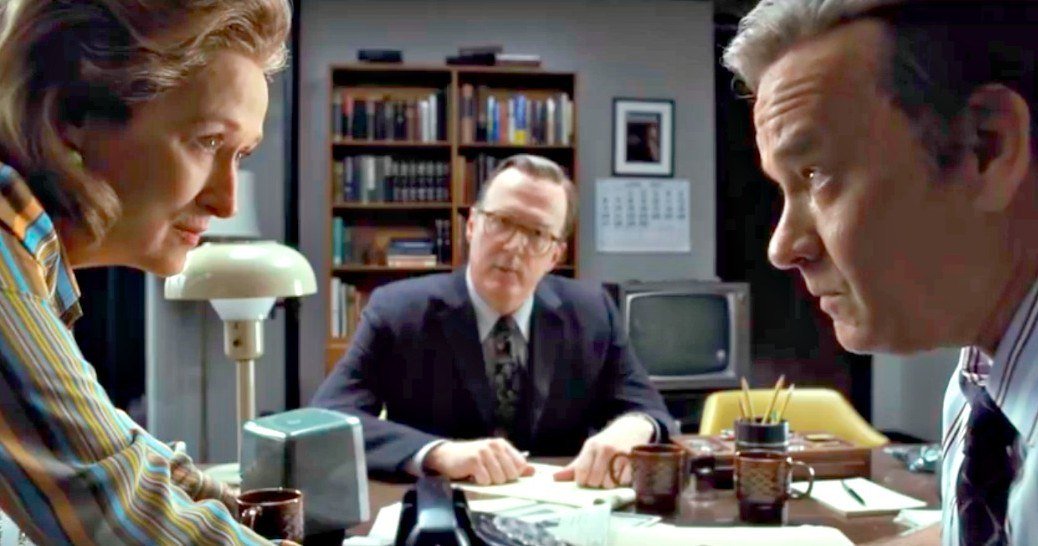
Heavy hitters this week: Oscar contenders and people who just hit hard. We talk through The Post, The Commuter, Jane and what’s new in home entertainment.
Sure, this is a kid’s movie. The main character is a talking bear. His greatest aspiration is to buy a rare pop-up book of London for his Aunt’s birthday. In most ways, the film is predictable. Almost rote. But there’s some sparkle there, too.
Firstly, the movie is incredibly well lit. Lighting this good has no business in a children’s film’s sequel. And yet there it is. Warm yellow homes, moody shafts of light through window panes, snowy alleyways. That light isn’t wasted either. It illuminates bright, punchy sets and colorful costumes hung on a parade of quirky characters.
The Wes Anderson inspiration shows up in bright green rooms and pastel pink prison uniforms. Director Paul King finds sweetness in even life’s most ordinary moments. Where he cannot find sweetness, in a grimy pipe or a shattered telephone box, he finds curiosity instead, playing with light and camera angles.
Following a pop-up book of London, King makes sure to hit all of London’s beloved landmarks. London is a part of Paddington’s mythology. It’s a magical kingdom full of fun and mystery. King paints the city beautifully.
Secondly, what a cast. Sally Hawkins, fresh off her incredible performance in The Shape of Water, oozes gumption. English favorites parade across the screen: Peter Capaldi, Richard Ayoade, Brendan Gleeson.
None quite as fun, though, as Hugh Grant in his role as an unhinged stage actor. As the baddie, Grant never slips into evil. Nefarious, yes, but never evil. King keeps his film silly, always, but never allows it to be hollow.
For every predictable gag there’s a genuinely funny moment, too. Good children’s films cater to their whole audience, kids and parents. Its important to screen films like these in theatres. I was reminded of this when a character passed out, face down, into a cake. The children in the audience shrieked with delight.
That’s Paddington 2’s final merit. It’s good natured. It has jokes, visual gags, and constant reminders to be kind. Paddington believes in himself, his family, and his friends. Sure, a children’s film about a talking bear isn’t destined to be profound. But it manages to be sweet all the way through, just like marmalade.