The Room Where It Happened

One Night in Miami

by George Wolf

The room where it really happened was in Miami’s Hampton House. After a young Cassius Clay won the Heavyweight title from Sonny Liston on Feb. 25, 1964, he joined his long time mentor Malcolm X, NFL legend Jim Brown and soul sensation Sam Cooke at the South Florida hotel.

Writer Kemp Powers first imagined how that meeting of legendary minds might have played out, and now Regina King – who already has an acting Oscar – jumps into the race for Best Director with a wise and wonderful adaptation of Powers’s stage play. Propelled by a bold, vital script from Powers himself, King invites us into a frank discussion about the steps in the civil rights movement of the 1960s, and about each man’s role in the struggle.

Though existing mainly inside that single hotel room, One Night in Miami is in a constant state of motion, as four talented actors serve and volley through a ballet of insight and intellect.

Portraying a bigger-than life-personality such as Clay without a hint of caricature is no easy feat, but Eli Goree handles it with smooth charisma.

Clay’s braggadocio is as playful and charming as you remember, but Goree also finds authentic shades of apprehension about the societal role Clay (who would publicly join the Nation of Islam and announce his name change to Muhammed Ali just weeks after the meeting) was about to accept.

Kingsley Ben-Adir’s Malcom X is a measured voice of wisdom, but the film finds its gravitational pull in the forces of Aldis Hodge and Leslie Odom, Jr.

As Brown, Hodge is beautifully restrained power, a man of incredible strength still able to be staggered by sudden blows of racism. Brown’s path as a leader of the civil rights movement contrasts sharply with Cooke’s, and Odom, Jr. gives the singer surprising and resonant layers that include anger at the thought that he’s not all in for the cause.

The characters continually challenge each other, as King and Powers challenge us with a profundity that comes from their refusal to settle for easy answers. Each question the film raises connects past to present with committed grace, and One Night in Miami finds a beautiful dignity that shines in the face of bigotry. 

Hair of the Dog

Bright Hill Road

by Hope Madden

No one looks forward to the consequences of their actions. If you believe in God, they’re coming for you one way or the other.

Robert Cuffley’s latest economically made horror Bright Hill Road shadows no-longer-functioning alcoholic Marcy (Siobhan Williams) through a pretty bad stretch. It would be hard to imagine things getting any worse, really. So, Marcy decides to drive across country to spend some time with her sister Mia in California.

She doesn’t drive straight through, though. She wakes up in her car in front of a pretty dodgy looking hotel in some forgotten little town and finds herself checking in. The place is super weird, though, and Marcy’s never sure if she’s hallucinating, drying out, or seeing and hearing ghosts.

Most of the time Bright Hill Road works—playing on your guesswork without giving away all its secrets. Sometimes it does not work. But the film lives and dies with Siobhan Williams’s performance.

Slight but scrappy, she takes on the image of Angela Bettis or Elliot Page. You worry for her, believe in both her vulnerability and the chip on her shoulder that might get her through it. She’s weary but spirited and more than anything, she’s in denial.

Cuffley’s direction takes on a hallucinatory quality that suits Susie Maloney’s trippy script. Both Act 1 and Act 3 feel rushed—the opening bit of violence shocks you out of complaining, but the final moments border on being unearned. Still, the meat of the film meanders at a creepy pace, one that conjures the feeling of a bad dream.

Bright Hill Road has an intentional, low rent Overlook quality to it—something both supernatural and seedy. It carries its own internal logic, and while the toughest eruptions of violence hit us in the film’s opening moments, it has some grim images to share as the hotel takes on additional guests.

Cuffley doesn’t break a lot of new ground, but his is an appealing riff on a familiar tune. Most of our demons are within. Trauma takes on an even more sinister form when it’s mixed up with shame. Addiction is its own monster. No one likes a shared bathroom.

Is Anyone There?

Go/Don’t Go

by Brandon Thomas

The opening minutes of Go/Don’t Go hint at a burgeoning relationship drama. Shy boy meets an outgoing girl. Girl draws the boy out of his shell. Hints of electricity crackle as they find themselves engrossed in conversation. The parts are all there, but as the scene comes to a close, Go/Don’t Go crosses into something a little more…sinister. 

Set in a not-so-distant future, Adam (writer/director Alex Knapp) spends his days completing routine tasks. He cleans, prepares meals and works on repairing a car. When not doing his day-to-day, Adam wanders the countryside, checks homes and marks areas on a map as “Go/Don’t Go.” Adam appears to be the only person left.

Isolation and loneliness exist in the periphery of every post-apocalyptic type movie. In Go/Don’t Go, the isolation is front and center. Adam doesn’t spend the entire running time evading cannibalistic marauders or dispatching shuffling zombies. No, Adam’s conflict exists in the haunted memories of a past love, K (Olivia Luccardi, It Follows). 

Looked at as a typical horror/thriller, Go/Don’t Go could be a frustrating watch for many. There’s a purposeful aloofness to the narrative that builds a lot of mystery, but also never shows much interest in resolving said mysteries. Adam’s flashbacks fill in interesting character gaps instead of explaining how Adam found himself in his current situation. 

The film’s most interesting angle is how it plays with metaphor. Is the landscape in which Adam lives even real? Every house he enters has running water and electricity. The market he goes to is always stocked full of fresh products. Maybe Adam’s shyness, hinted at in those opening minutes, has consumed him after the ending of a relationship. Of course, nothing is definitive and most of this is left to the viewer to decide. 

Knapp’s handling of familiar territory is a breath of fresh air. Despite the lack of momentum in the narrative, Knapp taps into a sense of urgency through clever editing. This allows layers of character to be peeled back piece by piece. It’s enough to keep us interested and invested in a story that moves at more of a sporadic pace. 

By focusing on character and theme, Go/Don’t Go manages to stand out in a sea of post-apocalyptic tales. 

https://www.youtube.com/watch?v=38k4Mmat_6I

Not a British Comedy

Bloody Hell

by Hope Madden

The title made me think I was in for droll English humor. Not the case.

Bloody Hell, the latest from filmmaker Alister Grierson, is a kind of American/Finnish hybrid about tourism and how it’s often a terrible decision.

Rex (Ben O’Toole, Detroit) made one mistake. Well, it was sort of a series of mistakes all at one time, but they’re only mistakes if you think of them that way, and he doesn’t. Not really. Yes, one person died as a result, but Rex’s debt is paid now and he’s ready to rebuild his life.

Just not in the US, where the video of his “mistake” made him wildly, oppressively famous. Nope, somewhere else. Somewhere far away. Somewhere calm.

Finland! It’s the happiest country in the world! (It’s true. Look it up.) What could go wrong? There’s even reindeer.

There’s also this one sadistic and insane family, and Rex is about to get to know them and learn that unwanted fame is not, in the grander scheme, that bad when the grander scheme includes Finnish cannibals.

Bloody Hell is funny. It’s mean funny, sometimes tone-deaf mean and not so funny, but the often joyously dark humor almost makes up for that. The film’s success is mainly thanks to O’Toole, who manages to be sympathetic and sort of awful.

A string of lunatic supporting turns moves the story forward. Caroline Craig and Matthew Sunderland, in particular, are creepy fun as the heads of the household.

Credit screenwriter Robert Benjamin for much of the film’s frenetic pace. He has a knack for understanding what details we really do not need to possess to be able to follow along. Benjamin has basically strung together a series of carnage-strewn set pieces, and Grierson relies on O’Toole’s charisma to elevate these for messy, bloody laughs.

With self-deprecating charm to burn, O’Toole creates a wrong-headed but hilarious and almost sweet tone that helps Grierson hold together a plot that throws a lot at you. But at its heart, Bloody Hell is the tale of a lonely guy—endearingly but borderline psychotically lonely—and what it takes for him to find someone to love.   

It takes a trip to Finland. No wonder they’re so happy over there!

Peace From the World

The Reason I Jump

by George Wolf

Ten years ago, a Japanese teenager wrote a book that quickly became regarded as “an envoy from another world.”

With The Reason I Jump, 13 year-old Naoki Higashida expressed in poetic detail how a nonverbal autistic child sees the world.

In short, it’s “details first…then the whole thing.”

For the film adaptation, veteran documentarian Jerry Rothwell gently weaves narrated passages from the book around visits with a handful of other mostly nonverbal autistic teens from around the globe.

The wonderful cinematography from Ruben Woodin Deschamps is a perfect vessel to unveil the beautifully undiscovered country the film explores. These teens are talented, intelligent and expressive, longing for friendships that only require “peace from the world.”

And more than anything, they want to change the perception of autism by joining the conversations they’ve long been the subject of. The Reason I Jump is a touching introduction into how much we can learn by listening to them.

Better Together

If Not Now, When?

by Hope Madden

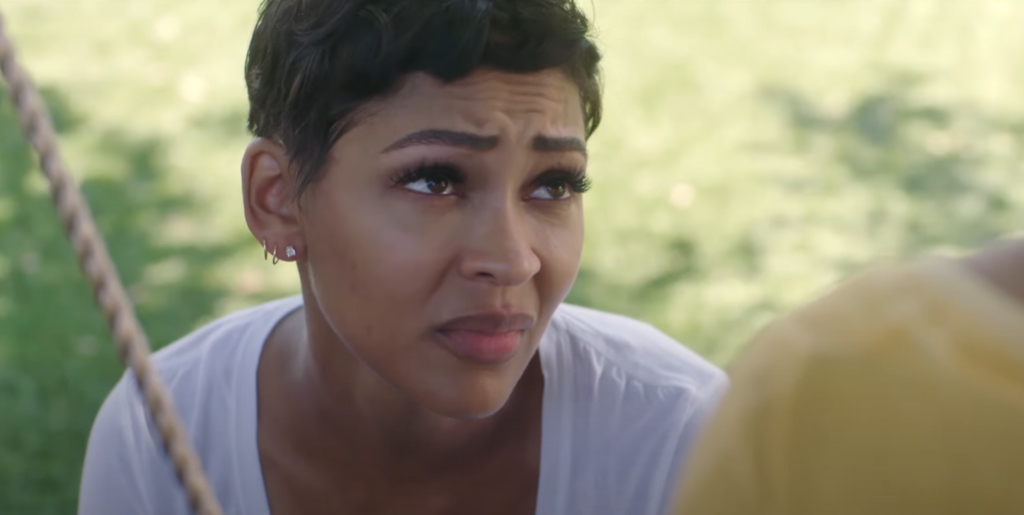
Meagan Good and Tamara Bass have essentially grown up before our eyes. Mainly taking supporting roles in films and TV, the veterans have been fairly consistent presences since the Nineties.

For their latest, they create their own roles and their own stories. If Not Now, When?—written by Bass and co-directed by the duo—chronicles the lives of four high school besties facing their thirties and wondering what went wrong.

Good and Bass co-star as, respectively, a professional facing her addiction problem and a nurse unwilling to hope for a family of her own. They’re joined by Mekia Cox as a football star’s unhappily pregnant wife, and, most impressively, Meagan Holder as a mother torn between family and ambition.

The four have a fairly solid chemistry, with Holder bringing a mellow, peacemaker vibe that diffuses much of the melodrama the film flirts with. A solid supporting cast—Edwin Hodge is especially strong as a love interest—help give each character’s personal story some needed depth and interest.

Bass’s script is too often superficial, creating moments for each star to shine, but those moments invariably feel unearned. Without weightier or more believable interior lives and conflicts, flashes of heartbreak or breakthrough come off as little more than fodder for an acting reel. They rarely feel like honest moments in a character’s life.

If Not Now, When? does a lot right, too. The pacing of each character’s arc is different, so the excitement and poignant moments are staggered—more like real life. We don’t all hit our own personal highs and lows simultaneously (thank God), and neither should these characters. The cadence not only lends some needed authenticity, but it gives the film a slight irregularity in its structure, which keeps it from feeling formulaic or predictable.

In keeping with that thread of authenticity, Bass wisely avoids closing each individual story with tidy precision. Will she or won’t she? And how will that turn out for her? The questions are rarely answered with any real finality, and that emphasizes the film’s point, which is not how each one is doing individually. Bass and Good are more interested in exploring how they do together.

Troubled Water

Pieces of a Woman

by George Wolf

Pieces of a Woman opens with a crew working on bridge construction. It closes with that new bridge standing strong after many months of work. And it between, the film gracefully navigates how one woman learns to rise above some deeply troubled waters.

Vanessa Kirby is devastatingly good as Martha, a pregnant Bostonian who settles in with her partner Sean (Shia LaBeouf, a bit too showy) for the home birthing experience they have planned since day one.

What they didn’t plan on was backup midwife Eva (a terrific Molly Parker) having to take the lead when their original choice is tied up with another, longer-than-expected delivery. And when events turn tragic, Martha and Sean are hit with waves of grief while family, friends, and lawyers search for blame and restitution.

Director Kornél Mundruczó wields a camera that meanders to great effect, utilizing slow, extended takes and Benjamin Loeb’s dazzling cinematography to completely immerse us in Martha’s emotional upheaval. Mundruczó teams again with screenwriter Kata Wéber (White God, Jupiter’s Moon) for a gentle journey toward one woman’s healing, where the clear metaphors (the bridge, Martha’s fixation on apples) and moody score (credit composer Howard Shore) ultimately land with more sincerity than force.

And what a vessel the filmmakers have in Kirby, who stakes her claim as a talent full of staggering depth. From the robotic, soul-deadening way Martha responds to condolences to her final defiance against her tone deaf mother (a blistering Ellen Burstyn), Kirby delivers every note of Martha’s arc with a humanity that is achingly real.

This is a film that delivers just what the title promises: one woman, shattered into pieces, grasping for the chance to heal in her own way, on her own terms. And even in its most uncomfortable moments, Pieces of a Woman doesn’t blink.

That, and Kirby, make it hard to look away.

Cloudy with a Chance of Whoop Ass

Shadow in the Cloud

by Hope Madden

Sometimes, you’re just in the mood for a B movie, especially if it’s a creature feature.

Extra points if it’s a feminist take on a misogynist’s story.

Shadow in the Clouds co-writer Max Landis has been accused of sexual misconduct and/or outright assault by eight different women. And while it’s tough to stomach any ticket purchase benefitting him, the truth is that co-writer/director Roseanne Liang’s film has stylized fun in depantsing exactly the kind of weak, entitled, insecure crybaby that makes you think of Max Landis.

If you’ve seen the New Zealander’s 2017 horror short Do No Harm, you’ll recognize Liang’s writing here.

The film tags along on a non-combat WWII military flight out of New Zealand. With seconds to spare, an unexpected female flight officer named Maude Garrett (Chloe Grace Moretz) boards the flight carrying a duffel bag with confidential contents.

The rowdy, boorish, some would say violently sexist crew quickly stashes Maude – sans duffel – in the gun turret until take off.

This is a brilliant move, cinematically. It creates immediate, palpable tension because she is locked into a tiny cell dangling from a moving airplane and dependent upon the good nature of the mainly bad natured men above.

It also allows Moretz and Liang the opportunity to introduce any number of terrifying elements out there in the clouds.

But mainly, it gives Moretz the chance to own the film for a while, and she does. Together filmmaker and lead slyly reveal more about Maude, ratcheting tensions and thrills as they do. Liang leans into budgetary constraints, developing a cheesy retro vibe while finding appealing ways to introduce different characters.

In many respects, the writing is the weakness. Too often scenes devolve into obvious but inauthentic ways to further the plot. Still, a lot tends to be forgivable in an openly, charmingly B movie.

If the style doesn’t engage you immediately, abandon all hope. The film builds on style, repaying your attention with increasingly insane action ending in a climax where one fight, one monster stands in for every belittling, dangerous, violent, controlling obstacle Maude has ever faced.

You can picture Max Landis if you like.

Shadow in the Cloud is a ludicrous, over-the-top action horror. It knows what it is and it delivers on its promises.

COFCA Nominees Announced

Nominees for the 19th annual Columbus Film Critics Association awards 

(Columbus, January 3, 2021) The Columbus Film Critics Association (COFCA) is pleased to announce the nominees for its 19th annual awards.  Winners will be announced on the evening of January 7th, 2021.

Founded in 2002, the Columbus Film Critics Association is comprised of film critics based in Columbus, Ohio and its surrounding areas. Its membership consists of 26 print, radio, television, and online critics. COFCA’s official website at www.cofca.org contains links to member reviews and past award winners.  

The 2020 Columbus Film Critics Association awards nominees are:

Best Film 

First Cow

Ma Rainey’s Black Bottom

Mank

Minari

Never Rarely Sometimes Always

Nomadland

Promising Young Woman

Soul

Sound of Metal

The Trial of the Chicago 7

Best Director 

-Lee Isaac Chung, Minari

-Emerald Fennell, Promising Young Woman

-David Fincher, Mank

-Darius Marder, Sound of Metal

-Chloé Zhao, Nomadland

Best Actor 

-Riz Ahmed, Sound of Metal

-Chadwick Boseman, Ma Rainey’s Black Bottom

-Delroy Lindo, Da 5 Bloods

-Gary Oldman, Mank

-Steven Yeun, Minari

Best Actress 

-Viola Davis, Ma Rainey’s Black Bottom

-Sidney Flanigan, Never Rarely Sometimes Always

-Julia Garner, The Assistant

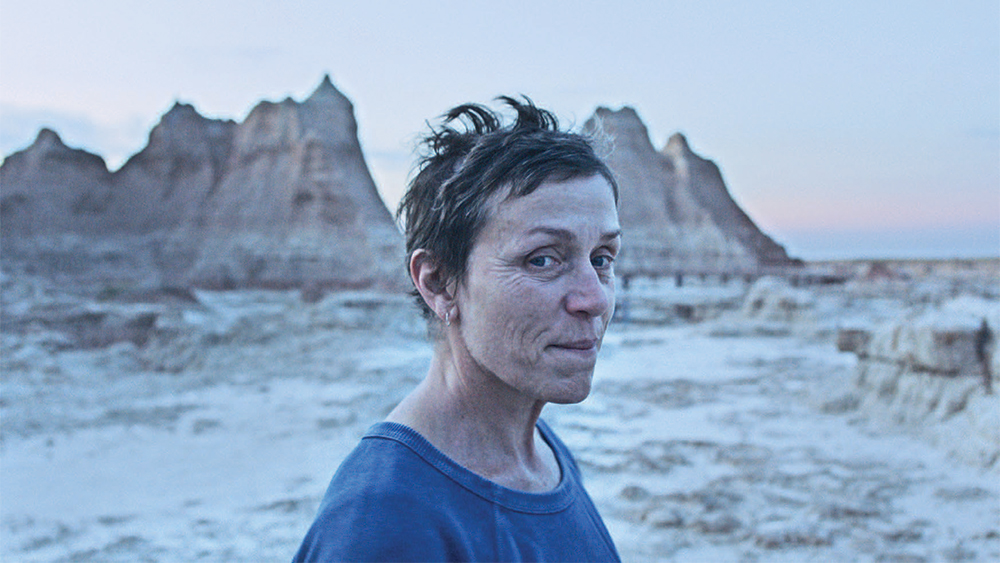
-Frances McDormand, Nomadland

-Elisabeth Moss, Shirley

-Carey Mulligan, Promising Young Woman

Best Supporting Actor 

-Sacha Baron Cohen, The Trial of the Chicago 7

-Chadwick Boseman, Da 5 Bloods

-Bill Murray, On the Rocks

-Paul Raci, Sound of Metal

-Mark Rylance, The Trial of the Chicago 7

Best Supporting Actress 

-Maria Bakalova, Borat Subsequent Movie Film

-Olivia Colman, The Father

-Olivia Cooke, Sound of Metal

-Amanda Seyfried, Mank

-Youn Yuh-jung, Minari

Best Ensemble 

Da 5 Bloods

Ma Rainey’s Black Bottom

Minari

Promising Young Woman

The Trial of the Chicago 7

Actor of the Year (for an exemplary body of work) 

-Sacha Baron Cohen (Borat Subsequent Moviefilm and The Trial of the Chicago 7)

-Chadwick Boseman (Da 5 Bloods and Ma Rainey’s Black Bottom)

-Elisabeth Moss (The Invisible Man and Shirley)

Breakthrough Film Artist 

-Radha Blank, The Forty-Year-Old Version – (for producing, directing, screenwriting, and acting)

-Emerald Fennell, Promising Young Woman – (for producing, directing, and screenwriting)

-Sidney Flanigan, Never Rarely Sometimes Always – (for acting)

-Kitty Green, The Assistant – (for producing, directing, screenwriting, and film editing)

-Eliza Hittman, Never Rarely Sometimes Always – (for directing and screenwriting)

-Alan S. Kim, Minari – (for acting)

-Darius Marder, Sound of Metal – (for directing and screenwriting)

Best Cinematography 

-Christopher Blauvelt, First Cow

-Eric Messerschmidt, Mank

-Lachlan Milne, Minari

-Joshua James Richards, Nomadland

-Hoyte Van Hoytema, Tenet

Best Film Editing

-Alan Baumgarten, The Trial of the Chicago 7

-Kirk Baxter, Mank

-Robert Frazen, I’m Thinking of Ending Things

-Mikkel E.G. Nielsen, Sound of Metal

-Kelly Reichardt, First Cow

Best Adapted Screenplay

-Sarah Gubbins, Shirley

-Charlie Kaufman, I’m Thinking of Ending Things

-Kemp Powers, One Night in Miami

-Jonathan Raymond & Kelly Reichardt, First Cow

-Ruben Santiago-Hudson, Ma Rainey’s Black Bottom

-Chloé Zhao, Nomadland

Best Original Screenplay

-Lee Isaac Chung, Minari

-Emerald Fennell, Promising Young Woman

-Darius Marder & Abraham Marder, Sound of Metal

-Andy Siara, Palm Springs

-Aaron Sorkin, The Trial of the Chicago 7

Best Score 

-Alexandre Desplat, The Midnight Sky

-Ludovico Einaudi, Nomadland

-Emile Mosseri, Minari

-Trent Reznor and Atticus Ross, Mank

Trent Reznor and Atticus Ross, Soul

Best Documentary 

Boys State

Collective (Colectiv)

Crip Camp

Dick Johnson is Dead

The Painter and the Thief

Time

Best Foreign Language Film 

Bacurau

Beanpole (Dylda)

Martin Eden

Minari

The Whistlers (La Gomera)

Best Animated Film 

The Croods: A New Age

Onward

Over the Moon

Soul

Wolfwalkers

Best Overlooked Film 

The Assistant

Bloody Nose, Empty Pockets

Palm Springs

Possessor

The Vast of Night

COFCA offers its congratulations to the nominees.

Previous Best Film winners:

2002:  Punch-Drunk Love

2003:  Lost in Translation

2004:  Million Dollar Baby

2005:  A History of Violence

2006:  Children of Men

2007:  No Country for Old Men

2008:  WALL·E

2009:  Up in the Air

2010:  Inception

2011Drive

2012Moonrise Kingdom

2013:  Gravity

2014Selma

2015Spotlight

2016La La Land

2017Lady Bird

2018If Beale Street Could Talk

2019Parasite (Gisaengchung)

For more information about the Columbus Film Critics Association, please visit www.cofca.org or e-mail info@cofca.org

The complete list of members and their affiliations: 

Richard Ades (Freelance); Dwayne Bailey (Bailey’s Buzz); Adam Barney (The Film Coterie); Sam Brady (I Am Sam Reviews); Logan Burd (Cinema or Cine-meh?); Kevin Carr (www.7mpictures.com, FilmSchoolRejects.com); Bill Clark (www.fromthebalcony.com); Olie Coen (Archer Avenue, DVD Talk); John DeSando (90.5 WCBE); Johnny DiLoretto (90.5 WCBE, PencilStorm.com); Chris Feil (FilmMixTape.com, TheFilmExperience.net); Frank Gabrenya (The Columbus Dispatch); Mark Jackson (MovieManJackson.com); Brad Keefe (Columbus Alive); Kristin Dreyer Kramer (NightsAndWeekends.com, 90.5 WCBE); Adam Kuhn (Corndog Chats); Roger Legg (The Film Coterie, Faith and Film); Hope Madden (Columbus Underground, Columbus Radio Group, WTTE-TV and MaddWolf.com); Paul Markoff (Filmbound); David Medsker (Bullz-Eye.com); Lori Pearson (Kids-in-Mind.com, critics.com); Mark Pfeiffer (Filmbound, Reel Times: Reflections on Cinema); Melissa Starker (Freelance); George Wolf (Columbus Radio Group, Columbus Underground.com, WTTE-TV and MaddWolf.com); Jason Zingale (Bullz-Eye.com); Nathan Zoebl (PictureShowPundits.com).


Hope Madden and George Wolf … get it?