Cue and A

V/H/S/94

by George Wolf

You ready for scary?

1994 was almost thirty years ago. Three zero.

So the fourth film in the V/H/S series places the found footage premise in a decidedly nostalgic vibe, with plenty of videotape filter effects, “taped over” moments and no worries about smartphones crashing the internal logic.

Five filmmakers deliver separate short film visions, as four segments are bookended by an anchor meant to tie them all together as a narrative whole.

Jennifer Reeder handles the wraparound, entitled “Holy Hell,” which follows a SWAT team invading a compound while members shout about drugs and search warrants. They find much more than drugs in a frantic, satisfactory opening that suffers from some uneven production values and pedestrian acting.

Chloe Okuno’s “Storm Drain” finds an Ohio TV reporter and her cameraman investigating the local legend of the Rat Man. Venturing a little too deep in the sewers, what they find sheds a nicely subtle light on the plight of the homeless before the creature effects come calling.

Okuno’s camerawork and dark tunnel framing is effective, and Anna Hopkins delivers a fine performance as the reporter, but like all the segments here, “Storm Drain” feels like a great idea that’s never fully realized.

That is the most true with Simon Barret’s “Empty Wake.” Barrett, writer of You’re Next, The Guest and Blair Witch, gives us a funeral home employee waiting out a wake that no one is attending. As a storm escalates outside, noises from inside the casket suggest a soul may not be ready to move on.

Barrett lays out some nicely simplistic stakes, and plays a fine game of peek-a-boo with the inside lights going off and on, but the payoff ultimately lands as a bit familiar and anti-climactic.

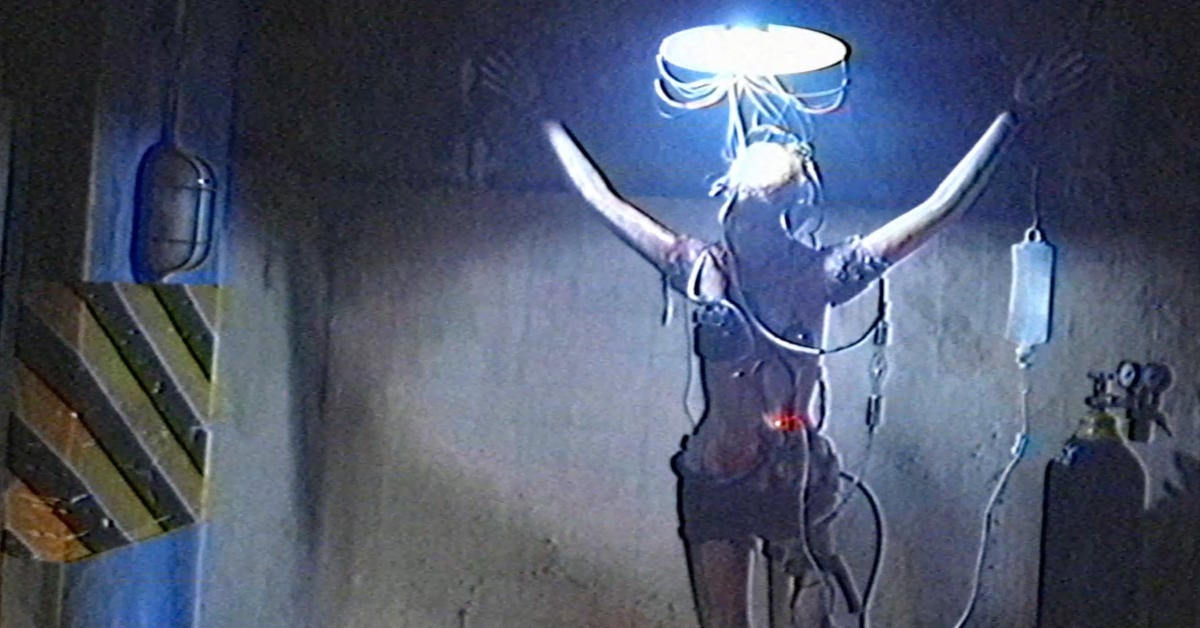
The opening shot of Timo Tjahjanto’s “The Subject” grabs your attention immediately, bringing you into the horrific laboratory of a mad scientist conducting human experiments. What starts as a fun and gore-filled homage to both Frankenstein and Tetsuo descends into an overlong, first-person shooter game that squanders much of its early potential.

“Terror,” the final segment from Ryan Prows, brings horror comedy to the party with a look at good ‘ol boy militia members aiming to overthrow the government. They’re more than well-armed, they’re fostering a supernatural entity. And you can guess how well that goes.

Prows never completely sets the tone, as the few truly comedic moments crash into an overall atmosphere that plays it too straight for satire.

Reeder closes it all out with the conclusion of “Holy Hell,” bringing a surprise to one of the SWAT teamers and an overly tidy reinforcement of the videotape theme.

V/H/S/94 presents a host of promising ideas and several solid moments. A step up from Viral for sure, but with too many false starts for a rewind-able experience.

Dark Academia

Detention

by Christie Robb

Dead Poet’s Society meets Pan’s Labyrinth in John Hsu’s Detention, based on a 2017 2-D video game.

Set in 1960s Taiwan, the state is under martial law. Reading communist and other left-leaning books is punished severely—in some cases by death. In the midst of this repression, two high school teachers start a secret book club that meets in a storeroom and introduces students to works of “subversive literature.” One of the students narcs on the group, unleashing government-sanctioned violence upon the school.

The story unfolds in several parts. “Nightmare” starts with two of the students waking up in the now-empty and somewhat dilapidated school building, unaware of how they got there and what happened before they went to sleep.  The students are literally haunted by their own recent past. Some of the horror tropes are familiar: long, vertigo-inducing, ill-lit hallways, creepy girls with hair hanging in front of their eyes, fairly effective jump scare. This section seems to be most heavily influenced by the videogame source material. What is particularly effective here is a literal embodiment of the repressive state that menaces the corridors.

The section “The Whistleblower” shows the events that led to the outing of the book club. It takes an onion-peeling approach, showing the motivations and potential culpabilities of various participants, layer by layer. Awe-inspiring and sadly realistic how so much deplorable violence can result from the banal foibles of adolescents and their ever-so-slightly older teachers.

“The Ones Who Live” establishes the thesis of the work, that it’s important for those who live on to remember and admit to mistakes made in the past. As long as there are people living, there is hope.

Well-acted, with cinematography and sound design that keep us poised for scares, Detention does a wonderful job delivering a SpooOOooOOky season movie while also conveying a message about the price of freedom and liberty.

Screening Room: Venom: Let There Be Carnage, The Many Saints of Newark, Titane, Addams Family 2 & More

The Glam Fam

The Weasel’s Tale

by Brandon Thomas

Filmmakers love to poke fun at themselves almost as much as they love to celebrate each other. From The Player and Barton Fink to Tropic Thunder and Hail, Caesar!, Hollywood hasn’t had much of a problem cashing in on making fun of the vain, pompous artists who make movies. These are all distinctly American examples, though.

How much differently would this kind of movie play if moved to South America?

Not much as it turns out.

Mara (Graciela Borges), her husband Pedro (Luis Brandoni), and their friends Martin (Marcos Mundstock) and Norberto (Oscar Martinez) all live in a grand house in the Argentinian countryside. At one point in the past, all of them were involved in Argentina’s luscious film industry. Mara, in particular, was an actress acclaimed not only for her prowess in front of the camera but also for her beauty. Martin, a writer, and Norberto, a director, both worked with Mara on countless films. Pedro sought to be an actor of Mara’s caliber but often had to settle for bit parts at her side.

The aging artists spend their days discussing exploits of decades past, putting on mock awards ceremonies and using a shotgun to rid the grounds of weasels. The monotony is broken up when two charming, young real estate agents show up with an attractive offer to buy the house from Mara. The men instantly smell trouble, but the agents play to Mara’s vain, fame embracing nature, and use that to their advantage.

The Weasel’s Tale plays like Sunset Boulevard meets the work of Wes Anderson, then it does Tropic Thunder. The comedy never goes as broad as it is in Stiller’s film, yet it’s never as dark as Sunset. There’s a twinkle in the eyes of the characters even when they’re cutting each other down, or plotting to murder the people trying to force them out of their home. It’s a quaint bloodlust.

The plot never becomes too unwieldy but does manage to offer some surprising twists along the way. The “mystery” of the film almost seems like an afterthought, but an afterthought that was well thought out and by design.

Director Juan Jose Campanella does a remarkable job threading the needle through such distinct tone management. There’s a sadness that hangs over the film, but not the kind that threatens to depress the audience. No, this sadness helps us find empathy for protagonists who might not necessarily deserve it.

The cast of The Weasel’s Tale is the ultimate draw. The majority of the film is spent in the company of Mara, Pedro, Martin and Norberto. And all four of them are rotten sons of bitches to varying degrees. (Well, maybe not Pedro, but guilt by association, okay?) Borges especially shines. For most of the movie, Mara never lets the veneer of her vanity crack – not even to her dear Pedro. Yet, we see instances here and there. There’s a vulnerability beneath the surface that Mara can barely contain, and Borges does a wonderful job showing that.

The Weasel’s Tale is a fantastic melding of dark comedy, noir, and satire – but one never lets either genre fully take over.

Girls Are Better Off Dead

Mayday

by Cat McAlpine

Life’s hard for Ana, who is sleeping in her car and doing her best serving under her abusive boss. Although the time and place aren’t specified and don’t matter, the dark and dated dance hall she caters in suggests that Ana’s gloomy life is somewhere in Eastern Europe. But she won’t stay there for long.

An act of violence shakes Ana (Grace Van Patten) from her stupor and in a dreamy mashup of Alice in Wonderland, Sucker Punch, and a hint of Sylvia Plath, Ana escapes her life by crawling through a glowing oven. On the other side, she discovers a ragtag group of girls – brutal and intoxicating Marsha (Mia Goth), hearty Gert (Soko), and sweet Bea (Havana Rose Liu). The girls play at war, picking off men from any side of an unknown eternal conflict to torture and kill. Instead of a magic tree house, they live inside the hull of an old U-Boat. Like coastal sirens, they hop on the airwaves and cry “Mayday,” leading men into storms and uncertain territory.

Nervous at the thought of killing, Ana warns, “I’ve never been in a war.”

“You’ve been in a war your whole life, you just don’t know it,” replies Marsha.

Writer/Director Karen Cinorre creates a beautiful and increasingly dark dreamscape for Ana to explore her trauma, but the dialogue is heavy-handed while the plot stays meandering and loose. The result is a contemplative romp through female rage, painted like a grim fairytale that isn’t quite sure where it’s going.

Aesthetically, the film is fantastic, and it is anchored by strong performances. Van Patten is enjoyable to watch as Ana comes into her own. Goth is terrifying and power-hungry, a believable cult leader. But Cinorre’s fever dream burns on too long and gets too caught up in its own rules of make-believe, casting off metaphor and leaving it for dead. War is a childlike fantasy playscape for the girls who feel powerless otherwise. But are they all dead? Is this a shared hallucination? Some of the players are characters from Ana’s own life while others are strangers.

One scene implies that Ana has gunned down a whole camp of men, but it shows her doing a choreographed dance with them instead. Is this an illusion inside of an illusion? Mayday doesn’t stand up to questioning, which suits the fantastical film just fine most of the time.

Ana must discover what measure of hope and rage suits her. Marsha is all rage. Bea all hope. And Gert doesn’t want to talk about it. As soon as Ana takes to killing men, she starts seeing all the ones who were kind to her before. And though their fairytale island is littered with ill-suited husbands and would-be rapists, Ana still struggles to condemn the whole kingdom of men.

Ultimately, Mayday is a fine telling of how to find our rage and how to tend to our sadness without letting go of the good the world still has to offer.

Daughter of Darkness

The Addams Family 2

by George Wolf

Two years ago, The Addams Family returned to their cartoon roots with an animated feature that leaned heavily on little Wednesday Addams for its few sparks of macabre fun.

Despite turning to a more convoluted plot line, AF2 doesn’t do much to improve the family reputation.

Wednesday (Chloe Grace Moretz) is still the standout here, putting the creepy and kooky in the 3rd grade science fair. She’s denied a prize thanks to a new “everybody wins” school policy, but her brilliance catches the eye of shady scientist Cyrus Strange (Bill Hader).

Worried she’s being dumbed down by the idiots around her, Wednesday rebuffs cheer up attempts from Dad Gomez (Oscar Isaac) and Mom Morticia (Charlize Theron) when a pushy lawyer (Wallace Shawn) comes knocking with a bombshell.

His clients believe Wednesday may actually be their daughter and are requesting a DNA test. What else can Mom and Dad do except pack Wednesday, Pugsley (Javon “Wanna” Walton, stepping in for the now deeper voiced Finn Wolfhard), Fester (Nick Kroll) and Lurch (Conrad Vernon, who again co-directs with Greg Tiernan and newcomer Laura Brousseau) into the haunted camper for that fallback device for hastily-connected hi jinx, the road trip!

It’s a three week trek to (where else?) Death Valley and back, stopping in Miami, San Antonio, and the Grand Canyon long enough to catch up with more family (Snoop Dogg’s Cousin It) and try out some mildly amusing gags.

Only a precious few – like the guy who keeps trying to propose to his girlfriend and “Thing” trying to stay awake while driving – actually land, and it’s up to Moretz and her perfect deadpan (“I’ve been social distancing since birth”) to remind us of what makes this family dynamic.

The script from Dan Hernandez and Benji Samit veers off into wild Dr. Moreau territory, adding even more baggage to a film that would have been wise to pack lighter. Inspired soundtrack choices (from Gordon Lightfoot to Motorhead) give way to forced pop and hip-hop, and the film’s attempt at an “own who you are” message seems half-hearted at best.

But what’s really lost is the inherent fun The Addams Family brings to wherever they are. When the world goes light, they go dark. That’s a fun and funny idea ready to be exploited.

Once again, Wednesday’s just waiting for the rest of the gang to get back to the family business.

Flesh & Bone & Other

Titane

by George Wolf

I’m just going to go with the official synopsis:

“Following a string of unexplained murders in France, a father is reunited with the son who has been missing for ten years.”

Fine, done, because knowing anything more about Julia Ducournau’s Palme d’Or-winning Titane could steal some of the mesmerizing, can’t-look-away, what-is-happening spell it inflicts on you.

Ducournau’s 2016 feature debut Raw shocked audiences with a brutally in-your-face metaphor mixing primal appetites and familiar bonds. She ups all the antes available with Titane, claiming her film is “its own wild animal” like a mad doctor unleashing her creation on an unsuspecting city of fools.

The film is alive with alternating color palettes, pulsating sounds and endless shocks of body horrific visuals. The sudden bursts of violence are downright pedestrian alongside the parade of boldly squirm-inducing clashes of flesh, bone and other.

But as she did with Raw, Ducournau finds humanity clawing out from the inhumane. Truly unforgettable performances from Vincent Lindon and Agathe Russell provide intimate examples of the extremes that even the most damaged souls are capable of in the search to care and be cared for.

It may not be shy about homages and influences, but Titane is indeed its own ferocious animal. Open the cage look the F out.

Double Trouble

Venom: Let There Be Carnage

by Hope Madden

An unusual note about comic book movies is that the sequel is often, perhaps usually, superior to the original. Why? Because the original can be so burdened by telling an origin story – usually one we already know.

Venom: Let There Be Carnage is one such film, superior to the original not because we already knew the symbiote antihero’s origin tale, though. Rather, director Ruben Fleischer’s much-maligned 2018 blockbuster suffered from a choppy first act and uninspired direction.

With director Andy Serkis (this guy knows how to motion capture) at the helm and a streamlined writing team (Kelly Marcel is the only writer from the original film to return, this time sharing the pen with star Tom Hardy), Let There Be Carnage determines its tone and pace from the opening scene and, for better or worse, rides that through to its concluding, post-credit moments.

The tone runs far closer to horror-comedy than the original, a theme that suits the story of frenemies, one trying to keep the other from eating human brains.

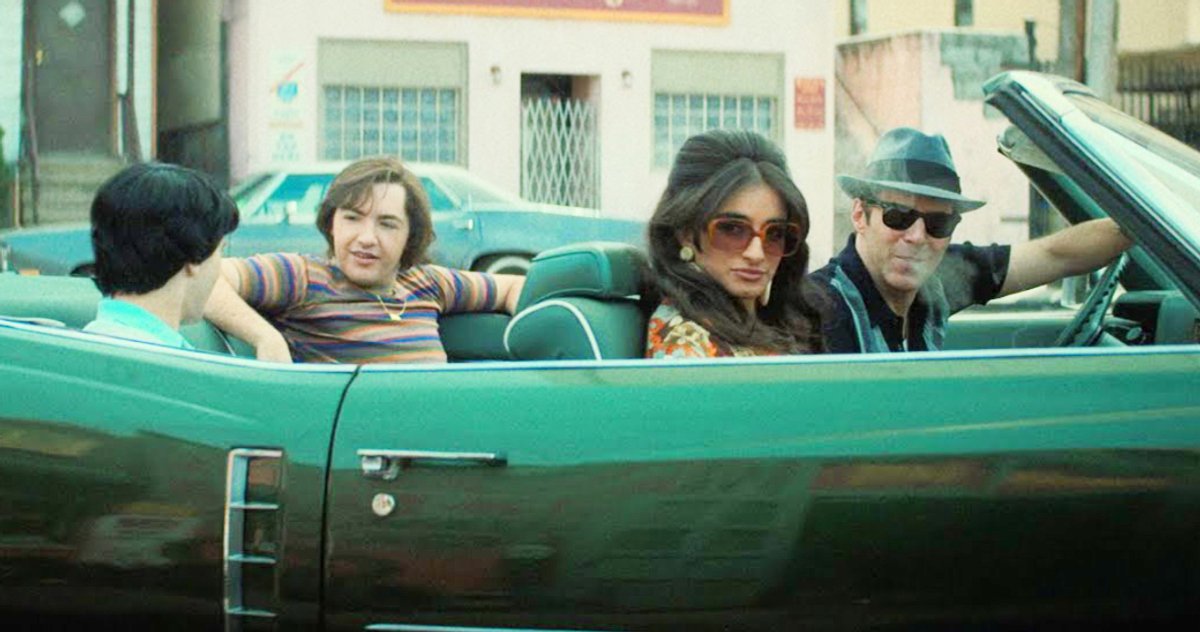
Hardy returns as Eddie Brock, a one-time superstar San Francisco reporter who ran afoul of his fiancé (Michelle Williams), his news outlet and the law last go-round, but found a life partner in the flesh-hungry extra-terrestrial parasite, Venom (also voice by Hardy). They have inadvertently infected cannibal serial killer Cletus Kassidy (Woody Harrelson) with symbiote blood, and now he, too, has a little voice and big alien inside of him.

Harrelson and his slightly digitally modified eyeballs offer villainous fun — though, to be honest, Riz Ahmed’s evil genius in the previous film was not only underappreciated but superior to Harrelson’s lunatic menace.

Still, Hardy is the reason to see the film. His Eddie is put upon and weary while his Venom is boisterous and often very funny. Through the two performances, Hardy delivers the type of lived-in animosity needed to sell any odd-couple story.

Though the CGI was sharper last time, the overall aesthetic Serkis creates is far campier and Goth, which feeds the film’s spooky season vibe. Williams, in a smaller role, finds her stride, though Naomie Harris’s underwritten character is a shame.

The result is a mish-mash of messy, frenetic fun with a higher body count than you might expect. Plus a post-credits stinger worth sticking around to see.

Games of Chance

Bingo Hell

by Hope Madden

Sometimes a title really hits you, like Bingo Hell. Maybe because the idea of playing this game makes me lose the will to live.

Co-writer/director Gigi Saul Guerrero has a slightly different use for the image of folks hunched over their boards hoping to win something from the community chest. A veteran of the horror short film, Guerrero pulls together conflicted thoughts about gentrification and neighborhood loyalty, poverty and affluence, and the sketchy influence of organized gambling for her first feature.

Speaking of veterans, Adriana Barraza — reliable as ever — leads the film as Lupita, the aging but spunky heart of her community, Oak Springs. She doesn’t dig gentrification. Watching members of her community take the cash and bail because they don’t have the cash to pay newly exorbitant rents doesn’t break her heart, it fuels her rage.

Lupita is a spitfire and Barraza’s relish with her outbursts drives the film’s energetic, campy outrage. Bingo Hell has social commentary to spare, but it’s not preaching. It’s attacking.

Guerrero’s film, part of Amazon Prime’s 2021 Welcome to the Blumhouse program, doesn’t oversimplify causes and solutions. Still, it delivers its recommendations as more of a blunt instrument than a surgical tool.

It is much fun to watch Barraza and other mature actors (L. Scott Caldwell, Grover Coulson, Clayton Landey) inhabit characters with agency and some degree of complexity, but it’s Richard Brake who offers Barraza the best sparring partner. Effortlessly sinister, the underappreciated character actor delivers another memorable baddie.

With characters to root for, violence to spare, and a healthy acceptance of chaos, Bingo Hell is pretty fun.

Undead American Summer

Black As Night

by George Wolf

“That was the summer I got breasts and fought vampires.”

Yes, a lot is happening in Shawna’s life, but Black As Night never loses that matter-of-fact teenage perspective even as it broaches some plenty familiar horror terrain.

Shawna (Asjha Cooper) and her BFF Pedro (Fabrizio Guido) uncover a ring of vampires in their New Orleans precinct, and it’s going to take some help from the hunky Chris (Mason Beauchamp) and a privileged Twilight fan (Abbie Gayle) to track down the lead bloodsucker and take him out.

Black As Night is part of 2021’s “Welcome to the Blumhouse” collaboration with Amazon, and it continues last season’s focus on films by and about women and/or people of color.

Director Maritte Lee Go and writer Sherman Payne mix Candyman‘s themes of gentrification and disposable populations with the surface level adventures of Buffy and The Lost Boys for a vampire tale that is most noteworthy for its fresh cultural lens.

The message isn’t unique or particularly subtle, production values can be shaky and there’s a hearty helping of exposition shortcuts, but these kids have spunk. Cooper makes Shawna’s journey from insecure wallflower to confident vampire killer an endearing one, and Keith David is here to lend his always welcome gravitas.

And though it often feels like Black As Night is content to just jump on a crowded ride, it consistently finds small moments to call its own. Plus, large numbers of vampires to kill!

So, how was your summer?

Hope Madden and George Wolf … get it?