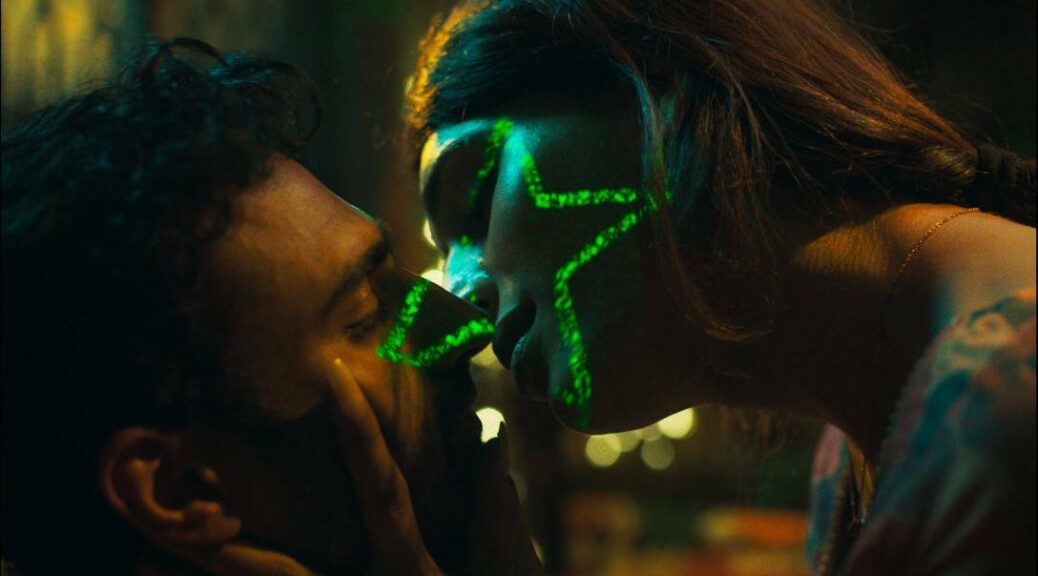
The feature debut from director and co-writer Saim Sadiq unveils an assured and often masterful technician, one able to convey a deep affection for the lives of his meaningful characters.
Joyland is a smart and deeply human drama, a treat for both the eye and the heart.
Haider (Ali Junejo) is the youngest son in a traditional Pakistani family. After a long period of unemployment, he finally lands a job. But while this seems like good news, it signals a seismic shift in his multi-generational family dynamic at home, starting with the family’s decision for Haider’s wife Mumtaz (Rasti Farooq) to give up the salon job she loves so she may stay home and assist with keeping house and children.
Haider will be joining the backup dancers in a Bollywood-style show led by the strong-willed Biba (Alina Khan), a trans woman. The pay is good, but Haider will have to tell his conservative father (Salmaan Peerzada) that he’ll be managing the theatre, not dancing in it, and avoid any mention of the star of the show.
But Haider’s biggest secret is his infatuation with the magnetic Biba, and the relationship that is budding between them.
Sadiq’s camera moves slowly and confidently, filling frames that are frequently static with mesmerizing dances of color, shadow, and light. Just what he does with a decorative light fixture’s effect on the room where Haider and Biba grow closer is a thrilling wonder of shot choreography.
Similarly, Sadiq’s script (co-written with Maggie Briggs) often speaks loudly through the silence of things left unsaid. Haider isn’t the only one here keeping secrets, and the film begins to ache with the longing for lives that seem hopelessly out of reach.
And yet somehow, the gripping conclusion arrives without any of the melodrama you might expect. And when it does, Joyland leaves a mark that also signals the arrival of its visionary and insightful filmmaker.
Is there anything in all the world more satisfying than watching Nazis die? Perhaps not.
Jalmari Helander, the genius behind 2010’s exceptional holiday horror Rare Exports, squeezes a lovechild from Leone and Peckinpah by way of Tarantino (natch). The result, Sisu, a kind of WWII-era Scandinavian John Wick.
That sounds borrowed, but it doesn’t feel borrowed. It feels stylized but never derivative.
Rare Exports star Jorma Tommila plays Aatami Korpi. Korpi used to be a soldier. He left that – and his reputation as a “one man death squad” – behind, instead roaming Lapland with his dog and his horse in search of peace and gold.
After finding one, the other becomes even more elusive.
The Nazis, their loss imminent, are leaving scorched earth behind as they move across Lapland. Their paths cross Korpi’s. It doesn’t go well for the Nazis.
Helander’s confident vision meshes majestically with the cinematography of Kjell Lagerroos, capturing the lonesome beauty of Lapland in one minute, the next minute bursting with the frenetic energy and viscera of action. The stunt choreography and editing in the dizzying array of carnage-laden set pieces are breathtaking. Knives, guns, fisticuffs, tank fire, regular fire, land mines, a hanging, airplanes – a seemingly endless string of magnificently crafted violent action keeps the pace breathless.
Speaking of breath, there’s an underwater sequence that’s a real gem. And a great deal of Sisu’s success is in the novelty of its action. We’ve seen about 11 hours of John Wick by now. It’s hard to do something new.
But Helander manages. Composers Juri Seppä and Tuomas Wäinölä also assist in lifting the heights of this spectacle, and it becomes as beautiful a celebration of bloodletting as we’ve seen for some time.
And though a final confrontation between Korpi and the ruthless SS Commander tracking him (Aksel Hennie) is never in doubt, it takes on a greater significance thanks to Helander’s clearly-drawn stakes. The Nazi is looking to buy his redemption, while Korpi sees the chance to finally escape his past.
Vengeance? Oh, that’s here, too, for both Korpi and some POWs who smugly warn their German captors of what is coming. They say the Finnish word for what the wandering stranger is does not translate, but that he is no ordinary traveler.
And the film is no ordinary travelogue. Clocking in at just 91 minutes, Sisu is perfectly lean, relentlessly mean, and consistently satisfying at every blood-soaked turn.
Picture this: a loved one has passed away and you inherit a piece of property from them that they’ve never mentioned. You’ve been handed a house along the coast that comes with its own private beach. We’re talking beautiful, untouched land. An absolute dream come true, with no catch in sight.
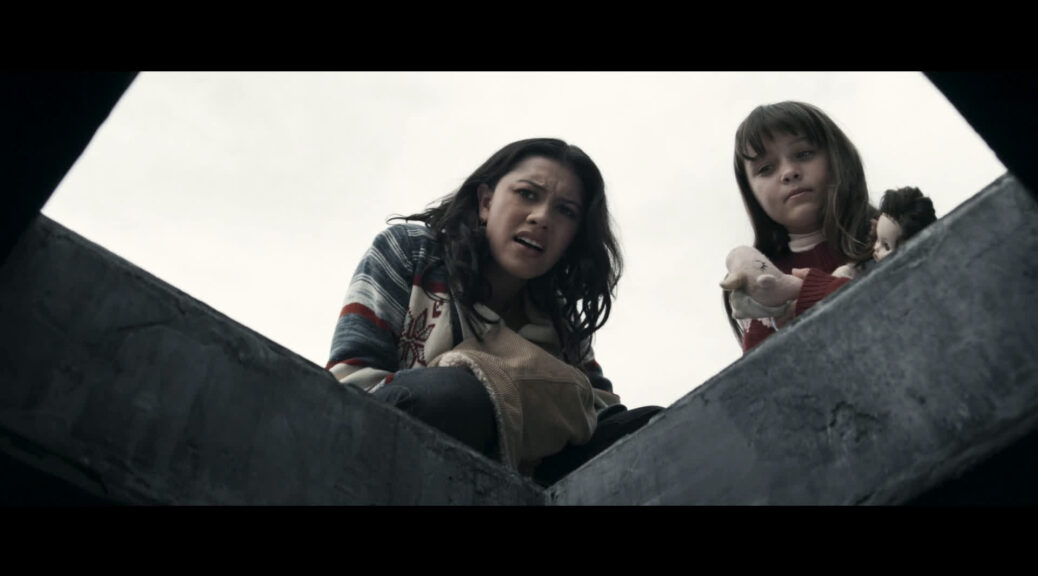
Well, except for that weird water tank that’s hidden underground on the property. A tank that may or may not contain an ancient beast that loves to run amok when unleashed. That right, you didn’t just inherit your dream home. You inherited a horror movie as well. Congratulations!
Scott Walker’s New Zealand creature feature The Tank knows its tropes and revels in them constantly. If you’re rolling up to this coastal oasis of terror looking for heaps of originality, you’re going to swim away disappointed. However, if you’re the type that loves a good meat & potatoes monster movie, then you will find quite a bit to enjoy here.
There are two true stars of this bestial B-movie endeavor, with the first being the practical monster effects work on display from WETA Workshop. Their efforts here are just as good as you’d expect coming from the imaginative minds that brought forth the cinematic beasties on display in The Lord of the Rings trilogy, 30 Days of Night, District 9, and the cult classic Black Sheep. Richard Taylor and his team are in fine form, serving up a cool monster and delivering delicious creature carnage.
The other star is actress Lucianne Buchanan. While the other performances in the film are fine, Buchanan stands tall above the rest, gifting us with a new horror heroine to root for in family matriarch, Jules. Between her turn in this and her leading role on the recent hit Netflix action series The Night Agent, Buchanan is one to keep your eye on.
The Tank does have its issues. The pacing in the first two acts can be sluggish at times, the color palette can get a bit monotonous, and the family drama subplots don’t really amount to much. Of course, that’s not what we’re here for. The Tank promises you some lean, mean, and low budget monster escapism. For the most part, it delivers on that promise, so if this type of movie is up your alley, give it a look.
Visual poet of the day-to-day Kelly Reichardt returns to screens this weekend with a look at art as well as craft in her dramedy, Showing Up.
Michelle Williams is Lizzy, a sculptor who’s not getting enough done for her upcoming show. It’s a small show in a small gallery not exactly downtown, but it’s a show and she’s got a lot of work left to do.
So does Jo (Hong Chau, one of three 2023 Oscar nominees in the cast!), Lizzy’s neighbor and landlord. In fact, Jo has two shows coming up, so who knows when she’ll be able to fix Lizzy’s water heater?
And just like that, Reichardt leaches the glamour from the art world, dropping us instead into a place far from glitzy but bewilderingly human.
Williams is characteristically amazing, her performance as much a piece of physical acting as verbal. You know Lizzy by looking at her, at the way she stands, the way she responds to requests for coffee or work, the way she reacts to compliments about her work, the way she sighs. Williams’s performance is as much in what she does not say as what she does, and the honesty in that performance generates most of the film’s comic moments.
Chau knocks it out of the park yet again, and like Williams, she presents the character of Jo as much in her physical action as in her dialog. The chemistry between the two is truly amazing, simultaneously combative and accepting, or maybe just resigned to each other.
Reichardt’s phenomenal cast does not stop there: Judd Hirsch (irascible and hilarious), John Magaro (sad with an undercurrent of potential danger), Andre Benjamin (chilling), Maryann Plunkett (frustrated) and Amanda Plummer (weird, naturally).
As is so often the case, the environment itself is its own character, every gorgeously mundane detail filmed in Reichardt’s go-to 16mm film. She and cinematographer Christopher Blauvelt once again find the grace and beauty in the spots everyone else ignores.
Like Nicole Holofcener and Claire Denis, Reichardt invests her attention in the small moments rather than delivering a tidy, obvious structure. The result feels messy, like life, with lengths of anxiety and unease punctuated by small triumphs.
Wes Anderson with a Black Mass fetish and a feminist point of view, Biller wrote/directed/produced/edited/set-designed/costume-designed/music-supervised the seductive sorcery headtrip The Love Witch.
Elaine (Samantha Robinson – demented perfection) needs a change of scenery. Driving her red convertible up the seacoast highway toward a new life in northern California, her troubles – and her mysteriously dead ex-husband – are behind her. Surely, with her smart eyeshades and magic potions, she’ll find true love.
Shot in dreamy 35mm and produced in lurid Technicolor, the film achieves a retro aesthetic unparalleled in modern cinema. And yet, a mid-film cell phone and third act DNA evidence pulls you from the hip Sixties spell of burlesque shows and tea rooms – but don’t mistake this for anachronism. Instead, it fits perfectly into a narrative that sees a deranged lunatic embrace archaic gender roles with the rage of one already ruined by them.
Enough cannot be said for Biller’s imagination for detail – from the contents of a “witch bottle” to the retro look of every actor, the era-evoking flatness in line delivery to the excruciating art adorning Elaine’s walls.
The orgy of colors, textures and dessert treats signifies the sensual madness eating away at poor, narcissistic Elaine.
Biller’s casting sense is as keen. Every actor not only fully embraces the weirdness of Biller’s spell, but each looks like they just walked out of a Sears Roebuck catalog circa 1968.
Expect a loose confection of a plot, as Elaine molds herself into the ideal sex toy, winning and then tiring of her trophies. This allows Biller to simultaneously reaffirm and reverse gender roles with appropriately wicked humor.
Biller pulls thematically from her 2007 film Viva, but her epic knowledge of the sexual revolution era Black Magic Woman flicks (Oh, there are plenty: Mephisto’s Waltz, Season of the Witch, The Velvet Vampire) and her clear growth in her craft help The Love Witch exceed all expectations.
There is something scary about hospitals, especially the old, abandoned ones and those creepy, windowless floors! But what about the patients? We take a look – limiting our discussion to actual patients in actual facilities, not involuntary patients in homes, garages and storage units (although that turned out to be quite a list, so maybe later…)
5. Patrick: Patrick (1978)
One of a number of underappreciated Aussie horror flicks of the Seventies, Patrick is the first pairing of director Richard Franklin and writer Everett de Roche. The two would make a number of solid genre flicks together, but it was probably the popularity of this film that sparked the Ozploitation craze.
Here, big-eyed Robert Thompson is an unblinking catatonic in a Melbourne hospital. Though nothing’s going on in his body and eyelids (honestly, the fact that he never blinks and no one give him eyedrops might generate more unease than anything else in the movie!), his mind is very busy. Especially now that he’s keen on nurse Kathie (Susan Penhaligon).
Thompson owns the screen, regardless of his state, and effortlessly creates dread. Franklin ups the ante with some elevator claustrophobia and the general tension of being in a hospital. This is a low budget indie and suffers a bit from sprawl, but when Patrick turns his head and scares his new nurse. I still jump.
4. Mary Hobbes: Session 9 (2001)
Nyctophobia, dissociative identity disorder, creepy tapes, an abandoned asylum – the pieces are there for a spooky horror movie. Credit writer/director Brad Anderson for swimming familiar waters and yet managing a fresh, memorable and disturbing film.
Gordon (Peter Mullan) needs some cash – and some sleep. Troubles at home aside, he’s having problems getting his latest assignment completed on time. With just a skeleton crew and an unreasonable turnaround time, Gordon has to remove the asbestos from the long-abandoned Danvers Lunatic Asylum.
He sneaks away a lot to call his wife and listen to these therapy tapes he’s found. Meanwhile, a couple of his guys are bickering over a shared girlfriend, another one’s a pothead, and then there’s Gordon’s sweet, mulleted nephew Jeff (Brendan Sexton III), who’s afraid of the dark.
Atmosphere is everything in this film. Performances are outstanding and Anderson has some seriously scary moments in store. Oh, poor Jeff.
3. Elvis Presley: Bubba Ho-Tep (2002)
Who wants to see Bruce Campbell play Elvis Presley?! We do.
Director Don Coscarelli (Phantasm) brings Joe R. Lansdale’s short story to the screen to depict the horror and sadness of aging, although its done with such humor that the film is impossible not to love.
Elvis never died, he swapped places with an impersonator who died and ever since then he’s been stuck living someone else’s life. And now he’s in this low-rent old folks home where his only real friend is a guy who believes he’s JFK (Ossie Davis). Obviously, when they realize that the recent spate of patient deaths is due to a mummy sucking the life from people through their assholes, who’d believe these knuckleheads?
The script is great and Coscarelli knows exactly how to make the most of budgetary limitations. The entire cast soars, but Campbell and Davis have such incredible chemistry that the film delivers not just laughs, message, and some scares but genuine tenderness.
2. Nola Carvath: The Brood (1979)
Dr. Hal Ragland – the unsettlingly sultry Oliver Reed – is a psychiatrist leading the frontier in psychoplasmics. His patients work through their pent-up rage by turning it into physical manifestations. Some folks’ rage turns into ugly little pustules, for example. Or, for wide-eyed Nola Carveth (Samantha Eggar), rage might turn into bloodthirsty, puffy coated spawn. This is Cronenberg’s reimagining of procreation, and it is characteristically foul.
Cronenberg wrote the film during his own ugly divorce and custody battle. He created a fantasy nightmare rooted firmly in the rage, despair, and the betrayal that comes from watching someone who once loved you turn into someone who seems determined to harm you.
Cronenberg is the king of corporeal horror, and The Brood is among the best of the filmmaker’s early, strictly genre work. Reed and Eggar are both unseemly perfection in their respective roles. Eggar uses her huge eyes to emphasize both her former loveliness and her current dangerous insanity, while Reed is just weird in that patented Oliver Reed way.
1. Patient X: The Exorcist III (1990)
You can absolutely never outdo Friedkin’s original masterpiece, but William Peter Blatty – who wrote the novel The Exorcist – takes a nice stab with the third installment.
Who is this secret Patient X? Or, who’s controlling him? Kinderman (played in this film with much gusto by George C. Scott) will live through a nightmare to figure it out. Jason Miller makes a heartbreaking return, but honestly, Blatty has so much fun with the rest of the patients, the film offers constant, weird terror.
Deadites hit the big city in Lee Cronin’s Evil Dead Rise, the latest instalment in the old Sam Raimi demon possession franchise. As was true with its predecessors, blood will rain, viscera will spew, chainsaws will bite, and the dead will most definitely rise. Just don’t expect any jokes this time around.
We open, as usual, on a cabin. Despite the top-notch title sequence, though, this episode will not be a cabin-in-the-woods horror. Cronin, who’s credited with the script as well, takes the Necronomicon and all its secrets into an urban high rise to see what hell he can raise.
Beth (Lily Sullivan) has some troubling news and wants to lay low with her sister’s family for a bit. But her sister Ellie (Alyssa Sutherland) is about to have some real troubles of her own because an earthquake opened a hole from the parking garage to a vault beneath the building. That vault held a book and some vinyl.
Lessons we should all have learned by now:
Don’t play unknown albums backwards.
Don’t read from flesh bound books.
Stay out of elevators. I know this one is pretty inconvenient, but honestly, it’s for the best.
Cronin (The Hole in the Ground) tosses in some loving homages to the Raimi films. Who doesn’t love a demon POV shot?! In fact, he uses disorienting angels and shots throughout the film to beautifully bewildering effect. A fisheye-of-death through a peephole is just one of the film’s many horrifying highlights.
Sutherland takes the most abuse as devoted mother turned chief Deadite, a role her lanky, angular frame is ideally suited to. She’s terrifying, but the most disturbing idea at play in this sequel is that children are fair game.
Cronin’s vision offers none of the slapstick, Three Stooges-esque humor of Raimi’s original trilogy. In fact, it leans far closer to the tone of Fede Alvarez’s underappreciated 2013 genre treasure, Evil Dead. And while this installment’s nods to the iconography of the original set is wonderful, Evil Dead Rise also recalls [Rec] and Joko Anwar’s Satan’s Slaves: Communion and even a little bit of Kubrick’s The Shining, Carpenter’s The Thing (or maybe Yuzna’s Society) – all exceptional horrors and worthy inspiration.
It’s also fun that Evil Dead Rise boasts an altogether new storyline, since so many films in the franchise are reworkings of earlier episodes. That storyline is somewhat slight, but what the film lacks in depth it makes up for with inspired visuals, solid casting, and so much blood.
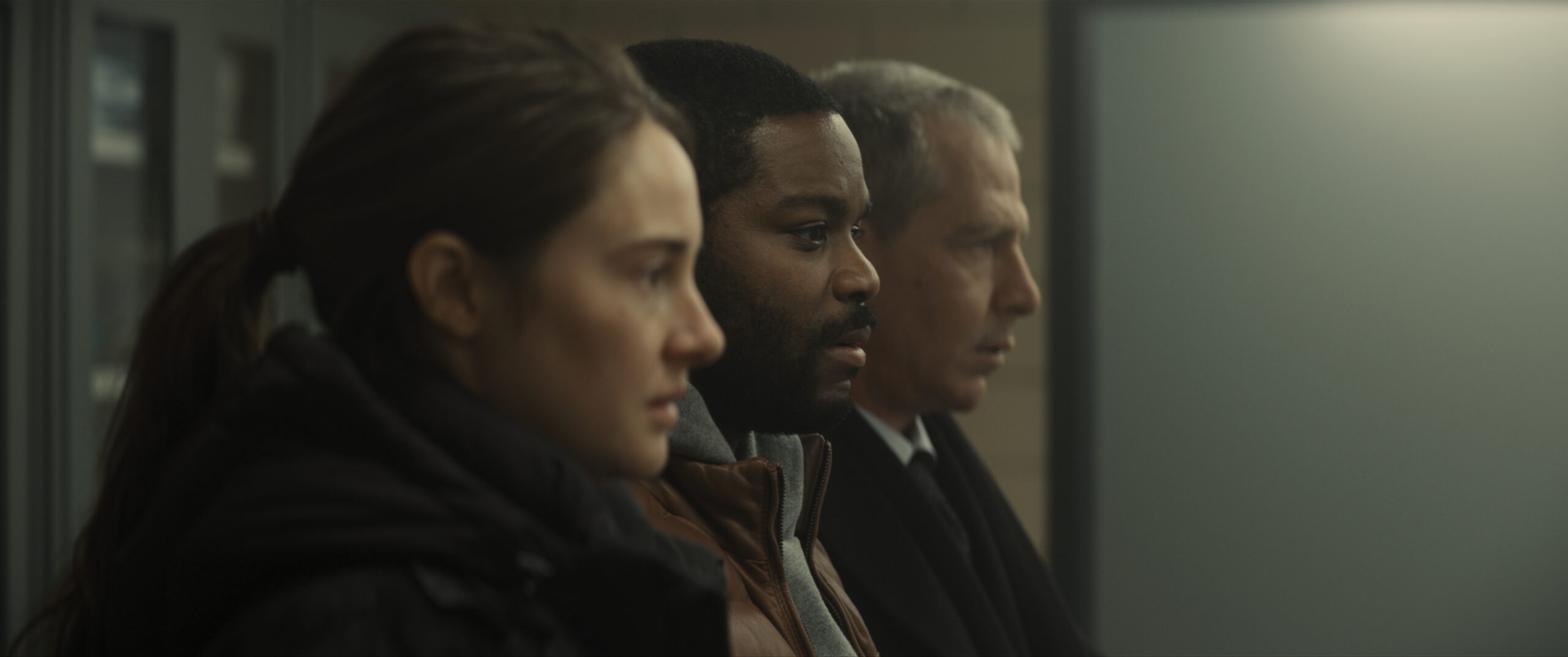
To Catch a Killer is a title that begs to be forgotten, bland and obvious and broad as it is. The film is about a disgruntled and underappreciated cop with the skills to get inside the mind of a killer, skills that are being nurtured by a grizzled detective who sees potential.
So far so yawn.
And yet, filmmaker Damián Szifron’s thriller is weirdly compelling.
His visuals are on point. Fireworks, cop cars, aerial shots, sudden impact – clarity in presentation tells us what is going on long before any actor speaks.
Those actors don’t hurt. Shailene Woodley delivers an un-showy but emotionally raw central performance as a beat cop quietly desperate for a meaningful challenge.
She’s aided by Ben Mendelsohn as the beleaguered senior investigator. While Det. Lammark doesn’t offer Mendelsohn the opportunities for pathos that allowed him to create iconic characters in Slow West, Mississippi Grind, Killing Them Softly, Animal Kingdom and more, the veteran finds enough humanity to make the detective memorable.
Politics, sycophancy, scapegoating and bad decisions cripple the investigation, giving Szifron and co-writer Jonathan Wakeham a chance to impress with their script as well. No broad strokes, the script indicts media, greed, cowardice, sexism, and capitalism in turn and finds reason to empathize with the least likable characters.
Still, it follows the beats you expect from a film called To Catch a Killer about an unsung but brilliant cop finding her legs as an investigator. The film can never fully escape that dull familiarity.
The film is solidly built on understated performances, and it makes viable points. But it can’t quite stick the landing.
When her mom dies, rather than live with her grandparents, Marge (Jess Gabor) decides to track down her long-lost dad (Steve Zahn) in Mexico in directors Marny Eng and E. J. Foerster’s film, Gringa.
It makes sense that our narrator would choose to find a dad she doesn’t know rather than live with her mother’s parents. The little we see of them shows they’re too critical, nothing like Marge’s supportive mother.
This is one of the film’s strengths – we’re able to glean a lot of information about Marge, her mother, and her grandparents during the film’s first fifteen minutes.
The other strength is the actors. Each is captivating on screen, particularly Gabor. She is a relatable, sympathetic young woman who fails to fit in. She copes with her depression by binging, her bulimia telegraphed early to help us understand this complicated young woman.
Unfortunately, Patrick Hasburgh’s script tries to be too many things at once, and none of the issues raised are given the weight they deserve. If the film had struck the right comedic balance, this could be overlooked, but because there is a seriousness to the tone, these difficult issues come across as shallow.
Alcoholism and bulimia are treated as switches a person can turn on or off at will. Marge’s problems are apparently solved by a month-long trip to Mexico with a near-perfect father. The fact that he left Marge and her mother when Marge was two is too easily forgiven, and when the climax comes, it’s predictable and uninspired.
This is also a sports movie, bringing all the tropes you would expect. Unlike her team at home in California, Marge – the gringa – quickly fits in with her soccer teammates in Mexico. They’re initial reluctance to have her on their team is quickly replaced by appreciation when she helps them win a critical game. Several montages take the place of moments that would have been better represented with honest dialogue.
Yet, the movie has its moments. Zahn is charming, as are several members of the supporting cast. Gabor is easy to root for; you want her and her dad to find their way. But the film is a patchwork of too many ideas and tones to effectively hook the audience. You might be carried along by what works, but it’s more likely you’ll disappointed by what doesn’t.