Do the Hustle

White Men Can’t Jump

by George Wolf

A few months ago I noticed the TV ads pitching the “Jack Harlow meal” at KFC and remembered I had no idea who Jack Harlow was.

That was on me. Since then, I’ve learned he’s a popular rapper, guested on SNL and is making his acting debut in Hulu’s new remake of White Men Can’t Jump.

The good news: he’s a bit stiff but decent, and like Woody Harrelson in 1992, knows his way around a basketball court. But while the chemistry between Harlow and co-star Sinqua Walls (Shark Night) is more than adequate, it can’t touch the fun and edgy dynamic of Woody and Wesley that drove the original.

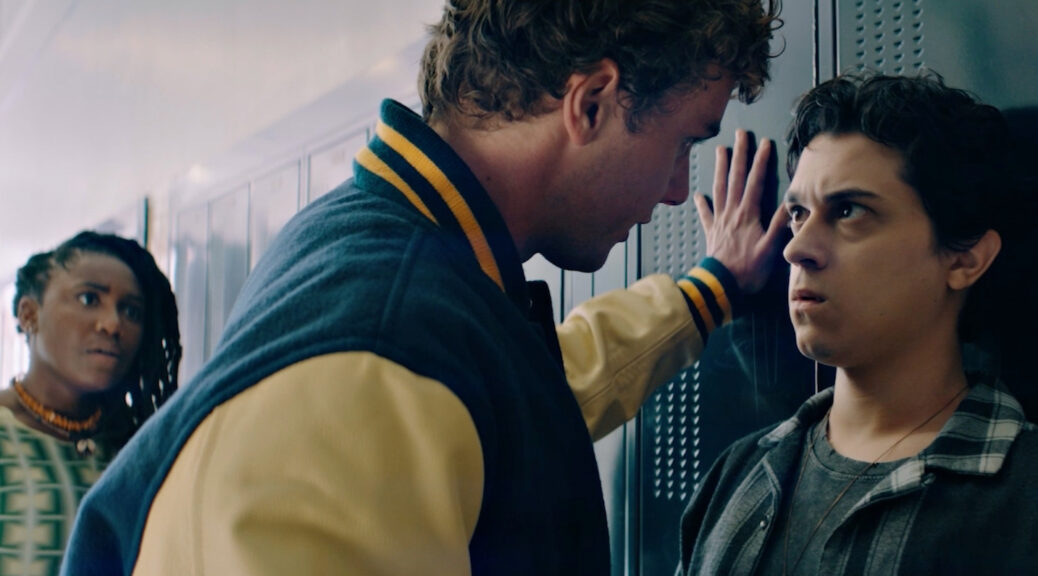
Director Calmatic (House Party) teams with Black-ish writers Kenya Barris and Doug Hall for a largely familiar premise. White Jeremy (Harlow) and Black Kamal (Walls) team up to hustle some unsuspecting marks and eventually compete in a big street ball tournament.

Give Barris and Hall credit for updating the race-related humor with some smart and savvy barbs (many delivered through the winning support of Myles Bullock and Vince Staples), but that’s about the only aspect of the new narrative that doesn’t seem neutered.

Both Jeremy and Kamal still have issues at home (with Laura Harrier and Teyana Taylor, respectively), but the stakes don’t feel as authentic. And with the removal of the early double-cross that occurs in the first film, an important emotional layer is removed from the bond between the ballers, leaving only fast money as motivation.

The gap is filled with dueling backstories about knee injuries and brushes with the law, but ultimately, they both land as fairly generic diversions. As does the film.

There’s nothing really bad about the updated White Men Can’t Jump. There are timely laughs, a solid ensemble, and some perfectly acceptable hooping. But the lack of investment in character makes it hard to really care about who wins the tourney. Neither grit or desperate suspicion made this lineup, and if you’re still a fan of the old starters, they’ll be missed.

The Guns of Navagroan

Come Out Fighting

by Daniel Baldwin

War movies have been an action cinema staple since the dawn of filmmaking and men-on-a-mission movies are perhaps the most popular form of war film. Writer/director Steven Luke has carved out a niche for himself on the DTV action circuit making bargain budgeted World War II tales. Come Out Fighting is the latest of these.

As he did in his previous outings, Luke has assembled a nice, recognizable cast of genre actors. You’ve got indie martial arts superstar Michael Jai White (Blood & BoneBlack Dynamite), Kellan Lutz (The Twilight Saga), Tyrese Gibson (The Fast & Furious Saga), and an ever-grizzled Dolph Lundgren (no introduction required). All in all, not a bad assortment of fisticuff-throwing fellas to send into battle against a Nazi horde!

On paper, Come Out Fighting sounds like a fun little flick. In execution, however, it is anything but. The good news is that all of the men above have roles that are larger than cameos. The bad news is that they’re all too good for this film. Try as they might to hold it all together, their collective efforts cannot turn the tide on a bad script and even worse direction.

Anyone who watches the occasional direct-to-video actioner of this type knows to expect things like production design, costuming, and special effects work to not be on par with similar studio-produced fare. The best directors in this field still manage to overcome such limitations with sharper scripts, small but still thrilling setpieces, and low budget movie-making ingenuity. Jesse V. Johnson’s Hell Hath No Fury is an excellent example of this, managing to check off that entire list in spite of its miniscule budget. Come Out Fighting, however, manages none of these things, instead serving up heaping helpings of bad blocking, poor scene geography, and some pretty glaring historical inaccuracies.

It does at least have something on its mind, as it digs into the prejudices that African American soldiers faced from their own white compatriots during the war. As commendable as that is, that simply isn’t enough to salvage an otherwise inept picture. If you’re in the mood for an engaging new slice o’ action-filled WWII entertainment this weekend, you’re better off seeking out the aforementioned Hell Hath No Fury or Jalmari Helander’s now-on-VOD revenger Sisu.

The Devil You Know

The Thief Collector

by Rachel Willis

There’s an old adage that you can never really know someone. In director Allison Otto’s documentary, The Thief Collector, she puts this at the forefront with a modest couple, Jerry and Rita Alter, from middle-of-nowhere New Mexico, who happened to be art thieves.

Or at least, that’s how it seems.

After an estate sale, three men, Rick, Dave, and Buck discover an unattractive painting placed behind a bedroom door. It isn’t until a local artist recognizes the painting that they look into it further. One Google search later, the men discover the painting in their possession is Willem de Kooning’s Woman-Ochre, stolen from the University of Arizona Museum of Art in 1985.

So, how did Jerry and Rita, two teachers, come to have this painting in their possession?

The Thief Collector wants to answer this question.

There is a lot of reliance on Jerry’s short stories to paint a picture of two people who were “thrill seekers” (also conveniently one of Jerry’s story titles). There is documented evidence that the couple lived a fascinating and exhilarating life – one full of travel and adventure in parts of the world many will never see.

However, any writer of fiction would be appalled to think after their death, their stories would be taken as fact – and as evidence of crimes. While this could be the case for Jerry, it’s all speculation.

There is more compelling evidence to implicate the Alters in the crime, but there is a lot of filler in the documentary. Readings from Jerry’s short stories serve as narration for scripted scenes – with Glenn Howerton as “Jerry” and Sarah Minnich as “Rita”. While these scenes are an over-the-top kind of enjoyable, they’re not evidence of wrongdoing, no matter how much the filmmakers might wish them to be.

By focusing on Jerry’s stories, there is a lot of reaching rather than revelation.

Where the documentary succeeds is in its blend of interviews, in footage of the Alters’ many trips, and the vast collection of art in their home. The reenactments don’t quite fit, but they’re amusing.

Of course, the film would have been better served if it tightened its focus to what is known about the theft and the Alters. The interviews with friends and family give a good back and forth on the film’s theme – that the people you’ve known many years, maybe even your whole life, may have a dark side. It’s definitely something to ponder.

In Bloom

Master Gardener

by Hope Madden

A damaged man imposes order on his life, eventually growing confident enough in this structure to try to save someone else because he cannot save himself.

That’s right. This is a Paul Schrader movie. Like most of Schrader’s best features (First Reformed, The Card Counter, all the way back to his script for Taxi Driver) Master Gardener delivers a variation on that same riff. Lucky his characters are so compelling they keep us watching.

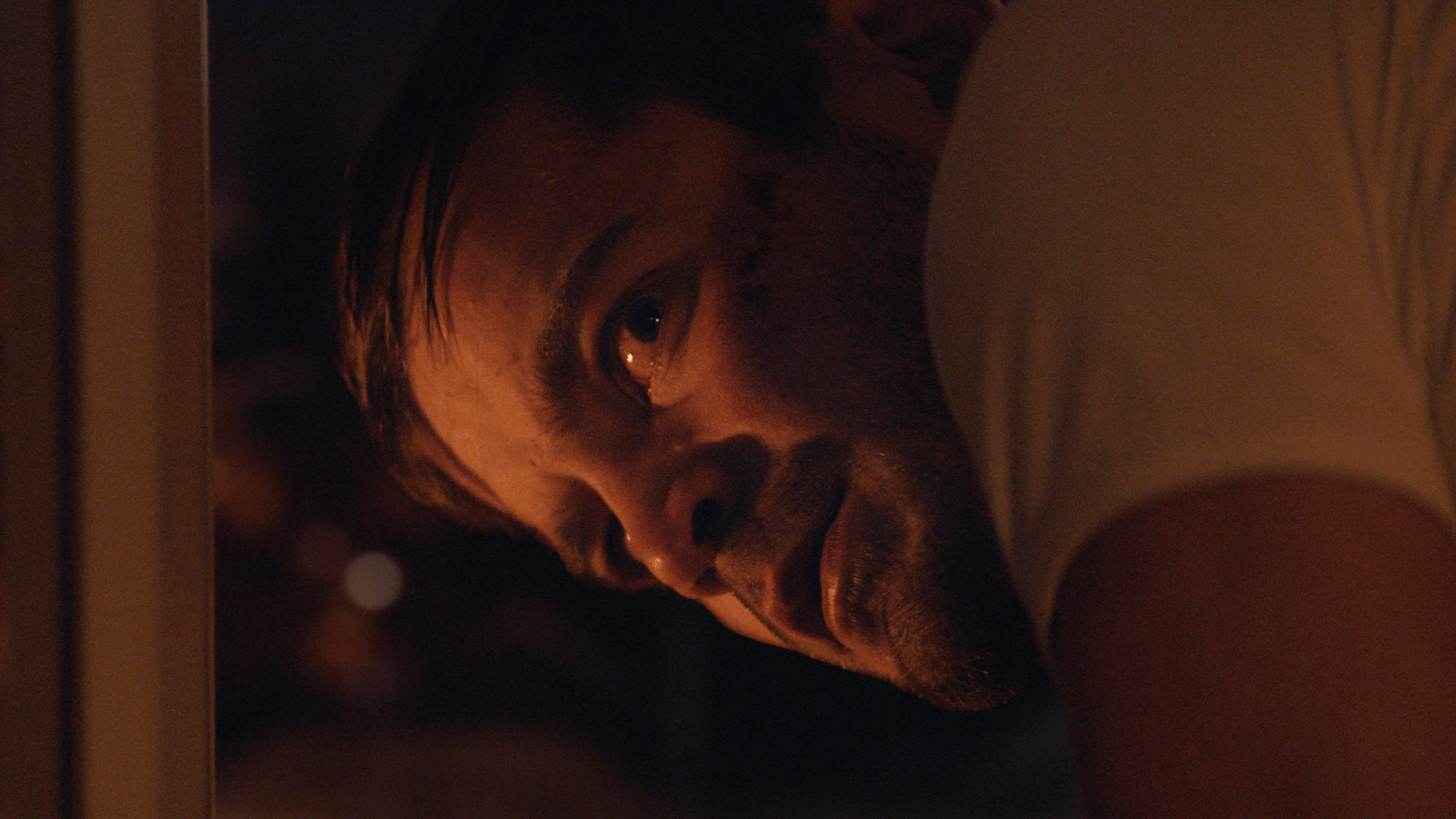
In this case, that character – the titular gardener – is Narvel (Joel Edgerton). Narvel tells us, via his journal: Gardening is a belief in the future, that change will come in its due time.

Is Schrader growing more optimistic? Or will we grow to hope for Narvel only to witness the worst possible outcome (a la Card Counter)? Longtime fans may get a little nervous before the general moviegoer, but either way, Schrader sets a hook early.

The other element that jumps out early is the look of this film. Schrader’s gift for visual composition has never seen so exceptional a vehicle. Fitting, given the beauty of a garden. The lovely orderliness of Narvel’s garden is set against the riotous disarray that arrives in the shape of Mya (Quintessa Swindell): sloppy clothes, hair everywhere, no plans, no future. Maya doesn’t crave orderliness. Mya just is.

What Mya is not is like her Great Aunt Norma (Sigourney Weaver, letter perfect as the wealthy matriarch of the estate). Norma has arranged for Mya to apprentice on the property. She’d like Narvel, or “Sweet Pea” as she calls him, to look after the girl.

The arrival of this outsider sets wheels in motion. Narvel’s once orderly world now falls victim to his own past, drug dealers, the Feds. Edgerton’s a solid choice for the role, stoic but roiling with regret and quietly desperate for redemption. Swindell’s free spirit, tempered with the justifiable righteousness of youth, offers an excellent counterweight and Weaver outshines them all, stealing every inch of scene she’s in.

But they don’t have enough to do. Redemption feels unearned. Drug addiction is treated as too easily overcome. Most troubling is the way racism is skirted throughout the film.

“Gardening is the manipulation of the natural world, the creation of order out of disorder,” Narvel tells us. Filmmaking can provide much the same exercise. But forgiveness comes too easy for this damaged antihero, and Master Gardener feels too much like Schrader light.

Classic Case

Carmen

by George Wolf

For this latest reimagining of the classic story, director Benjamin Millepied credits inspiration from Prosper Mérimée’s original novella from 1845, and Alexander Pushkin’s poem “The Gypsies” from 1824.

Flashing more modern vibrancy through culturally rich music and dance, this new Carmen arrives as a wonder of visionary composition that struggles to find an equally compelling connection to its characters.

The writing team of Loic Barrere, Alexander Dinelaris and Lisa Loomer crafts a surface-level tale of lovers on the run. Aidan (Paul Mescal) is a troubled Marine veteran volunteering on a night patrol along the Mexican border, while Carmen (Melissa Barrera) is trying to cross after the death of her mother. A violent altercation leads to casualties, and the two are soon trying to stay one step ahead of authorities.

Millepied (choreographer and co-star of Black Swan) knows his way around a dance number, getting an assist from flamenco specialist Marina Tamayo for sequences that sport some thrilling fluidity. The acclaimed talents of cinematographer Jörg Widmer (The Tree of Life, V for Vendetta) and composer Nicholas Britell (Moonlight, If Beale Street Could Talk) are also on full display, rounding out a veteran stable of technical skill that consistently lifts the film’s imagery and scope.

Mescal (Aftersun) continues to show a gift for quiet nuance, Barrera (In the Heights, Scream, Scream VI) finally breaks out of her reliance on posing, and the veteran Rossy de Palma (various Almodóvar projects) steals scenes as a savvy nightclub owner, but the script seems content to keep depth at a distance.

Pushkin’s centuries-old themes of noble savages and the tragedy of life are too often given a heavy hand, needing a rescue by the visual poetry on display.

This Carmen tells us “dancing will you heal you.” Indeed, it’s one of the cures for what ails a less than passionate romance.

Fright Club: Best Contagion Horror Movies

The Seventh Seal, Blindness, Carriers, Rabid, Mayhem, Masque of the Red Death, Infection, Flesh + Blood, The Crazies – all amazing movies exploring our communal fear of contagion. They pick that scab, so to speak, but are there others that do it better?

Our two rules: no zombies, no living beasties (The Thing, Shivers, etc.) Just some kind of virus. Here goes!

5. Pontypool (2008)

Canadian director Bruce McDonald’s shock jock horror film is best appreciated as a metaphor on journalistic responsibility and the damage that words can do. Radio air personality and general pot-stirrer Grant Mazzy (Stephen McHattie) finds himself kicked out of yet another large market and licking his wounds in the small time – Pontypool, Ontario, to be exact. But he’s about to find himself at the epicenter of a national emergency.

McDonald uses sound design and the cramped, claustrophobic space of the radio studio to wondrous effect as Mazzy and his producers broadcast through some kind of mad epidemic, with Mazzy goosing on the mayhem in the name of good radio. As he listens to callers describe the action, and then be eaten up within it, the veteran McHattie compels attention while McDonald tweaks tensions.

Shut up or die is the tagline for the film. Fitting, as it turns out that what’s poisoning the throng, turning them into a mindless, violent mob, are the very words spewing at them. It’s a clever premise effectively executed, and while McDonald owes debts all around to previous efforts, his vision is unique enough to stand out and relevant enough to leave an impression.

4. Antiviral (2012)

If you could catch Kim Kardashian’s cold, would you?

This is the intriguing concept behind writer/director Brandon Cronenberg’s seething commentary on celebrity obsession, Antiviral. 

Young Syd March (Caleb Landry Jones) works for a clinic dealing in a very specific kind of treatment. They harvest viruses from willing celebrities, encrypt them (so they can’t spread – no money if you can’t control the spread), and sell the illnesses to obsessed fans who derive some kind of bodily communion with their adored by way of a shared herpes virus. Gross.

But the ambitious Syd pirates these viruses by injecting himself first, before the encryption. Eventually, his own nastiness-riddled blood is more valuable than he is, and he has to find a way out of quite a pickle. Maybe vitamin C?

3. It Comes at Night (2017)

Deep in the woods, Paul (Joel Edgerton, solid as always), Sarah (Carmen Ejogo) and their teenage son Travis (Kelvin Harrison, Jr.) have established a cautious existence in the face of a worldwide plague. They have boarded their windows, secured their doors, and enacted a very strict set of rules for survival.

At the top of that list: do not go out at night.

Writer/director Trey Edward Shults explores the confines of the house with a fluid camera and lush cinematography, slyly creating an effective sense of separation between the occupants and the dangers outside. But what are those dangers, and how much of the soul might one offer up to placate fear itself? In asking those unsettling questions, It Comes at Night becomes a truly chilling exploration of human frailty.

2. It Follows (2014)

It Follows is another coming-of-age tale, one that mines a primal terror. Moments after a sexual encounter with a new boyfriend, Jay (Maika Monroe) discovers that she is cursed. He has passed on some kind of entity – a demonic menace that will follow her until it either kills her or she passes it on to someone else the same way she got it.

Yes, it’s the STD or horror movies, but don’t let that dissuade you. Mitchell understands the anxiety of adolescence and he has not simply crafted yet another cautionary tale about premarital sex.

Mitchell has captured that fleeting yet dragging moment between childhood and adulthood and given the lurking dread of that time of life a powerful image. There is something that lies just beyond the innocence of youth. You feel it in every frame and begin to look out for it, walking toward you at a consistent pace, long before the characters have begun to check the periphery themselves.

Mitchell’s provocatively murky subtext is rich with symbolism but never overwhelmed by it. His capacity to draw an audience into this environment, this horror, is impeccable, and the result is a lingering sense of unease that will have you checking the perimeter for a while to come.

1. 28 Days Later (2002)

Activists break into a research lab and free the wrong effing monkeys.

28 days later, bike messenger Jim wakes up naked on an operating table.

What follows is the eerie image of an abandoned, desolate London as Jim wanders hither and yon hollering for anybody. In the church, we get our first glimpse of what Jim is now up against, and dude, run!

Prior to 28 Days Later, the zombie genre seemed finally dead and gone. But director Danny Boyle single-handedly resurrected the genre with two new(ish) ideas: 1) they aren’t dead, 2) therefore, they can move really quickly.

Both Brendan Gleeson and Cillian Murphy are impeccable actors, and Naomie Harris is a truly convincing badass. Their performances, and the cinematic moments of real joy, make their ordeal that much more powerful. But you know you’re in trouble from the genius opening sequence: vulnerability, tension, bewilderment, rage, and blood – it launches a frantic and terrifying not-zombie film.

CrackBerry to WhackBerry

BlackBerry

by George Wolf

So, a voice on the line says, “You have a collect call from ‘What the f%& is happening’!”

That’s not really the caller’s name.

He’s actually Jim Balsillie (a terrific Glenn Howerton), co-CEO of BlackBerry Limited, and he’s having yet another temper tantrum. The pairing of Balsillie’s bare-knuckled business sense with the tech genius of other CEO Mike Lazaridis (Jay Baruchel, perfectly awkward) made the company an early leader in the cell phone game, but things have started to unravel. Fast.

It’s a wild and often unhinged rise and fall, told with gleeful abandon by BlackBerry director and and co-writer Matt Johnson, who also co-stars as Doug Fregin, Lazaridis’s original business partner.

While operating a Canadian tech supply company called Research in Motion in 1996, Lazaridis and Fregin hatched the idea of utilizing North America’s unused bandwidth for a cellphone with built-in capability for email and messaging.

Balsillie, a Harvard-educated d-bag with self promotion tunnel vision, knew what the geeks had, and gave them his business street smarts in exchange for a big piece of the pie.

Johnson (Operation Avalanche) draws the battle lines early, framing the unfocused nerds with jittery, The Office-style camerawork amid chaotic workplaces while the calculating, take-no-prisoners suits live within crisp lines, confident movement and unforgiving architecture.

The colliding of worlds is engaging enough, but the delightfully sharp humor and first-rate ensemble (also including Michael Ironside) turn these based on true events into a rollicking, can’t-look-away slice of history.

There’s so much here that resonates – friendship, ambition, cutthroat capitalism and just feeling like an outcast. And at the root is the push and pull of commerce (Balsillie: “Are you familiar with the saying, ‘perfect is the enemy of good?”) vs. science (Lazaridis: “Well, ‘good enough’ is the enemy of humanity.”)

BlackBerry is a fast, funny and often thrilling ride, one that ends up worthy of both time spent and time capsule.

Moonchild

Crater

by Hope Madden

Following three increasingly competent features (Easier with Practice, C.O.G., The Stanford Prison Experiment), filmmaker Kyle Patrick Alvarez moved into episodic television. His return to feature length feels a bit more like TV than film, but Crater marks new territory for Alvarez in family entertainment.

The Disney+ feature, written by John Griffin (also mainly TV), follows a quintet of adolescents on a joyride across the moon.

The effortlessly charming Mckenna Grace (Ghostbusters: Afterlife) is the new kid on the helium mining colony. Caleb (Isaiah Russell-Bailey) and his buddies need her to help them break into the basement garage so they can hotwire a rover and take it to the “crater” Isaiah’s dad was always talking about. They never expected her to want to go with them.

The film’s anticapitalism message (ironic coming from Disney) is welcome, as we commiserate with the five children of miners – each with no future outside of mining, except for Isaiah. When Isaiah’s father died in the mine, the insurance money bought his now-orphaned son a ticket off this rock.

But first, the kids go on an epic adventure that will change their lives.

It feels about as pre-packaged as it sounds, very Goonies or Stand By Me, but slicker, tidier and without the soul. Grace has proven to be nothing but an authentic talent since toddlerhood, really announcing her skill in 2017’s Gifted. But she’s given no real opportunity to create a character here.

Her co-stars struggle even more. Russell-Bailey can’t dig deep enough to manage the life-altering grief or rage a kid in his position would face, but at least his backstory is unveiled slowly. Isaiah’s best friend (Billy Barratt) just announces his trauma, then stares doe-eyed at both Grace and Russell-Bailey for the balance of the film. This isn’t a knock on the performance as much as it is the script and direction.

Crater cobbles together a lot of cliched ideas but can’t find any depth to explore. Instead Alvarez delivers a superficial and forgettable road trip movie in space.

Like It’s 1995

Party Girl

by Hope Madden

It was 1995. We’d already had a sense of the unique talent that is Parker Posey because of her drill sergeant character in Dazed and Confused, but we were not yet in love with her. Writer/director Daisy von Scherler Mayer’s Party Girl would change that.

Von Schlerler Mayer’s slight story trails a twentysomething in NYC whose only real skill is partying and looking fantastic. Mary (Posey) is busted throwing a rent party (the purpose of the party is to make enough money to pay rent) and has to turn to her only family – librarian godmother Judy (Sasha von Scherler, the director’s mother) – to bail her out. The condition: Mary has to get a real job. Preferably clerking in the library.

It’s a fairly straightforward “fish out of water” story, the type where the fish realizes dry land (that is, becoming a librarian) is really the way to go. Kind of a cross between Breakfast at Tiffany’s and Desperately Seeking Susan with essentially none of the plot of either, Party Girl skims the surface of extended adolescence.

There are romantic entanglements and an assortment of hip friends on the fringe. And, of course, the clash between downtown style and library shushing. Von Schlerler Mayer’s ensemble delivers charmingly superficial and oblivious characters, and the climax is never really in doubt. So why has this film stood up for almost thirty years?

Parker Posey, duh.

There was no turning back after this film. Posey owns this character, her insecurity and confidence, vulnerability and insensitivity. She carves out a personality that can carry the whole film, even though the film itself offers little in return. Posey radiates goofy charm that’s infectious enough to keep you drawn to Mary’s dilemma, however vapid it is.

Party Girl is a frothy, forgettable good time, but Posey turned out to be a keeper.

Hope Madden and George Wolf … get it?