Category Archives: Outtakes

Movie-related whatnot

Please Won’t You Be?

Neighborhood Watch

by Hope Madden

Director Duncan Skiles’s latest, Neighborhood Watch, delivers a tense and unpretentious thriller about a young man debilitated by childhood trauma who witnesses a kidnapping. When the police don’t believe him, he teams up with a disgraced campus security guard to find the victim.

Jack Quaid (Novocaine, Companion) is Simon, so crippled by his childhood that he hallucinates, his every thought accompanied by a running commentary in the voice of his abusive father. He can’t convince the police of what he’s seen, and in his desperation, drags his unpleasant and reluctant neighbor Ed (Jeffrey Dean Morgan) into the mystery.

Neighborhood Watch is a buddy comedy without the comedy, and it is funny how stripping away the humor allows the relationship between these two lonely men to breathe in very human ways.   

Morgan’s a spitfire, but one you recognize—your dad, your uncle, your neighbor, somebody who’s fighting the feeling of uselessness with condescension and inappropriate action. It would have been very easy to overplay Ed. Instead, Morgan nails a good-humored bitterness that gives way, little by little, to compassion and genuine usefulness.

Quaid works fiercely against easy, tropey characterization. There’s nothing cloying or patronizing in the performance. Rather, Simon is a frustrated, intelligent, decent person trying to do what’s right. The unselfconscious humility in both performances allows even the most overwritten moments of bonding to feel earned.

Sean Farley’s script includes a few too many plot conveniences, to the point that sometimes Neighborhood Watch feels like a network drama. Except that our focal points are not the police investigators, but two damaged nobodies with nothing better to do. Something about that helps the film transcend cliché.

Neighborhood Watch is an example of direction and performance elevating a script. The plot itself is far from unique. Indeed, its central mystery has become Hollywood shorthand for feel good heroism.

But Skiles looks past knee jerk, self-congratulatory action in favor of context, his camera lingering on the blight of old suburbia. In this unglamorous world of perms and coupons, polyester and bus passes, two losers that life passed by just try to do one good thing. The humble simplicity is surprisingly moving.

Fatherhood of the Future

Daddy

by Rachel Willis

In a sterile conference room, a man speaks to a disembodied voice coming from a speaker. The voice is trying to determine if the man is the right kind of person to go on a government retreat that will decide if he would make a suitable father. If he’s not chosen, he will instead receive a vasectomy. So begins the dystopian comedy, Daddy.

Writers/directors Neal Kelley and Jono Sherman have crafted a new kind of hellscape with their look at toxic masculinity, the fear of vulnerability, and the competition that springs from the kind of scarcity that would lead a government to screen potential parents.

As four men arrive at the scenic mountain home, we’re given bits and pieces of the world that has given rise to such a scenario.  Mo (Pomme Koch) tells the others his girlfriend is at the female version of the retreat. The two decided to be screened at the same time. But while the men are housed in the lap of luxury, the women are apparently put through a more intense screening process. The subtle details that we pick up during the film’s run time make what we see on screen more interesting.

The men begin to descend into paranoia, leading to a certain amount of comedy as they try to decide what will make them seem like they’d be good fathers. The discovery of a realistic baby doll amps up the comedy.

Each actor brings a certain rigidity to their character that plays well with the idea that men have a hard time embracing their emotions. Scenes when the characters do display some vulnerability feel awkward – perfectly encapsulating how difficult some men find it to open up to other men.

When the film remembers that there is humor to be mined from such a situation, it shines. When it forgets, it becomes tedious.

However, it’s not hard to imagine this world, and Kelley and Sherman have fun wondering how men might react to the absurdity of it all.

I’ll Make Sandwiches

Relative Control

by Rachel Willis

Sara (Teri Polo) has her hands full. Her adult son is living on the other side of the country and is still dependent on her. Her aging parents are beginning to show signs of mental and physical decline. And she was just hired to handle the biggest case of her career as a corporate attorney.

How can one woman balance all of this? This is the focus of director Dafna Yachin’s film, Relative Control. Working from a script by Charlene Davis, Yachin understands how much of a family’s responsibilities fall to women, even when they have lives of their own to consider.

More and more, this scenario has become the reality for middle-aged Americans. Sara, a single woman with no partner to rely on for financial or emotional support, is lucky enough to have a high-powered job that allows her son to live off – rather than with – her as she juggles work and familial obligations.

There’s an exasperated humor that lies at the heart of the movie. As Sara interacts with her stubborn parents, her father especially, you can’t help but chuckle at the situation. It’s very relatable.

Sara’s age is a significant factor. For those with careers, this tends to be the time in life when the demands of work rise as one climbs the corporate ladder. As the sole child responsible for her parents, Sara’s worlds start to collide with more and more frequency. There are a lot of things an audience can relate to as we watch Sara struggle to maintain balance.

But not everything in Sara’s life is so easy to identify with. Most working adults don’t have the kind of career that affords a son to fly home from the other side of the country at seemingly every crisis.

The characters do help to keep the story familiar. They likely resemble members of your own family, and as we watch the family interact, it’s not hard to care about them.

Relative Control is not a perfect representation of the “sandwich generation”—the one still supporting adult children when the need to support their own parents comes around—but it resonates nonetheless.

Fact or Fiction

Asog

by Brandon Thomas

Since its inception, filmmaking has given artists an outlet to explore and amplify identity. Whether it’s cultural, religious, or something more profound and oftentimes less investigated – like sexuality and gender – film has opened the door for people around the world to share who they are. Through a mix of documentary and narrative film, filmmaker Sean Devlin’s Asog puts an important spotlight on the Philippines’s queer community as well as the forgotten people of the country’s rural areas. 

Set in the aftermath of a destructive typhoon, Asog simultaneously tells the story of Jaya (Rey Aclao), a non-binary teacher, and the residents of the devastated island of Sicogon. As Jaya travels to a drag pageant with one of their students in tow, they cross paths with the people of Sicogon as they struggle with the destruction of their home, and the outside forces of development that seek to change the island forever.

From the get-go, Asog is interesting in its stylistic choices: mainly in blending narrative and documentary type filmmaking. This kind of approach is certainly nothing new, but it does feel like a rarity in today’s IP and nostalgia-centric world of cinema. That mix of fact and fiction often happens through psychedelic realism – simultaneously putting the audience into the emotional vortex of the characters. The choice works as Devlin’s film keeps reminding the audience that a part of this story really did happen and the people are still dealing with the consequences. 

The heart of the film belongs to Jaya’s relationship with their student, Arnel (Arnel Pablo). The chemistry and connection between the two is raw and honest – mirroring the film’s overall form. This is all the more impressive given that both are non-traditional actors – with Arnel actually playing himself in the film. The rest of the cast is made of these kinds of actors too, with results not nearly as satisfying. There’s a clunkiness to the other performances that’s distracting and hobbles the film’s overall effectiveness.

The other half of the film – the part focusing on the people of Sicogon Island, isn’t nearly as cohesive or well executed as Jaya’s story. Devlin’s intent is there – cultural identity being virtually wiped away by encroaching greedy outsiders, but it feels too siloed when put together with the sometimes very comedic and intimately personal nature of Jaya’s journey. 

Even if the more telegraphed “message” portion of the film doesn’t completely come together, the story of Jaya and Arnel whacks enough of an emotional wallop that most audiences won’t notice Asog’s low points.

All Hat and No Cattle

Gunslingers

by Hope Madden

Nic Cage makes, what, 18 movies a year? And every tenth or so is really worth watching, maybe because it’s fun, often solely because he’s a lunatic, and once in a long while you get a Pig, a Dream Scenario, a Mandy. But more often than not you get a Gunslingers.

Written and directed by Brian Skiba, the film opens with the worst AI New York skyline, circa 1904, you’ve ever seen. The scene that sets up the film amounts to a handful of quick cuts, gunshot sounds, and the worst CGI fire you’ve ever seen.

Cut to four years later and Thomas Keller (Stephen Dorff, a consistently solid actor who deserves better roles) is looking for the mythical town of Redemption, Kentucky. There he can lay down his guns and his name and take on a new, peaceful life, like every other citizen. It’s a town full of wanted men who’ve found…subtlety is not Skiba’s strong suit.

Hold your horses! That guy who was badly CGI burned? He’s on Thomas’s trail! And so is Val (Heather Graham), an “old friend” with a 4-year-old in tow. Who could be the father? What could Val want in Redemption? And how much exposition can Heather Graham be tasked with blurting out at opportune moments?

Well, old Thomas hasn’t been a citizen of Redemption long, but he’s already got friends in Redemption: town leader Jericho (Costas Mandylor); his daughter, the bartender (Scarlet Rose Stallone); his righthand law man (Tzi Ma in the worst wig you’ve ever seen onscreen); and the town religious zealot (Cage, dressed so anachronistically like a late ‘60s hippie it’s ludicrous).

Gunslingers feels like a grade school play written by a precocious 4th grader who watched a lot of Spaghetti Westerns. Skiba presents all the main beats of the genre with none of the connective tissue that gives them context or purpose. Every scene is contrivance plus shoot out plus convenient plot turn plus Val shouting exposition followed by Cage brandishing some kind of inexplicable tracheotomy sound to his vocal delivery.

It’s probably not the worst movie Cage has made, but lord, it is not good.

MOM 9000

Renner

by Daniel Baldwin

Artificial Intelligence has been a staple of science fiction cinema for decades. Particularly when it comes to depicting fear of A.I. gone rogue. From 2001: A Space Odyssey and The Terminator to The Matrix and Her, filmmakers have deeply explored numerous ways that A.I. can decide to make our lives miserable once it decides to have a life of its own. Robert Rippberger’s Renner is the latest addition to this subgenre.

The film centers around a man named – you guessed it (no, not Frank Stallone) – Renner, who has invented a sort of A.I. “life coach” for himself to help him navigate social interactions. Renner’s life is the cinematic equivalent of a bottle episode of television: stuck in a single location as he computer genius-es his way through life. He’s lonely, however. Enter Salenus, the aforementioned A.I. device.

Unfortunately for Renner, Salenus not only sounds like his mother, but is also just as overbearing as her. Talk about transporting one’s mommy issues into the digital era! This is not an ideal situation for the guy, but it’s certainly a welcome one for audiences, as Salenus is voiced by none other than the great Marcia Gay Harden.

Were this Renner’s only problem, he might be all right. But it’s not, as he is developing feelings for his neighbor Jamie (Violett Beane), who lives with her sketchy brother (Taylor Gray). Are Jamie’s interactions with Renner genuine or will she only serve to further upend his hermetic existence? Given that this is a thriller, you probably already know the answer.

The best parts of the film are the performances, particularly Frankie Muniz in the titular role and the ever-undervalued Beane as his chief supporting player. The sci-fi elements and themes, while interesting, are a bit too thin and undercooked. As a result, despite Renner only being 90 minutes in length, it might have been better served as a short rather than a feature. Still, if you’re in the mood for a low budget serving of sci-fi, this might just temporarily scratch that itch.

Dream Scenario

Shudderbugs

by Rachel Willis

The ability to dream of things that happened or will happen is part of the family mythology that permeates writer/director (and star), Johanna Putnam’s film, Shudderbugs.

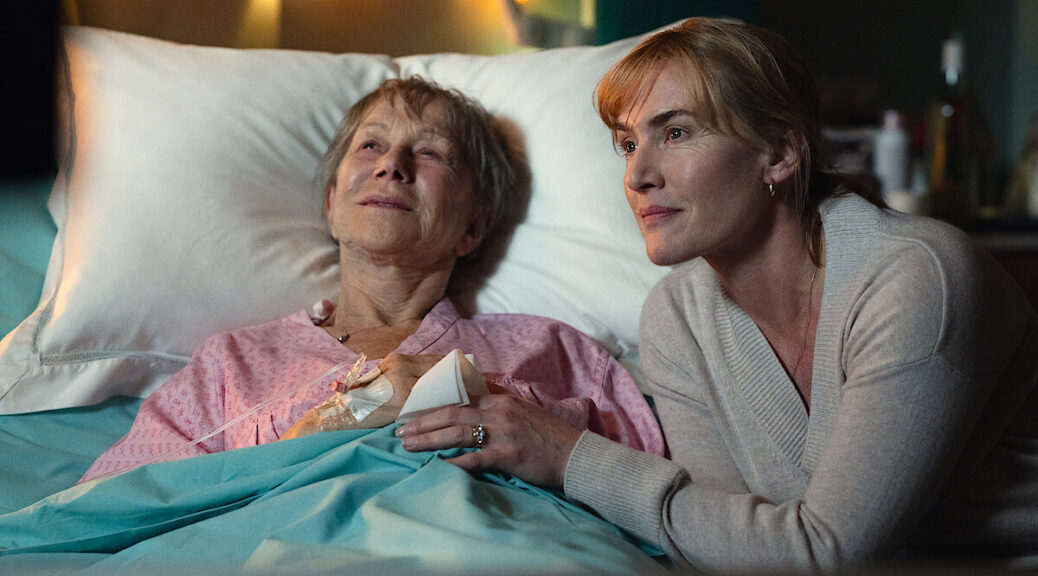
As we learn from Sam (Putnam), shudderbugs was what her mother, Eliza, called the eerie premonitions and feelings that allowed her to know when something was going to happen. After Eliza’s death, Sam begins having these same feelings as she explores what happened to her mom.

Grief, and the whys that surround death, are the main focus of Putnam’s quiet, contemplative film. We learn through a slow unfolding that Eliza’s death was unexpected. A visit with Sam for her birthday was big on Eliza’s mind, as we see reminders throughout the house of the expected visit.

The first inkling that something isn’t quite right occurs when Sam can’t find her mother’s dog. Then, the neighbor acts very strangely. The results from her mother’s autopsy require further tests. Sam’s suspicions grow as she uncovers new pieces of information while spending several days in her mother’s rural house.

The setting of Putnam’s film, upstate New York, speaks to tranquility. The gorgeous surroundings make it hard to feel that something is amiss, but there are moments that unnerve: sounds from inside the creaky old house, dolls set up in cribs and highchairs around the garage attic, and the neighbor who is wonderfully “off.” It’s hard not to be sucked in to the mystery, especially as Sam starts to experience her own shudderbugs.

The film starts off very strong, but it never quite pulls off the sense of dread that’s expected with such unusual circumstance. Sam carries the vast majority of the film. Unfortunately, Putnam’s talents are far better behind the camera. Her acting is fine, but not the caliber needed for such a quiet character study.

However, for all the weaknesses, the film’s strengths are far more engaging. The writing is exceptional, and the unsettling questions that surround an unexpected death lend themselves well to the film. While there are some moments that stumble, the overall experience is worth the time.

Fish On

Tarpon

by George Wolf

So this documentary is about fishing? And writing? It’s set in 1970s Key West? And features original music by a pre-superstardom Jimmy Buffett?

Holy schnikes, Tarpon, where have you been hiding all my life?

It’s been out there like the titular trophy fish, never officially released but gaining a cult following among writers and fishing guides since its production in 1973. Then two years ago, the short film All That Is Sacred (available on YouTube) used Tarpon clips and more recent interviews with Buffett, writers Tom McGuane and Jim Harrison and others to dig into the Bohemian, artistic lifestyle of their youth.

Now, Tarpon finally gets its official release, and an absolutely beautiful restoration that serves as a pristine time capsule to a lost world.

In bewitching cinema vérité style, directors Guy de la Valdene and Christian Odasso take us to the boats, beaches, and bars that formed a local Keys lifeblood, and fueled a creative spirit that eventually brought Buffett, McGuane, Harrison, and Richard Brautigan both popularity and critical acclaim.

The Key West Conch Train driver serves as a wonderfully organic tour guide, popping in with bits of context as the film casually drifts among the local eccentrics, creatives and fishermen (word of warning: there are scenes of brutality to unwanted sharks in the day’s catch).

At only 53 minutes, Tarpon‘s intoxicating spell is one you’ll wish lasted a bit longer. But after all these years of waiting, even a little of this magic is enough.

Punk Enough?

Lulu and the Electric Dreamboat

by Brandon Thomas

Mark McDonagh (co-director and writer Michael Casey) deals with all of the same issues most teenagers do: strange parents, bullies, and an utter lack of confidence. Mark’s one outlet for his angst – punk rock – singles him out even more amongst his family and community. When Mark meets Lulu (Sinead Morrisey), the goth girl who lives next door to next door, he’s instantly infatuated and desperate to impress her. As the two begin to spend more time together, they form their own band Lulu and the Electric Dreamboat – with Mark being the aforementioned Electric Dreamboat. 

Ireland’s own John Carney has had a bit of a monopoly on romantic music infused films since Once burst onto the scene in 2007. With Lulu and the Electric Dreamboat, writer/directors Casey and Paddy Murphy seek to deliver something a little more ornery than it is sweet. And for the most part they succeed. There’s a chaotic sense of humor to Lulu that certainly sets it apart from Carney’s more earnest work. From Mark’s overly-supportive parents (with mis-matched accents), to Mark and Lulu stealing the local church’s donation box, the humor comes more with a punk rock sneer than it does a twinkle in its eye.

Casey and Morrisey have a charming chemistry that allows for an easy investment in their burgeoning friendship/romance. Neither character is particularly groundbreaking with the mousey punk kid and the mean goth girl being pretty worn out tropes. The two actors work well with a fairly thin script – leaning more into the physicality of the roles and the audacious humor. 

The low-budget nature of the film occasionally creeps in with a spotty sound mix, a visual palette that’s rather flat and bland, and a peripheral cast that isn’t always up to snuff. Grace is – and should be – given to indie film, but it’s harder to overlook said budget deficiencies when they take you out of the movie.

Lulu and the Electric Dreamboat is a fun enough punk rock romance even if it’s a little rough around the edges.