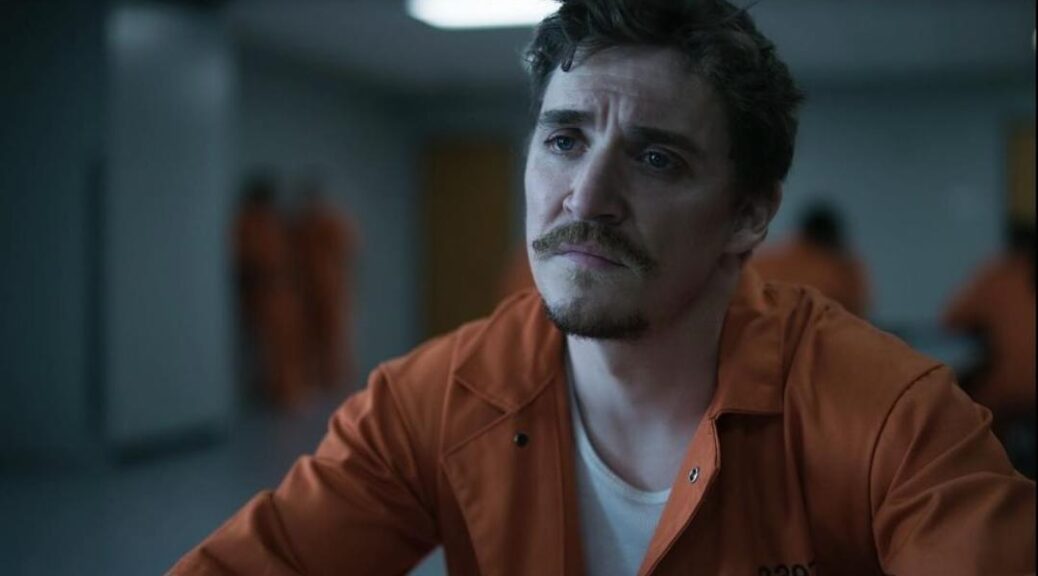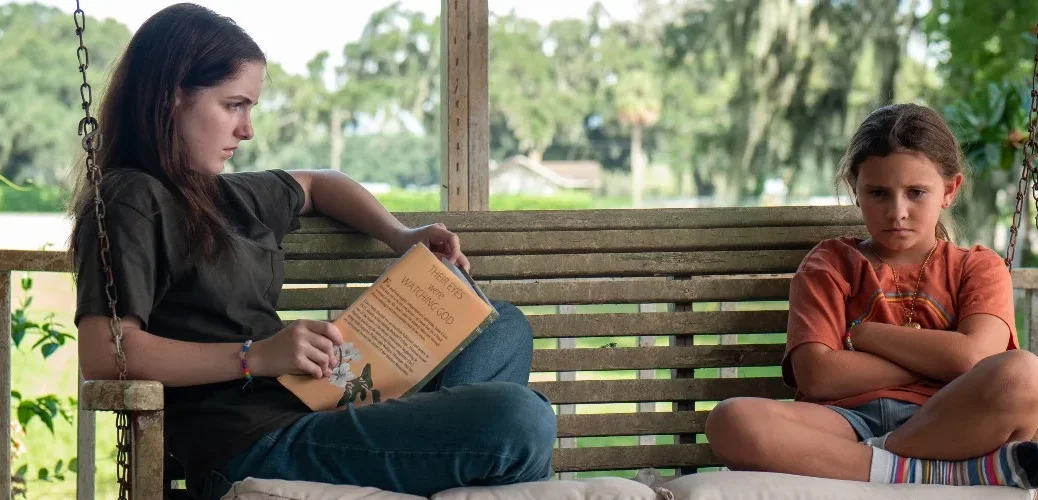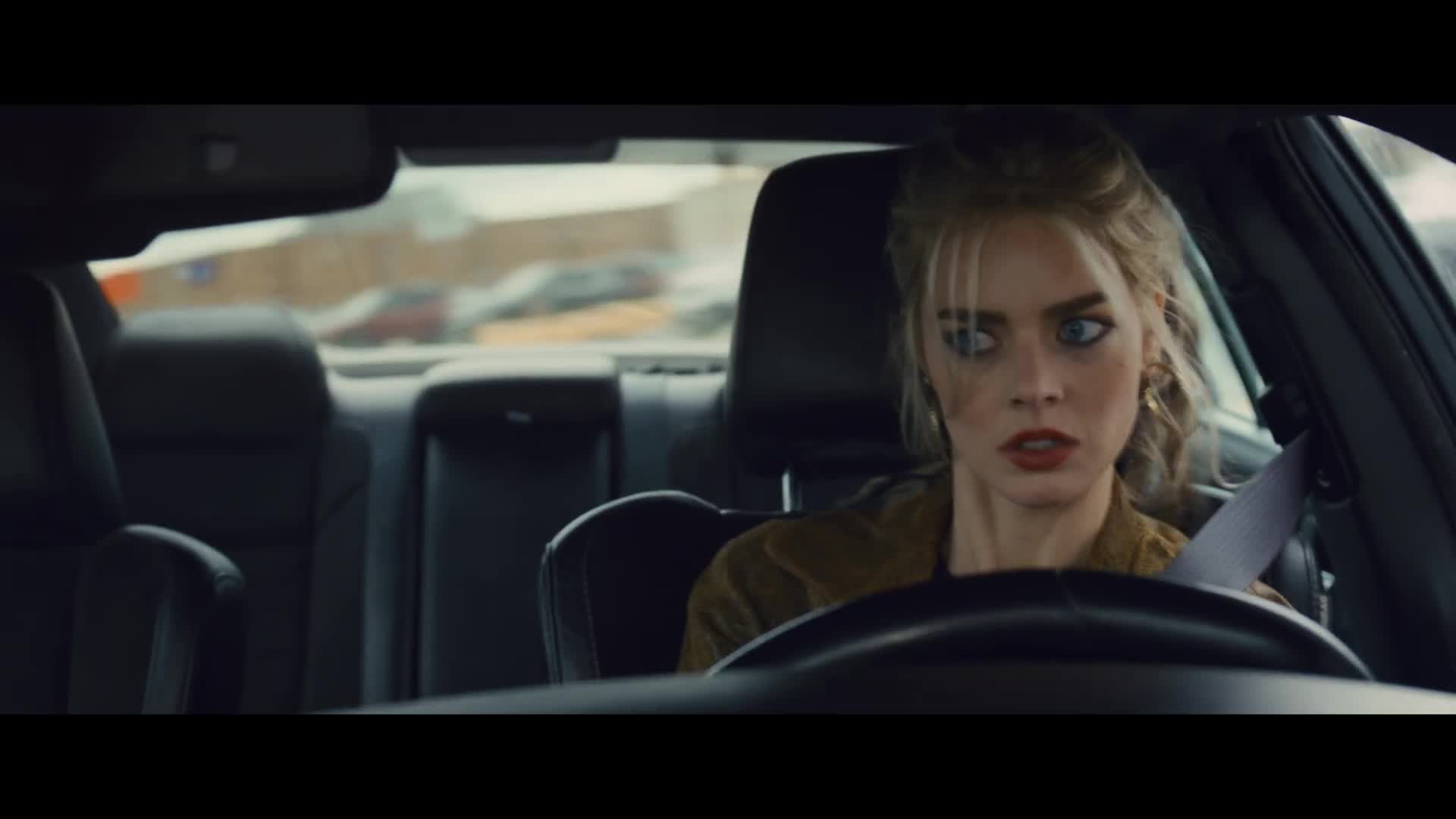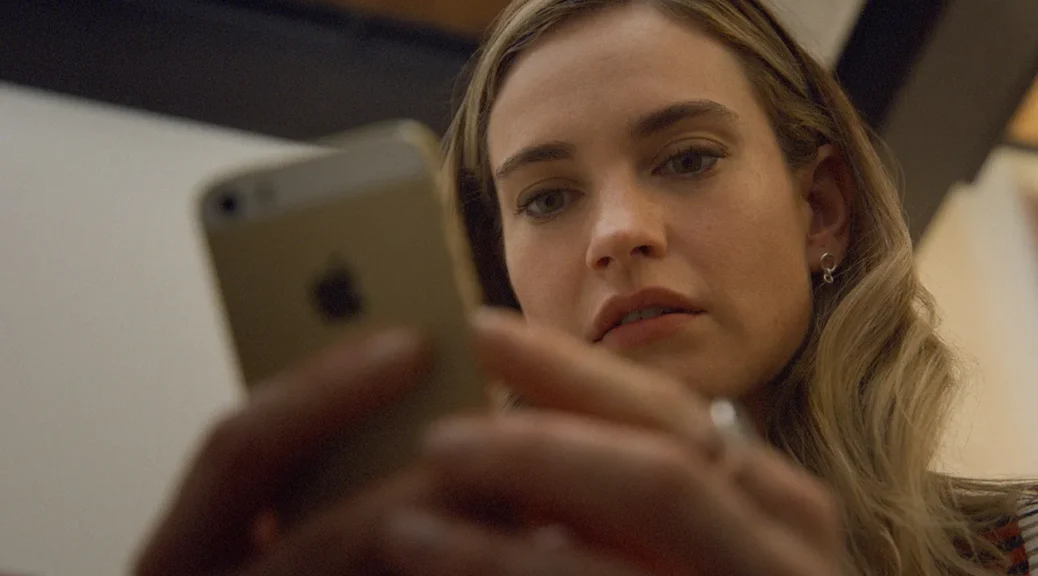
Director Antonio Negret and writer Daniel Negret have something interesting to say. Unfortunately, they can’t find a consistently interesting way to say it with their latest film, Shaman.
The film shadows an American Catholic missionary family working with an Ecuadorian priest in a mountain village. Candice (Sara Canning) teaches catechism and English, and she and husband Joel (Daniel Gillies) help Father Meyer (Alejandro Fajardo) with baptisms, school and church maintenance, and they serve meals to the community.
Out playing with his friends, preadolescent son Elliot (Jett Klyne) enters a cave, though warned by the two locals he hangs out with. He comes home carrying something much older than Jesus.
Candice notices immediately and blames the shaman who lives in the mountains, while Joel scolds her to stop giving them power they don’t have. Meantime, with something afflicting her own family, Candice finds that her own faith may be more of a false front, a façade of superiority and benevolence.
What is weird about Shaman is that both Klyne and Canning co-starred in Brandon Christensen’s 2019 possession horror Z, a film where a mother watches helpless as something ugly takes hold of her innocent son (Klyne).
At times, the atmosphere Negret creates offers a subtle but worthwhile change in the missionary horror of the past, which told of either a white savior discovering primitive evil, or in more recent years, a white savior who is, in fact, the evil. Negret combines the two tropes in ways that are sometimes provocative, sometimes predictable, sometimes tone deaf.
Solid performances all around, plus gorgeous locations and some genuine surprises elevate the proceedings, but the pace is slow, the FX are weak, and the story too often falls prey to the cliché it’s trying to expose. (They also don’t get any of the Catholic stuff right. There, I said it.)
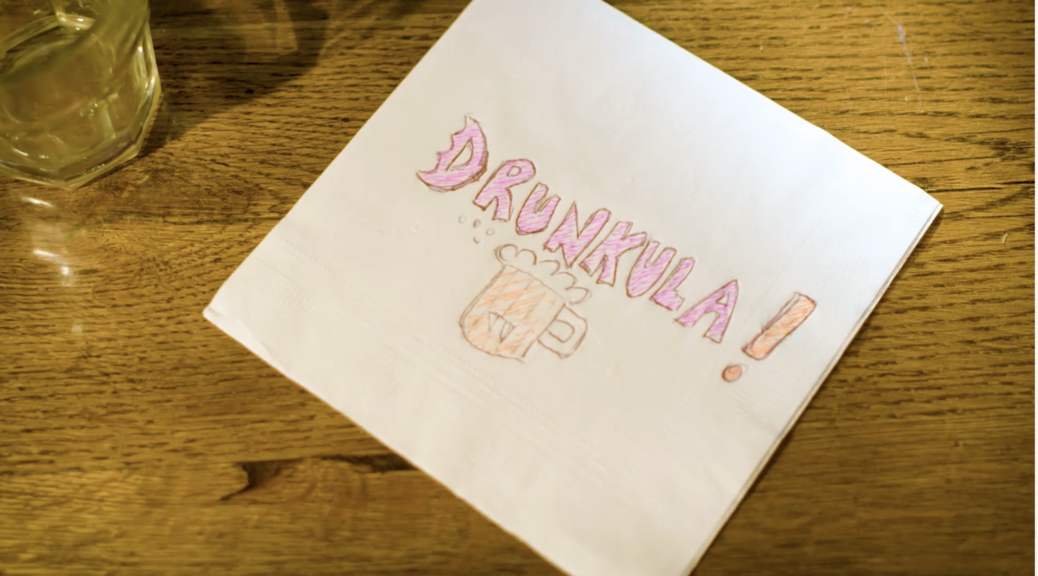
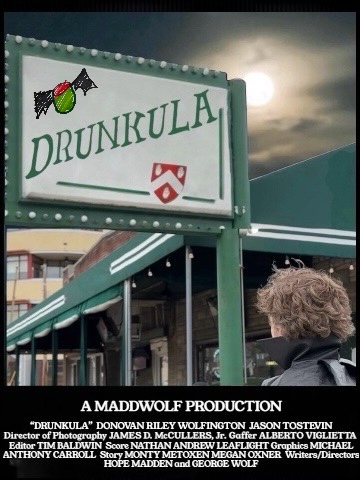
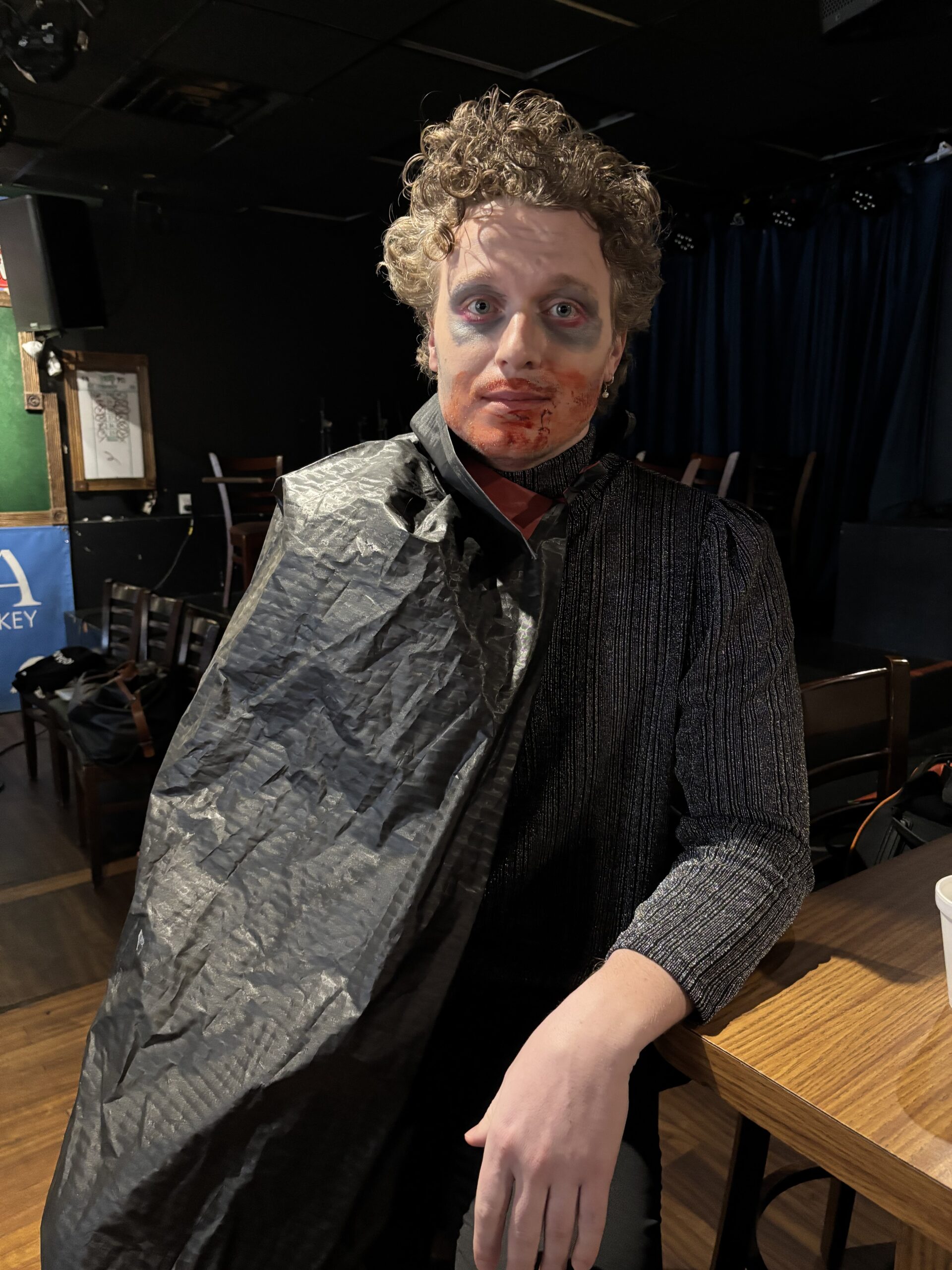
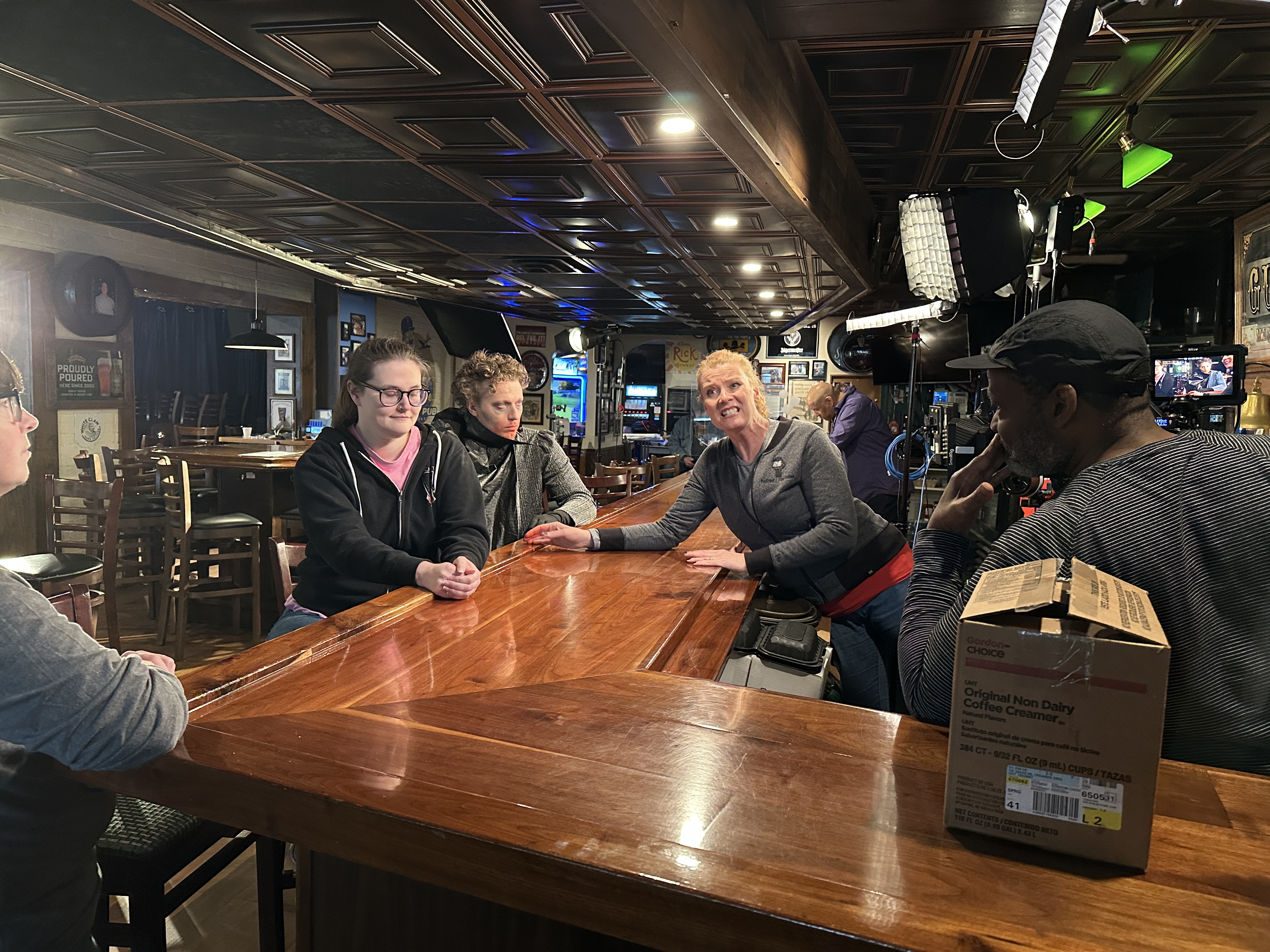
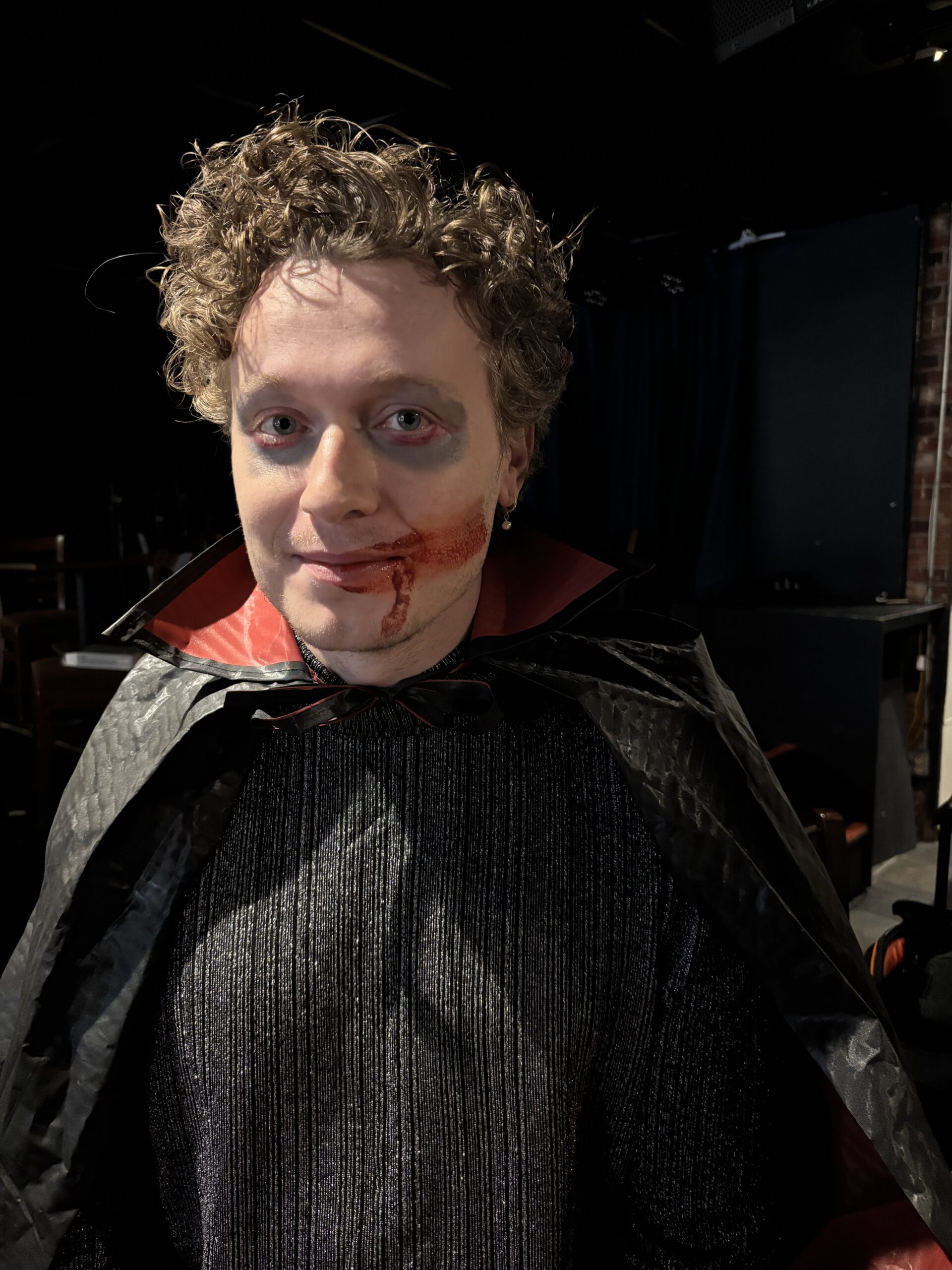
Weary of the nightly chase for a meal, a vampire begins picking drunks off at last call in a neighborhood pub. Though it makes it easier to acquire a meal, eventually the blood alcohol content gets to him.
Clare (Bella Thorne, The Babysitter) is a college student who believes she is on a mission from God. Blessed with visions, she hunts down the men who prey on the women in her small town. Detective Timmons (Ryan Phillippe, Cruel Intentions, MacGruber) grows suspicious of her extra-curricular activities as she keeps turning up in the wrong places.
Guided by the ghost of Mailman Bob (Frank Whaley, Pulp Fiction), the first man she inadvertently killed, Clare begins to connect the dots on who’s behind the growing number of local women who have gone missing. Bob is a messenger from the beyond and he seeks to keep Clare centered on her righteous path of vengeance.
Saint Clare is based on the YA novel Clare at Sixteen by Don Ruff. A quick search yields book reviews that frequently compare the Clare Bleecker series to Dexter, the popular show that is still churning out sequel and spin-off seasons. It’s easy to see why – Clare is a serial killer who only pursues other killers and she has conversations with a dead person from her past who acts as her conscious.
Thorne delivers a solid performance as the melancholy Clare, but the rest of the film around her is tonal mess. It really feels like a pilot episode with the season finale tacked on as the final fifteen minutes. There are a lot of story threads and elements, like a goofy school play, that are introduced but dumped quickly in favor of rushing toward the ending. The film is uninterested in exploring its own central mystery of the missing women, Clare is simply propelled to the wrong doers by convenience.
Co-writer and director Mitzi Peirone (Braid) provides a few moments that visually pop as the world around Clare becomes more colorful and otherworldly, but they are too few and far in between.
Saint Clare never quite picks a lane. It’s a revenge tale without a strong motive, it’s a mystery that isn’t remotely interested in the investigation, and it’s a supernatural fable that is too grounded and serious for its own good.
You may have heard Jaws celebrated its fiftieth anniversary last month. The celebrations and remembrances, the memes and mementos have been joyous fun, reminding us of a landmark film that changed the landscape of the movies.
And now, like the fashionably late party guest everyone was waiting for, comes Jaws @ 50: The Definitive Inside Story. Streaming concurrently on Hulu, Disney + and the National Geographic channel, the film serves up a boatload of BTS goodness that fans will wish was twice as big as the 88-minute running time.
At the heart of director Laurent Bouzereau’s deep dive is the time spent with director Steven Spielberg. His approach to adapting the book for the screen, his tales of how the shoot went months behind schedule, how there was real doubt that it could even be completed, and the PTSD that followed him into his filmmaking future are all completely captivating. Looking back, he still seems amazed that they pulled it off, and Bouzereau finds an effective contrast between Spielberg remembering what went wrong and famous fans such as Quentin Tarantino, Jordan Peele, Guillermo del Toro, Steven Soderbergh and more lavishing praise about what went right.
The Martha’s Vineyard location and its unique citizenry become characters themselves, but of course its Bruce the mechanical shark that always steals the show – for better or worse. Fifty years later, you’re glad that CGI wasn’t around in the summer of 1974, as Bruce’s “less is more” performance still holds up every time.
From the cast members to the score to the USS Indianapolis monolog to the film’s effect on studio production, marketing and even shark conservation, Jaws @ 50: The Definitive Inside Story covers just about every angle you’re hoping for. It is the perfect exclamation point to this month long birthday celebration.
I just wonder why the “fin” in Definitive isn’t capitalized.
I don’t find that funny. I don’t find that funny at all.
Look, it’s just science. You get a glimpse of Uma Thurman and Charlize Theron in a sword fight, you get your hopes up. I did, hopeful that The Old Guard 2 on Netflix could match – or maybe even exceed the fun of the original.
But while it is a blast to see those two bad asses in a blade battle, it’s too little too late in a sequel that gets bogged down in speeches, heavy meaningful glances, and plans for the future of this group of immortals.
It also really helps to have seen part one, or at least be familiar with the graphic novels by Greg Rucka and Leandro Fernández. They’re both back as co-writers, with director Victoria Mahoney taking over for Gina Prince-Bythewood. They put the now-mortal Andy (Theron) and her crew (including Kiki Layne, Chiwetel Ejiofor and Matthias Schoenaerts) on a collision course with the long-lost Quynh (Veronica Neo) – who returned at the close of part one after centuries locked in an Iron Maiden.
Andy also has a new friend, Tuah (Henry Golding) who speaks a lot about legends, lore, and the power of Discord (Uma), the original immortal who rescued Quynh as part of a nefarious plan.
This veteran cast looks a bit lost amid the bright neon palettes, plodding dialog and awkwardly choreographed fight sequences. Mahoney never really lets the fun in, returning to tired blocking and exposition dialog every time you think we’re finally gonna get cooking.
And just when you’re wondering what the point of this sequel is…you find out.
Mild spoiler ahead.
This is a just a bridge to the next chapter. And when that works in a film series, it’s because the bridge also supports its own story arc, one that leaves you satisfied while still wanting to follow these characters into the future.
The Old Guard 2 just leaves you frustrated on all counts, with nothin’ mister but boring stories of the glory days.
If the heat doesn’t get under your skin, maybe this will: 2025 is half over! What? I guess we should get those Christmas decorations down. But it has been quite a year already in terms of movies. From Ryan Coogler’s masterpiece to a grown up spy movie, incredible indie horror to revelatory documentary, awkward buddy comedies to beautiful dramas, the year already has it all. So much, in fact, that we couldn’t stop at 10!
11. Eephus
It’s mid-October in a small New Hampshire town, and rec league teams are assembling to wrap up the season at Soldiers Field. Some bellies are a bit larger, some fastballs are a bit slower, but the cracks are as wise as ever and the love of the game has never wavered. And though what bleachers there are will be nearly empty, Franny (Cliff Blake) will be keeping the scorebook as usual, and there may even be fireworks after the final out.
Because next year, local development will bulldoze the field, and these players may have to accept a future without that diamond life.
Director/co-writer (and veteran cinematographer) Carson Lund finds the emotional pull that exists in the space between an enduring game and the souls forced to let it move on without them. The ensemble cast (including legendary MLB free spirt Bill “Spaceman” Lee on hand to perfectly illustrate the titular type of pitch) is authentic and eccentric in equal measure, and anyone who has ever spent time around the ballfield will recognize these people, and the simpler way of life that may also be slipping away.
10. My Dead Friend Zoe
Filmmaker Kyle Hausmann-Stokes impresses with his feature debut, My Dead Friend Zoe. Based on his 2022 short Merit x Zoe, the film follows Army veteran Merit (Sonequa Martin-Green, Star Trek: Discovery) as she tries to overcome some post-Afghanistan trauma.
While the title and premise may sound a tad flippant, My Dead Friend Zoe turns out to be a rewarding and earnest drama. Natalie Morales delivers a boldly funny and equally vulnerable turn, and love interest Alex (Utkarsh Ambudkar) injects the film with charming, self-deprecating humor. But the levity tends to enrich the film’s truly human quality rather than distract from its underlying tensions.
9. Mickey 17
People mainly familiar with filmmaker Bong Joon Ho’s Oscar-sweeping masterpiece Parasite may not know of his remarkable skill with a SciFi creature feature. Mickey 17, then, will be an excellent primer.
Robert Pattinson is the titular Mickey. Well, he’s a bunch of Mickeys, all 17 of them. He’s a hilarious, self-deprecating charmer, a man who believes he somehow deserves his fate. Fates. Through him the filmmaker employs absurd, sometimes even slapstick humor to satirize our own current fate. Beautifully (and characteristically), all of this is in favor of the reminder that our humanity requires us to be humane.
Weaving sensibilities and ideas present in Snowpiercer,Okja, The Host as well as any number of clone movies, Mickey 17 could feel borrowed. It doesn’t. Like the best science fiction, it feels close enough to reality to be a bit nightmarish.
8. Surviving Ohio State
A searing takedown of abuse, power and heartbreaking betrayal, HBO’s Surviving Ohio State deconstructs the decades of alleged abuse of athletes by Ohio State University physician Richard Strauss. Based on the reporting of Sports Illustrated writer Jon Wertheim and directed with a patient hand by Eva Orner, the film features first-person interviews with victims that reveal the timeline of a calculating predator and shatter a pervasive myth.
Amid a backdrop of social media posts that doubt how big, strong athletes could become easy prey, the men detail just how and why they felt powerless to stop the atrocities. The only thing more heartbreaking is how the coaches they looked up to (yes, including Congressman Jim Jordan) and the university they still love refused to support them once the whispers became screams and the accusations grew too big to ignore.
The one or two occasions where the film tries to connect dots for us are the exceptions in a measured and precise exposé. Surviving Ohio State is no joy to watch, but it’s too important to ignore.
7.Sacramento
Michael Anganaro’s instincts are sharp in Sacramento, only his second feature as writer/director after decades of acting gigs. He co-stars wth Michael Cera as two men with differing challenges facing adult life who take a weird road trip down memory lane. It’s a witty combination of finely-drawn characters, consistently boasting a dry self-awareness that earns the LOLs.
Sacramento haș plenty of fun with arrested development – Cera’s desperate phone calls to one of his old buddies are awkwardly hilarious. But the film’s heart comes from those moments when boys (and girls, too) start accepting the responsibilities of adulthood. It’s far from a new story, but these characters make it one worth revisiting.
6. Friendship
Writer/director Andrew DeYoung harnesses the essence of Tim Robinson’s socially awkward comedic stylings, attached it to Paul Rudd’s impeccable comic delivery, and crafted the most profoundly uncomfortable and endlessly watchable bromance in film.
Friendship is a bizarro-world I Love You, Man, and it is so much more than what that tantalizing trailer promises. Unpredictable, absurd, cringy, perfectly cast and that coat! How priceless is that coat?!
It’s maybe the funniest film of 2025.
5. Invader
Lean, mean and affecting, Mickey Keating’s take on the home invasion film wastes no time. In a wordless—though not soundless—opening, the filmmaker introduces an unhinged presence.
Immediately Keating sets our eyes and ears against us. His soundtrack frequently blares death metal, a tactic that emphasizes a chaotic, menacing mood the film never shakes. Using primarily handheld cameras from the unnerving opening throughout the entire film, the filmmaker maintains an anarchic energy, a sense of the characters’ frenzy and the endless possibility of violence.
Joe Swanberg, with limited screentime and even more limited dialog, crafts a terrifying image of havoc. His presence is perversely menacing, an explosion of rage and horror. Invader delivers a spare, nasty, memorable piece of horror in just over an hour. It will stick with you a while longer.
4. Black Bag
What is more diabolical: enacting a global plan for widespread destruction, or pursuing a selfish agenda in your relationship, ready to twist the knife precisely where it hurts your partner the most?
Black Bag has a satchel full of fun weighing the two options, as director Steven Soderbergh and a crackling ensemble contrast the power plays in both love connections and spy games.
Michael Fassbender and Cate Blanchett (already sounds good, right?) are downright delicious as Londoners George Woodhouse and Kathryn St. Jean, master spies and devoted spouses. He’s emotionless and tidy, an expert cook, and a dogged sleuth with a hatred of dishonesty. She’s cool, calculating and seductive, with a wry sense of humor, a prescription for anxiety meds and a sudden cloud of suspicion around her.
Throw in a fine meal beforehand, and you’ve got a damn fine date night that just might put you in a pretty friendly mood when you get home.
3. The Ugly Stepsister
Writer/director Emilie Blichfeldt infuses her feature debut with an impossible-to-ignore blast of sharp wit, subdued rage, and grotesque bodily horrors.
The Ugly Stepsister(Den stygge stesøsteren) is the latest new angle to a classic tale, but don’t expect it follow the trend of humanizing misunderstood villains. Blichfeldt makes sure there are plenty of bad guys and girls throughout this Norwegian Cinderella story, punctuated by grisly violence surprisingly close to what’s in the 17th Century French version of the fairy tale penned by Charles Perrault.
It is fierce, funny, gross and subversively defiant. But is one feature film enough to immediately put Blichfeldt on the watch list of cinema’s feminist hell raisers?
Yes. The shoe fits.
2. Pee-wee as Himself
If there’s one thing Matt Wolf’s 2-part documentary Pee-wee as Himself does, it reminds you what a cultural phenomenon Pee-wee Herman was in the 80s. Movies to TV to MTV to toys to talk shows, he was everywhere and he was beloved by children, college kids, and adults alike.
Charmingly acerbic but often candid, Paul Reubens is openly reluctant to hand over control of his image after so many years of calculating every detail of his public life. Part of what makes the film so electric is how early and often the two butt heads over which of them ought to be in control of the documentary. This conflict itself paints a portrait of the artist more authentic than any amount of historical data ever could.
1. Sinners
Ryan Coogler reteams with longtime creative partner Michael B. Jordan to sing a song of a 1932 Mississippi juke joint. The Smoke Stack twins (Jordan) are back from Chicago, a truckload of ill-gotten liquor and a satchel full of cash along with them. They intend to open a club “for us, by us” and can hardly believe their eyes when three hillbillies come calling.
Jack O’Connell (an amazing actor in everything he’s done since Eden Lake) has a brogue and a banjo. He and his two friends would love to come on in, sing, dance, and spend some money, if only Smoke would invite them.
It’s scary. It’s sexy. The action slaps. It’s funny when it needs to be, sad just as often. It looks and sounds incredible. And there’s a cameo from Buddy F. Guy, in case you needed a little authenticity. When Ryan Coogler writes and directs a vampire movie, he gives you reason to believe there is yet new life for the old monster.
I love Max’s unapologetic nature. Writer/director James Villeneuve’s spare feature Pins & Needles shares an adventure with a biology major and insulin-dependent diabetic who has no Fs to give. The result is a nice change of pace from “likable female leads.”
Max (Chelsea Clark) is leaving her biology field trip early, mainly because she’s not about to ride several hours back to campus with her “don’t be mad” lab partner, John. Because she is mad. And she’s not thrilled with Harold (Daniel Gravelle), even though he’s volunteered to give her a lift. She’s especially irritated when he picks up a buddy along the way, chooses an off-the-map route to avoid drug sniffing police, and gets a flat.
What Pins & Needles does in Act 1 is slightly revise the traditional road trip horror story in that it gives us a lead who doesn’t care if anyone—audience included—likes her. Everything else, from the medical frailty to the isolated home to the suspiciously friendly homeowners, is straight out of the genre playbook, though.
For the film to proceed, you need a reason that Max doesn’t just bolt while she can. Well, it’s that pesky insulin, an obstacle that certainly feels convenient and telegraphed, but honest enough.
What matters is that Clark and the homeowners, Emily (Kate Corbett) and Frank (Ryan McDonald) keep it interesting and sometimes wickedly funny back at the house.
Villeneuve’s medical horror contrasts the genuine needs of ordinary people (Max’s insulin) with the diabolical excess of obscene wealth (what’s going on in that basement). The commentary might feel heavy handed were it not for the sharp comic instincts of both Corbett and McDonald. The film itself is by no means a comedy, but the absurdity the actors bring to this glibly privileged pair of villains gives Pins & Needles a bright tension rather than the grimy feel a movie this gory might carry.
The plots needed some complications. This feels like a short film padded to feature length, and a couple of the lengthening pieces (particularly a dream sequence) don’t fit well. A solid b-story would have added needed depth, but there are some tense and satisfying moments to be had.
“Hey, what’s that?” is a phrase that has driven the majority of human exploration, from the first cave person to see a hill to your dad hearing a noise outside at night. This phrase also drives the plot in The Sound, as climbers ascend a forbidden mountain to check out what’s on top.
The CIA is aware of a mysterious signal emanating from the top of a mountain range in indigenous territory. A failed climbing expedition in the 1950s has brought them no closer to the truth, as none of the climbers returned. Now, six decades later, the tribal authority has agreed to let another team of climbers attempt the ascent. The mountain is sacred so they can’t drill or otherwise deface the surface, so the climb will also be technically difficult.
It is clear that writer/director Brendan Devane is an avid climber. There’s an attention paid to the specific details of the climbing depicted in the movie that you don’t see in other mountain climbing films. Characters carefully latch themselves into crevices, pitch their mountain-side tents, and otherwise skillfully scale a sheer granite cliff. No one is going to make an epic leap with an ice axe in each hand.
Cinematographer Ryan Galvan also does a tremendous job of capturing some breathtaking shots of the climbers as they ascend. They likely used professional climbers for the long shots and their cast for the close-ups, but it all blends together convincingly.
Outside of the climbing elements, the movie suffers from a generic sci-fi plot and dull characters. You won’t find yourself caring about any of them as they meet their various ends as they get closer to the mysterious object. There’s a fight scene that has some Power Rangers-esque choreography, including magically teleporting characters, that is truly groanworthy.
Some notable faces like William Fichtner (Blackhawk Down, The Dark Knight), Kyle Gass (Tenacious D), and Alex Honnold (Free Solo) show up for brief cameos, but they don’t really boost the movie, other than having their names attached. There’s a clear strength when The Sound is focused on the actual climbing, but it falls flat once it tries to mash in its sci-fi elements.
Way back in 1988, legendary practical FX and make up genius Stan Winston directed his first feature film, Pumpkinhead. In it, a grieving father (Lance Henriksen) awakens an unstoppable evil to avenge his terrible tragedy.
The film remains effective because it is so genuinely heartbreaking. Winston, who also co-wrote, understands the unreasonable, destructive nature of grief, and that is what every frame in the film depicts.
Fast forward nearly 40 years, and veteran music video director Colin Tilley shapes Elisa Victoria and Michael Tully’s similarly themed script Eye for an Eye into something like Pumpkinhead lite.
Still reeling from the car wreck that took her parents, Anna (Whitney Peak, Gossip Girl) moves in with Grandma May (S. Epatha Merkerson, Chicago Med) in the Florida bayou. Grandma’s blind, but behind those big, dark glasses is evidence of something cursed, something supernatural. And now that Anna has gotten mixed up with a couple of locals who bullied the wrong kid, she might be cursed as well.
What works: some really believable performances almost salvage the film. Reeves has an understated, shell-shocked approach that slows down reactions, giving proceedings a dreamy quality while ensuring audiences keep up with plot twists.
Both Laken Giles and Finn Bennett veer outside of cliché as the nogoodnik townies Anna takes up with. And veteran Merkerson elevates the villain-in-waiting grandmother character with endearing bursts of humor.
Everything that works in the film delivers a YA drama. Three lost teens, one finding her way, the other two already poisoned by circumstances, face the music after an ugly incident.
But Eye for an Eye is a horror movie. And besides Grandma May’s empty stare, nothing genre related works. The confused Freddy Krueger-esque mythology feels Scotch-taped onto an indie drama.
Nightmare sequences are weak, backstory feels convenient and of another film entirely. The production values impress, giving creepy bayou vibes that emphasize the horror. But conjuring both Pumpkinhead and A Nightmare on Elm St. sets a very high bar for an indie horror flick, and Eye for an Eye can’t deliver on that promise.
The barn roof at the Echo Valley horse ranch is bad. Like $9,000 bad. And when Kate (Julianne Moore) makes the trip to her ex-husband Richard’s (Kyle MacLachlan) office for some financial help, we get some nicely organic character development.
In those few important minutes, director Michael Pearce and writer Brad Ingelsby let us know Kate and Richard’s daughter Claire may have some serious issues, and that Kate may be enabling her.
From there, we can guess that Claire (Sydney Sweeney) will be showing up soon.
She does, and says she’s clean. She just needs for Mom to buy her another new phone while she breaks away from her boyfriend Ryan (Edmund Donovan). But of course Ryan shows up, followed by their dealer Jackie (Domhnall Gleeson – a nicely subtle brand of menacing), and it isn’t long before a frantic Claire comes home wearing someone else’s blood.
The somewhat pulpy, kinda noir-ish pieces aren’t exactly new, but Pearce (Beast) and the terrific ensemble always find frayed edges that keep you invested. We’re set up to pull for the put-upon Kate, then continually given reasons to doubt that very support.
Does Kate’s aversion to tough love make her an easy mark? Maybe, but maybe Kate’s smarter than anyone expects. Especially Jackie.
Pearce keeps the pace sufficiently taut and supplies some hypnotic shots of a countryside that comes to play an important part in the mystery – as does modern tech. Instead of copping out with a 90s timestamp, Echo Valley leans into the texts and tracking. True, the resolve might not be water tight digitally, but the timeliness gives the tension some relatable urgency.
It’s also refreshing to find a streaming release that doesn’t continually cater to lapsed attention spans. From that opening meeting in Richard’s office, Echo Valley assumes you’re settled in for the ride, all the way through a rewarding deconstruction of events and a final shot that cements what the film was getting at all along.