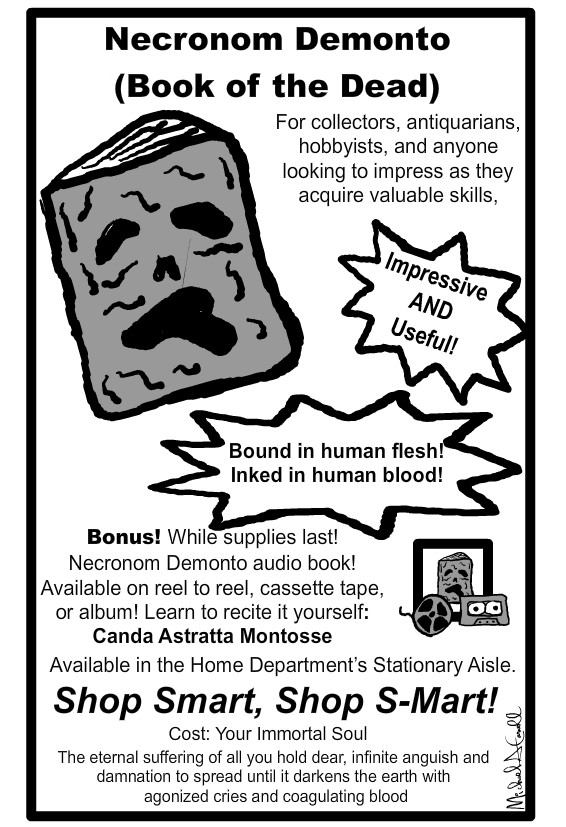
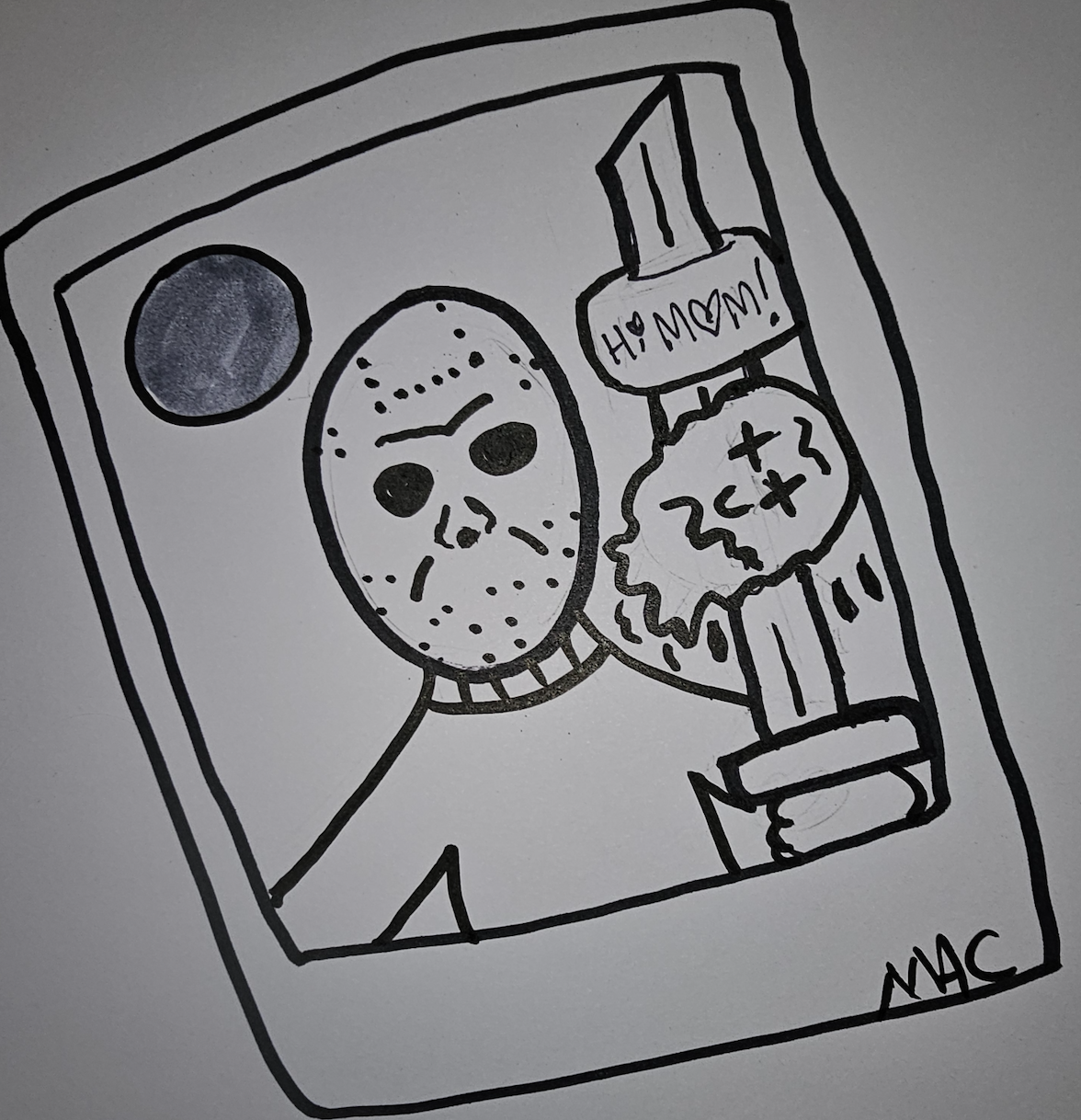
*by Hope Madden. Voiceover by Riley Wolfington. Clip production by George Wolf. Art by Michael Anthony Carroll.
Disclaimer: Villain Diaries is a non-commercial work of fan fiction and parody. All characters, names, and elements from the film belong to their respective copyright and trademark holders. I don’t own them and I’m not affiliated with, endorsed by, or sponsored by the creators, studios, or rights holders. This piece is an original creative commentary inspired by their work. It is shared for free, for entertainment and critical purposes, and earns me no money. If you’re a rights holder and have concerns, please contact me at maddwolf95@gmail.com and I’ll respond promptly.
BOAT TOURS! CAPE FEAR RIVER AND SURROUNDING TRIBUTARIES! CALL CAPTAIN MAX CADY!
North Carolina. This really is the land of the free.
You know what you are? Free as a bird. Free to go wherever, whenever. But you can’t escape your demons just by leavin’ home. That much freedom could get a fella into trouble. Without the right guide, I mean.
Do you want a lake tour guide who’s less than human? My mission is to be more than human.
And just let me get a gander at the rest of your family. I can even get in touch with my feminine side, if that’s what it takes. I got something planned for your wife and kid that they ain’t never gon’ forget.
I’ll show you things on the Cape Fear river you never in your wildest dreams imagined. I am offering you something hot. I won’t force you to make a commitment. But you could say I’m here to save you. Save you money and frustration on a cut rate boat captain, that is.
Contact Captain Max Cady.
I’ll see ya around, counselor.
*By Hope Madden. Art by Michael Anthony Carroll.
Disclaimer: Villain Diaries is a non-commercial work of fan fiction and parody. All characters, names, and elements from the film belong to their respective copyright and trademark holders. I don’t own them and I’m not affiliated with, endorsed by, or sponsored by the creators, studios, or rights holders. This piece is an original creative commentary inspired by their work. It is shared for free, for entertainment and critical purposes, and earns me no money. If you’re a rights holder and have concerns, please contact me at maddwolf95@gmail.com and I’ll respond promptly.
Listen, listen. I’m not the villain here. All right?
I’m an actor. There’s this kooky older couple in the building where I live. They said they could help me. Just bring me a tie, they said. Just bring them a tie that belonged to the one guy who kept getting all my parts.
You have no idea how competitive this industry is. And these people, they can help. They really can. One necktie, and suddenly I’m the golden boy. I didn’t do anything to him. I didn’t do anything. I didn’t even know what they were going to do. Hell, I don’t know what they did do or how they did it, but…and I do feel bad for the guy! But am I going to pass up my big break?
And now they need a little more. The necktie, that was really to prove a point. To show me what they could do.
And Rosemary—my wife—deserves better than what we had. So, yes, I took some liberties. But who did it hurt, really? She wasn’t supposed to remember any of it. That’s what they told me! She wouldn’t remember anything. She’d just be pregnant – sure, a little sicker than a regular pregnancy, but a lot of women are sick while they’re pregnant. And then, it would be like she had miscarried. Sad, sure, but she’d get over it and we’d try again. Begin our own family. A family that could live the way we wanted to live, deserved to live.
It wasn’t easy for me, either, you know. Seeing my wife with that – thing. That beast. I had to watch that. But my sacrifice—you know—it was for us. I did it for us.
And what those people do, well, that’s their business. To each his own. Live and let live, right? They’re not so bad, really. I kind of feel sorry for them. Rosemary is always getting on me to be nicer to people. That’s all I was doing.
I’m not the villain.
*by Hope Madden. Voiceover and audio production by George Wolf. Art by Michael Anthony Carroll.
Disclaimer: Villain Diaries is a non-commercial work of fan fiction and parody. All characters, names, and elements from the film belong to their respective copyright and trademark holders. I don’t own them and I’m not affiliated with, endorsed by, or sponsored by the creators, studios, or rights holders. This piece is an original creative commentary inspired by their work. It is shared for free, for entertainment and critical purposes, and earns me no money. If you’re a rights holder and have concerns, please contact me at maddwolf95@gmail.com and I’ll respond promptly.
I know I said I didn’t want to go to camp this year. I said nobody ever talks to me. Nobody ever asks me to swim or hike, or play truth or dare, or arm wrestle. Nobody offers me an enchilada. I said I didn’t like it. I said it was boring, but what I really meant was that it was lonely. I didn’t want to have to spend the whole summer—again!—with no friends. I said nobody likes me here. I said I would miss you.
But you said, “Jason, they’re just as scared of you as you are of them! They can’t like you if they don’t know you, so just march right up to them and show them who you are. Show them what you’re made of. You might even see what they’re made of.”
You were right, Mom. As always! I love it here. I am having the best summer, just like you said I would. Thanks for always having my back. I still miss you, though!
Jason
*by Hope Madden. Video in partnership with Mills James Productions. Voiceover by Dave Man Bjorklund. Art by Michael Anthony Carroll.
Disclaimer: Villain Diaries is a non-commercial work of fan fiction and parody. All characters, names, and elements from the film belong to their respective copyright and trademark holders. I don’t own them and I’m not affiliated with, endorsed by, or sponsored by the creators, studios, or rights holders. This piece is an original creative commentary inspired by their work. It is shared for free, for entertainment and critical purposes, and earns me no money. If you’re a rights holder and have concerns, please contact me at maddwolf95@gmail.com and I’ll respond promptly.
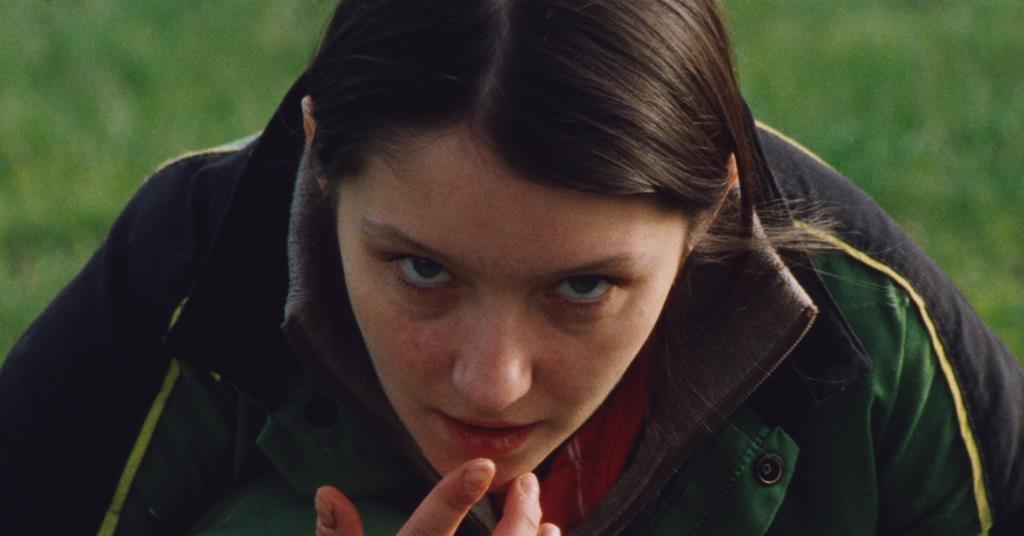
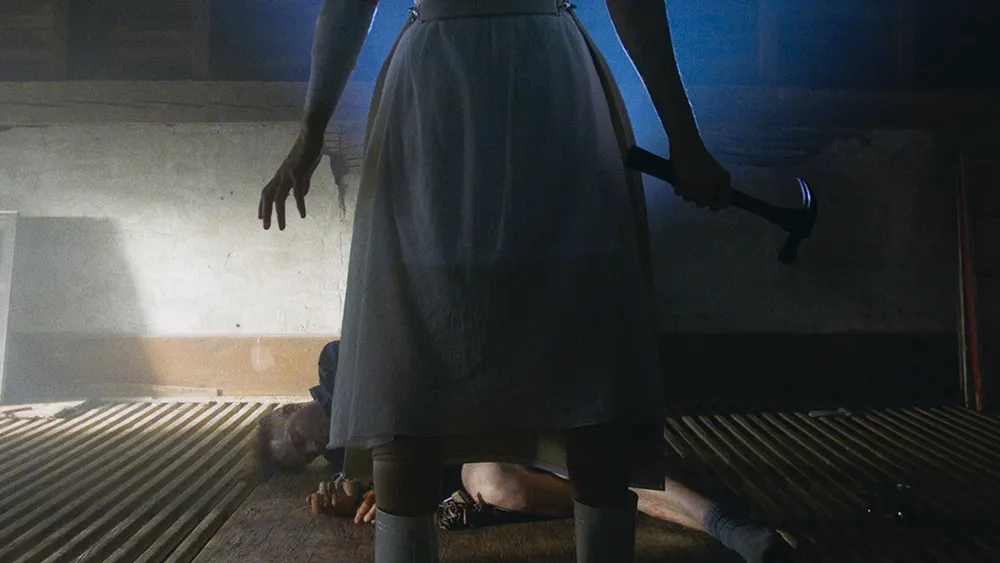
Julia Kowalski grounds each moment of Her Will Be Done in an utterly authentic day-to-day. Every chore, every mismatched but sturdy layer of clothing, every slap of a rubber glove or boot makes you ache with Naw (Maria Wróbel) for something more than the French farm life of a Polish migrant.
But that’s 20-year-old Naw’s life, with her kind but religious father (Wojciech Skibinski) and her two rowdy brothers (Przemyslaw Przestrzelski and Kuba Dyniewicz). Naw yearns to be a veterinarian, or to do anything that gets her out of this house, this life. Even if she believes, as her father does, that she carries her mother’s curse.
The realism of Kowalski’s approach keeps you guessing: are Naw’s episodes medical? Supernatural? Just plain rage? The filmmaker mixes messages, confounds clues, and transfixes you in the mystery, mainly through Wróbel’s convincing, wide-eyed observational performance.
Wróbel’s quite wonderful, rarely speaking, communicating the entire arc of the character with her enormous, searching eyes. Thanks to the performance it’s easy to question Naw’s reality and to worry about the way she interprets the reality around her.
Naw’s life of quietly raging frustration takes quite a turn when the neighbor’s daughter (Roxane Mesquida)—scandalous for some reason Naw’s father won’t tell her—moves back home.
From this moment, Kowalski spins a folk horror rooted in misogyny, patriarchy, religion, power, and superstition. All of this as observed by the sheltered, innocent Naw. It’s like a fairy tale where the beautiful fairy finds herself somehow in Naw’s miserable world rather than vice versa, and the filmmaker mines that concept to create a kind of backward folktale.
In its best moments, Her Will Be Done conjures Marcin Wrona’s 2015 treasure Demon. At other moments, the understated realism calls Emma Benestan’s feminist horror Animale to mind. Kowalski, who writes with Simon Beaufils, complicates characters, makes them tough to predict. And yet, the bones of both reality and fairy tale dictate what must be.
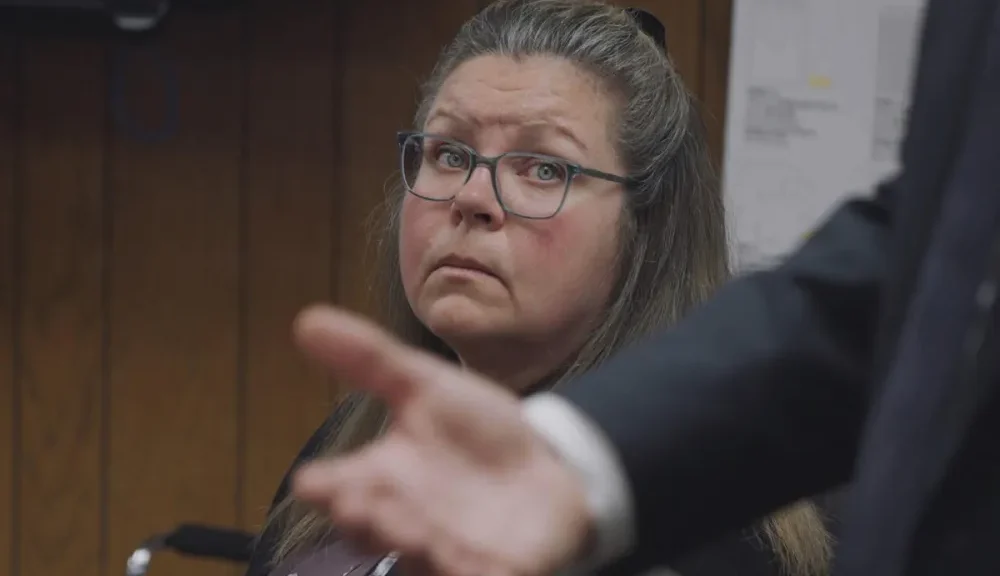
There’s no true crime mystery at the heart of director Jessica Earnshaw’s riveting documentary Baby Doe. Gail Ritchey gave birth in 1993 and left the newborn in the woods in Geauga County, a conservative rural suburb outside of Cleveland, Ohio. The case was a local sensation that went unsolved until 2019, when DNA evidence led investigators to arrest Ritchey for murder.
What follows from that arrest is a challenging examination of the criminal justice system, its treatment of women and their mental health and how we view those accused of what popular culture (and pulpier true crime fare) dub acts that are “especially heinous,” told through a blend of contemporary footage and intimate access to the Ritchey family and their legal team.
Earnshaw’s camera becomes an ever-present member of the extended Ritchey family as they grapple with an unthinkable crime. Ritchey’s high school sweetheart and now husband Mark was unaware that Gail was even pregnant with their child at the time, and Earnshaw doesn’t shy away during interviews as Mark and Gail both reckon with their deeply conservative Christian upbringing that may have contributed to Gail’s state of mind at the time.
As Ritchey’s defense team confers with experts on how to get a jury to sympathize with Ritchey, Earnshaw touches on other high-profile cases on the subject of “denied pregnancy.” This is where the documentary takes yet another surprising—and enraging—turn, with medical experts on one side offering up compelling and deeply moving testimony on the under-discussed condition. On the other side, there is Ohio law, which in this case bars Ritchey and her team from using any of this as part of her defense. Instead, her lawyers must focus on the argument that the baby was stillborn.
Earnshaw’s raw interviews ultimately weave a sad, winding narrative that starts with Ritchey’s overbearing father and ends up in a suburban Cleveland jury room filled with male jury members and a reproving judge. It’s difficult to shake the sense that whatever is happening in that courtroom, it’s not about justice.
We do at least find more tender moments and even grace outside of the trial. Some of this comes from likely sources (a welcoming church, spearheaded by a caring pastor’s wife). But one of these moments comes from a surprising figure near the end of the film, one of the few men outside of the Ritchey family who sees Gail as someone who is more than the acts she has committed.
These moments, rare as they are, hardly make up for a criminal justice system that seems both unequipped and uninterested in understanding the mental health of why some people do what they do. Thankfully, Earnshaw is, and she tells the story beautifully in a way that suggests if sympathy is impossible, we can still find room for empathy.
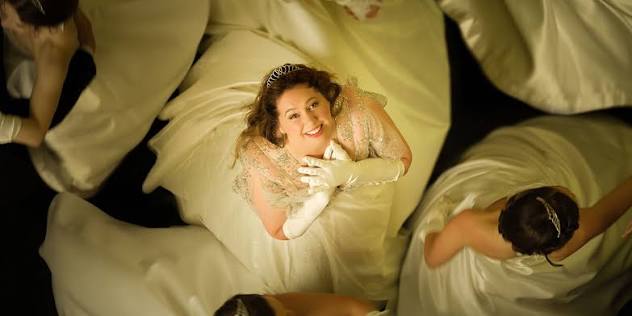
After pulling a feminist-themed stunt at school, Maeve (Charlotte MacInnes) is banned to the bush; more specifically, the small town of Dunburn where her cousin Taylah (Natalie Abbott) lives in Rebel Wilson’s directorial debut, The Deb.
Maeve arrives in town to find all Taylah wants from life is to make a splash at the upcoming debutant event. Nothing is more archaic to Maeve than this spectacle of femininity and purity.
The wants of both girls are relayed through song, and while each song is catchy, they are also uninspired. In fact, none of the songs in the movie stand out nor do any of the choreographed dance numbers that give us time to meet the people of Dunburn. They are unnecessary filler in an otherwise absorbing story.
Dunburn’s resident mean girl Annabelle (Stevie Jean) and her fellow mean girls (The Pixie Cups) are fun in a catty sort of way as they do their best to make Taylah’s life hell.
Rebel Wilson co-stars as Annabell’s mother. Her character is a combination of Amy Poehler’s Mean Girls cool mom, and a stereotypical parent-manager who tries to bully her kid toward superstardom.
As Maeve adjust to life in Dunburn, she harshly judges Taylah and everyone in the bush for their behavior, their quaintness, their dreams and desires. She is as cruel in her own way to Taylah as the Pixie Cups. Though Maeve aspires to feminist equality and the end of the patriarchy, she doesn’t recognize her own role in perpetrating classist and patriarchal beliefs.
But the film isn’t too interested in taking a deep dive into the problems Maeve seeks to address with her stunts and TikTok videos. Instead, the audience is treated to a fun musical that has a simple lesson or two for the mean girls of the world.
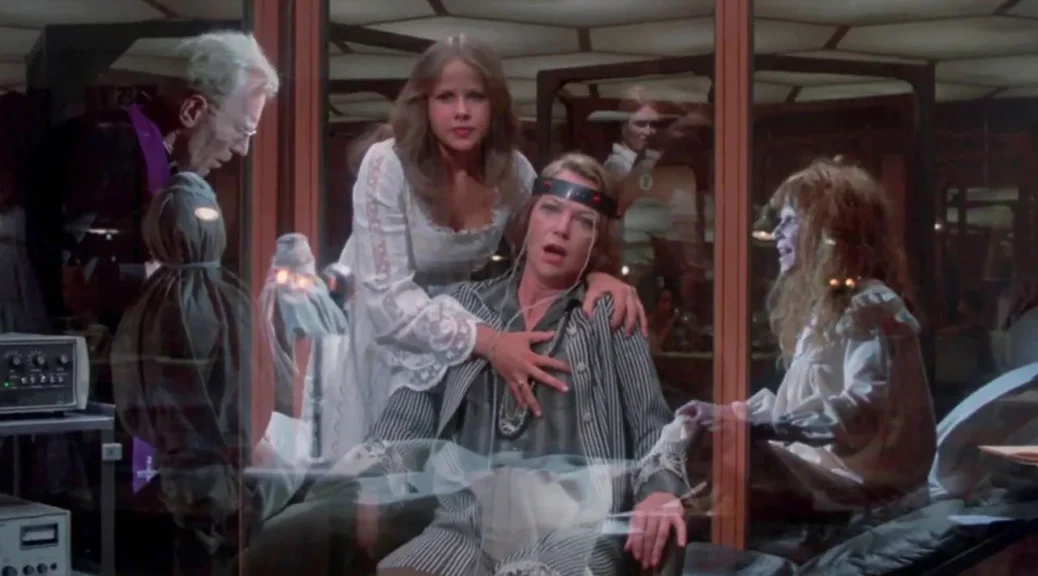
There was a new list floating around social media this week, and it ranked the 25 all-time worst movie sequels. 1977’s Exorcist II: The Heretic was nowhere to be found. That will probably surprise a bunch of people, including some that are part of Boorman and the Devil, a fascinating look behind one of the most infamous productions in film history.
John Boorman was fresh off of an Oscar nomination for Deliverance when he accepted the gig to follow up the phenomenon that was The Exorcist. Looking back, the now 92 year-old Boorman realizes Stanley Kubrick was correct when he warned the only way to follow Friedkin’s classic was to bring even more shock value.
Boorman chose an approach that focused on light over dark. Plus “the Synchronizer,” a tap-dancing Linda Blair and James Earl Jones in a locust getup.
It was a complete disaster. But director David Kittredge’s look back is so captivating, the urge to give The Heretic another look will be strong.
Boorman’s candor about the pain of failure is refreshingly honest, and the way that Kittredge surrounds it with insightful commentary from filmmakers such as Karyn Kusama, Mike Flanagan and Joe Dante creates an engaging filmmaking conversation.
Kittredge also shows some sharp editing skills, weaving in specific moments from the film to create wry commentary on the battles going on behind the scenes. Linda Blair would show up late, Richard Burton would leave early and Oscar-winner Louise Fletcher wound up exasperated.
Plus, there was the battle over the script re-writes, some ballooning budget and production schedules and Boorman’s case of Valley Fever that shut the whole thing down for five weeks.
Was there a Devilish curse at work?
Kittredge makes sure you appreciate all the things Boorman did right, and hear from a few critics who insist The Heretic is more triumph than tragedy. Either way, Boorman and The Devil is an essential and entertaining breakdown of one infamous film, and the devil-in-the-details of the filmmaking process itself.
When scholarship student Dani (Cassady McClincy Zhang) is picked up for carrying a miniscule number of illegal pills, her life is forever altered in writer/director Merlin Camozzi’s film The Snare.
The two detectives (Royce Johnson and Elizabeth Stahlmann) who take Dani in are quick to accuse her of intent to sell. She insists she only got the drugs to celebrate her recent graduation. Whether they believe her doesn’t matter. They see someone they can use for their own ends.
Camozzi has crafted a stunning portrayal of the mental toll inflicted on confidential informants (CIs) who will do almost anything to avoid a prison sentence. In Dani’s case, a conviction would mean losing her scholarship to college. For a poor student who is reliant on this, it’s a devastating consequence for a minor mistake.
The psychological abuse inflicted on Dani by the two cops is appalling. They are absolutely convincing in their efforts to bend Dani to their will. By exploiting her, they hope to land a whale. And because she has everything to lose, she is easily backed into a corner.
The scenes between Dani and the detectives are sometimes maudlin and their effect is diminished by this. However, McClincy Zhang convinces us of the hopelessness Dani feels. She knows what they want her to do would hurt people she cares about, but the detectives use the desperation against her. It leaves the viewer with an overwhelming sense of being between a rock and a hard place.
Camozzi does an excellent job of showing Dani’s world. This is a world where children are abandoned by their parents or have parents who work multiple jobs to stay afloat. The relationship Dani has with her mom (Lucy Walters) and brother, Bison (Joaopaulo Malheiro) is convincing and sincere.
The film states it is based on a true story, and while it is not specific to any one person, it is an overarching look at the flaws in the system of CIs. It’s sobering to realize children as young as 13 might find themselves in a situation like Dani’s. The film makes you wonder if the system is worth the price.
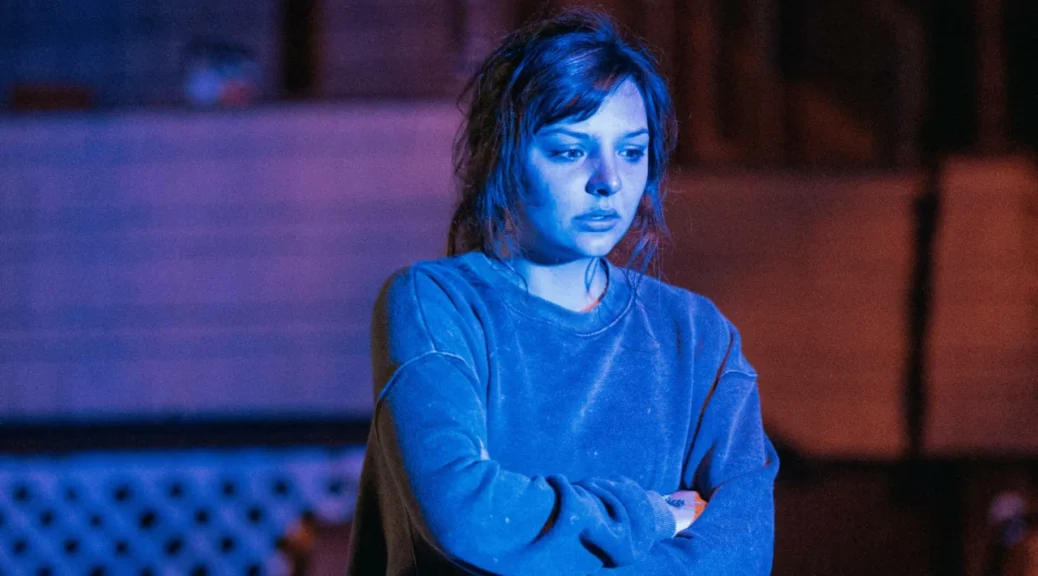
Writers/directors Emily Bennett (who also stars) and Justin Brooks explore the concepts of sadism and masochism as vehicles for filmmaking in their spare, effective, bloody feature Blood Shine.
Bennett is the delicately lovely Clara, all alone in a big old farmhouse out in the middle of nowhere. We meet Clara as she answers her door late at night to the recently out-of-work Keith (Brendan Sexton III — Session 9’s tragic, mulleted, and tragically mulleted Jeff!).
It’s an effective prelude to the film to come of a zealot, a vessel, and an awful lot of blood given that the balance of the film consists mainly of two people.
The second of those two people, Brighton West (David Call) is a horror film director. Like Keith, Brighton West is not such a great guy. Call is convincing enough that it’s tough to care what happens to Brighton, but Blood Shine gives both Call and Bennett opportunities to surprise.
Though the film nods to Silence of the Lambs, American Psycho, Audition and some of the dreamier horror indies of the Seventies, that’s more in specific shot decisions than story. Bennett and Brooks have carved out something unique within the isolated zealot storyline and created a character in Clara that highlights Bennett’s skill as an actor.
The small but strong supporting ensemble—extended cameos, really—include Toby Poser and Larry Fessenden. Both are characteristically wonderful, each bringing a presence that alerts viewers to creepiness afoot.
The brings in filmmaking as a device, but it isn’t pieced well into the narrative and winds up feeling tacked on and unnecessary. But the one-on-one between Clara and Brighton, and Bennett’s increasingly brittle performance, compel attention.
It’s an effective lead up to a passable climax. Blood Shine is more invested in the journey than the destination. That journey is a dark one disguised in whites, between two people we shouldn’t care about heading in a direction we shouldn’t want them to go.