Category Archives: New In Theaters

Reviews of what’s out now

We Rate Dogs

Good Boy

by Hope Madden

I have a theory that the best way to make a horror film terrifying is to put children in peril. How better to ensure viewers are compelled, hearts in their throats, desperate for the heroes to prevail?

Co-writer/director Ben Leonberg may have discovered a more sure-fire way.

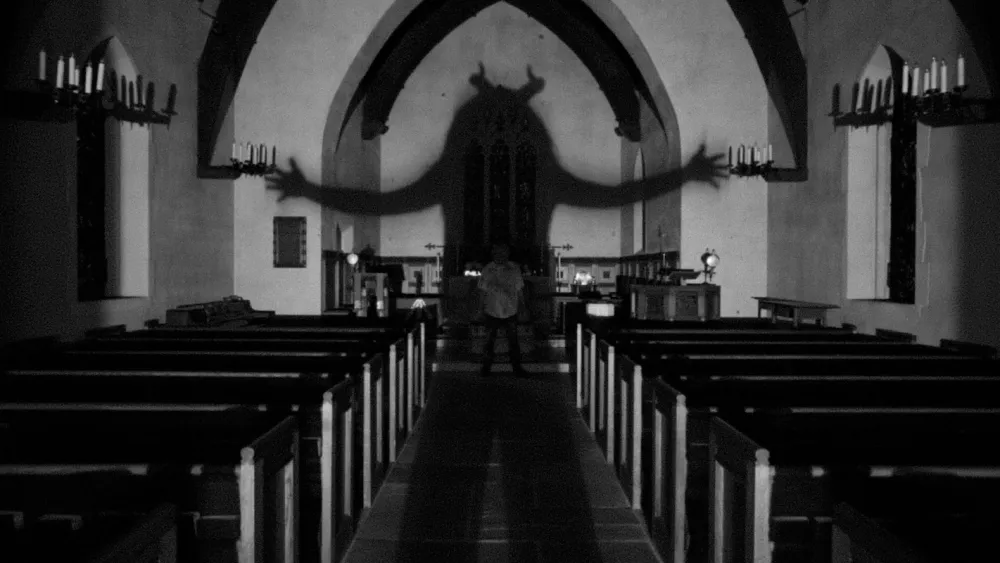
Meet Indy, a Nova Scotia Duck Trolling Retriever and an undeniably Good Boy. The dog is played by Leonberg’s own pet, also named Indy. I am not one to talk to the screen, but there were several times during Good Boy’s mere 72-minute running time that I heard myself saying, “No, no, no, no. Don’t do that, buddy.”

Because Indy and his dude, Todd (Shane Jensen), have just moved into Grandpa’s (Larry Fessenden) old place out in the woods. Todd’s in bad shape, physically. And even though folks say the old place is haunted, and even though Grandpa died here and his dogs all ran away or disappeared, Todd and Indy should be fine. Right?

The film works as well as it does because of Leonberg’s great gimmick. The story is told from Indy’s point of view. We know what he knows, which allows metaphor and supernatural to fold together seamlessly since no real exposition can be given. It also means that we never take our eyes off this beautiful dog, so we never stop worrying about his wellbeing, if he’s sad, is he cold out in the rain, is he scared?

Yes, Leonberg is out to break your heart, and his gorgeous retriever does just that.

There’s something unsettling in real life when your pet stares deeply at nothing and whines. Leonberg contemplates those shadows, the silence, the movement just outside the frame, along with Indy. The atmosphere he creates is deeply creepy and tinged with unendurable tenderness.

But a metaphorical supernatural horror story is tough to resolve satisfactorily when all we have to work with is the communicative abilities of a dog. No matter how darling that dog is.

Good Boy feels longer than its 72 minutes, and the metaphor at the heart of the story leeches away the true fear. It leaves you with heartbreak, which isn’t quite enough. But Leonberg’s film is an audacious feature debut and a worthy experiment.

Viva la Revolution

One Battle After Another

by Hope Madden

Paul Thomas Anderson, still batting 1000.

This f’ing guy! He spends four or five years directing obscure music videos, hits us with a masterpiece of modern cinema, then back to the tunes. The Phantom Thread, The Master, Boogie Nights, Punch Drunk Love, Licorice Pizza, Hard Eight, Inherent Vice, Magnolia, There Will Be Blood—you get whiplash from genre and stylistic hopscotch. But in each is a gorgeous pathos, a meticulous cinematic experience, and ensemble piece teeming with dozens of the most stunning performances you’ve ever seen.

So, you know what to expect when you sit down to One Battle After Another.

Anderson based the film on Thomas Pynchon’s Vineland, which contrasted the revolutionary spirit of America of the 1960s with the era of Ronald Reagan’s reelection. Anderson finds parallels in the generational necessity for revolution with Bob (Leonardo DiCaprio).

Years ago, Bob and Perfidia Beverly Hills (Teyana Taylor, owning the screen no matter who she shares it with) were revolutionaries disrupting W.’s ugly border policies, among other things. But everything went to hell, much thanks to Col. Steven J. Lockjaw (great name!). And about 16 years later, Lockjaw comes looking for Bob and the baby he disappeared with off-grid all those years ago (Chase Infiniti).

Sean Penn is Lockjaw, and he hasn’t been anywhere near this compelling or transformed since Milk (although he was a ton of fun in Licorice Pizza).

Though the massive cast is characteristically littered with incredible talents crackling with the electricity of Anderson’s script, Benicio del Toro stands out. He brings a laidback humor to the film that draws out DiCaprio’s silliness. While much of One Battle After Another is a nail-biting political thriller turned action flick, thanks to these two, it’s also one of Anderson’s funniest movies.

It may also be his most relevant. Certainly, the most of-the-moment. A master of the period piece, with this film Anderson reaches back to clarify present. By contrasting Bob’s paranoid, bumbling earnestness with the farcical evil of the Christmastime Adventurer’s Club, he satirizes exactly where we are today and why it looks so much like where we’ve been during every revolution.

But it is the filmmaker’s magical ability to populate each moment of his 2-hour-41-minute run time with authentic, understated, human detail that grounds the film in our lived-in reality and positions it as another masterpiece.

Everyday People

The Lost Bus

by George Wolf

Paul Greengrass loves him a true survival story. And with Captain Phillips, United 93, Bloody Sunday and more, he’s shown great instincts for bringing those stories to the screen. That craftsmanship is on display again in The Lost Bus, a harrowing retelling of a heroic rescue from Northern California’s catastrophic Camp Fire that killed 85 people and destroyed ninety percent of a city’s homes in 2018.

Adapting Lizzie Johnson’s book, Greengrass and co – writer Brad Ingelsby get us up to speed early and effectively. The town of Paradise has not had rain for over 200 days, and the threat of wind gusts up to 90 mph bring multiple wildfire warnings.

Kevin McKay (Matthew McConaughey) is begging for extra shifts as a school bus driver, trying to keep his life together amid an aging mother (McConaughey’s mother Kay), a rebellious son (McConaughey’s son Levi), a disappointed ex-wife (Kimberli Flores), an impatient boss (Ashlie Atkinson) and a dying dog.

He’s also struggling with guilt after his father’s death, and it’s only McConaughey’s skill with grounding the character that keeps Kevin from collapsing under the strain of an overly tortured and reluctant hero.

A faulty power line ignites a small fire that quickly grows to overwhelm firefighters, and as evacuation panic sets in, a call goes out to any bus drivers able to rescue a group of stranded schoolchildren. McKay answers, picking up teacher Mary Ludwig (America Ferrera) and her class of 22 kids. The radios are out and the bus is unreachable, adding even more anxiety to the frightened parents waiting at a shelter.

Ferrera also does wonders with a broadly drawn character. She and McConaughey create effective snapshots of everyday heroes pushed to the brink, the perfect anchor for Greengrass’s frenzied shaky-cam plunge into the fire. What the effects team accomplishes with the mix of embers, wind and flame is just spectacular, and though none of the bus’s perilous moments surpass the white knuckle nerve-shredding of Sorcerer, just the fact that Greengrass can bring Friedkin’s classic to mind is a high-five in itself.

McKay and Ludwig certainly deserve plenty of those. And the bluntly titled The Lost Bus gives them their due in grand, appropriately no-nonsense fashion. Unimaginable circumstances bring on an unparalleled fight for survival, and heroes emerge. Hold on tight for a gripping ride, especially if you can catch this Apple TV release on the big screen.

She’s Investigatin’…Darn Tootin!

Dead of Winter

by Hope Madden

Emma Thompson and Judy Greer go head-to-head in a kidnaping thriller set in a forsaken Northern Minnesota snowstorm? Dude, I am so in!

With Dead of Winter, Brian Kirk relies on nuanced character work, gorgeously isolating cinematography, and the desperation of human nature to keep you guessing. Thompson, who executive produces, is Barb. Barb with that Minnesota “r”. She’s hearty for a mature gal. And despite the weather forecast, she puts on the ol’ snowsuit, warms up the even older pick up, and heads to faraway Lake Hilda to do some ice fishing. And maybe something else.

But she gets a little turned around and hears chopping in the distance, so she goes to ask directions. Nobody else for miles around, what else is she to do? Barb finds a bearded man in camo (Marc Menchaca, excellent), who—very startled by the sight of her—directs her to the lake. But blood on the snow has Barb a little troubled, and soon enough, she sniffs out a kidnapping. Is she hearty enough to save that poor girl in the wood chopper’s basement?

In some ways, Dead of Winter—written by first time screenwriters Nicholas Jacobson-Larson and Dalton Leeb—feels like little more than a welcome update to a well-worn plot. A handful of flashbacks to Barb’s youth, which flesh out the film’s B-story and deepen Barb’s character, are just this side of Hallmark Channel. But Thompson, from her first determined sigh, is so utterly convincing that you’re hooked.

And that’s all before the glorious Greer makes her entrance. It’s hard to justify saying that the most versatile and employable character actor of a generation is playing against type, since Greer has played every imaginable type of character. But the blind desperation behind her unnamed (she and Barb never really get on chummy terms) character’s cruelty is so precisely wielded by this actor that you would believe this film no matter how farfetched it became.

There’s a simplicity to the storytelling that matches Kirk’s determined avoidance of cynicism. Like Barb, this movie marches on, not necessarily seeing the worst in this world even when it wouldn’t be too hard. Hard with that Minnesota “r”. But he never loses track of his chosen genre. Dead of Winter sidesteps cliché, delivers thrills, and finds new ways to showcase two tremendous talents.

Living Deliciously

Him

by Hope Madden

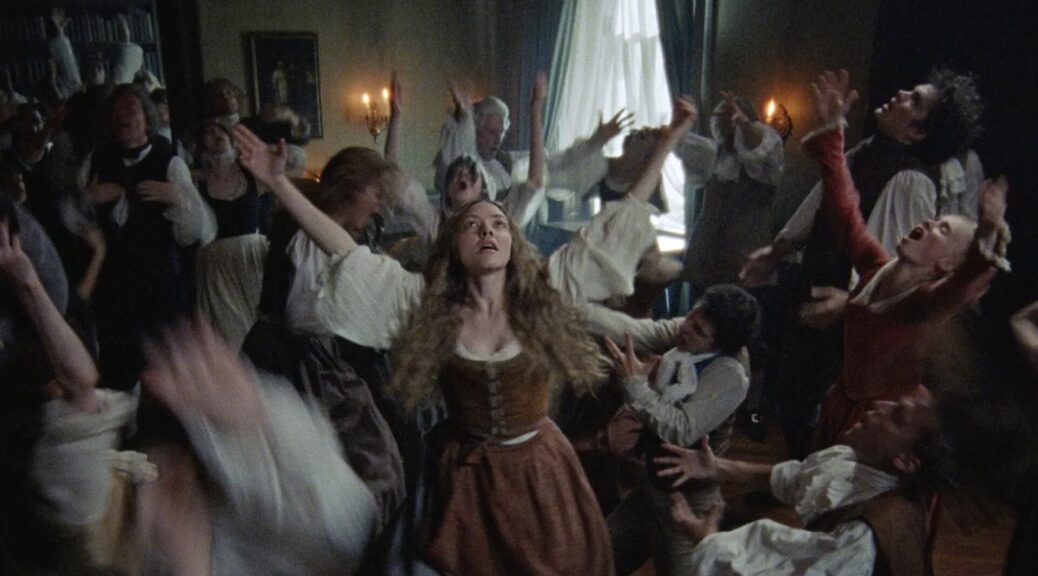
The goat is an apt image to anchor a sports film. The Greatest Of All Time. Every athlete’s dream. If you’ve ever watched horror, goats are also excellent avatars for evil. In the case of Him, co-writer/director Justin Tipping’s feature from Jordan Peele’s Monkey Paw Productions, it’s a bit of both.

Isaiah White (Marlon Wayans) lives deliciously. Is Cameron Cade (Tyriq Withers) ready for that? Cade is the up-and-comer, the college QB who may be the one man to dethrone legendary Saviors quarterback, White. The 8-time champion came back even after the bone-protruding leg injury Cam’s late father made him watch again and again as a child.

Why would a father make a child watch something like that? To learn what it means to be a man, naturally.

Him is dense with themes and imagery, beginning with the very real frights of traumatic brain injury and its effect on football players. But the larger horror is rooted in performative masculinity, of proving your physical superiority by overpowering an opponent, drawing first blood, drawing last blood, and calling it power when it’s simply entertainment for puny white men with money.

Tipping equates the mechanics of sizing up an athlete with preparation for an auction block in one of the film’s most quietly unnerving sequences. Later references to gladiators obediently entering the pit at the behest of their trainers serve as additional, hardly subtle, illustrations of the power dynamic afoot.

Withers’s overwhelmed acolyte feels more dopey than wide-eyed, but Wayans is slippery, diabolical fun as the primary antagonist. Naomie Grossman steals scenes as White’s biggest fan, and Tim Heidecker’s disingenuous smarm fits perfectly as Cade’s agent.

There’s an intriguing half to this film. It’s the half making points about the way those with a financial stake in the game proselytize brutal sacrifice in search of greatness. The delicious living half, though, feels like a cheat.

The supernatural elements in Him give way to a foggy mythology full of fever dream smash cuts and jump scares. At times—as on a shooting range—details are left delightfully, grotesquely vague. Elsewhere the ambiguity feels like narrative weakness.

Worse still, the supernatural side of the film, to a degree, lets capitalism and white supremacy off the hook, no matter how satisfying the final bloodletting may feel. The set design is evocative and cinematography impresses, but the film can’t quite live up to expectations.   

My Mind on Mega and Mega on My Mind

Megadoc

by George Wolf

I saw Megalopolis when it debuted last year. I liked it, didn’t love it. It was a big, messy cinematic swing from Francis Ford Coppola, and even those who hated it – there were plenty – had to admire FFC’s commitment to a project that he started over thirty years prior.

Coppola put up his own fortune to get the film done, including selling a stake in his winery. And that meant Coppola answered only to Coppola, which adds a captivating element to Megadoc, Mike Figgis’s behind-the-scenes documentary on the chaotic production.

Coppola invited the veteran Figgis (Leaving Las Vegas) on set, which gave him nearly unlimited access to cast and crew. FFC’s head butts with the difficult Shia LeBeouf are frequently captured, while the more calculated Adam Driver needs some time to feel comfortable with Figgis’s presence.

The first run at filming Megalopolis came in the early 2000s, and footage from those early table reads and green screen shoots with some different cast members are juxtaposed with current footage to hypnotic effect.

But the real attraction of Megadoc lies well beyond any movie star posturing or agent demands. We get an up-close look at Coppola’s broad creative process, and the conflicts that come from the famed director thinking of his passion project as “play, while they want to work at it.”

Half the crew walks out, actors question the director’s choices, while FFC often retreats to the isolation of a trailer where he can call the shots remotely. And Figgis is always there, sometimes abusing his privileges and becoming more of a proud participant than impartial observer.

And ironically, that ends up making Megadoc even more of a necessary bookend to Hearts of Darkness, Eleanor Coppola’s 1991 doc on the making of Apocalypse Now. Decades later, the frenzied director on the verge of losing it all has become a legend more than at peace with risking it all. That’s a fascinating transformation to observe, and any fan of filmmaking should embrace the chance to do it.

One Step Up, Two Steps Back

Waltzing with Brando

by Hope Madden

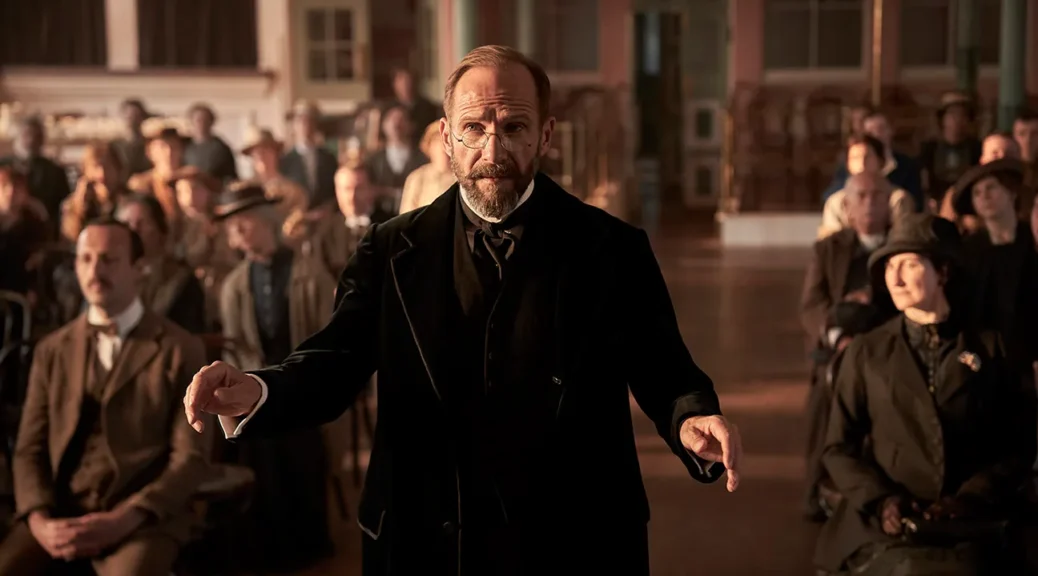
Just about one year ago, images surfaced of Billy Zane on set as Marlon Brando for the film Waltzing with Brando. Zane’s an underappreciated talent relegated for decades to mostly B-movie hell. Brando is, naturally, a fascinating topic for a biopic. And Zane looked remarkably like him. Hello, cautious optimism.

Jon Heder (Napoleon Dynamite) plays Bernard Judge, the LA architect who heads to Tahiti to build Zane’s Brando an ecologically pristine hideaway on an uninhabitable island. Director Bill Fishman adapts Judge’s memoir of the years-long relationship—the hijinks, the struggles, the personal journey from square to somewhat rounded but thoroughly tanned.

It’s awful.

Because the arc we follow is Judge’s, Brando—easily and obviously the most interesting presence—is a supporting character. A magical figure, unknowable and wise and often nude, Buddha like, he exists only to enlighten our hero. Fully 35% of the film consists of Brando saying something vague and odd, Judge staring wide-eyed and confused at him, or Judge saying something stupid, Brando laughing amiably at him. The two then eye each other as if some wisdom must be passing, either between the two of them or between them and us. And scene.

It’s awful. I know I’ve said that but it more than bears repeating.

Heder often breaks the 4th wall, giving the viewer a little aside or comment. Judge is asking us to join him on his journey because we could relate. It seems like a sound narrative choice given the undeniable fact that we would all have more in common with this earnest, uptight nobody than we would with Marlon Brando. But the writing is so profoundly cloying, the performances so community-theater superficial, and the scenes so needlessly drawn out and sanitized that the result is unbearable.

To make an audience want to get to know an architect when Marlon Brando is right there is a potentially insurmountable task for a director, and Fishman is by no means up to the task. He surrounds the two men with countless one-dimensional caricatures of beautiful islanders, tricky islanders, benevolent islanders, and the inescapable long-suffering but supportive wife (Alaina Huffman) and precocious daughter (played by Zane’s daughter, Ava).

For his part, Zane delivers an impish and entertaining turn, though he’s never once asked to act, to find anything inside the provocative figure. We learn nothing about Marlon Brando, and honestly, very little about Bernard Judge. Tahiti looks nice, though.

Again Tonight They’re Gonna Rock You Tonight

Spinal Tap II: The End Continues

by George Wolf

In the 41 years since the iconic This Is Spinal Tap, the “mockumentary” approach has become so prevalent that even Christopher Guest (Best in Show, For Your Consideration, A Mighty Wind, etc.) admitted he doesn’t see much point in returning to the form he’s executed so brilliantly over the years.

The point of doing just that for Spinal Tap II: The End Continues is clearly nostalgic fun, something the film manages just enough of to please longtime devotees.

Guest (David St. Hubbins) reunites with Michael McKean (Nigel Tufel), Harry Schearer (bassist Derek Smalls), and director Rob Reiner (director Marty DiBergi) to catch up with the Tap as they come together for the first time in 15 years.

It’s a logical catalyst for another mock, and a perfectly organic excuse to reach out to some famous drummers (settling on Valerie Franco as Didi Crockett), welcome some legends (Sir Paul, Sir Elton) and break out the classics. “Big Bottom,” “Bitch School,” “Cups and Cakes,” “Tonight I’m Gonna Rock You Tonight” and more are all still hilarious bangers, and the hit parade gets to the heart of what this movie does best: remind you how much you still love the first one.

This film feels more slight than usual, and the 82 minute running time is littered with brief reunions (Bobbi Fleckman, Artie Fufkin, Jeanine) and flashbacks to scenes from the original. It all seems a bit like the gang didn’t really have enough “A” material for a feature, but gave it a go for old times sake.

And for that sake, it works well enough. The “these go to eleven” and Stonehenge bits get well-played homages, Sir Elton is a gas and a few of the deadpan punchlines hit home. But if you’re expecting the elderly rock star bit to get the same level of inspired skewering the young rockers did four decades ago, forget it.

Tap II just plays the hits.

Soft Shells in Baltimore

The Baltimorons

by Hope Madden

A love letter to Baltimore and a beautiful showcase of talent, The Baltimorons is the yes-and of romcoms.

Jay Duplass directs a script co-written with Michael Strassner, who plays Cliff. Lovable, endearing, excruciatingly earnest, Cliff is headed with girlfriend Brittany (Olivia Luccardi) to spend Christmas Eve with her family. He falls on the back step, knocks out a tooth, and has to comb Baltimore for a dentist available to help.

Schlubby and sweet and desperately afraid of needles, Cliff makes quite an impression on the difficult to impress Dr. Didi (Liz Larsen). A series of mishaps, hijinks and opportunities keeps the two together for the balance of Christmas Eve.

This one-thing-leads-to-another cinematic structure can feel tedious and contrived, but Duplass and Strassner ground the narrative in Cliff’s two defining traits. Newly sober, Cliff is still learning who he is without alcohol. There’s a tentative, brave, sad but funny exploratory nature to the narrative that exactly mirrors this.

He’s also a sketch and improv comic, though he hasn’t done comedy since “the incident”—the catalyst for the film, for his sobriety, and for the personal journey that led Cliff to this moment. Cliff’s approach to life is the “yes, and” improv ethic. Whatever comes Cliff’s way, he’s not only up for it, he will meet it with the next most unexpected yet organic step to take.

Strassner couldn’t be better or more authentic in the lead, and his natural chemistry with Larsen compels interest. It’s a master class in opposites attract, two fully realized characters who are who they are, somehow warming to the thing in each other that most surprises them.

The Baltimorons is about fresh steps and reawakenings and taking what comes with humor and bravery. And it’s funny—sometimes slyly, sometimes hilariously. There’s substance to it, and romance, though the late-film reveal feels forced when compared to the balance of the film. Still, I haven’t seen a romantic comedy this romantic or funny since The Big Sick.

The Cost of Doing Business

The Man in My Basement

by George Wolf

You see Willem Dafoe is starring in a film called The Man in My Basement, and you suspect things could get freaky – in ways both hilarious and perverse. But if you’re at all familiar with Walter Mosley’s source novel, you know this basement business will deal in the bonds of history, the questions of philosophy and the responsibility of heritage.

The basement belongs to Charles Blakey (Corey Hawkins), an African American man in Sag Harbor whose life is slowly unraveling. With his parents deceased, Charles lives alone in his ancestral home, surrounded by artifacts he only values for possible sale.

Unemployed, Charles spends his days drinking, gambling and aimlessly drifting through life. With no motivation or prospects, Charles has little hope of saving the house from foreclosure, until Anniston Bennet (Dafoe) shows up on his door with an unusual offer.

If Bennet can rent the basement of the house, he’ll pay Charles one thousand dollars a day for 65 days. And he’ll pay in cash. What luck.

But of course, once Bennet moves in, Charles begins to discover the strings attached to the offer, and director Nadia Latif – adapting the screenplay with Mosley – zeroes in on the psychological battle downstairs.

Hawkins is impressive, with an understated approach that lends valuable authenticity to Charles’s gradual awakening. Through conversations with Bennet, and his growing friendship with a local curator (Anna Diop), Charles begins to the see the world – and his place in it – in an important new light.

Bennet’s unusual charm seems effortless for Dafoe. Is he angel or devil? Teacher or student? Prisoner or warden? From the minute Bennet’s offer is accepted, you know there will be consequences, and Dafoe has little problem upping the ante with a persuasive intensity.

Latif’s defiant final shot lands more securely than the attempts to paint the film as more of a danger-filled thriller than it really is. Charles’s nightmares seem more tailored to beefing up the trailer than the narrative, ultimately adding to a frustrating superficiality that dulls the edges of otherwise compelling themes.

The meaningful weight is found in the back and forth between Charles and Bennet. Hawkins and Dafoe flesh out both similarities and differences, and how each man is changed from the encounter. It is in these moments that the film finds its voice, and you end up wanting to push aside the overt symbolism, hoping to find a little more boundary pushing.