Category Archives: New In Theaters

Reviews of what’s out now

Split Decision

Hands of Stone

by George Wolf

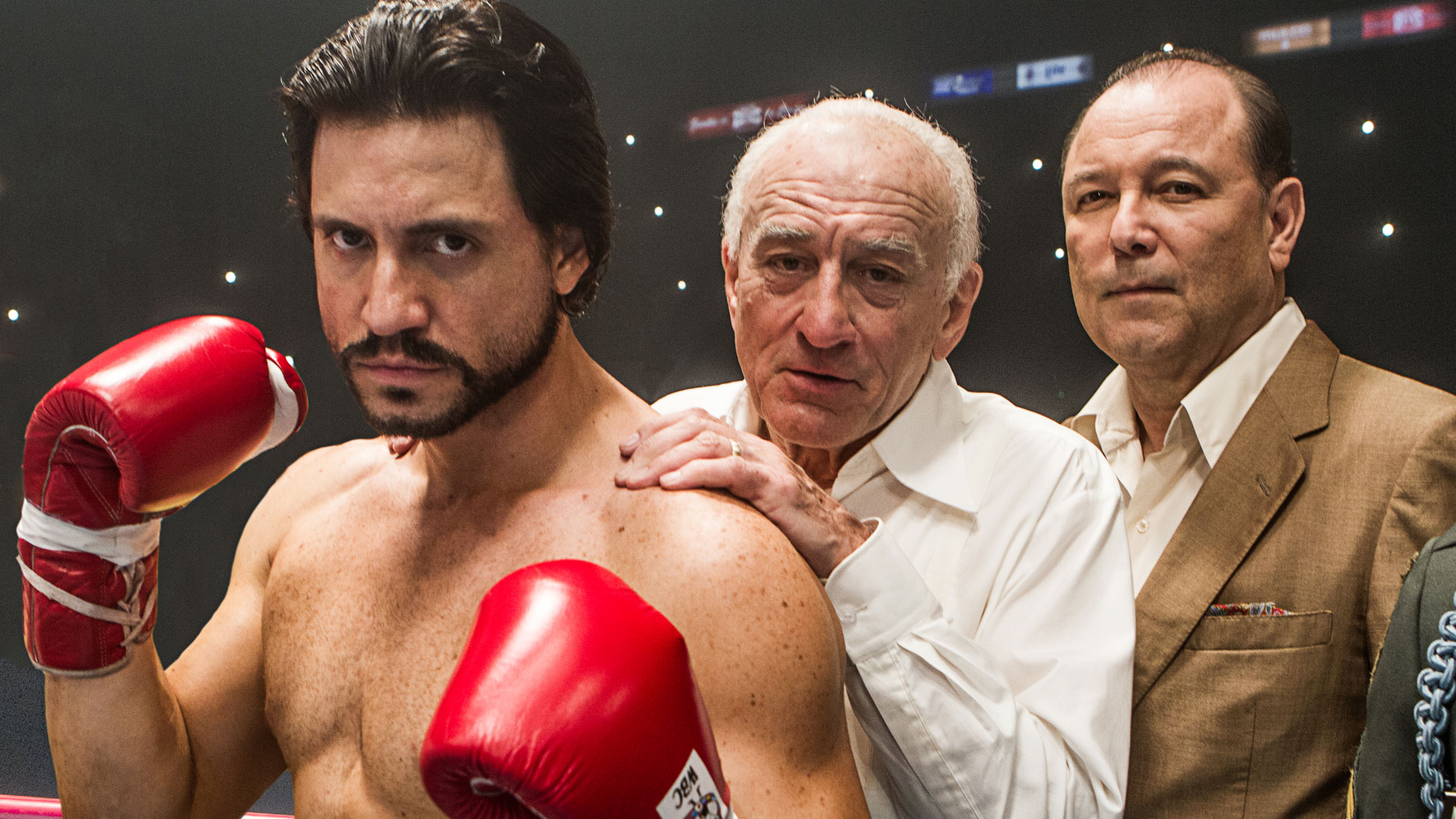
Early in Hands of Stone, legendary boxing trainer Ray Arcel (Robert DeNiro) is schooling future legendary boxer Roberto Duran (Edgar Ramirez) on technique versus strategy. The film tells us there are vital differences, then shows us these differences aren’t just in the ring.

Like a fighter too caught up in the moment to remember the plan, the film boasts solid fundamentals but employs a tired strategy while exploring more openings than it can safely land.

Duran was born in Panama, rising to stardom against a backdrop of poverty and political unrest in his homeland. So of course his story is told from the old white guy’s point of view. Trainers are a natural element in boxing movies, true, but anchoring this one with Arcel is just bad strategy. I mean, Mickey was great at telling us that women weaken legs, but he never altered the long game: telling Rocky’s story.

Writer/director Jonathan Jakubowicz’s respect for Duran is evident, and sincere enough to not shy away from some of the unflattering aspects of Duran’s past. Equal confidence that his story could be told on its own terms would have been welcome. Ramirez rises above it with a terrific performance, capturing the early hunger and eventual crash of a gifted champion who often seemed plagued by contradictions.

DeNiro brings a nicely underplayed grace to the wise narrator’s role while Ana de Armas is dynamic as Duran’s wife Felicidad, showing her recent one-note role in War Dogs was a complete waste of both time and talent.

The fine performances do much to keep the film grounded as it struggles to find a consistent voice. Jakubowicz wants us to understand the social, political and familial forces that nagged Duran, but also lament how great boxing used to be and appreciate Duran’s rivalry with Sugar Ray Leonard (nicely done Usher Raymond).

It’s a crowded narrative, even before Arcel’s own family dramas and mob connections come to call.

Hands of Stone shows admirable heart and strong technique, but is often derailed by scattershot focus and a questionable strategy. Call it a split decision.

Verdict-3-0-Stars


https://www.youtube.com/watch?v=1W1L0WnVnjY
Waiting to Exhale

Don’t Breathe

by Hope Madden

Filmmaker Fede Alvarez announced his presence on the horror film scene with authority. His 2013 Evil Dead reboot was not only critically and commercially successful, it was also the bloodiest movie ever made. Nice.

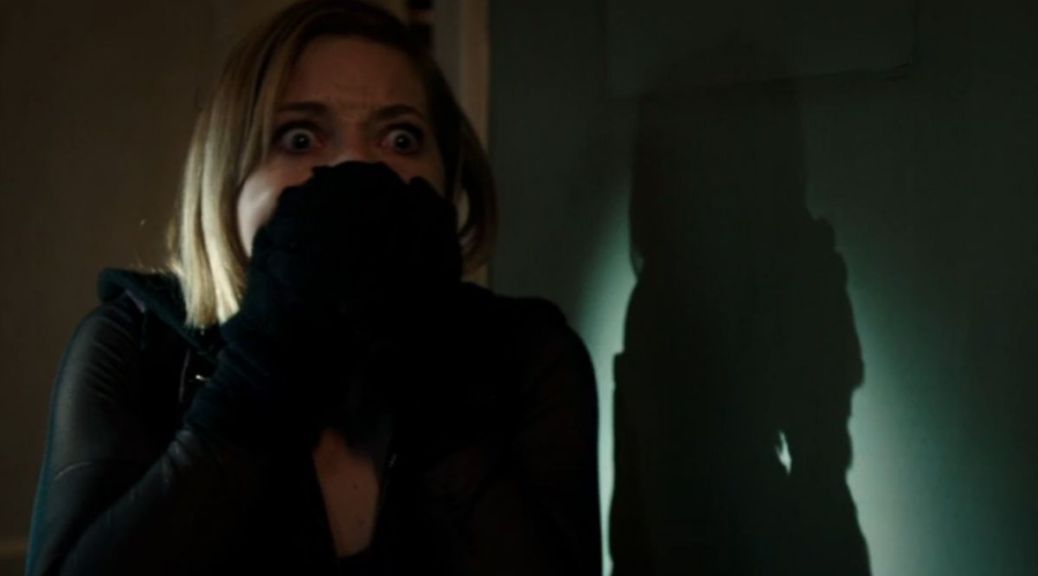
For his sophomore effort Don’t Breathe, the director dials down the blood and gore in favor of almost unbearable tension generated through masterful deployment of set design, sound design, cinematography and one sparse but effective premise.

Young thugs systematically robbing the few remaining upscale Detroit homeowners follow their alpha into a surefire hit: a blind man (Stephen Lang) sitting on $300k.

The depleted urban landscape makes for an eerie reminder of the state of the once proud Motor City, but it’s also the perfect locale for a B&E – there are no neighbors left to call 911.

Unfortunately for our trio – Rocky (Evil Dead’s Jane Levy), Money (Daniel Zovatto) and Alex (Dylan Minnette) – this blind man is not the easy mark they’d predicted.

This is a scrappy film that gives you very little in the way of character development, backstory or scope. Instead, Alvarez focuses so intently on what’s in front of you that you cannot escape – a tension particularly well suited to this claustrophobic nightmare.

A masterwork in efficiency, Don’t Breathe wastes barely a frame. So few elements are telegraphed that the rare overplaying of a hand – a camera holds too long on a mallet or lingers on a framed photo sitting upside down on a mantle – feels like a real disappointment.

Rodo Sayagues’s taut screenplay wastes little time, relying instead on Pedro Luque’s panicked camera to convey as much as we need to know about the predicament these three friends have gotten us all into.

The always effective Lang cuts an impressive figure as the blind veteran with mad skills and crazy secrets. Wisely, Alvarez sidesteps easy categories. Though you may think you recognize each character as they first appear, no one is as easy to pigeonhole as you may think.

As he does with so much of the rest of the film, Alvarez makes excellent use of what little we know about the characters to keep us anxious.

But that’s not all – there are surprises enough to confound and amaze. You may think you have the old man’s secret figured out, but so do our hapless felons. Things get a little nuts as the tale rolls on, but thanks to the film’s breakneck pace and relentless tension, you’ll barely have time to breathe, let alone think.

Verdict-3-5-Stars

Thy Chariot Awaits

Ben-Hur

by George Wolf

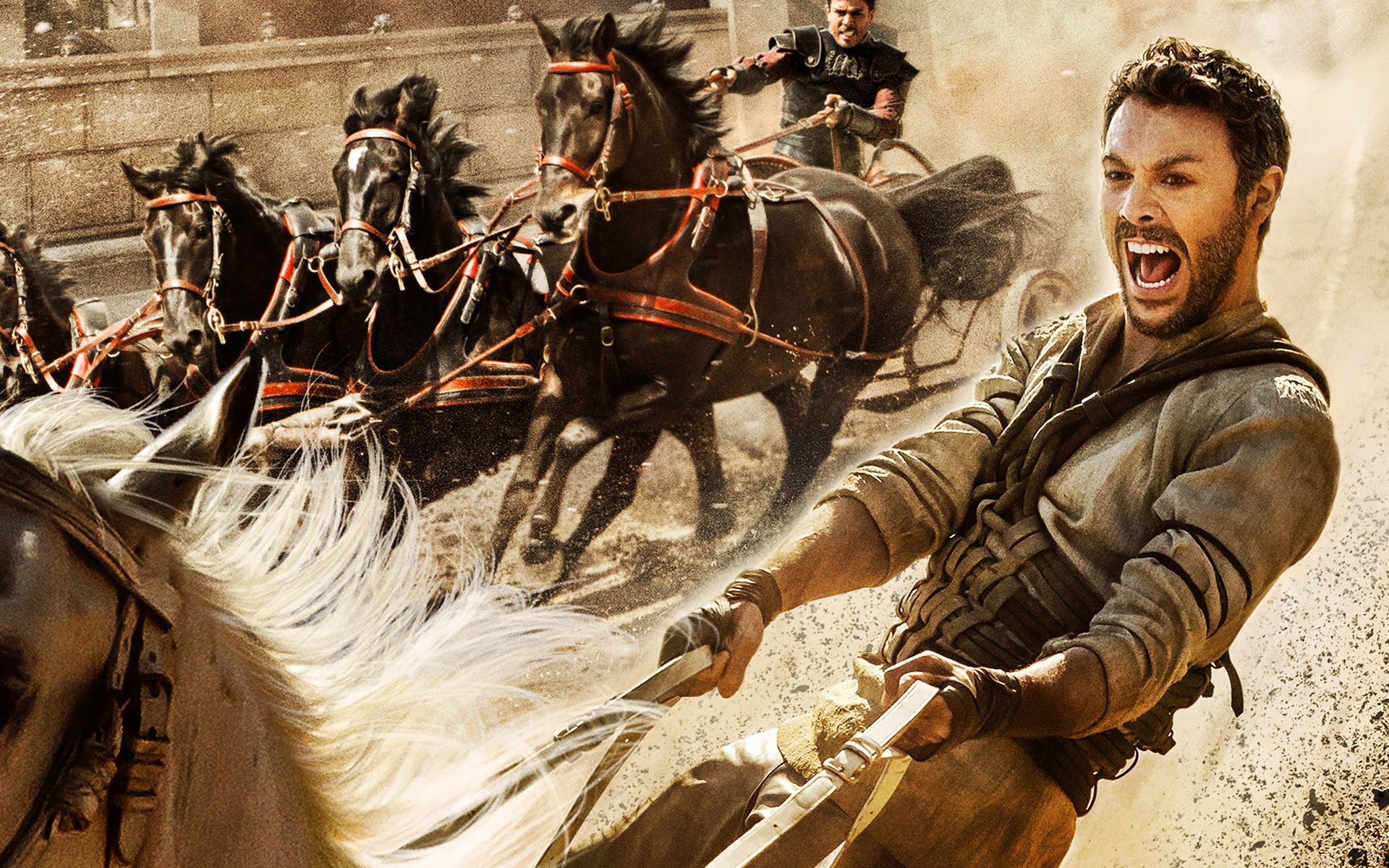
It might be unfair to judge the latest version of Ben-Hur strictly by how well it handles the iconic chariot race, so let’s not. But bottom line: it’s not the most thrilling sequence in a film that too often feels more fitting for cable TV.

This time out, Jewish prince Judah Ben-Hur (Jack Huston) and Roman tribune Messala Severus (Toby Kebbel) are adoptive brothers torn apart by a false charge of sedition. After years as a prisoner and galley slave, Judah makes his way back to Rome to find his family and take revenge on his brother in the epic chariot battle.

Director Timur Bekmambetov (Wanted, Abraham Lincoln: Vampire Hunter) pops some eyes with a thrilling sequence depicting Judah’s escape from slavery during a shipwreck, while the chariot duel itself becomes a CGI-fest of choppy editing and hurried frames.

The screenplay, adapted from Lew Wallace’s novel by Keith R. Clarke and John Ridley, is more streamlined and faith-based, with the new thread in the rival’s relationship adding a soap opera quality of entangled family allegiances.

But after all these years (the first filmed adaptation was in 1907), the story still has power, enough to give the new Ben-Hur small moments of effective nuance amid the parade of empty spectacle.

Verdict-2-5-Stars


Wolf of War Street

War Dogs

by George Wolf

War Dogs starts with a guy in the trunk of a car and works backward, ending two hours later over the sound of Leonard Cohen’s “Everybody Knows.” Though both devices are tactical errors, what’s between them is a fairly effective take on true, undeniably American events.

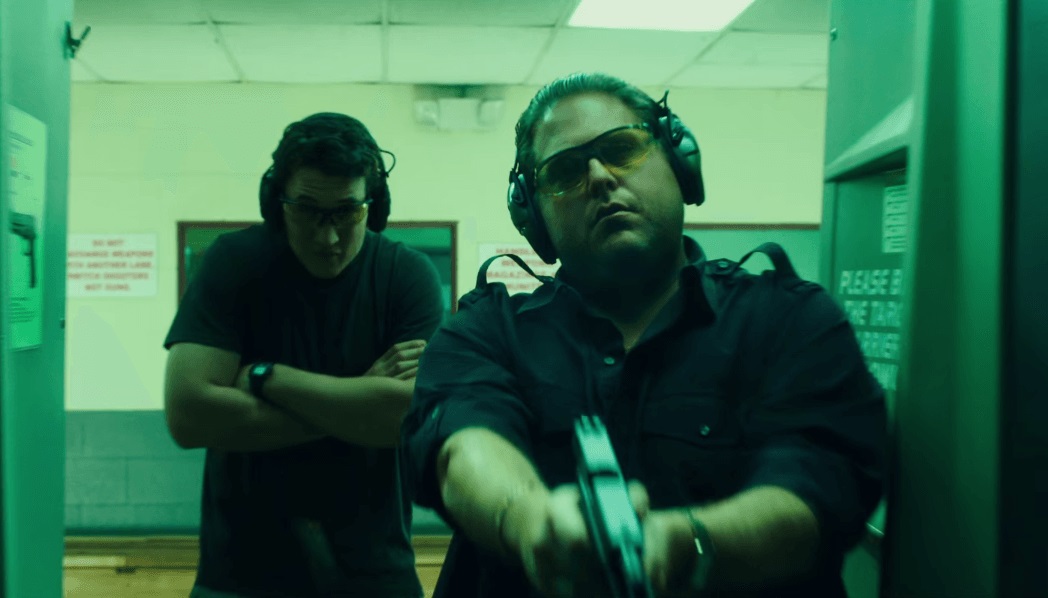
David Packouz (Miles Teller) was a struggling twenty-something massage therapist in Miami when he re-connected with childhood friend Efraim Diveroli (Jonah Hill). Together, they grew Diveroli’s modest gun selling business into a 300 million dollar contract with the Pentagon to arm our allies in Afghanistan.

As Diveroli is quick to point out, “It’s not about being pro-war, it’s about being pro-money.”

Director/co-writer Todd Phillips, expanding a resume built on comedies such as The Hangover trilogy and Old School, brings a suitable zest to the insanity of this guns-to-riches tale, but falters when the time comes to move beyond his filmmaking comfort zone.

With The Big Short just last year, Adam McKay brought comedic sensibilities to the complexities behind financial corruption, dissecting a scandal with humor, insight, and most importantly, a constant undercurrent of outrage that War Dogs is missing.

It does feature a fantastic performance from Hill, and if you still doubt his acting chops after two Oscar nominations, that’s a YP. Hill is magnetic, making Diveroli a darkly charming sociopath who effortlessly becomes whomever his latest mark wants him to be. Don’t be surprised if nomination number three comes calling in a few months.

Teller is fine, if a bit underwhelming next to Hill, while Ana de Armas is asked to do little more than hold a baby in the embarrassingly cliched role of Packouz’s wife.

Phillips does serve up some hearty laughs and effective set pieces while telling this incredible tale, but too much of the journey feels like a testosterone-fueled romp that’s more about respect for the boys’ brazen ambition than the sad truths it revealed. It’s not that Phillips doesn’t want to dig deeper, he’s just not sure how to do it on his own terms.

More than anything, War Dogs is a film that constantly reminds you of other films. The Hangover vibe is rampant, from the guy in the trunk to the effective cameo by Bradley Cooper, but there are also shots lifted right from Scarface and Rain Man, plus stylistic nods to multiple Scorsese titles, especially Wolf of Wall Street.

That film, like The Big Short, carried a healthy dose of cynicism to dig at the wages of excess. War Dogs doesn’t, and closing with one of the most brilliantly cynical songs ever written only makes that fact more obvious.

It’s clear Phillips knows how to make us laugh. War Dogs is his uncertain step toward making us think, too.

Verdict-3-0-Stars


Call Me Kubo

Kubo and the Two Strings

by Matt Weiner

Describing the story of Kubo and the Two Strings feels deeply wrong for a film that takes great pains to remind us of the raw power of storytelling—that our lives come and go, and all we can hold onto is the story of ourselves.

But here goes anyway: Kubo (voiced by Game of Thrones‘ Art Parkinson) is a one-eyed boy who spends his days entertaining his village in a magical, ancient Japan. His nights are a lot less fun, thanks to dire if not particularly lucid warnings from his mother about returning home before dark.

As young heroes in mythical tales are wont to do, Kubo eventually stays out past sundown, invoking the wrath of familial specters (twin sisters, voiced by Rooney Mara) who doggedly pursue him through the village, leaving a trail of destruction in their wake.

Kubo’s mother saves the day, but at great cost, and Kubo soon finds himself on the run with little besides his stringed instrument known as a samisen, a talking monkey (voiced by Charlize Theron) and magical powers that grow stronger by the day.

First-time director Travis Knight makes an impressive debut after years of animation experience. Knight, also the president and CEO of Laika Studios, has given his group another modern stop-motion classic. Laika has never been a studio to tread lightly around adult themes in their animated films—but while Coraline and ParaNorman aren’t short on death, Kubo cuts to the emotional core with a story so saturated with loss that it becomes its own texture, something as visceral as the sumptuously animated hair or backgrounds.

Kubo follows the typical hero’s journey: suffer adversity, embark on a quest, encounter friends and foes, suffer more adversity, conquer evil. (None of this should come as a spoiler for the adults watching who have seen or read… well, pretty much any story before.)

But beneath the surface, Kubo and the Two Strings quietly but persistently makes us confront what it means to be alive, and just how tenuous the bonds we share are with the ones we love in this world. And the script deftly handles this emotional gut punch without getting sentimental.

All the way up to the end, the film continues to ask questions without easy answers. What’s the difference between a story, a memory and a lie? Are we more than that?

Maybe not. But it’s all we have, and if Kubo doesn’t inspire you to seek out new stories of your own, you might as well be dead already.

Verdict-4-5-Stars


https://www.youtube.com/watch?v=p4-6qJzeb3A

Texas Two Step

Hell or High Water

by Hope Madden

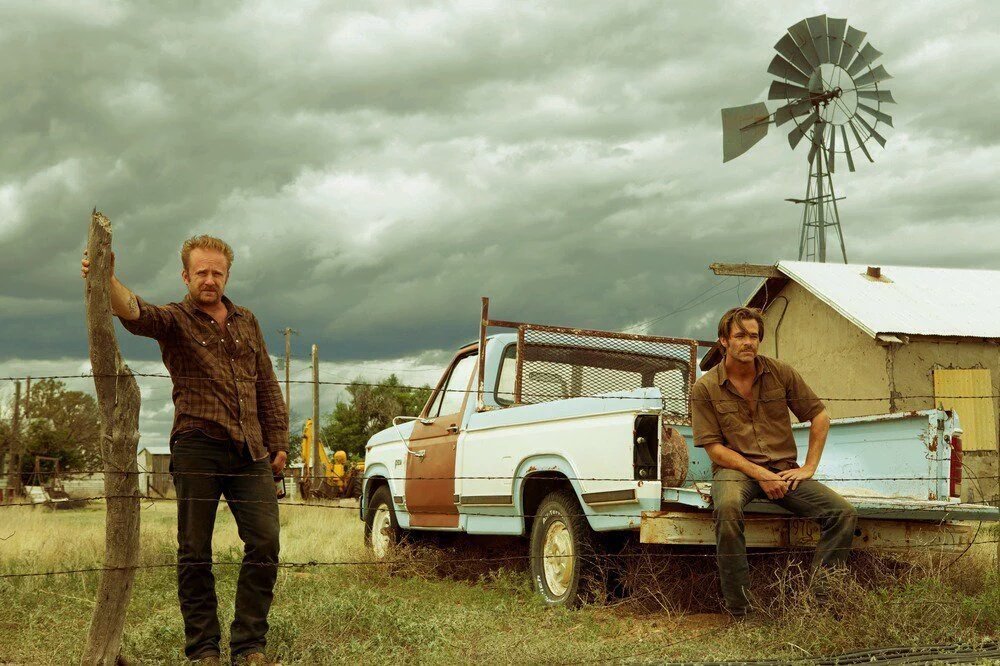
Two brothers in West Texas go on a bank robbing spree. Marshalls with cowboy hats pursue. It’s a familiar idea, certainly, and Hell or High Water uses that familiarity to its advantage. Director David Mackenzie (Starred Up) embraces the considerable talent at his disposal to create a lyrical goodbye to a long gone, romantic notion of manhood.

Two pairs of men participate in this moseying road chase. Brothers Toby and Tanner – Chris Pine and Ben Foster, respectively – are as seemingly different as the officers trying to find them. Those Texas Marshalls, played with the ease that comes from uncommon talent, are Marcus (Jeff Bridges) and Alberto (Gil Birmingham).

Though both pairs feel like opposites at first blush, their relationships are more complicated than you might imagine. Foster, a magnificent character actor regardless of the film, is a playful menace. Though Pine’s Toby spends the majority of the film quietly observing, his bursts of energy highlight the kinship. Their often strained banter furthers the story, but moments of humor – many landing thanks to Foster’s wicked comic sensibility – do more to authenticate the relationship.

Likewise, Bridges – wearing the familiar skin of a grizzled old cowboy – makes every line, every breath, ever racist barb feel comfortably his own. Birmingham impresses as well, quietly articulating a relationship far muddier than the dialog alone suggests.

These four know what to do with Taylor Sheridan’s words.

Sheridan more than impressed with his screenwriting debut, last year’s blistering Sicario. Among other gifts, the writer remembers that every character is a character and his script offers something of merit to every body on the screen – a gift this cast does not disregard.

The supporting actors populating a dusty, dying landscape make their presence felt, whether Dale Dickey’s wizened bank teller, Katy Mixon’s spunky diner waitress, or a hilarious Margaret Bowman as another waitress you do not want to cross.

Even with the film’s unhurried narrative, not a moment of screen time is wasted. You see it in the investment in minor characters and in the utter, desolate gorgeousness of Giles Nuttgen’s photography. Every image Mackenzie shares adds to the air of melancholy and inevitability as our heroes, if that’s what you’d call any of these characters, fight the painful, oppressive, emasculating tide of change.

A film as well written, well acted, well photographed and well directed as Hell or High Water is rare. Do not miss it.

Verdict-4-5-Stars

The Emperor’s Old Voice

Florence Foster Jenkins

by Hope Madden

Brace yourselves – Meryl Streep is wonderful in her new film Florence Foster Jenkins. Great to know she’s finally found her footing with this whole acting thing.

Yes, Meryl Streep can act. Thanks to a string of recent films like Into the Woods, we learned that Streep can sing, too. Maybe not as well, but passably. She’s also great in a comedy (Julie & Julia, The Devil Wears Prada).

How good? Well, she did grab Oscar nominations for all three of the above efforts.

In the title role of Stephen Frears’s new 1944-set biopic, Streep gets to strain those vocal cords while showing off her comic sensibilities. No surprise, she does both with aplomb in the role of the NYC heiress who loved music far more than it loved her. Streep delivers a vibrant central performance in a charming if forgettable end-of-Summer comedy.

The film gets so much right, though. There could not have been a better choice to play Florence’s devoted yet philandering husband than Hugh Grant, whose scheming is rarely in the service of self. His every expression exposes such tenderness and protectiveness, whatever his cagy action.

Big Bang Theory’s Simon Helberg, playing Florence’s talented if green accompanist, steals scenes – from Meryl Streep, no less! – with the barely contained giggle or outright expression of bewildered wonder. To a certain degree, he represents the audience, forever asking: How is all this possible?

Because the film remains relatively faithful to the truth of the events: Jenkins honestly believed her caterwauling to be the tones of a sublime soprano. Her husband had so insulated her from critics who might burst that delusion that she willed herself to the stage of Carnegie Hall.

Florence is the butt of this joke, and to Streep’s credit, we all feel as protective of her as her husband and accompanist do. She finds the right combination of entitlement, tenacity, vulnerability and true, blinding love of art to make the character more than just a joke. Everyone can understand deeply loving something you simply don’t have the talent to succeed in.

Unfortunately, Frears can’t quite deliver the poignancy or even the universality that should undergird the giggles and screeches. Despite moving performances, the film dips too frequently and too deeply into sentimentality. Worse though, is the fact that you come away from the film thinking: Can you believe she really sang at Carnegie Hall? She’s still a joke. She should be a bit more of an inspiration.

Verdict-3-0-Stars

Yes, It’s a Weiner

Sausage Party

by Christie Robb

I was expecting to hate this movie. At worst I was anticipating a series of increasingly forced dick jokes and at best a munchie-induced fever dream. Instead, I gotta say, Sausage Party stands up with the South Park movie as a pretty offensively entertaining animated movie for adults.

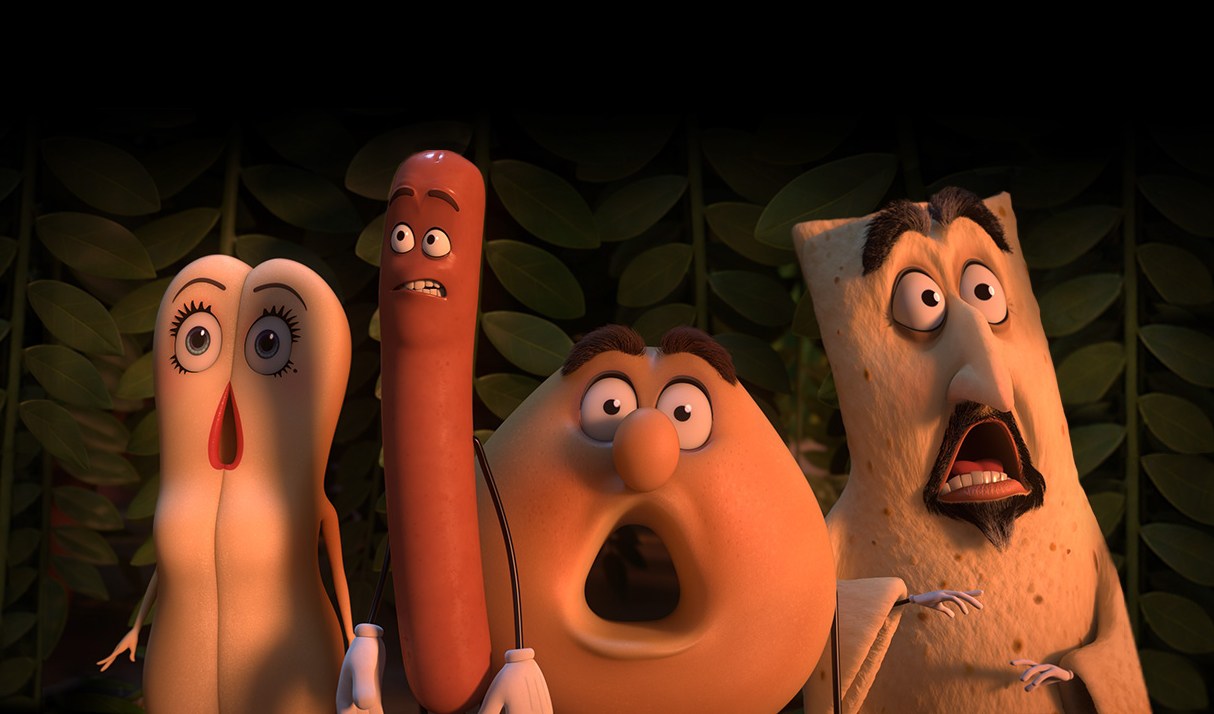
The film is set in a Shopwell supermarket where every morning the products sing about their desire be chosen by “the gods”—those big things wheeling the carts—and travel to the Great Beyond (via a song composed by Alan Menken—the guy who co-created the songs from The Little Mermaid, Beauty and the Beast, and Aladdin).

Little do the foodstuffs know what terrors await them on the other side of the pneumatic doors. It’s not nirvana. The Gods fucking eat you.

As the Fourth of July approaches, Frank—a hot dog voiced by Seth Rogan—eagerly anticipates hooking up with his honey bun (Kristen Wiig) in the Great Beyond. But after they are chosen, they and a bunch of other products are separated from their packaging and fall to the supermarket floor.

Forced to traverse the enormous grocery, the fellowship has to navigate the aisles to get back to their packages, interacting with their fellow foodstuffs in various ethnic-food aisles, partying in the liquor aisle, and generally trying to evade the villain—a vampiric and increasingly unhinged literal douche.

The movie certainly employs a fair amount of wiener-based humor and a variety of food-centric ethnic stereotypes (for example, the sauerkraut jars are a bunch of fascists bent on exterminating “the juice”, the bagel’s voice is a Woody Allen impression, and a Peter Pan “Indian”-style pipe-smoking bottle of firewater dispenses wisdom), but the movie turns to a surprising exploration of faith vs. skepticism and the extent to which religious belief fosters divisions, hostility, and repressed sexuality.

Although the movie manages to provide enough offense to go around, the majority of the jokes are actually quite funny. The cast is certainly strong. Rogan and Wiig are joined by Nick Kroll, Salma Hayek, Michael Cera, James Franco, Bill Hader, Danny McBride, Edward Norton, Craig Robinson, David Krumholtz, and Paul Rudd, and the sex-positive food porn scene exceeded my expectations of what was bound to happen once the wiener and the bun finally got together.

Seeing Sausage Party ain’t a bad way to pass the time. But, for the love of God, please don’t take your kids.

Verdict-3-5-Stars


Sit. Stay. Breathe Fire.

Pete’s Dragon

by George Wolf

Just a few months after a triumphant re-imagining of The Jungle Book, Disney heads back to the vault to give Pete’s Dragon a similar live action/animation reboot…with less magical results.

Much has changed from the 1977 cartoon, starting with the surprisingly tragic depiction of how a very young Pete becomes an orphan. Losing his parents in isolated woodlands deep in the Pacific Northwest, Pete is promptly befriended  by the very dragon whose legend has been passed down for decades in local song and story.

Pete will call his dragon “Elliot.”

Well, we’re told it’s a dragon, but here he or she is more like a big, green dog with wings. Look at it chasing its tail and fetching a stick!

Six years later, park ranger Grace (Bryce Dallas Howard) encounters an injured Pete (Oakes Fegley) in the forest and takes him home, where stories of a dragon best friend intrigue Grace’s father Meacham (Robert Redford), who may have his own history with Elliot. These stories also catch the attention of local meanypants Gavin (Karl Urban), who quickly assembles a hunting parting with an aim to “put himself on the map” by bagging a giant green trophy.

Director/co-writer David Lowery makes a monster-sized pivot from the poetic desperation of his Ain’t Them Bodies Saints, and while Pete’s Dragon is rife with gentle sweetness, it’s lacking in both depth and wonder.

After the bracing prologue, characters and situations are broadly drawn, as if to never challenge any viewer older than Pete himself. It’s a curious approach for a PG-rated film, and the less than subtle, too often sappy treatment undercuts later attempts to resonate on a more metaphorical level.

Does Pete’s desire to stay with Elliot represent that wish to escape adult responsibilities and hold tight to childhood wonders? Maybe, but that Neverland remains out of sight.

We do get perfectly acceptable, albeit generically feel good lessons on the importance of family, and that’s fine. But despite those wings, Pete’s Dragon never quite soars.

Verdict-3-0-Stars


https://www.youtube.com/watch?v=fPOamb6d_20

Zappa Plays Zappa

Eat That Question: Frank Zappa in His Own Words

by Hope Madden

“There is no word nor any sound that you can make with your mouth that is so powerful that it will condemn you to the lake of fire at the time when you hear it. Any word that gets the point across is a good word.”

So says Frank Zappa – a singular, curmudgeonly, cynical voice that echoed around the fringes of American culture for far too short a time. Known more for his personality than his music – each of them equally ingenious and caustic – Frank Zappa became a peculiar kind of icon. He was associated with a hippie culture he disdained, linked to extreme liberalism though he was a conservative, and for many he stood for the hedonistic rock star lifestyle that would corrupt our youth, though he was a loyal family man.

Frank Zappa was a conundrum.

Eat That Question: Frank Zappa in His Own Words underscores every seemingly inconsistent element of that mad genius, sharing nothing but interviews from the musician over the course of his career. Documentarian Thorsten Schutte crafts a portrait free from the analysis of others – no friends of the family, no insights from the director himself. Zappa is best understood – if he can be understood at all – on his own terms.

Whether it’s archival footage of a young, clean shaven Frank appearing on the Steve Allen Show to play a symphony of dissonance on a bicycle, the iconic mess of hair and cynicism that marked his most productive time with The Mothers of Invention, or the bitter elder statesman dealing with Tipper Gore’s PMRC, you see Zappa as he saw himself.

There’s something appropriate about Schutte’s structure. Why should we care about someone else’s opinions on Frank Zappa? He certainly didn’t. And Schutte doesn’t try to paint a pretty picture. These aren’t one-sided images set to glorify. Frank Zappa was a dick. Geniuses often are.

Like Bob Dylan, Zappa was disinterested in the effects of his artistic decisions on his fans. He alienated at will, forever cursing the American public’s lack of discernment. “People are not accustomed to excellence,” was one of his more generous statements about his lack of popularity at home.

“The thing that sets Americans apart from the rest of the cultures of the world is we’re so fucking stupid,” is one of his less generous thoughts.

Pulling an even-handed, honest documentary that sheds light on this particular individual could not have been easy. It must have been tempting to pick and choose – Zappa the wild man, Zappa the political mind, Zappa the underappreciated genius. But Schutte balances those, throwing in the ugly with the funny with, in one especially uncharacteristic and moving segment, the tender.

Frank Zappa had a larger effect on American culture than you may realize. Have you seen those tee shirts – So Many Books, So Little Time? He said that. You should get to know him. Here’s how.

Verdict-4-0-Stars