Category Archives: New In Theaters

Reviews of what’s out now

Dream Baby Dream

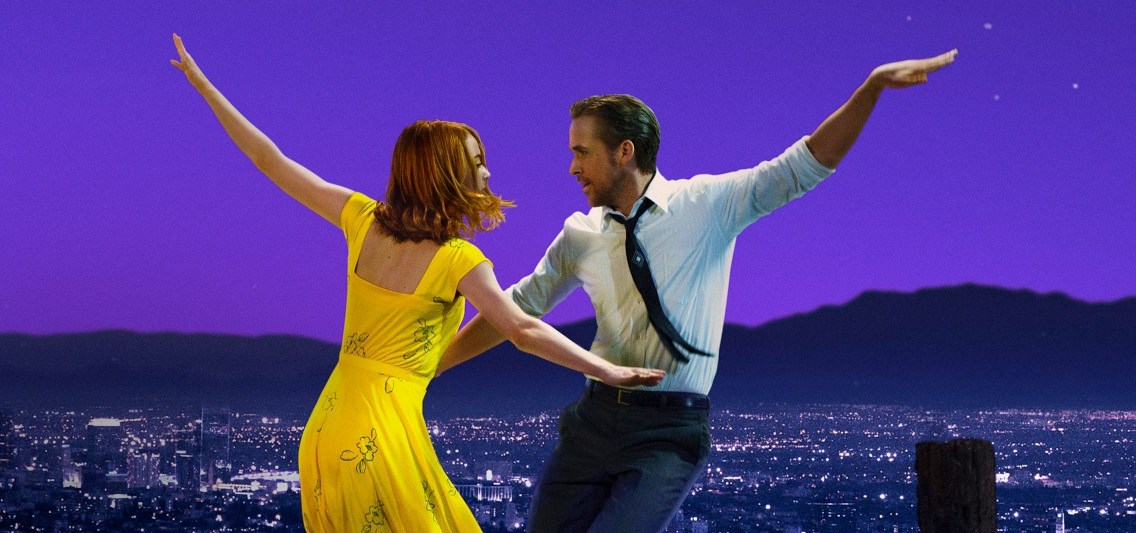
La La Land

by George Wolf

What an utterly glorious piece of filmmaking La La Land is.

Have you ever smiled for two hours straight? From the opening sequence – a dazzling song and dance number in the middle of an L.A. traffic jam that’s skillfully edited to resemble one long shot – writer/director Damien Chazelle plants a wide one on your face with his unabashed mash note to old Hollywood, old jazz, and young love.

Nostalgia? That’s hard to get right.

“That’s the point!”

So says Sebastian (Ryan Gosling), a frustrated jazz pianist whose dinner music gig will soon be gone if he doesn’t stick to the approved playlist. He meets struggling actress Mia (Emma Stone) and the cutest couple in town contest ends quickly.

Like a beautiful bookend to Chazelle’s thrilling Whiplash, La La Land is again steeped in music and starry-eyed dreamers, but trades cynicism for an unfailing belief in the power of those dreams. It’s easy to say “they don’t make movies this any more,” and that’s right – they don’t, because doing so means risking all that comes from putting such a heart on such a sleeve.

It could have gone Gangster Squad wrong, but Chazelle’s instincts here are so spot-on, every tactical choice adds a layer to the magic. The Cinemascope framing and extended takes prove a fertile playground for the film’s vibrant colors, relevant backdrops, catchy tunes and snappy dance steps. Who needs 3D to create a world so tactile and dizzying? Not Chazelle.

But as much as La La Land has its head in the clouds, it’s grounded by a bittersweet reality, with wonderful lead performances that showcase the heartbreak often awaiting those that choose this life.

Gosling (displaying some impressive keyboard chops) makes Sebastian a natural charmer who’s “letting life hit me ’til it gets tired,” and trying to stay true to his old school ambitions. When a well-paying gig with a pop-leaning band comes calling (the publicity photo shoot is a scream), Gosling underplays Sebastian’s sell-out frustrations but never the resonance.

And good as Gosling is, Stone is luminous. She takes Mia from the plucky Doris-Day-next-door enduring a string embarrassing auditions to a nuanced young woman facing the realities of what her dream demands, and Stone has us at hello. This film has everything going for it, yet it still rests on Stone’s ability to find the perfect blend of wonder and authenticity. She does not disappoint.

Let’s not kid ourselves, real life in 2016 has hit many of us ’til we’re more than tired, we’re damned depressed. This type of joyful jolt to the senses is long overdue.

Take two hours of La La Land and call me in the morning.

Verdict-4-5-Stars


Cinema Killed the Video Star

Assassin’s Creed

by Hope Madden

What does it take to make a worthwhile movie based on a video game? Because it isn’t just talent – Assassin’s Creed proves that.

Like Warcraft, Creed pits a genuinely gifted director against all that terrible cinematic history – from 1992’s Super Mario Brothers through the Resident Evil series to this year’s Angry Birds Movie – and comes up lacking.

Australian director Justin Kurzel quietly proved his mettle with an astonishing true crime horror film in 2011 called Snowtown. Last year, he teamed up with Michael Fassbender and Marion Cotillard – authentic talents if ever there were – for an imaginative and bloody take on Shakespeare’s Macbeth.

And now the three re-team, along with time-tested craftsmen Jeremy Irons, Brendan Gleeson and Charlotte Rampling, to adapt the popular time traveling video game.

Fassbender is Cal, a death row convict secretly saved by the Abstergo science lab. There, Dr. Sofia Rikkin (Cotillard) will use him to channel his ancestor Aguilar (also Fassbender) – member of a shadowy team battling the Knights Templar for the freedom of humanity.

So, we bounce back and forth in time between a modern day SciFi story and a dusty Inquisition-era adventure. Cal struggles against his newfound captivity and the after-effects of the experiments; Aguilar parkours his way through ancient Spain, trying to keep the Templar from the apple that started all our troubles back in Eden.

If the problem here is not talent, what, then?

As usual, it begins with the writing. Kurzel works with his Macbeth collaborator Michael Lesslie, as well as ne’er do wells Adam Cooper and Bill Collage (Allegiant, Exodus: Gods and Kings). They put together a story that’s as convoluted and bloated as it is superficial.

The cast gets little opportunity to do anything other than deliver dour lines with stone faces, each one developing less of a sense of character than what you would have actually found in the video game itself.

Kurzel’s no help, his mirthless presentation undermining thrills at every turn. When he isn’t bombarding the action with murky visual effects, he’s pulling the audience from the midst of a climactic battle and back into the lab to watch Cotillar and/or Irons look on with clinical interest.

Yawn.

Maybe it’s impossible to capture the visceral thrill of gaming within the comparatively passive experience of cinema. Maybe the rich backstories of modern video games are only rich if you’re used to video game narratives. Hopefully the movies will get it right at some point, or at least they’ll stop wasting such incredible talent on such forgettable nonsense.

Verdict-2-0-Stars

Lost & Found

Lion

by Hope Madden

Inspirational, true-life tales – however tailor-made they seem to be for a big screen presentation – can be tough to deliver with integrity. In fact, the more tailor-made they seem, the tougher it can be.

Director Garth Davis manages to hit most of the right notes with his cinematic telling of Saroo Brierley’s amazing journey in Lion.

At 5-years-old, Saroo (played as a child by the impossibly cute and talented Sunny Pawar) follows his older brother to the train station where they’ll scrounge what they can from between seats and on the ground. But Saroo wanders off, falls asleep in a train car, and by the time he gets off, he’s thousands of miles from home – alone in a train station in Calcutta.

What follows – told with surprising restraint and solid focus – are the details of his struggle to survive and, decades later, to find his mother.

The adventure is harrowing. Davis chooses wisely between the events to explore deeply and those to leave ambiguous. We glimpse things that are clearly menacing but not fully explained because we’re seeing them through the eyes of a bewildered child. The result is a dark sense of all that could have occurred, not a sledge-hammer about the lurid details Saroo couldn’t possibly have articulated.

Once the film moves to Australia, where the boy relocates with an adoptive family, Davis again shares enough details to give the film a memorable sense of authenticity. The now grown and well-cared-for Saroo (Dev Patel) struggles with longing, guilt and a crippling concern for the pain his birth-family must bear because of his absence.

Patel deserves credit for a performance unlike the work we’ve seen from him in previous efforts. As a performer, he has tended toward painfully earnest representations, an over-actor who relies heavily on hyperbolic reactions.

Here, though, is a far more nuanced turn – one that benefits immeasurably by the chemistry he shares with Nicole Kidman, playing his adoptive mother Sue Brierley.

Dependable as ever to explore the depths of grief, Kidman conveys the conflicting emotions that, in their way, inform Saroo’s struggle. She’s surrounded by solid performances from a strong ensemble.

The film does make its missteps. The talented Rooney Mara is both underused and overused. Her flatly written character contributes little to the overall narrative, and yet the romance crowds a story that has more interesting things to say.

Faults aside, Lion dives into grief, guilt and love with refreshing honesty to tell the most unbelievable story in a way that echoes with a human connection we can all appreciate.

Verdict-3-5-Stars

Post By Post

Fences

by Hope Madden

Denzel Washington is an Oscar contender in about one of every three films he makes – Fences is clearly one of those special performances.

As a director, he’s chosen to focus on the African American experience – August Wilson’s Pulitzer and Tony-winning stage play being the strongest effort yet.

Troy Maxson – a 1950s garbage man with a lot to say – is a character that feels custom-made for Washington. Larger than life, full of conflict and bullshit, bravado and stubbornness, Troy is a big presence. He fills up the screen, he fills up a room, but it is Viola Davis as his wife Rose who offers an emotional and gravitational center to the story.

It doesn’t take much effort to pitch Viola Davis a ball she can hit out of the park. Denzel does just that.

As Rose – the force that keeps the family functioning smoothly – Davis quietly astonishes. She delivers every scene – from silly reminiscences to life-altering decisions – with the easy grace of a profound talent.

Together she and Washington boast such chemistry, their glances, smiles and gestures articulating a well-worn, bone-deep love. Their time together on screen – which is a great chunk of the film – is an opportunity to watch two masters riff of each other for the benefit of character and audience alike. The result is in turns heart-warming and devastating.

The two leads benefit from the remarkable support of the ensemble – longtime character actor Stephen Henderson and Russell Hornsby, in particular.

True to the source material, Washington’s direction feels very stage-bound and theatrical. But in most respects, Washington’s delivery – faithful as it is to the idea of the stage from which it leapt – retains what is needed about the sense of confinement allowed by the few sets and locations.

This is a respectful and powerful tribute to the late Wilson, the playwright whose on-stage Fences saw its 2010 revival starring both Washington and Davis. There is no doubting this play’s bonafides, and Washington honors its intimacy and universal themes.

Verdict-4-0-Stars

Lost In Space

Passengers

by Hope Madden and George Wolf

If there’s one thing we’ve learned from romantic comedies, it’s this: as long as two people are attractive enough and have no entanglements – no jobs, no family, no social obligations to speak of – then only the most ludicrously contrived and easily surmountable of obstacles can keep them apart.

What if we applied this concept to SciFi? Well, if you can cast the two most bankable actors in Hollywood, you might be onto something.

That something is Passengers.

Jennifer Lawrence and Chris Pratt are the pair of stupidly good looking actors playing Aurora and Jim, two of the 5,000 some odd hibernating passengers on a flight to Homestead II – a colony planet about 120 years from Earth. One convenience leads to another and they both wake up a lifetime too early.

To writer Jon Spaihts’s credit, his screenplay opens up many a moral conundrum. Between his existential questions and the film’s needed action sequences, Passengers feels like a good fit for director Morten Tyldum (Headhunters, The Imitation Game).

And yet, there is no easy out these two won’t take.

Big fans of Kubrick (clearly), Tyldum and Spaihts borrow not only from the obvious source of 2001, but even more liberally from The Shining – as well as one certain foreign film that will go unnamed for fear of spoiling the early plot twist.

Intriguing? Not for long.

Passengers also nabs bits and pieces from Gravity, Titanic and Alien (none of the good parts from Alien – although since Spaihts wrote Prometheus, maybe some of this should have been expected).

So it looks good. And the characters are likeable – troublingly likeable, which ends up becoming the anchor this film can’t escape. Potentially fascinating questions are raised, then abandoned, as if it’s too dangerous to risk upsetting some focus group who came to see love at light speed.

Pratt has no problem with likability, but he again finds it hard to veer from his comfort zone of Chris Pratt. This is even more evident next to Lawrence, who can always find small ways to craft a new character, even when hamstrung by a less than challenging script such as this.

You’ll get some how-do-you-do’s to sustainability and corporate greed, but by then the course for Passengers has long been set.

Look at these two! Don’t you like them together?

Verdict-2-5-Stars

https://www.youtube.com/watch?v=0968aYSHUXE

Good Thing Going…Gone

Best Worst Thing That Ever Could Have Happened

by George Wolf

“I got everything I ever wanted, and I never really got over it.”

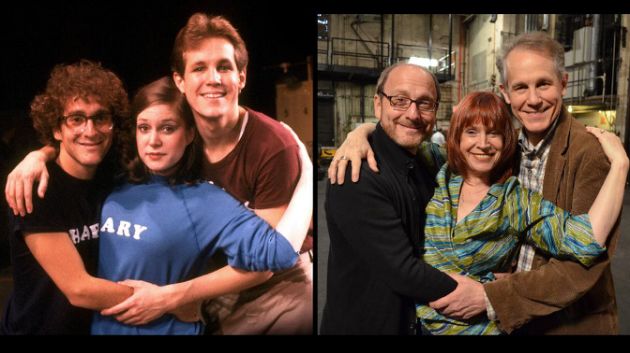
It’s been said that life is lived forward, but understood backward. This sentiment sits at the heart of Best Worst Thing That Ever Could Have Happened, a poignant look back at a failed musical that carried the very same theme.

In 1981, director/co-writer Lonny Price was in the original Broadway cast of Merrily We Roll Along, a Stephen Sondheim/Hal Prince production that started with middle-aged characters and worked backward in time, until each was just a teenager eager to embark on life’s journey.

Now, more than three decades later, those very cast members (including a 21 year-old Jason Alexander) are middle-aged, and Price (who you’ll remember as ‘Neil” from Dirty Dancing) brings them together to look back on their shared experience and how it affected the course of their lives.

The setup is so perfect you’d think opening this time capsule was planned from the start, except that Merrily was an unexpected flop, leaving all involved to pick up the pieces and move on.

Price’s project struck gold when he discovered boxes of old video covering the birth of the show. Meant for an ABC-TV project that never aired, the footage lets us glimpse men and women watching themselves as just kids, excited for the promise of a future that has now become the past.

The young actors are beside themselves with energy, incredulous that they’re working with Sondheim and Prince (“the Gods of Broadway!”) and nearly bursting with all the bravado and naivete of youth.

The feels come early and often, in an entertaining and well-paced package. The strength of dreams, the bonds of friendship and the pain of disillusionment all take their bows, as the lines between stage, documentary and the lives of those involved are blurred in bittersweet ways.

Broadway fans will find an endearing peek inside that life, but thirty-five years later, the film succeeds on that elusive universal level the musical was dreaming of.

Verdict-3-5-Stars


That’s No Moon…

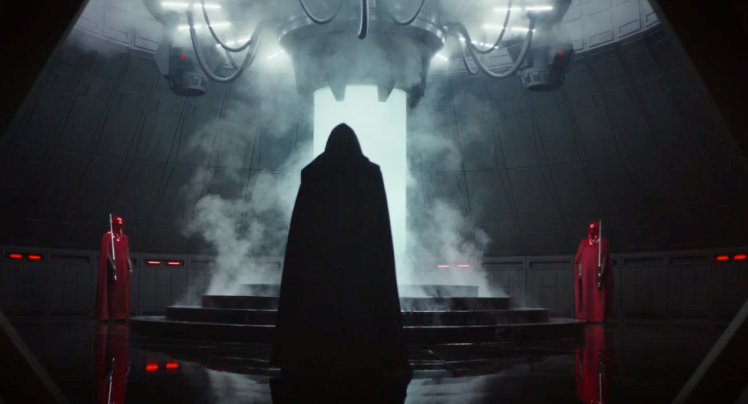
Rogue One: A Star Wars Story

by Hope Madden and George Wolf

It is a Star Wars story, no doubt about that.

Familiar crafts and creatures are scattered about, buoyed with a stream of cameos that begin as clever and escalate to downright ovation-wothy. And, at the film’s core is a story of wayward fathers, longing children, and the paradox of “confusing peace with terror.”

Why this sudden pearl-clutching over the politics of the Star Wars universe? There’s been a “final solution” tilt since the outset (they are called stormtroopers, after all), and Rogue One takes us back to when the Empire’s prized Death Star had yet to be completed.

As an act of conscience, Empire scientist Galen Erso (Mads Mikkelson) designed the Death Star with that fatal flaw that is exposed when viewing the original blueprints. It’s up to Galen’s daughter Jyn (Felicity Jones) and her band of rebel fighters to capture that file and ensure daddy’s flaw is exploited.

Sure, we know how it all turns out, but connecting those dots becomes a thrilling, thoughtful bit of fun.

Jones makes a fine hero: brave, righteous and naive – or, perfect for this series.

She and Mikkelson join a full slate of very talented character actors – from the genius Ben Mendelsohn to the under-appreciated Diego Luna to the up-and-coming Riz Ahmed. They’re part of an adventure that butts up against the New Hope, bridging tales swirling around that far away galaxy.

Like JJ Abrams’s The Force Awakens, Rogue One: A Star Wars Story peppers the action with welcome humor and continually reminds viewers of the film’s place – chronological and geographical – in the saga.

One or two of the tricks up director Gareth Edwards’s (Monsters, Godzilla) sleeve come up short, but the majority land with style. With his team of writers and a game cast, he takes us back to the height of the Empire’s smug attitude – their belief in their right to silence those who oppose them and dictate to a voiceless population with impunity.

It’s a clever, thoughtful slice of entertainment entirely apiece of the Star Wars history. It’s also a reminder that there is always hope.

Verdict-3-5-Stars


Grief, Lies and Videotape

Collateral Beauty

by Hope Madden

It’s December. That means many things to many people – to Will Smith, it means Oscar bait season.

The Legend of Bagger Vance. Ali. The Pursuit of Happyness. Seven Pounds. Concussion. Collateral Beauty.

One of those movies is pretty good. It isn’t this one.

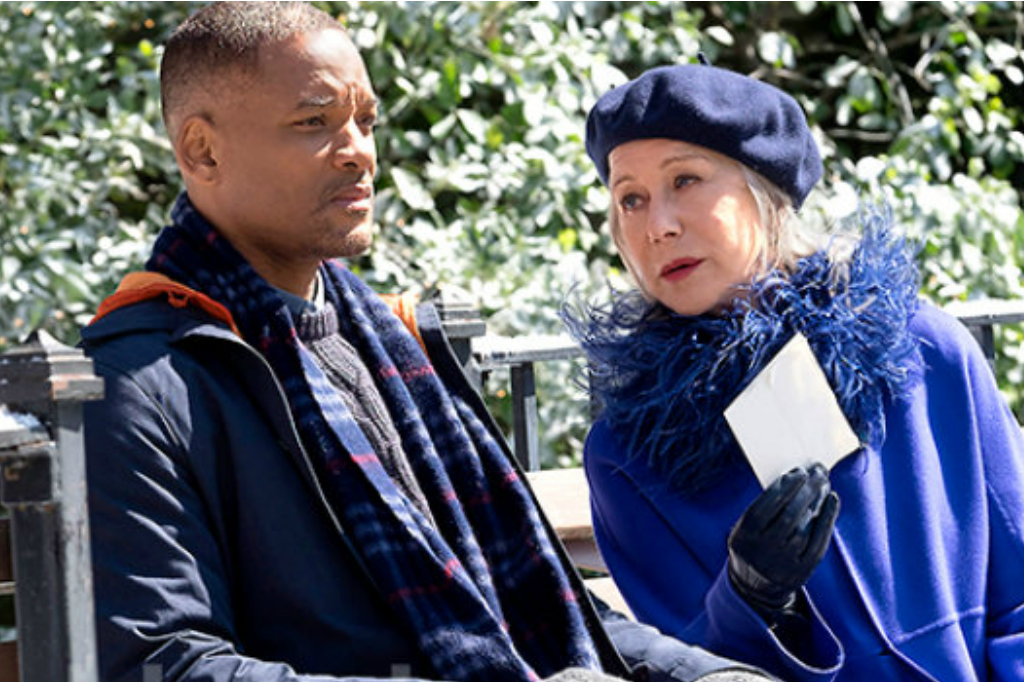
In Collateral Beauty, Smith plays Howard, a charismatic ad exec whose daughter died three years ago. Since then, he’s been a zombie, rarely eating, riding his bicycle dangerously and spending his work days building elaborate domino structures just to watch them collapse.

Oh, the symbolism!

In a fit of grief one night, he writes three letters: one to death, one to time, and one to love.

In an audacious contrivance, wheels turn in the minds of his friends and colleagues – played by Kate Winslet, Ed Norton and Michael Pena – and the next thing you know, those letters are returned to sender, by hand, by the recipient.

Death – played with panache by Helen Mirren, has lessons to share, as do Love (Keira Knightly) and Time (Jacob Latimore).

Grief is a tough topic. It’s easy to be emotionally manipulative. It’s easy to be patronizing. Director David Frankel and writer Allan Loeb like easy.

Loeb tackled the same theme with his first feature, Things We Lost in the Fire – a well-cast effort that seeks to provide resolution to the grieving. From there, he’s mostly written bad comedies, often starring Kevin James.

Smith stares, tears up and rarely speaks in this cloying, predictable piece of pseudo-enlightened garbage – a film that offers telegraphed twists and jaw-dropping self-satisfaction.

One person’s grief is really nobody else’s damn business. It’s not a learning opportunity for those around, and there are no easy resolutions. Collateral Beauty does not empathize with the grieving. It empathizes with those uncomfortable with grief.

This is selfish. And yet, selfishness is applauded in this film, reframed as confused acts of love.

Verdict-1-5-Stars

American Gothic

The Eyes of My Mother

by Hope Madden

The Eyes of My Mother will remind you of many other films, and yet there truly is no film quite like this one.

First time feature writer/director Nicolas Pesce, with a hell of an assist from cinematographer Zach Kuperstein, casts an eerie spell of lonesome bucolic horror.

Shot in ideal-for-the-project black and white, an Act 1 event could come from any number of horror films. A mother looks out her window to see her young daughter, playing alone in the front lawn, talking with a stranger. There is something clearly wrong with the stranger, and things take a bad turn. But for Pesce, this simple, well-worn set-up offers endless unexplored possibilities. Because this bad man doesn’t realize that the isolated farm family he’s come to harm is very comfortable with dissection.

His film is told in three parts. Part 1, with the stranger, sees the young Francisca (Olivia Bond) finding her role in her family. It changes after the stranger’s visit.

Parts 2 and 3 catch up with the family quite a few years later. The now-grown Francisca (Kika Magalhaes) takes some extreme measures to end her loneliness.

There is much power in dropping an audience into a lived-in world – the less we know, the better. Pesce understands this in the same way Tobe Hooper did with The Texas Chainsaw Massacre, and though The Eyes of My Mother lacks the cynicism, satire and power tools of Hooper’s farmhouse classic, it treads some similar ground.

Where Eyes differs most dramatically from other films is in its restraint. The action is mostly off-screen, leaving us with the sounds of horror and the quiet clean-up of its aftermath to tell us more than we really want to know.

As retrained as it is, The Eyes of My Mother hardly lacks in sensual experience. Stunning, gorgeously lit frames are matched with garish sound editing.

Kuperstein’s cinematography is sometimes almost Malick-like. Pesce focuses that camera on nearly silent moments full of traumatic images. He creates dissonance between the peaceful, idyllic scenes and the pinpoint imagery, the horrifying sounds.

The quiet amplifies Francisca’s isolation. The sounds amplify something else entirely.

Though Eyes of My Mother is reminiscent of several Seventies horrors, its muted telling exposes a patience rarely found in the genre. Pesce repays you for your patience.

Verdict-4-0-Stars

All in the Family

Manchester by the Sea

by George Wolf

Manchester by the Sea will put your emotions in a vice and slowly squeeze, buffering waves of monumental sadness with moments of biting humor and brittle affection. Writer/director Kenneth Lonergan crafts a film so deeply felt it can leave you physically tired. A very good kind of tired.

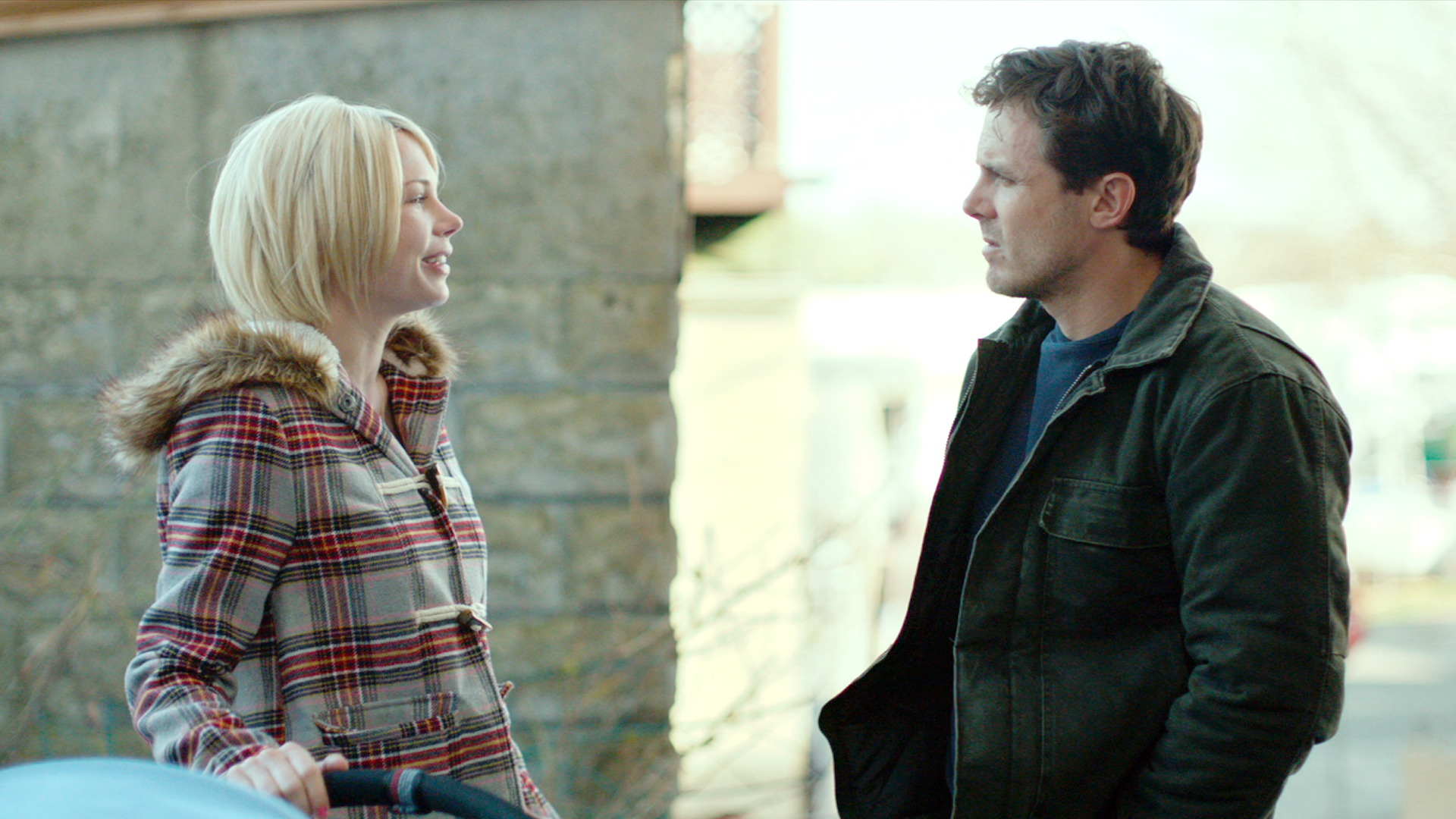
Casey Affleck is a sure Oscar contender as Lee Chandler, a quiet, moody soul content to live in a one room apartment and work as a janitor in suburban Boston. When the call comes about the passing of his older brother Joe (Kyle Chandler), Lee heads to Manchester to attend to family business.

His brother’s will specifies that Lee is to be guardian of Joe’s 16 year-old son Patrick (Lucas Hedges in a crackling, breakout performance), a responsibility Lee is not expecting nor seemingly interested in.

Questions on this family backstory abound, and Lonergan takes his sweet, beautiful time in answering them. After his stellar 2000 debut You Can Count on Me and the ambitious mess of Margaret a year later, with his third feature Lonergan displays a form of storytelling masterfully rooted in subtlety and realism.

Sketches of a narrative take shape without regard for any strict linear structure, and the dense fog of grief within the Chandler family becomes palpable, anchored in Affleck’s tremendous performance. More than just a moody loner, Affleck crafts Lee as a soul unsure if he seeks punishment or absolution, and seemingly content to remain undecided.

The sudden responsibility of Patrick forces Lee to face things he’s run from, and Affleck’s scenes with the young Hedges are filled with wonderfully restrained moments of tenderness and anger. Even better are the sudden bursts of piercing humor, as Lonergan is always two steps ahead of where you think a scene may be going.

The entire supporting cast is uniformly excellent, highlighted by an unforgettable Michelle Williams as Lee’s ex-wife Randi. Despite limited screen time, Williams makes Randi’s own pain visible through her facade, finally airing it in a shattering reunion with her ex husband. A masterclass in film acting from Williams and Affleck, these are moments so full of ache and humanity you’ll be devastated, yet thankful for the experience.

Williams’s small but mighty performance pierces the film’s admittedly male-centric worldview. The other female characters are more broadly drawn in negative lights, yet this reinforces the sad cycle of emotional immaturity in danger of being passed on to another Chandler man. In the end, Manchester by the Sea is a hopeful ode to breaking these barriers, and enduring in the face of the worst that life can bring.

Verdict-4-5-Stars