Category Archives: New In Theaters

Reviews of what’s out now

Underwhelmed

Overboard

by Hope Madden

More than 30 years ago, Garry Marshall directed one of those Eighties films: good-heartedly hateful and contrived in that colorfully rom-com way, Overboard.

It is the ridiculous story of comeuppance wherein a small-town carpenter (Kurt Russell), cheated out of payment by a scantily clad, uppity billionaire (Goldie Hawn), concocts a plan to get the money he is due when she washes ashore with amnesia.

Flash forward several decades and director Rob Greenberg makes his feature debut after a lifetime of sitcoms, revisiting Leslie Dixon’s 1987 screenplay.

His update sees Kate (Anna Faris) as a single mom just trying to pass that damn nursing exam so she can quit her two jobs (pizza delivery, carpet cleaner) and offer a better life for her three daughters.

She’s sent to sop up the champagne spillage on a yacht, meets spoiled heir Leonardo (Eugenio Derbez), argues and ends up in far worse financial trouble than she’d been in a day before.

Now she’ll never get that nurse’s license!

When the billionaire washes up back in Elk Cove, Kate’s pizza place boss (Eva Longoria) figures the least he owes Kate is some some day labor (so she doesn’t have to replace that job he lost for her), and enough chores to give Kate the time to study.

Only until the exam—then we’ll tell him.

The premise is no fresher or more believable this time around, though they do update in a couple of interesting ways. Leonardo is a Mexican heir; the day laborers only speak Spanish and most of the pizza crew is bilingual Mexican American, so about fifty percent of the film is subtitled.

This is an interesting choice, since the point of both versions of Overboard is to point out the hideous gap in work ethic and morality you can find between the rich and poor. Choosing not to “Roseanne” that image of the American working poor was a solid decision. Not that it can help this movie.

This is simply not a premise that has the strength to stand the test of time. The original was a success on the charm and natural (and obviously abiding) charisma of its stars. Why was it successful? Goldie Hawn was a comic genius, Kurt Russell was gorgeous, and it was the Eighties. That is it.

The remake has none of those things going for it. Greenberg, updating Dixon’s script with Bob Fisher (Wedding Crashers), can’t write his way out of the contrivance. Though Faris is certainly a talent, she lacks the charisma to carry a film.

Perhaps most damaging is the utter absence of chemistry between the leads, making every inch toward romance feel unnatural and, honestly, almost creepy.

Hey Lady, You Lady

Tully

by George Wolf

The character Tully doesn’t show up ’til nearly 40 minutes in, but by then the film Tully has its anchor: a sensational Charlize Theron.

The Oscar-winner excels as Marlo, an exhausted, frazzled mom in dire need of a break. Marlo and her inattentive husband Drew (Ron Livingston) already have a young daughter, a younger son with some behavior issues, and now (surprise!) a brand new baby girl.

Lucky for Marlo, she’s also got a rich brother (Mark Duplass) whose baby gift is a “night nanny” named Tully (Halt and Catch Fire‘s Mackenzie Davis – a keeper). Once Tully shows up, Marlo can get what every new parent craves…sleep.

After two winners together in Juno and the criminally ignored Young Adult, writer Diablo Cody  and director Jason Reitman make their third collaboration a wonderfully natural extension of the first two.

Cody is a gifted writer, her dialogue often insightful without preaching and timely without pandering. Here she creates two characters whose unlikely friendship speaks to the changing roles women will play throughout their lives, and the heartache those changes can sometimes bring.

That being said, it’s hard to imagine the film working as well as it does without Theron. She makes Marlo’s every emotion feel real, and the character absolutely human even when Cody’s script takes some chances not all will appreciate.

Reitman, back in form after the dreadful Men, Women & Children, also helps in that department, keeping the film grounded in a world many will recognize. This isn’t the heartwarming comedy the TV ads want you to think it is, nor is it the casual dismissal of postpartum depression that others have charged.

It is one woman’s story, with moments of humor, absurdity and truth, a bit of cliche and even some fairy tale optimism. And with all of that, there’s enough brash boundary pushing to make Tully feel like a film we haven’t seen before, and one we’re glad that’s here.


Come Dancing

Foxtrot

by George Wolf

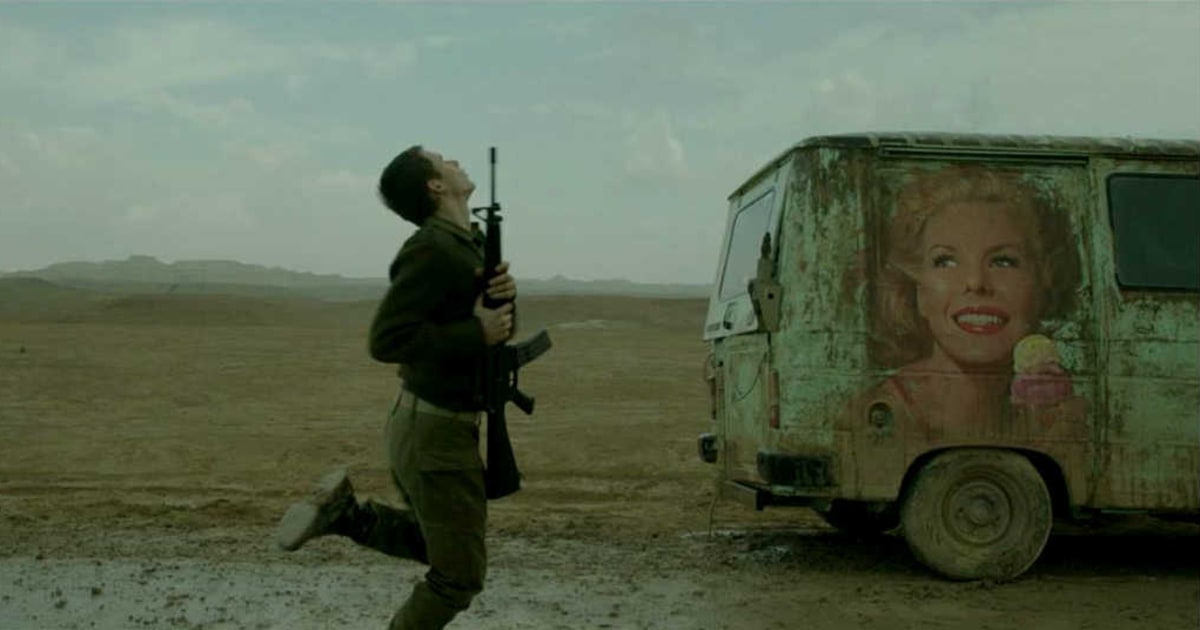
From its opening shot – a slow, dizzying swirl above a patterned kitchen floor – Foxtrot commits to a cornerstone of disorientation. Through both narrative and camerawork, writer/director Samuel Maoz keeps you off balance as he constructs a deep, moving dive into one family’s struggle with loss and regret.

Jonathan (Yonaton Shiray), a soldier in the Israeli Army, is going about his mundane duties in a remote outpost when a tragic twist of fate occurs. Jonathan’s father Michael (Lior Ashkenazi delivering his usual excellence) and mother Daphna (Sarah Adler – also terrific) take the news of the accident, along with the news of a second, very unexpected development, very differently.

Maoz’s visuals, sometimes anachronistic, bold and darkly funny, are never less than fascinating. His writing is incisive and brilliantly layered, confidently moving toward a shattering finale without stopping to worry about whether you’re connecting every loose end.

Just when you may think you know where Maoz is going, you don’t. But the rug isn’t pulled by cheap gimmickry or emotional manipulation, but rather perfectly arranged pieces assembled by deeply affecting performances.

Like its namesake, a dance that will always lead you to “end up in the same place,” Foxtrot can be viewed from different angles with equal impact. You might see a sociopolitical statement on the filmmaker’s home country, a universal parable on the costs of war, or a starkly intimate take on family bonds.

Let it in, and this film will reveal layers of meaning and a lasting grip. Through Foxtrot, Maoz and his stellar performers are speaking with a stylish and bittersweet elegance.

Listen.


Home Again, Home Again

The Endless

by Hope Madden

There is something very clever about the way Justin Benson and Aaron Moorehead’s movies sneak up on you. Always creepy, still they defy genre expectations even as they play with them.

Camp Arcadia offers the rustic backdrop for their latest, The Endless. A clever bit of SciFi misdirection, the film follows two brothers as they return to the cult they’d escaped a decade earlier.

Just to visit.

Do you ever have those dreams where you find yourself back in your hometown and no matter how hard you try, you can’t leave? No? You must not be from Tiffin, Ohio.

Benson and Moorehead capture that particular panicked feeling, each slow-moving moment generating a louder and louder echo in your head, yelling: Why are you still here? Go already!

The other thing the directing pair creates with uneasy authenticity is that spotty forgiving and unforgiving bond between siblings.

The directors themselves play those siblings. Though Moorehead and Benson have had cameos in their previous films Spring and Resolution, as well as a handful of other horror flicks, The Endless, penned by Benson, is the first film they anchor.

Their acting chops are mainly solid, although perhaps not lead-worthy. Moorehead’s innocence and whining sometimes feel forced. Meanwhile, Benson’s character’s motivation is at times suspect, and he’s unconvincing as a sheltered, shell-shocked, co-dependent.

Though the lead performances sometimes undermine the agile storytelling, the turns the directors draw from their ensemble are strong across the board. Welcome familiar faces in a third-act surprise prove the filmmakers’ nimble skill with a fantasy storyline that could easily collapse on itself but never does.

It is this story and the pair’s storytelling skill that continues to impress. Their looping timelines provide fertile ground for clever turns that fans of the filmmakers will find delightful, but the uninitiated will appreciate as well.

https://www.youtube.com/watch?v=eRg7lwDsGpw

We Won’t Tell You Who Dies

Avengers: Infinity War

by Hope Madden and George Wolf

Let’s say you recently penned Captain America: Civil War, an exceedingly successful comic book franchise effort weighed down by the mushrooming of heroes. So. Many. Heroes.

And let’s say it went so well that you are now tasked with the new Avengers movie—the film that takes very nearly every hero from your last effort and tacks on, say, 7 or 8 more. You would almost have to immediately think about thinning the herd, right?

Yes.

Christopher Markus and Stephen McFeely (who’ve penned all three Captain America films) weave a Marvel Universe-spanning tale that asks whether or not things would work out better if we had about half as many people to deal with. That seems like writerly self-reflection right there.

Thanos (Josh Brolin, who villains it up for Deadpool 2 next) believes in balance. He’s been collecting Infinity Stones across all the different Marvel movies so he can create this Justice Friends adventure and rid the universe of half its inhabitants.

Wait, Thanos is a Guardians of the Galaxy villain, right? Does that mean Starlord’s entire rag-tag crew will join the Avengers (and Dr. Strange and Black Panther and Spiderman and on and on)? So, Chris Pratt, Chris Evans and Chris Hemsworth?

Correct.

All we need to defeat Thanos is Chris Pine. No way six Infinity Stones can outshine the wattage of all the Chrisses!

The screenplay offers smart comic moments that suit individual characters (Drax! Teenaged Groot!) and never undermine the drama, of which there is plenty. And balance is clearly on the minds of the writers as well as directors Anthony and Joe Russo (who helmed the last two Captain American films and love Cleveland). The storyline divides up nicely to allow the plethora of personalities to shine, each in their own way.

Though the film runs a full 2 ½ hours with the end-of-credits stinger, it never drags. Plenty happens, all of it rooted in character and held together by Brolin, who gives the film a layered epicenter through his memorable CGI/voice performance.

The Thanos facial effects rank somewhere between Planet of the Apes and Superman’s mustache, while the outlying worlds and creatures sport satisfactory shine.

But we cannot get behind what they’re doing with Hulk. Not digging it.

The very best films in the Marvel universe excel in nuanced big thinking (Black Panther, Winter Soldier) or bullseye tonality (Spider-Man: Homecoming). Infinity War gets close on both battlegrounds, but lays up to bet on its own long game.

True, that sounds like cliched word salad, but we’re steering clear of planet spoiler.

Infinity War tackles some big ideas and makes some brave choices that may cause you to reassess the entire Marvel franchise.

Not everyone will be pleased.

But props to Markus, McFeely and the Russos, for being unmoved by the Last Jedi fanboy uproar and following an ambitious vision. And their film does entertain. There’s not a minute of bloat and there is plenty of thought-provoking story likely to make this a movie earning more respect through time and space.

Don’t Call Her Foxy

Traffik

by Hope Madden

A mid-budget action thriller sees a handsome couple alone in an isolated home suddenly at the mercy of a biker gang.

Well, hell, this could be just about any mid-to-low budget thriller from the Seventies. Writer/director Deon Taylor borrows some of the ideas and themes from Seventies exploitation, updating it with a more contemporary style, slicker editing, modern problems and Paula Patton.

That last one might be the real trouble.

Patton plays Brea, a Seattle journalist who may have just lost her job because she’s too interested in telling the whole story. She’s just not one to turn a piece around quickly enough for today’s 24/7 news cycle.

She takes her mind off things with the surprise trip her boyfriend (Omar Epps) planned.

Traffik builds slowly with overly familiar tension, and Taylor makes a handful of interesting choices. These bikers aren’t just racist and bloodthirsty (although they are that). They are the goons of an international human trafficking organization and Brea, her boyfriend and this pointless second couple are in for some real trouble.

The women in Taylor’s film get every opportunity to make a difference, participate in the action and make reasonable decisions—definitely not a staple of Seventies exploitation. Problematically, Paula Patton cannot act.

A lot of action stars can’t, that’s true, but the film really depends upon Patton’s emotional journey and the woman cannot emote.

Taylor makes up for that by simply ogling her body with his camera for 90 minutes. I have never in my life seen a film more preoccupied by one performer’s nipples than Traffik. It would be problematic anywhere, but in a movie where the heroine hopes to save women from sex slavery, it feels wildly wrong-headed.

Given a couple of turns in the script and the film’s overall Seventies vibe, you wonder whether Taylor sees Patton as the new Pam Grier.

She is not.

The film is not terrible. Dawn Olivieri’s turn as a truck stop druggie will haunt you, and even though you basically know what’s coming, Taylor’s game direction keeps you interested nonetheless. There are a couple of decent action sequences—nothing to write home about—and the pace is quick.

Take Paula Patton (and Taylor’s leering filming of her) out of the movie and it’s not a bad little piece of throwback exploitation.

Bloody and Beautiful

You Were Never Really Here

by George Wolf

Two killers lie on a kitchen floor, gently singing along as the radio plays “I’ve Never Been to Me,” surely on of the cheesiest songs of all time. Only one of the men will get up.

It’s a fascinating sequence, one of many in Lynne Ramsay’s bloody and beautiful You Were Never Really Here.

In 2011, Ramsay turned We Need to Talk About Kevin, a spare novel that was not especially big screen friendly, into one of the most devastating yet necessary films in recent memory. Her gifts keep on giving, as here she adapts Jonathan Ames’s brisk novella into a dreamy, hypnotic fable, an in-the-moment pileup of Taxi Driver, Taken and Drive.

Joaquin Phoenix delivers an intensely powerful performance as Joe, a combat veteran who has been wounded in various ways. Joe lives with his mother in suburban New York, whetting his appetite for violence as a vigilante for hire who specializes in rescuing kidnapped girls and exacting brutal justice.

A New York senator (Alex Manette) wants his daughter’s (Ekaterina Samsonov) disappearance kept quiet, so Joe gets the call, only to find this case comes with unexpected complications.

Together, Ramsay and Phoenix ensure nearly each of the film’s 89 minutes burns with a spellbinding magnetism. While Phoenix lets you inside Joe’s battered psyche just enough to want more, Ramsay’s visual storytelling is dazzling. Buoyed by purposeful editing and stylish soundtrack choices, Ramsay’s wonderfully artful camerawork (kudos to cinematographer Thomas Townend) presents a stream of contrasts: power and weakness, brutality and compassion, celebration and degradation.

Much like Ramsay’s Kevin, YWNRH is no feel good garden party. It is darkly surreal, and ironically exacting in its impressionistic study of taking hits, and hitting back. Still, it offers a rich cinematic experience, with a filmmaker and actor working in glorious tandem to soak each frame with meaning.

Border Wars, Eh?

Super Troopers 2

by George Wolf

If you’ve been holding your breath for another Super Troopers, let’s face it, you’re long dead.

But after 17 years, the Broken Lizard gang is back with more of the same stupid gags from that doofus crew in the Vermont Highway Patrol.

Well, technically, the crew has been relieved of duty since the “Fred Savage ride-along incident,” but destiny finds them at the Canadian border. After a rare border reassessment, a small Canadian town (with a winning Rob Lowe as the local mayor/bordello owner) must begrudgingly accept that it will soon become a small American town. To ease the jurisdictional switch from Mounties to VHiPs, Captain O’Hagan (Bryan Cox) reaches out to his old cohorts with the defiant cry of “stoners assemble!”

He really doesn’t do that, but you get the idea. The guys are still stoners.

Apparently inspired by an actual border situation, the film digs in for plenty of sophomoric antics about polite Canucks, boorish Yanks, body parts, bad puns and how each side pronounces “sorry.” There are easy targets and cheese aplenty, but some laughs do get squeezed out, mostly from sheer commitment to the familiarly low bar of the original.

The writers/director/stars in the BL gang are aiming to please, and understandably so. They’re here thanks to cultish fans and a crowdfunding boost, so giving the Troopers troop what they want, including at least two inspired callbacks to that first film, is a sound strategy. It’s just not a consistently hilarious one.

The verdict is pretty simple: if you liked the first one, you’ll like Super Troopers 2. 

Either way, stay for the Fred Savage thing.


Me Be Pretty One Day

I Feel Pretty

by Hope Madden

Trainwreck, the 2015 big-screen break out for comic Amy Schumer (and LeBron James and John Cena) offered a wise about-face for the rom-com.

Written by Schumer, the film simultaneously embraced and subverted tradition by basically casting a female in the traditionally male role of eternal adolescent who accidentally finds love and, therefore, adulthood.

She returns to the romantic comedy with I Feel Pretty, film that is neither romantic nor comedic, unfortunately.

Schumer plays Renee Bennett, a perfectly attractive woman.

So there’s your first problem.

I will give writers/directors Abby Kohn and Marc Silverstein credit for one thing. When Bennett hits her head at a spinning class and wakes up believing she’s traffic-stopping gorgeous, at least the film does not stoop to showing us the flawless physical image Renee sees in the mirror. Thanks for that.

So, it’s only after a traumatic brain injury that Amy Schumer can consider herself attractive.

Now she has all the confidence she needs to go after that receptionist gig at the big cosmetics firm. (Wait! A romantic comedy where a receptionist can afford a small but cool NYC apartment? Yes, that checks out.)

Things take a turn for the better whenever CEO Avery LeClair (Michelle Williams) appears onscreen. Her weirdly spot-on performance as the baby-voiced heiress is a riot—and the only unpredictable moments in the film belong to her.

Schumer does what she can with this superficial, blandly rote script. She has excellent chemistry with her co-stars (Busy Phillips, Aidy Bryant, Rory Scovel), regardless of their underwritten roles. But when you have a comic talent like Schumer on the bill and you still cannot think of anything funnier than seeing a pretty woman fall down, your writing is weak.

Let’s not even address the fact that all Renee wants in life is to work for a cosmetics company and maybe, if we all dream big enough, she might be the new face of a cosmetics line!

Jesus.

In summation, I Feel Pretty is Big meets Shallow Hal, if those films suggested that all Tom Hanks needed was confidence enough to believe he should be objectified, then all would be well.

Can Amy Schumer just write the next Amy Schumer movie? Please?

Films Against Humanity

Truth or Dare

by Hope Madden

Do people over the age of 8 still honestly play Truth or Dare? This idea surprises me. Aren’t there video games kids can be wasting time with?

I suppose the real surprise is that it took four years for a film to rip off It Follows. The new PG-13 horror from Blumhouse, Truth or Dare, takes a stab at it.

No, it’s not sex. But it is a curse that you pass on to other people to save yourself. A super lame curse that blends the clever concept of It Follows with the by-the-numbers structure of one of the later Final Destinations and wraps it all up in a faux-contemporary cautionary tale about the digital age.

Yawn!

I’d point out that co-writer/director Jeff Wadlow was primarily lifting from his own 2005 film Cry Wolf, but I decided to go with movies you might have seen—movies that merit imitation.

So. Goody two-shoes Olivia (Lucy Hale) plans to spend her final spring break as a college student building houses with Habitat for Humanity, but her trampy bestie Markie (Violett Beane) and their binge-drinking roomie Penelope (Sophia Ali) have other plans. They guilt Olivia into spending the time with them, their boyfriends and an ethnic minority/gay sixth wheel in Mexico.

Hooray! Six slasher stereotypes—I mean, six best friends!—head south to flirt with alcohol poisoning and make bad decisions. Like playing grade school sleepover games and going to that decaying old mission.

Truth is, there are moments when one performance or a single intriguing notion or a clever call-back threatens to save a scene, by the final reveal you realize how heavy-handed the film really is.

Performances are bland, kills lack inspiration, there aren’t even enough of the prerequisite jump scares to keep the target PG-13 audience interested.

If you are of-age, hopefully you bought some beer with that ID because you’ll need the lubrication to help you glide past the lapses in logic, sometimes comical dialog and one laugh-out-loud moment at the vending machine.

Brad (Hayden Szeto, who deserves better) hears the ominous sound of an otherworldly voice calling out his name.

Except that it sounds exactly like some stoned guy hiding on the other side of the candy machine trying out his spooky voice and stage-whispering, “Braaaaaaaaadddddd!”

My entire row laughed.

So, there you go. There is some enjoyment to be had.

https://www.youtube.com/watch?v=DLXgDaajBmw