Category Archives: New In Theaters

Reviews of what’s out now

Personal Space

Ant-Man and the Wasp

by George Wolf

Like the titular heroes who get small to do big things, Ant-Man and the Wasp gets a boost by making its stakes more personal, and its mojo a sweet, witty blast.

“Do you guys just put ‘quantum’ in front of everything?”

Scott Lang/Ant-Man (Paul Rudd) asks that question for him and for us. The answer is yes, they do, but don’t sweat the science and the fun will win out.

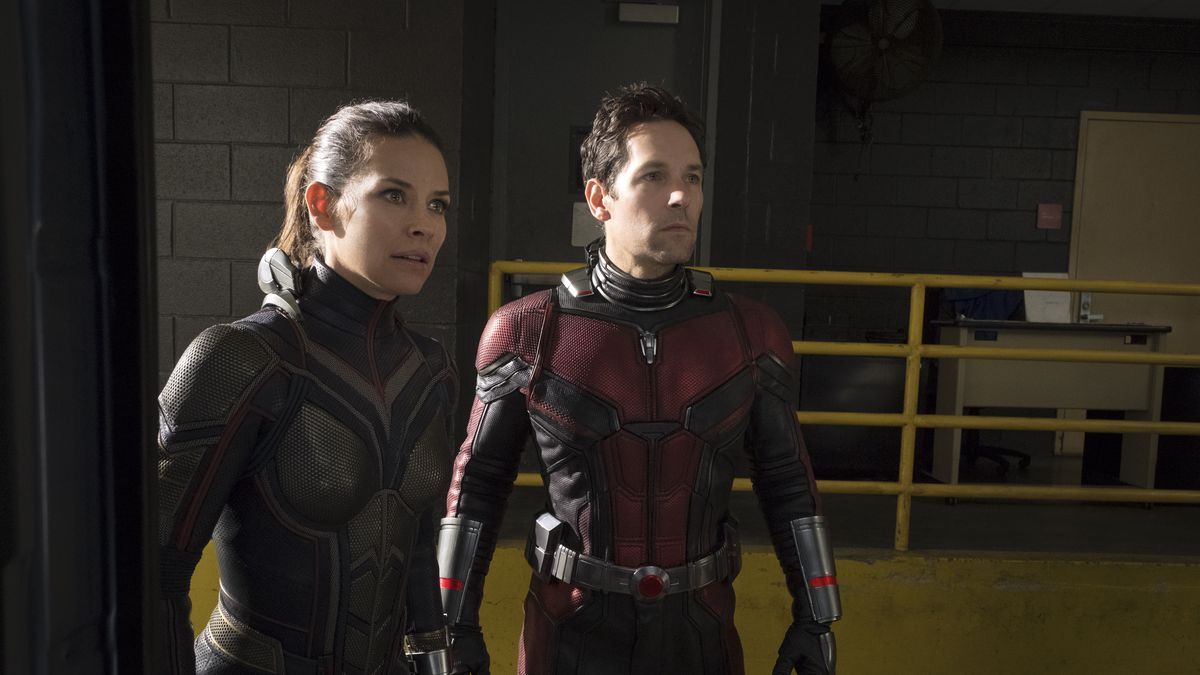
Scott’s on the outs with just about everyone since his assist to Captain America (“We call him Cap!”) in Civil War, but he just might be what Dr. Pym (Michael Douglas) and his daughter Hope Van Dyne (Evangeline Lilly) need to rescue their long lost wife/mother Janet Van Dyne (Michelle Pfeiffer) from the “quantum realm” that’s held her for decades.

The team could be on to something huge, and their research has many interested and scary parties, including “Ghost” (Hannah John-Kamen from Black Mirror and Ready Player One), a molecularly challenged young lady who thinks it could save her life.

Too serious? Anything but.

Thanks to Rudd’s comic timing and affable charm, Ant-Man becomes the family friendly cousin to Ryan Reynolds’s Deadpool. Like Reynolds on his DP projects, Rudd again earns a writing credit, filling his character with plenty of snappy dialogue and tongue-in-cheek humor that feels like a comfortable extension of Rudd’s own persona.

He’s a natural, but Lilly is the welcome surprise here. The Wasp’s intro in the first film often seemed like an awkward distraction, but she earns the equal marquee time with a script that allows Lilly the chance to make the character matter.

Director Peyton Reed is also back from part one, showing a confident grasp on Ant-Man’s role in the Marvel Universe. He keeps the pace quick, the gags (many featuring a scene-stealing Michael Pena) on a PG-13 speed dial, and the effects team busy, showcasing plenty of the amazing scale-altering set pieces that give this franchise its unique calling card.

The film knows its place in Marvel’s lineup, too, and that’s hardly an accident. Good as Infinity War was, the break from galaxy-hopping is welcome. Two of the writers from Spider-Man: Homecoming are on board this time, bringing some of the less-is-more sensibility which gave that film such an unexpected freshness.

Yes, it could stand to lose about fifteen minutes of excess, but AMATW has an unassuming vibe that is infectious fun, and the perfect palate cleanser before another bite of Thanos.

And don’t leave early, or you’ll miss a mid-credits bonus that might drop some jaws.

 

WWFRD?

Won’t You Be My Neighbor?

by Hope Madden

The world did not deserve Fred Rogers.

A loving and tender soul if ever there was one, Fred Rogers saw children not as future consumers, but as vulnerable human beings who needed to know they had value.

Directed by documentarian Morgan Neville (Oscar winner for his 2013 doc 20 Feet from Stardom), Won’t You Be My Neighbor? trollies into the life of the children’s TV host. What you’ll learn is that, yes, Mr. Rogers was really like that.

What might surprise you, though, is how brave he was in representing the themes and conflicts of current events in the neighborhood. It seems everybody missed that—perhaps because of his gentle delivery, or maybe adults just couldn’t see past the puppets to notice. Rogers wasn’t out to be controversial. But when horrifying images from the Vietnam War, assassinations or terrorism splashed across TV screens, Rogers understood that this would frighten children, and they would need ways to cope that would not likely be there. So he did it himself.

The parallels to today are hard to miss, as is the current need for Rogers’s sincerity and idealism.

Neville mines ample archival reels from programs, interviews and home movies and offsets them nicely with talking head footage. The family exposes a man who struggled at times with exactly the kinds of insecurities and fears he addressed head-on for children on his show: fear of being a fraud, the need to be loved.

Neville’s film does not canonize the man. We see how uncomfortable he was with his SNL-style imitators and how infuriating he found trashy children’s programming.

Meanwhile, experts position him among the great child educators and colleagues see him as a fearless and savvy manipulator of the medium. An ordained pastor, Rogers also utilized his time with children to preach by example.

In one episode, Rogers is cooling himself on a hot day by bathing his feet. A visit from Officer Clemons, an African American character played by Francois Clemmons, prompts Fred to ask him to join. The two men sit blandly enough, side by side, their bare feet chilling in a plastic pool.

At that same time – as Neville points out with news footage – children may also have witnessed a different image on their TV screens: one of a public pool manager tossing bleach into the water to bully a black family into leaving the grounds.

Fred Rogers looked out for children, understanding what frightened us and making every attempt to help us through those “difficult modulations.” It’s tough to make it through the film’s 94 minutes without tearing up, and that’s not entirely from sentimentality. It’s from wondering whether today’s world is simply too cruel and cynical for Mr. Rogers.

I’ve Got the Music in Me

Hearts Beat Loud

by Rachel Lewis

Director Brett Haley and co-writer Marc Basch have crafted a tender story of a father and daughter who spend a last summer together bridging their differences through a shared love of music.

Nick Offerman is charming as Frank, a man who’s never outgrown his dream of being a musician. Though his days are spent behind the counter of a record store, he wishes for something bigger. It’s his daughter, Sam (Kersey Clemons, from Dope and Neighbors 2: Sorority Rising), who is the family’s realist. Her goal is to go to college and become a doctor. The conundrum is that Sam has talent. A lot of it. Upon discovering how much talent Sam has during a family “jam sesh”, Frank’s dreams are reignited. 

Much time is spent on the music itself. We watch as songs are written, revised, practiced, and recorded. These original tunes, written by Keegan DeWitt, are effective at highlighting the film’s themes, and the title song is catchy enough to stay in your head long after the credits roll.  

The problem with this amount of attention on the music is that other areas of the film suffer for it. The relationships between characters are thin. We’re told there’s history present, but we never feel it. If the focus was kept on Frank and Sam, rather than expanding their world to include romantic relationships and a grandmother who adds little to the story, the audience connection might have gained more strength. As it is, we’re told to care about characters who have little dialogue and next to no screen time. Though this imbalance exists, the actors do their best with what they have.

There is a sweetness to the film, and Frank’s excitement is so contagious, Sam’s lack of enthusiasm is painful next to it. It’s a touching portrayal of a father and daughter who’ve grown apart, but find a way to reconnect. Terse conversations deepen as musical bridges are hammered out, with memories brought to the surface and shared through poetic lyrics. Moments that reveal pieces of the past are subtle, yet striking.

There’s much to like about Hearts Beat Loud, even if it does rely too much on the music to carry it. 


Dia de los Muertos

Sicario: Day of the Soldado

by Hope Madden

How’s your summer going?

It may be good, but I bet it’s not Josh Brolin good.

He’s having a one-of-a-kind summer. The kind that follows blockbuster Avengers: Infinity War and Deadpool 2 with the sequel to the film that should have earned him his second Oscar nomination. (It also should have won Benicio Del Toro his second Oscar.)

But can Sicario: Day of the Soldado accomplish as much insightful commentary, intimate drama and visceral action as Denis Villeneuve’s riveting 2015 peek behind the curtains of the drug war?

The first piece of great news: writer Taylor Sheridan returns, scripting another border war with the cartels, this time focused less on drugs, more on smuggling terrorists across to the US.

Now for the bad news. Visionary director Villeneuve does not return, nor does legendary cinematographer Roger Deakins. Or Emily Blunt.

Dude, that hurts.

But del Toro and Brolin are back, and they were so fun last time. Brolin’s brash, deceptively easygoing Matt Graver has another mission requiring that he get dirty, which means more work for his favorite operative, played with shadowy precision by del Toro.

Cleveland’s own Isabela Moner joins the cast as a kingpin’s daughter, and for a moment you might think that the hole Blunt left has been filled. Defiant and solitary, Moner’s Isabella Reyes quickly becomes an enigmatic character you long to get to know better.

Unfortunately, we don’t. Equally underused is the great Catherine Keener, playing the administrator who holds Graver’s leash.

Dariusz Wolski is a gifted cinematographer, but he’s no Roger Deakins, whose brutal cinematic lyricism gave Sicario its arresting beauty. That fluidity is missing from the sequel, along with the fierce idealism that so perfectly balanced the cynical nature of the story.

Gone, too, are Graver’s eccentricities. Though Brolin’s performance is strong, the character himself has become little more than the traditional conflicted mercenary.

Likewise, del Toro is given a more ordinary man’s role. Not entirely ordinary, but that enigma that haunted Sicario serves more to keep the story moving forward, his time on screen rarely allowing a glimpse at who he is or, more frustratingly, how he and Moner’s Isabella respond to each other.

It sounds like it’s all bad news, and it’s not. Director Stefano Sollima serves up a fine, edgy piece of action for the summer. It’s just that I’d hoped for more.

Real and Spectacular

Mountain

by George Wolf

“How big a screen ya got?”

That’s what you need to be asking for Mountain, a nature documentary that puts the breathtake in breathtaking.

Director and co-writer Jennifer Peedom provides a majestic canvas for the truly stunning cinematography of Renan Ozturk, gracefully pondering the evolution of humankind’s quest to climb upward.

Intermittent narration from Willem Dafoe dots the landscape of footage from the world’s highest peaks, and though the writing seems overly dramatic at first (“the holy or the hostile…nothing in between”) the sheer grandeur of what you’re seeing quickly demands nothing less.

From swooping aerial shots featuring tiny specks of humanity to tight, miraculous skiing sequences a la Warren Miller, Mountain beautifully reminds us how truly small we remain. For those enthralled by such things (my hand is up) it might as well be mountain porn, questioning our fascination even as it’s feeding it.

But again: big screen.

The Grommets of Oz

Breath

by Hope Madden

Quiet poetry is hardly what we’ve come to expect from a surf movie. But actor-turned-director Simon Baker offers exactly that in his elegantly familiar coming-of-age story, Breath.

Based on Tim Winton’s novel, the film follows two mates in coastal Australia as their childhood friendship faces the snarls of the onset of adulthood.

Pikelet (Samson Coulter) —a beautiful gangle of limbs and promise—is the only child of a humble but loving family. He and Loonie (Ben Spence) are inseparable, though their futures are destined to veer in wildly different directions. Before that happens, they will tumble toward adulthood on some dangerous waves.

The lads find an unlikely mentor in the form of a bohemian surfer. Bodhi…no, I’m lying. His name is Sando (Baker), and for every one of Point Break’s Hollywood-slick moments of waves, wisdom and gleaming tan, Sando offers authentic surf-tossed ruggedness and reflection.

This film is less about that one big one, the one that’ll make you famous. It’s entirely about the journey, the solitude and the fear—what an individual can make of those elements, what those elements make of an individual. It’s about life.

The young actors’ performances are wonderfully true and fresh, each easily articulating those days immediately before adulthood claims a child, determining his inevitable direction. Breath is most at home as these two boys bristle and bond, but slightly less honest as they separate and explore the world’s dangerous secrets on their own.

The lads are full of promise, though you can already see a darker path for one. The adults onscreen, including Sando and his wife Eva (played with appropriate chill by Elizabeth Debicki), represent the many possible ways that journey could go wrong.

Though Baker directed a number of episodes of his TV show The Mentalist, Breath represents his first venture into feature filmmaking. He shows a knack for authenticity and understatement—two elements sorely lacking in coming-of-age dramas, not to mention surf films.

Even the way he captures the water evokes the idea of imperfection and wonder, unlike those crystal blue, foaming tubes we’ve become used to.

It works well with Winton’s words, adapted for the screen by Gerard Lee. Both he and Baker seem to have crafted the entire, lovely effort around one nearly perfect line: Never had I seen men do something so beautiful, so pointless and elegant, as if dancing on water was the best and brightest thing a man could do.

https://www.youtube.com/watch?v=chI8HpQt96Y

Senior Buckets

Uncle Drew

by George Wolf

So Kyrie Irving has parlayed his Pepsi commercial into a full-length Uncle Drew feature?

As a Cleveland sports fan I’m conflicted, I ain’t even gonna lie.

A little history: when Irving first put on the old man makeup and schooled some unassuming playground ballers, he was a Cleveland Cavalier.

Then he hit the shot that propelled the Cavs to The Land’s first championship in 52 years. Mad love for you Kyrie!

Then he demanded a trade out of Cleveland. (Al Pacino voice) Kyrie, you broke my heart.

The point is, I need to get over it, I mean the point is, what made the original Uncle Drew work was the prank. Like the Jeff Gordon version when the NASCAR champion put on a disguise, took a test drive and nearly gave his car salesman a coronary, the fun was being in on the stunt.

That jig is up, and expanding a marketing idea to feature length means filling the void with more basketball stars in disguise, a few reliable comedians, and some warmed-over attempts at warm fuzzy life lessons.

Dax (Lil Rel Howery) has dreams of winning New York’s legendary Rucker Park street ball tournament, taking the 100K prize money and vanquishing his longtime basketball nemesis, Mookie (Nick Kroll).

But just before tourney time, Dax loses his team and his girl (Tiffany Haddish), leaving playground legend Drew as his only hope.

In true Blues Brothers fashion, Drew reforms his (very) old band (Shaq, Chris Webber, Reggie Miller, Nate Robinson) to break some ankles and get some buckets.

With a cast light on actors and a script light on substance, director Charles Stone III (Drumline) has his hands full. He tries to balance the athletes’ often painful emoting with the solid timing of the actual comics, and a few good laughs come out in the process (mainly in the first act and the closing blooper reel).

Basketball fans will appreciate a few self-aware inside gags (Chris Webber is a good sport), but with the novelty of the superstar-in-disguise long gone, Uncle Drew feels like little more than the corporate branding love child of Pepsi and Nike.

Now if you’ll excuse me, I’ve got some 2016 NBA Finals highlights to cue up….


Take Me Out to the Spy Game

The Catcher Was a Spy

by George Wolf

The Catcher Was a Spy features a surprisingly impressive lead performance from Paul Rudd. It’s not his talent that surprises, but rather the role as enigmatic baseball player turned wartime spy.

This isn’t what we’ve come to expect from the always welcome Rudd, which makes him that much more appealing for branching out.

Dammit, Rudd, you likable rogue!

He stars as true life legend Moe Berg, who spent fifteen years as a Major Leaguer in the years before WWII. Though never a superstar, he was a well-respected and durable catcher with many other talents that proved useful.

A Princeton grad with multiple degrees, Berg spoke several languages and was fiercely private. With his playing career over and a war raging, Berg’s intellect, discretion and communication skills were valued at the O.S.S., where he was trained as a spy and tasked with assassinating the German physicist (Mark Strong) getting dangerously close to developing a nuclear bomb.

Woah.

Director Ben Lewin (The Sessions) fills his throwback yarn with the requisite newsreel voiceovers and shadowy set pieces for a satisfactory spy thriller, but makes more of a mark through the intimate workings of Rudd and the supporting cast.

We’re told Berg is an enigma, but Rudd makes us feel it. From his blunt honesty to his sexual history, Berg’s nature always seems a bit out of step with the crowd, and Rudd provides the humanity to get us on his side while he stokes our curiosity.

Supporting players, including Jeff Daniels, Sienna Miller, Paul Giamatti and Guy Pearce, are equally strong, cementing the relationships that elevate the adapted script from writer Robert Rodat (Saving Private Ryan).

As a spy drama, The Catcher remains fairly routine. Its power comes from its intimacy, getting just close enough to a mysterious, fascinating figure without disrespecting that figure’s commitment to mystery.


The Long F*cking Goodbye

Izzy Gets the F*ck Across Town

by Matt Weiner

For a character who’s supposed to have trouble holding down a steady job, Izzy is putting in some serious work: Izzy Gets the F*ck Across Town is a road trip movie that never leaves its first city, a shaggy dog celebration of Los Angeles with characters who could rival those in any LA noir. But more than anything it’s a sharp inversion of the manic pixie dream girl and the role she inhabits.

Written and directed by Christian Papierniak, Izzy GTFAT is disjointed by design. Mackenzie Davis (Tully) holds everything together as Izzy, a once-promising musician who is now too strung out to keep a catering job, let alone the man of her dreams. When she finds out that her ex-boyfriend Roger (Alex Russell) is getting engaged, she sets off across Los Angeles to make it to the big party and win him back.

At each stop in her journey, Izzy gets help from a standout supporting cast. Lakeith Stanfield, Haley Joel Osment, Alia Shawkat and Annie Potts run the gamut from wistful and strange to funny and strange to… well, strange and strange. These vignettes have the feel of early Richard Linklater, so while the structure of Izzy’s Odyssean journey gets repetitive midway through, the actors keep it interesting.

Papierniak gets the film back on track with Izzy’s major confrontations: first a bittersweet reunion with her sister (Carrie Coon), which hints at a lifetime of backstory in just a few tender minutes. And then finally with what has been teased all along: Roger’s engagement party.

Without giving too much away, the confrontation and aftermath go in a remarkable direction, serving up an altar of clichés only to mercilessly destroy them—a sacrifice to Izzy’s rebirth. She has spent the entire film careening from one manic pixie trope to the next in her desperate attempt to be the catalyst in somebody else’s story. So it’s pure delight to watch the way in which Izzy takes control after spending her adult life in thrall to her own fantasies, failures and dreams deferred.

There could easily be a version of this movie from Roger’s perspective. And ten years ago, we would all be expected to care about what happens to that bearded thumb and be happy for him. It’s probably the reality Izzy would have been happy with at that point in her life, too.

But times change. People change. Slowly, unevenly. And maybe not in ways we always hoped, but hopefully still, in some small way, for the better.


Dinosaur Poetry

Jurassic World: Fallen Kingdom

by Hope Madden

If you don’t know director J.A. Bayona, that’s unfortunate. His first three feature films—The Orphanage, The Impossible and A Monster Calls—emphasized storytelling skills that were equal parts visceral and poetic.

He picks up the Jurassic mantle with the latest in the franchise, Jurassic World: Fallen Kingdom. The visceral part seems likely, but dinosaur poetry? Sadly, no.

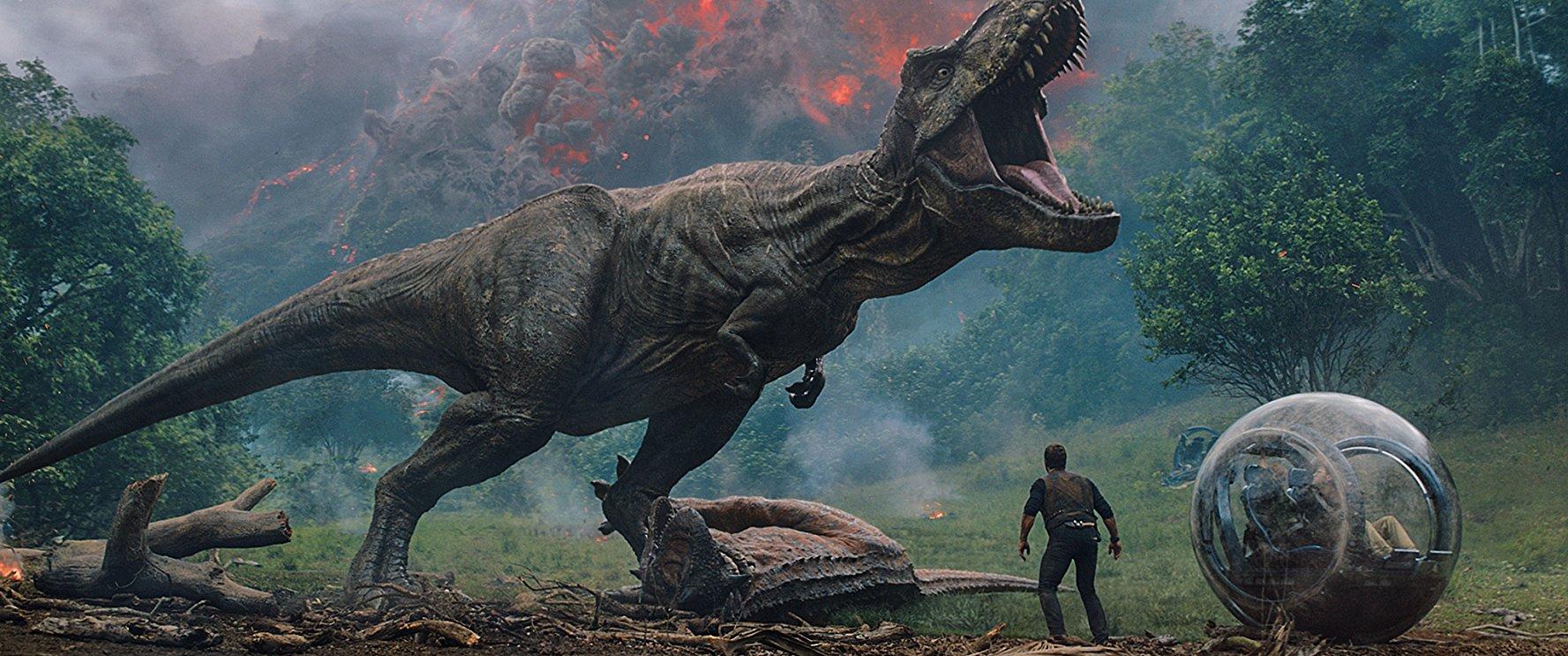
It’s been a few years since toothy, carnivorous hell broke loose on the island theme park Jurassic World. Though the un-Jurassic world has left those dinosaurs alone on their island—mostly—the island itself seems to be self-selecting extinction for the beasts, its now-active volcano an immediate threat to their very survival.

Claire Dearing (Bryce Dallas Howard) wants to save them. But how? I mean, dinosaurs are really big. Many of them bite. Interacting with them has proven dangerous and silly four different times. What’s a girl to do?

Well, put on some sensible shoes, for once, and take a deal from a dying old billionaire with a Hogwarts-style estate and a guilt complex. Benjamin Lockwood (James Cromwell), one-time partner of John Hammond (Richard Attenborough from the original film), wants to bring as many beasties as possible to a secluded island he owns where they’ll be safe.

Or is this just another example of idealistic lefties falling prey to greedy capitalists and scientists with their cadre of guns-for-hire?

It’s basically The Lost World with more volcano and less Vince Vaughn.

Howard’s Dearing—point of such contention in the previous installment with her severe hair, white pumps and icy demeanor just waiting to be melted by a real man—is simultaneously softer and stronger this time around. Howard, though, is mainly just dewy-skinned and earnest.

Chris Pratt returns as the real man in question, and he is as charmingly Chris Pratt as ever.

The real problem, besides the hackneyed and derivative story penned by Derek Connolly and Colin Trevorrow (who both penned Jurassic World, which Trevorrow directed), is Bayona’s tired direction.

Though he does not shy away from showing human carnage, there is not a fresh or compelling set piece in the film. What doesn’t feel directly lifted from earlier works plods along blandly, the only tension coming from the real curiosity about why the character hasn’t yet a) closed the door, b) climbed the ladder, c) run.

Yes, the sight of a volcano exploding on Hawaii (location for the filming) does generate some anxiety, and the sound of a child crying out near images of anything being caged against its will is even more horrific. It’s hard to credit Bayona for having his finger on the pulse of current events, though, given that he’d have completed shooting at least a year before our latest American shame.

Hell, dinosaurs would be a welcome change of pace at this point.