Category Archives: New In Theaters

Reviews of what’s out now

Justice v Tradition

A Crime on the Bayou

by Cat McAlpine

The nation was one month into federally enforced integration in 1966 when Gary Duncan pulled his car over to intervene between a group of boys spoiling for a fight. That afternoon, Duncan became a marked man.

Targeted with a litany of false charges, he was arrested again and again. He could have accepted battery charges for a crime he did not commit and paid a fine. But he refused to be painted as a criminal for simply being Black. So he and his Jewish attorney, Richard Sobol, took the case to court, stepping to the corrupt titans of 1960s Louisiana, like white supremacist judge Leander Perez.

Remembering one of his final arrests with tears in his eyes, Duncan recalls “I said ‘I’m not going to jail. I’m tired.’…I was ready to die.”

Another clip shows young Ruby Bridges, the first Black child to attend desegregated William Frantz Elementary School in New Orleans. Weeping, she tells the interviewer, “I’m not afraid. They’ll have to kill me to keep me from getting my education.” She was six years old at the time.

The most striking juxtaposition in A Crime on the Bayou is the use of black and white footage paired with full color, high-quality interviews. Director Nancy Buirski utilizes a unique handheld technique for the talking heads portions of the film, staying extremely tight on her main subjects’ faces. It reminds us that 1966, and the Civil Rights Movement, was not as long ago as we’d like to believe. Many of the young people immortalized in black and white photos, screaming their protest of the integration of schools, are still alive and well today. They are a part of our society. They are your neighbors. They vote and run for office or lead companies.

Little Ruby Bridges is still alive too. She’s only 66 years old.

Buirski embraces the setting of the desegregation crisis and resulting Civil Rights movement. She employs drone footage of Louisiana, archived footage of New Orleans, and jazz music interludes. Buirski reminds us that culture cannot be separated from its struggles and ugly parts.

The documentary also explores the struggle of Jewish Americans during the Civil Rights Movement, particularly Jewish attorneys and civil rights lawyers. The holocaust had only occurred 20 years prior, and many Jewish families were relatively newly immigrated and fighting for a new life. With them, they carried their own memories of genocide and totalitarian rule. And while the trauma of the two cultures cannot be compared— you can never compare trauma and come up with a winning outcome—Black Americans and Jewish Americans often found themselves fighting against the same forces.

This moving film is a reminder that the world does change, but slowly. We cannot brush off the sins of the past so easily, as many of us are still living them.

At an hour and a half, this documentary moves quickly and doesn’t languish in the trauma of Black men the way many other films do. Instead, it is honest about the inherited traumas we carry. It methodically exposes how entire systems have been built to suppress minorities. Most importantly, it reminds us that the fight continues, and that whenever possible, we must rise to the challenge of upholding justice.


Sleeps with the Fishes

Luca

by Hope Madden

It’s summertime. Who doesn’t want to look out on the bluest water as little boats rock in the breeze and kids cavort in a tiny seaside villa on the Italian Riviera? Awash in the wonder of childhood, the latest adventure from Pixar follows someone from under the sea who’s lured to dry land—against their parents’ wishes—and finds a whole new world.

Wait, that last phrase evokes a different movie, but Luca – a Disney + release that doesn’t require the Premier Access fee – does share a winking resemblance to Disney’s most famous fish out of water story. Young sea monster Luca (Jacob Tremblay) finds the idea of the world above sea level equally forbidding and fascinating. He discovers, with the assistance of another young sea monster named Alberto (It’s Jack Dylan Grazier), that as long as he stays dry, he can pass for human.

Good thing, since the whole villa where they hide from Luca’s parents (Maya Rudolph and Jim Gaffigan) is obsessed with finding and killing the elusive sea monsters of lore.

Writers Jesse Andrews (Me and Earl and the Dying Girl) and Mike Jones (who co-wrote last year’s Oscar winner for Pixar, Soul) essentially turned The Little Mermaid into a buddy comedy. Rather than digging into a lot of angst, self-sacrifice or villainy, director Enrico Casarosa— longtime animator and writer/director of Pixar’s lovely 2011 short La Luna—keeps things light and harmless.

The water here is shallow but bubbling with activity. Luca and Alberto make a friend in the feisty Giulia (Emma Berman), make an enemy of the conniving Ercole (Saverio Visconti), learn a trade, discover a love of pasta, develop a longing to learn, and take part in an Italian triathlon (the middle leg is pasta eating) so they can win enough money to buy a Vespa and see the world.

It’s busy. It looks pretty. The message – embrace who you are – is worthy, but there’s just not much in the delivery for the film to call its own. From any other animation studio, Luca would be a solid summer release, but for Pixar, it’s a middling effort on par with Onward or Finding Dory. It’s a forgettable if lovely time waster.

Hey You Guys!

Rita Moreno: Just a Girl Who Decided To Go For It

by George Wolf

By now, we can probably guess your age by how you first came to know Rita Moreno.

Singin’ in the Rain? The King and I? West Side Story? The Electric Company? The Rockford Files? Oz? Jane the Virgin? Carmen Sandiego? The One Day at a Time reboot? Even if you just got here, there’s the recent In The Heights Twitter feud and if you’re on your way, it’s almost time for West Side Story again!

The point is, Rita is among the most legendary of entertainment legends, and Just a Girl Who Decided To Go For It is a completely captivating tour through an iconic, trailblazing life.

A Puerto Rico native, Rosita Alverio emigrated to New York with her mother at age 5 – and never saw her native family again. “Rita” made her dancing debut at age 6 in a Greenwich Village nightclub, and by 16 she had landed a contract with MGM Studios.

Through countless “shut up and be sexy” roles that prompted self-loathing, to Emmy, Oscar, Grammy and Tony Awards, an abortion, a suicide attempt, marriage and family, political activism and therapy, her 90th year has found Rita to be a fulfilled, thankful survivor.

And beyond the treasure trove of archival footage, home movies and interview praises from the likes of Eva Longoria, Gloria Estefan, Morgan Freeman, and Lin-Manuel Miranda (also one of the film’s producers), director Mariem Pérez Riera finds the most resonance in the personal journey told by Rita herself.

Looking back on the obstacles she faced and the successes and failures of her life and career, Moreno displays a hard-won self-worth and an honest self-awareness, one that – as evidenced by her In The Heights second thoughts – she continues to probe.

This is not just an entertaining Hollywood story, it’s an inspiring American story and a hopeful human story. It’s just a damn good story, from someone worthy of celebrating while she’s still here.

To All Who Enter

Woe

by Hope Madden

What is it that haunts us, really?

Horror has a blossoming subgenre that’s particularly spooked by that inescapable curse of heredity. The metaphorical horror of facing what your family has to hand down to you whether you want it or not fueled Relic, Hereditary, The Dark and the Wicked, and now, Matthew Goodhue’s family horror, Woe.

It’s been a year since his father died, but Charlie (Adam Halferty) still hasn’t seemed to put it behind him. He toils on his dad’s old house but doesn’t ever make any real progress. Same with the backyard. Same with everything. He barely evens speaks to his family anymore, even though his sister Betty (Jessie Rabideau) is about to get married.

Charlie’s not just grieving. There’s something really weird happening to him in that house, and it colors his perceptions of everyone and everything else. Mysterious phone calls and a sketchy meeting out in the woods might set things straight.

Wait a minute, when has that ever helped anything?

Goodhue’s script avoids easy answers or simple metaphors. He evokes an eerie atmosphere, one that seems to envelop Charlie and threatens to take in Betty, but something that everyone else appears to be immune to. That’s especially true of Betty’s well-meaning doofus of a fiancé, Benjamin (Ryan Kattner, as an endearing as any could possibly be).

The three performances sell the story, the Twilight Zone weirdness, and the human pathos that underly everything. Woe is a slow burn, rushing nothing but punctuating its fog of depression and sorrow with bursts of action and brief, welcome splashes of humor.

For A Good Time Call

The Hitman’s Wife Bodyguard

by George Wolf

The Hitman’s Wife’s Bodyguard is not a great movie – heck it’s barely a good movie – but it is a fun movie. And that last part means the film does have pretty great timing.

Because with so many of us returning to movie theaters for the first time in a long time, what is the majority looking for?

A good time. And this film does deliver it, even if it is just one Fat Bastard away from parody.

In case you’ve forgotten, this is a sequel to 2017’s The Hitman’s Bodyguard, and returning writer Tom O’Connor gets us up to speed via Michael Bryce’s (Ryan Reynolds) final therapy session with a doctor who can’t wait to be rid of him.

Bryce has lost his AAA bodyguard license, which is going to make it difficult to win the Bodyguard of the Year award he dreams of. Bryce has also sworn off guns, which becomes a problem once the bullets start flying and director Patrick Hughes (also back from part one) rolls out more direct head shots than a zombie apocalypse.

Bryce doesn’t let the lack of licensing stop him from guarding Sonia Kincaid (Salma Hayek), a spitfire who has no problem shooting first – from the hip or from the lip. Plus, she happens to be married to Bryce’s old nemesis Darius Kincaid (Samuel L. Jackson). So while Bryce and Darius are bickering about old grudges, Sonia and Darius argue about starting a family (don’t bother thinking about their ages – just go with it).

The dangerous games come from an evil tycoon (Antonio Banderas on a steady diet of scenery) who’s fighting back against E.U. sanctions on Greece, and from a frustrated federal agent (Frank Grillo) who decides his best bet is to work with bad guys in hopes of catching worse guys.

Hughes proves adept at quick-paced action and satisfying set pieces full of sound and fury, signifying nothing but excess. There’s plenty of globe-trotting to beautiful locales, lo-cut costume changes for Hayek and enough all around ridiculousness to make you wonder when Reynolds and Jackson are going to switch faces.

But the starring trio seems to be enjoying it enough to be in perfect sync – with each other and the level of material they’ve been handed. All three may be on auto-pilot, but their banter is an expletive-laden, rapid fire hoot that’s consistently mischievous and sometimes downright hilarious.

The Hitman’s Wife’s Bodyguard isn’t high art, but it isn’t trying to be. In the words of Bret Michaels and Sam Jackson: it ain’t nothin’ but a good time, motherf^*%$#.

Blood Brothers

La Dosis

by Brandon Thomas

It’s harder to think of a more respected profession than nursing. This notion might be even more widely shared now, after the past year. Nurses are there during the worst emergencies, and they’re also there to help with recovery. We put a lot of trust and responsibility in them during our weakest moments. Writer/director Martin Kraut’s thriller La Dosis (translation: The Dose) examines what happens when that trust is breached in the worst possible way.

Marcos (Carlos Portaluppi) is a confident and experienced nurse with more than 20 years under his belt. His professionalism and thoroughness make him well respected in his department. Marcos has a secret though. For certain terminal patients, he uses the cover of night to administer enough medication to allow them to peacefully slip away. For Marcos, this is a way to preserve their dignity even if it goes against the ethical nature of working in medicine.

When Gabriel (Ignacio Rogers), a new young nurse arrives, Marcos finds himself threatened by the handsome man. As Marcos’s coworkers and superiors fall under Gabriel’s charming spell, the elder nurse begins to suspect that Gabriel might harbor his own homicidal tendencies.

If there’s one word I’d use to describe La Dosis, it would be deliberate. The film mirrors Marcos’s steady, pragmatic personality by slowly, and methodically, introducing us to the characters and setting. It’s the type of no-frills opening that makes Marcos’s first act of homicide all the more surprising while still seemingly mundane.

Things begin to heat up and get weirder once the character of Gabriel is introduced. Is Marcos’s distrust of the young nurse simply sour grapes or is there a more sinister reason? That’s the question the film plays with momentarily until it’s quickly answered. The suspense of toying with Gabriel’s true intentions is cast aside rather quickly.

La Dosis frustrates more than it captivates. The back and forth between Marcos and Gabriel has all the trappings of an exciting rivalry, except the film refuses to let it happen. Marcos yo-yos between being Gabriel’s adversary and his friend. The film tries to explain this away with tepid sexual tension between the two, but it’s never explored on more than a surface level. 

Portaluppi is the film’s bright spot. There’s an inviting casual sadness to the character that never strays into pity. Even when the script falters with Marcos’s questionable behavior and choices, Portaluppi does his all to make it work. 

There’s also a level of dark comedy at play that the film never truly capitalizes on. The story is ripe for this kind of approach, yet the filmmakers continue to pull their punches. The hesitancy to go full dark comedy or even full medical thriller hobbles the film in the end. 

La Dosis tantalizes with interesting character beats and odd tonal shifts, but in the end, doesn’t quite reach a satisfying conclusion.

Video Nasty

Censor

by Hope Madden

Catch catch a horror taxi

I fell in love with my video nasty

            –The Damned

Damned, indeed.

Stern, driven Enid (Niamh Algar) takes her responsibilities seriously. Unfortunately for her, they come at a high price. Enid is a film censor in the most punishing time and place for such an endeavor: Thatcher’s England. It’s 1985, an era when controversial films hoping to make their way to screens big and small found themselves more butchered than their characters.

Co-writer/director Prano Bailey-Bond takes inspiration from this notion in her feature debut, Censor—an immersive era-specific horror. It is especially immersive for Enid.

She spends long hours deliberating on exactly where the line is between danger and acceptability: rewinding, examining frame by frame, if necessary, regardless of the nonchalance and casual derision of her co-workers. Enid is convinced it is her duty to protect people from these images.

As she herself drowns in repeated viewings of the most violent and depraved material, you have to wonder whether she might be better off protecting herself.

Bailey-Bond has other questions in mind, like why is it that Enid is so preoccupied with this job, how might it feed her own darkness, and what happens when her worlds blend together?

Censor is a descent into madness film—nothing new in the genre. And moments of Censor can’t help but call to mind fellow Brit Peter Stickland’s 2012 treasure Berberian Sound Studio. But Bailey-Bond and co-writer Anthony Fletcher evoke such a timestamp with this film, not just in the look and style, but with the social preoccupation.

As coincidences pile up – a definitive family decision, a horror movie-style murder spree, a film that hits too close to home — Enid seems to suspect that her real motive has been to censor her own thinking.

When she stops doing that, look out.

Algar’s prim and sympathetic, deliberate and brittle. It’s clear from the opening frame that Enid will break. But between Algar’s skill and Bailey-Bond’s cinematic vision, the journey toward that break is a wild ride.

Hillbilly Antidote

Holler

by Hope Madden

It is incredibly rare to see a worthwhile film that deals with American poverty. Nomadland certainly broke through, and recent movies including Winter’s Bone, Frozen River and Little Woods also made the case that resilience and poverty need not condescend or patronize.

Hillbilly Elegy missed that memo.

Holler, the feature debut from filmmaker and Ohio native Nicole Riegel, sugarcoats nothing, patronizes no one, and does not need a Mamaw to explain the facts of life.

Instead, Ruth (a bristlingly confident Jessica Barden) figures things out on her own. A high school senior who spends most of her time collecting scrap metal with her brother – both just one step away from eviction – Ruth has very little time for contemplation, though.

Riegel’s Rust Belt winter offers a malevolent backdrop for Ruth’s coming of age, and the illegal scrapping—the tearing down of the disused industries that once kept Ruth’s family and town afloat—is eerily fitting.

Barden gives the film a grainy bleakness, Ruth’s red hat and her brother Blaze’s (Gus Halper) pickup the only bursts of color in the dreary Southern Ohio grey. Compelling and authentic, it all often feels mainly like a showcase for Barden’s talent.

That’s not to say that the film is in any way weak, simply that Barden’s performance is that strong. Willful and bursting with anger, her Ruth is a force—destructive, sure, but strong and powerfully determined.  

Barden’s not alone. Her supporting ensemble delivers nuance and grit in equal measure, from Halper to Austin Amelio’s sketchy scrap metal entrepreneur to a remarkably humane turn from Becky Ann Baker. Riegel’s script, dreary though the vision can be, hints at forgiveness and hope in nearly every scene.

If you seek an antidote to Hillbilly Elegy, Riegel has what you’re looking for.

Enter Sandman

Awake

by Hope Madden

There are so few things I enjoy more in this life than sleeping. Sleeping is the best. I love sleeping. This is one of the reasons director Mark Raso’s apocalyptic Awake got under my skin.

But it’s supposed to, after all. It’s not a comedy. It’s a spare, clever idea about some kind of celestial happening that throws off our hard wiring enough that we lose the ability to fall asleep. This power surge affects more than just our own circadian rhythms, though. It also shuts down all electric power, including car engines.

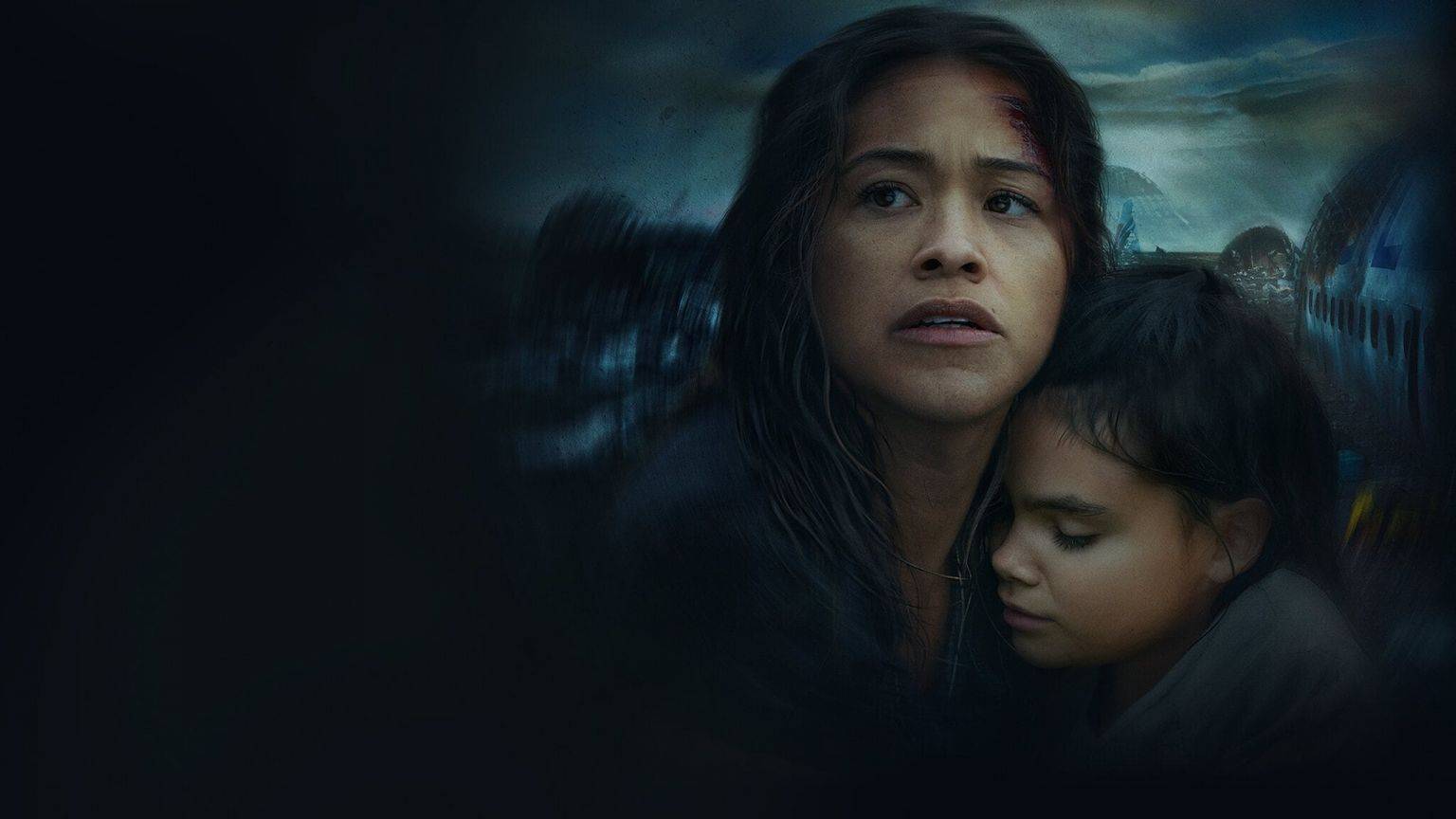
Jill (Gina Rodriguez) was tired already. She just finished the late shift as security at a local hospital when she picked her kids up for their day together—her son Noah (Lucius Hoyos) goes more reluctantly than her young daughter Mathilda (Ariana Greenblatt). By the time Jill understands what’s happening, she realizes the kind of danger her daughter is in—from religious zealots as well as government officials—because Mathilda can sleep.

So, there you have it. There’s a fight against the clock (the film outlines in great detail exactly how this will disorient and then eventually kill you) for this mother to figure out how her daughter will 1) survive the apocalypse and 2) continue to survive once everyone else is dead.

Rodriguez drives the film with a believable mix of savvy, grit and growing brain dysfunction. Several of the population-gone-mad set pieces are eerie and smart, although others are underdeveloped and unsatisfying.

Raso, working from a script he co-wrote with brother Joseph as well as Gregory Poirier, picks at one or two modern-day concerns but truly breaks new ground only rarely. Moments from The Mist, War of the Worlds, and just about every outbreak movie make their way into Jill’s family adventure. Borrowed as much of this is, it still comes together in a way that feels fairly fresh.

Support work from Barry Pepper, Jennifer Jason Leigh, Frances Fisher and Shamier Anderson offers the adventure shape and character while Rodriguez gives it a pulse. And some really heavy eyelids.

Block Party

In the Heights

by George Wolf

I know there’s still plenty of bad out there, but it’s summer, people are getting out in the heat, and it feels like maybe we deserve a few minutes to celebrate.

How about 143 minutes? In the Heights makes them all count, with a summer celebration practically bursting with joyful exuberance.

It’s been 13 years since the stage production won 4 Tony Awards – including Best Musical, on top of Best Original Score and Best Actor for Lin-Manuel Miranda. Since then, Miranda conquered the world with Hamilton (maybe you’ve heard it), so now what seems like a follow up is really a return to his roots.

Miranda’s aged out of the starring role, so Anthony Ramos (Hamilton, A Star Is Born) answers the bell with a breakout turn as Usnavi – the Washington Heights, New York storekeeper with a dream.

As the days until a blackout wind down and the temperature ramps up, Usnavi’s block is buzzing with welcome arrivals, planned departures, and romance in the air.

Nina (Leslie Grace) is home from Stanford with major news to break to her father Kevin (Jimmy Smits) while she reconnects with Benny (Corey Hawkins), a dispatcher at Kevin’s neighborhood car service.

For his part, Usnavi has finally scored a date with his crush Vanessa (Melissa Barrera), but it might be too late – she has her sights set on leaving the block behind with a new apartment uptown.

So while the gossip is raging at the hair salon, and the piraqua guy (Miranda) tries to compete with Mister Softee (Hamilton‘s Chris Jackson, who played Benny in the stage version) as the king of cool treats, fate intervenes. Usnavi discovers his bodega has sold a winning lottery ticket – a stroke of luck worth 96 G’s – and then the lights go out.

Director Jon M. Chu (Crazy Rich Asians) proves a worthy choice to move the project from stage to screen with magic intact. The most accomplished of directors (see Attenborough and Eastwood) have fallen hard trying to make musical numbers pop on film, but Chu gives Christopher Scott’s choreography the space to be graceful and the intimacy to be gritty.

Miranda’s music meshes irresistibly with the sounds of the street, and from swimming pools to rooftops, more than a few of Chu’s grandly-staged set pieces nearly soar off the screen. And it won’t be just fans of this show who will be giddy, as the Wicked faithful will find plenty of reason to be excited Chu is already in pre-production on that long-awaited film adaptation.

Source writer Quiara Alegría Hudes pens the screenplay here as well, with a heartfelt, character-driven ode to cultural strength and sacrifice. Bookended by Usnavi telling the story of his block to a cute group of youngsters, the tale of Washington Heights is layered with respect for immigrant families just fighting for a place to belong.

And while they may be fighting against gentrification and bigotry, the film’s heart remains unquestionably hopeful, so downright wholesome that even the lack of sweat-stained bodies in the 100-degree heat feels like part of the movie magic.

In the Heights has been saving that magic for the big screen experience, and now that it’s here it is indeed worthy of celebrating – in a theater, with a crowd.

Are we really “back to normal?” Can the American dream still be alive?

For 143 minutes, it sure feels like it.