That is a good, sinister question when posed by the
mustachioed traveler responding to his captive’s promise to remain silent if he
lets her go. It’s good because it clarifies to her and us that this is not his
first prisoner rodeo, an unsettling fact that increases tensions and moves the
story forward.
It’s also a good question to ask director John Hyams as his
road trip horror Alone serves up a very familiar premise.
Jessica (Jules Wilcox), her beat Volvo station wagon and
hitched U-Haul trailer are making a cross-country trip. Nobody else, just them.
Sure, Mom keeps calling, but Jessica just can’t right now.
It’s beautiful, wooded country, but a little treacherous—more so once that black SUV starts following her around.
You know where this is going from the opening scene, so the only
hope is that the execution delivers some thrills. Drone shots of trees may be a
little tired by this time, but they are pretty and they give the sense of
isolation. Screenwriter Mattias Olsson makes subtle changes to the predictable
story, giving each character an unexpected layer or two to keep you guessing.
Wilcox’s no-thrills performance suits the project beautifully. Though frustrating in the early going (don’t pretend you wouldn’t do some stupid things in that situation, too), Jessica’s resolve and tenacity are proven with a focused, physical performance.
Marc Menchaca, known only as Man, is a delight in the role of the villain. That ‘stache! Nary a false note creeps into his menacing demeanor. His is the saucier of the two characters and the hateful chemistry between the actors drives the thrills and commands attention.
Anthony Heald also makes a welcome appearance at about the halfway point, and the action takes an effective turn with him. But mainly, Alone benefits from two truly savvy performances. It just doesn’t have much to say that we haven’t already heard.
Anyone who saw the original The Girl With the Dragon Tattoo knows if you get on the wrong side of a score with Noomi Rapace, she’ll have no problem settling it.
As Maja in The Secrets We Keep, Rapace has a similar mindset. Settled into post-war Suburbia in an unnamed town, Maja and her physician husband Lewis (Chris Messina) run the local medical clinic while raising their young son, Patrick.
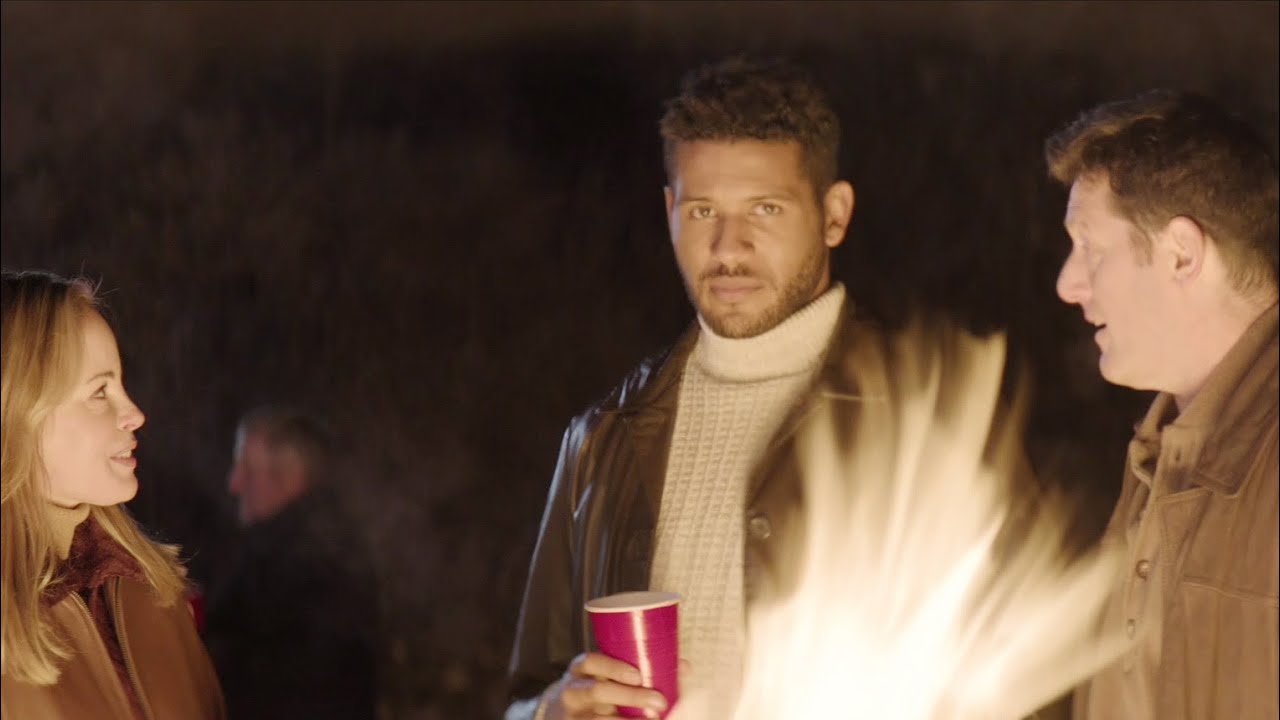
On one fateful afternoon, the Romanian-born Maja is shaken to her core by the sight of a man (Joel Kinnaman) she believes committed heinous war crimes against her and her family years before. After setting a successful trap, Maja kidnaps the man and holds him captive in her basement, finally detailing to Lewis the horrifying ordeal she has never spoken of.
Director and co-writer Yuval Adler sets an effective hook despite some forced visual cues (a literal bubble bursting, North by Northwest on a theater marquee). Rapace delivers the right mix of confused trauma, making Maja’s indecision between murder and interrogation ring true (much more so than the petite Rapace’s ability to maneuver the dead weight of Kinnaman).
Is the suburban hostage a Swiss immigrant named Thomas, as he claims, or is he the former Nazi Karl, whose war crimes haunt Maja’s dreams?
Adler seems to sense the need to distance the film from Death and the Maiden (and, to a lesser extent, Big Bad Wolves), but as events move further from the basement, an air of B-movie pulp emerges.
A visit from the neighborhood cop seems to exist only for contrived tension, while Maja’s burgeoning friendship with her captive’s wife (Amy Seimetz) and daughter can never quite move the shadow of secrets over the entirety of picket-fence Americana the way Adler intends.
And despite a terrific performance from Messina, Lewis lands as a frustrating and sometimes distracting presence. While Lewis’s struggle to believe Maja – even without a confession – is one of the film’s most resonant strengths, the bigger struggle concerns the film’s commitment to defining Maja on her own terms.
When it does commit, The Secrets We Keep rewards the investment. But when it cops out, there’s little here we haven’t already been told.
As colorful as a dream, Juan Diego Escobar Alzate’s feature
film debut Luz: The Flower of Evil looks like magic and brims with the
casual brutality of faith.
Set inside a religious community in the mountains of
Colombia, the film drops us into ongoing struggles with the group’s religious
leader, El Señor (Conrad Osorio). No one knows the devil as he does, he reminds
his daughter Laila (Andrea Esquivel).
She lives contentedly, devoutly, along with her two adopted
sisters. El Señor and the villagers consider the trio angels—just as they believe
the little boy chained up out back is the Messiah who will deliver the community
from its recent calamities.
Though never entirely detailed, the internal logic of the
film and the community is clear enough to feel simultaneously familiar and
horrifying. The way the filmmaker wrestles with what is and is not real, with
forgiveness and the morally ambiguous nature of man, and with our tendency to
blame God or the devil for our own shortcomings is frustrating and
intoxicating.
Alzate gets maximum impact for minimum budget thanks in
large part to Nicolas Caballero Arenas’s cinematography. His breathtaking visuals
add spooky richness, turning this Western of sorts into a beautiful, lyrical,
macabre Columbian folktale.
Lovely as it is, the film echoes of loss. The title itself conjures what is absent. As time wears on and the “angels” lose confidence in their father figure, remembered stories of the late mother figure Luz (Spanish for light) take the space for them that El Señor’s tales of God take for the rest of the community.
Luz: The Flower of Evil surprises as often as it relies on expectations to deliver its message. The film is more atmospheric than cautionary, its resolution a fitting end for characters’ whose own logic doesn’t likely reflect that of the audience. It is a vision, from its opening musical notes to its closing image, though, that marks a filmmaker worth discovering.
How many films, horror or otherwise, open as a moving van
leaves a fresh faced family unpacking in their new dream home? Kurtis David
Harder and his new Shudder thriller Spiral welcome you to the
neighborhood.
What feels like your typical suburban paranoia film, this
time given a fresh coat of paint with the introduction of a same-sex couple at
its center, turns out to be something else entirely.
Even as Malik (Jeffrey Bowyer-Chapman) and Aaron (Ari Cohen)
try to convince Aaron’s teenaged daughter Kayla (Jennifer Laporte) that she really
won’t miss the big city, Malik is seeing some things around the cul-de-sac that
worry him.
But Aaron isn’t ready to believe the neighbors are
homophobes (or racists, for that matter, even if Tiffany across the street
assumed Malik was the gardener).
Spiral quickly falls into a very familiar pattern.
Malik, who works at home as a writer, begins to let his research get the better
of him. Writer’s block has him paranoid—or maybe there’s a trauma in his past
that’s to blame? Is he really seeing something strange in his neighbors’
windows? Is Aaron right, did he go overboard with that new home security
system?
It sounds familiar—so much so that the film sometimes just figures your brain will fill in blanks left open. And while Spiral’s internal logic is never air tight, screenwriters Colin Minihan (It Stains the Sands Red, What Keeps You Alive) and John Poliquin are more interested in bigger patterns. Their social allegory doesn’t achieve the breathless thrills of Get Out, but Spiral swims similar waters.
The filmmakers see patterns in political hatred and the continuing reaffirmation of the status quo, and those patterns are horrifying. While horror has always been an opportunity for the collective unconscious to deal with social anxiety in a safely distant way, Spiral is less interested in creating that comforting fictional buffer. It’s as if the filmmakers want you to see the holes in their plot so you’re more able to see the nonfiction it’s based on.
It’s hard to sympathize with a catfish – someone who
pretends to be someone else online to develop a misleading relationship.
Yet, in the film, Summerland, directed by Lankyboy (the nickname for directing duo Kurtis David Harder and Noah Kentis), we’re asked to do just that.
Bray (Chris Ball), who is pretending to be Victoria online, has made a connection with Shawn (Dylan Playfair) via a Christian dating site. Bray/Victoria has plans to meet Shawn at the music festival, Summerland.
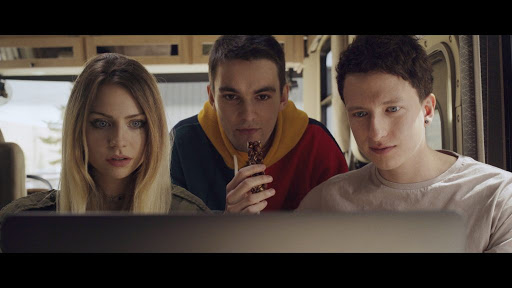
Along for the road trip to Summerland is Oliver, Bray’s best
friend, and Oliver’s girlfriend, Stacey. The problem? Bray has been using
Stacey’s pictures to construct Victoria online. Once the trio gets to
Summerland, will Bray be able to find Shawn before he finds Stacey?
Miraculously, as the film progresses, we do begin to sympathize with Bray. As a gay teenager, he is not accepted by his parents and struggles with his identity. He wants to meet someone, to have a relationship, and be himself. Despite the fact he has lied about his identity, he’s managed to be as open with Shawn as he has with anyone.
However, the film doesn’t let Bray off the hook entirely. We’re repeatedly reminded that he’s constructed a relationship around a lie. We must ask ourselves if some lies are forgivable when the liar struggles with what it means to be himself.
Most of the film is centered around the road trip to Summerland. Bray is anxious to get there so he can finally meet Shawn in person. Oliver wants to enjoy the journey. Stacey is rebelling against a stepdad she doesn’t like.
Lankyboy wants their movie to be quirky, but it’s a conventional road trip/relationship movie with some weird extras thrown in. Those weird moments are forced, don’t contribute much, and end up making a short movie feel intolerably long.
There are also far too many montages for such a short film.
The actors aren’t terrible in their roles. They’re not the worst trio to spend time with on a road trip movie, and the film does have one or two funny moments. But too much of the movie is focused on what it wants to be rather than effectively embracing what it is.
Unfortunately, what is ends up being is an unmemorable experience.
H is for Happiness navigates grownup tensions and trauma from the perspective of an optimistic 12 year-old named Candice (Daisy Axon). Candice’s class is given an assignment to recount their life via a narrative based on the letters of the alphabet. On the same day, a new student arrives.
“Can you keep a secret?” newcomer Douglas asks her.
“No.”
Candice chirps back with cheerful honesty.
Douglas (Wesley Patten) claims he’s from another dimension, but it doesn’t faze Candice. Little bits of mystery and magical realism like this make Candice’s world deeper and more fantastical, even when the magic ends up being rooted in reality.
Brightly colored and fun, exaggerated moments make the film’s world seem vibrant and alive in a storybook kind of way. But it has its dark moments too. Candice may be hopelessly optimistic but everyone around her is miserable. Her grieving, depressed mother stays in a room deeply saturated in blue. Her father and uncle, at odds, exist in opposite landscapes. Her father works in a tiny garage office. Her rich uncle sails a picturesque sailboat on a bright blue sea.
While H is for Happiness is told through Candice’s eyes, it’s not just a watered-down children’s story. The way it unfolds is enjoyable to all ages. Instead of going for easy laughs, the film explores the frustration of trying to fix a broken family with silly hijinks that simply don’t work. The heavy dose of realism creates continued tension throughout and motivates Candice to continue exploring what her role in the world might be as she turns 13.
Director John Sheedy frames his shots with whimsy and beauty, showing adults struggling through Candice’s eyes. Bright colors are always caught just off in the corner to show how the world continues beyond the screen. Candice’s broken-spirited father is perfectly framed by pastel balloons at a fateful birthday party. Its images like these that meld nostalgic memories with the realities behind them.
Making her film debut, Axon is fantastic as Candice, showing a precocious can-do attitude will make you fall in love with her immediately. Her partner in crime, Patten, is charming and equally likable as Douglas from Another Dimension.
H is for Happiness is a beautifully crafted coming-of-age movie that teeters on the edge of childhood innocence and the next step beyond it.
Based on his own Danish-language film Silent Heart, writer Christian Torpe partners with director Roger Michell for the Anglo-American remake, Blackbird. You likely know the story already: an ailing matriarch invites her fractured family around to stay for one last weekend of joy and festivities before she plans to end her life through euthanasia. But, as is so often the case in films like this, everyone’s a long way from even pretending to play happy family.
Susan Sarandon stars as Lily, the head of the family unit. Sam Neill puts in a career-high as Paul, Lily’s husband, who proceeds with a stoic, removed air about his wife’s illness and impending self-death.
Kate Winslet’s Jennifer is the first to arrive, early, along with husband Michael (Rainn Wilson) and son Johnathan (Anson Boon). Straight-laced and proud, Jennifer is the polar opposite of her younger sister, Anna (Mia Wasikowska); a flighty young woman who traipses in late, “looking like shit,” with girlfriend Chris (Bex Taylor-Klaus) in tow.
Completing the family unit is Liz (Lindsay Duncan), Lily’s oldest and dearest friend.
As you can probably tell, the film’s main attraction is its star-studded cast. A sea of riveting performances is what awaits us and Torpe’s well-written, character-establishing (and building) dialogue make these people come alive and feel genuine—even if some of their actions don’t. Indeed, Michell relies heavily on the strength of his actors to deliver the emotional clout the movie promises. There’s no denying the cast is up to the task, although other aspects of the film feeling like an afterthought.
The plot mechanics are hackneyed and unoriginal, while Peter Gregson’s score feels generic and uninspired. Mike Ely’s crystalline visuals, though, are an absolute delight, and effortlessly reflect the beauty and tragedy of both life and death.
It’s unoriginal, and it’s certainly not perfect, but this is a beautiful piece of filmmaking about the celebration of life, love and family, rather than the sadness of death and loss. And it brought tears to my eyes on more than one occasion.
We haven’t been able to leave home in months, which means that home has kind of turned into its own horror show. For us, that’s Ohio, so we figured, why not celebrate?! In honor of our own home grown horror show, we dug into the best horror movies set right here in OH-IO!
5. Scream 2 (1997): Windsor College, OH
Updating his celebratory meta-analysis of genre clichés, Craven checked back in on Sydney Prescott (Neve Campell) and crew a couple years later, as the surviving members of the Woodsboro murders settled into a new semester in the little Ohio liberal arts school of Windsor College. The movie Stab, based on the horrors Sydney and posse survived (well, some didn’t survive) just two years ago is already out and screening on campus, but has it inspired copycat killers?
Craven, working again from a screenplay by Kevin Williamson, goes even more meta, using the film-within-a-film technique while simultaneously poking fun at horror sequel clichés in his own horror sequel.
And in the same way Scream subverted horror tropes while employing them to joyous results, the sequel – funny, tense, scary, smart, and fun – manages to find freshness by digging through what should be stale.
https://www.youtube.com/watch?v=WG0oUO4mK4A&t=29s
4. Tragedy Girls (2017): Rosedale, OH
Heathers meets Scream in the savvy horror comedy that mines social media culture to truly entertaining effect.
Sadie (Brianna Hildebrand) and McKayla (Alexandra Shipp) are looking for more followers to improve their brand, and they have been doing a lot of research to make their content more compelling. The Tragedy Girls plumb their small Ohio town’s surprising death toll with more insight than the local police seem to have. Where do they get their knowledge?
Provocative.
Hildebrand and Shipp (both X-Men; Hildebrand was the moody Negasonic in Deadpool while Shipp plays young Storm in the franchise proper) nail their characters’ natural narcissism. Is it just the expectedly shallow, self-centeredness of the teenage years, or are they sociopaths? Who can tell these days?
3. The Faculty (1998): Herrington, OH
The film exaggerates (one hopes) the social order of a typical
Ohio high school to propose that it wouldn’t be so terrible if all the teachers
and most of the students died violently, or at least underwent such a horrific
trauma that a revision of the social order became appealing.
Indeed, in this film, conformity equals a communicable disease.
Adults aren’t to be trusted; high school is a sadistic machine grinding us into
sausage; outcasts are the only true individuals and, therefore, the only people
worth saving. Director Robert Rodriguez pulls the thing off with panache, all
the while exploring the terrifying truth that we subject our children to a very
real and reinforced helplessness every school day.
Interestingly, the infected teachers and students don’t turn into
superficial, Stepford-style versions of themselves. For the most part, they
indeed become better, stronger, more self-actualized (ironically enough)
versions, which is interestingly creepy. It’s as if humanity – at least the
version of it we find in a typical American high school – really isn’t worth
saving.
2. Trick ‘r Treat (2007): Warren Valley, OH
Columbus, Ohio native Michael Dougherty outdid himself as writer/director of this anthology of interconnected Halloween shorts. Every brief tale set in sleepy Warren Valley, Ohio compels attention with sinister storytelling, the occasional wicked bit of humor and great performances, but it’s the look of the film that sets it far above the others of its ilk.
Dougherty takes the “scary” comic approach to the film—the kind you find in Creepshow and other Tales from the Crypt types—but nothing looks as macabrely gorgeous as this movie. The lighting, the color, the costumes and the way live action bleeds into the perfectly placed and articulated moments of graphic artwork—all of it creates a giddy holiday mood that benefits the film immeasurably.
Dylan Baker (returning to the uptight and evil bastard he perfected for his fearless performance in Happiness) leads a whip-smart cast that includes impressive turns from Brian Cox, Anna Pacquin, Leslie Bibb and Brett Kelly (Thurman Merman, everybody!).
And it’s all connected with that adorable menace, Sam. Perfect.
1. A Nightmare on Elm Street (1984): Springwood, OH
Teens in suburban Ohio share nightmares, and one by one, these teens are not waking up. Not that their disbelieving parents care. When Tina woke one night, her nightgown shredded by Freddie’s razor fingers, her super-classy mother admonished, “Tina, hon, you gotta cut your fingernails or you gotta stop that kind of dreamin’. One or the other.”
Depositing a boogieman in your dreams to create nightmares that will truly kill you was a genius concept by writer/director/Clevelander Craven because you can only stay awake for so long. It took everyone’s fear of nightmares to a more concrete level.
The film was sequeled to death, it suffers slightly from a low budget and even more from weak FX that date it, but it’s still an effective shocker. That face that stretches through the wall is cool, the stretched out arms behind Tina are still scary. The nightmare images are apt, and the hopscotch chant and the vision of Freddie himself were not only refreshingly original but wildly creepy.
“Lord knows where a person who ain’t saved might end up.”
Indeed. The constant fight to overcome the worst in ourselves lies at the heart of The Devil All the Time, director Antonio Campos’s darkly riveting realization of Donald Ray Pollock’s best-selling novel.
Bookended by the close of World War II and the escalation in Vietnam, the film connects the fates of various characters living in the small rural towns of Southern Ohio and West Virginia.
Arvin (Tom Holland), the son of a disturbed WWII vet (Bill Skarsgård), fights to protect his sister (Eliza Scanlen) while he ponders his future. Husband and wife serial killers (Jason Clarke and Riley Keough) look for hitchhikers to degrade, photograph and murder. A new small town preacher (Robert Pattinson) displays a special interest in the young girls of his congregation.
It’s a star studded affair—Mia Wasikowska, Haley Bennett and Sebastian Stan joining as well—but every actor blends into the woodsy atmosphere with a sense of unease that permeates the air. No stars here, all character actors in service of the film’s unsettling calling.
Pollock’s prose created a dizzyingly bleak landscape where Flannery O’Connor and Cormac McCarthy might meet to quietly ponder man’s inhumanity to man. Campos unlocks that world courtesy of Pollock himself, who narrates the film’s depravity with a backwoods folksiness that makes it all the more chilling.
As rays of light are constantly snuffed out by darkness, Campos (who also co-wrote the screenplay) uses Pollock’s voice and contrasting soundtrack song choices to create a perverse air of comfort.
Redemption is a slippery aim in and around Knockemstiff, Ohio, and grace is even harder to come by. With a heavier hand, this film would have been a savage beating or a backwoods horror of the most grotesque kind. Campos and his formidable ensemble deliver Pollock’s tale with enough understatement and integrity to cut deeply, unnerving your soul and leaving a well-earned scar.
It might be more fair for someone who wasn’t an Ohio State graduate and/or rabid Buckeye fan to review TBDBITL 141.
But no one fitting that description lives in my house, so…
For the sadly unwashed, “TBDBITL” stands for The Best Damn Band in the Land. 2018 brought the Ohio State Marching Band’s 141st edition, and director Joe Camoriano takes us inside that memorable season with unprecedented access. (Camoriano’s role as the University Communication Director of National Broadcast Media might have helped.)
From summer practice to tryouts, headline-grabbing halftime shows to the Macys Thanksgiving Day Parade, Rose Bowl and Disneyland, we get a captivating look at how hard Band Director Dr. Christopher Hoch, his staff and band members work to achieve a status that is – in the words of former football coach Urban Meyer – “elite.”
Camoriano is wise to humanize the experience via three engaging band members. There’s Konner, who is realizing a lifelong dream as Drum Major; Sydney, a charming trombone player with boundless enthusiasm; and Thomas, the lucky sousaphonist who gets the honor of dotting the “I” in the incomparable Script Ohio.
These three are likable personalities and easy to root for, which naturally increases our investment in the entire process, and is especially helpful for anyone coming to this film wondering what the hype is all about.
Despite an over-reliance on video fades and some rough patches in the background sound mix, Camoriano’s footage is always informative and engaging, even occasionally thrilling.
And for those of us always ready to answer a cry of “O-H!” there might be a goosebump or three.