Fright Club: Towns that Won’t Let Go

Being trapped in a town–whether by supernatural forces or physical ones–is a nightmare scenario that horror movies use to their advantage. Maybe it’s bloodthirsty kids in a cornfield who keep you. Maybe it’s some kind of unnatural barrier, and every time you leave, you wind up where you started. Either way, spooky times! Here are our five favorite towns that won’t let you leave!

5. Hilsboro: The Brotherhood of Satan (1971)

One of those mid-afternoon TV watches one day home sick from school, this movie scared the shit out of me. Was it the kidnapping and possession of children? The Satanic cult? No–it was the idea that K.T. and Nicky could never leave the town. No matter what direction they drove or how they attempted it, they would never get out of the town.

That idea stuck with me for ages, but in restrospect, the movie has a lot of weird goodness going for it. It seems to have inspired Being John Malcovich to a degree, as well as Cemetery Man. It’s a B-movie, no question, but it is a lot of fun.

4. Camp Arcadia: The Endless (2017)

Justin Benson and Aaron Moorhead continue themes developed in the remarkable Resolution (which could also be on the list). And though it’s really a camp they need to leave, the dread the filmmakers develop is identical to that of the town that won’t let go.

As brothers return to the cult they’d escaped years earlier for a friendly visit, you spend every minute hoping, goading, yelling, begging them to fucking just leave! Get out! What are you still doing there?!

The tension is palpable and the fraternal familiarity between Justin and Moorhead is painfully, tenderly authentic. This works to ground the science fiction elements as they develop, creating an unnerving and memorable feature.

3. Hobbs End: In the Mouth of Madness (1994)

John Carpenter combines King with Lovecraft to create an unforgettable journey into madness. Sam Neill is an insurance investigator out to prove that vanished author Sutter Cane is a phony. He just needs to get to Hobb’s End and prove it.

There’s a scene with a bicyclist on a country road that boasts of Carpenter’s genre magic, as madness and mayhem collude to keep Neill where he is, at least until he can serve a greater purpose.

2. Buffalora: Cemetery Man (Dellamorte Dellamore – [of death, of love], 1994)

Inarguably director Michele Soavi’s best work is confined mainly to the cemetery in Buffalora. Released the same year as In the Mouth of Madness, Cemetery Man explores a handful of the same themes. It just does it with more sex.

The film balances humor with horror, sneakily leading to meaner and more chaotic plot turns until there’s no going back.

Rupert Everett is perfection as Dellamorte, the cemetery keeper who has noticed that the dead come back about seven days after they’re interred. Things go from bad to worse to worse still, and finally he loads up his best friend Gnaghi and plans to put Buffalora behind him. Good luck.

1. The Yabba: Wake in Fright (1971)

First time in the Yabba?

Sweaty, drunken, debauched–Ted Kotcheff’s Aussie thriller wrings tension from every scene as John Grant, put-upon school teacher, explores his manliness with the very manliest in town.

A pressure cooker, the film is an absolute education in escalating tension, but it also boasts what may be the greatest performance of Donald Pleasance’s career.

The film is not for the faint of heart, and potential viewers beware: the kangaroo hunt is real.
Eugénie’s Feast

The Taste of Things

by Matt Weiner

You know you’re in for a hell of a meal when the appetizer is a 15-minute cold opening that lingers on every small detail of cooking a feast to a degree that borders on pornographic.

This scene from writer and director Anh Hung Tran sets the mood—and pace—of the rest of his latest feature, The Taste of Things.

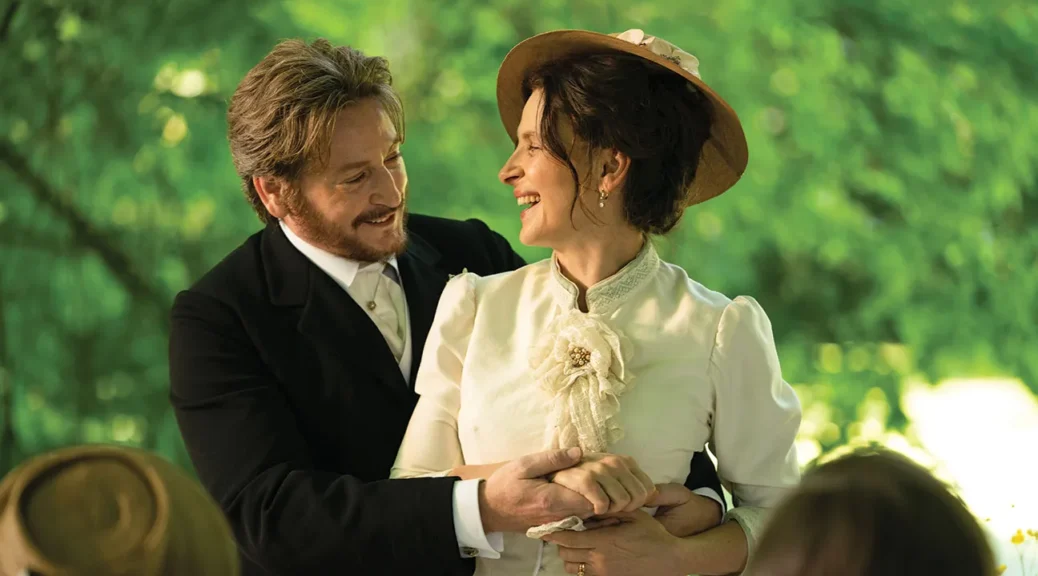
Eugénie (Juliette Binoche) prepares these elaborate meals for Dodin (Benoît Magimel), a famed gourmand and restaurateur who has relied on Eugénie’s unique blend of skill and intuition to bring his culinary visions to life.

The bright, airy kitchen where these feasts are prepared might as well be one of the film’s co-leads. Binoche is spellbinding as Eugénie, who must be played as equal parts enchanting muse and aloof lover to Dodin. It’s a delicate balance, especially in a film with Tran’s subtle direction where the emotional connection between the pair comes out as much in the physical acts of cooking food as in the dialogue.

The two seem to have forged an idyllic life together that caters to their passions. Their kitchen is an insular one—debates over French culinary giants like Caréme and Escoffier are as political as Dodin gets, even as outside the kitchen modernism is poised to upend European society and tradition.

But within this narrow setting, Tran’s light touch and genial script centers the story on Eugénie and Dodin’s love and respect for one another, and how the two intersect personally and professionally. Dodin is determined to get Eugénie to marry him, formalizing the intimacy they already share.

A drawn-out challenge to turn a paramour into a wife may sound like a lucky problem to have. But in The Taste of Things, such stakes are life and death. And why shouldn’t they be? Dodin and Eugénie’s mutual affection for one another isn’t just around cooking, but in the vanishing conviction that craft elevated to art is in itself a monumental—and rare—achievement.

Oscar Nominated Shorts: Animation

by Hope Madden

When I was a kid watching the Oscars, I remember always being perplexed by short film categories. How do people manage to see these shorts?

Good news, kids, it’s gotten much easier. Not only to we now have ShortsTV, but in the last several years, all the nominated shorts have been packaged by category for theatrical showings. And in the cases where the combined run times don’t reach feature length, some bonus shorts are added to the programs.

In this year’s Animation group, don’t look for a lot of silly fun. Or any, really. These animators have beautiful heartbreak in store for you. (Did Pixar not make a movie this year? Seriously, have your Kleenex handy.)

Our Uniform 7 Mins. Director: Yegane Moghaddam Iran

The lightest of the films in the category, Our Uniform delivers a tactile journey through the weight, feel and even sound of the fabric of our lives. Told from the perspective of an Iranian school girl, the film unfolds as a nonchalant conversation about the clothing she wears and how it changes depending on her age and where she is.

The animation is a delight of fabric and flow, and the story releases a sense of freedom and what that feels like.

Letter to a Pig 17 Mins. Director: Tal Kantor Israel

This haunting story, told mostly in black and white with startling uses of pink, follows the dream a school girl has as a Holocaust survivor visits her classroom to tell of a pig that saved his live.

Tal Kantor, who writes and directs, takes unexpected turns in tone. What at first feels like a heartbreaking but beautiful story of survival meeting the apathy of middle schoolers, turns to bitterness and hatred, which turns on its head as it’s translated into the dream of a child. It’s a harrowing, somber but beautiful work.

Pachyderme 11 Mins. Director: Stéphanie Clément France

This heartbreaking tale that sneaks up on you is told in lovely, fluid watercolor style animation with a lilting, melancholy delivery as a grown woman looks back at her visits to her grandparents when she was a child.

Together director Stéphanie Clément and writer Marc Rius tease one story from another, the combined tale told with the resigned distance of age by the narrator. The result is touching and lovely.

Ninety-Five Senses 13 Mins. Director: Jared Hess, Jerusha Hess USA

This is not a film I would expect from Napoleon Dynamite director Jared Hess (working alongside his wife and directing partner, Jerusha Hess).

Tim Blake Nelson voices the protagonist of this story, an older man running through a personal tale depicting each of his senses. The delivery is cantankerous and the often quirky animation style suggests homespun wisdom. But the story the Hesses tell consistently surprises. It’s a startlingly human story of redemption, of sorts, and it pulls more tears than the others. (And that is a feat—these movies are out to destroy you!)

War Is Over! Inspired by the Music of John and Yoko 11 Mins. Director: Dave Mullins USA

A carrier pigeon flies through the winter sky, bombs bursting around him. A soldier clomps through snow, his boot print showing the blood beneath the snow.

A chess match unfolds that offers a birds-eye view of the idiocy of war. It’s another tear jerker, but what’s wrong with a good cry?

Parents Who Use Drugs…

Bleeding Love

by Christie Robb

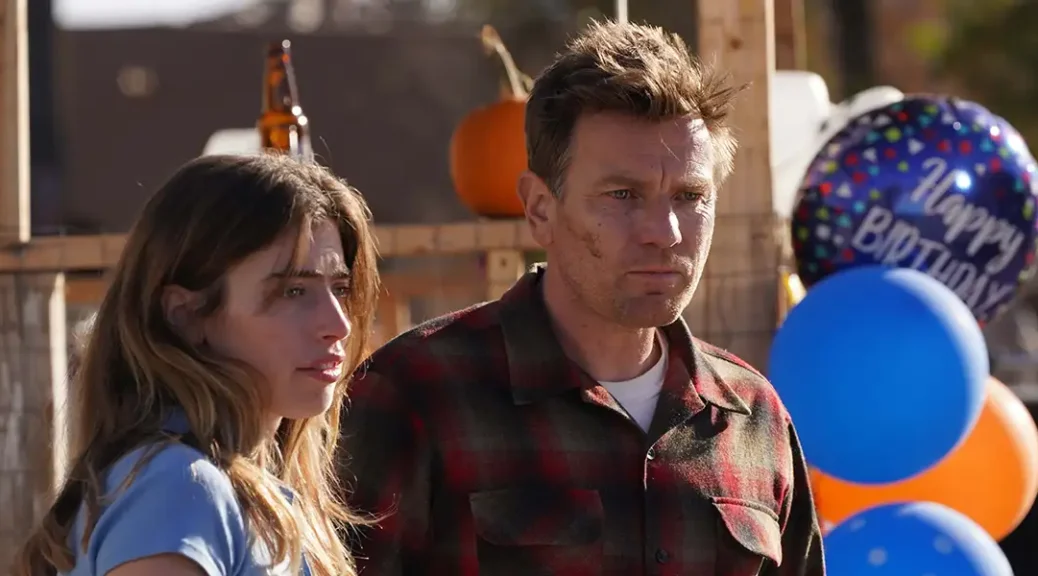
It’s generational trauma time as real-life father and daughter Ewan and Clara McGregor play estranged family embarking on a 14-hour road trip across the American Southwest.

She thinks she’s going on a vacation. He’s taking her to rehab in the aftermath of a first OD at 20. His support now is made possible by his own sobriety journey. It’s just too bad that his rehabilitation started after his daughter’s early childhood had ended. And his rock bottom involved abandoning the family.

Directed by Emma Westenberg (Stranger’s Arms), Bleeding Love is a spare, gritty film. Quite a bit of it consists of extreme close ups of the pair, bathed in golden desert light, awkwardly attempting to rebuild a connection.

This is interspersed with the tropes you’ve come to expect from road trip movies—a breakdown, a sing-along, moments of high drama broken with comedic relief—the best of the latter coming from a sex worker (Vera Bulder) who helps the duo navigate a medical crisis.

With flashbacks to the daughter’s childhood, recalling moments of joy and pain surrounding her dad’s wacky behavior, the film will definitely give watchers of a certain age flashbacks to the large-scale anti-narcotics PSA by Partnership for a Drug-Free America. Nope. Not the frying egg. The other one.  The one with the dad finding a box of drugs in his son’s bedroom and asking the poor kid how he even knows to use them.

You alright. I learned it from watching you!”

Bleeding Love can be a bit heavy-handed and ignores some of the realities of addiction (like the crushing hangovers) but it’s sweet and hopeful and grounded in the real-life struggles of the McGregors.

Brick by Brick

Monolith

by Brandon Thomas

Having already made a strong impression in last year’s Evil Dead Rise, Lily Sullivan delivers an even more impressive performance – and one where she’s the only actor on screen – in Monolith. Sullivan’s command of the screen for the entire 94 minute running time is a testament to her understanding of the material, and how that allows us, the audience, to recognize her character’s (known only as The Interviewer) complex motivations. 

Monolith begins with Sullivan’s former journalist holed up in her parents’ luxury vacation home. Nursing an enormously bruised ego after having been fired from her previous job for not fully vetting a source, the Interviewer is desperately hoping for that next big thing that will find her career redemption. The answer is an anonymous email that leads the Interviewer to a woman who once had in her possession a mysterious black brick. As the Interviewer digs deeper, she finds that multiple people in various parts of the world also have these bricks. The more the Interviewer reveals about the bricks and their owners, the more she also starts to succumb to a mysterious force. Is it the influence of the bricks or is the Interviewer’s own hubris and vanity causing her to spiral?

Director Matt Vesely and writer Lucy Campbell are able to wring so much tension out of a single location and a lot of phone interviews. As already noted, much of Monolith’s success rests in Sullivan’s hands. Her isolation as an actress informs the same isolation that the Interviewer is feeling. The audience begins to slowly match the Interviewer’s paranoia and discomfort with the bricks and the strange influence that they seem to have over people. Vesely’s command of tone and mood syncs up perfectly with Sullivan’s captivating performance.

Monolith is the kind of film that teases that it might show its cards but never actually does. For movies that are high on plot this might be a problem, but Monolith is character-centric through and through and the ambiguity only serves the Interviewer as she sinks further and further into obsession with the bricks. In fact, while the finale itself retains that overall ambiguity, it also reveals just how deeply personal the Interviewer’s journey ends up being. It’s a satisfying reveal that isn’t treated as some sort of Shyamalan “surprise,” but instead acts as the final piece to understanding Sullivan’s character and her true motivations. 

Monolith is the best kind of slow burn: one that trusts the audience to come along for a satisfying ride, but also delivers enough twists and unsettling scares that even the tiniest amount of boredom never sets in.

Rastaman, Live Up

Bob Marley: One Love

by Hope Madden

It’s kind of stunning that Bob Marley: One Love represents the first time someone’s told the star’s legendary tale onscreen. Yes, you can find concerts to watch (may we recommend 2020’s Marley?), as well as Kevin Macdonald’s outstanding 2012 documentary, Marley.

But this life seems custom designed for cinematic treatment.

Reinaldo Marcus Green (King Richard, Joe Bell–dude loves him a biopic) finally gives the Rastafarian some big screen drama with a fairly straightforward, greatest-hits look at what set Marley apart.

Kingsley Ben-Adir (Malxolm X in One Night in Miami) plays Marley. The 2012 doc provides a little clearer picture of Bob’s enigmatic, challenging character. Ben-Adir delivers a charming, eternally laid-back presence. Marley’s flawed, but just enough to make him human. Never enough to make him unlikeable.

As the film–written by Terence Winter, Frank E. Flowers, and Zach Baylin–begins, Jamaica is in the middle of a contentious election year that threatens to erupt in a civil war. Marley hopes an upcoming concert can bring the people together.

His wife Rita (Lashana Lynch, The Woman King) disagrees. She thinks it will bring danger to Bob and his family. Rita is right.

The balance of the film follows Marley’s story, sometimes flashing to dreamlike snatches from his childhood, or allowing glimpses of the teen years that brought Bob, Rita, and Rastafarianism together. The main throughline is the trouble caused by success outside of Jamaica.

Lynch flexes muscles we’ve not seen before, though the unapologetic ferocity that has marked her work up to now is as present as ever. Ben-Adir’s Marley is all tenderness, and the performances balance each other nicely.

The music is great, obviously, and a large ensemble (Nia Ashi, James Norton, Anthony Welsh, Quan-Dajai Henriques, Michael Gandolfini) delivers.

Marley’s widow, his oldest son Ziggy, and several of his other children produce. Possibly this explains One Love’s soft touch. And the result is a perfectly lovely tribute to a figure who is not known as well as he should be. But it also does not really let us get to know him, which is too bad.

Memory Lane

Lie With Me

By Rachel Willis

Past memories and present regrets mix in director Olivier Peyon’s film, Lie with Me.

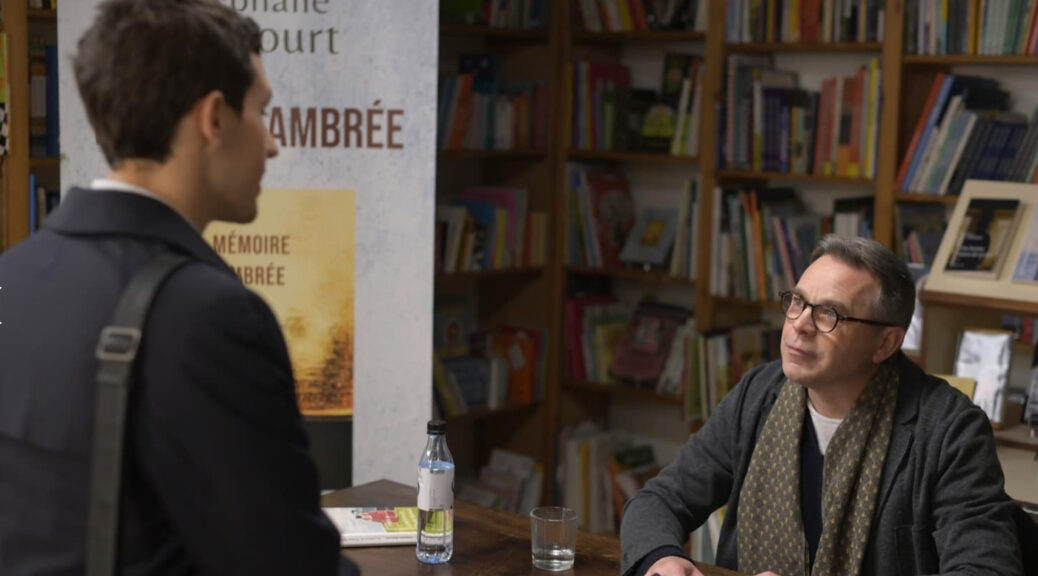
Returning to his hometown after decades away, celebrated author Stéphane Belcourt (Guillaume de Tonquédec) looks to dig up the ghosts of his past in hopes of inspiring something lost. Or in this case, one ghost. 

In 1984, a young Stéphane (Jérémy Gillet) begins a relationship with popular student, Thomas (Julien De Saint Jean). The only condition of their relationship is that no one can know. What starts as something tawdry deepens as the two boys spend more time together. Scenes from the past intermingle with scenes from the present, as memories of his first love overwhelm an older Stéphane.

It’s not clear if Stephane expects to encounter his past love when he returns, but he is floored when instead he meets Thomas’s son, Lucas (Victor Belmondo). 

There are two very touching relationships in the film as we watch the budding romance between Stéphane and Thomas unfold, along with Stéphane’s friendship with Lucas. The two actors portraying Stéphane are equally skilled at bringing the character to life in a seamless blend of one person at two different times in life. It’s as effectives as the contrasting natures of Thomas and his son, Lucas. Where Thomas is reserved, never revealing who he is, Lucas is at ease with himself.

The slow steps the film takes in trying to reveal Thomas are elusive; can we ever really know a person who doesn’t know himself? In hiding a part of himself from everyone but Stéphane, he essentially lives a stunted life.

There are some scenes that don’t always work. A few are too heavy-handed and sentimental in a film that works better when it embraces restraint. As the older Stéphane, de Tonquédec can convey a range of emotion with his expressions. When his controlled façade slips, we see sadness and radiance as he recalls moments of love and loss. 

The movie isn’t perfect, but it’s touching. There is a quiet sadness that haunts Stéphane as we follow him through his memories. While some scenes carrying a heavy weight, the film is not without hope. While it’s true there are some people we can never really know, often they leave hints, revealing as much of themselves as they can. It’s depressing, but it’s hopeful, too. 

Perhaps one day, the world will learn the accept others for who they are and there will no longer be a need to hide.

Oscar Nominated Shorts: Documentary

by George Wolf

When I was a kid watching the Oscars, I remember always being perplexed by short film categories. How do people manage to see these shorts?

Good news, kids, it’s gotten much easier. Not only to we now have ShortsTV, but in the last several years, all the nominated shorts have been packaged by category for theatrical showings. And in the cases where the combined run times don’t reach feature length, some bonus shorts are added to the programs.

In this year’s Documentary group, you’ll find informative shorts that inspire, surprise and delight.

Island In Between 20 Mins. Director: S. Leo Chiang Taiwan

Taiwanese-American filmmaker S. Leo Chiang calls this his ”op-doc,” as he reflects on a ”three way custody battle” that continues to define him.

The triangle of influence is made up of the U.S., China and the small island of Kinmen, where Chiang’s parents still live. Kinmen is a Taiwanese island only 10km from mainland China, a small piece of land sitting literally and figuratively between vastly different worlds.

It’s often wise to funnel complex ideas through smaller, more intimate perspectives, and Chaing does that effectively here. In documenting his own journey to self-identification, Island In Between becomes an enlightening window into a slice of world history that continues to breed tension.

No trailer available


Nai Nai & Wài Pó 17 mins. Director: Sean Wang United States

In a bad mood? Give this one 17 minutes and it will be gone like a fart in the wind.

Probably one of Wai Po’s farts.

Nai Nai & Wai Po are the paternal and maternal grandmothers of filmmaker Sean Wang. They live together in China, and are happy that their grandson is visiting to make them ”movie stars!”

Wang fills each frame with love and appreciation, allowing each woman to look back, to talk about how they see life and death, and to get gloriously silly.

It’s a wonderful love letter to family that will bring a warm smile to your heart, and make you want to call your Mom or Grandma.


The ABCs of Book Banning 27 Mins. Directors: Trish Adlesic, Nazenet Habtezghi, Sheila Nevins United States

The film quickly gets you up to date on some sobering facts: approximately 2,000 books have been removed from U.S. school districts after being restricted, challenged or banned.

Then, the directors let a group of 8, 9 and 10 year-olds sound ff on these decisions. These kids are smart and thirst for knowledge, and their wonderfully simplistic assessments expose the ridiculous objections to many of these books.

“You’re stealing knowledge.”

“I like to learn.”

“Something’s not clicking in your brain.”

And, after being told that a book having same sex parents is objectionable: ”Why? It’s not like they turned into a werewolf!”

The clear objective here to give voice to those who don’t often get to weigh in on an issue that directly concerns them. But to rest its case, the film spotlights a 100 year-old woman’s impassioned speech to a local school board debating banned books.

Neither age group has much use for BS. Well done.


The Barber of Little Rock 35 mins. Directors: John Hoffman Christine Turner United States

Get to know Arlo Washington.

A Little Rock barber and small business owner, Arlo’s commitment to confronting the racial wealth gap led to his forming the People’s Trust bank in 2008, a Community Development Financial Institution specially designed to combat the economic segregation of his community.

I.e. ”banking while Black.”

You feel inspired just spending time with Arlo, and smarter for the way he and the film break down the ways CDFI’s can make truly impactful differences in both lives and communities.

Arlo’s work provides freedom, which is precisely why a friend advises him to watch his back. The film lets you understand why the friend’s words are well taken, even as you’re hoping Arlo’s work is just getting started.


The Last Repair Shop 39 mins. Directors: Kris Bowers, Ben Proudfoot United States

The team behind the 2020 Oscar nominee A Concerto Is a Conversation returns to spotlight the people inside a musical instrument repair shop, and the students whose lives they are touching.

Since 1959, the L.A. school district has been providing free instrument repair for its music students. It is one of the last U.S. districts to still offer this service, and the film shows us the joy the practice can bring to the kids, while it profiles the unique circumstances that brought four expert craftspeople to the same repair shop.

It’s a captivating and warm approach to illustrating this one degree of separation between generations, and reminding us of the enrichment possible through music education.

Oscar Nominated Shorts: Live Action

by George Wolf

When I was a kid watching the Oscars, I remember always being perplexed by short film categories. How do people manage to see these shorts?

Good news, kids, it’s gotten much easier. Not only do we now have ShortsTV, but in the last several years, all the nominated shorts have been packaged by category for theatrical showings. And in the cases where the combined run times don’t reach feature length, some bonus shorts are added to the programs.

In this year’s Live Action group, we get four tear-jerkers, two big plot twists and one Wes Anderson cavalcade of whimsy. Enjoy.

Invincible 30 Mins. Writer/director: Vincent René-Lortie Canada

Based on the last 48 hours in the life of Marc-Antoine Bernier, a 14 year-old boy struggling with incarceration in a youth centre, Invincible finds humanity amid heartbreak.

Young Léokim Beaumier-Lépine gives a terrific performance as Marc, whose continued outbursts have put his weekend visits home at risk. Marc has shown himself to be both smart and talented, but has not responded well to his confinement. The situation is also beginning to take a toll on his younger sister, Justine (Élia St-Pierre).

René-Lortie brings an artful touch of grace to this tragic story, allowing a troubled spirit to soar toward freedom.

Knight of Fortune 25 mins. Writer/director: Lasse Lyskjær Noer Denmark

Karl (Leif Andrée) has come to the morgue for a last look at his beloved wife. He’s told to be prepared for the changes in her appearance, but he can’t quite bring himself to open the coffin and accept that she is gone.

In the restroom, Karl meets Torben (Jens Jørn Spottag), another grieving widower who would like Karl to accompany him to the room with his own late wife’s coffin, and help him say goodbye.

The men’s quick bond is bittersweet and warmly funny. And when Karl learns some surprising facts about Torben, the film becomes a wonderfully touching message about love, loss, and what it takes to keep moving forward.

No trailer available

Red, White and Blue 23 mins. Writer/director: Nazrin Choudhury United State

Brittany Show stars as Rachel, a struggling single parent in Arkansas who is suddenly faced with an unwanted pregnancy. She’s forced to cross state lines for the care she seeks, and Rachel’s choices seem fairly clear cut.

Until they’re not.

Choudhury, a veteran TV writer directing her first film, drops a major twist that changes everything we thought we knew about Rachel. Yes, what follows comes on pretty strong, but Choudbury isn’t interested in whispering, and there’s an urgency in Red, White and Blue that can’t be denied.

The After 19 mins. Writers: Misan Harriman and John Julius Schwabach Director: Misan Harriman United Kingdom

The first of two Netflix films in this group, The After finds Dayo (David Oyelowo in fine form as always) struggling to accept unspeakable tragedy.

Sleepwalking though what’s left of his life, Dayo takes a job as a ride share driver. The lack of personal interaction seems perfect for Dayo’s desire to withdraw, until a certain passenger forces him to confront the past.

The film is not subtle, but Oyelowo’s turn is deeply affecting, allowing The After to speak clearly through the tears.

The Wonderful Life of Henry Sugar 37mins. Writer/director: Wes Anderson. U.K./U.S.A.

One of three short films Wes Anderson produced for Netflix last year, Henry Sugar unfolds like a delightful pop-up book being presented to us by a breathlessly enthusiastic troupe.

Benedict Cumberbatch, Dev Patel, Ralph Fiennes and Sir Ben Kingsley lead a stellar ensemble that thrives inside Anderson’s trademark world of unmistakable color, framing and pace.

You could say the film is about a man who learns to see through objects with help from a stolen book, but that would be doing a disservice to the engaging ways the entire tale evolves. Wonderful indeed.