Tag Archives: movie reviews

ScarJo’s Haunting, Hypnotic Drive

Under the Skin

by Hope Madden

Jonathan Glazer is a filmmaker worth watching. While you’d hardly call him prolific – he’s directed just three films in his 14 year career – each effort is an enigmatic gem worthy of repeated viewings. His latest, Under the Skin, offers a challenging, low key SciFi adventure that keeps you guessing and demands your attention.

Scarlett Johansson turns in her third back to back stellar indie performance as the nameless lead, a mysterious beauty looking for unattached men in Scotland.

Light on dialogue and devoid of exposition, Under the Skin requires your patience and your attention, but what it delivers is a unique and mesmerizing journey, a science fiction film quite unlike anything else out there.

It’s excellent to see Johansson finding her stride again because she’s a versatile, talented performer. While her stunning looks make it almost impossible for her to sidestep all eye candy roles, her work in Her, Don Jon and this film let her flex some artistic muscle.

That musculature is important here, as the film relies almost solely on Johansson’s performance to get its points across. Her character is a unique vehicle, providing little of the traditional foundation normally available for building an emotional evolution. Johansson excels at articulating her character’s development with barely a word.

It’s an impressive feat, not only because of the tools she has to use to deliver the performance, but because she manages to keep the character in our sympathies regardless of her actions or of Glazer’s regular reminders of her guilt. To Johansson’s great credit, we’ve already forgiven her.

Besides a stellar lead, Glazer has one or two other tricks up his sleeve. The film is refreshingly light on FX, and when he does pull that out, the impact is phenomenal, a fitting turn for the atmospheric mystery he’s building.

Early elements call to mind Kubrick’s 2001, and once the film falls into its pace it conjures last year’s brilliant Upstream Color, but Glazer’s effort is certainly its own artistic achievement. Though an almost relentless series of similar incidents, somehow he punctuates this weird monotony with a fascinating balance of perplexity and humanity, and slowly, themes, character and plot emerge.

The effort may try some viewers’ patience, but for those with the attention span for it, Under the Skin pays a remarkable artistic reward.

Verdict-4-0-Stars

Less Smoke, More Mirror

Oculus

by Hope Madden

Back in 2011, writer/director Mike Flanagan unleashed the impressive nightmare Absentia, a film that cost him just $70,000 to make. Creepy, memorable and extremely well crafted given the budget, the film suggested an artist who deserved a chance with some real money.

Armed with the genre cred from that film, as well as the story from his well-received short, Flanagan embarked on his first wide-release horror film, Oculus.

His new effort follows a pair of siblings looking to prove that their childhood family horror was actually the fault of a cursed mirror.

Flanagan braids present day events and flashbacks effectively, not just to illustrate the ghastly deeds of the siblings’ youth, but to emphasize the growing madness of the brother and sister as they revisit the scene of the crime and set about proving their theory.

He has better luck with the performances of the youngsters in the cast than their present-day counterparts. Ten-year-old Kaylie Russell (played with convincing spunk by Annalise Basso) and her little brother Tim (Garrett Ryan) survived a family meltdown of Overlook Hotel proportions. While Tim’s spent his formative years institutionalized and learning to accept a more logical version of the events, Kaylie bounced around foster homes doing research and plotting to clear her family name, prove her version of the story, and break that damn mirror.

The pouty Karen Gillan (Dr.Who) offers more insincere bravado than spunk as the adult version of the determined sister, while Brenton Thwaites’s newly-released Tim has as much charisma as a tuna sandwich. For this reason, the flashback sequences hold more attention than the modern-day plans to undo the evil.

Plus, terrorized children are just more scary than whining adults.

Flanagan has some real skill weaving the rational world with one full of madness, and he knows when to rely on FX and when to be craftier with his scares. Unfortunately, his pacing is frustratingly slow, which makes his climax feel like a bit of a cheat. It’s hard not to compare his work with others of similar themes – The Shining, for example – and in that company, Oculus falls quite short.


Verdict-2-5-Stars


Countdown: Best No-Frills SciFi

Scarlett Johansson shoulders the heft of a new and impressive low key SciFi flick opening next weekend, Under the Skin. It got us to thinking about those understated genre gems that rethink science fiction cliches and wow us for it. You don’t need laser blasters, black holes or rankors to create a memorable fantasy film. Here  are a handful of our favorite low-intensity yet high-impact SciFi flicks.


6. Another Earth (2011)

The first of two Brit Marling films to get the nod, Another Earth spins a science-sketchy but emotionally brave tale of a young woman, a car accident, and a duplicate Earth. Go in expecting a deliberately paced, moving and clever character study and you won’t be disappointed by errors in scientific data concerning gravitational pulls. Co-writer/star Marling delivers with understated authority.

5. The Sound of My Voice (2011)

Co-writing, starring and impressing a second time in the same year, Marling became a kind of low key SciFi goddess in 2011. Or a prophet – at least for this eerie, daring film. Two fledgeling documentarians go under cover to secretly film a cult whose leader (Marling) claims to be from the future. Surprising, evocative and captivating without so much as one second’s FX, the film hits its marks and keeps you guessing.

4. Timecrimes (2007)

This one is nutty, and absolutely required viewing for anyone with an interest in space/time continuum conundrums. So much can go wrong when you travel just one hour back in time. An always clever experiment in science fiction and irony, Timecrimes is a spare, unique and wild ride.

3. Primer (2004)

Made for $7000, this film is, in itself, an act of science fiction. Writer/director Shane Carruth, taking his first of two spots on the countdown, drums up all new ways to consider the havoc a time machine could wreak. It would be the most streamlined, absorbing and ingenious film of its kind if there were other films of its kind.

2. Safety Not Guaranteed (2012)

An outstanding premise, generous performances, and a director who knows when to go in for the comedic kill and  when to lean on compassion add up to one of the most clever, most fun time-travel-and-slackers movies ever.

1. Upstream Color (2013)

He waited 9 years between films, but in 2013, writer/director Shane Carruth delivered an awe inspiring take on identity crisis. The film defies summarization and expectations, but its dreamlike tale of lovers rebuilding their shattered lives with more in common than they realize is a poignant, beautiful, lyrical wonder.

Because “Sex Addict” Loses a Little of the Magic

Nymphomaniac, Volume I

by Hope Madden

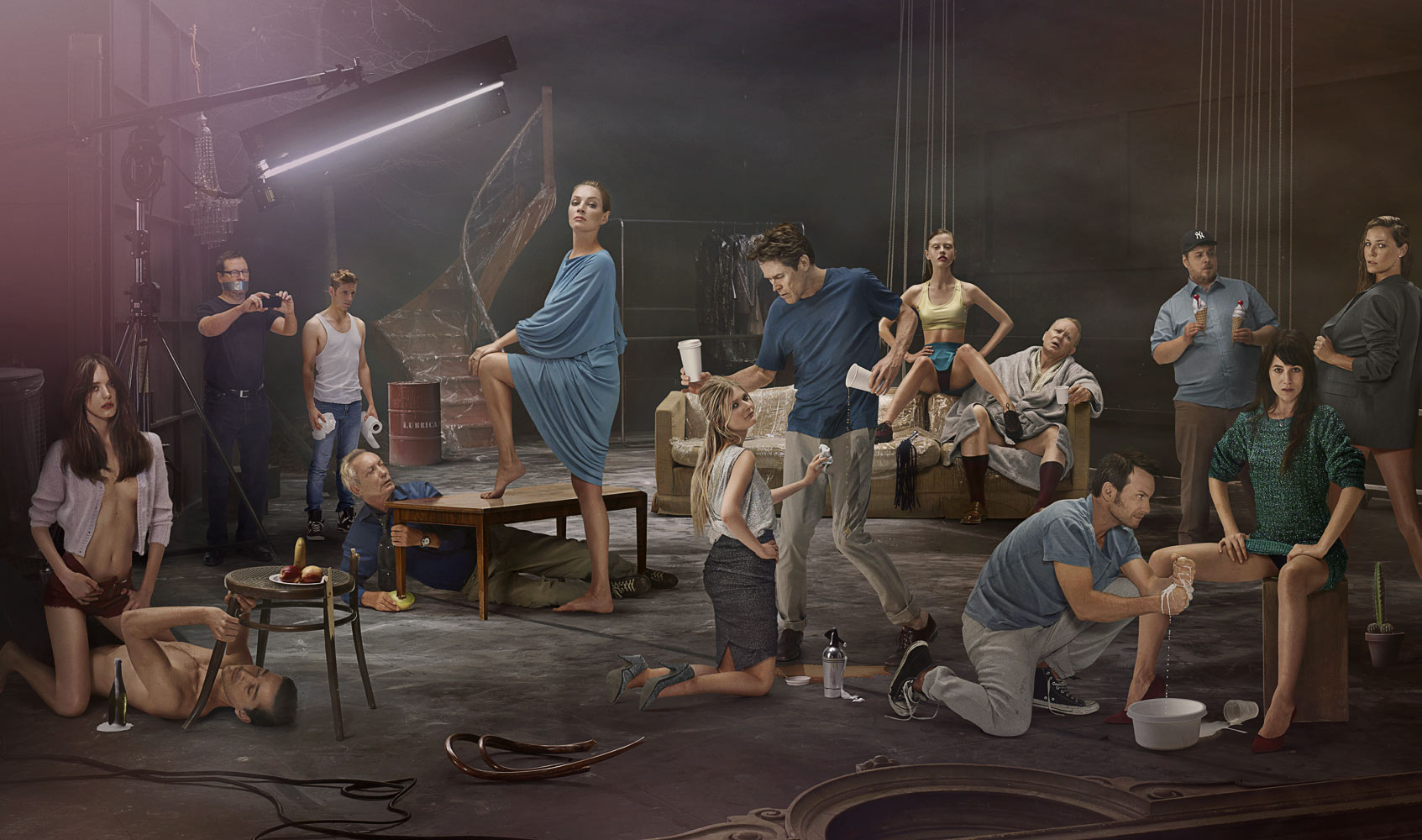
Nymphomaniac, Volume I, is a difficult film to review, and not, surprisingly enough, because of its subject matter. The fact is that filmmaker provocateur Lars von Trier’s latest affront is, indeed, an unfinished piece. As engaging as Volume I is, it is not a standalone film, and without knowing precisely where LvT is going, it’s hard to say how well he’s getting there.

What we have so far is a not-so-simple dialogue. Old bachelor Seligman (Stellan Skarsgard) finds a battered young woman (Charlotte Gainsbourg) in an alley. She won’t see a doctor, so he nurses her at his home and, in return, she tells him the story of her life.  Well, the first part, anyway.

For the next couple of hours, it’s as if LvT’s morose side (Gainsbourg, as Joe) argues with his impish side (Skarsgard), while Stacy Martin (playing the young Joe) has a lot of sex. The film is as much a story about storytelling as it is anything.

Joe sometimes rests in her confession to allow a little editorial from the helpful and artfully non-judgy Seligman. (Could he be named for the famed American psychologist Martin Seligman, founder of “positive psychology” and the theory of learned helplessness?) Seligman not only points out that she’s being too hard on herself, but offers different allegories from nature and science to enliven her narrative, sometimes even questioning the veracity of her tale based on contrivance and coincidence he’s finding.

Again, it’s as if LvT is arguing with himself over narrative devices and the strength of his own storytelling. It offers the film a playfulness rarely found in the Dane’s work, and the humor works wonders in keeping attention and distancing the film from a label of pornography.

Von Trier draws attention to the artifice he’s created. Even the title suggests a literary, romantic (as opposed to realistic) approach – in that the term used for the last several decades is sex addiction, which hardly conjures the same image.

His cast is game. A brief, supporting turn from Uma Thurman, in particular, is wickedly funny. But the star here is the filmmaker. Expect the von Trier trademarks: a visually magnificent display populated with shame, gender politics, sexuality, religion, all led by a wounded female who cannot fit in this world.

He’s exploring the same territory. Maybe he’s trying to distract us from that fact with all the sex? Or maybe he’s playing with us. While Volume II promises to be a more punishing effort, LvT’s first episode is surprisingly enjoyable.


Verdict-3-5-Stars


Waiting for a Sunny Day

Noah

by Hope Madden

The last time Darren Aronofsky and Ari Handel wrote a screenplay together, they came up with the filmmaker’s grandest, most epic misstep, The Fountain. Gorgeous and heady without enough beneath the surface to ground the visual display, it was a film about self-destruction, madness and commitment to the ideal of love.

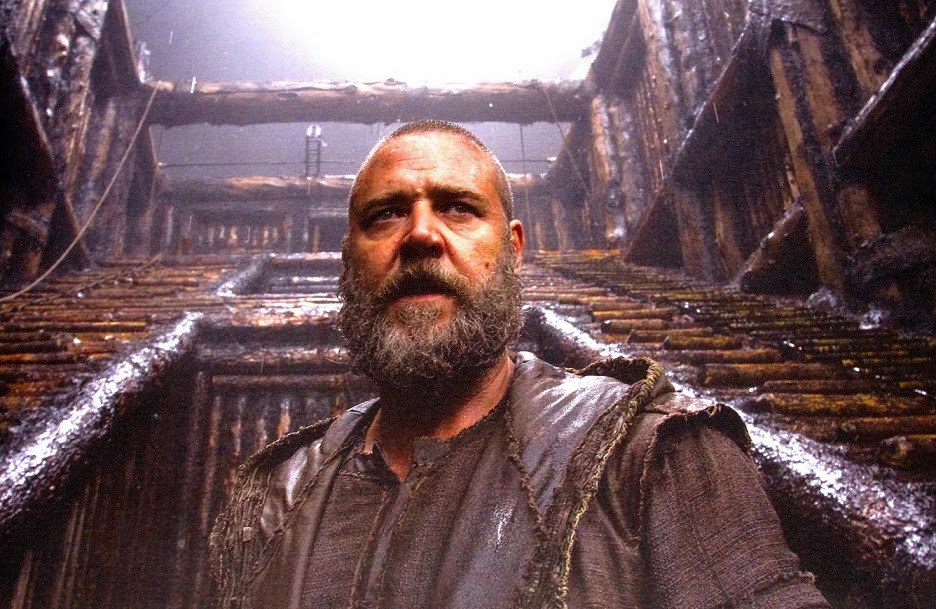
Well, after two gritty, intimate tales on those same themes (The Wrestler, Black Swan), Aronofsky goes grand again with the biggest tale of human self-destruction, madness, and commitment to an ideal he could find: Noah. Amid the recent flood of Christian themed films (Son of God, God is Not Dead, and the upcoming Heaven is Real), it’s tempting not to take Noah very seriously. Aronofsky is serious.

An IMAX spectacle worthy of its subject matter, the effort is epic in scale and sometimes dizzyingly powerful to look at. And though the approach is 100% earnest and absolutely respectful of the Old Testament tale being told, he’s not only emphasizing parallels between the damned of Noah’s time and our current culture, but slyly asking  whether saving humanity was really the best idea.

It’s an admirable attempt, and though he nearly lost me with the biblical rock monsters (I swear to God), on the whole, the storytelling is as almost strong as the imagery.

He’s not getting the kind of nuanced, career-high performances from this cast that he enjoyed in his previous two efforts, though. Perhaps the reason is that these characters are far more broadly drawn, but their one dimensionality doesn’t help the film generate a lively, resonant quality. It tends instead to feed the film’s feel of a bombastic take on a musty, old story.

Russell Crowe scowls and looks conflicted, as does Jennifer Connelly (veteran not only of Crowe’s onscreen relationships but of Aronofsky films).

Ray Winstone delivers (as always) in the role that animates man’s wickedness, and with him Aronofsky scores the most points in articulating modern society’s connection to the parable without offering a sermon.

It’s a tremendous, impressive feat of cinema, the kind of epic biblical tale not attempted since Charlton Heston had his own hair. Aronofsky has entrenched himself in Noah’s story, considered what it really meant to him as a human, and by extension, what it meant to humanity. He doesn’t entirely pull it off, but it’s a hell of an effort.


Verdict-3-0-Stars


http://www.youtube.com/watch?v=_OSaJE2rqxU

He’s Back. Again.

Sabotage

by Hope Madden

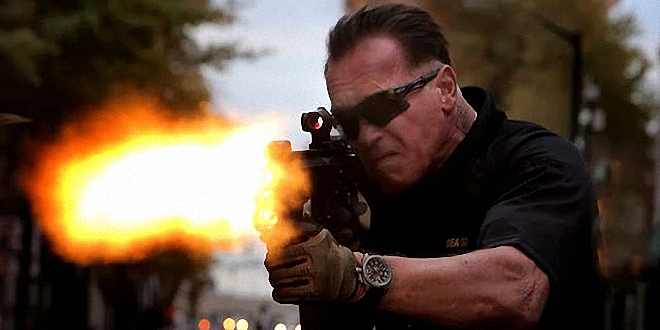
At 67-years-old, Arnold Schwarzenegger is having a career resurgence of sorts. Sabotage is his 3rd film to be released in the last 12 months, and he has 5 more in development, including sequels to Expendables, Conan and Terminator. That’s not to say he’s exactly found an audience for his return to the big screen, but he’s certainly trying.

Truth is, neither Escape Plan or The Last Stand – his last two efforts – made at the box office even half of what they cost to produce. You’ve got to hope that his sequels do a little better, or that he’s put away some cash for retirement from somewhere else, because Sabotage is not likely to please a wider audience than his last two flicks.

It’s a darker film that you might expect, with mercifully few jokes about Arnold’s age. As Breacher, a legendary DEA agent whose career has taken an ugly turn, the big Austrian leads a team of unhinged misfits whose last bust corrupted their trust in the team and in Breacher.

Sabotage was co-written and directed by David Ayer, whose resume is littered with ill-conceived, gritty cop dramas (and the first Fast and Furious flick – so thanks for that). It’s a winding tale of double crosses that betray the worst in everybody, but Ayer can’t find a clean path through the story and Arnold can’t begin to shoulder the emotional weight required of his should-be complex character.

Points for a couple of unusual casting decisions. Mireille Enos cuts a sketchy figure as the team’s sole female agent – a role that could easily have fallen to (and seems to have been written for) a shapely babe pretending to be a badass. Instead, Enos looks like someone who could be mistaken for a meth addict (a plus in the world of covert DEA ops). She chews scenery, but at least she’s memorable.

Likewise, Olivia Williams has talent, and her ease with the material allows some genuine chemistry and natural humor to invade an otherwise stiff, by-the-numbers action flick. What she can’t do is handle a southern accent. Ouch.

Some decent red herrings are thrown about as Williams’s good cop works with Breacher to figure out who is picking off his team one by one. This generates decent tension as the investigation leads us through otherwise obvious territory. It’s when Ayer tries to throw an actual curve ball that things get sloppy.

He’s not aided by his lead’s performance, though. The twisty, secret-riddled script required a performance with a modicum of range. And yet, Ayers cast Arnold Schwarzenegger. Curious.


Verdict-2-0-Stars


http://www.youtube.com/watch?v=sVOCbK3s8Yo

One Good Documentary, No Bullshit

Elaine Stritch: Shoot Me

by Hope Madden

Having stolen scenes on stage and screen (large and small) for 60+ years, it’s only appropriate that Elaine Stritch would get the chance to hold your attention all on her own in the new documentary Elaine Stritch: Shoot Me. And for 80 brief minutes, she commands attention and more in a film that attempts to match the old school, ballsy dame’s single most compelling quality: unflinching honesty.

For the uninitiated, Stritch may be best remembered as Jack Donaghy’s irascible mother on 30 Rock – a performance that won Stritch her third Emmy. (She was nominated 5 times for that role alone.) But Stritch is a legend of the stage, and a personality that’s too big to hold in any medium.

Lensed by first time director (longtime producer) Chieme Karasawa, Shoot Me serves the formidable octogenarian well by simply presenting her as she is: brassy, vulnerable and pantsless.

We spend some time with the headstrong entertainer leading up to her 87th birthday and her newest project, the cabaret act Singin’ Sondheim…One Song at a Time. It’s an opportunity to glimpse her whirlwind past as well as her struggles with alcohol and diabetes, not that she’d accept your pity.

As the seasoned pro says, “Everybody’s got a sack of rocks.”

It’s Stritch’s paradoxical qualities that make her so engaging. She’s a prima donna without an ounce of pretense. She’s humble and candid and absolutely addicted to attention. Says her longtime friend Julie Keyes, “She is a molotov cocktail of madness, sanity and genius.”

Karasawa and her film are appropriately in awe of this truly remarkable talent, but she’s also wisely clear-eyed in her efforts. The film lacks any hint of nostalgia or romanticism – the kind of gimmicks you might find in other biographical docs. It’s a bit more like the 2010 film Joan Rivers: A Piece of Work in that it marvels at the star’s seemingly boundless energy and phenomenal work ethic without clouding the image of a flawed but fascinating cultural icon.

One element that sets Stritch apart from other performers of her generation or any other is her immediate and amazing connection to the audience. Perhaps that’s why her story and personality prove such compelling fodder for a documentary.


Verdict-4-0-Stars

Two New Foreign Gems For Your Queue

We normally like to use For Your Queue to champion an underseen new release and pair that with an older film you may have missed. This week, however, there are two wonderful films coming out on DVD that you should check out. Both are foreign language titles – one that went sorely underseen, while the other won the Oscar.

The Past is the newest film from Asghar Farhadi, whose magnificent A Separation took home the Oscar for best foreign language film in 2012. Another intimate examination of rocky family bonds, The Past winds through one man’s journey into his estranged family’s crisis. Centered on a volatile and brilliant performance from Berenice Bejo, the film is another exceptional family drama from one of modern cinema’s most promising filmmakers.

http://www.youtube.com/watch?v=IVPUkGQAVwo


Paolo Sorrentino’s Oscar winner The Great Beauty also drops today. A visual wonder, combining satire, silliness and social commentary with a loose narrative and the brilliant performance of veteran Italian actor Toni Servillo, the film lives up to not only its Oscar, but perhaps more impressively, to its “Fellini-esque” label.

http://www.youtube.com/watch?v=KAmHqTe8OqY

Countdown: 2013’s Bounty of Foreign Films

The Academy did a nice job this year in honoring foreign language films. Each candidate was wonderful, and we were especially pleased to see The Hunt and The Broken Circle Breakdown get attention. But the fact is, there were so many exceptional foreign language titles released this year, a lot of really wonderful movies didn’t get the nod. And that’s too bad, because without the Academy stamp, they went largely unnoticed in theaters. So, we decided to honor them ourselves. Please enjoy our list of the best foreign language films that did not get an Oscar nomination this year.

1. Gloria

If there’s one thing the films on our list have in common, it’s the strength of their female leads. Nowhere is this more the case than with the Chilean import Gloria. Paulina Garcia owns the title role with a performance that is raw emotion in action. With nary a false note, Garcia takes us on whirlwind coming-of-middle-age tale that never ceases to surprise.

2. Blue is the Warmest Color

Moving at its own pace, the French film packs an emotional wallop as it follows young Adele (Adele Exarchopoulos) through her first affair of the heart. Anchored by Exarchopoulos’s powerhouse performance, and her touching chemistry with co-star Lea Seydoux, Blue is a beautifully human, wildly compelling love story.

3. The Past

Available today on DVD is a poignantly complicated, beautifully told tale of family dysfunction and the constant presence of our past. Blessed with unflinching performances – particularly from a magnificent Berenice Bejo – the wonderfully textured The Past keeps your attention as its mystery slowly unravels before your eyes.

4. Beyond the Hills

A Romanian story of forbidden love, progress and superstition, Beyond the Hills offers an understated and unhurried picture that leaves you shaken. A tale of survival and a displaced generation’s quest for security, the film makes for a beautiful examination of the weird, counter-productive, even dangerous relationship between primitive and modern Romania.

5. A Touch of Sin

That same tug of progress against a backdrop of old world creates the dehumanizing and corrupt environment for Zhangke Jia’s A Touch of Sin. The film dips a toe in four interweaving stories of individuals torn by the too-rapid cultural shift in China. Amid bullet and arterial spray, four beautifully developed characters struggle against their own bleak futures.


Who Wants a Cocktail?

The Face of Love

by Hope Madden

We owe a lot to alcohol. Just one example of the gifts booze gives graces our multiplexes and independent cinemas weekly, because nearly every movie theater now contains a bar. This means that audiences who would not spend money on traditional concessions – that is, an older crowd – are more apt to spend their leisure time at the movies. This, in turn, creates more demand for grown up fare onscreen. Not just more character driven or dramatic storytelling, either. Older crowds want to see stories that relate to them, performed by grown-ups, and the financial success of films like The Best Exotic Marigold Hotel only guarantees the trend will continue.

This isn’t always a good thing. For every Amour there’s a Grudge Match, but at least we get to see an extension on the careers of really talented actors, like Annette Bening and Ed Harris, portraying star-crossed lovers in The Face of Love.

Bening plays Nikki, five years widowed from her beloved husband Garrett (Harris). Her needy, also-widowed neighbor Roger (Robin Williams) hopes to woo her, but she only has eyes for Garrett. Luckily enough, she runs into his doppelganger at an art gallery.

Yes, Garrett’s exact duplicate also lives in LA, visits the same museum, is single and lonely, and falls for Nikki.

The love of your life dies and you meet an exact replica. What do you do?

Is it a universal question or a ridiculous contrivance?

The latter, it turns out, but thanks to the sheer force of talent both Harris and Bening bring to the project, it is hard to turn away.

Harris breaks your heart as the good guy who falls for this mysterious new lady in his life. He’s lucky, though, because his character – a nice guy in for a heartache – is a little easier to play.

Bening’s drawn the shorter straw, but she handles the entire task quite well regardless of the lacking character development on the page. Her uneasy joy, repressed emotion, and fragile calm all help to make the character and her actions feel almost real.

What’s utterly and irredeemably unreal is the plot, co-written by director Arie Posin, along with Matthew McDuffie. But if you drink enough while you’re at the theater, you’ll hardly notice.


Verdict-2-5-Stars