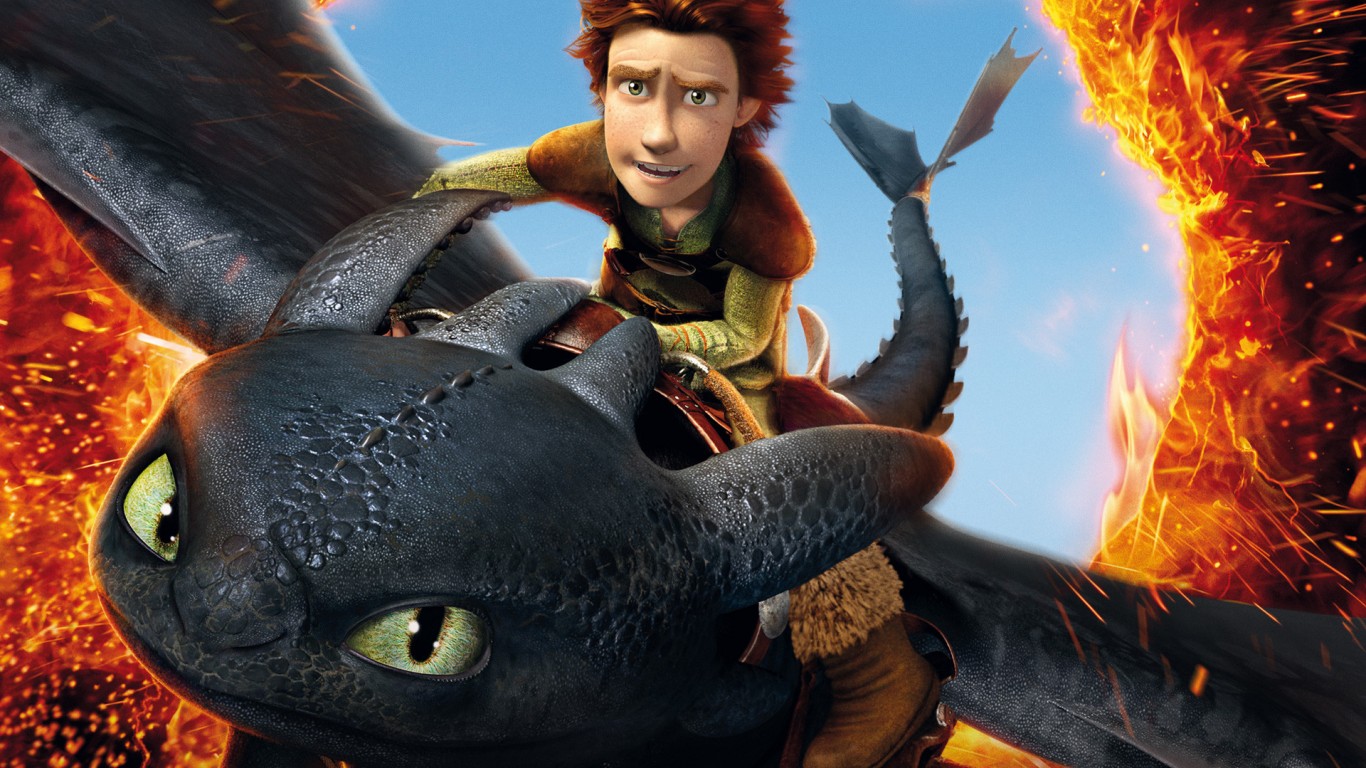
You can put that obscenely expensive, insanely large HD TV to good use this week, as How to Train Your Dragon 2 releases for home entertainment. As visually arresting as its predecessor, Dragon reunites viewers with Hiccup and his beloved flying dragon Toothless as they take on dragon-napping pirates led by Drago Bloodfish. That is how you name a villain! Breathtaking visuals and a story rooted in family and frienship make this sequel well worth looking into.
An obvious double bill is the gorgeous, moving and thorougly entertaining original How to Train Your Dragon, but we hate to be so obvious. Instead we’re recommending another film about a boy, his unusual best friend and their adventures: The Iron Giant (1999). Director Brad Bird’s first feature roots itself in 1950s Cold War hysteria but tells a story brimming with immediacy. It’s also one of the more deeply touching animated adventures you will ever find.
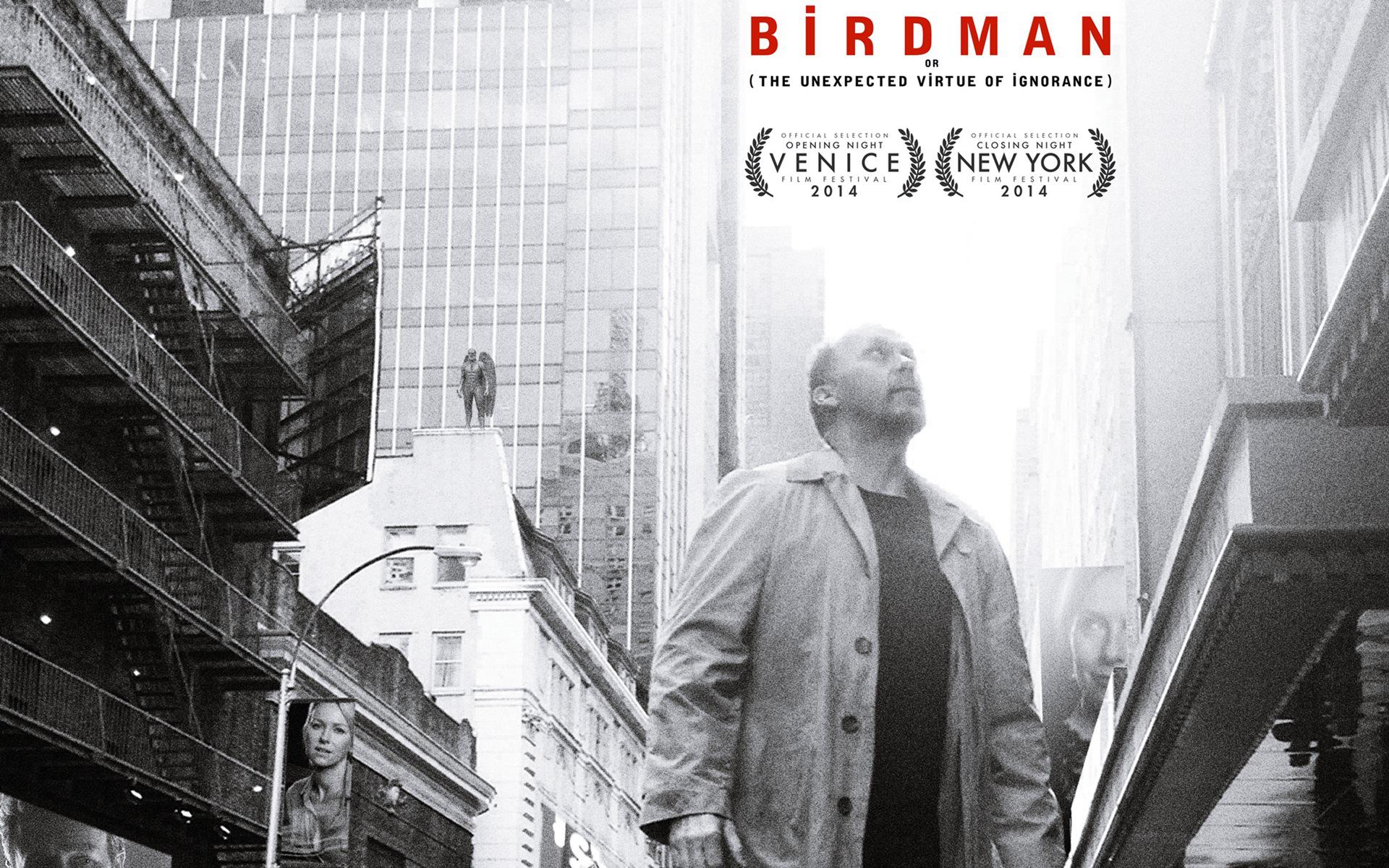
You’ve heard the buzz. It’s loud and merited. The sharp and beguiling Birdman or (The Unexpected Virtue of Ignorance) sees a brilliant director and a magnificent cast at the height of their creative powers.
Playful and dark, the film follows a washed up Hollywood actor best known for a superhero franchise (an Oscar bound Michael Keaton, who certainly resembles that description). Struggling to regain relevance, he writes, directs and stars in a Broadway play. Meta from the word go, Birdman’s incisive exploration of the entertainment industry and the compulsion to perform couldn’t be more spot-on or more imaginative.
Director/co-writer Alejandro González Inárritu and his fluid, stalking camera ask a great deal from this ensemble as together they dissect fame – its proof and its power – in the digital age. From first to last, they are up to the task and then some.
They clearly relish a script that has such an insider’s perspective, skewering the self-absorption, insecurity and need for attention that fill the business. The performers embody these weaknesses and still create a tenderness for their characters. The comedy isn’t mean, though it is dark and edgy.
Edward Norton is hilarious in a bit of a self-parody as the true talent who pushes boundaries and strives for honesty – on the stage, anyway. He’s hardly alone. The entire ensemble – Emma Stone, Naomi Watts, Zach Galifianakis, Andrea Riseborough, Lindsay Duncan and Amy Ryan – impresses.
Each has his or her own story, conflict, world, and Inárritu allows that to enrich the world he creates, but it’s all in support of Keaton in the finest turn of his often underappreciated catalog of performances.
He never falls back on the ticks and gimmicks that mark most of his comedic turns – quirks that made efforts like Beetlejuice so enjoyable. This performance is volcanic and restrained, pitiful and triumphant. His desperation is palpable and his madness is glorious. That Keaton can hit these disparate levels sometimes simultaneously inspires awe. Keaton has long been a unique talent, and while this role seems almost awkwardly custom made for the former Batman, the performance still could not have been less expected.
Inárritu, master of beautiful tragedy (Amores Perros, 21 Grams, Babel, Biutiful), may be in impish humor with this effort, but Birdman is as dark and poetic as anything he’s created. Impeccably written, hauntingly filmed and superbly performed, Birdman is the first real contender Boyhood has faced for the best film of 2014.
Prior to 28 Days Later, the zombie genre seemed finally dead and gone. But director Danny Boyle single-handedly resurrected the genre with two new(ish) ideas: 1) they weren’t dead, 2) therefore, they could move really quickly.
You know you’re in trouble from the genius opening sequence: vulnerability, tension, bewilderment, rage and blood – it marks a frantic and terrifying not-zombie film.
Like zombie god George Romero, though, Boyle’s real worry is not the infected, it’s the living.
Activists break into a research lab and free the wrong fucking monkeys.
28 days later, bike messenger Jim wakes up naked on an operating table.
What follows is the eerie image of an abandoned, desolate London as Jim wanders hither and yon hollering for anybody. In the church, we get our first glimpse of what Jim is now up against, and dude, run!
Danny Boyle is one of cinema’s visionary directors, and he’s made visceral, fascinating, sometimes terrifying films his entire career – Shallow Grave, Trainspotting, Millions, 127 Hours – but 28 Days Later is his one true horror film. And it is inspired.
He uses a lot of ideas Romero introduced, pulling loads of images from The Crazies and Day of the Dead, in particular (as well as Adrian Lyne’s Jacob’s Ladder). But he revolutionized the genre – sparking the rebirth of zombie movies – with just a handful of terrifying tweaks.
The vision, the writing, and the performances all help him transcend genre trappings without abandoning the genre. Both Brendan Gleeson and Cillian Murphy are impeccable actors, and Naomie Harris is a truly convincing badass. Their performances, and the cinematic moments of real joy, make their ordeal that much more powerful.
Sure, it’s tough to believe that among the ten or so people still alive in England, two are as stunningly attractive as Murphy and Harris. You know what, though? Boyle otherwise paints a terrifyingly realistic vision of an apocalypse we could really bring on ourselves.
My theory is this: first time feature filmmaker Theodore Melfi is a wizard. It seems improbable, sure, but I can think of no other explanation for St. Vincent.
A newly single mom hires her curmudgeonly neighbor to babysit for her precocious son. As obvious as it sounds – and is – somehow Melfi creates surprises in the territory he treads and the performances he draws. Had Charles Bukowski starred in About a Boy, this is the film it would have become.
Melfi’s genius with dialog and his light touch when directing together create an atmosphere that allows actors to breathe. Even the cast members with the least screen time – Terrence Howard and Chris O’Dowd, in particular – have the opportunity to fill out their characters, and they do.
Imagine what Bill Murray can do with this kind of creative atmosphere. Murray reveals layer after believable layer in his performance as Vincent. There’s not a moment of schmaltz in this performance, and there are moments of real genius.
And what about young Jaeden Lieberher as Vincent’s charge Oliver? Melfi obviously created him from some sort of spell. There really is no other explanation. This kid is great – deadpan when he needs to be, and otherwise the natural mixture of wisdom and naiveté that suits Oliver’s peculiar circumstances. The performance is dead on perfect.
Melissa McCarthy gets a couple of good lines in, but her performance is more restrained and internal than what we’re used to from her. It’s a nice change of pace.
Naomi Watts struggles more with the almost cartoonish character she lands, and not all the youngest actors are very strong, but acting is rarely St. Vincent’s weak point. The plotting, on the other hand, needs some work.
Scene after scene is utterly contrived. Many plot points are conveniently forgotten, the climax is obvious and the happy family ending is simplistic given the circumstances of the film on the whole. And yet, somehow the whole is thoroughly enjoyable.
It has to be the fullness of the characters, and the interaction between talented performers. That or the moments of genuine surprise peppered throughout a well worn storyline. Or maybe it’s some kind of sorcery.
What else could explain how well this film works? Because it has no business working at all, yet somehow it’s one of the more memorable and moving dramedies you’ll see this year.
Co-writer/director Alejandro Amenabar casts a spell that recalls The Innocents in his 2001 ghost story The Others. It’s 1945 on a small isle off Britain, and the brittle mistress of the house (Nicole Kidman) wakes screaming. She has reason to be weary. Her husband has still not returned from the war, her servants have up and vanished, and her two children, Anna and Nicholas, have a deathly photosensitivity: sunlight or bright light could kill them.
What unspools is a beautifully constructed film using slow reveal techniques to upend traditional ghost story tropes, unveiling the mystery in a unique and moving way.
Kidman’s performance is spot-on, and she’s aided by both the youngsters (Alakina Mann and James Bentley). Bentley’s tenderness and Mann’s willfulness, combined with their pasty luster (no sun, you know) heightens the creepiness.
The house is as much a character in this film as anyone in the credits. Enormous and yet claustrophobic, filmed to tweak tensions with the sense that something lies just out of frame, gorgeously lit to ghostly effect, it’s a roomy old mansion that begs you to hear echoes of the past.
With the help of cinematographer Javier Aguirresarobe and supporting actress Fionnula Flanagan, Amenabar introduces seemingly sinister elements bit by bit. It all amounts to a satisfying twist on the old ghost story tale that leaves you feeling as much a cowdy custard as little Nicholas.
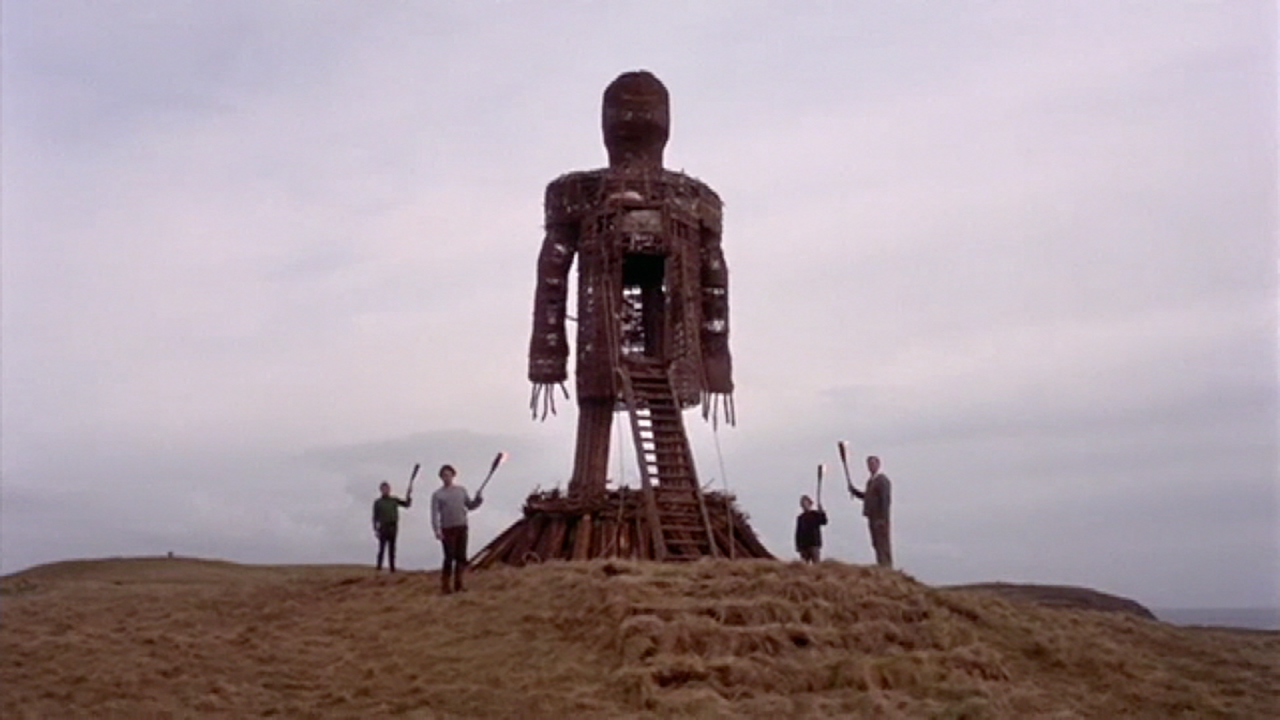
In the early Seventies, Robin Hardy created a film that fed on the period’s hippie- versus-straight hysteria. An uptight Brit constable Sgt. Howie (Edward Woodward) flies to the private island Summerisle, investigating charges of a missing child. His sleuthing leads him into a pagan world incompatible with his sternly Christian point of view.
The deftly crafted moral ambiguity of the picture keeps the audience off kilter. Surely we aren’t to root for these heathens, with their nudey business right out in the open? But how can we side with the self-righteous prig Howie?
Hardy and his cast have wicked fun with Anthony Shaffer’s sly screenplay, no one more so than the ever-glorious Christopher Lee. Oh, that saucy baritone! We love him in the role of Lord Summerisle, though it helps that he gets all the great lines. For instance, “Shocks are so much better absorbed with the knees bent,” he deadpans.
When Howie asks, “And what of the one true God?”
Summerisle responds, “Well, he’s dead. He had his chance and, in modern parlance, blew it.”
Blasphemy indeed! No wonder Howie’s so up in arms. Plus there’s that naked barmaid and her sexy come-hither dance.
Truth be told, Brit Eckland’s seductive dancing looks more like a temper tantrum mixed with a seizure, but on Summerisle you can let your freak flag fly.
Howie won’t be tempted by the barmaid, though. And as the tale meanders unpredictably forward, he might have wanted to rethink that.
The film is hardly a horror movie at all –more of a subversive comedy of sorts – until the final reel or so. Starting with the creepy animal masks (that would become pretty popular in the genre a few decades later), then the parade and the finale, things take quite a creepy turn.
It’s a different type of horror film, one with a cheery disposition and sense of wicked fun that puts you in an uncomfortable position. Brilliantly told, impeccably filmed and hard to forget, it’s worth digging up this season.
Jaws wasn’t cinema’s only powerful shark horror. In 2003, young filmmaker Chris Kentis’s first foray into terror is unerringly realistic and, therefore, deeply disturbing. From the true events that inspired it to one unreasonably recognizable married couple, from superbly accurate dialog to actual sharks, Open Water’s greatest strength is its unsettling authenticity. Every element benefits from Chris Kentis’s control of the project. Writer, director, cinematographer, and editor, Kentis clarifies his conception for this relentless film, and it is devastating.
A couple on vacation (Blanchard Ryan and Daniel Travis) books a trip on a crowded, touristy scuba boat. Once in the water, they swim off on their own – they’re really a little too accomplished to hang with the tourists. And then, when they emerge from the depths, they realize the boat is gone. It’s just empty water in every direction.
Now, sharks aren’t an immediate threat, right? I mean, tourist scuba boats don’t just drop you off in shark infested waters. But the longer you drift, the later it gets, who knows what will happen?
Kentis boasts not just an ear for realistic dialogue and an ability to draw authentic performances. He’s even better at framing shots.
Susan and Daniel have been adrift for hours, and they’ve dozed off. Susan wakens suddenly. Something has bumped her from below. It’s unclear whether she realizes what woke her, just that she’s awake now and her husband is not nearby. She panics, begins calling him. Her terror, heartache, panic are very real and moving. But we know more than she does. Because, while she calls out, Kentis’s camera pans to an aerial image showing clearly what woke Susan, and the whole population of predator in the world immediately below Susan and her husband. Very quietly, it’s among the scariest scenes in horror cinema.
If there’s a sure fire hit for your Halloween viewing pleasure, it’s the scariest movie of 2013:The Conjuring.
Welcome to 1971, the year the Perron family took one step inside their new home and screamed with horror, “My God, this wallpaper is hideous!”
Seriously, it often surprises me that civilization made it through the Seventies. Must every surface and ream of fabric be patterned? Still, the Perrons found survival tougher than most.
The farmhouse’s previous residents may be dead, but they haven’t left, and they are testy! So the Perrons have no choice but to look up paranormal investigators Lorraine and Ed Warren – the real life couple linked to many famous American hauntings, including one in Amityville, NY. The Conjuring is allegedly based on one of the couple’s cases.
Yes, this is an old fashioned ghost story, built from the ground up to push buttons of childhood terror. But don’t expect a long, slow burn. Director James Wan expertly balances suspense with quick, satisfying bursts of visual terror.
Wan cut his teeth – and Cary Elwes’s bones – with 2004’s corporeal horror Saw. He’s since turned his attention to something more spectral, and his skill with supernatural cinema only strengthens with each film.
Ghost stories are hard to pull off, though, especially in the age of instant gratification. Few modern moviegoers have the patience for atmospheric dread, so filmmakers now turn to CGI to ramp up thrills. The results range from the visceral fun of The Woman in Black to the needless disappointment of Mama.
But Wan understands the power of a flesh and blood villain in a way that other directors don’t seem to. He proved this with the creepy fun of Insidious, and surpasses those scares with his newest effort.
A game cast helps. Joining five believably terrified girls in solid performances are Vera Farmiga, Patrick Wilson, and the surprisingly well-suited Ron Livingston as the helpless patriarch. The usually sublime Lili Taylor is uncharacteristically flat as the clan’s loving mother, unfortunately, but there’s more than enough to distract you from that.
Wan’s expert timing and clear joy when wielding spectral menace help him and his impressive cast overcome the handful of weaknesses in the script by brothers Chad and Carey Hayes. Claustrophobic when it needs to be and full of fun house moments, The Conjuring will scare you while you’re watching and stick with you after. At the very least, you’ll keep your feet tucked safely under the covers.
Don’t be off put by the hashtag in #Stuck. Writer/director Stuart Acher’s film is less a glib comment on social media alienation and more a savvy reimagining of the romantic comedy.
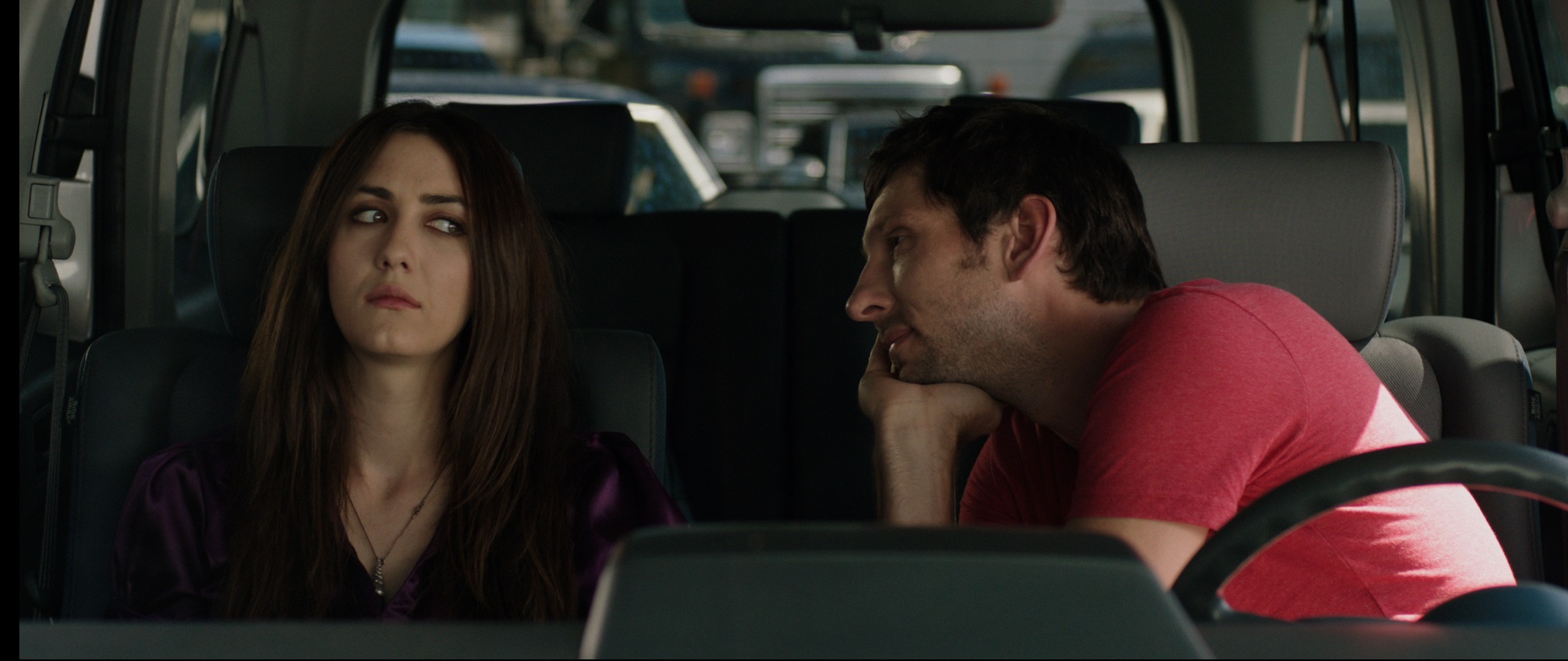
Holly (Madeline Zima) and Guy (Joel David Moore) are stuck in an epic traffic jam. To make matters worse, this is simply the “morning after” ride back to Holly’s car, which is still at the bar where the two hooked up the night before.
“It’s easier to have sex with a stranger than make conversation with one,” notes Holly early in their uncomfortable alone time.
On its surface, the script feels almost like a writing workshop challenge, but Archer’s assured direction and game performances from the two leads make it work. Acher’s story weaves from the shame and claustrophobia of the morning after to the drunken debauchery of the night before.
The flashback is told in reverse order, allowing us to learn more about the two based on what they’ve forgotten, just as they learn about each other based on the time each must now spend in the other’s company.
It’s hard to sustain interest with little more than in-car acting – unless you have Tom Hardy behind the wheel – and there are certainly times when #Stuck strains to keep your attention. But on the whole, the slow revelation of character feels natural and the performances are sympathetic enough to keep you invested.
Zima has a real Meg Ryan quality about her, which may make the film feel more like an outright romantic comedy than it would otherwise. She and Moore have an uneasy chemistry that suits the begrudgingly burgeoning relationship, and while their banter is never a laugh riot, more often than not it’s bright and enjoyable.
To alleviate the tension for the audience, anyway, Acher’s camera periodically swings out of Guy’s car and takes a peek at the goings on in the other cars sitting motionless on the LA freeway. It’s a fun distraction and a light handed way of underscoring the overall theme of the film: that often, time wasted is more valuable than time spent on task.
Alexander and the Terrible, Horrible, No Good, Very Bad Day
by Hope Madden
I recently attended the advance screening of Alexander and the Terrible, Horrible, No Good, Very Bad Day, and I have to admit, my own day had been pretty craptastic. What I really wanted to do was drink to excess. But instead, I sat in the dark and watched as Steve Carell and Jennifer Garner parented four children through a crisis-riddled day.
Taken from Judith Viorst’s much beloved children’s book of the same name, the film follows Alexander on the day before and the day of his 12th birthday. At birthday-eve dinner, as Alexander recounts the woes of his miserable life – including accidentally setting his science class on fire while horrifying the girl of his dreams – each of his siblings and parents announces a wonderful life event that happened to coincide with Alexander’s misery.
So, at midnight, he makes himself a birthday Sunday and wishes his too-perfect family would have a bad day.
Well, he realizes the next day that he’s cursed each and every one of them.
And as obvious as the story is, it’s handled here with restraint and dignity.
Director Miguel Arteta – who directed one of my favorite little indies, Chuck and Buck – never panders or condescends. He has respect for his characters, his story, and his audience. It is amazing what a difference that makes in a family film.
Each character is drawn with some depth. Few actors are asked to mug for the camera. Each crisis is, of course, wildly implausible, but somehow this film and this cast pulls it off.
The cast itself helps. Carell and Garner never stoop. They are invested in these characters, and though both parents are too good to be true, they also both have dimension and faults.
As the titular Alexander, young, lisping Ed Oxenbould (Wow! That’s quite a moniker!) turns in an enjoyable performance as layered as the film could allow. He easily anchors the movie.
Plus, one outstanding cameo from the always brilliant Jennifer Coolidge.
Yes, things turn out OK. Great, in fact, and if you have a family that loves you, everything will be all right for you, too.
Beer is great, too, though. I’m not going to lie to you.