There is a pleasantly madcap quality to the environments filmmaker Luc Besson creates. His best work combines that untamed world – whether earthbound and criminal or colorfully intergalactic – with unusual characters performing slickly choreographed action.
His lesser efforts don’t. On that note, meet Valerian and the City of a Thousand Planets.
Based on France’s beloved comic series about a pair of time and space-hopping agents, Besson’s film looks pretty cool.
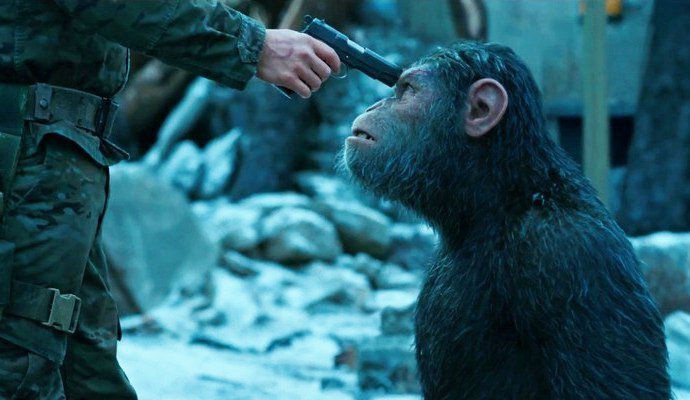
Not as good as Christopher Nolan’s Dunkirk, or Matt Reeves’s War for the Planet of the Apes, or Spider-Man: Homecoming or Baby Driver or about one out of every three movies released so far this summer.
At this point in cinematic history, you have to bring more to the screen than visual flair.
What else you got, Luc?
Because it’s not acting.
Dane DeHaan plays Valerian. Poorly. Wildly miscast as the scoundrel flyboy who might find love with his partner, the often reliable actor cannot make his way through Besson’s stilted, lifeless banter.
DeHaan has a better time of it than Cara Delevingne as Valerian’s strong-willed partner Laureline – perhaps because Delevingne has no discernible talent.
Still, the writing is awful and she’d be in a tough spot even if she did have talent. Just ask Clive Owen. He has talent galore and even he embarrasses himself with this garbage.
To be fair, Valerian is basically a kids’ movie. Except for that extended and utterly needless stripper sequence showcasing Rihanna. But if you cut that out (if only we could – along with at least another 15 minutes, because damn this movie is long!), then you basically have a kids’ movie.
Not a good one. So just don’t set your standards too high. Go in looking for an overly long, addle-brained extra-terrestrial romp that looks great and you’ll be fine.
Unless you really want quality acting. Valerian an’t help you there.
Christopher Nolan, one of the biggest imaginations in film, takes on a WWII epic – the truly amazing evacuation of 400,000 British troops from certain death on the beaches of Dunkirk, France.
Nolan = epic, yes. His career is marked by complicated ideas, phenomenal visual style and inventiveness, ever-increasing running times and head-trippery. So, if you’re prepared for a long, bombastic, serpentine, heady adventure, you are not prepared for Dunkirk.
Though the word epic still fits.
Nolan’s storytelling is simultaneously grand and intimate. To do the story justice, he approaches it from three different perspectives and creates, with a disjointed chronology, a lasting impression of the rescue that a more traditional structure might have missed.
The great Mark Rylance brings in the perspective of the courageous Brits who manned their pleasure boats and headed toward the beleaguered troops to ferry them to safety.
From the air, Tom Hardy and Jack Lowden offer the view (literally and figuratively) of the RAF, undermanned and outgunned, maneuvering to end as much of the carnage as possible while the evac takes place.
And on the ground amongst those desperate for removal is young Tommy (Fionn Whitehead), the actor with the most screen time and quite possibly the fewest lines. He’s the reminder that these soldiers were heroes – flawed, brave, terrified and young.
The cast is appropriately huge, including a surprisingly restrained Kenneth Branagh as well as James D’Arcy, Cillian Murphy, Barry Keoghan, Tom Glynn-Carney and, of course, One Direction’s Harry Styles (who commits himself respectably).
Solid performances abound without a single genuine flaw to point out, but the real star of Dunkirk is Nolan.
Talk about restraint. He dials back the score – Hans Zimmer suggesting the constant tick of a time bomb or the incessant roar of a distant plane engine – to emphasize the urgency and peril, and generating almost unbearable tension.
Visually, Nolan’s scope is breathtaking, oscillating between the gorgeous but terrifying open air of the RAF and the claustrophobic confines of a boat’s hull, with the threat of capsize and a watery grave constant.
What the filmmaker has done with Dunkirk – and has not done with any of his previous efforts, however brilliant or flawed – is create a spare, quick and simple film that is equally epic.
If art imitates life, then can the discarded art of a period tell us an insightful story of a forgotten time and place? Documentarian Bill Morrison thinks so, or his latest, Dawson City: Frozen Time, suggests as much.
A pastor and part-time backhoe operator in Dawson – a small town in the Yukon – unearthed a trove of nitrate film reels from the silent era while digging up the land behind Diamond Tooth Gertie’s gambling hall in 1978.
Adding a minimum of spoken explanation or context, all of which is quarantined to the opening and closing of his film, Morrison pieces together footage from the find with sometimes startlingly gorgeous photos and other craftily placed film bits, as well as onscreen type, to weave his tale.
His film tells of Dawson’s fascinating history – the romantic, dangerous kind usually reserved for Wild West legends. (Maybe something worthy of the name Diamond Tooth Gertie?)
Dawson was the last stop for a film, a location so remote and far flung, distributors refused to pay the postage to have their movies returned. Theater managers disposed of most of it in the same way the townspeople disposed of everything at the time – down river during the thaw.
But one crafty bank manager – because it was in the bank that many reels were held – decided to use it as landfill beneath the town’s ice rink. The permafrost kept the reels from deteriorating entirely, and their water damage only adds to the odd and dreamy style Morrison uses to sketch out this history.
Immersed in Alex Somers’s often hypnotic score, the film is a meticulously crafted near-silent film itself – a work full of insight on history and art. Perhaps too meticulous. Feeling every minute of its 2-hour run time, Frozen Time is often so bogged down in minutia that the bigger, more fascinating picture can get lost.
Though his documentary does share insights into Dawson’s labor, expansion, culture, science and the displacement of native peoples, Morrison is interested in more than the progression of the town.
His doc is also about film as art, and the ways that art can be manipulated to tell a compelling story. The filmmaker, relying heavily though not exclusively on reels uncovered by Frank Barrett’s backhoe, edits together images from wildly varying movies having nothing to do with Dawson. He uses these to articulate, in clever and sometimes wryly funny fashion, the history unfolding.
Here’s my guess: The first time you saw the trailer for Girls Trip you thought, didn’t I just see this movie? Isn’t Rough Night this same movie, only whiter?
Yes.
Well…Girls Trip is a bit raunchier, a bit schmaltzier, with characters a bit more broadly drawn.
You will laugh, though.
Regina Hall stars as Ryan Pierce, an Oprah-style life coach whose perfect marriage is a beacon of “having it all” to her throngs of fans and book buyers. Invited to keynote at Essence Magazine’s New Orleans conference, she sees a chance to reconnect with her three college besties – the Flossy Posse.
Uptight single mom Lisa (Jada Pinkett Smith), trashy Dina (Tiffany Haddish) and true friend in a bad spot, Sasha (Queen Latifah) join Ryan for their first wild weekend together in years. Give this mostly veteran cast credit – they take underwritten characters and make them feel like flesh and bone.
Girls Trip bears the glossy look and feel of a Malcolm D. Lee film – enough camaraderie to keep you interested, enough syrup to make you want to brush your teeth. But Lee takes some chances and allows his cast some leeway with this film, and it pays off.
Despite its already tired premise, Lee’s movie takes some of its antics in extreme directions to draw shocked laughter and genuine entertainment.
I don’t mean polite chuckle funny, either. It’s “is that an old man dick?” funny.
Not a single plot point will surprise, and the film is too damn long. Way too long – 30 minutes too long at least. But, between the natural chemistry among the quartet of leads and wild scene stealing from the comically gifted Haddish, Girls Trip offers some fun.
It’s too bad the lessons learned have to be delivered with a sledge hammer blow, but if you’ve ever said, “This place smells like Hennessy and bootie sweat. We’ve found our tribe,” then Girls Trip may be your film.
Big apes, big firepower, a double shot of Brie Larson, little indies that will crush your soul, the bloody tale of idiots who still camp in Australia. Will people never learn? We have your peek at what’s new and what’s worth it in home entertainment.
Click the title for a full review. And as always, please use this information for good, not evil.
Painting in his room, the artist Wladyslaw Strzeminski (Boguslaw Linda) suddenly loses his light as an enormous red banner of Stalin is dropped in front of his building. He opens the window, reaches out with his crutch and tears a hole big enough to let in natural light.
It’s a scene heavy with symbolism as well as dread, and one of many that filmmaker Andrzej Wajda uses to evoke a sense of time, place and struggle. It is not how Afterimage opens, though.
In a painterly scene brimming with life and beauty, Strzeminski meets in a meadow with a group of students from his Academy of Fine Arts in Lodz. The WWI veteran missing one arm and leg tucks his crutches and rolls on his side down the hill, followed merrily by his students. A sunny, living painting – the bright spot is meant to give you a comparison as totalitarian post-war Poland crushes every glint of light in the artist’s life.
Wajda’s lean, focused film limits its scope to the days leading up to Strzeninski’s conflict with Poland’s Ministry of Culture and the deterioration of the artist after. His abstract work and outspoken views on “Socialist Realism” – propaganda disguised as art – are deemed counter to public interest.
What to do with an artist?
Linda’s understated performance grieves for hope – a pervasive feeling throughout the film.
Sharply written, lean and efficient, Afterimage engages with an unadorned vision. What emerges is the picture of systematic bullying aimed at breaking a man’s will.
Strzeminski’s story is not so atypical, and as angry a film as Wajda creates, there is no glory in the artist’s martyrdom. There is simply choice. Afterimge doesn’t deify the man. What it does is more honest.
It not only asks after the imperative of personal and artistic choice. It muddies that conversation intentionally with an accusation about the separation of art and commerce.
And it’s not difficult to find modern echoes in totalitarian catch phrases like, “Unfortunately, we have to educate,” and “Those who don’t work won’t eat.”
That’s a lot to cover in a brief run time, but Afterimage is not just an excellent picture of an artist Poland wanted us to forget. It’s a directorial feat to remind us that Wajda, making his last film before his death at 90, was a storyteller of the highest caliber until the end.
How big is your screen? We got a couple options this week if you have the normal size TV and one that – well, it rains cars. Is your screen big enough for raining cars?
Here’s what you can find this week in home entertainment. Click the title for a full review. And as always, please use this information for good, not evil.
An aging musical icon wants to end his career on a fresh note and reaches out to an esteemed industry powerhouse to help him.
A modern master gets a text from his childhood hero, reminding him in a rush of all that informed the direction of his life.
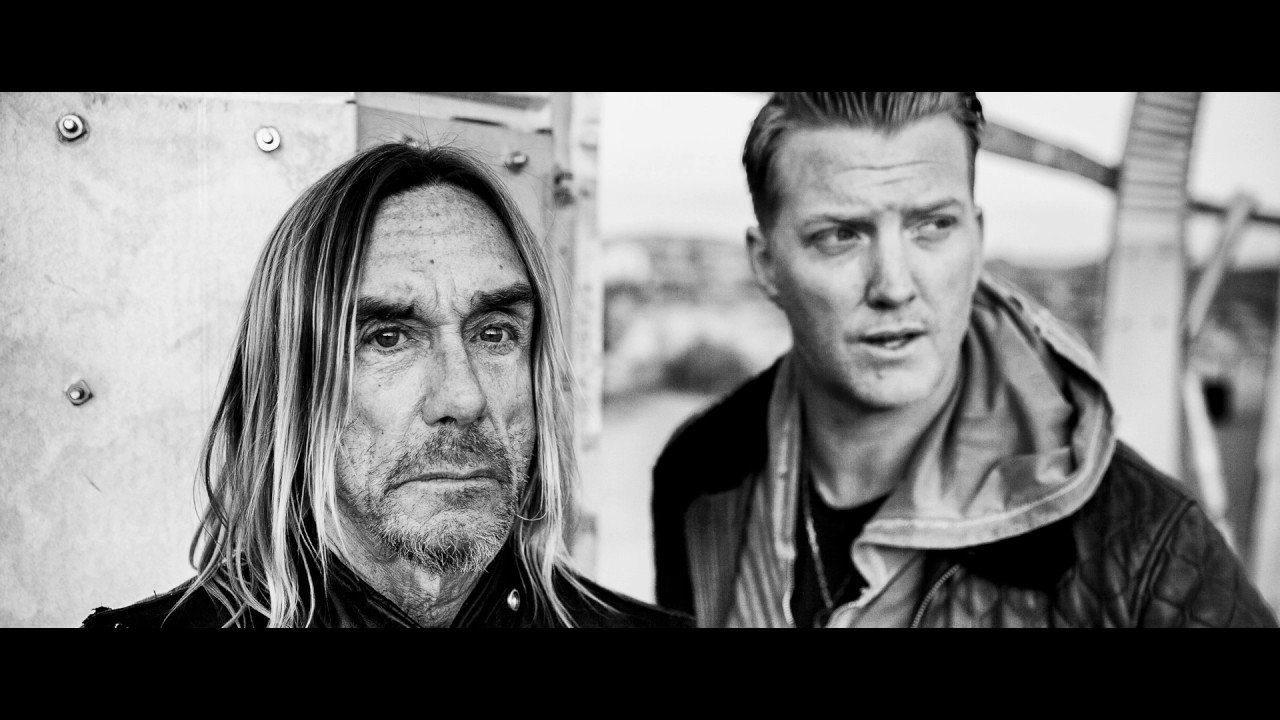
In what could easily have been a simple marketing tool – a documentary to support Iggy Pop’s last album, Post Pop Depression – American Valhalla instead offers a look at the creative process. But, more than that, it’s a glimpse into the kind of rock star adoration we’ve all felt, and an image of the all-too-human object of that worship.
In this case, the adored is punk rock godfather Iggy Pop; the adoring, Queens of the Stone Age front man Josh Homme, (who also co-directs).
Reading directly from their own journals written during the planning, recording and touring process, Homme, Pop and the rest of the band narrate the clashing emotions, nerves and anxieties that fueled this partnership and the ensuing album and tour.
Pop, now in his late sixties, is a small, crooked, humble guy, and still every bit a spectacle. His raw, unpredictable humanity is etched in the deep lines and huge eyes that haunt his famous face.
Homme – every inch Pop’s physical opposite, tall, sleek and handsome – opens himself up on camera in a way that’s disarming. Between Pop’s honest humility and Homme’s almost paralyzing adoration, the film somehow strikes a deeply sweet note. It’s validation for the overwhelming awe your own personal heroes can inspire. At the same time, it’s a touching reminder that even our heroes are deeply human.
Homme, directing with Andreas Neumann, shows great instincts visually. The documentarians cut between live footage, portraits and stills, creatively framed talking heads, and lonesome vistas. The pieces weave together to create an image that’s simultaneously haunting and energetic.
The music also happens to be outstanding.
Most surprising may be the film’s sweet, open heart. It’s a mash note for fans – all fans, but particularly Iggy Pop fans. If this is, indeed, to be Pop’s final hurrah, it is a lovely way to go out.
So many vampires – so many! And then there are all these other guys who may or may not be. Sometimes it’s hard to say. Sure they drink blood, but do they really need to? Let’s explore.
5. Vampire’s Kiss (1988)
Sure, Nicolas Cage is a whore, a has-been, and his wigs embarrass us all. But back before The Rock (the film that turned him), Cage was always willing to behave in a strangely effeminate manner, and perhaps even eat a bug. He made some great movies that way.
Peter Lowe (pronounced with such relish by Cage) believes he’s been bitten by a vampire (Jennifer Beals) during a one night stand. It turns out, he’s actually just insane. The bite becomes his excuse to indulge his self-obsessed, soulless, predatory nature for the balance of the running time.
Cage gives a masterful comic performance in Vampire’s Kiss as a narcissistic literary editor who descends into madness. The actor is hilarious, demented, his physical performance outstanding. The way he uses his gangly mess of limbs and hulking shoulders inspires darkly, campy comic awe. And the plastic teeth are awesome.
Peter may believe he abuses his wholesome editorial assistant Alva (Maria Conchita Alonso) with sinister panache because he’s slowly turning into a demon, but we know better.
4. The Transfiguration (2016)
Milo likes vampire movies.
Eric Ruffin plays Milo, a friendless teen who believes he is a vampire. What he is really is a lonely child who finds solace in the romantic idea of this cursed, lone predator. But he’s committed to his misguided belief.
All this changes when Milo meets Sophie (Chloe Levine), another outsider and the only white face in Milo’s building. A profound loneliness haunts this film, and the believably awkward behavior of both Ruffin and Levine is as charming as it is heartbreaking.
The Transfiguration is a character study as much as a horror film, and the underwritten lead, slow burn and somewhat tidy resolution undercut both efforts.
Still, there’s an awful lot going for this gritty, soft-spoken new image of a teenage beast.
3. The Reflecting Skin (1990)
Writer/director Philip Ridley has a fascinating imagination, and his film captures your attention from its opening moments.
Seth Dove lives with his emotionally abusive mother and his soft but distant father, who run a gas station in rural Idaho sometime after WWII. Seth’s older brother Cameron (Viggo Mortensen) is off serving in Japan. Seth has decided that the neighborhood widow Dolphin Blue (a wonderfully freaky Lindsay Duncan) is a vampire.
Positively horrible things begin to happen, each of them clouded by the dangerous innocence of our point of view character.
The film plays a bit like a David Lynch effort, but with more honesty. Rather than the hallucinatory dreaminess Lynch injects into films like Blue Velvet (the most similar), this film is ruled by the ferociously logical illogic of childhood.
With this point of view, the realities of a war blend effortlessly with the possibility of vampires. Through little Seth Dove’s eyes, everything that happens is predictably mysterious, as the world is to an 8-year-old. His mind immediately accepts every new happening as a mystery to unravel, and the jibberish adults speak only confirm that assumption.
This film is a beautiful, horrifying, fascinating adventure unlike most anything else available.
https://www.youtube.com/watch?v=DBGHoknFI2I
2. Cronos (1993)
In 1993, writer/director Guillermo del Toro announced his presence with authorty by way of this tender and unusual “vampire” flick. Del Toro favorites Federico Luppi and Ron Perlman star. Luppi is Jesus Gris, the elder statesman, an antique store owner, loving husband and doting grandfather.
Perlman plays Angel, a thug – what else? Angel’s miserable but very rich uncle wants an Archangel statue from Gris’s store, but the real value has already found its way into Gris’s veins.
A vampire film of sorts, it’s a beautiful story about faith and love – not to mention the real meaning of immortality. Performances are wonderful, and watching this masterful filmmaker find his footing is the real joy.
1. Martin (1978)
Martin (John Amplas) is a lonely young man who believes he’s a vampire. He may be – the film is somewhat ambivalent about it, which is one of the movie’s great strengths. He daydreams in black and white of cloaks, fangs and mobs carrying pitchforks.
Or are those memories? Does Martin’s uncle hate him because Martin, as he claims, is really in his Eighties, as his uncle would surely know? Romero has fun balancing these ideas, tugging between twisted but sympathetic serial killer and twisted but sympathetic undead.
Romero’s understated film is more of a character study than any of his other works, and Amplas is up to the task. Quietly unnerving and entirely sympathetic, you can’t help but root for Martin even as he behaves monstrously. It’s a bit like rooting for Norman Bates. Sure, he’s a bad guy, but you don’t want him to get into any trouble!
The film’s a generational culture clash wrapped in a lyrical fantasy, but quietly so. It’s touching, gory at times, often quite tense, and really well made. That, and it’s all so fabulously Seventies!