Tag Archives: movie reviews

Screening Room: Ant-Man 3, Winnie the Pooh: Blood and Honey, Oscar Nominated Shorts, Sharper and More

You Know Their Name

The Other Fellow

by Daniel Baldwin

In 1953, while writing Casino Royale, Ian Fleming decided to name his hero after an ornithologist who had written a book on Caribbean birds that he enjoyed. That name was Bond. James Bond. You know his name and you know his number, but what about all of the other folks out there who share the same name?

Our names are a part of our identity. Some of us like our names; others don’t. So too it goes for the other souls around the globe who are named James Bond. Matthew Bauer’s documentary The Other Fellow is their story. From an annoyed lawyer to a self-made raconteur to someone fleeing a real-life villain to another accused of murder, these people carry both the pleasure and the pain of being compared to the world’s most famous spy every time they introduce themselves.

Much like the Bond films, this documentary is a globe-trotting affair filled with beauty, grief, suspense, and yes, even product placement. In most hands, this could have been a cheap piece of cinematic fluff meant to grift some money off of Bond fans, but the filmmakers have managed to craft something far more meaningful here. Whether or not you sympathize with the varying trials and tribulations of its different subjects, The Other Fellow is a compelling and human look into identity – be it chosen or not – and how it affects a person as they go through life.

Why would someone intentionally change their name to James Bond? Well, as it turns out, there can be some very good reasons for that. Similarly, there are scenarios in which carrying that name could ruin your entire life because of the baggage it carries. Being Bond comes with a cost, be it a grand one or just the occasional annoying one in the form of bad jokes from strangers. For better or worse, such is the way of things when one shares a name with a celebrity (be they real or fictional), which is something yours truly knows a tiny bit about.

The Other Fellow is an intriguing and insightful look at how our names can shape our personality, our growth, our day-to-day lives, and ultimately our future. It’s an 80-minute dive into identity that, much like its subjects, just happens to evoke a certain 00 agent. It might not leave you shaken and stirred, but it’s worth a look.

Nothing Left to Lose

Boy from Nowhere

by Rachel Willis

Writer/director S.J. Finlay brings to life the reality facing people living on the island of Mindanao (Philippines) with his feature film, Boy from Nowhere. His focus, in particular, is trained on a young boy named Gary (Gary Jumawan).

Tall and lanky, Gary’s age is never mentioned, but it is clear he is young – likely somewhere between 12 and 15.

Gary’s life revolves around playing basketball with area boys, as well as learning how to fish. He spends his time in the water, learning to observe the environment around him. Though it speaks of a peaceful existence for a young boy, Gary’s world is shattered by the brutality that is often the experience for people in Mindanao.

An island rich in resources, there are several factions vying for control. The island comprises several tribes, and the film’s brief introductory text states that many people have found their livelihoods and cultures threatened by both the government of the Philippines, as well as outside interests. To combat the upheaval to their way of life, rebel factions rely on child soldiers to bolster their numbers.

Finlay’s style is naturalistic. Casting several non-actors in the primary roles serves to underscore the film’s realism. Some are more natural on camera than others, but there is a documentarian feel as Finlay watches Gary navigate the world, often without the presence of adults.

The short run-time hinders the film. When Gary is faced with several choices, we’re not allowed to contemplate them with him, nor are we given much action to help us understand the choices he makes. Instead, Finlay relies heavily on exposition and dialogue to clarify what’s at stake. This choice negates the slice-of-life portrait the filmmaker is trying to paint.

The film best succeeds in its focus on the moral and ethical dilemmas facing the people of Mindanao. While using children to fight a war is unethical, Boy from Nowhere emphasizes the desperation facing people with nothing left to lose. When the entire culture is threatened, isn’t it the duty of the children to fight? Though Finlay’s opinion on this matter is never in doubt, he treats those who resort to such choices with sympathy.

Finlay juxtaposes the images of child soldiers against a breathtaking landscape. The cinematography highlights what people are fighting to protect. One can only hope this way of life might be saved.

Honey of a No

Winnie the Pooh: Blood and Honey

by Hope Madden

Leaving the screening of Winnie the Pooh: Blood and Honey, I overheard another viewer say, “So many questions.” I, too, have a lot of questions. Why do Pooh and Piglet have man hands? Where do they get their clothes? When did they learn to drive? What am I doing at this movie?

No, that last one’s not real. There was no question I was going to see this movie. Like most people, I grew up with Winnie the Pooh and all his friends in the 100 Acre Wood. I loved the illustrations in A.A. Milne’s books. I loved the Disney cartoons. That live-action kids’ show, though, with people in suits – that freaked me out. That was just wrong, and it was the kind of wrong I was hoping for with the film.

Nope.

Though the sound mix is often muddy, the film does boast some technical qualities: production values, set design, lighting – writer/director Rhys Frake-Waterfield gathered a competent crew. The problem is the writing. There’s about enough script for a 30-minute film, and even that would not have been very good.

First, Christopher Robin (Nikolai Leon) returns to his old stomping ground to introduce his beloved to his oldest, dearest friends, only to find that Pooh and the gang have not exactly thrived in his absence.

Meanwhile, Maria (Maria Taylor) follows her therapist’s suggestion to take a break, unplug and relax with her girlfriends. She and her besties head to the same stretch of forest for a quiet weekend of grisly, man-bear related slaughter.

The acting throughout is awful, but it’s hard to slight the actors themselves when each of their scenes is stretched to 4 minutes longer than it should be and they have to just find a way to take up the time. This leads to a lot of inaction when action would be reasonable, and an awful lot of repeated, “Why are you doing this?”

Plus, there’s a gun that appears and disappears scene to scene, and a laugh-out-loud car sequence. But any intentional humor is woefully absent.

Whatever the film’s many – almost countless – flaws, Frake-Waterfield deserves tremendous credit for seeing an opportunity and seizing it. Milne’s catalog fell into the public domain last year, a fact Frake-Waterfield met with an idea. What if Pooh and the gang went feral?  

And the world was in. I know I was.

Domesticated Animals

Huesera: The Bone Woman

by Hope Madden

As Huesera: The Bone Woman opens, women climb the 640 steps leading to the world’s largest statue of the Virgin of Guadalupe, located in Ocuilan, Mexico. Valeria (Natalia Solián) and her mother are among the pilgrims, their goal: a blessing leading to Valeria’s fruitful womb.

As writer/director Michelle Garza Cervera’s camera pulls back and back and back, suddenly the 108’ virgin looms like a serene-faced golden Godzilla above a woman who no longer looks so certain about her prayer.

It’s a confident opening to the entirely assured feature debut from Cervera. Her maternal nightmare is bright and decisive, pulling in common genre tropes only long enough to grant entrance to the territory of a central metaphor before casting them aside for something sinister, honest and honestly terrifying.

While it toes certain familiar ground – the gaslighting of Rosemary’s Baby, for instance – what sets Huesera apart from other maternal horror is its deliberate untidiness. Cervera refuses to embrace the good mother/bad mother dichotomy and disregards the common cinematic journey of convincing a woman that all she really wants is to be a mom. 

There’s complexity and subtlety in the various relationships as well, elevating the material above standard horror fare. Valeria has real, joyous chemistry with husband Raúl (Alfonso Dosal). And if he’s weak in the face of his mother’s wishes, Valeria is hardly standing up to her own mother or sister. The ways in which we all dodge family conflict feed into the writing, helping ground the larger metaphor in reality.

Solián’s performance weaves effortlessly and authentically from one family dynamic to the next, each presenting only opportunities to submit, to accept or to be ostracized and rejected. Huesera’s metaphor is brave and timely. Brave not only because of its LGBTQ themes but because of its motherhood themes. It’s a melancholy and necessary look at what you give up, what you kill.

Grifting Away

Sharper

by George Wolf

It may not be a textbook Rashomon approach, but director/co-writer Benjamin Caron leans on a similar structure in his impressive feature debut for Apple Originals, Sharper.

Set up in chapters named for the main personalities, the film first introduces us to Tom (Justice Smith, from Jurassic World: Fallen Kingdom and Pokémon: Detective Pikachu). Tom owns a struggling bookstore in NYC, and is mostly estranged from his billionaire father, Richard (John Lithgow) and his new wife, Madeline (Julianne Moore).

But when Tom sells a book to PhD student Sandra (The Tender Bar‘s Briana Middleton), a relationship begins. And a few weeks later, Tom is offering to give Sandra thousands of dollars to settle her troubled brother’s debts with some bad guys. He gives her the satchel full of cash, and watches her walk away. Yeah.

So, right away, we’re on Tom’s side. But then, we get Sandra’s backstory, which includes some important details about her life before walking into that bookstore, and about her shady brother.

And then there’s the relationship between Richard and Madeline, which gets plenty complicated with the sudden arrival of Madeline’s ne’er-do-well son, Max (Sebastian Stan).

Caron, from TV’s The Crown, Andor and Sherlock, weaves the agendas together with a fine hand, revealing mysterious secrets just when they can add the most fun to the journey.

And this is an entertaining slice of life on the grift, one leaning more toward gloss and polish than neo and noir. The performances are all stellar, which ironically adds to the film’s slight stumble at the finish line. That final twist will not be hard to sniff out, even for mildly experienced film buffs. But we believe these people know all the angles, and when a character calls out a con midway through, it should only increase the chance that their antenna would be up for this same play later on.

But cons are just fun, aren’t they? And Sharper is a well-crafted and clever one, even with a finale that dulls its edges a bit.

Bloodbath at Sea

Project Wolf Hunting

by Brandon Thomas

South Korean filmmakers have never been shy about putting carnage on screen. From I Saw the Devil to Train to Busan, South Korean cinema often runs gloriously blood red. With Project Wolf Hunting, the ante has been upped considerably as geysers of gore are jettisoned out of every original – and disgustingly created – human orifice. Dead Alive this ain’t, but it’s not for lack of trying.

In Project Wolf Hunting, a cargo ship has been chartered to transport a group of South Korean prisoners back home from the Philippines. Along for the ride is a small unit of Korean police, a two-person medical team, and the ship’s crew. However, unbeknownst to them, there’s also a small group stowed away in the bowels of the ship protecting an undead creature that has ties to Japanese experimentation during World War 2.

Large-scale horror movies on boats petered out in the late 90s with films like Deep Rising (a good one!) and Virus (a bad one!), all but killing this particular subgenre. The isolation the open ocean provides is second only to deep space when it comes to a great horror movie setting. Project Wolf Hunting taps into that fear that naturally comes from battling the elements. The fact that there’s also a creature and a dozen psychotic felons only adds to the mounting anxiety.


No one is going to go out of their way to congratulate Project Wolf Hunting for its originality. The film proudly wears its influences on its sleeve with Con Air and Overlord being the most obvious. We’ve seen a lot of these beats and eventual reveals dozens of times before, but this film’s infectious energy makes all of that an afterthought. Even at two hours, Project Wolf Hunting never drags and, at times, keeps layering new craziness to an already bonkers film.

Director Kim Hong-sun must have challenged himself to use every kind of action beat imaginable in this movie. There are fantastic shootouts in confined spaces, brutal knife fights, and a few truly gnarly hand-to-hand combat scenes. However, the real star is the gore effects. A movie this wet and goopy hasn’t been seen in a while – and boy, does it make an impression. The gore never feels overly realistic but fits perfectly into the over-the-top approach the filmmakers establish early on. 
With no desire to reinvent the genre wheel, and a solid handle on action and gore, Project Wolf Hunting is a bloody bit of South Korean fun that’s well worth your time.

I Am Once Again Asking You to Get Small

Ant-Man & The Wasp: Quantumania

by Hope Madden & George Wolf

Time to set your phasers to “5” Marvel Fans, and hope for better days ahead. Because Ant-Man & The Wasp: Quantumania is a messy, lackluster kick-off to the new stage.

After the prologue and before the two end stingers, Quantumania is bookended by two winning sequences, both set to the theme from “Welcome Back, Kotter.” They’re self-effacing and full of the unique charm that has defined Paul Rudd’s Ant-Man/Scott Lang character since the first installment. And the rest of the film can never quite measure up.

While Scott has been off Avenging, his daughter Cassie (Kathryn Newton) has grown into an impressive young scientist herself. In fact, the new sub-atomic telescope she invented seems pretty nifty, until a family pizza party ends with Scott, Cassie, Hope/Wasp (Evangeline Lilly), Hank (Michael Douglas) and Janet (Michelle Pfeiffer) all sucked back into the Quantum Realm.

And it turns out, there’s plenty Janet didn’t let on about the 30 years she spent down there. Some of it involves Krylar (Bill Murray, channeling Criswell). But the life-threatening details revolve around how Kang the Conqueror (Jonathan Majors) wound up there, and why he must never make his way out.

Director Peyton Reed returns from parts 1 and 2, but his powers are more limited in the quantum realm than Kang’s. Without city landmarks and average Joes to ground the comedy, the Ant-Man dorkishness falls flat.

The writing doesn’t help, although it’s tough to blame series newcomer Jeff Loveness in his feature debut. The first film was written by Edgar Wright, Joe Cornish and Adam McKay, for Pete’s sake. But Loveness cannot find a groove, throwing comedy bits that suit Aqua Teen Hunger Force into hyper-serious melodrama with a Barbarella backdrop.

Much of the film is blatantly Star Wars, with attempts at Ragnorak humor that run headlong into extended exposition and Kang’s quest for dominating multiple plexes. None of it works.

Rudd’s a doll, per usual, and Newton’s a charmer. Pfeiffer continues to have charisma to burn, which is a good thing because Lilly’s as engaging as a paper sack and Douglas is mainly wasted. But the real pity is Majors, another profound talent floundering in an underwritten villain role that relies on speechifying rather than acting.

There are some big ideas here, and the attempts at world building are ambitiously borrowed, but much the same as its unlikely Avenger, Quantumania comes up small.

You Had Me at Miaow

Cat Daddies

by Christie Robb

Apparently, there’s some sort of social stigma attached to men who like cats? Having grown up in a generally pet-loving family with a cat named Mittens that clearly preferred my dad to all other humans, this comes as news to me. But my husband looked at me like I was shocked to find out that people put milk in their cereal when I asked him if he’d heard about this stigma, so I guess I’m the weirdo?

Huh.

Anyway, Mye Hoang’s documentary Cat Daddies feels like part of a benign public relations campaign to generate increased interest in the felis catus brand.

The production team has identified a possible new target audience for cats: adult men. To help create a positive relationship between the brand and the target audience, a series of charismatic cats who cohabitate successfully with people of a masculine persuasion in a variety of contexts is presented. Some of the cats help their human roommates gain social media attention. Others accompany their bros on hikes or other outdoor adventures, sometimes while wearing little outfits and/or peeking out of backpacks. Several help their dudes overcome the trauma of being first responders or living without permanent housing. The male feline enthusiasts have diverse careers: actor, former construction worker, firefighter, trucker, stunt performer, teacher, police officer, software engineer, and (not surprisingly) advertising executive.

During the course of the beautifully shot documentary, the pandemic begins to unfold, giving the movie additional depth and allowing for an exploration of the critical role pets played as social/emotional support during an exceptionally difficult time. In addition to this, two of the more serious themes investigated are the need for support in efforts to control feral cat colonies by Trap-Neuter-Release programs, and for adoption efforts to get animals off the streets and into loving homes.

The most compelling story of the eight covered is of former construction worker David and his cat Lucky. David, a man out of work who had been living on the streets,  found Lucky as a kitten dying outside of Penn Station. He helped get Lucky back to health and their bond has helped David keep going while dealing with the effects of lack of housing, the pandemic, and his increasing ill health.

Throughout the film, there is a reoccurring refrain almost that it’s ok for men to feel an emotional bond with an animal, to experience compassion, and a wiliness to care about something other than themselves. This is a positive message, but it kind of sucks to be living in a world where Hoang feels the need to hammer home that it is ok to be masculine and care about something.

But yeah, cats are great. And this movie lets you watch some brawny lads snuggle them.

Fright Club: Celebrity Crushes in Horror Movies

Killer crushes, literally – that’s what we’re talking about this time. We also run down our own biggest celebrity crushes, because why not? And we talk about the best horror films to capture the moment obsession turns dangerous.

5. Be My Cat: A Film for Anne (2015)

Adrian is a Romanian filmmaker who likes girls and cats. He does not like dogs or boys. His favorite thing? Anne Hathaway as Cat Woman.

He was so inspired by her performance that he knew he had to make a film with her. To convince her, he’s lured three actresses to shoot a film with him. That film is really just to convince Anne, his beloved, that she should star in the real movie.

She’s not going to want to.

This movie works on the sheer, weird charisma of writer/director/star Adrian Tofei. He is pathetic and charming and terrifying as he documents his direction as a kind of “behind the scenes” for Anne, so she can understand how truly perfect she is for his film and he is for her artistic future. The result is unsettling, unique and wildly entertaining.

4. The Phantom of the Opera (1925)

You know the story – a shadowy figure haunts the Paris opera house, demading that the object of his affection, Christine, be given the lead in Faust. In what amounts to a cautionary tale about women prioritizing career over family, the story revolves around a masked and disfigured madman and the singer who is easily duped, then saved by righteous men.

The reason this particular version of the film works so well is, of course, Lon Chaney’s now-legendary look. The actor devised his own make up and underwent painful tricks of physical contortion, succeeding in shocking audiences with a ghastly but very realistic visage. His flair as an actor is also on display, and though other versions sometimes mine for a bit of empathy or heartbreak as this hideous creature connives for a love triumphant, Chaney delivers menace and horror.

3. The Fan (1982)

The first thing Eckhart Schmidt’s film has in its favor is that the audience is meant to empathize with the fan, Simone (Désirée Nosbusch). Generally, we see the fanatical from the celebrity’s point of view, but this makes more sense because every member of the audience is more likely to have lost their shit over a teen idol than they’ve been worshipped themselves.

And yet, Simone clearly has a screw loose. Schmidt’s approach to her obsession as seen through the eyes of worried parents, apologetic postmen and other adults is confused and compassionate. Teenage girls – who can understand them? The tone is ideal to set up the explosive heartbreak you know is coming, as well as a third act you couldn’t possibly see coming.

2. Antiviral (2012)

If you could catch Kim Kardashian’s cold, would you?

This is the intriguing concept behind writer/director Brandon Cronenberg’s seething commentary on celebrity obsession, Antiviral. 

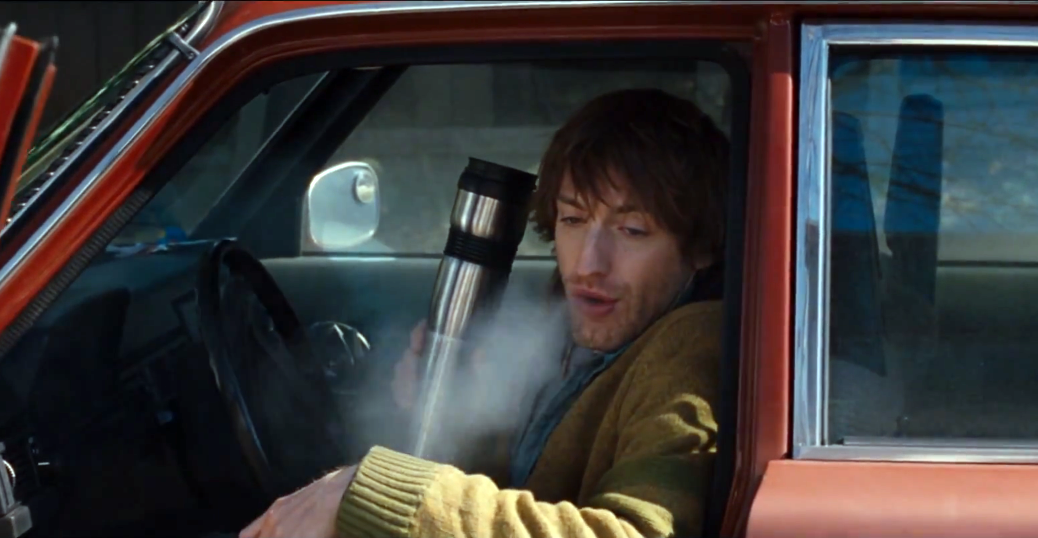
Young Syd March (Caleb Landry Jones) works for a clinic dealing in a very specific kind of treatment. They harvest viruses from willing celebrities, encrypt them (so they can’t spread – no money if you can’t control the spread), and sell the illnesses to obsessed fans who derive some kind of bodily communion with their adored by way of a shared herpes virus. Gross.

But the ambitious Syd pirates these viruses by injecting himself first, before the encryption. Eventually, his own nastiness-riddled blood is more valuable than he is, and he has to find a way out of quite a pickle. Maybe vitamin C?

1. Misery (1990)

Kathy Bates had been knocking around Hollywood for decades, but no one really knew who she was until she landed Misery. Her sadistic nurturer Annie Wilkes – rabid romance novel fan, part-time nurse, full-time wacko – ranks among the most memorable crazy ladies of modern cinema.

James Caan plays novelist Paul Sheldon, who kills off popular character Misery Chastain, then celebrates with a road trip that goes awry when he crashes his car, only to be saved by his brawniest and most fervent fan, Annie. Well, she’s more a fan of Misery Chastain’s than she is Paul Sheldon’s, and once she realizes what he’s done, she refuses to allow him out of her house until she brings Misery back to literary life.

Caan seethes, and you know there’s an ass-kicking somewhere deep in his mangled body just waiting to get out. But it’s Bates we remember. She nails the bumpkin who oscillates between humble fan, terrifying master, and put-upon martyr. Indeed, both physically and emotionally, she so thoroughly animates this nutjob that she secured an Oscar.