Tag Archives: MaddWolf

Music Maker, Dreamer of Dreams

Remembering Gene Wilder

by Hope Madden

Maybe the smartest choice director Ron Frank made when putting together his affectionate documentary Remembering Gene Wilder was to pull audio from Wilder’s own autobiography. Sure, we hear from many who loved the comic actor—Mel Brooks, Carol Kane, Alan Alda among them. But everything they tell you about his authenticity, humility, humanity, and perfect comic timing you can hear for yourself as Wilder spills the beans on his life.

You remember the hair, of course. And probably those eyes. But that voice proves, in case you have forgotten, that there was something deeply, bubblingly, undeniably delightful about Gene Wilder. And he could act.

Frank, working with writer Glenn Kirschbaum, hand picks some of Wilder’s best scenes. Not necessarily the most iconic, but the most confounding, the scenes where he made a creative decision no one else would have considered, creating an indelible moment on screen.

This is a film that loves Gene Wilder, and it makes a pretty good case for that.

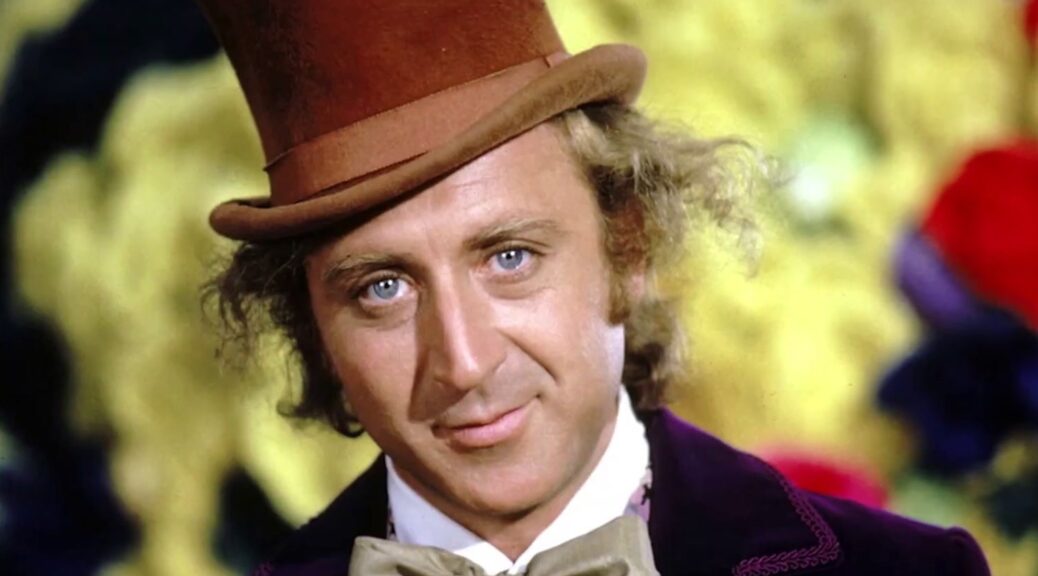
We hear about is childhood, about Willy Wonka, Young Frankenstein, Richard Pryor, Gilda. Each story showcases the gentle, charming creature that was Gene Wilder. Though Frank doesn’t break any new ground cinematically—talking head interviews flank home movies, film clips surround family photos—the mellow approach belies a deep emotional connection.

Remembering Gene Wilder is not just a greatest hits. Although the film does not delve into any of the actor/director’s box office or critical missteps—nor does it devote a single moment to anything that would make Wilder out to be anything other than a treasure—it acknowledges low times. Even those just make you want to hug him.

Not every film or character of Wilder’s has aged well, but his good nature and talent shine none the dimmer. Remembering Gene Wilder certainly does not unearth any ugliness, bares no startling truths. It’s clearly the product of a filmmaker who truly loves his subject.

He doesn’t seem wrong, though.  

You’ve Got Hate Mail

Wicked Little Letters

by George Wolf

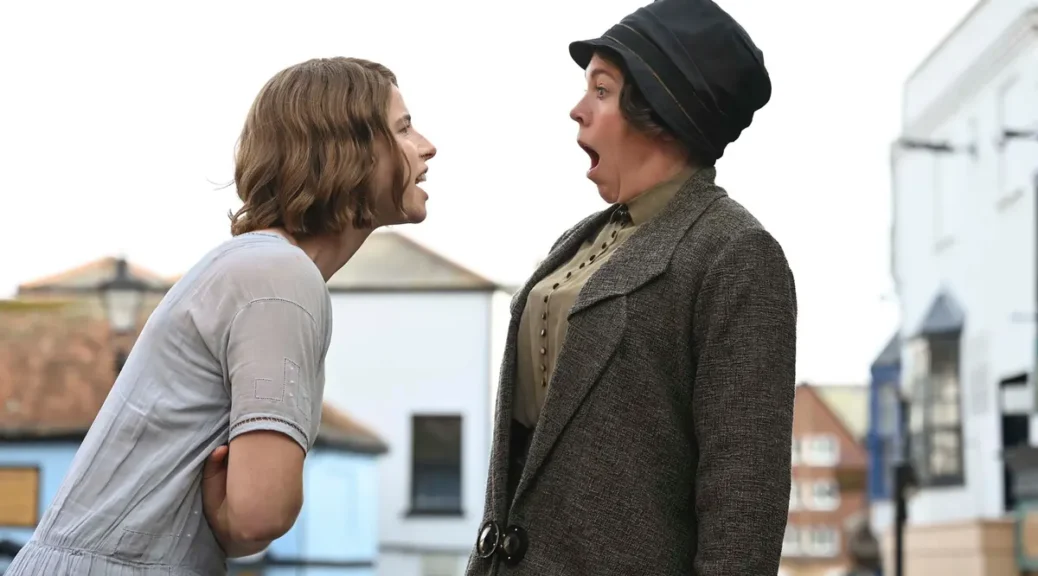
Long before you could hide behind a keyboard and avatar, a small English village was scandalized by some expert-level anonymous trolling. Wicked Little Letters tells us that story is “more true than you’d think,” and rolls out a stellar ensemble to elevate the tale at nearly every turn.

It is the 1920s in Littlehampton, England, where unmarried Edith Swan (Oscar winner Olivia Colman) still lives with her parents (Timothy Spall, Gemma Jones). Edith is known to be a dutiful daughter and devout Christian, so town tongues are wagging when she begins to receive hateful and profanity-laced “poison pen” letters in the mail.

Who could be behind such unwarranted vitriol?

Whaddya bet it’s that filthy Irishwoman Rose Gooding (Oscar nominee Jessie Buckley)?

Rose is frequently loud, drunk and vulgar. Plus, she’s a war widow (or is she?) with a young daughter (Alisha Weir from the upcoming Abigail), a “reputation” and a live-in boyfriend (Malachi Kirby).

Throw in the recent falling-out with Edith, and that’s enough for the town Constables (Hugh Skinner, Paul Chahidi), who arrest Rose and quickly schedule a show trial.

But “Woman Police Officer” Moss (Anjana Vasan) isn’t convinced, and she risks her position by continuing to investigate the letters on her own.

Director Thea Sharrock (Me Before You, The One and Only Ivan) and first-time screenwriter Jonny Sweet don’t craft a “whodunnit” as much as they do a “whoproveit” and a “whydunnit.” The real culprit is revealed fairly early on, and the film tries to balance some British wit atop heavier themes of repression, equality, and the sanctimonious crowd who are all preach no practice.

It’s historically interesting and well-meaning enough, but it reveals Sweet’s TV background through a light and obvious romp that’s rescued by heavyweight talent.

Colman, Buckley and Spall are all customarily splendid, each making up for the lack of nuance in their characters with some livid-in conviction and natural chemistry. Plus, Vasan stands out in the winning supporting group as the overlooked and underestimated W.P.O. Moss.

So while it’s lacking in the bite needed to leave a lasting impression, think of Wicked Little Letters as an extended cat video, one just amusing enough to take your mind off of all those nasty comments from the keyboard warriors.

Two Minute Warning

Baghead

by Hope Madden

Back in 2013’s Texas Chainsaw, a young woman receives word that she’s inherited a building from a mysterious relative. She ignores the notes explaining her duties until it’s too late and she’s already stumbled into what lives in her basement.

Laberto Corredor’s Baghead—an expansion of his 2017 short of the same name—treads similar real estate. Iris (Freya Allan) gets word that her estranged dad (Peter Mullan) has passed and she’s inherited his dilapidated Berlin pub. Currently penniless, jobless and homeless in England, Iris signs the deed and takes over the old place.

She doesn’t watch the video explaining the current basement tenant until it’s too late. But it’s not Leatherface down in Iris’s cellar. It’s Baghead, a centuries old witch condemned to freakshow status. For a fee, she’ll swallow a relic of a deceased loved one and turn into said loved one for two minutes.

But—as was the case with last year’s similarly themed Talk to Me—the conversation comes with more baggage than you might expect.

There are some exceptional shots in this film and solid performances. The small ensemble boasts memorable support work from Mullan, Ned Dennehy and Svenja Jung, as well as strong lead performances.

Ruby Barker elevates the thankless best friend role, while Jeremy Irvine smartly inhabits the character of a grieving husband.

Iris makes a lot of inexcusably dumb choices, but because Allan crafts her as angry and short sighted, this feels less like a misstep than it could have.

The plot—co-written by Christina Pamies, Bryce McGuire and the short film’s writer, Lorcan Reilly—becomes needlessly complicated. Worse, Corredor undermines the excellent production value of his locations with gimmicky and weak VFX.

Irvine and Allan nearly save the film, though. The result is a modestly entertaining mixed bag.

Screening Room: Godzilla x Kong, Steve! (Martin), Easter Bloody Easter & More

The Sexual Tension Is Palpable

Godzilla x Kong: The New Empire

by Hope Madden

Remember how good Godzilla Minus One was? Did you see the black and white version? Glorious!

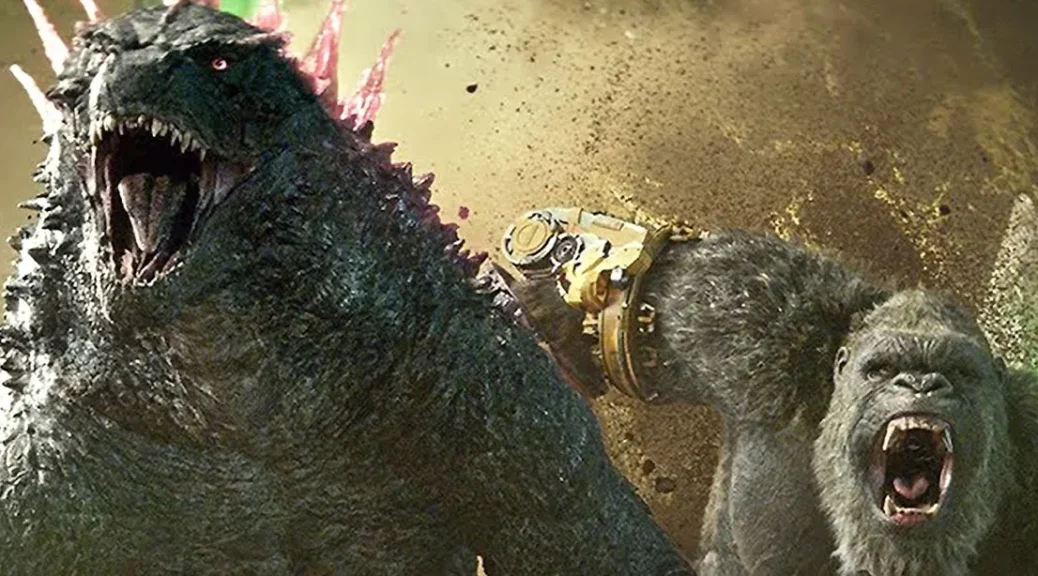
It’s almost too bad that Adam Wingard’s Godzilla x Kong: The New Empire is really competing with the memory of that 2023 Oscar winner rather than his own moderately entertaining 2021 hit Godzilla vs. Kong. Because as a straight up sequel, G x K feels a little streamlined, a bit punchy. Dumb but moderately fun.

Writer Terry Rossio returns, teaming with longtime Wingard collaborator Simon Barrett, as well as Jeremy Slater. They prune most of the Godzilla storyline to focus on Kong and his search for family. That brings Dr. Andrews (Rebecca Hall) and young Jia (Kaylee Hottle) back into focus.

When the Doc needs help understanding Jia’s connection to energy spikes in Hollow Earth (Kong lives there now, remember?), she turns to podcast conspiracy spewster/world saver Bernie Hayes (Brian Tyree Henry). Together with a veterinarian who’s in touch with his emotions and really bad early 80s rock (Dan Stevens), Dr. Andrews, Jia and Bernie head to Hollow Earth to lend Kong a hand.

There’s a lot of Planet of the Apes going on in this movie. Kaiju action takes a back seat and, though brightly colored and relatively fun, it’s never central to the film.  But Wingard can create a fake looking but fun creature fight and Hall gets to explain what’s going on frequently to her dumb company, which makes it easy for every the most sugar-hyped family members to follow the story.

What she’s doing in this franchise continues to be a head scratcher, but she can certainly act, which never hurt a movie. Henry and Stevens bring levity—or try. Both are also inarguable talents and they share a sweetly enjoyable onscreen chemistry, but nothing happening in G x K is as much fun as Wingard thinks it is.

Kong: Skull Island was fun. That was a popcorn muncher for the ages: the soundtrack, the shot choices, the monster carnage, the humor and pathos. And don’t even compare it to Minus One, that just wouldn’t be fair. But for a greenscreenapalooza of dumb monster action, Godzilla x Kong: The New Empire is adequate.

Play Me a Memory?

They Shot the Piano Player

by Hope Madden

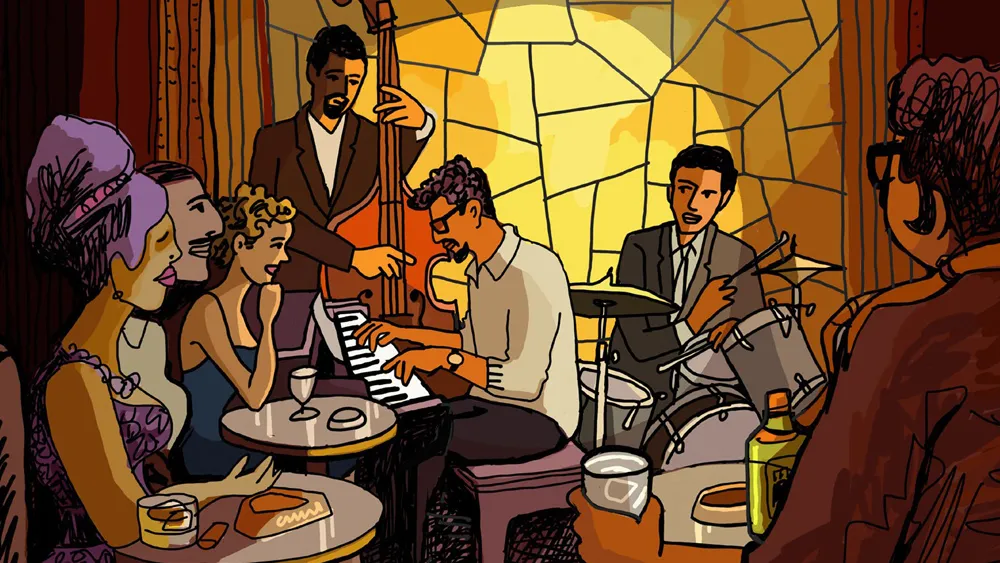
An unusual hybrid of documentary and narrative, music and animation, They Shot the Piano Player pulls you into a political mystery.

Jeff Goldblum voices the character of a New Yorker journalist writing a book about bossa nova, or so he thinks. He travels to Brazil to dig into the history of this groundbreaking musical movement and finds himself drawn to the story of one particular pianist.

Inside the chaos of color, vibrant animation and remarkable soundtrack, directors Javier Mariscal and Fernando Trueba unveil a particularly turbulent moment in history. The discovery and quick popularity of Brazilian bossa nova—literally the “new wave” of samba and jazz fusion—ran headlong into a continent-wide collapse into violent, oppressive military regimes.

Goldblum is one of a handful of actors whose fictional storyline collides with archival interviews with some of the musical movement’s greats. Little by little, the investigation sidesteps music to focus on the 1976 disappearance of Francisco Tenório Júnior.

The filmmakers bridge audio commentary concerning the disappearance, the desperate search, and the inevitable truth with Goldblum’s fictionalized storyline. The result, much elevated by Goldblum’s characteristically offbeat performance, generally works. The filmmakers attempt to do more than uncover one of hundreds of thousands of stories of innocent lives lost to Central and South American despots beginning in the 1960s.

Mariscal and Trueba want you to know Tenório, to see all that was lost when he was disappeared: father, friend, artist. And with him, the entire beautiful new wave of music and art that had been blooming across the continent.

Unruly and fresh as the music it dances to, They Shot the Piano Player sometimes loses its train of thought. The outright documentary content is probably compelling enough—even if told via animation—to omit the fictionalized sleuthing. But the way Mariscal and Trueba couch the heartbreaking loss of one life within the larger artistic loss of an entire art form is melancholy magic.

The Deadest of Pans

Lousy Carter

by George Wolf

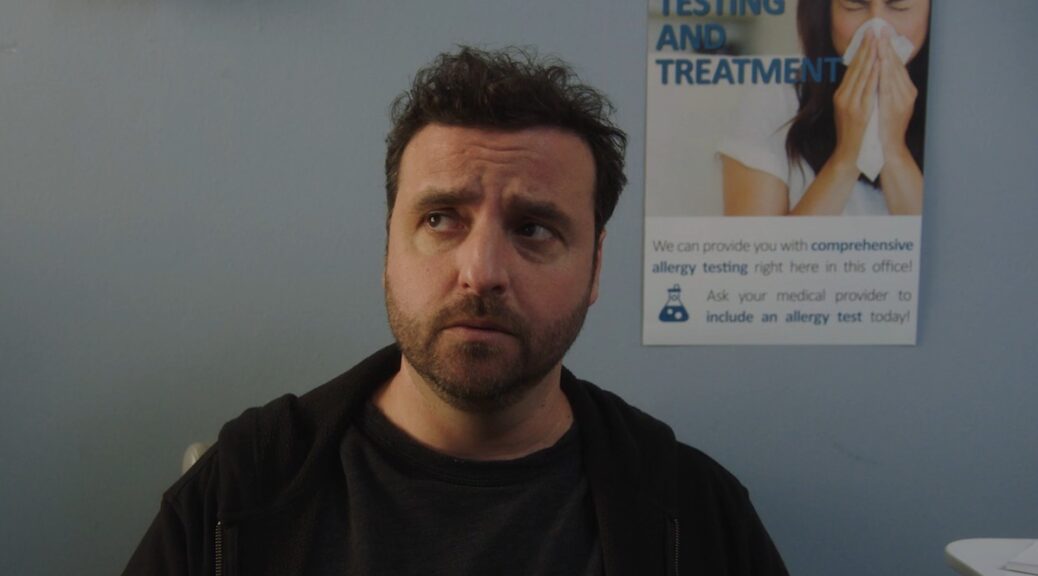
“Lousy” Carter (a terrific David Krumholtz) is a college professor, currently teaching a grad level seminar on The Great Gatsby.

One book? Even his “best friend” and colleague Kaminsky (Martin Starr) is nonplussed.

“Maybe you should teach a pamphlet,” he says with the deadest of pans, underscoring the entire tone of writer/director Bob Byington’s sardonic slice of life and death.

Carter got his titular nickname from being bad at golf, but he’s not exactly ace-ing this life thing, either. Lousy’s students don’t like him, his ex (Olivia Thirlby) calls him a “baby man,” and his sister (Trieste Kelly Dunn) would rather not call him at all. His fellow teachers are embarrassed for him, his therapist (Stephen Root) mocks him, he’s thousands in debt, and he’s sleeping with Kaminsky’s wife (Jocelyn DeBoer).

Great. Anything else?

He just got some very bad news at the doctor’s office.

But hey, he does have a fan in Dick Anthony (Macon Blair), a weird guy who loved the animated film Lousy made “back in the aughts,” and who might be giving off stalker vibes.

If you’re familiar with Byington’s work (Somebody Up There Likes Me, RSO), you’ll be ready for how dryly Byington attacks this clash of narcissism against the merciless march of time. And though you can probably count on one hand the number of times any character smiles, that doesn’t mean there aren’t laughs to be found here.

The biggest may be the “based on true events” tag that Byington hangs up at the start, right before he lets Krumholtz loose on this journey of indignation. It’s not so much an arc as it is a sinking ship, but Krumholtz excels in finding sympathetic moments that draw us in.

And even if this bark has too much bite for you, it’s hard not to respect Byington’s masterly command of tone. His commitment to that tone is unwavering, with Krumholtz leading an unmerry band of misanthropes through a series of events that are never at a loss for darkly funny cynicism.

I mean they’re just lousy with it.

Life’s a Stage

Earlybird

by Brandon Thomas

Artistic risks are hard. Conventional wisdom states that the safest artistic endeavors tend to be the most successful. This is true for movies, music, writing, and theater. Why else would we be gifted with theatrical productions of Mrs. Doubtfire or have ten Fast & Furious movies?

Michael (Joshua Koopman) is the owner of a struggling independent theater company. The theater’s go-to has always been tried-and-true classics like Romeo & Juliet or Julius Caesar, and even those aren’t getting many butts into seats. After his landlord informs him that the rent is going up, Joshua decides to call it quits with the theater. At the urging of his wife, Sarah (Julie Pope), Michael dusts off an old oddball script of his own in an effort to be more creative during the theater’s remaining weeks. When the show is a surprise hit, Michael and his staff begin looking for even odder shows to produce.

On the periphery, Earlybird seems like the kind of movie we’ve seen a thousand times before. You know, the one where the scrappy crew of lovable losers has to overcome insurmountable odds and always comes out on top. Except, that’s not exactly what Earlybird is. No, while Earlybird does contain said lovable losers, the path to “coming out on top” isn’t as predictable.

The key to Earlybird’s freshness is the lack of devotion to plot. The real conflict doesn’t come from whether or not the theater company will actually close. Instead, the drama and driving force throughout the film are the relationships between the characters. Joshua’s transition from burned out and uninspired to all-consumed and flippant takes center stage (ahem).

Koopman and Pope lead the cast with a natural and charming chemistry. Theirs is a relationship that feels lived in and supportive. As Joshua’s behavior begins to strain their relationship, writer/director Martin Kaszubowski never goes for the easy sitcom-level drama. The honesty of their predicament is all the drama Earlybird needs.

There are so many times that Earlybird feels like it’s going to play it safe. However, the cleverness of the script and the scrappiness of the overall production helps to keep the film on its toes. While a comedy, belly laughs aren’t exactly the target of the film. There’s an overall sweetness to Earlybird that shows itself early and never quite goes away. 

The film seemingly wraps up a little too nicely, but it ultimately feels earned given the strength of the previous 1 hour and 45 minutes. Sometimes a little extra sweetness at the end isn’t such a bad thing.

Cinematic Treasure Hunters

Mad Props

by Rachel Willis

Enter a world of movie prop collectors, individuals who amass pieces from costumes to sculptures to fragments of sets. These collectors are the focus of director Juan Pablo Reinoso documentary, Mad Props.

He begins by introducing our narrator and host, film producer Tom Biolchini, and his history, from wanting to work as a special effects artist to his eventual role as a hobby prop collector. It’s not the most compelling way to start the film. Several scenes involve Tom showing his family pictures from a prop catalog, dreaming about his most desired objects. We watch him place bids, paying anywhere from $25,000 to $75,000 for a single item.

The film picks up somewhat as the focus moves to other prop collectors. We travel the world to see some of the most impressive collections. Collectors often display their items in creative ways, highlighting the pieces they are most proud of. Unfortunately, Reinoso doesn’t do much to vary the presentation of these moments, and that repetitiveness drags.

Mad Props is most interesting when Reinoso interviews the artists who make the movie props. When asked what he thinks of his work being coveted by fans, one designer expresses delight. But who is the ultimate beneficiary of all the money being spent on these props? It’s not the designers.

Actors Lance Henriksen and Robert Englund add a little levity to the film. Unfortunately, even they can’t help with much of the footage, which simply feels like filler.

Mad Props flounders, never quite telling its story in a cohesive, interesting way. Of all the things to collect, movie props are pretty cool. You purchase a piece of cinematic history, art, and depending on the person’s relationship to the film itself, a bit of nostalgic joy. Of course, the cost of the items makes the hobby pretty prohibitive, hindering any attempt at universal appeal.

Reinoso wants to convey the value in this type of collecting. Sadly, he never quite makes the case that this is a hobby of interest for those beyond the collectors themselves.

Fright Club: Telephone Horror

We welcome our Fave Five From Fans podcast buddy Jamie Ray back to the Club to talk about horror movies that make the best use of phones. This was Jamie’s topic suggestion and he brings five titles of his own, so please be sure to listen to the full podcast!

In the meantime, here are our five favorites.

5. The Black Phone (2021)

Ethan Hawke plays the Grabber in Scott Derrikson’s take on the Joe Hill short story. With his top hat, black balloons and big black van, Grabber’s managed to lure and snatch a number of young boys from a small Colorado town. Finney (Mason Thames) is his latest victim, and for most of the film, Finney waits for his punishment down a locked cement basement with a cot and an unplugged black rotary dial phone.

Time period detail sets a spooky mood and Derrickson has fun with soundtrack choices. But the film’s success—its creepy, affecting success—is Hawke. The actor weaves in and out of different postures, tones of voice, movements. He’s about eight different kinds of creepy, every one of them aided immeasurably by its variation on that mask.

Derrickson hasn’t reinvented the genre. But, with solid source material and one inspired performance, he’s crafted a gem of a horror movie.

4. Black Christmas (1974)

Sure, it’s another case of mysterious phone calls leading to grisly murders; sure it’s another one-by-one pick off of sorority stereotypes; sure, there’s a damaged child backstory; naturally John Saxon co-stars. Wait, what was different? Oh yeah, it did it first.

Released in 1974, the film predates most slashers by at least a half dozen years. It created the architecture. More importantly, the phone calls are actually quite unsettling. Director Bob Clark was onto something with the phone calls, as evidenced by the number of films that ripped off this original convention.

3. When a Stranger Calls (1979)

With a very simple premise, director/co-writer Fred Walton delivered genuine shocks and dread.

Carol Kane is Jill, garden variety high school babysitter type. The kids are already in bed, Jill just needs to be there in the house until Dr. and Mrs. Mandrakis get back. She does homework, talks on the phone, watches TV. What she does not do—however often the rando phone caller asks—is check the children.

The first and third acts are the killers, while Act 2 is a lot of police procedural thriller, but there’s a reason people still bristle when they hear, “Have you checked the children?”

2. Scream (1996)

Wes Craven’s return to horror—aided immeasurably by a sly and daring script from Kevin Williamson—revived the genre. And you knew it would be an incredible movie from the opening moments.

Drew Barrymore—easily the most recognizable name in the cast (also a producer)—answers the phone. She’s home alone, making popcorn, readying to watch a horror film. She gets roped into a flirty anonymous game of “what’s your favorite scary movie?”

The voice (Roger Jackson) became iconic, as did his line.

1.The Ring (2002)

“Seven days…”

Gore Verbinski’s take on Chisui Takigawa’s 1995 film embraces the already-retro tech—VHS tapes and landlines—to ground a supernatural tale of curses, horses and bad parenting.

Nowadays when you see “PG13” attached to horror, you may roll your eyes. But The Ring brings plenty of terror and tension, and it all starts when that phone rings.