Hope & George review this week’s new releases: Disclosure Day, The Furious, Earth Wind & Fire, Find Your Friends, and Leviticus.
Hope & George review this week’s new releases: Disclosure Day, The Furious, Earth Wind & Fire, Find Your Friends, and Leviticus.
by Hope Madden
I love Shudder. Truth is, Shudder is the only station I know how to find on our TV. I mean it. How I look forward to each new Shudder original! Happily, most of them live up to the excitement.
But every once in a while, you get a Find Your Friends.
Five unreasonably attractive and clearly alcoholic twentysomething besties wreak havoc on their livers and look good doing it. And screw the a’holes at this yacht party because these party bitches are headed to Joshua Tree to a better party followed by some desert tripping. Hell yeah!
I rarely stop watching a movie once I start it because it’s my job to finish the movie. I had to remind myself of this during Find Your Friends no fewer than four times before we even got to Joshua Tree.
We spend time with Amber (Helena Howard), Lavinia (Bella Thorne), Zosia (Zión Moreno), Lola (Chloe Cherry), and Maddy (Sophia Ali) twerking, doing shots, slapping each other’s asses, taking Molly, smoking joints, taking ‘shrooms, more shots, making out with strangers, driving wasted, saying “pussy” hundreds of times, talking incessantly about dick, and living as if we don’t exist in a country where you get away with rape but go to prison for defending yourself.
But that’s sort of writer/director Izabel Pakzad’s point, I suppose. That humans aggressively oblivious to their own safety still deserve safety, which is true. And that young women are often so frequently coerced and misused that they bond over it, joke about it, numb themselves to it. Also valid.
And that no women live in Joshua Tree at all. Only pick-up truck driving rapists and rifle carrying misogynists. This seems less accurate.
The heavy handedness of the film’s story and the one-dimensionality of its characters make it hard for Pakzad to build any momentum. There really is a story of female rage swimming beneath the sea of alcohol, but the story is so slight and the film so long and the climax so abrupt and the final shot so unearned that the message is tough to get behind.

by Hope Madden
For about fifty years, Steven Spielberg has been indulging his wonder. By sheer force of will and undeniable talent, the filmmaker turned the direction of Hollywood’s alien fascination, not from “they’re coming to get us” to “maybe they love us.” But he pushed hard enough, beguiled intensely enough, to create that space.
He isn’t done. Disclosure Day returns our eyes to the skies and asks us to examine why our natural inclination is to believe the worst in each other and blame the “other” for it.
Josh O’Connor is Daniel Kellner, math nerd (you knew there’d be a nerd). He’s employed by Wardex, an intelligence and security paramilitary firm that works alongside, not for, the US government. But Spielberg, working from a script by longtime collaborator David Koepp (Jurassic Park, War of the Worlds) for which he gets story credit, wastes no time on this set up. From the opening smackdown, we are on the run with Daniel and girlfriend Jane (Eve Hewson) from Wardex and its head, Scanlon (Colin Firth).
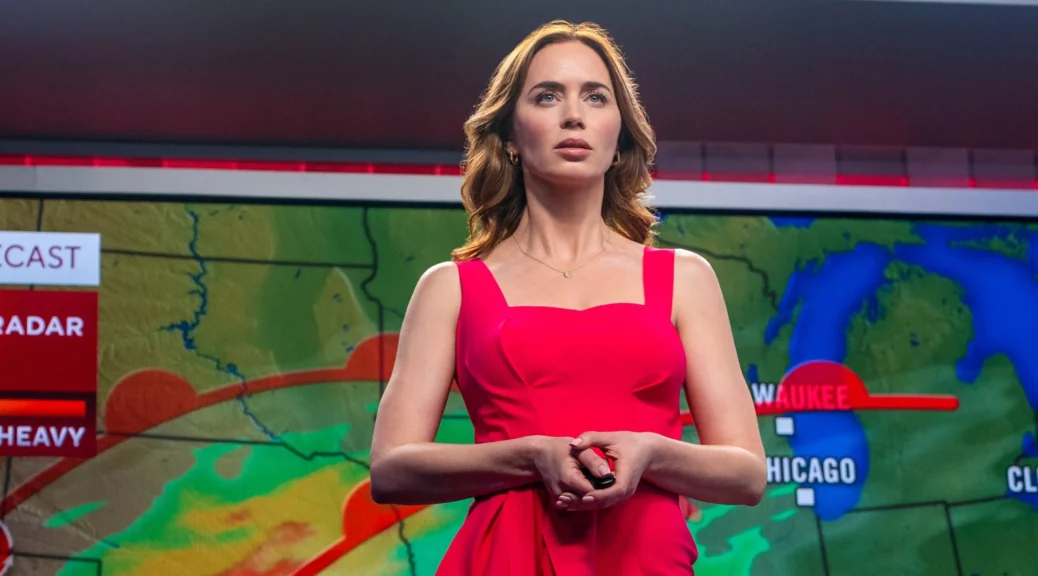
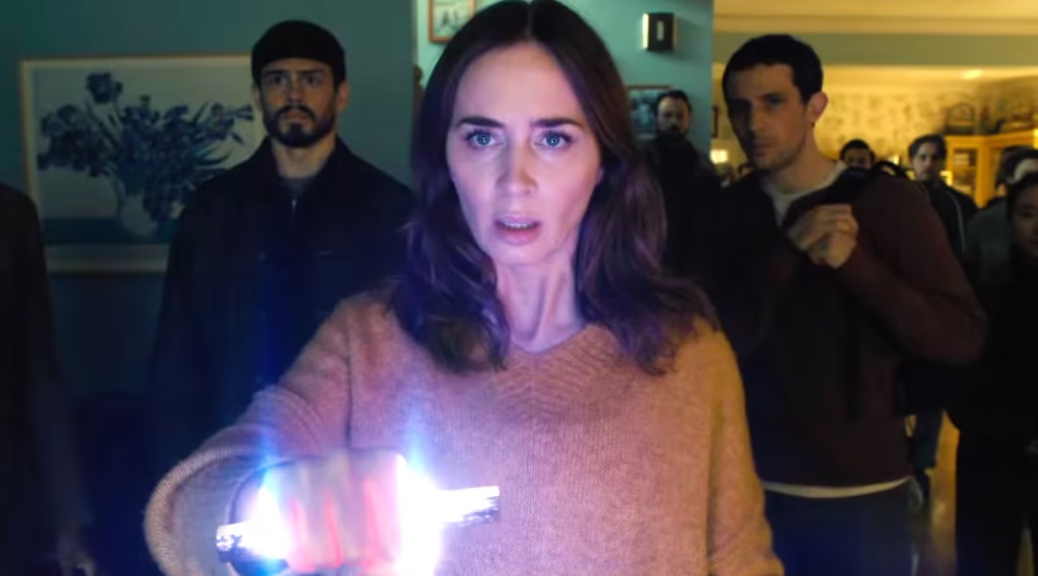
Cut to the charmingly unserious Kansas City meteorologist, Margaret Fairchild (Emily Blunt). Quite suddenly, over the objections of Margaret’s equally unserious boyfriend (Wyatt Russell), she’s on a collision course with Daniel while Scanlon’s high tech, black clad operatives use all intel on hand to close in.
The shot making is Spielberg at his most reflectively, thrillingly Spielbergian. Disorienting, gorgeous, and often recalling his own work in nod after ingenious nod. Plus, John Williams came out of retirement, pairing music to scene to reliably engrossing effect.
Colman Domingo offers his support as the father figure whose let wonder and optimism override knee jerk fear and cynicism.
Everybody’s great, Blunt in particular. And there’s a lovely sentiment fueling the tale as Spielberg uses his familiar themes to point to the weaponization of religion and society’s bottomed-out belief in humanity.
But the world is not the same place it was when Richard Dreyfuss wasted a good plate of mashed potatoes. As well made and engaging as Disclosure Day is, the third act reveals what the first two suggested. For a comment on the state of the world, or an extra-terrestrial thriller, the film’s sweet, quaint, and somewhat irrelevant.
A few questionable details would be easier to overlook thanks to the film’s admirable momentum had it all led somewhere less telegraphed and less wide-eyed.

On this week’s Screening Room podcast, Hope & George review Masters of the Universe, Power Ballad, Carolina Caroline, Office Romance, Scary Movie, Strange Journey: The Story of Rocky Horror, Chum, and Seven Snipers!
by Hope Madden
Mattel, the company behind Greta Gerwig’s brilliant blockbuster Barbie, follows that unprecedented success by backing another woman centered feature driven by an Oscar worthy screenplay and helmed by a genius female filmmaker.
JK. They’re just making another toy movie.
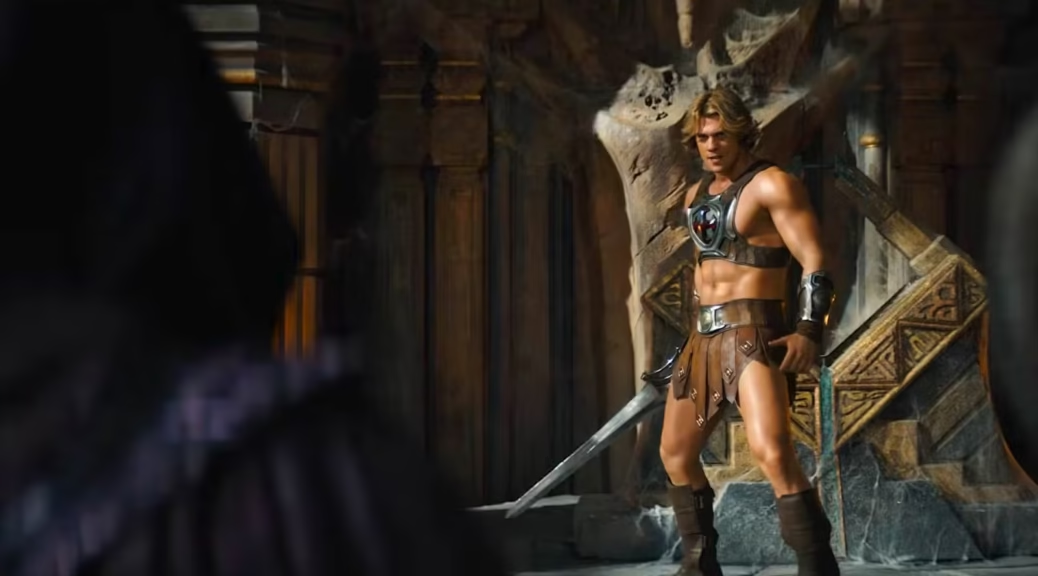
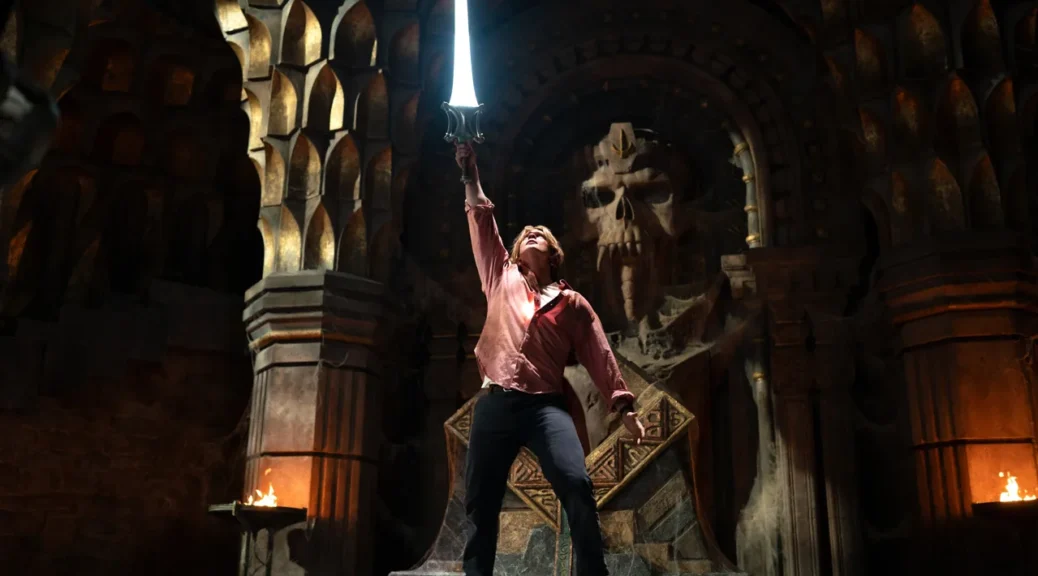
Mattel welcomes you to Pride month with the return of their second pinkest toy. Bulging hero He Man (Nicholas Galitzine), saucy villain Skeletor (Jared Leto), and scrappy helpers including Ram Man (Jon Xue Zhang) and Fisto (Jóhannes Haukur Jóhannesson), unite for a semi-campy Masters of the Universe origin story.
Director Travis Knight, who somehow carved one worthwhile film out of the Transformers franchise (Bumblebee), is tapped to try to Gerwig-up this afternoon 80s staple. The filmmaker’s been nominated three times for Oscars, all for producing truly exceptional animated films. He works here with a team of writers (Chris Butler, Aaron Nee, Adam Nee), collaborators all on other great animated features. It’s not Gerwig and Baumbach, but it’s an impressive pedigree for Masters of the Universe.
The cast off the top impresses. Galitzine, so spot-on in both Bottoms and 100 Nights of Hero, charms as the bumbling prince returned from Earth to save Eternia from the clutches of the cackling, weirdly muscular Skeletor.
Idris Elba elevates scene after scene as Duncan/Man at Arms, the tough talking softie who mentored young Adam and has become a bit of a lush in his absence.
Leto’s adequate. But Knight articulates his henchmen (Trap Jaw, Beast Man, Goat Man) well with a good practical/CGI mix.
The tone is the thing. Masters of the Universe is both playful and self-serious. This doesn’t always work cinematically, but there’s tenderness for the franchise baked into the film. And certain things require a bit of ribbing. Fisto? Seriously?
The good natured humor is not enough to entirely salvage the movie. Indeed, it makes you realize anew how remarkable Barbie was for its lack of cynicism and endless insight. But we may never again see a film quite like Barbie, especially if men keep deciding who makes movies. As Orko might have helped us see at the end of an episode, Masters of the Universe is no masterpiece, but sometimes it’s OK to have fun. And the movie is OK.
Stay tuned for three post-credits scenes. Number one will thrill fans, while two and three tease future installments. Bye for now!
by Hope Madden
Bourbon soaked and steamy, Carolina Caroline spins a modern Bonnie & Clyde tale with brains, sexual chemistry and emotional impact.
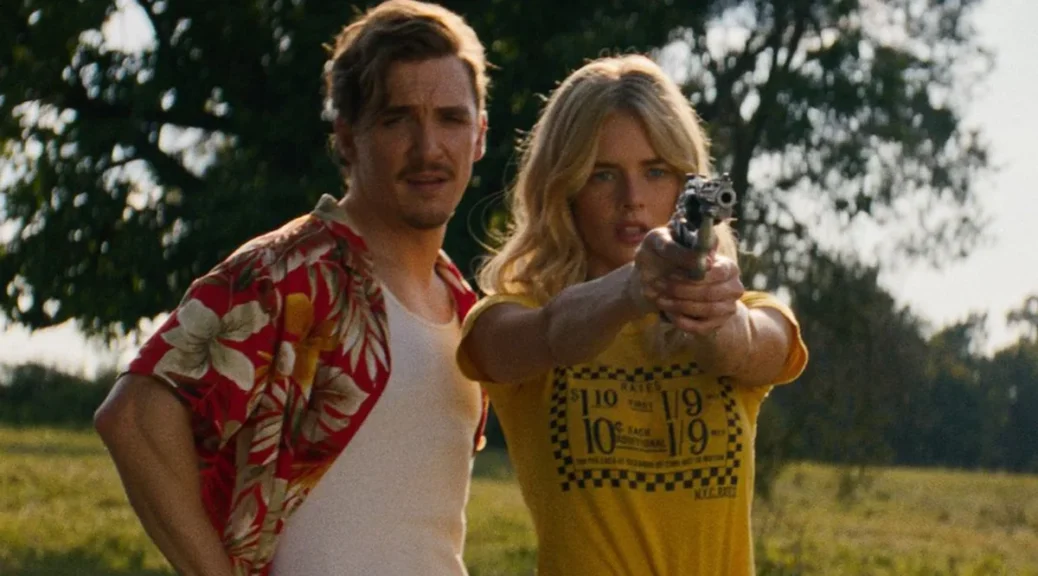
Samara Weaving is Caroline Daniels, stocking shelves and cleaning bathrooms at a two-pump filling station in an ambiguously timestamped, uncertainly located small Texas town. In walks Oliver (Kyle Gallner). He’s not from around here. And she is the one thing Oliver cannot entirely predict.
Director Adam Rehmeier struck gold with this cast. Certainly, he knew Gallner’s capabilities going in, the actor having led his subversive yet adorable misfit romance Dinner in America in 2022. Gallner’s as reliably magnetic an actor as anyone working today, forever mining the outsider character for its humanity.
And Weaving is just a star, pure and simple. Impossible to look away from, charming and vulnerable, those enormous eyes taking everything in, the wheels always turning, in her hands, Caroline is no cliched country beauty.
Strong support from Jon Gries (so dear as Caroline’s dad) and Kyra Sedgewick (brutal!) keep you emotionally engaged.
After two top-tier comedies (Dinner in America and Snack Shack), it’s impressive to see Rehmeier show such instincts with sexier, heavier material. It would have been simple enough for him to coast on the chemistry between his leads, Jean-Philippe Bernier’s photography, and an impossibly on-point honky tonk score and still produce a film worth watching. Although, there are times when that’s kind of what he does.
Writer Tom Dean (Charlie Harper) usually sidesteps cliché, even given the film’s worn-thin roadmap. We have heist machinations, romance, violence, laughs, family drama and more, none of it out of place or off putting. But maybe because of the skill Rehmeier shows in keeping this road picture intimate, when the script hits some obvious notes, they stand out.
But then Weaving moseys in and rescues the scene with unbridled charisma, and you’re back to enjoying yourself. For the film’s handful of rough patches, it would be a shame to miss Gallner and Weaving sizzle like this.

by Hope Madden
I would like…if I may…to take you on a Strange Journey.
Linus O’Brien—son of Rocky Horror creator Richard O’Brien—directs a mash note by way of documentary about his dad’s other baby. For fans of the show and film, the documentary is a delightful accounting of the phenomenon that is Rocky Horror.
Strange Journey: The Story of Rocky Horror chronicles Richard O’Brien’s early plans for the stage show, his collaborators, its humble beginnings and its immediate success. And though the spine of the film is a sequential history from stage to screen, box office bomb to midnight monster, the flesh on those bones is tender and tasty.
O’Brien the elder is raw and emotional, but like everyone else in the film, brimming with joy over the film’s lasting impact. He strums out some greatest hits, in fine voice for 83! O’Brien the director flanks the homey footage of his father with interview pieces from everyone you hope to see.
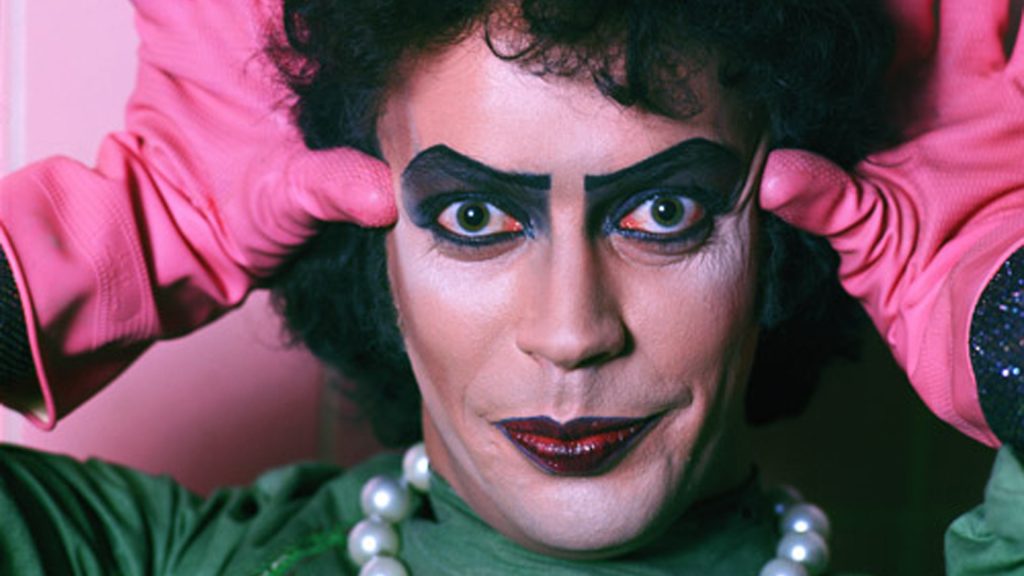
Tim Curry (a scientist), Susan Sarandon (slut), Barry Bostwick (asshole), Patricia Quinn (a domestic), Nell Campbell (a groupie), and Peter Hinwood (a creation) all have fun and funny tales to tell. It is especially dear to hear how in awe everyone was of Curry, undeniably iconic in the lead role. And listening to both Quinn and Campbell note their shock at Meatloaf’s voice is a kick.
Film producer Lou Adler and director Jim Sharman shed some light on the maneuvering that went on to keep O’Brien’s vision pure. As the doc kicks into its third act, both O’Briens are keen to shift focus to fans.
Richard O’Brien created, for himself firstly and luckily for the rest of us, a film that celebrates the weirdo, that revels in gender and sexual fluidity, that disdains the status quo. He created a raucous, glittery space where people could stop pretending to be ordinary and could indulge in their own beautiful uniqueness.
At the film’s end, Richard O’Brien tells us that Rocky Horror isn’t his at all. It belongs to all of us. Strange Journey is essential viewing for all of us too.

by Hope Madden
There is reason to compare Backrooms, feature debut from 19-year-old co-writer/director Kane Parsons, to Skinamarink, the 2022 feature debut from writer/director Kyle Edward Ball. If you are one of the many who found Ball’s nightmare an effective, even terrifying head trip, Backrooms might be for you.
If you didn’t, that’s OK too. Backrooms shares the true experiential nature—you may feel as though the director has somehow filmed your actual nightmares. But a lot more happens in this one.
Backrooms is liminal space horror, not entirely unlike Genki Kawamura’s effective video game adaptation, Exit 8. But for all these comparisons, Parsons crafts an unnervingly unique excursion into the uncanny.
Captain of that voyage is Clark (Chiwetel Ejiofor). He manages a furniture store where he dresses like a pirate for low-fi ads. It’s 1990. Clark wanted to be an architect. He just keeps making the same mistakes, like a circuit he follows forever expecting a different destination. That’s why he sees Dr. Mary Krane (Renate Reinsve).
Let’s pause, because that’s reason enough to see the movie. Here are two actors who’ve built careers on understated, natural performances that ground every moment onscreen in something honest. Which makes them a magnificent choice for a film where nothing makes sense, and that’s the whole point.
Kane adapts a series of shorts that made him a YouTube force, all of it based on online Twenty-teens creepypasta dread of being trapped eternally in an endless, yellow, moistly carpeted maze of empty rooms with no hope of escape.
The fact that Parsons turned this concept into a compelling feature essentially about our own labyrinthine minds and psychiatry’s impotence is pretty impressive for a fucking teenager!
Both leads give the film earnest vulnerability and obvious intelligence, which sells the madness. Their few scenes together are wonderful, but that’s not simply because of their talent. The script is engrossing, forever mirroring what’s been seen and said in a way that could feel heavy handed were it not for Kane’s sure direction.
It’s easy to make a trippy movie that doesn’t make sense because you don’t really have to make sense. A lot of bad horror leaves you guessing because of sloppy scripting. Backrooms never feels sloppy. Every tee shirt, piece of furniture, neighborhood street feels intentional, tells its own story. Everything loops, remembers but doesn’t, until you can’t shake the dread that nothing is right.
Backrooms, because it’s so singular in its vision, won’t sit with everyone. But for those of us who have nightmares of being trapped in room after windowless room of fluorescent buzz and mildew smell, this is our Skinamarink. I mean that in the best way possible.
by Hope Madden
For anyone bemoaning the state of the film industry, claiming that there are no original films, only sequels and superheroes, may I introduce you to Boots Riley?
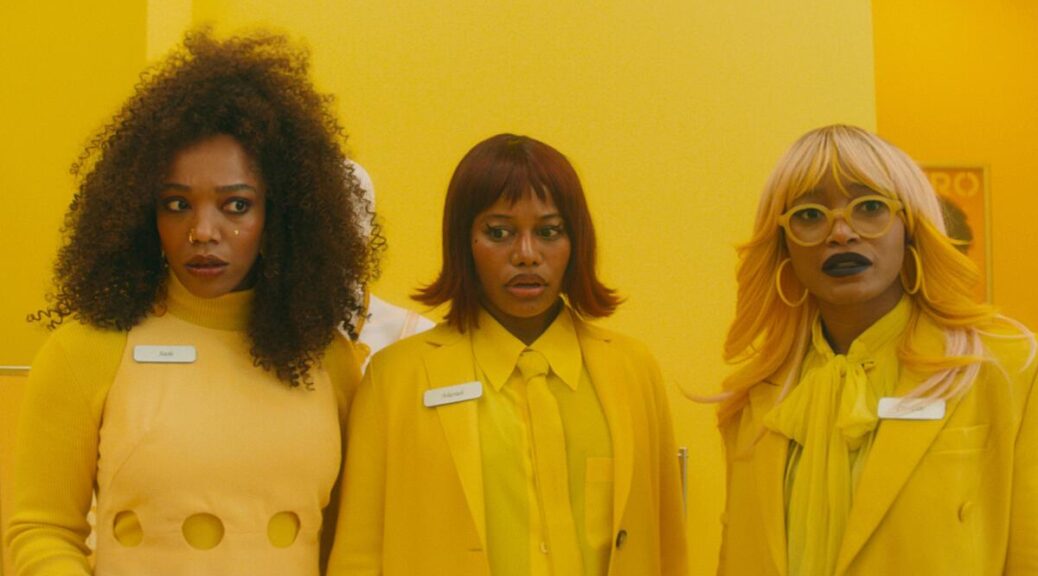
There is no more original voice in cinema today. And what’s extra great is that the voice is actually saying something worth hearing. His second feature, I Love Boosters, certainly proves that there’s talent looking to work with a visionary filmmaker. Look at this cast: Keke Palmer, Naomi Ackie, Taylour Paige, Don Cheadle, LaKeith Stanfield, Demi Moore, Eiza González, Will Poulter. Damn.
They tell a wild, boldly colorful, sometimes Claymation, often surreal, occasionally demonic, fantastical, consistently smart, regularly hilarious, and shockingly personal tale about the individual’s need for community. And, of course, the inescapable evils of capitalism.
Thanks to Palmer and Ackie, there’s a crackling emotional center that sets the friction between community and the individual on understandable ground. Stanfield is a hoot as an emotionally naked suitor (that storyline takes a turn!), Moore is great as the brash talking “innovator,” and it may take a moment to recognize Cheadle, but you won’t forget him.
If you saw Riley’s 2018 jaw-dropper Sorry to Bother You, you know to go in with no expectations. Predictability is not one of the tools this filmmaker wields. And though there are no horse men in I Love Boosters, the movie goes in wild directions.
But excess is Riley’s joyous medium. And no one paints revolution with such glorious color.
Underneath the metaphysical science fiction banter, beneath the scathingly comical evisceration of fast fashion, at the heart of the wacky heist flick, is a lonesome story that resonates. It’s all one struggle.
If that doesn’t sound entertaining, then I’m not doing my job correctly. Brazenly original, ridiculously entertaining, with relevance and immediacy to spare, Boots Riley’s second feature film I Love Boosters is the adventure of the summer.
by Hope Madden
Star Wars has been around for nearly a half century. We’ve seen films, sequels, prequels, TV series, books, animation, Legos, and one epically weird Christmas special. But we haven’t seen a feature film since 2019, and we’ve never seen a feature film based on a TV show. Until now, with Jon Favreau’s Star Wars: The Mandalorian and Grogu.
Much is still the same. Bad guys still have terrible aim, faulty weapons, and super cool monsters. Good guys have decent aim, reliable weapons but unreliable transportation, and cute and friendly beasties.
The film picks up where Season 3 left off as a sort of replacement for Season 4. And that’s kind of how it feels—not like an epic adventure, more like an extended episode. The X Files movie of the Star Wars franchise.
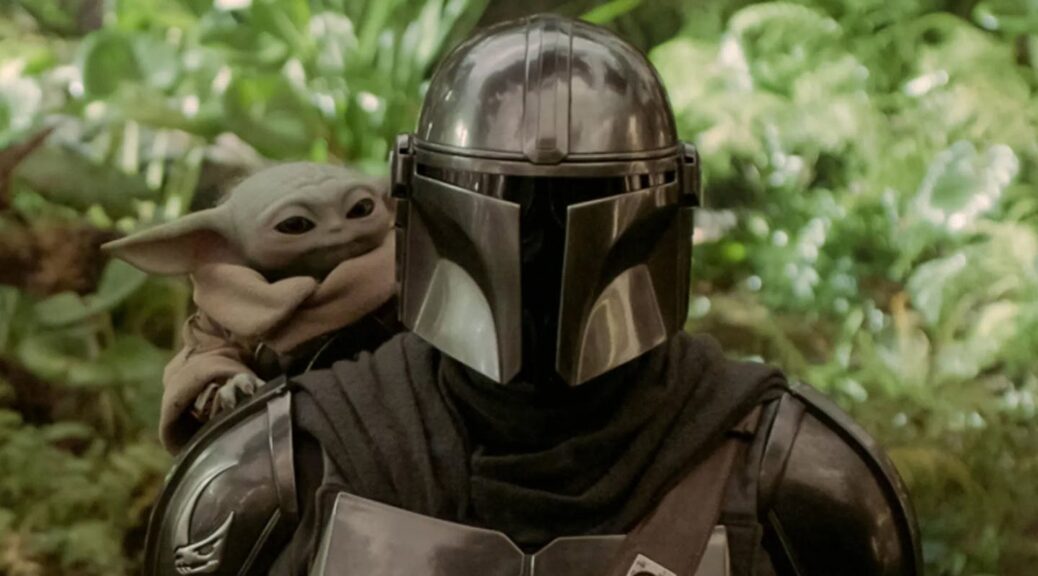
Mando (Pedro Pascal) and Grogu agree to save Rotta the Hutt (voiced by Jeremy Allen White) from a gladiator-style imprisonment in return for information from his aunt and uncle, “The Twins.”
Naturally, it involves star fights, surprise monster battles, a barroom brawl, and dirty dealings. But no matter the odds, the Mandalorian is noble and Grogu is cute. The CGI, though? Sketchy.
Mando’s co-pilot Zeb Orrelios (Steve Blum) looks bad, especially his face. There is one gorgeously rendered dragon snake thing, but otherwise, most of the monsters are under articulated. The action, whether hand-to-hand or in the air, feels uninspired.
There is a long break in the live-action action that’s pretty great. First, we travel with Grogu and the Anzellans—gripey little mechanics who make baby Yoda look big. And later, Grogu has an episode all his own. Both sequences let the film breathe and let the audience spend some quality time with the character we probably came for.
Otherwise, the story is capably written and told. The score is adequate and the cinematography is OK. There are questions. Why does actor Jonny Coyne go by his actual name in this movie? And why is it so sexy to hear Sigourney Weaver (as Colonel Ward) say: “Going in weapons hot”?
But narratively, no. They cover everything. And it’s fine. It’s sometimes really fun, often super cute, frequently amusing, and easily the most forgettable film in the whole Star Wars galaxy.