Short and sweet, like most of its performers, Tod Browning’s controversial film Freaks is one of those movies you will never forget. Populated almost entirely by unusual actors – midgets, amputees, the physically deformed, and an honest to god set of conjoined twins (Daisy and Violet Hilton) – Freaks makes you wonder whether you should be watching it at all. This, of course, is an underlying tension in most horror films, but with Freaks, it’s right up front. Is what Browning does with the film empathetic or exploitative, or both? And, of course, am I a bad person for watching this film?
Well, that’s not for me to say. I suspect you may be a bad person, perhaps even a serial killer. Or maybe that’s me. What I can tell you for sure is that this film is unsettling, and the final, rainy act of vengeance is truly creepy to watch.
Beautiful ‘normal’ Cleopatra (Olga Baclanova) performs in the circus, flirting with sideshow manager Hans (Harry Earles) for the perks – the gifts, and the chance to mock him with the other ‘normals’ in the group. When she realizes that Hans is loaded, she decides to marry and then kill him, with the help of dunderheaded Hercules (Henry Victor).
Among the film’s drawbacks are the ridiculously thick accents of most of the principal actors. Earles, in particular, is almost impossible to understand, but he is – god help me – absolutely adorable. That’s Hans’s problem, of course. His baby face and tiny stature make him tough to take seriously, and his tendency to fall for opportunistic bitches that tower over him isn’t helping.
To make things even more unseemly, Hans is loved truly by fellow little person Frieda, played by the actor’s own sister Daisy. The two characters are not, as far as I can tell, meant to be related, but they look exactly alike, which just makes the whole effect all the weirder. I have no idea if this was intentional or not, but I’m for it.
Well sir, the close knit “family” of freaks gets wind of Cleopatra’s plan, and they exact revenge. The revenge itself – the final act – makes no logical sense, but the perpetration is awesome.
Browning’s camera stays near the ground, filming everything as lowly, dark, hiding, creeping. He’s taking the inconcrete fear we have of what is abnormal and making it literal: that which we hide from view will creep forth and kill us.
Or, turn us into a chicken lady.
Listen weekly to MaddWolf’s horror podcast FRIGHT CLUB. Do it!
A paranoid fantasy about the link between progress and emasculation, The Ordeal sees a timid singer stuck in the wilds of Belgium after his van breaks down en route to his big Christmas gig.
Writer/director Fabrice Du Welz’s script scares up the darkest imaginable humor. If David Lynch had directed Deliverance in French, the concoction might have resembled The Ordeal. As sweet, shy singer Marc (a pitch perfect Laurent Lucas) awaits aid, he begins to recognize the hell he’s stumbled into. Unfortunately for Marc, salvation’s even worse.
The whole film boasts an uneasy, “What next?” quality. It also provides a European image of a terror that’s plagued American filmmakers for generations: the more we embrace progress, the further we get from that primal hunter/gatherer who knew how to survive.
Du Welz animates more ably than most our collective revulsion over the idea that we’ve evolved into something incapable of unaided survival; the weaker species, so to speak. Certainly John Boorman’s Deliverance (the Uncle Daddy of all backwoods survival pics) understood the fear of emasculation that fuels this particular dread, but Du Welz picks that scab more effectively than any filmmaker since.
Plus there’s dancing!
The entire cast – freaks, every one – is so memorable, so fascinating. Du Welz creates an almost amiable curiosity with each character, although poor Marc’s increasingly horrific circumstances proves that even the biggest sweetheart here is capable of really, seriously bad things.
His film is a profoundly uncomfortable, deeply disturbing, unsettlingly humorous freakshow that must be seen to be believed. So, you know, watch it!
Listen weekly to MaddWolf’s horror podcast FRIGHT CLUB. Do it!
Give writer/director Jorge Michel Grau credit, he took a fresh approach to the cannibalism film. His Spanish language picture lives in a drab underworld of poverty teeming with disposable populations and those who consume flesh, figuratively and literally.
In a quiet opening sequence, a man dies in a mall. It happens that this is a family patriarch and his passing leaves the desperately poor family in shambles. While their particular quandary veers spectacularly from expectations, there is something primal and authentic about it.
It’s as if a simple relic from a hunter-gatherer population evolved separately but within the larger urban population, and now this little tribe is left without a leader. An internal power struggle begins to determine the member most suited to take over as the head of the household, and therefore, there is some conflict and competition – however reluctant – over who will handle the principal task of the patriarch: that of putting meat on the table.
We’re never privy to the particulars – which again gives the whole affair a feel of authenticity – but adding to the crisis is the impending Ritual, which apparently involves a deadline and some specific meat preparations.
Grau’s approach is so subtle, so honest, that it’s easy to forget you’re watching a horror film. Indeed, were this family fighting to survive on a more traditional level, this film would simply be a fine piece of social realism focused on Mexico City’s enormous population in poverty. But it’s more than that. Sure, the cannibalism is simply an extreme metaphor, but it’s so beautifully thought out and executed!
The family dynamic is fascinating, every glance weighted and meaningful, every closed door significant. Grau draws eerie, powerful performances across the board, and forever veers in unexpected directions.
We Are What We Are is among the finest family dramas or social commentaries of 2010. Blend into that drama some deep perversity, spooky ambiguities and mysteries, deftly handled acting, and a lot of freaky shit and you have hardly the goriest film in the genre, but certainly one of the most relevant.
Listen to MaddWolf’s weekly horror movie podcast FRIGHT CLUB. Do it!
The 2013 revenge thriller Blue Ruin heralded writer/director Jeremy Saulnier as a filmmaker bursting with the instincts and craftsmanship necessary to give familiar tropes new bite. In Green Room his color scheme is horror, and the finished work is equally suitable for framing.
Young punk band the Ain’t Rights is in desperate need of a paying gig, even if it is at a rough private club for the “boots and braces” crowd (i.e. white power skinheads). Bass guitarist Pat (Anton Yelchin) eschews social media promotion for the “time and aggression” of live shows, and when he accidentally witnesses a murder in the club’s makeshift green room, Pat and his band find plenty of both.
Along with concertgoer Amber (a terrific Imogen Poots), they’re held at gunpoint while the club manager (Macon Blair from Blue Ruin) fetches the mysterious Darcy (Patrick Stewart, gloriously grim) to sort things out. Though Darcy is full of calm reassurances, it quickly becomes clear the captives will have to fight for their lives.
As he did with Blue Ruin, Saulnier plunges unprepared characters into a world of casual savagery, finding out just what they have to offer in a nasty backwoods standoff. It’s a path worn by Straw Dogs, Deliverance, and plenty more, but Saulnier again shows a knack for establishing his own thoughtful thumbprint. What Green Room lacks in depth, it makes up in commitment to genre.
He drapes the film in waves of thick, palpable tension, then punctures them with shocking bursts of gore and brutality. Things get plenty dark for the young punkers, and for us, as Saulnier often keeps light sources to a minimum, giving the frequent bloodletting an artful black-and-white quality which contrasts nicely with the symbolic red of certain shoelaces.
And yet, Saulnier manages to let some mischievous humor seep out, mainly by playing on generational stereotypes. Poots, barely recognizable under an extreme haircut and trucker outfit, has the most fun, never letting bloody murder alter Amber’s commitment to bored condescension. Love it.
Only a flirtation with contrivance keeps Green Room from classic status. It’s lean, mean, loud and grisly, and a ton of bloody fun.
Listen to MaddWolf’s weekly horror podcast Fright Club. Do it!
In a bit of meta-filmmaking, Man Bites Dog is a pseudo-documentary made on a shoestring budget by struggling, young filmmakers. It is about a documentary being made on a shoestring budget by struggling, young filmmakers. The subject of the fictional documentary is the charismatic Ben – serial killer, narcissist, poet, racist, architecture enthusiast, misogynist, bird lover.
There’s more than what appears on the surface of this cynical, black comedy. The film crew starts out as dispassionate observers of Ben’s crimes. They’re just documenting, just telling the truth. No doubt this is a morally questionable practice to begin with. But they are not villains – they are serving their higher purpose: film.
Eventually the filmmakers’ commitment to the project, fear of retaliation, bloodlust, or sense of camaraderie pushes them toward aiding Ben, and then finally, to committing heinous crimes themselves.
Benoit Poelvoorde’s (who also co-directs) performance as Ben is just as quirky, ridiculous and self-centered as it can be. He’s perfect. His character needs to move the group toward fear, camaraderie, and sometimes even pity – but slyly, he also moves the audience.
The film examines social responsibility as much as it does journalistic objectivity, and what Man Bites Dog has to say about both is biting. It’s never preachy, though.
Theirs is a bitter view of their chosen industry, and – much like The Last Horror Movie – a bit of a condemnation of the viewer as well. The fact that much of the decidedly grisly content is played for laughter makes it that much more unsettling.
There are cynical chuckles to be has as members of the crew die off, one by one, and the remaining crew come up with teary excuses to soldier on with the film. But filmmaker and views alike have been made unclean by what we’ve chosen to participate in.
Listen weekly to MaddWolf’s horror podcast FRIGHT CLUB. Do it!
In 2015 -a year rife with exceptional Westerns – this film sets itself apart. S. Craig Zahler’s directorial debut embraces the mythos of the Wild West, populating a familiar frontier town with weathered characters and casting those archetypes perfectly.
Kurt Russell and Richard Jenkins, in particular, easily inhabit the upright sheriff and eccentric side kick roles, while Patrick Wilson’s committed turn as battered, heroic lead offers an emotional center.
Even the heretofore unexceptional Matthew Fox finds a little wounded humanity in his swagger as Brooder, the fancy-lad sharp shooter who volunteers to help Wilson and posse find his wife, believed to have been nabbed by cannibals.
Cannibals?! Hell yeah!
Zahler effortlessly blends the horror and Western genres, remaining true to both and crafting a film that’s a stellar entry into either category. Bone Tomahawk looks gorgeous and boasts exceptional writing, but more than anything, it offers characters worthy of exploration. There are no one-note victims waiting to be picked off, but instead an assortment of fascinating people and complex relationships all wandering into mystical, bloody danger.
This is not your typical cowboys and Indians film – Zahler is (perhaps too) careful to clarify that. This is more of an evolutionary wonder taking place – kind of a Hills Have Eyes in 1869.
Because the true horror is a long time coming and you’re genuinely invested in the participants in this quest, the payoff is deeply felt. This is a truly satisfying effort, and one that marks a new filmmaker to keep an eye on.
Listen weekly to MaddWolf’s horror podcast FRIGHT CLUB. Do it!
When aren’t vacations a horror show? Remember that time the car a/c broke and your dad wouldn’t let you roll the windows down because the wind made his hearing aids whistle? God, that sucked. But our research had led us to believe that there are worse miseries than driving cross country with Mark Madden. Hundreds, actually – traveling abroad, camping, boating, island adventures. Here are a handful that will make you want to just stay home.
5. Wolf Creek (2005)
Using only digital cameras to enhance an ultra-naturalistic style, writer/director Greg McLean’s happy backpackers find themselves immobile outside Wolf Creek National Park when their car stops running. As luck would have it, friendly bushman Mick Taylor (John Jarratt) drives up offering a tow back to his camp, where he promises to fix the vehicle.
If this sounds predictable and obvious to you, rest assured that McLean has plans to burst every cliché in the genre, and he succeeds on almost every level.
His first triumph is in the acting. Jarratt’s killer is an amiable sadist who is so real it’s jarring. You find yourself hoping he’s an actor. His performance singlehandedly shames the great Tobe Hooper and Wes Craven, whose backwoods horror films relied so completely on caricatures for villains.
A horror film this realistic is not only hard to watch, but a bit hard to justify. What makes an audience interested in observing human suffering so meticulously recreated? This is where, like a true artist, McLean finally succeeds. What is as unsettling as the film itself is that its content is somehow satisfying.
4. Eden Lake (2008)
The always outstanding Michael Fassbender takes his girl Jenny (Kelly Reilly) to his childhood stomping grounds – a flooded quarry and soon-to-be centerpiece for a grand housing development. He intends to propose, but he’s routinely disrupted, eventually in quite a bloody manner, by a roving band of teenaged thugs.
Kids today!
The film expertly mixes liberal guilt with a genuine terror of the lower classes. The acting, particularly from the youngsters, is outstanding. Most impressive, Jack O’Connell’s performance as the young psychopath is chilling.
There’s the slow boil of the cowardly self-righteous. Then there’s this bit with a dog chain. Plus a railroad spike scene that may cause some squeamishness. Well, it’s a grisly mess, but a powerful and provocative one. Excellent performances are deftly handled by the director who would go on to helm The Woman in Black.
Don’t expect spectral terror in this one, though. Instead you’ll find a bunch of neighborhood kids pissed off at their lot in life and taking it out on someone alarmingly like you.
https://www.youtube.com/watch?v=_9kuMFPW0YI
3. The Descent (2005)
A bunch of buddies get together for a spelunking adventure. One is still grieving a loss – actually, maybe more than one – but everybody’s ready for one of their outdoorsy group trip.
Writer/director Neil Marshall begins his film with an emotionally jolting shock, quickly followed by some awfully unsettling cave crawling and squeezing and generally hyperventilating, before turning dizzyingly panicky before snapping a bone right in two.
And then we find out there are monsters.
Long before the first drop of blood is drawn by the monsters – which are surprisingly well conceived and tremendously creepy – the audience has already been wrung out emotionally.
The grislier the film gets, the more primal the tone becomes, eventually taking on a tenor as much like a war movie as a horror film. This is not surprising from the director that unleashed Dog Soldiers – a gory, fun werewolf adventure. But Marshall’s second attempt is far scarier.
For full-on horror, this is one hell of a monster movie.
2. Deliverance (1972)
Nine notes on a banjo have never sounded so creepy.
Deliverance follows four buddies staving off mid-life crises with a canoeing adventure in southern Georgia, where a man’s not afraid to admire another man’s mouth.
James Dickey streamlined his own novel to its atmospheric best, and director John Boorman plays on urbanite fears like few have done since. Dickey and Boorman mean to tell you that progress has created a soft bellied breed of man unable to survive without the comforts of a modern age.
The film, while steeped in testosterone, also mocks modern man’s desire to conquer nature. It does so by viewing the manly weekend through the eyes of four different types of men: Burt Reynolds’s alpha male, Ronny Cox’s open-hearted optimist, Jon Voight’s introspective intellectual, and poor, doomed Ned Beatty’s smug businessman.
Solid performances, particularly from Voight and Reynolds (this is the guy you want on your zombiepocalypse team), and startlingly effective photography fold perfectly into Boorman’s harrowing tale. This raw, unsettling authenticity helps Deliverance sidestep a hixploitation label, but you’re not likely to look at rural Southerners the same way again.
1. Funny Games (’97, ’07)
A family pulls into their vacation lake home. They are quickly bothered by two young men in white gloves. Things, to put it mildly, deteriorate.
Writer/director/genius Michael Haneke begins this nerve wracking exercise by treading tensions created through etiquette, toying with subtle social mores and yet building dread so deftly, so authentically, that you begin to clench your teeth long before the first act of true violence.
The teen thugs’ calm, bemused sadism leaves you both indignant and terrified as they put the family through a series of horrifying games. And several times, they (and Haneke) remind us that we are participating in this ugliness, too, as we’ve tuned in to see the family suffer. Sure, we root for the innocent to prevail, but we came into this with the specific intention of seeing harm come to them. So, the villains rather insist that we play, too.
His English language remake is a shot for shot repeat of the German language original. In both films, it is the villains who sell the premise. Whether the German actors Arno Frisch and Frank Giering or the Americans Brady Corbet and Michael Pitt, the bored sadism that wafts from these kids is seriously unsettling, as, in turn, is each film.
To find a serial killer, you have to get inside his head. This is not a new concept in horror movies, thrillers, police procedurals. No, this is a tired conceit.
But Irish filmmaker Billy O’Brien (Isolation) finds a new vision for it with his wry, understated indie I Am Not a Serial Killer.
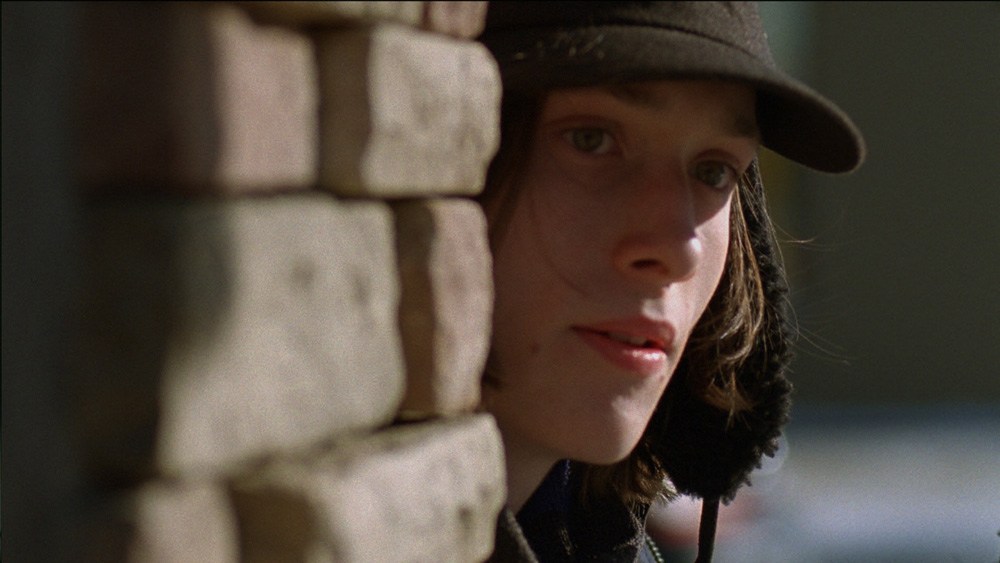
John (Max Records) is an outsider in a small Minnesota town. He works in his mom’s morgue, writes all his school papers on serial killers, and generally creeps out the whole of his high school. His preoccupations have landed him a therapist, the bird enthusiast Dr. Neblin (Karl Geary).
Turns out, John is a budding sociopath – that’s his official diagnosis. A good kid who lacks empathy, may not feel love, and obsesses over death and murder, he follows self-imposed rules and rituals to try to make himself normal and ensure the safety of those around him.
But when townsfolk start turning up in gory pieces, John turns his keen insights on the case.
Though O’Brien’s film may be too quiet an effort to command attention, his coming-of-age approach and indie sensibilities help him turn this outlandish and contrived effort into something touching, humorous and rewarding.
Records, who melted me as young Max in Spike Jonze’s 2009 masterpiece Where the Wild Things Are, serves up an extraordinarily confident, restrained performance. One scene, in particular – when he turns the tables on a bully at the school dance – is outstanding.
His onscreen chemistry with the nice old man across the street – Back to the Future’s Christopher Lloyd – generates thrills enough to offset the movie’s slow pace.
For his part, Lloyd is in turns tender, heartbreaking and terrifying.
The story cleverly inverts the age-old “catch a killer” cliché and toys with your expectations as it does. Robbie Ryan’s grainy cinematography gives the film a throwback looks that fits the image of a depressed Midwest town lost in time.
Bursts of driest humor keep the film engaging, while Records’s performance engenders the kind of empathy from the audience that the character himself could never muster.
It’s an effective twist on the serial killer formula, certainly, not to mention a coming-of-age tale that accepts its unpopular protagonist for who he is rather than how he could be made over to be happier in a way that makes us comfortable.
The evil stepmother has been a source of fear and dread for eons. The Grimm brothers knew it – they disliked stepmothers as much as they disliked wolves. Horror has picked that same scab again and again over the years, but it’s not just that mom-substitute that you need to worry over. As we discover this week, stepdads – especially the heavily bearded, axe-wielding variety – are just as problematic.
5. The Stepfather (1987)
Years before Terry O’Quinn gained a following on Lost (or West Wing or Alias or Millennium), he crafted a memorable villain out of a weakly written toss-off of a horror flick, creating, in turn, a movie worth a second look.
With an idyllic suburb-turned-nightmare hellscape, the film opens like John Carpenter’s Halloween, the camera wading through the falling leaves and quiet street before stopping on the window of one particularly unpretentious little home. Inside, O’Quinn quickly and effectively establishes character. This is an actual character, not a cookie cutter psycho, and on the strength of his performance, this bloody confection of 80s family values works.
O’Quinn’s Jerry Blake marries into fatherless homes, ever seeking the perfect family. As soon as he sees the reality of familial bliss, he decides his family is a disappointment and slaughter ensues. As the film unspools, Jerry’s new brood, including Charlie’s Angel’s Shelley Hack, as well as Jill Schoelen, as her 16-year-old daughter, show signs of fatigue already.
Stepfather explores ideas of the exclusivity of the American dream and the inexplicable popularity of shaker knit sweaters. Mostly, though, it mines that same tension that worked so well for the Brothers Grimm: the fear inherent in taking on a step parent, in that they not only represent the finality of the loss of a beloved, but the possibility that the new household head to which you must submit will actually bring you danger.
https://www.youtube.com/watch?v=HZGHTP2dH10
4. Amityville Horror (1979)
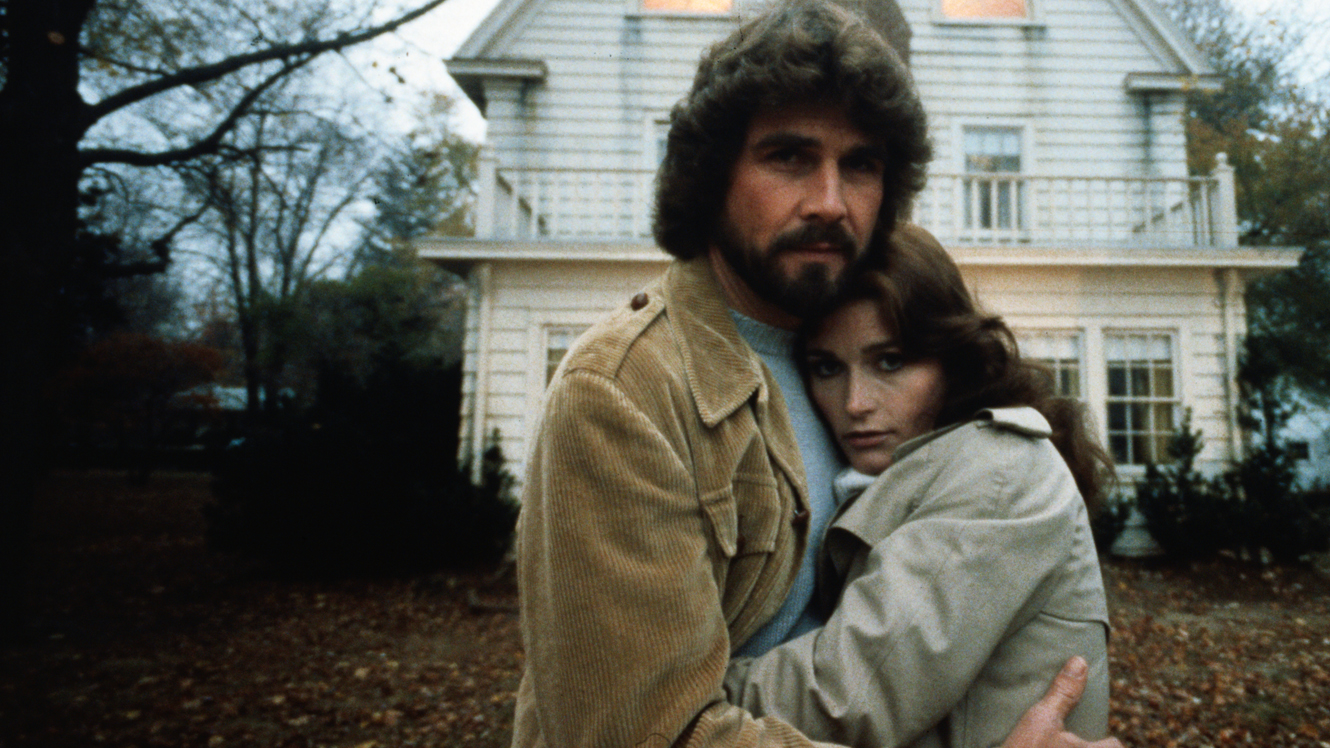
Back in the Seventies, Long Island residents Kathy and George Lutz caused quite a stir with their tale of a diabolical house that nearly killed their whole family. The cultural hysteria they stirred led to a bestselling book, at least ten feature films and a documentary. The most famous of the cinematic efforts was the 1979 flick, a picture that followed the Lutzes as they took one step inside 112 Ocean Avenue and screamed, “Oh my God, this wallpaper is hideous!”
But, the house was really cheap, what with the former tenants having all been slain by their oldest son/brother Ronald DeFeo, so the Lutzes turned a blind eye to the hideous décor and moved right in.
James Brolin and his hair star as George Lutz, newly married to Kathy (Margot Kidder), new father to her three kids, serious wood cutter. George goes a little nuts, and who can blame him? There is obviously not a single decent barber in all of Long Island, and he’s sunk his life savings into a lovely home that sits atop the gateway to hell. (Honestly, though I always thought Tiffin, Ohio was the gateway to hell, the actual gateway lies beneath Columbus, OH. It’s true. Look it up.)
The film seems like low-level exploitation for director Stuart Rosenberg (Cool Hand Luke), whose approach is more melodramatic than horrific. He rode the cultural hysteria to big box office, but his effort feels a little silly now. Maybe it’s the red-eyed pig out the window?
3. The Snowtown Murders (2011)
John Bunting tortured and killed eleven people during his spree in South Australia in the Nineties. We only watch it happen once on film, but that’s more than enough.
Director Justin Kurzel seems less interested in the lurid details of Bunting’s brutal violence than he is in the complicated and alarming nature of complicity. Ironically, this less-is-more approach may be why the movie leaves you so shaken.
An unflinching examination of a predator swimming among prey, Snowtown succeeds where many true crime films fail because of its understatement, its casual observational style, and its unsettling authenticity. More than anything, though, the film excels due to one astounding performance.
Daniel Henshall cuts an unimpressive figure on screen – a round-faced, smiling schlub. But he brings Bunting an amiability and confrontational fearlessness that provides insight into what draws people to a sadistic madman. There’s not a false note in his chilling turn, nor in the atmosphere Kurzel creates of a population aching for a man – any adult male to care for them, protect them and tell them what to do.
http://www.youtube.com/watch?v=qcoCTA2IZ7c
2. Tale of Two Sisters (2003)
A lurid Korean fairy tale of sorts – replete with dreamy cottage and evil stepmother – Jee-woon Kim’s Tale of Two Sisters is saturated with bold colors and family troubles.
A tight lipped father returns home with his daughter after her prolonged hospital stay. Her sister has missed her; her stepmother has not. Or so it all would seem, although jealousy, dream sequences, ghosts, a nonlinear timeframe, and confused identity keep you from ever fully articulating what is going on. The film takes on an unreliable point of view, subverting expectations and keeping the audience off balance. But that’s just one of the reasons it works.
The director’s use of space, the composition of his frame, the set decoration, and the disturbing and constant anxiety he creates about what’s just beyond the edge of the frame wrings tensions and heightens chills. The composite effect disturbs more then it horrifies, but it stays with you either way.
Tale masters the slow reveal, and the dinner party scene is a pivotal one for that reason. One of the great things about this picture is not the surprise about to be revealed – one you may have guessed by this point, but is nonetheless handled beautifully – but the fact that Tale has something else up its sleeve. And under its table.
1. Night of the Hunter (1955)
Robert F. Mitchum. This may be the coolest guy there ever was, with an air of nonchalance about him that made him magnetic onscreen. His world-wizened baritone and moseying way gave him the appearance of a man who knew everything, could do anything, but couldn’t care less. And perhaps his greatest role in definitely his best film is as serial killer/preacher Harry Powell in the classic Night of the Hunter.
The iconic film noir sees Mitchum as a con man who cashed in on lonely widows’ fortunes before knocking them off. He’s set his sights on Willa Harper (Shelley Winters), whose bank robber husband had been a cell mate before his execution.
What unravels is a gorgeously filmed, tremendously tense story of Depression-era terror as Powell seduces the widow and her entire town, but not her stubborn son. Many of the performances have that stilted, pre-Method tinge to them, but both Winters and Mitchum bring something more authentic and unseemly to their roles. The conflict in styles actually enhances an off-kilter feel director Charles Laughton emphasizes with over-the-top shadows and staging. It gives the whole film a nightmarish quality that, along with Mitchum’s unforgettable performance, makes Night of the Hunter among the best films of its era.
From the earliest horror films, physical disabilities have plagued characters. It’s the inherent vulnerability that makes the topic such a draw for the genre, but some films – like these five – defy your expectations.
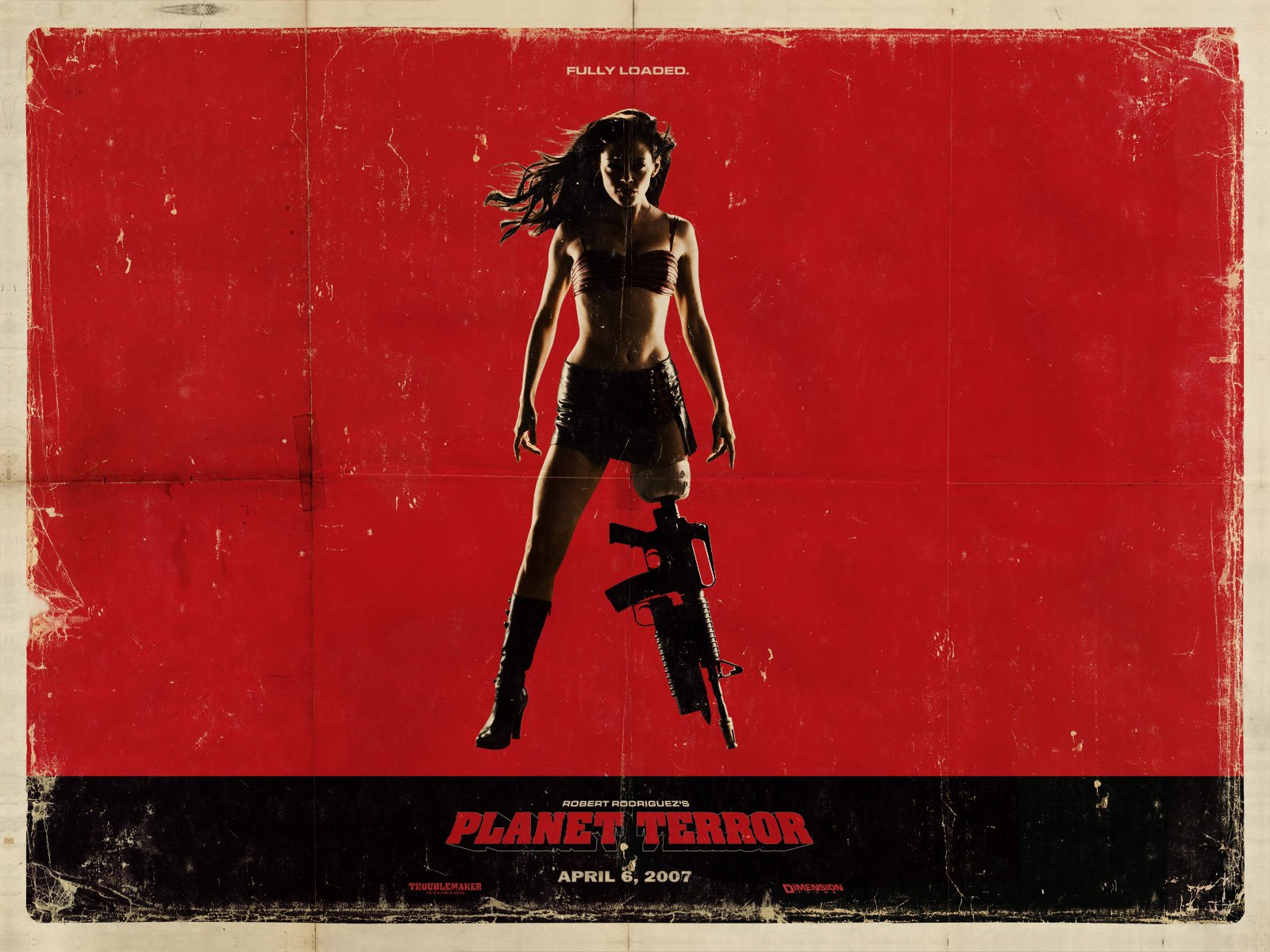
5. Planet Terror
Losing a leg – in most horror movies, this would spell doom for a character. Not in Robert Rodriguez’s half of Grindhouse, though. Indeed, for Rose McGowan’s Cherry Baby, an amputated limb turns her to the film’s most daring badass.
A machine gun for a leg! How awesome is that?! McGowan strikes the right blend of hard knock and vulnerability to keep the character interesting – beyond the whole leg of death thing. I mean, you’d hardly call her boring.
The entire film is a whole lot of throw-back fun – gory, fun, lewd, funny, gross (so, so gross). It’s so much fun that even a lengthy Tarantino cameo doesn’t spoil things. And it makes the point that people who’ve been struck by physical disabilities can still be total badasses – not to mention hot as F.
4. Misery (1990)
Kathy Bates had been knocking around Hollywood for decades, but no one really knew who she was until she landed Misery. Her sadistic nurturer Annie Wilkes – rabid romance novel fan, part time nurse, full time wacko – ranks among the most memorable crazy ladies of modern cinema.
James Caan plays novelist Paul Sheldon, who kills off popular character Misery Chastain, then celebrates with a road trip that goes awry when he crashes his car, only to be saved by his brawniest and most fervent fan, Annie. Well, she’s more a fan of Misery Chastain’s than she is Paul Sheldon’s, and once she realizes what he’s done, she refuses to allow him out of her house until she brings Misery back to literary life.
Caan seethes, and you know there’s an ass kicking somewhere deep in his mangled body just waiting to get out. The film’s tension is generated by way of his utter helplessness as he’s trapped in that bed – on the road to recovery until…. Well, we assume you know the scene.
There is so much to be said for the sharp writing, the outstanding performances, and the way the film subverts your expectations of villains, women, men, and disability.
And mallets.
3. Don’t Breathe (2016)
Young thugs systematically robbing the few remaining upscale Detroit homeowners follow their alpha into a surefire hit: a blind man (Stephen Lang) sitting on $300k.
Unfortunately for our trio – Rocky (Evil Dead’s Jane Levy), Money (Daniel Zovatto) and Alex (Dylan Minnette) – this blind man is not the easy mark they’d predicted.
The always effective Lang cuts an impressive figure as the blind veteran with mad skills and crazy secrets. Wisely, director Fede Alvarez sidesteps easy categories. Though you may think you recognize each character as they first appear, no one is as easy to pigeonhole as you may think.
There are surprises enough to confound and amaze. You may think you have the old man’s secret figured out, but so do our hapless felons. Things get a little nuts as the tale rolls on, but thanks to the film’s breakneck pace and relentless tension, you’ll barely have time to breathe, let alone think.
2. The Texas Chainsaw Massacre (1974)
With this horror masterpiece, director Tobe Hooper sidestepped all the horror gimmicks audiences had grown accustomed to – a spooky score that let you know when to grow tense, shadowy interiors that predicted oncoming scares – and instead shot guerilla-style in broad daylight, outdoors, with no score at all. You just couldn’t predict what was coming.
Hooper also cast aside any concerns for dignity or fair play, a theme best personified by wheelchair-bound Franklin. Franklin is supremely unlikeable – whiney and selfish – ending horror’s long history of using personal vulnerability to make a character more sympathetic. Films such as Wait Until Dark and What Ever Happened to Baby Jane? and Rear Window – excellent films, all – ratcheted up tension through the sympathy they could generate toward the helpless character. These films’ anxiety and payoff both owe everything to watching the vulnerable protagonist in danger, and waiting for them to overcome the odds.
But Hooper is after an entirely different kind of tension. He dashes your expectations, making you uncomfortable, as if you have no idea what you could be in for. As if, in watching this film, you yourself are in more danger than you’d predicted.
But not more danger than Franklin is in, because Franklin is not in for a good time.
http://www.youtube.com/watch?v=eY4ldz615FA
1. Freaks (1932)
Short and sweet, like most of its performers, Tod Browning’s controversial film Freaks is one of those movies you will never forget. Populated almost entirely by unusual actors – midgets, amputees, the physically deformed, and an honest to god set of conjoined twins (Daisy and Violet Hilton) – Freaks makes you wonder whether you should be watching it at all.
This, of course, is an underlying tension in most horror films, but with Freaks, it’s right up front. Is what Browning does with the film empathetic or exploitative, or both? And, of course, am I a bad person for watching this film?
Well, that’s not for us to say. We suspect you may be a bad person, perhaps even a serial killer. Or maybe that’s us. What we can tell you for sure is that the film is unsettling, and the final, rainy act of vengeance is truly creepy to watch.