The horror prologue—almost a matter of necessity at this point, a short film in itself to introduce the terror, make you jump, serve as a reference point for a third act call-back.
As cliche as they may be, the opening jump scene is still handled more effectively and more memorably in horror than in any other genre. (I’m looking at you, James Bond.) They can become iconic cinematic moments and pop cultural touchstones like Scream or The Ring. They can, without the aid of the rest of the film, haunt your dreams: It, Martyrs. They can amuse you while setting up the rules for the film: Zombieland. Or they can be just astoundingly beautiful, like Rear Window.
We want to thank Brandon Thomas for joining us this week to count down the six best (fuzzy math!) opening scenes in horror.
6. Dawn of the Dead (2004)
The flick begins strong with one of the best “things seem fine but then they don’t” openings in film.
And finally! A strong female lead who seems like a real person. Poor, overworked Ana (Sarah Polley) just wants to get off her nursing shift—a subtly brilliant way to introduce the facts of the infection without beating you about the face and neck with it.
Then on to a quiet ride home with “Have a Nice Day” on the radio—one of many brilliant musical choices by director Zack Snyder—and our first aerial of the tidy suburban landscape that is about to be destroyed.
Cut to ordinary, comfortable wedded bliss, then Vivian in her bloody little nightgown, then a rabid husband, a bloody escape and the second pan around the neighborhood gone insane.
5. The Reflecting Skin (1990)
It isn’t often when documenting horror cinema that you have the need to mention an art director, but for The Reflecting Skin, the work of Rick Roberts deserves a note. His gorgeous, bucolic Idaho is perfectly crafted, with golden wheat and decrepit wooden outbuildings representing both the wholesomeness and decay that will meld in this tale.
Writer/director Philip Ridley has a fascinating imagination, and his film captures your attention from its opening moments. A cherubic tot walks gleefully through wheat fields toward his two adorable little buddies, carrying a frog nearly as big as he is. “Look at this wonderful frog!” he calls out to them.
What happens next is grotesque and amazing – the casual but exuberant cruelty of children. It’s the perfect introduction to this world of macabre happenings as seen through the eyes of a little boy.
4. It Follows (2014)
David Robert Mitchell wears his fondness for the genre on his sleeve. His startlingly realized prologue not only sets you on edge for one of the strongest new genre films in a decade, but it announces that Mitchell, like many of us, is a very big John Carpenter fan.
As Mike Gioulakis’s camera circles this comfortable suburban street, following poor Annie (Bailey Spry) in circles as she decides her next panicky move, Mitchell’s inspirations are clear. It’s both clever and ballsy: drawing comparisons to the genre master in your opening scene can very well set you up for tremendous failure.
But not if you’re about to follow this pristine piece of horror set-up with one of the most imaginative, well-crafted and terrifying films in recent memory. Well done.
https://www.youtube.com/watch?v=Cs0PrI3ylso
3. Halloween (1978)
Speaking of John Carpenter, here’s a guy who knows how to open a movie. The Thing, for instance, brilliantly and almost wordlessly sets up the entire film with an economy and visual style that tells you all you need to know about the harsh environment, isolation and, if you’re really paying attention, the danger that’s afoot.
But it’s the prologue to Halloween that has been the most inspirational of any of his film openings. Backed by his spare and perfect score, the spooky chanting of children sets the mood: black cats and goblins and broomsticks and ghosts/covens of witches with all of their hosts/ you may think it’s scary/ you’re probably right/ black cats and goblins on Halloween night!
Switch to the now-famous killer’s pov through the eye-holes of a Halloween mask—an iconic image clearly inspired by Bava’s devil mask pov shot in Black Sabbath—and then the blank face and bloody knife of the jester-suited Michael Meyers and your masterpiece has taken its first steps.
https://www.youtube.com/watch?v=nnWw060ygG8
2. Get Out (2017)
Opening with a brilliant prologue that wraps a nice vibe of homage around the cold realities of “walking while black,” writer/director Jordan Peele uses tension, humor and a few solid frights to call out blatant prejudice, casual racism and cultural appropriation.
Lakeith Stanfield is just trying to find the party, but he’s lost on McMansion avenue in a suburb. When a sports car slows down next to him and then stops, Peele has introduced utterly perfectly his method of subverting genre expectations to make terrifying salient points about America.
Backed by Flanagan and Allen’s utterly terrifying golden oldie Run Rabbit Run, we watch the age-old genre scene unfold: a vulnerable innocent alone in the dark with no one coming to the rescue. But suddenly it’s not the beautiful co-ed, not the helpless victim we’re trained to worry for, accustomed to seeing as prey. It’s actually the image we’ve been trained to see as the aggressor, the villain, the reason to fear.
And yet, what happens here feels far, far too much like reality.
https://www.youtube.com/watch?v=GheJAxYvbfs&t=5s
1. Jaws (1975)
Poor, drunk Chrissie and her stupid, wasted suiter.
Steven Spielberg, 29-years-old at the time, was about to cause a tidal wave of pop culture defining terror. But first, a late-night beach party, a couple of wholesome if drunken revelers, a late swim and our first taste of John Williams masterpiece of a score.
No, Chrissie does not look like she’s having a good time, and actress Susan Backlini seems to have gone through enough of an ordeal to come away with PTSD. Bill Butler’s camera switches from the disturbing shark’s-eye-view to the even more disturbing close up just above the water line—that line Chrissy keeps crossing, up and down, up and down, and then back and forth and back and forth.
The result was a lingering terror of the water that not only kept you hoping against hope that every member of Amity stayed off that beach, but very likely caused you at least a little anxiety the next time you want for a late night dip.
d: Steven Spielberg; w: Peter Benchley
Westerns share a lot in common with horror. Both deal in black and white, good and evil, blood. There’s not a lot of true cross over. Sure, you’ve got some brilliant horror that pulls ideas from the Western: Sam Peckinpah’s Straw Dogs, Wes Craven’s The Hills Have Eyes. But that’s not what we’re looking for. We want horses and cowboy hats and shit. And we found them.
Here are the five best Western/horror crossovers.
5. The Burrowers (2008)
Here’s one that bears a resemblance to Bone Tomahawk: someone’s love goes missing, Indians are blamed, a posse heads out in search but finds something more sinister than expected.
Writer/director J.T. Petty laments the barbarism of the white settler and its Cavalry with a bleak and subconsciously gruesome image of the consequences of “progress”.
Burrowers, though, asserts itself as a horror film early and often. It certainly borrows from both genres, balancing themes well by exploring what’s ugliest in Western lore. Horror films tend toward social commentary in a way that Westerns rarely do—indeed, classic Westerns tend to revel in the exact elements of human nature that horror likes to exploit for its blood-curdling nastiness.
Solid performances, especially from veteran character actors Clancy Brown and William Mapother, elevate the film above its monster movie trappings.
4. Ginger Snaps Back: The Beginning (2004)
In 2004, director Grant Harvey offered an origin story for the lycanthropic Fitzgerald sisters (Katharine Isabelle and Emily Perkins reprising their roles). It’s 1815 and Ginger and Bridget find themselves lost in the Canadian wilderness, seeking assistance from a Native American woman and then shelter from a creepy pastor and his flock at a fur trading post.
What’s got the traders so spooked? Werewolves!
They bring the sisters in because they are nicer than the people at The Slaughtered Lamb, but it turns out they’d have been better off leaving G&B to die in the woods.
The movie has a fun, self-consciously anachronistic style to it that allows the Fitzgerald sisters to seem even more like us and like outsiders than they did in the original high school horror show. Dream sequences, practical effects, creepy kids, sisterly love and old fashioned carnage make this one a decent throwback.
3. Dead Birds (2004)
First, we get to liking the rag tag bunch of misfits—deserters from the Confederate army: two brothers (Henry Thomas and Patrick Fugit), two buddies (Michael Shannon and Mark Boone Junior – hell yes!), an escaped slave (Isaiah Washington) and a nurse (Nicki Aycox).
Next, we’re freaked out by the mutant boar and grisly scarecrow in the abandoned plantation where they will hole up with their ill-gotten loot.
What director Alex Turner does best with his supernatural Western is to draw you in with sympathetic characters played well by talented actors. Though the pace is slow—as is often the case with supernatural horror—and the FX are not spectacular, the film has a hypnotic quality and it fills you with dread.
Turner benefits from an empathetic script penned by Simon Barrett, who’d go on to a fruitful partnership with director Adam Wingard (You’re Next, The Guest, Blair Witch). Together with haunting performances, the mind-bender of a story leaves you troubled.
2. Ravenous (1999)
The blackest of comedies, the film travels back to the time of the Mexican/American War to throw us in with a cowardly soldier (Guy Pearce) reassigned to a mountainous California outpost where a weary soul wanders into camp with a tale of the unthinkable – his wagon train fell to bad directions, worse weather, and a guide with a taste for human flesh.
Pearce is great as the protagonist struggling against his own demons, trying to achieve some kind of peace with himself and his own shortcomings, but Robert Carlyle steals this movie.
As the wraithlike Colonel Ives, he makes the perfect devil stand-in. Smooth, compelling and wicked, he offsets Pearce’s tortured soul perfectly. The pair heighten the tensions with some almost-sexual tension, which director Antonia Bird capitalizes on brilliantly.
1. Bone Tomahawk (2015)
In a year rife with exceptional Westerns (Slow West, The Hateful Eight, The Revenant), this film sets itself apart. S. Craig Zahler’s directorial debut embraces the mythos of the Wild West, populating a familiar frontier town with weathered characters, but casting those archetypes perfectly.
Kurt Russell and Richard Jenkins, in particular, easily inhabit the upright sheriff and eccentric side kick roles, while Patrick Wilson’s committed turn as battered heroic lead offers an emotional center.
Zahler effortlessly blends the horror and Western genres, remaining true to both and crafting a film that’s a stellar entry into either category. Bone Tomahawk looks gorgeous and boasts exceptional writing, but more than anything, it offers characters worthy of exploration. There are no one-note victims waiting to be picked off, but instead an assortment of fascinating people and complex relationships all wandering into mystical, bloody danger.
Because the true horror is a long time coming and you’re genuinely invested in the participants in this quest, the payoff is deeply felt. This is a truly satisfying effort, and one that marks a new filmmaker to keep an eye on.
A surprising, gorgeously filmed prologue creates a mood: a little girl, bundled in a red coat, follows her shotgun-toting father across a frozen pond into the snowy woods. She looks periodically through the ice at the fish moving beneath the ice. In the quiet woods, the two spy a deer. The girl holds her breath, staring silently at the animal while her father prepares to shoot.
The film never again rises to the exquisite, icy tension of its opening scene, but it does work your nerves and keep you guessing. As we follow that little girl, Thelma (Eili Harboe), through the uncomfortable, lonely first weeks of college we gather that her parents are very Christian and very over-protective.
Things could have gone all predictable and preachy from there, but co-writer/director Joachim Trier knows what you’re thinking and he plans to use it against you.
Thelma is a coming-of-age film at its cold, dark heart. The horror here lies in the destructive nature of trying to be something you are not, but here again, nothing in Thelma is as simple or cleanly cut as the beautiful framing and crystal clear camera work suggest.
As familiar as many of the conflicts feel, Trier never lets you forget that something’s not entirely right about Thelma. She seems normal, maybe just sheltered, but that opening scene nags at you.
Like Julia Ducournau’s magnificent coming-of-age horror Raw, Thelma dives into the issues swirling around post-adolescent freedoms and taboos in daring and insightful ways. Trier also fills the screen with metaphorical dangers of indulgence and self-acceptance, although his protagonist’s inner conflicts lead to different results. Where Raw’s horror is corporeal, Thelma’s is psychological.
Thelma takes its time and lets its lead unveil a fully realized, deeply complex character full of contradictions—inconsistencies that make more sense as the mystery unravels. Though the result never terrifies, it offers an unsettling vision of self-discovery that’s simultaneously familiar and unique.
This line, slyly delivered shortly into co-writer/director Óskar Thór Axelsson’s
film I Remember You, let’s you know that you are not really watching the movie you think you are.
Indeed, the Icelandic thriller weaves two separate stories together using this missing child as the thread.
As the line is delivered, Freyr (Jóhannes Haukur Jóhannesson 0, a psychiatrist, is filling in for a medical doctor at the site of a suicide. An elderly woman hung herself in an old church, writing the word “unclean” on the wall and vandalizing the building before taking her own life.
Though he’s only a fill-in, Freyr begins working with local authorities on the case, which begins as an apparent suicide but quickly turns into something sinister, perhaps supernatural.
Meanwhile, the film spends time with a trio—a man, his wife and her friend—refinishing a would-be bed and breakfast on an isolated Icelandic island.
What does Freyr’s son Benni, who vanished three years ago, have to do with all of it?
To be honest, Axelsson has trouble really clarifying that point. It takes a medium (who also happens to be a lawyer for no reason I can discern) to begin to explain Benni’s connection, but the truth is that these three tales of human misery—the suicide, the DIY trio and the mourning father— are spinning disconnected around us and no amount of spiritual mumbo jumbo can truly bring them all together
Still, I Remember You offers plenty of fine performances. Though Freyr behaves in ways no psychiatrist would (having his ex-wife point that out does little to remedy the problem), Jóhannesson’s caring but distrusting turn gives the film a center of gravity.
The three fixer-uppers (Anna Gunndís Guðmundsdóttir, Thor Kristjansson and Ágústa Eva Erlendsdóttir) offer the most tender and believable performances, and the ghost story itself sits best with them on that secluded island.
There’s also an effectively foreboding score and the endlessly imposing if beautiful Icelandic backdrop. The biggest issue is that Axelsson, working with Ottó Geir Borg to adapt Yrsa Sigurðardóttir’s novel, can’t bring the most intriguing threads to the surface and tie them together.
It’s a movie that refuses to stay with you. The final image is provocative, but even that won’t help you remember I Remember You.
Small town sociopath, isolated farmhouse on land littered with rusted out car carcasses, a basement freezer full of human heads—Poor Agnes has all the trappings of your garden variety serial killer flick.
All but one: Lora Burke.
Burke plays Agnes, a woman who knows what she likes.
The film plays out like the origin story of some unstoppable slasher, and that works pretty well. Director Navin Rameswaran complicates his narrative and Agnes’s life with a side trip into Stockholm syndrome territory.
Agnes spends her days either chopping wood or injecting men with a concoction featuring “rat poison, mostly.” But she takes a liking to would-be victim Mike (Robert Notman), a low-rent private investigator whom no one will miss.
Rather than dispatching him quickly, Agnes indulges her inclination to play God and see how well she can re-mold Mike in her own image. Things seem to go smoothly until their twosome becomes a threesome.
While Burke’s unapologetically convincing, Notman’s performance is less so. Maybe his metamorphosis is too truncated by James Gordon Ross’s script, or maybe Notman can’t manage to sell the transformation. Whichever, too often his behavior feels utterly false. What we needed out of Notman was a version of Patty Hearst, but his face is a blank slate, his actions inauthentic.
That’s a real problem for this film because a tangy villain can only carry a story so far. Burke’s turn commands attention. She’s unafraid to be profoundly unlikeable, but she’s never over-the-top. It’s an alarmingly natural, more alarmingly believable portrait of a psychopath.
We’re afraid of the woods. We likely always have been—the Brothers Grimm may have collected wooded tales of witches, elves and wolves both big and bad during the 1800s, but those stories had been passed down for generations.
Those who told the old fairy tales saw the forest as a mysterious place of wonder, temptation, confusion and danger.
Writing/directing team George Popov and Jonathan Russell follow that same bumpy trail into the woods with their first feature, Hex.
Made on little more than a thousand dollars, Hex proves the duo to be a competent set of craftsmen and effective storytellers.
Two soldiers separated from their companies in the 17th century during England’s Civil War chase each other into a deep forest. The rebel Thomas (William Young) is young, soft and open to the dark poetry and doom of witchcraft. He’s not long in the woods before he sees his true enemy is not the countryman behind him with his sword drawn.
Richard (Daniel Oldroyd) fights for King and Country, strident and single-minded, logic keeps him from believing until he has little choice.
Hex draws quick comparisons to Ben Wheatley’s 2013 experiment A Field in England, but where that film felt fanciful and indulgent (though entertaining), Hex feels a bit more like a stage play taken to the woods.
The film is slow-moving, sometimes frustratingly so. Though Popov and Russell’s technical skills are solid, their instincts for pacing and tension-building are less honed. The slight plot relies immensely on an atmosphere of supernatural dread for its success, but it’s here that the filmmakers have some trouble.
The flaw is hardly insurmountable. Even with sometimes obvious budget restrictions, the film looks good. Popov and Russell let light from a campfire spark the imagination, edging frames with shadowy dangers.
Hex sounds great, too, working the nerves with the effective noise of blades unsheathed or the diabolical tinker of a nearby brook, all enriched with Nino Russell’s appropriately bewitching score.
There is more happening here than you realize, and it’s to the filmmakers’ credit that you only recognize the film’s purpose when they are ready for you to do so. The result is a satisfying tale with more power than just magic.
That might be one of many iconic lines from The Blues Brothers, but it speaks to some of the great storylines in horror—sometimes misdirected, sometimes well-intentioned, always scary. Here we pick through the many, including the dozens of tried and true exorcism flicks, to zero in on those that are truly faithful to their calling to serve God, no matter the generally disastrous, often bloody results.
5. Red State (2011)
I actually got to talk to Kevin Smith about a year before Red State was released. Our official topic was his Smodcasts, but given my particular weakness for genre filmmaking, I veered the questions toward his forthcoming entrance into horror.
He told me: “For years I’ve called myself a filmmaker, but it’s not really true. Really I just make Kevin Smith movies. I’m at that stage where I could make a Kevin Smith Movie with my eyes closed. Let me see if I can make another movie.”
That other movie was Red State – an underrated gem. Deceptively straightforward, Smith’s tale of a small, violently devout cult taken to using the internet to trap “homos and fornicators” for ritualistic murder cuts deeper than you might expect. Not simply satisfied with liberal finger-wagging, Smith’s film leaves no character burdened by innocence.
Pastor Abin Cooper spellbinds as delivered to us by Tarantino favorite Michael Parks. Never a false note, never a clichéd moment, Parks’s award-worthy performance fuels the entire picture.
There’s enough creepiness involved to call this a horror film, but truth be told, by about the midway point it turns to corrupt government action flick, with slightly lesser results. Still, the dialogue is surprisingly smart, and the cast brims with rock solid character actors, including John Goodman, Stephen Root, Melissa Leo and Kevin Pollak.
Smith said at the time: “I think we have something. It’s creepy and very finger-on-the-pulse and very much about America.”
Agreed.
4. The Conjuring (2013)
Welcome to 1971, the year the Perron family took one step inside their new home and screamed with horror, “My God, this wallpaper is hideous!”
Seriously, it often surprises me that civilization made it through the Seventies. Must every surface and ream of fabric be patterned? Still, the Perrons found survival tougher than most.
Yes, this is an old-fashioned ghost story, built from the ground up to push buttons of childhood terror. But don’t expect a long, slow burn. Director James Wan expertly balances suspense with quick, satisfying bursts of visual terror.
Ghost stories are hard to pull off, though, especially in the age of instant gratification. Few modern moviegoers have the patience for atmospheric dread, so filmmakers now turn to CGI to ramp up thrills.
But Wan understands the power of a flesh and blood villain in a way that other directors don’t seem to. He proved this with the creepy fun of Insidious, and surpasses those scares with this effort.
Claustrophobic when it needs to be and full of fun house moments, The Conjuring will scare you while you’re watching and stick with you after. At the very least, you’ll keep your feet tucked safely under the covers.
http://www.youtube.com/watch?v=Vjk2So3KvSQ
3. Nothing Bad Can Happen (2013)
This film is tough to watch, and the fact that it is based on a true story only makes the feat of endurance that much harder. But writer-director Katrin Gebbe mines this horrific tale for a peculiar point of view that suits it brilliantly and ensures that it is never simply a gratuitous wallowing in someone else’s suffering.
Tore (Julius Feldmeier) is an awkward teen in Germany. His best friend is Jesus. He means it. In fact, he’s so genuine and pure that when he lays his hands on stranded motorist Benno’s (Sascha Alexander Gersak) car, the engine starts.
Thus begins a relationship that devolves into a sociological exploration of button-pushing evil and submission to your own beliefs. Feldmeier is wondrous—so tender and vulnerable you will ache for him. Gersak is his equal in a role of burgeoning cruelty. The whole film has a, “you’re making me do this,” mentality that is hard to shake. It examines one peculiar nature of evil and does it so authentically as to leave you truly shaken.
2. Frailty (2001)
“He can make me dig this stupid hole, but he can’t make me pray.”
Aah, adolescence. We all bristle against our dad’s sense of morality and discipline, right? Well, some have a tougher time of it than others.
Bill Paxton (who also directs) stars as a widowed country dad awakened one night by an angel—or a bright light shining off the angel on top of a trophy on his ramshackle bedroom bookcase. Whichever—he understands now that he and his sons have been called by God to kill demons.
Whatever its flaws— too languid a pace, too trite an image of idyllic country life, Powers Boothe—Frailty manages to subvert every horror film expectation by playing right into them. We’re led through the saga of the serial killer God’s Hand by a troubled young man (Matthew McConaughey), who, with eerie quiet and reflection, recounts his childhood with Paxton’s character as a father.
Dread mounts as Paxton drags out the ambiguity over whether this man is insane, and his therefore good-hearted but wrong-headed behavior profoundly damaging his boys. Or could he really be chosen, and his sons likewise marked by God?
1. The Exorcist
For evocative, nerve jangling, demonic horror, you will not find better than The Exorcist.
Slow-moving, richly textured, gorgeously and thoughtfully framed, The Exorcist follows a very black and white, good versus evil conflict: Father Merrin V Satan for the soul of an innocent child.
But thanks to an intricate and nuanced screenplay adapted by William Peter Blatty from his own novel, the film boasts any number of flawed characters struggling to find faith and to do what’s right in this situation. And thanks to director William Friedkin’s immaculate filming, we are entranced by early wide shots of a golden Middle East, then brought closer to watch people running here and there on the Georgetown campus or on the streets of NYC.
Then we pull in a bit more: interiors of Chris MacNeil’s (Ellen Burstyn) place on location, the hospital where Fr. Karras’s mother is surrounded by forgotten souls, the labs and conference rooms where an impotent medical community fails to cure poor Regan (Linda Blair).
Then even closer, in the bedroom, where you can see Regan’s breath in the chilly air, and examine the flesh rotting off her young face. Here, in the intimacy, there’s no escaping that voice, toying with everyone with such vulgarity.
The voice belongs to Mercedes McCambridge, and she may have been the casting director’s greatest triumph. Of course, Jason Miller as poor, wounded Fr. Damien Karras could not have been better. Indeed, he, Burstyn, and young Linda Blair were all nominated for Oscars.
So was Friedkin, the director who balanced every scene to expose its divinity and warts, and to quietly build tension. When he was good and ready, he let that tension burst into explosions of terrifying mayhem that became a blueprint for dozens of films throughout the Seventies and marked a lasting icon for the genre.
You know that nice lady at work who gets bronchitis every time she flies, then she coughs and hacks and spews DNA all over the office?
Let’s say you have issues with that kind of office contamination. And with office politics. And with your boss, her boss, and the way you’ve basically given up everything that makes you feel alive and happy for this stupid job you hate where germs are everywhere…
Wouldn’t it be cathartic to explode, right there, in the middle of everything, righteously and with no repercussions?
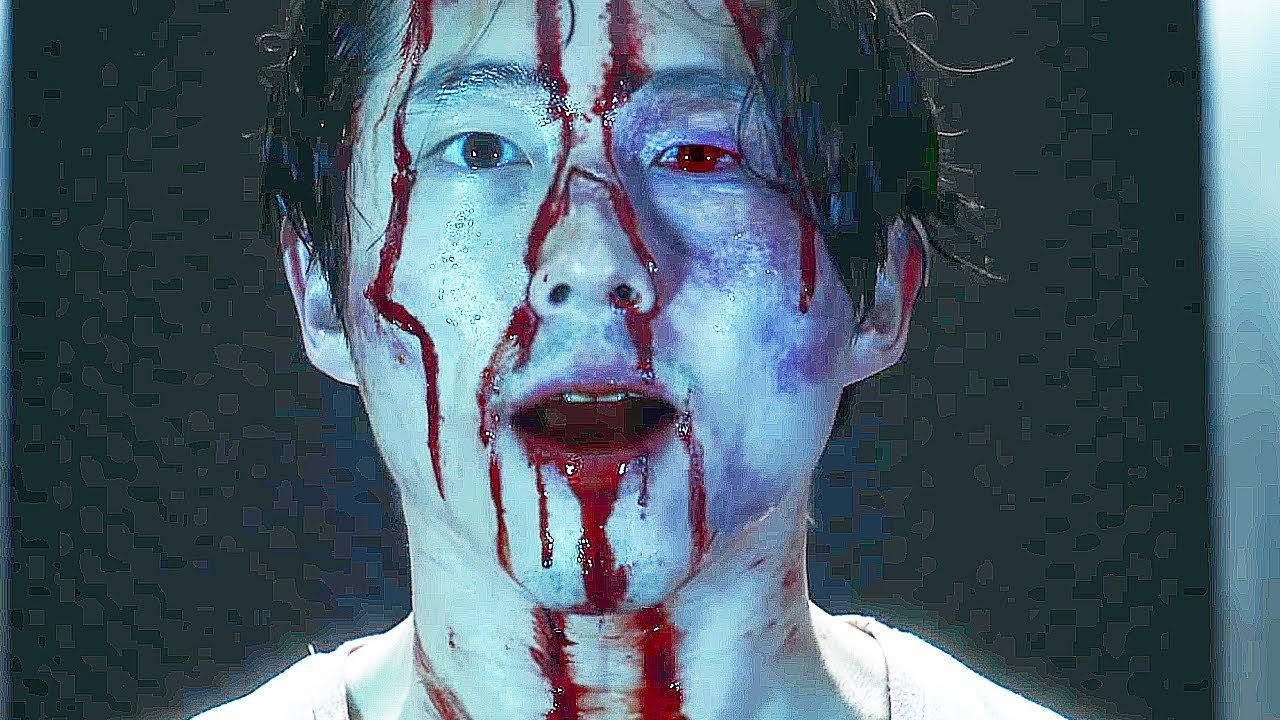
Mayhem, the new film from director Joe Lynch, is just that emotional release.
Steven Yeun (The Walking Dead) plays Derek, mid-level white-collar prick in a law office. Just mid-level, though—there’s some conscience left in him. Still, he got where he is by finding the loophole that got a broad-daylight-surrounded-by-witnesses murderer off the hook.
The murderer had a virus—the Red Eye virus—which disrupts your ability to manage your emotions. You might weep uncontrollably, masturbate during a conference call, or stab your boss in the throat with a pen.
Here’s what’s important: we like Derek, his building is contaminated, his court case set the precedent allowing public murder and mayhem while under the 8-hour-ish influence of the virus.
Let’s just quarantine this building and see what happens.
The film is an exercise in workplace catharsis, and a pretty fun one. It’s far superior to other recent attempts at office-bound carnage The Belko Experiment and Bloodsucking Bastards, partly because Lynch has a crisp sense of pace and knack for comedy.
Matias Caruso’s script doesn’t hurt. Though it never mines deeply enough for the film to resonate beyond the “I hate my job and wouldn’t mind killing my boss” level, it’s clever fun from start to finish.
Yeun makes an excellent everyman and his enjoyable performance is matched by those of many of his evil colleagues. Dallas Roberts (also The Walking Dead) is exceptional as the head of HR, also known as The Reaper.
The film is little more than an id explosion in service of workplace fantasy. It keeps a light heart despite the carnage, doesn’t dig deep and doesn’t really hold up to scrutiny. But it’s fun. Especially if you’ve ever wanted to kill your boss.
Wow, 2017 was one hell of a year in horror. We had blockbusters, people! Three horror movies broke blockbuster status, earning hundreds of millions of dollars. It—good God did that movie make some cash. What does that mean? It means more big budget, R-rated horror will be coming our way.
It was quite a year for genre-bending films like It Comes at Night, The Killing of a Sacred Deer and mother!—polarizing, amazing gems that really need to be seen.
But we’ll focus on films a little more clearly defined as horror. Thanks to Chris Hamel, President and Programmer of our beloved Gateway Film Center, for joining us to count down the best horror films of 2017.
10. Tragedy Girls
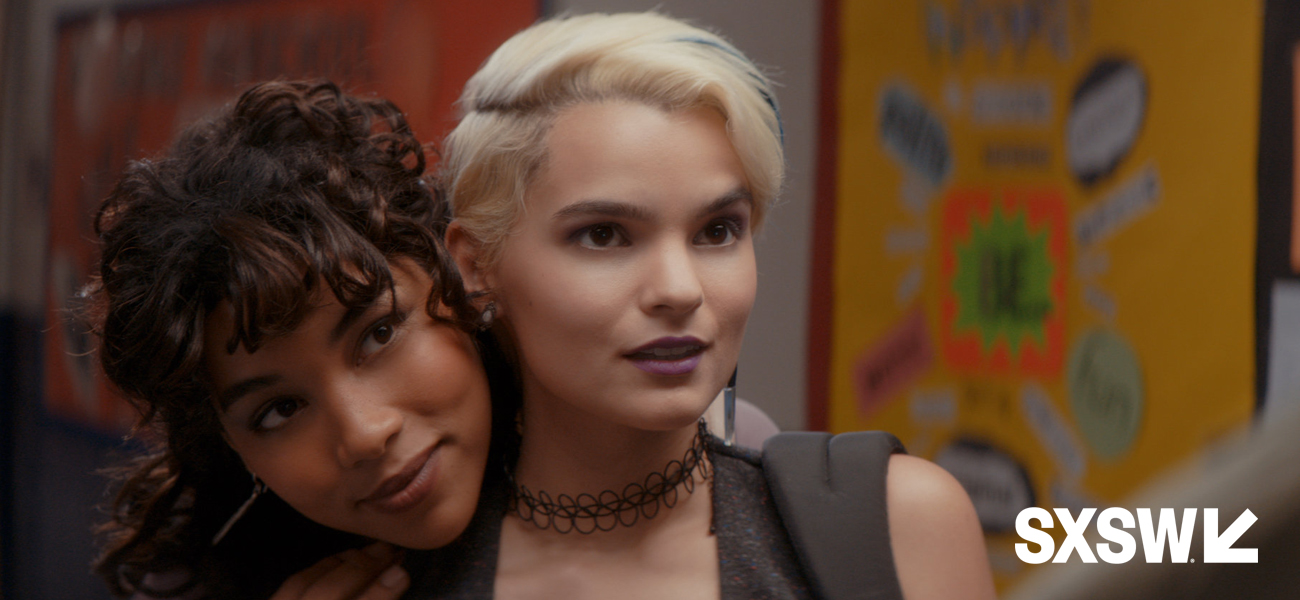
Heathers meets Scream in the savvy horror comedy that mines social media culture to truly entertaining effect, Tragedy Girls.
Tyler MacIntyre directs a screenplay he co-wrote with Chris Lee Hill and Justin Olson. The trio wade into the horror of a social media generation with more success than anything we’ve seen to date. A great deal of their success has to do with casting.
Brianna Hildebrand and Alexandra Shipp nail their characters’ natural narcissism. Is it just the expectedly shallow, self-centeredness of the teenage years, or are they sociopaths?
The film is careful not to go overboard with its commentary, though, and the final product is the better for it. MacIntyre’s affectionate, perhaps even obsessive, horror movie nods receive at least as much of his time and attention.
The result is both mean and funny. Josh Hutcherson’s small, image-lampooning part is an absolute scream proving that MacIntyre and company have pop cultural insights to spare, and proper comedic timing to boot.
9. Girl With all the Gifts
It is the top of the food chain that has the most reason to fear evolution.
Isn’t that the abiding tension in monster and superhero movie alike? The Girl with All the Gifts explores it thoughtfully and elegantly – for a zombie movie.
So, what’s the deal? A horde of “hungries,” each infected with a plant-based virus, has long since overrun the human population. Dr. Caldwell (Glenn Close), her researchers and the military are holed up while trying to derive a cure from the next generation, like Melanie (Sennia Nanua) – the offspring of those infected during pregnancy.
But much of the film’s success sits on Nanua’s narrow shoulders, and she owns it. The role requires a level of emotional nimbleness, naiveté edged with survival instinct, and command. She has that and more.
Cirector Colm McCarthy showcases his bounty of talent in a film that knows its roots but embraces the natural evolution of the genre. It’s not easy to make a zombie film that says something different.
But what Girl has to say is both surprising and inevitable.
And she says it really, really well.
8. Split
A transfixing James McAvoy is Kevin, a deeply troubled man harboring 23 distinct personalities and some increasingly chilling behavior. When he kidnaps the teenaged Casey (The Witch‘s Anya Taylor-Joy) and her two friends (Haley Lu Richardson, Jessica Suva), the girls are faced with constantly changing identities as they desperately seek an escape from their disorienting confines.
Meanwhile, one of Kevin’s personalities is making emergency appointments with his longtime therapist (Betty Buckley, nice to see you), only to show up and assure the Dr. everything is fine. She thinks otherwise, and she is right.
The split personality trope has been used to eye-rolling effect in enough films to be the perfect device for Shyamalan’s clever rope-a-dope. By often splitting the frame with intentional set designs and camera angles, or by letting full face close-ups linger one extra beat, he reinforces the psychological creepiness without any excess bloodshed that would have soiled a PG-13 rating.
Still, it all might have gone for naught without McAvoy, who manages to make Kevin a sympathetic character while deftly dancing between identities, often in the same take. He’s a wonder to watch, and the solid support from Buckley and Taylor-Joy help keep the tension simmering through speedbumps in pacing and questionable flashbacks to Casey’s childhood.
7. The Lure
Sisters Gold (Michalina Olszanska) and Silver (Marta Mazurek) are not your typical movie mermaids, and director Agnieszka Smoczynska’s feature debut The Lure is not your typical – well, anything.
The musical fable offers a vivid mix of fairy tale, socio-political commentary, whimsy and throat tearing. But it’s not as bizarre a combination as you might thing.
The Little Mermaid is actually a heartbreaking story. Not Disney’s crustacean song-stravaganza, but Hans Christian Andersen’s bleak meditation on the catastrophic consequences of sacrificing who you are for someone undeserving. It’s a cautionary tale for young girls, really, and Lure writer Robert Bolesto remains true to that theme.
But that’s really too tidy a description for a film that wriggles in disorienting directions every few minutes. There are slyly feminist observations made about objectification, but that’s never the point. Expect other lurid side turns, fetishistic explorations, dissonant musical numbers and a host of other vaguely defined sea creatures to color the fable.
https://www.youtube.com/watch?v=vxhi_3hDUPE
6. The Transfiguration
Milo likes vampire movies.
Eric Ruffin plays Milo, a friendless teen who believes he is a vampire. What he is really is a lonely child who finds solace in the romantic idea of this cursed, lone predator. But he’s committed to his misguided belief.
All this changes when Milo meets Sophie (Chloe Levine), another outsider and the only white face in Milo’s building. A profound loneliness haunts this film, and the believably awkward behavior of both Ruffin and Levine is as charming as it is heartbreaking.
The Transfiguration is a character study as much as a horror film, and the underwritten lead, slow burn and somewhat tidy resolution undercut both efforts.
Still, there’s an awful lot going for this gritty, soft-spoken new image of a teenage beast.
5. It
Clowns are fun, aren’t they?
The basic premise of It is this: little kids are afraid of everything, and that’s just good thinking.
The Derry, Maine “losers club” finds itself in 1988 in this adaptation, an era that not only brings the possibility of Part 2 much closer to present day, but it gives the pre-teen adventures a nostalgic and familiar quality.
Bill Skarsgård has the unenviable task of following a letter-perfect Tim Curry in the role of Pennywise. Those are some big clown shoes to fill, but Skarsgård is up to the challenge. His Pennywise is more theatrical, more of an exploitation of all that’s inherently macabre and grotesque about clowns.
Is he better than the original? Let’s not get nutty here, but he is great.
He and the kids really make this work. The young cast is led by the always strong Jaeden Lieberher (Midnight Special), and he’s surrounded by very strong support. Sophia Lillis charms as the shiniest gem in the losers’ club, and Finn Wolfhard (that is a name!) is a scream as the foul-mouthed class clown Richie.
The almost inexcusably cute Jackson Robert Scott is little, doomed Georgie, he of the yellow slicker.
Director Andy Muschietti shows great instinct for taking advantage of foreground, background and sound. Yes, It relies heavily on jump scares, but Muschietti’s approach to plumbing your fear has more depth than that and he manages your rising terror expertly.
4. Raw
What you’ll find in writer/director Julia Ducournau’s notorious feature debut is a thoughtful coming of age tale.
And meat.
Justine (Garance Marillier, impressive) is off to join her older sister (Ella Rumpf) at veterinary school – the very same school where their parents met. Justine may be a bit sheltered, a bit prudish to settle in immediately, but surely with her sister’s help, she’ll be fine.
Ducournau has her cagey way with the same themes that populate any coming-of-age story – pressure to conform, peer pressure generally, societal order and sexual hysteria. Here all take on a sly, macabre humor that’s both refreshing and unsettling.
In a very obvious way, Raw is a metaphor for what can and often does happen to a sheltered girl when she leaves home for college. But as Ducournau looks at those excesses committed on the cusp of adulthood, she creates opportunities to explore and comment on so many upsetting realities, and does so with absolute fidelity to her core metaphor.
She immediately joins the ranks of Jennifer Kent (Babadook) and Ana Lily Amirpour (A Girl Walks Home Alone at Night) – all recent, first time horror filmmakers whose premier features predict boundless talent.
3. The Blackcoat’s Daughter
Winter break approaches at a Catholic New England boarding school. Snow piles up outside, the buildings empty, yet Kat (Kiernan Shipka) and Rose (Lucy Boynton) remain. One has tricked her parents for an extra day with her townie boyfriend. One remains under more mysterious circumstances.
Things in writer/director Oz Perkins’s The Blackcoat’s Daughter quietly unravel from there – although quiet is not precisely the word for it. There is a stillness to the chilly, empty halls. But thanks to the filmmaker’s brother Elvis, whose disquieting score fills these empty spaces with buzzing, whispering white noise, a sinister atmosphere is born.
Perkins repays your patience and your attention. You can expect few jump scares, but this is not exactly a slow-burn of a film, either.
It behaves almost in the way a picture book does. In a good picture book, the words tell only half the story. The illustrations don’t simply mirror the text, they tell their own story as well. If there is one particular and specific talent Blackcoat’s Daughter exposes in its director, it is his ability with a visual storyline.
Pay attention when you watch this one. There are loads of sinister little clues to find.
2. Hounds of Love
Driven by a fiercely invested and touchingly deranged performance from Emma Booth, Hounds of Love makes a subtle shift from horrific torture tale to psychological character study. In 108 grueling minutes, writer/director Ben Young’s feature debut marks him as a filmmaker with confident vision and exciting potential.
It is the late 1980s in Perth, Australia, and at least one young girl has already gone missing when the grounded Vicki (Ashleigh Cummings) sneaks out her bedroom window to attend a party. This isn’t nearly as dumb a move as is accepting a ride from Evie White (Booth) and her husband John (Stephen Curry).
As the couple dance seductively and drink to celebrate, Young disturbingly conveys the weight of Vicki’s panicked realization that she is now their captive. It is just one in a series of moments where Young flexes impressive chops for visual storytelling, utilizing slo-motion, freeze frame, patient panning shots and carefully chosen soundtrack music to set the mood and advance the dreadful narrative without a spoken word.
And then, just when you might suspect his film to wallow in the grisly nature of the Whites’ plan for Vicki, Young turns to dialog sharp enough to upend your expectations, and three vivid characters are crafted in the suffocating dread of the White’s neighborhood home.
No doubt, events get brutal, but never without reminders that Young is a craftsman. Subtle additions, such as airplanes flying freely overhead to contrast with Vicki’s captivity, give Hounds of Love a steady dose of smarts, even as it’s shaking your core.
https://www.youtube.com/watch?v=UNEurXzvHqE
1. Get Out
Opening with a brilliant prologue that wraps a nice vibe of homage around the cold realities of “walking while black,” writer/director Jordan Peele uses tension, humor and a few solid frights to call out blatant prejudice, casual racism and cultural appropriation.
When white Rose (Alison Williams) takes her black boyfriend Chris (Daniel Kaluuya) home to meet the fam, she assures him race will not be a problem. How can she be sure? Because her Dad (Bradley Whitford) would have voted for Obama’s third term “if he could.” It’s the first of many B.S. alerts for Peele, and they only get more satisfying.
Rose’s family is overly polite at first, but then mom Missy (Catherine Keener) starts acting evasive and brother Jeremy (Caleb Landry Jones) gets a bit threatening, while the gardener and the maid (both black – whaaat?) appear straight outta Stepford.
Peele is clearly a horror fan, and he gives knowing winks to many genre cliches (the jump scare, the dream) while anchoring his entire film in the upending of the “final girl.” This isn’t a young white coed trying to solve a mystery and save herself, it’s a young man of color, challenging the audience to enjoy the ride but understand why switching these roles in a horror film is a social critique in itself.
Get Out is an audacious first feature for Jordan Peele, a film that never stops entertaining as it consistently pays off the bets it is unafraid to make.
Heathers meets Scream in the savvy horror comedy that mines social media culture to truly entertaining effect, Tragedy Girls.
Sadie (Brianna Hildebrand) and McKayla (Alexandra Shipp) are looking for more followers to improve their brand, and they have been doing a lot of research to make their content more compelling. The Tragedy Girls plumb their small Ohio town’s surprising death toll with more insight than the local police seem to have. Where do they get their knowledge?
Provocative.
Tyler MacIntyre directs a screenplay he co-wrote with Chris Lee Hill and Justin Olson. The trio wade into the horror of a social media generation with more success than anything we’ve seen to date. A great deal of their success has to do with casting.
Hildebrand and Shipp (both X-Men; Hildebrand was the moody Negasonic in Deadpool while Shipp plays young Storm in the franchise proper) nail their characters’ natural narcissism. Is it just the expectedly shallow, self-centeredness of the teenage years, or are they sociopaths?
Mrs. Kent (Nicky Whelan) would like to know. The spot-on teacher character offers the film’s most pointed piece of social (media) commentary when she points out the traits encouraged in a snapchat world, where shallowness and parasitic, even psychotic behavior is a plus.
The film is careful not to go overboard with its commentary, though, and the final product is the better for it. MacIntyre’s affectionate, perhaps even obsessive, horror movie nods receive at least as much of his time and attention.
The result is both mean and funny. Josh Hutcherson’s small, image-lampooning part is an absolute scream proving that MacIntyre and company have pop cultural insights to spare, and proper comedic timing to boot.
McIntrye loses his snidely meta tone briefly with a lengthy sidetrack focusing on Craig Robinson, which becomes more zany and broad than anything before it. The director can’t entirely find his footing again, as the resolution of the film gets mired a bit too much in the genre tropes.
Still, the details are priceless (she lends him a copy of Martyrs! Dig that ringtone!), the performances impress and the whole thing is a hoot.