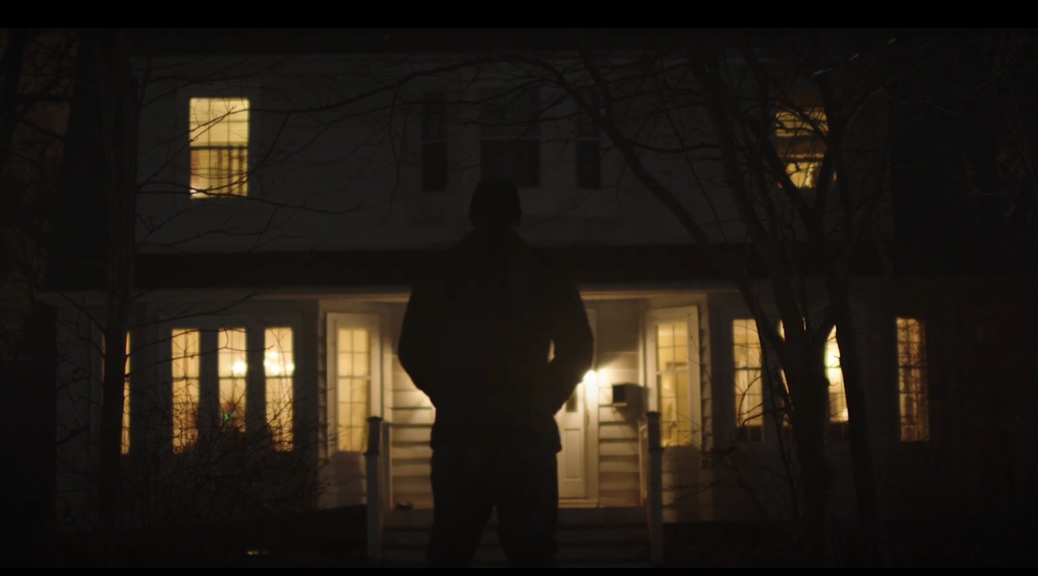
Ryan Coogler can direct the hell out of a movie, can’t he?
For Sinners, he reteams with longtime creative partner Michael B. Jordan to sing a song of a 1932 Mississippi juke joint. The Smokestack twins (Jordan) are back from Chicago, a truckload of ill-gotten liquor and a satchel full of cash along with them. They intend to open a club “for us, by us” and can hardly believe their eyes when three hillbillies come calling.
Jack O’Connell (an amazing actor in everything he’s done since Eden Lake) has a brogue and a banjo. He and his two friends would love to come on in, sing, dance, and spend some money, if only Smoke would invite them.
He does not.
The night becomes a standoff between those inside the club and those outside, but by the time Act 2 sets its fangs, Coogler and his terrific ensemble already have you invested in everyone inside.
The great Delroy Lindo effortlessly charms as bluesman Delta Slim. Wunmi Mosaku (His House, Lovecraft Country) works with Coogler’s direction to turn the horror trope “supernatural expert” (the one person who can explain to the others what’s going on and how to stop it) into the film’s broken heart.
Newcomer Miles Caton shines as the young blues guitarist whose voice is so sweet it can conjure the devil.
The setting and period suit the film beautifully, giving Coogler room to play with ideas of religion and redemption, music and temptation, and everything else that offers hope to the powerless. Every character carries a rich history that you can feel.
Jordan impresses in dual roles, carving out unique but dependent characters. O’Connell delivers lines and lyrics with a lived-in magic, twisting together Coogler’s insightful ideas about how prayer and song are often tools of the oppressor.
It’s scary. It’s sexy. The action slaps. It’s funny when it needs to be, sad just as often. It looks and sounds incredible. And there’s a cameo from Buddy F. Guy, in case you needed a little authenticity.
When Ryan Coogler writes and directs a vampire movie, he gives you reason to believe there is yet new life for the old monster.
Welcome to Peoria, IL sometime in the mid-1980s. A little mystery has taken hold of the post office. Letter sorters found a necklace in an envelope with the wrong address on it. It looks valuable, so that means Jasper (Tomas Boykin) will put his skills to the test to try to sleuth out who the jewelry belongs to and return it to its rightful owner.
There’s also this torn, bloody piece of paper about a kidnapping.
Filmmakers Joe DeBoer and Kyle McConaghy’s thriller Dead Mail builds on a wildly unrealistic concept: smalltown post offices with super-secure back rooms where pains are taken and spies may be accessed to solve mysteries behind lost mail. And yet, their analog approach to this period piece gives it a true crime feel you never fully shake.
The authenticity is not just in the lo-fi look—although the set design, costumes and hair are spot on. The wholly convincing performances, especially from two of the cast mates, pull you in.
Boykin’s low key, unflappable turn as the dead letter investigator quietly anchors the film—so quietly that the machinations around him are more likely to draw a “huh, I had no idea the Peoria post office went to such pains to track down lost mail” than they really should.
But the bulk of the film is carried on John Fleck’s shoulders. As Trent, the seemingly harmless organ enthusiast who has a man trapped in his basement, Fleck’s delivers magnificent work. There’s a beautiful loneliness in his performance that makes Trent irredeemably sympathetic.
DeBoer and McConaghy (Sheep’s Clothing), who co-write and co-direct, invest in character development enough to complicate your emotions. You’re genuinely sorry to see what happens to some of these characters, and yet, you just can’t hate Trent.
A couple of characters are there more for comic relief than anything, but even they are somewhat delicately drawn. And though the premise on its face is outlandish, every detail in the film convinces you you’re watching nonfiction.
Filmmaker and cast investment pays off. Dead Mail is clever, intriguing and wholly satisfying little thriller.
Some of the greatest films in horror do not dwell on women in terror, but women in the throes of righteous fury. Ginger Snaps, Revenge, Alucarda, Possession, Teeth, Jennifer’s Body, The Love Witch, She Will, A Wounded Fawn, Immaculate, Ms. 45, The Craft, The Angry Black Girl and Her Monster, The Substance, American Mary—it’s a long list, each film on it more than worthy of attention.
Alas, we had to boil it down to 5. Here, recorded live with a fantastic audience at Gateway Film Center in Columbus, OH, are our picks for the 5 films that best channel female rage.
5. Watcher (2022)
If you’re a fan at all of genre films, chances are good Watcher will look plenty familiar. But in her feature debut, writer/director Chloe Okuno wields that familiarity with a cunning that leaves you feeling unnerved in urgent and important ways.
None of the beats are new, and as events escalate, others are pretty clearly telegraphed. But it’s the way Okuno (who helmed the impressive “Storm Drain” segment from V/H/S /94) slowly twists the gaslighting knife that makes the film’s hair-raising chills resonate.
Even as Julia pleads to be believed, the mounting indignities create a subtle yet unmistakable nod to a culture that expects women to ignore their better judgment for the sake of being polite.
4. Carrie (1976)
The seminal film about teen angst and high school carnage has to be Brian De Palma’s 1976 landmark adaptation of Stephen King’s first full length novel, the tale of an unpopular teenager who marks the arrival of her period by suddenly embracing her psychic powers.
Sissy Spacek is the perfect balance of freckle-faced vulnerability and awed vengeance. Her simpleton characterization would have been overdone were it not for Piper Laurie’s glorious evil zeal as her religious wacko mother. It’s easy to believe this particular mother could have successfully smothered a daughter into Carrie’s stupor.
One ugly trick at the prom involving a bucket of cow’s blood, and Carrie’s psycho switch is flipped. Spacek’s blood drenched Gloria Swanson on the stage conducting the carnage is perfectly over-the-top. And after all the mean kids get their comeuppance, Carrie returns home to the real horror show.
3. The Other Lamb (2019)
The first step toward freedom is telling your own story.
Writer C.S. McMullen and director Malgorzata Szumowska tell this one really well. Between McMullen’s outrage and the macabre lyricism of Szumowska’s camera, The Other Lamb offers a dark, angry and satisfying coming-of-age tale.
The Other Lamb does not simply suggest you question authority. It demands that you do far more than that, and do it for your own good.
2. The Nightingale
A mother’s grief is something many filmmakers see as the pinnacle in pain, the one emotion almost unimaginable in scope and depth and anguish. That’s why brilliant filmmaker Jennifer Kent begins here, using this one moment of ultimate agony to punctuate an almost unwatchable scene of brutality, to tell a tale not of this mother and her grief, but of a nation—a world—crippled by the brutality and grief of a ruling white male culture.
What happens to Clare (Aisling Franciosi) at the hands of Leftenant Hawkins (Sam Claflin), the British officer to whom she is in service, is as brutal and horrifying as anything you’re likely to see onscreen. It’s the catalyst for a revenge picture, but The Nightingale is far more than just that.
Kent’s fury fuels her film, but does not overtake it. She never stoops to sentimentality or sloppy caricature. She doesn’t need to. Her clear-eyed take on this especially ugly slice of history finds more power in authenticity than in drama.
1. Audition
The prolific director Takashi Miike made more than 70 movies in his first 20 or so years in film. Among the best is Audition, a phenomenally creepy May/December romance gone very, very wrong.
Audition tells the story of a widower convinced by his TV producer friend to hold mock television auditions as a way of finding a suitable new mate. He is repaid for his deception.
Nearly unwatchable and yet too compelling to turn away from, Audition is a remarkable piece of genre filmmaking. The slow moving picture builds anticipation, then dread, then full-on horror.
By the time Audition hits its ghastly conclusion, Miike and his exquisitely terrifying antagonist (Eihi Shina) have wrung the audience dry. She will not be the ideal stepmother.
Finn Wolfhard and Billy Bryk are not the first to send up the summer camp slasher. They may not even be the first this year. But that fact doesn’t make Hell of a Summer any less delightful.
The co-directors and co-writers are also co-stars, playing two best friends returning to their beloved Camp Pinewood for the first time as counselors rather than campers. Bryk’s Bobby is a wannabe Romeo hoping to score. Wolfhard’s Chris is a little more enlightened.
“Single use plastics are the real killer.”
Among the charms the writers bring to the film is the ironically unironic Gen Z humor, which can’t help but set the film apart from similarly themed comedies. The pair also invest in character. Yes, the circle of counselors looks like every other set of doomed slasher victims: horny teens making bad decisions. And while no actor is asked to shade in a lot of various grays, each character has enough screen time that their jokes feel character driven and earned.
Abby Quinn shines as the grungier kid in the bunch, but it’s Fred Hechinger—who had one hell of a 2024, with roles in Thelma, The Nickel Boys, and Gladiator II—who steals this movie. The same sweet natured haplessness that fueled his turn as devoted grandson in Thelma lends power to the trope-skewering at the center of this film.
Hell of a Summer’s subversions are never heavy handed. They’re almost delicate, with quietly observed authenticity that echoes the film’s—and generation’s—underlying, if often comedic, empathy.
The plot itself could have used a few more solid surprises. Hell of a Summer does not set out to reinvent the wheel, and even commits to one of the genre’s most tiresome new stereotypes. (The social media influencer has replaced the rich, popular blonde as horror’s shorthand for victim most deserving a comeuppance.)
Still, it’s fun while it lasts. And Fred Hechinger is a treasure.
I wonder whether Ashland Falls is a far drive from Abaddon, New York. Looks like a pretty area.
Hell House LLC writer/director Stephen Cognetti launched a fun and mainly impressive horror franchise from the dusty soil of the mythical Abaddon, New York, reinvigorating the found footage genre and reminding those who’d forgotten that clowns are terrifying.
Cognetti’s latest, 825 Forest Road, is the filmmaker’s first feature outside that franchise. Though he leans on some of the style that made the Hell House films memorable, this movie is not found footage. In fact, it’s a pretty straightforward haunted house picture.
Chuck (Joe Falcone) and Maria (Elizabeth Vermilyea) buy a roomy old home in Ashland Falls, to be near the little college where Chuck’s younger sister Isabelle (Kathryn Miller) will attend. Couldn’t Isabelle just move into the dorms like every other college freshman?
Why do that when they could all uproot themselves and buy a haunted house?
The backstory—family tragedy, estranged siblings trying to rebuild something—is the first of the film’s many weaknesses. The fact that the incoming freshman looks like she’s older than her guardians doesn’t help set the mood, either.
But it’s not just Chuck’s new house that’s haunted. It’s the whole damn town. That can be a ripe premise, too. Just not today.
825Forest Road delivers a little bit of the style Cognetti’s become known for, and it’s refreshing to watch a modern horror film and know that if you don’t pay attention, you may miss an inspired bit of haunting. But in this case, that’s not enough to merit your time.
Though Vermilyea convinces, the balance of the cast feels more like they’re doing a read through than performing. Chemistry among the actors is nonexistent, which exacerbates the problem with the unfelt backstory.
Every reason to do something is a contrived excuse rather than natural choice, and every reason not to do something is even less earned. The movie plays like a rehearsal that could have turned into something fun with a couple more rounds of script revisions.
How many great horror films are set in Appalachia? So many that we had to leave these off the top 5 list: Wrong Turn, Evil Dead, Jugface, The Mothman Prophesies, The Descent, even Silence of the Lambs!
Because what were we looking for? Something that really dug into the landscape, the people of the area. Films that couldn’t have been set anywhere else. It was a tough cull, but we think we landed on the best.
5. Tucker and Dale v Evil (2010) (West Virginia)
Horror cinema’s most common and terrifying villain may not be the vampire or even the zombie, but the hillbilly. The generous, giddy Tucker and Dale vs. Evil lampoons that dread with good natured humor and a couple of rubes you can root for.
In the tradition of Shaun of the Dead, T&DVE lovingly sends up a familiar subgenre with insightful, self-referential humor, upending expectations by taking the point of view of the presumably villainous hicks. And it happens to be hilarious.
Two backwoods buddies (an endearing Tyler Labine and Alan Tudyk) head to their mountain cabin for a weekend of fishing. En route they meet some college kids on their own camping adventure. A comedy of errors, misunderstandings and subsequent, escalating violence follows as the kids misinterpret every move Tucker and Dale make.
T&DVE offers enough spirit and charm to overcome any weakness. Inspired performances and sharp writing make it certainly the most fun participant in the You Got a Purty Mouth class of film.
2. The Blair Witch Project (1999) (Maryland)
A master class in minimalism, Blair Witch scared the hell out of a lot of people back in the day. This is the kind of forest adventure that I assume happens all the time: you go in, but no matter how you try to get out – follow a stream, use a map, follow the stars – you just keep crossing the same goddamn log.
One of several truly genius ideas behind Blair Witch is that filmmakers Daniel Myrick and Eduardo Sanchez made the audience believe that the film they were watching was nothing more than the unearthed footage left behind by three disappeared young people. Between that and the wise use of online marketing (then in its infancy) buoyed this minimalistic, naturalistic home movie about three bickering buddies who venture into the Maryland woods to document the urban legend of The Blair Witch. Twig dolls, late night noises, jumpy cameras, unknown actors and not much else blended into an honestly frightening flick that played upon primal fears.
3. Devil to Pay (2019) (Georgia)
The tale is anchored with a quietly ferocious turn by Danielle Deadwyler (who also produces) as Lemon, a hardscrabble farmer trying to keep things up and wondering where her husband has been these past days.
One of the most tightly written thrillers in recent memory, The Devil to Pay peoples those hills with true characters, not a forgettable villain or cliched rube among them. The sense of danger is palpable and Deadwyler’s commitment to communicating Lemon’s low-key tenacity is a thing of beauty.
Hell, the whole film is beautiful, Sherman Johnson’s camera catching not just the forbidding nature of Appalachia, but also its lush glory.
2. The Night fo the Hunter (1955)(West Virginia)
Robert F. Mitchum. This may be the coolest guy there ever was, with an air of nonchalance about him that made him magnetic onscreen. His world-wizened baritone and moseying way gave him the appearance of a man who knew everything, could do anything, but couldn’t care less. And perhaps his greatest role in definitely his best film is as serial killer/preacher Harry Powell in the classic Night of the Hunter.
The iconic film noir sees Mitchum as a con man who cashed in on lonely widows’ fortunes before knocking them off. He’s set his sights on Willa Harper (Shelley Winters), whose bank robber husband had been a cell mate before his execution.
What unravels is a gorgeously filmed, tremendously tense story of Depression-era Appalachian terror as Powell seduces the widow and her entire town, but not her stubborn son. Many of the performances have that stilted, pre-Method tinge to them, but both Winters and Mitchum bring something more authentic and unseemly to their roles. The conflict in styles actually enhances an off-kilter feel director Charles Laughton emphasizes with over-the-top shadows and staging. It gives the whole film a nightmarish quality that, along with Mitchum’s unforgettable performance, makes Night of the Hunter among the best films of its era.
1. Deliverance (1972) (Georgia)
Nine notes on a banjo have never sounded so creepy.
Deliverance follows four buddies staving off mid-life crises with a canoeing adventure in southern Georgia, where a man’s not afraid to admire another man’s mouth.
They stop off, as travelers must, at a service station. No one warns them, no one delivers ominous news, but come on, no one had to. One look at the locals spending their days at that gas station should have been enough to convince them to turn back.
James Dickey streamlined his own novel to its atmospheric best, and director John Boorman plays on urbanite fears like few have done since. Dickey and Boorman mean to tell you that progress has created a soft bellied breed of man unable to survive without the comforts of a modern age.
When writer/director Shal Ngo’s Control Freak opens, we watch Val (Kelly Marie Tran)—in front of a backdrop of clouds, all Tony Robbins like—tell a rapt audience that they alone control their destiny.
Tran is compelling, but it’s an obvious way to open a horror film (or a comedy). Pride goeth before the fall. Within the first three minutes of the film, we can be pretty certain what Val is going to learn, where the big reveal will come, who will witness it, and how bad it’s going to be for her career.
Ngo doesn’t leave you hanging, but the way he works around the cliches is both the film’s strength and weakness.
Why did Val become a motivational speaker? Because of her own tough life, at one point waiting tables and living in her Toyota while chain smoking and eating gummy worms. But look at her now: loving husband (Miles Robbins), great house, new book, global speaking tour about to kick off. All she needs is her birth certificate, which means a visit to her dad, rekindling old trauma. Plus, there’s this incessant scalp itch…
There’s a larger metaphor at work here concerning the way generational trauma works like a parasite sucking your will to live. Ngo weaves complicated family dynamics and backstories in and around obvious horror set pieces, turning the familiar on its side in often fascinating ways.
Tran’s supporting cast also wiggles out of cliché in effective ways. Kieu Chinh’s droll comic timing as Val’s auntie also efficiently delivers needed information. Callie Johnson’s single-minded characterization as Val’s PR exec offers even more biting wit.
The monster metaphor is less compelling, as if Ngo can’t quite bring himself to get really uncomfortable with his viewers. In fact, the film steers clear of any real parasitic nightmare images—a serious misstep, if Ngo was hoping to create horror from the monsters in his monster movie .
There’s an untidiness in the whole narrative that, at times, feels welcome. No character is entirely good or bad. Most are a somewhat imbalanced mix of both. This choice brings with it a refreshing complexity and sense of surprise. But it all becomes muddy, no specific layer of the film ever entirely satisfying, all of it obscured by a metaphor that doesn’t quite fit.
When The Buildout opens, a religious group known as “The Clergy” is set on establishing a home in a remote part of a desert. Vague references are made to the fact that they’ve moved around a few times in search of a place where they can find a deep spiritual connection. Is this dusty and arid middle-of-nowhere locale what they’ve long sought? Given that this is a horror movie, the answer is undoubtedly yes, while also falling into the “Be Careful What You Wish For” category.
Our leads – Hannah Alline (Mayfair Witches) and Jenna Kanell (Terrifier) – are two friends on a road trip who make the unfortunate decision to stop in that same area for a pee break. What follows is what one might call a “vibes movie”, where mood is tantamount to plot-based events. If you can roll with that, The Buildout may just be for you.
This is the feature-length debut of writer/director Zeshaan Younus and it’s an impressive one. Shot with a small cast and crew for pennies on the dollar, it still manages to pack both an aural and a visual punch. The footage is a mix of more classic anamorphic cinematography and camcorder vlogs, giving it a distinctive feel. The sound mix is full and immersive. From a technical standpoint, it’s exactly what one hopes to be gifted when they sit down with an indie genre film: something that looks like it cost way more to make than it actually did.
While the script falters a bit, Alline and Kanell are great together, which smooths over the film’s narrative deficiencies. The otherworldliness of what occurs to their characters brings to mind the early films of Justin Benson and Aaron Moorhead. The Buildout might not be quite as impactful as their feature debut, Resolution, but it’s playing in similar terrain. Enough so that it makes one excited to see what Younus might conjure up next.
Lean, mean and affecting, Mickey Keating’s take on the home invasion film wastes no time. In a wordless—though not soundless—opening, the filmmaker introduces an unhinged presence.
Cut to Ana (Vero Maynez). She’s sleepy, it’s late, the bus is empty except for the driver hustling her off, his voice constant, annoyed, and on repeat: Come on. Get off the bus. Last stop. You gotta go.
It’s 4:30 am. The bus was late, the station is deserted, and Carmilla—Ana’s cousin—is not answering.
Immediately Keating sets our eyes and ears against us. His soundtrack frequently blares death metal, a tactic that emphasizes a chaotic, menacing mood the film never shakes. Using primarily handheld cameras from the unnerving opening throughout the entire film, the filmmaker maintains an anarchic energy, a sense of the characters’ frenzy and the endless possibility of violence.
Keating strings together a handful of believably tumultuous moments early in the film—particularly a couple of run-ins with a horn-blaring cabbie—to work the nerves and leave you feeling as raw and vulnerable as Ana. Rather than dip and settle, Invader delivers relentlessly on that early sense of harried terror.
Scenes possess an improvisational quality that coincides with the rawness of the overall effort. Keating is spare with exposition—if you can’t figure out what’s going on without having it explained to you, you are clearly not paying attention. The verité style accomplishes what it’s mean to, lending Invader an authenticity that amplifies the horror.
Maynez carries that authenticity. Ana never feels written, she feels alive. Her confusion, anger, fear—all of it runs together in a way that reflects what the audience is experiencing in each moment. Her limited screentime with Colin Huerta introduces enough tenderness to give the sense of terror real depth.
Joe Swanberg, with limited screentime and even more limited dialog, crafts a terrifying image of havoc. His presence is perversely menacing, an explosion of rage and horror.
Invader delivers a spare, nasty, memorable piece of horror in just over an hour. It will stick with you a while longer.
Why is it that so many kids’ toys are creepy? Not that you should call The Monkey a toy. You should not, ever. Because this windup organ grinder monkey, with its red eyes and horrifyingly realistic teeth, is more of a furry, murder happy nightmare.
The film itself is a match made in horror heaven. Osgood Perkins (Longlegs, Gretel & Hansel, The Blackcoat’s Daughter) adapts and directs the short story by Stephen King about sibling rivalry and the unpredictability of death.
The delightfully low-key Christian Convery (Cocaine Bear) carries the first half of the film as young Hal and Bill, twins who discover their dad’s old closet full of knickknacks and collectibles, one of which will indiscriminately kill a lot of people. They boys eventually believe they’ve eliminated the beast, but decades later, the adult brothers (played with deadpan precision and one impressive mullet by Theo James) must contend with bloody monkey business once more.
Perkins surrounds his deliberately low energy leads with bizarre, colorful characters—even more colorful when they catch fire, explode, are disemboweled, etcetera. The film is laced with wonderful bursts of Final Destination-like bloodletting, as the Monkey’s executions are carried out via Rube Goldberg chain reactions that quickly become fun to anticipate.
Yes, fun. And funny.
There is a different tone at work here for Perkins. It’s one that is somehow both bone dry and silly, creating a dark humor that wallows delightfully in the pulpy carnage. His usual aesthetic of dreamy Gothic beauty is replaced by a more grimy, Earth tone palette that seems purposefully at odds with the stated time stamps.
And yet, underneath all of it you’ll find a meaningful layer that speaks to absentee fathers and generational trauma. There are disjointed moments, but only a few, thanks mainly to grounded reminders about the monkey’s shoulder-shrugging mantra: “everybody dies.”
Indeed. And if sometimes they need a little help, well, you can always wind up Furious George and take your chances.