Screening Room: Kung Fu Panda 4, Imaginary, Ricky Stanicky, Damsel & More
by Hope Madden
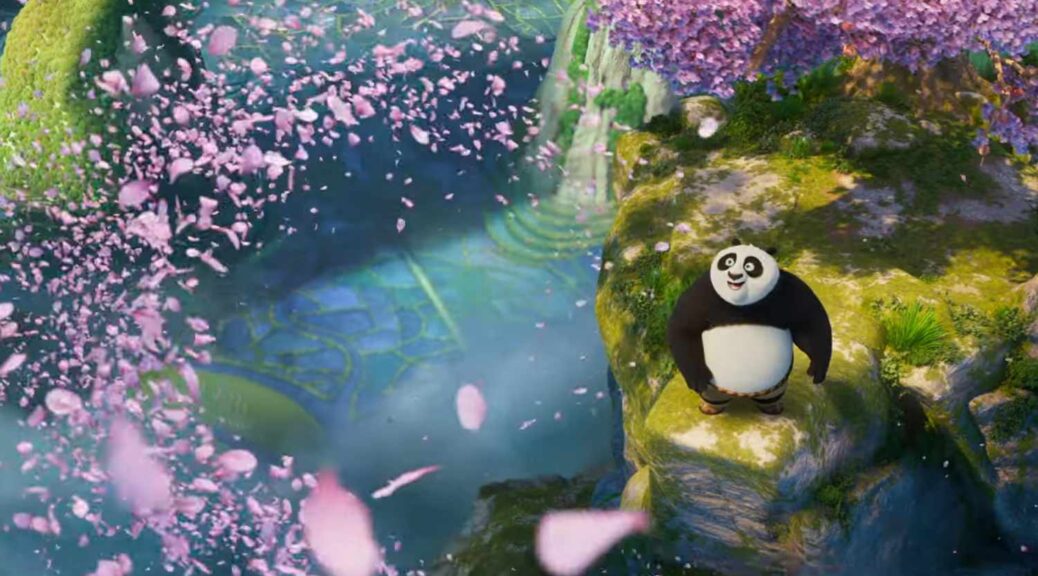
Animated sequels often work out. Every time you think “Do we really need another Toy Story?” you get one more cartoon masterpiece. Each How to Train Your Dragon movie is a stunner. And Puss in Boots: The Last Wish was not only better than any previous Puss in Boots film, it was better than any Shrek film.
So why not a fourth Kung Fu Panda? Literally no one expected the 2008 original to be a charming, lovely, thoroughly entertaining Oscar nominee. A couple more episodes in and maybe directors Mike Mitchell and Stephanie Stine have the power to entirely reimagine this franchise, find a universal truth and existential meaning that allows this installment to transcend its late-stage sequel position, a la Toy Story 3. Or Toy Story 4.
No, but it’s cute.
Po (Jack Black, lovable even if it’s only his voice) has been named the spiritual leader of the Valley of Peace, which means he must find his successor as Dragon Warrior. But he doesn’t want to. He finally found something he’s good at—kicking butt—and he’s kind of famous for it. And maybe he just fears change.
But all this successor stuff will have to wait. The Chameleon (Viola F. Davis) has a nefarious plan that needs thwarting and Po’s off to handle the situation with the help of this little thieving fox (Awkwafina, who may be voicing every animated film to come out, but she’s great at it).
Master Shifu (Dustin Hoffman) is disappointed. Naturally.
Hoffman is one of only a handful of returning voice talent—Angelina Jolie, Seth Rogan, Jackie Chan, Lucy Liu and David Cross are noticeably absent. But Ian McShane returns, and that’s a voice we can all listen to all day long, villainous or not. Plus, there’s more room for new characters.
Davis is characteristically wonderful as the evildoer, but it’s really the budding relationship between frenemies Po and Zhen (Awkwafina) that compels interest. Not every actor can carry off animation, but both Black and Awkwafina shine.
The animation is good looking enough. It’s not gorgeous, but it’s nice. The action is fun, the characters are funny enough, and the lessons are solid. And there are these three bloodthirsty little bunnies, and I am a fan.
Kung Fu Panda 4 breaks no new ground, transcends no limitations, but it entertains throughout and delivers a pleasant bit of family-friendly fun. Plus reimagined Ozzy and Britney are a delight.

by Hope Madden
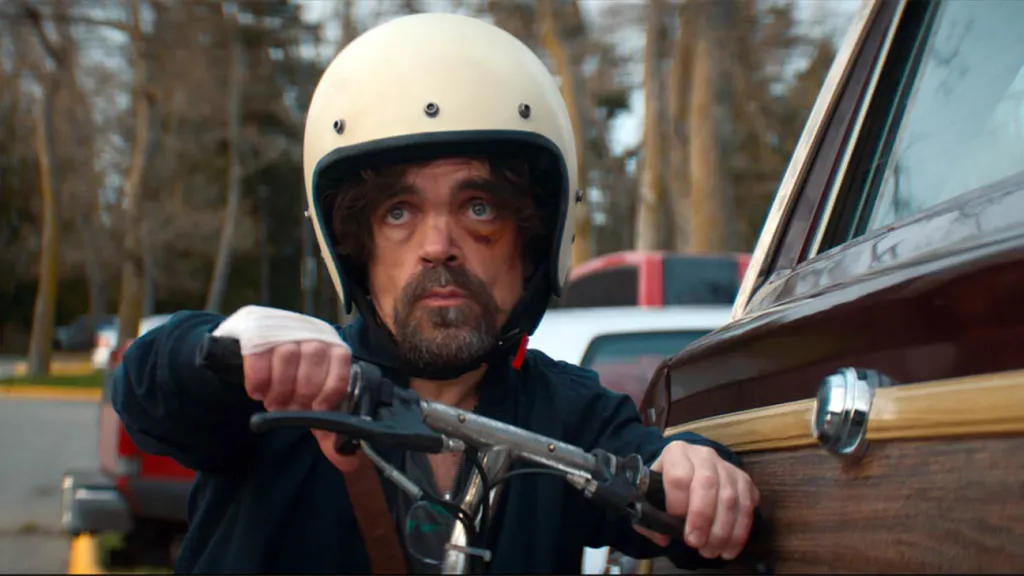
I was looking forward to American Dreamer, the comedy/drama that pairs Peter Dinklage and Shirley MacLaine as odd couple tenant/homeowner in a comment on the American dream.
And then I found out Matt Dillon and Danny Glover are in it, which appealed as well.
And then I wondered what on earth compelled any of the four of them to take this gig.
Paul Dektor’s film follows Dr. Phil Loder (Dinklage), an adjunct professor of social economics who is very down on his luck. Not sure how he got here? No worries, because a bartender will explain all of it to Loder, who one assumes must already know his own backstory. But this is how bad writing shows itself. And it won’t be the last time.
Loder dreams of home ownership, but he lives in a crappy apartment, drives a 30-year-old Saab, and makes (the bartender explains) less than 50k a year. But then he finds the deal of a lifetime in his price range. He just has to pay now, hold out in the stinky servant’s quarters and wait until the current owner (MacLaine) dies. Then his dream house is all his!
That’s convoluted and contrived enough, but wait, there’s more!
Mainly there’s a lot of sloppy, needless plot devices that do not entertain but do disjoint the overall film. One of these writers (Theodore Melfi) has an Oscar nomination for Hidden Figures. Go figure.
Not that the direction’s any better. Dektor can’t decide if American Dreamer is a slapstick comedy, a sex comedy, or a social diatribe aimed at capitalism. Choosing none of these, he winds up creating an inarticulate mishmash.
Everything that happens outside the relationship between Dinklage and MacLaine feels extraneous, but the focus is almost never on the two leads. Worse still, the actual relationship—what we see of it—is silly and superficial. Because of this, Loder’s arc is unearned.
It’s great to see Dinklage in a lead and in a comedy. Too bad it’s this one.
MacLaine is even more ill-used, and Dillon’s realtor character is unfathomable. You spend the whole time waiting for some revelation, like that he and Loder are boyhood friends or brothers—anything to explain their contemptuous yet close bond.
Maybe I should ask the bartender. I bet he knows.

by Hope Madden and George Wolf
This year’s group of nominees is stacked. Category after category, you find multiple films, filmmakers and performers all worthy of some hardware. But who will win?
Best picture
Should win: “Poor Things” Will win: “Oppenheimer”
Best actor
Should win: Cillian Murphy Will win: Murphy (Hope) Paul Giamatti (George)
Best actress
Should win: Stone or Gladstone Will win: Gladstone
Best supporting actor
Should win: Ruffalo Will win: Downey Jr.
Best supporting actress
Should win/Will win: Randolph
Best director
Should win: Nolan or Lanthimos Will win: Nolan
International feature film
Should win/Will win: “The Zone of Interest”
Animated feature film
Should win: “The Boy and the Heron” (Hope) “Spider-Man” (George) Will win: The Boy and the Heron” (Hope) “Spider-Man” (George)
Adapted screenplay
Should win: “Poor Things” Will win: “American Fiction” (Hope) “Oppenheimer” (George)
Original screenplay
Should win: “Anatomy of a Fall” Will win: “The Holdovers” (Hope) “Anatomy of a Fall’ (George)
Cinematography
Should win/Will win: “Poor Things”
Animated short film
Should win: “Ninety-Five Senses” Will win: “War Is Over”
Live action short film
Should win/Will win: “Henry Sugar“
Documentary short film
Should win/Will win: “The Last Repair Shop”
The 96th Academy Awards, hosted by Jimmy Kimmel, will air on ABC on Sunday, March 10, live from the Dolby Theatre at Ovation Hollywood.
by Hope Madden
Modern horror is littered with fake ghosthunter tales, films about scammers who come face to face with the evil they’re certain doesn’t exist. Kim Seong-sik’s Dr. Cheon and the Lost Talisman begins down a similar path.
Dr. Cheon (Gang Dong-won) leads his assistant/technician In-bae (Lee Dong-hwi) into the garden of a wealthy family whose bitchy teenage daughter they presume is possessed. She is, of course, just teenaged. Dr. Cheon convinces the family that it’s the house, he exorcises the house, tells the family what they want to hear, and all’s well that ends well.
But the truth is, Dr. Cheon is looking for more than the next gullible family to scam.
He finds it when Esom (Yoo-gyeong) dumps a bag of cash on his desk and asks him to follow her to her village, where her sister is possessed. Of course, though, this time the possession is real.
Don’t expect the same old routine of con artists being outed, learning a valuable lesson before bleeding out. Dr. Cheon is ready for this supernatural nemesis.
There’s a frenetic charm to the film’s main action sequence, where the demon leaps from one villager to the next as it chases Doc and Esom through town. Electric blue FX have a delightfully cheesy, throwback feel that balances the handful of gruesome moments.
Though never laugh out loud funny, levity throughout the film keeps it from ever crossing over truly to horror. Gang’s haunted straight man benefits nicely from Lee as a comedic sidekick, and veteran actor Huh Joon-ho menaces laudably as the evil mace, Beom-cheon.
Kim never fully lands on a tone. What begins as a lightweight horror show develops a kind of Saturday morning TV vibe before turning into an action adventure. Think Korean Dr. Jones meets Scooby Doo, or something along those lines. There’s a weird charm to it that might particularly delight those who like their scary movies not too scary.

It’s the most wonderful time of the year! We get to celebrate the terrible decisions some of this year’s Oscar nominees have made in their careers. Why? Because we sincerely love them—the movies and their stars. Join us as we comb through this year’s Oscar nominees’ bad horror past.
It’s a twofer! Nominees for Best Actress and Best Supporting Actor, Annette Bening and Robert Downey Jr. joined director Neil Jordan (In the Company of Wolves, Interview with a Vampire, Byzantium) for this gender fluid serial killer/fairy tale mash up that just doesn’t work.
With Aidan Quinn, Stephen Rea, Margo Martindale (in a brief, thankless orderly role), it’s a convoluted mess of a movie that tosses together tropes from about six different styles of horror without ever trying to make sense of any of them.
This was Bening’s only real foray into horror, while Downey Jr. starred in Zodiac (great) and Gothica (poor).
Do not be surprised that De Niro starred in a lackluster horror flick in the early 2000s. He starred in several, not to mention the handful of bad actioners, bad thrillers, and bad comedies he peppers into his otherwise impressive filmography.
In this case, De Niro plays a geneticist with an ulterior motive, preying on the grief of a couple (Rebecca Romijn, Greg Kinnear) whose only child (Cameron Bright) has been killed. De Niro brings him back, but when has that ever been a good idea in a horror movie? Derivative and embarrassing, considering the cast.
Robert De Niro has starred in some great horror (Cape Fear, Angel Heart) and some bad horror (Hide and Seek, Frankenstein).
Like George Clooney, Bradley Cooper can write, direct, star, earn Oscar nominations, and be counted on to shine bright in a bunch of bad early career horror. In this case, he co-stars with now two-time Oscar winner Renee Zellweger.
It’s a blatant, lifeless The Ring ripoff with bad FX, bad acting and lame plotting. Cooper plays Doug (he’ll be your Doug). It’s a thankless role of boyfriend/buddy/bee sting sufferer.
We’ve talked about other Cooper horror before, but here’s his whole lineup: My Little Eye (pretty bad), Midnight Meat Train (not very good), and 10 Cloverfield Lane (voice acting, a really good movie).
We had such hopes for this one when it came out. That cast! Benicio Del Toro, Anthony Hopkins, Hugo Weaving, and 2024 Oscar nominee Emily Blunt.
Good God, was it awful. If you can look past the idea that Hopkins and Del Toro could be father and son, look past the insipid plot, look past Hopkins’s hamminess or del Toro’s disinterest, you cannot look past the heinous FX. But Blunt handles herself really, really well.
This was not the first, nor would it be the last horror film for Blunt: A Quiet Place (very good) A Quiet Place 2 (good) and Wind Chill (pretty good).
This one’s hard to track down, but worth the effort if you enjoy very badly made family-oriented “horror.” It’s a Disney TV movie starring Burt Reynolds (I swear to God). Burt’s married to a woman 1/3 his age (played by Myriam Cyr, who—God love her—is the worst actor on earth). The two have two young sons, who dream of bringing the dead to life.
Oscar winner Louise Fletcher takes abuse in a role that’s wildly beneath her, but there is one bright spot. This is Ryan Gosling’s first film, and he’s a spunky charmer, elevating every scene he’s in.
It wouldn’t be his last horror film, having also starred in Stay (mediocre, but co-starring 2024 Oscar nominee Sterling K. Brown) and Murder by Numbers (mediocre).
by Hope Madden and George Wolf
Never trust the white guy.
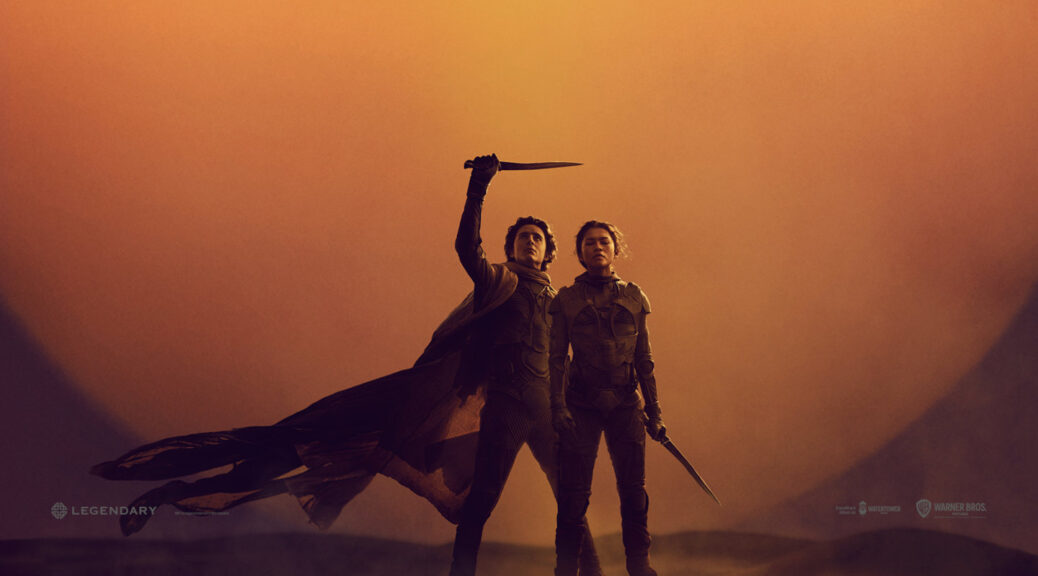
Is that the theme of Denis Villeneuve’s second installment of the Frank Herbert sci-fi epic? A colonizer twists religion to convince a huge population to act in their own worst interests? Sounds more like modern times, but maybe the blandly named Paul (Timothée Chalamet) really is The One.
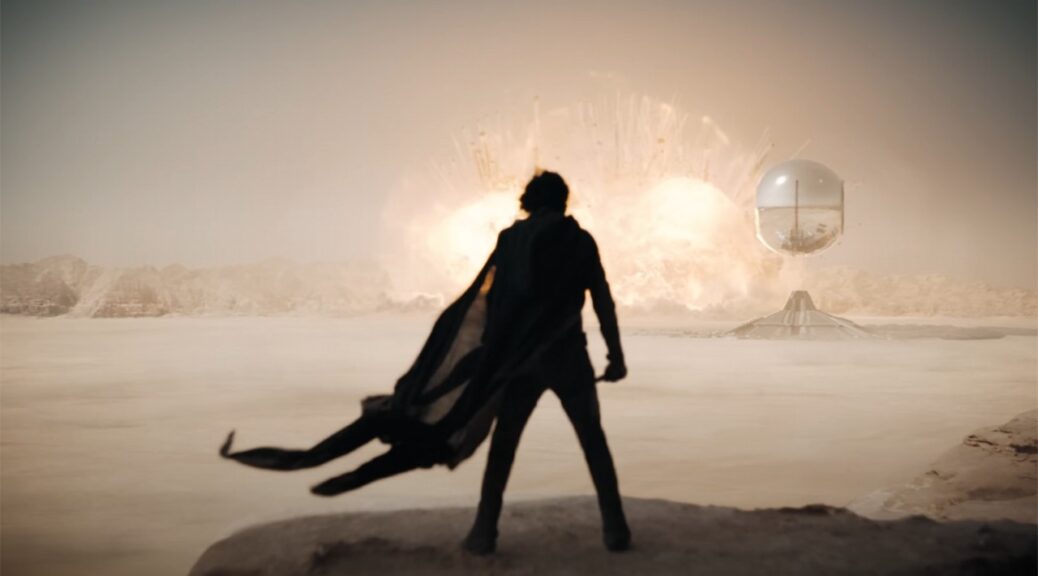
Dune: Part Two is as breathtaking a vision as Villeneuve’s 2021 Part One. And it’s a better film, benefitting immeasurably from the freedom of exposition that weighed down Part One. The sequel rides intensity and action from its opening segment.
Having taken refuge with his mother (Rebecca Ferguson, still the most interesting performance in the film) among the Fremen, Paul tries to understand his visions while fighting alongside Chani (Zendaya), the woman he loves, to take back the spice-rich planet Arrakis from the evil and extremely pale Harkonnen.
Villeneuve’s world-building is again a wonder to behold. He immerses us in this world of sand and savagery, providing fully realized reminders of how much Herbert’s original vision has influenced iconic sci-fi tentpoles such as Mad Max and Star Wars.
And, in turn, this Dune isn’t shy about its own inspirations. From the conversion of Paul to the schemes behind the throne, from the cries of “false prophet!” to the bloodline surprises, Villeneuve and returning co-writer Jon Spaihts bob and weave the narrative through a fertile playground of Biblical and Shakespearean roots.
The ensemble is again large and mighty, sporting a litany of heavyweights (Javier Bardem, Florence Pugh, Josh Brolin, Charlotte Rampling, Christopher Walken, Léa Seydoux, Stellan Skarsgård, Austin Butler, Dave Bautista) who are all able to leave unique impressions amid the battle of screen time.
And that tells you how many characters are populating this adventure, because there is no shortage of screen time. But while Part Two‘s 2 hours and 45-minutes eclipse the first film, you’ll also find more meat on the bone. Yes, the second act does bog down a bit, but the finale sticks a damn fine landing. Overall, there’s just more earned tension, more thrills (get ready for the worms!) and more character arc to keep you invested in this fight.
Part Two also feels like the complete film that its predecessor did not, and it begins to pick the scab off that “white savior” issue, although we’ll need to get to Part Three to really do it justice. Even if there is not a third installment (and let’s be honest, there’s going to be), Dune: Part Two delivers a satisfying and complete adventure all its own.
by Hope Madden and George Wolf
Is the flattery still sincerest if you’re imitating yourself?
Because about 15 minutes into Drive-Away Dolls, the first installment of a lesbian B-movie trilogy from director/co-writer Ethan Coen and co-writer Tricia Cooke (Coen’s longtime producer/editor/wife), you can’t ignore how much this film reminds you of Coen Brothers movies.
And yes, better Coen Brothers movies.
Like The Big Lebowski, Burn After Reading, Barton Fink and A Serious Man, all of which get subtle and not-so-subtle nods in a twisting story of two young women and a mysterious, valuable briefcase.
Jamie (Margaret Qualley) and Marian (Geraldine Viswanathan) are queer best friends in 1999 Philadelphia. Marian is sexually conservative, and the free-spirited Jamie hopes to get her friend some action while they accept a drive-away job down to Tallahassee and hit every lesbian bar they can find.
What the girls don’t know is that the car they’ve been given has two very important items in the trunk, and it isn’t long before “The Chief” (Colman Domingo) and his two hapless henchman (Joey Slotnick, C.J. Wilson) are on their tail heading South.
The cast is indeed impressive (with appearances from Pedro Pascal, Bill Camp, Beanie Feldstein and Matt Damon), but while the film serves up a handful of LOL moments, the vast majority of the nuttiness lands with more desperation than inspiration.
It all feels so forced, except for Viswanathan, whose earnest delivery points out the artifice in Qualley’s. The Foghorn Leghorn-y of pre-millennium lesbians, Jamie’s every line draws attention to its own zaniness. It calls to mind The Ladykillers—and that’s never the Coen movie you want to make people remember.
Much of the ensemble works magic, though. Camp is particularly, dryly memorable. But this script, and the unsteady direction, suffers from high expectations. Drive-Away Dolls is fine. It’s fun enough. It’s nutty. But if Coen and Cooke weren’t awkwardly chasing their own family history, it would have been more satisfying.
by Hope Madden
Wim Wenders is having a year. Though his epic 3D documentary Anselm somehow regrettably missed out on a Best Documentary nomination from the Academy, his unhurried slice-of-life Perfect Days caught their attention.
Nominated for Best International Film, Wenders’s lovely drama tails Hirayama (Koji Yakusho, perfection) through about two weeks in his life. Hirayama doesn’t have a lot to say, but he misses nothing in his days driving from public restroom to public restroom with Tokyo Toilet written on the back of his pristine blue jumpsuit.
Tools in rubber-gloved hand, Hirayama is meticulous as he works. He has a routine that suits him—brings him joy, even—and Wenders cycles us through that routine day after day after day. At a full two hours, Perfect Days begs your indulgence with this montage of minutely changing events.
The cumulative effect is, at first, lulling. As days pass, some small change draws attention and we try to predict a plot—will this turn into a love story, will that create financial chaos, is a tragic backstory of abuse about to come to light?
Not the goal of this movie. The film actually began as a commissioned short film meant to celebrate Tokyo’s pristine public toilets. I swear to God. It blossomed from there into a lithe, meditative character study shouldered by an impeccable Yakusho.
Though there are moments in the film that feel orchestrated—today, this happens; today, this happens—but not one breath, smile or nod of Hirayama’s head betrays the fiction. His is a mainly solitary, nearly silent life that can be surmised as a middle-aged man’s intentional creation. Hirayama has left something behind, has stripped himself of something, and what remains is what he finds vital: work where you can see a result; floor to ceiling shelves of books; a tidy and enormous collection of cassette tapes; a room full of tiny plants taking root, thanks to his tender care.
You could fit Hirayama’s dialog on less than a single page, and there are times when his silence feels forced and almost comedic. But Yakusho’s brilliantly nuanced, heartbreakingly felt performance makes up for any flaws in the film. Wenders punctuates scenes with joyously on-the-nose song choices—minus the cassette hiss—and the final few singalong minutes showcase one actor’s transcendent work.